Sorting skills Numbers Worksheets for Ages 3-5
5 filtered results
-
From - To
Help your little ones, ages 3-5, enhance their math abilities with our engaging Sorting Skills Numbers Worksheets! Kids Academy offers an array of fun, printable activities designed to teach young learners to recognize and categorize numbers. These carefully crafted worksheets guide children through sorting and organizing tasks, promoting critical thinking and foundational numeracy skills. Perfect for preschoolers and kindergarteners, our resources provide a supportive learning environment to boost confidence and creativity while mastering early math concepts. Visit Kids Academy today and watch your child navigate numbers with ease and excitement!
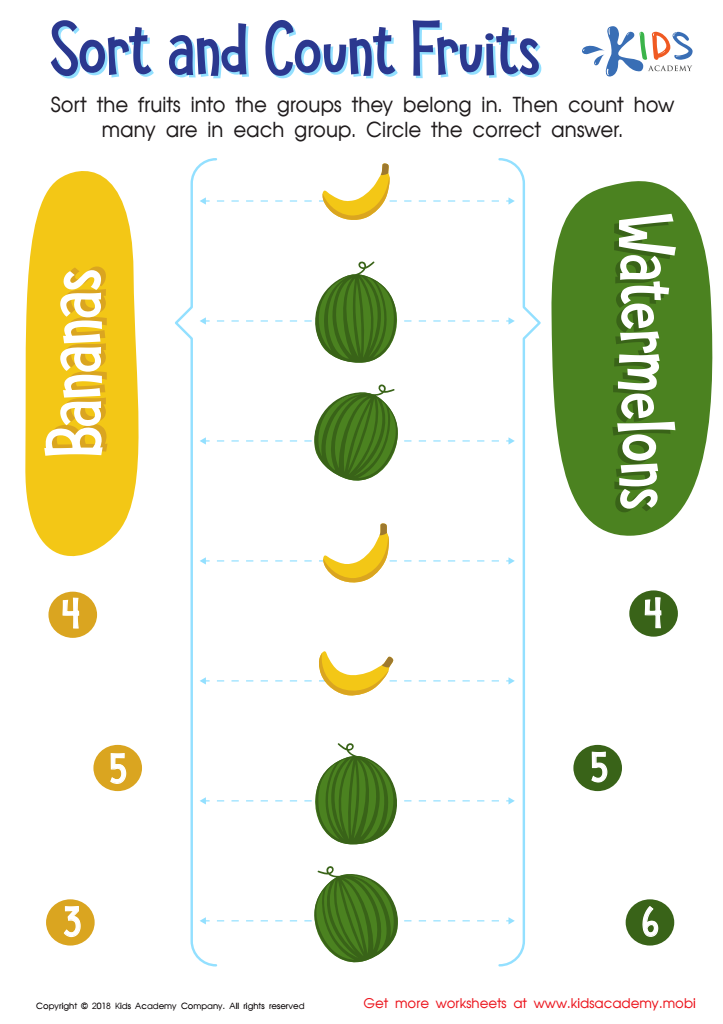
Sort and Count Fruits Worksheet
 Assign to My Students
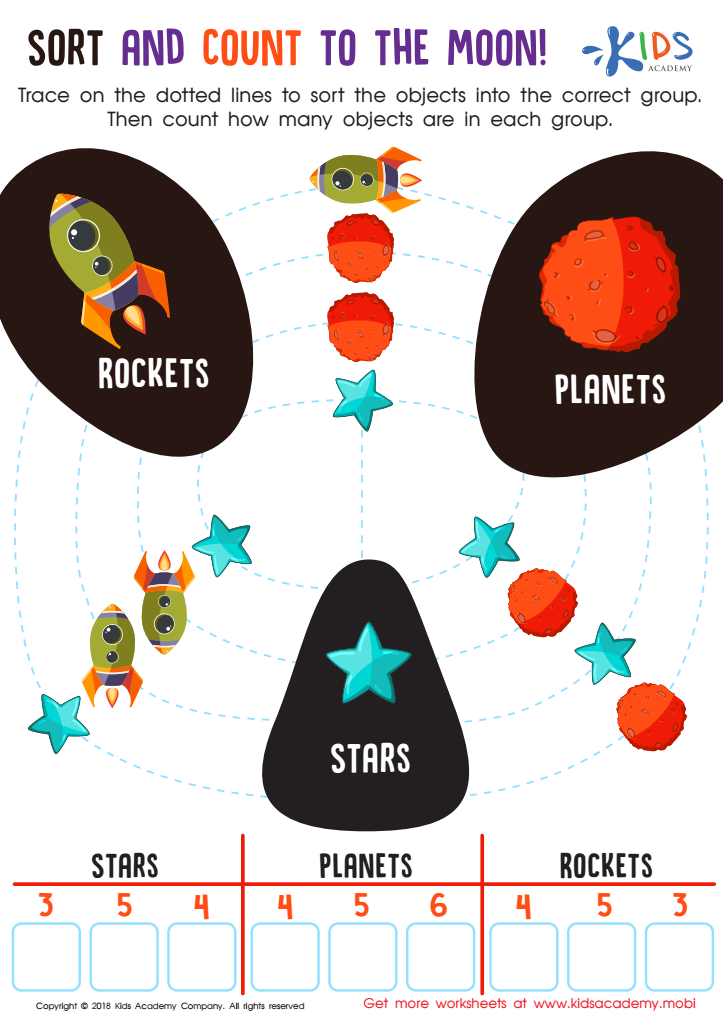
Sort and Count to the Moon Worksheet
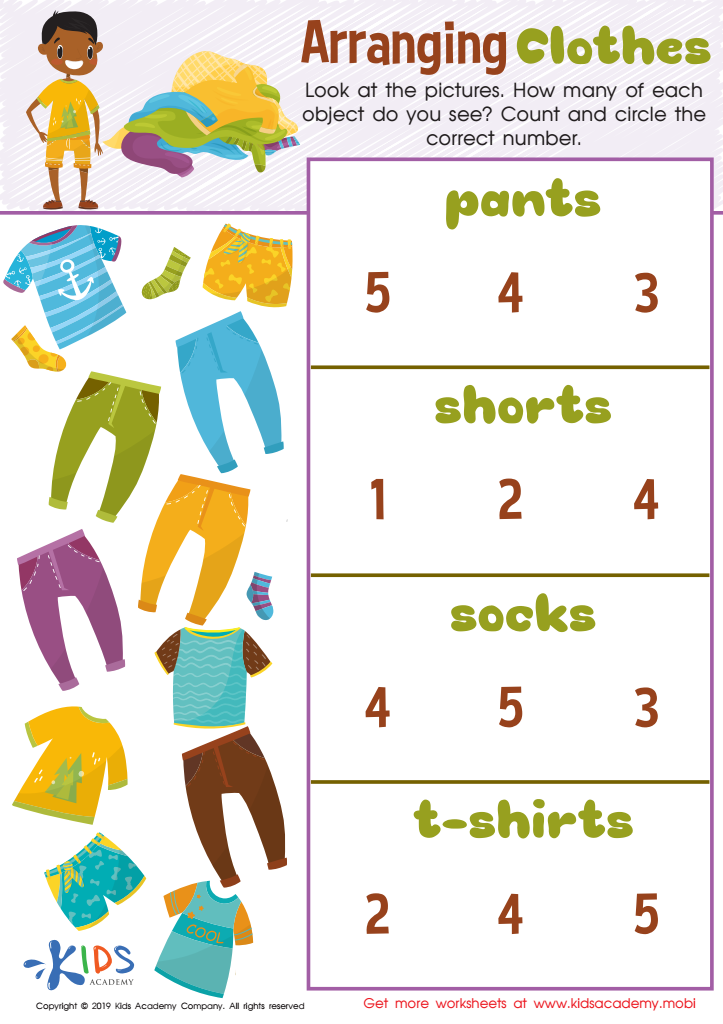
Arranging Clothes Worksheet
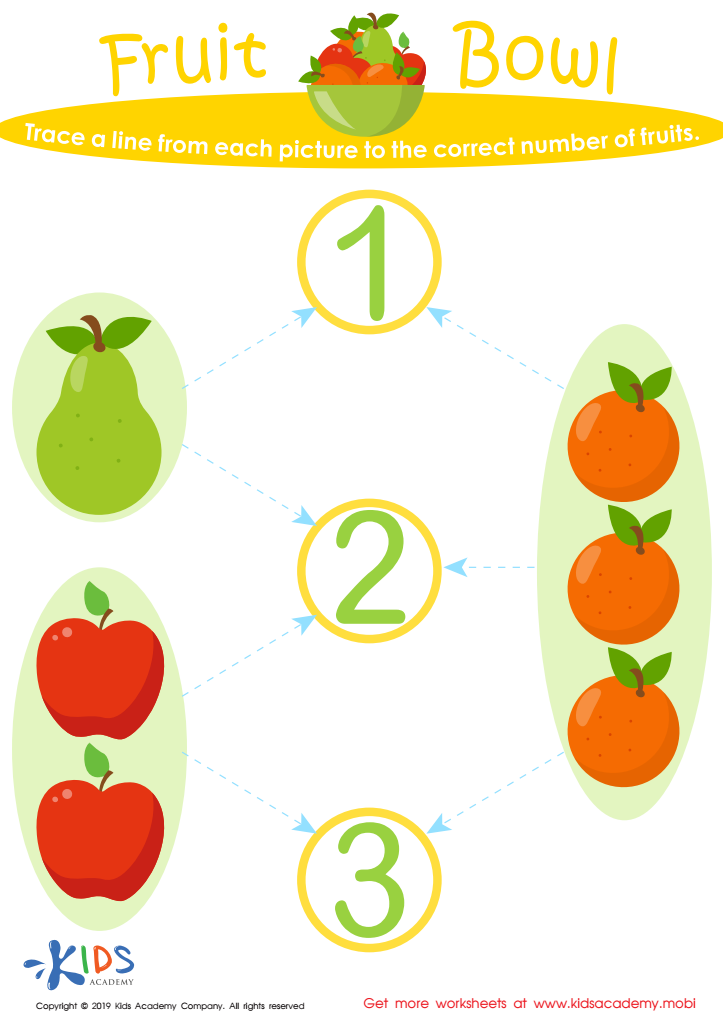
Fruit Bowl Worksheet
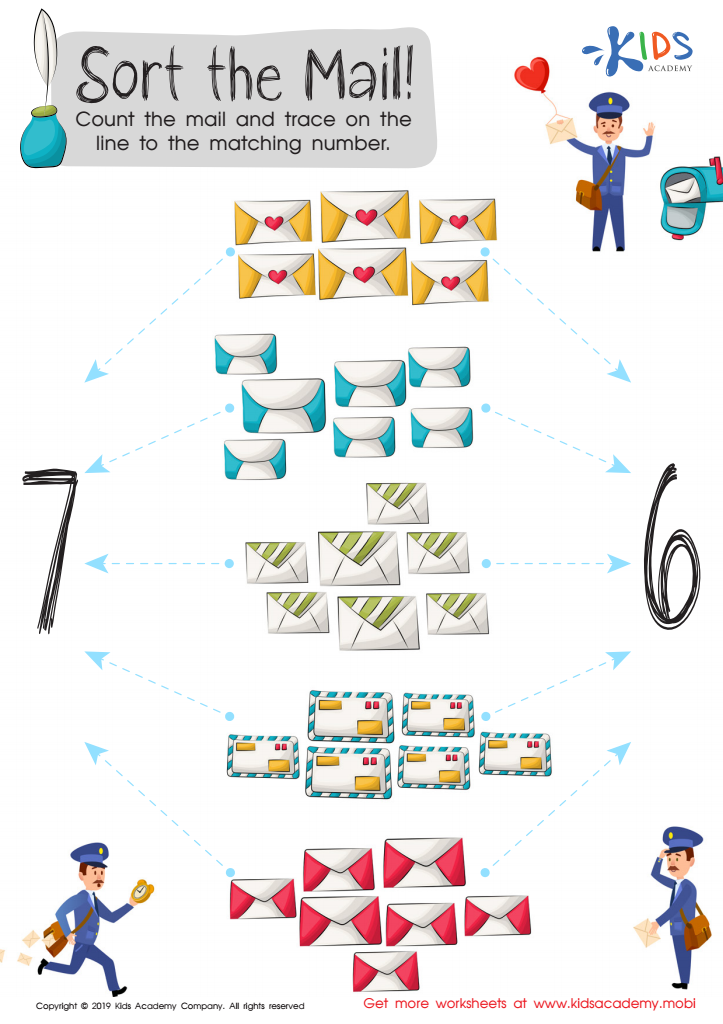
Sort the Mail Worksheet








Understanding sorting skills for numbers is crucial for children aged 3-5 as it lays the foundational stones for their mathematical development and cognitive growth. These early sorting activities help young minds grasp basic concepts like order, quantity, and patterns, which are essential for later mathematical reasoning.
When parents and teachers encourage sorting skills, they foster a child's ability to categorize and differentiate which aids problem-solving skills. Sorting exercises help clarify that numbers can be organized in sequences or grouped based on common attributes. For instance, recognizing patterns like odd and even numbers helps children build number sense.
Beyond math, sorting bolsters critical thinking, attention to detail, and fine motor skills. Engaging in sorting tasks enhances children's ability to follow instructions, improves their observational capabilities, and nurtures their logical reasoning. Sorting activities can also bridge to other subject areas such as science, where categorization is a routine part of learning about animals, plants, and other taxonomies.
Finally, involving children in sorting games promotes open-ended discussions and interaction, critical for social and language development. For parents and teachers, encouraging these sorting activities not only prepares kids for future academic success but also sets them on a path to become organized thinkers in everyday life.








