Understanding Quantities Numbers Worksheets for Ages 3-5
5 filtered results
-
From - To
Introduce your child to the fascinating world of numbers with our "Understanding Quantities Numbers Worksheets" for ages 3-5. Designed to help young learners grasp fundamental math concepts, these engaging worksheets make counting and recognizing quantities fun. Through colorful illustrations and interactive activities, children develop skills in number recognition, basic counting, and understanding quantities. Our worksheets foster a strong mathematical foundation, preparing preschoolers for future academic success. Ideal for both classroom and home use, these hands-on exercises ensure that learning stays enjoyable and effective. Start your little one’s math journey today with our expertly-crafted resources!
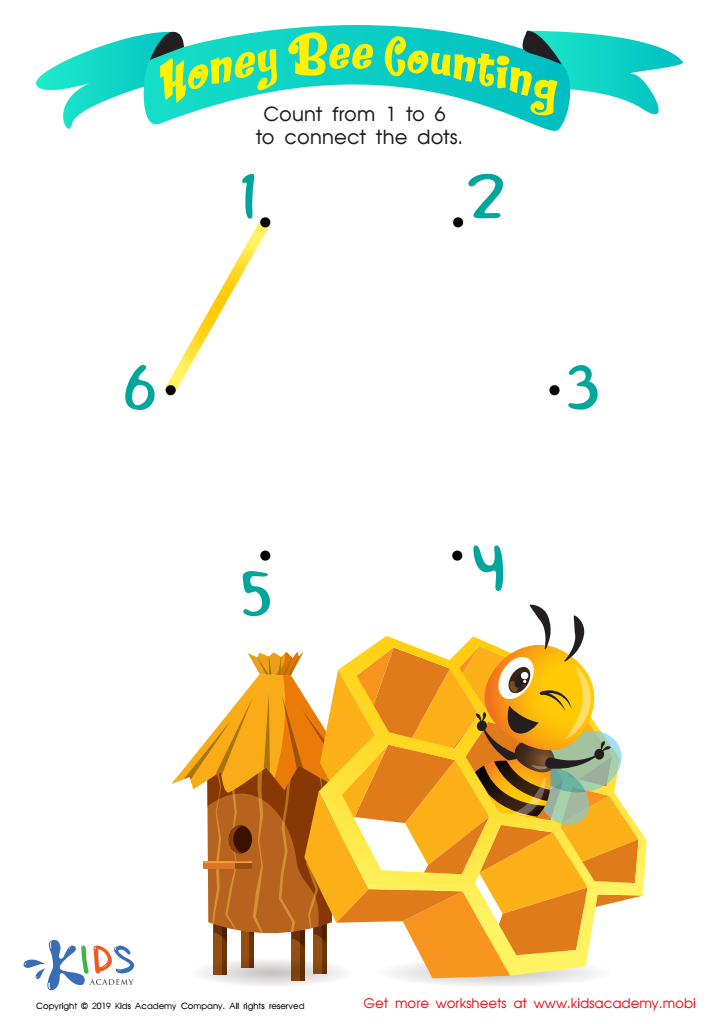
Honey Bee Counting Worksheet
 Assign to My Students
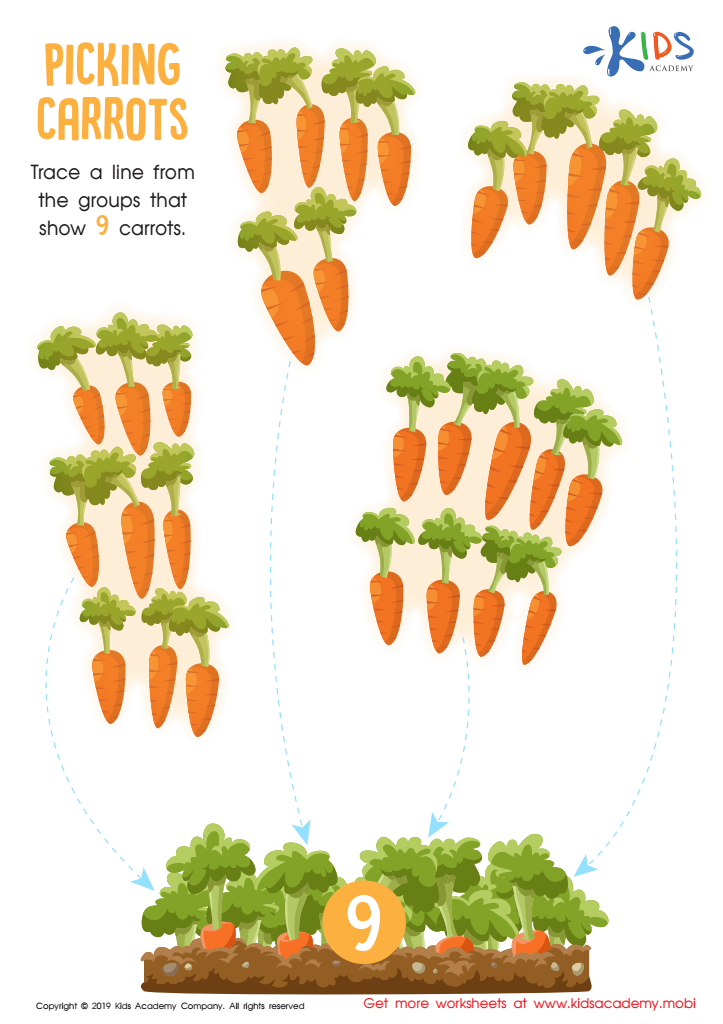
Picking Carrots Worksheet
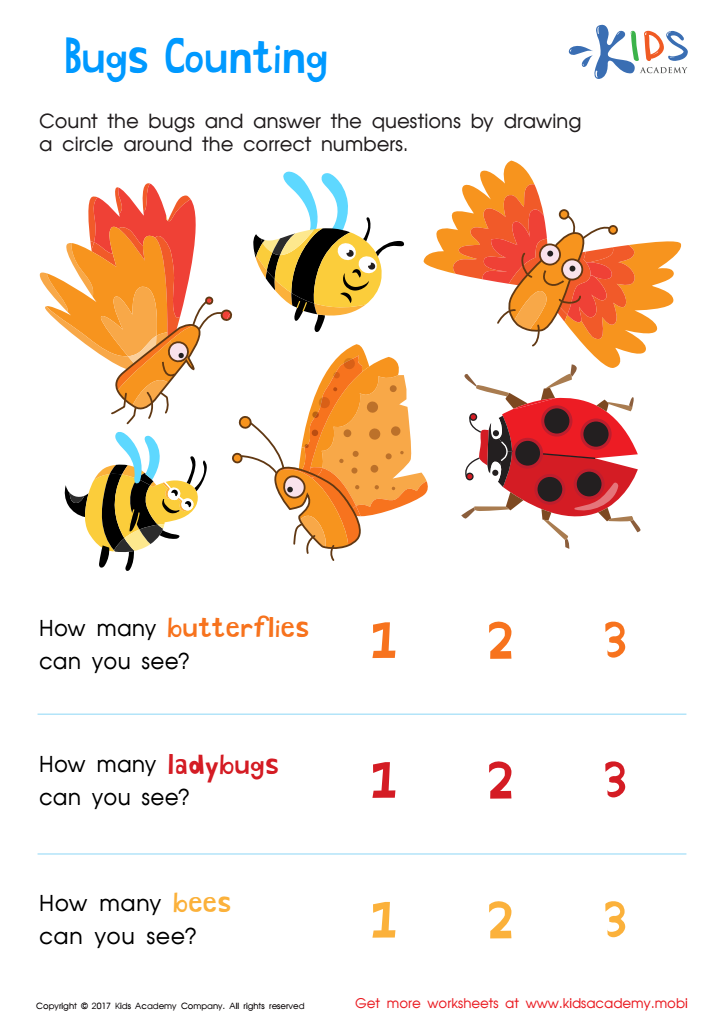
Bugs Counting Worksheet
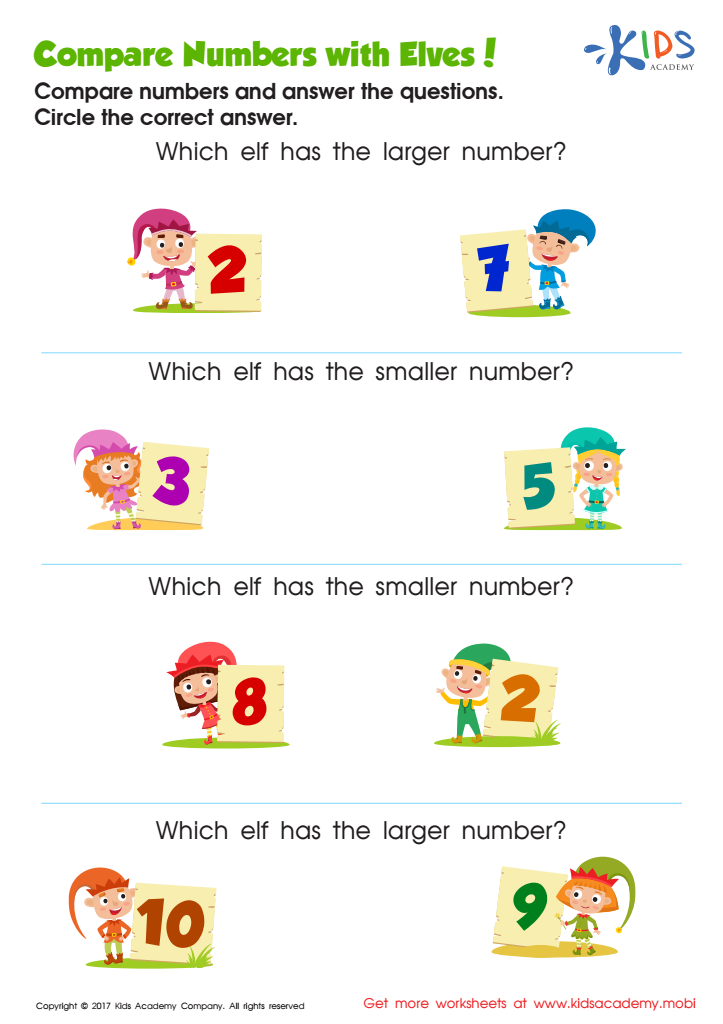
Comparing Numbers Worksheet for Kindergarten
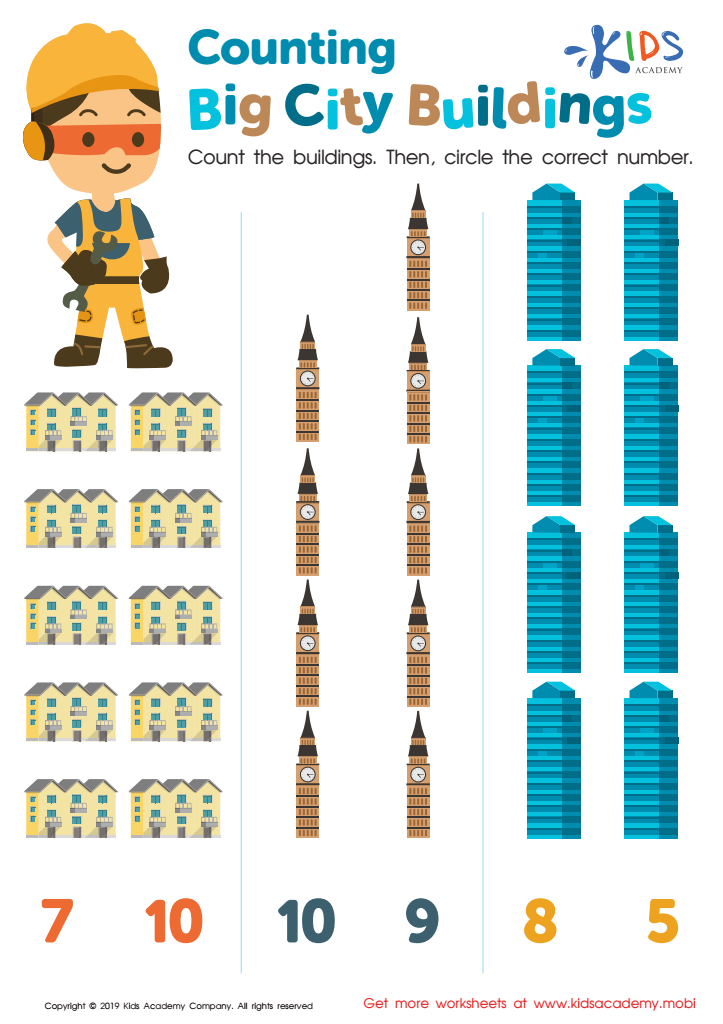
Counting Big City Buildings Worksheet


%20(1).jpg)





Understanding quantities and numbers at an early age, particularly between ages 3-5, is crucial for the cognitive and academic development of children. This foundational skill prepares young learners for future mathematical concepts and helps them make sense of the world around them. At this stage, children are developing their ability to recognize patterns, compare amounts, and understand simple operations such as addition and subtraction.
Early proficiency in number concepts fosters critical thinking and problem-solving abilities. Children who grasp these concepts are more confident and competent when they enter formal schooling, setting a positive trajectory for their academic achievement. Moreover, integrating quantities and numbers in everyday activities enhances language development; for example, discussing quantities ('more', 'less', 'full', 'empty') enriches vocabulary and communication skills.
For parents and teachers, focusing on these skills promotes a hands-on, engaging learning environment where children can explore and interact with their surroundings. Simple, playful activities like counting objects, playing board games, or even cooking together can embed numeric comprehension organically and joyfully. By nurturing these skills early on, we equip children with the basic tools crucial for their future education and everyday life, fostering a lifelong appreciation and understanding of math.








