Check out this FREE Trial Lesson on Math for age 3-5!

L

Favorites
With answer key
Interactive
  • 3-5
  • Addition skills
  • Math
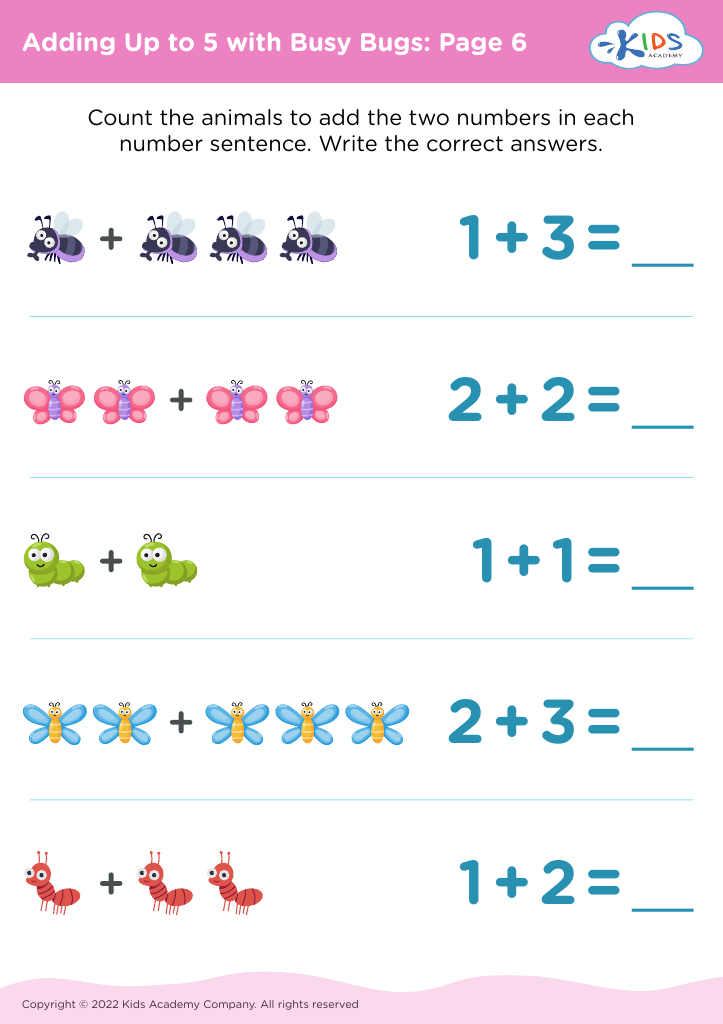
Adding Up to 5 with Busy Bugs: Page 6
Worksheet
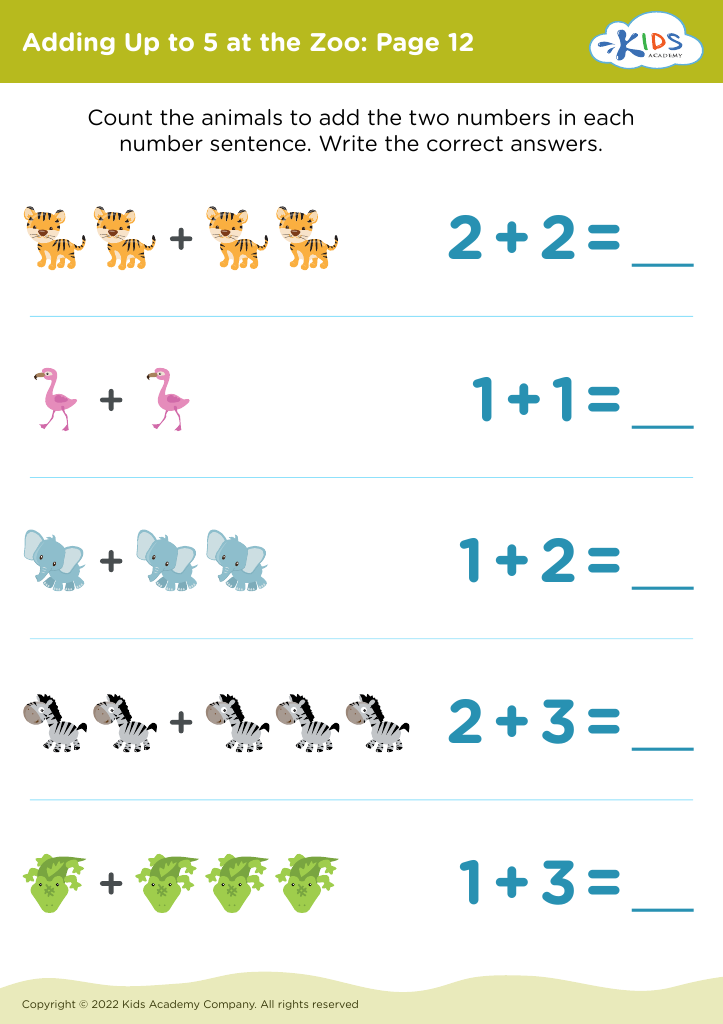
Adding Up to 5 at the Zoo: Page 12
Worksheet
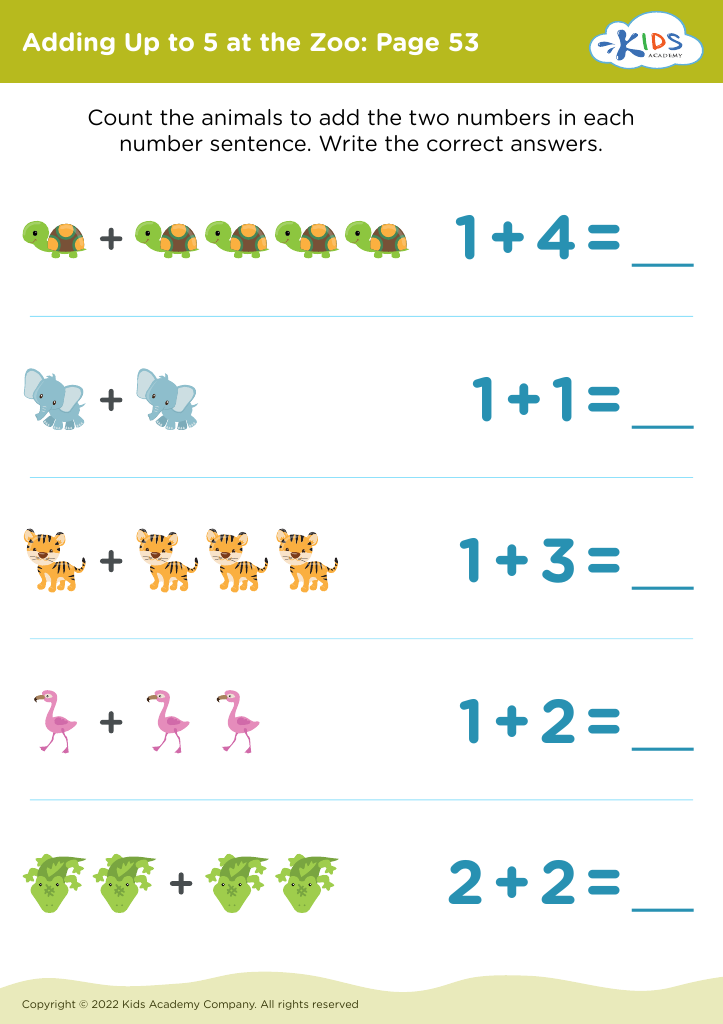
Adding Up to 5 at the Zoo: Page 53
Worksheet
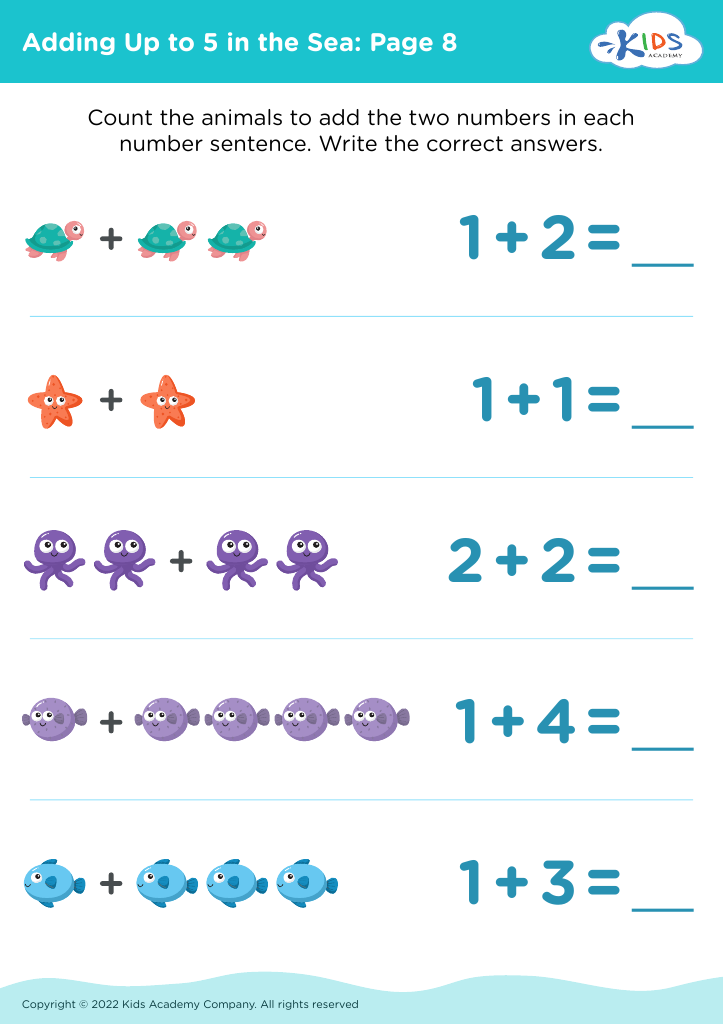
Adding Up to 5 in the Sea: Page 8

Adding Up to 5 in the Sea: Page 8

Adding Up to 5 in the Sea: Page 8
Worksheet
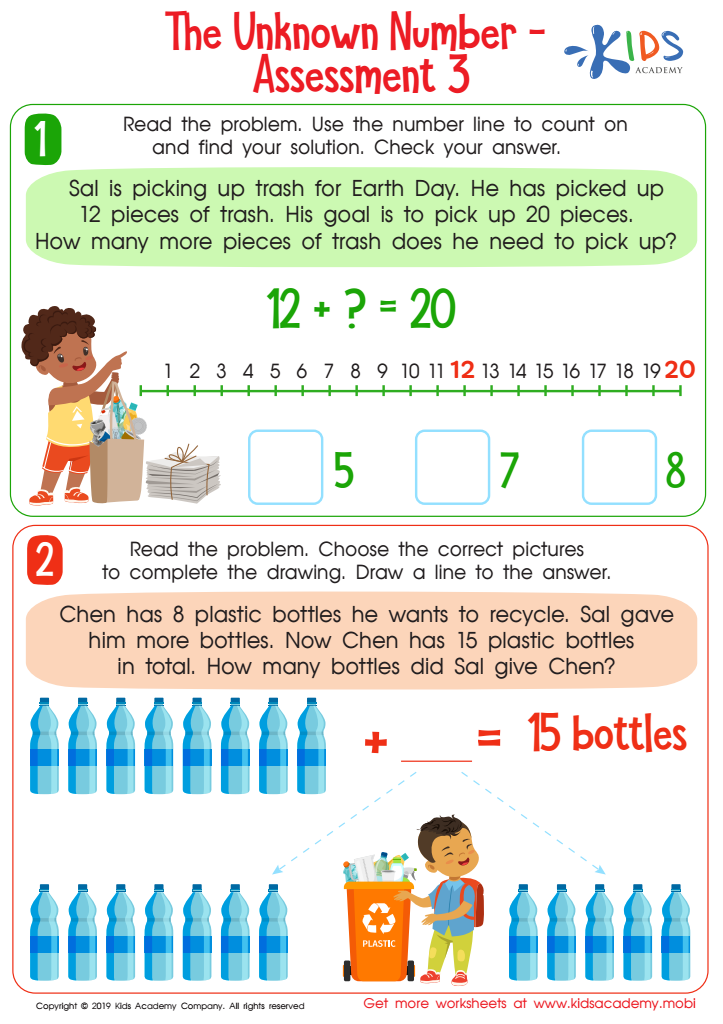
The Unknown Number - Assessment 3 Worksheet

The Unknown Number - Assessment 3 Worksheet

Read the Earth Day-themed word problem aloud to your kids, pointing to the pictures as you go. Use the number line to help them count on and find the answer. Then check it together. Doing this can help them learn more about Earth Day and meet other children who are doing their part to keep it clean.
The Unknown Number - Assessment 3 Worksheet
Worksheet
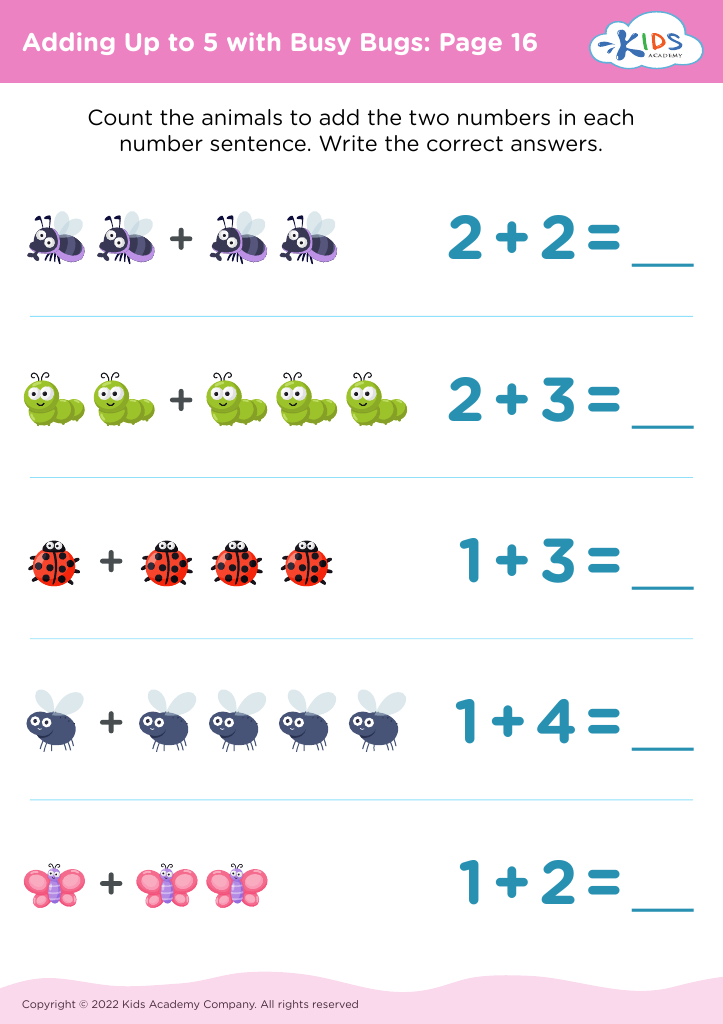
Adding Up to 5 with Busy Bugs: Page 16
Worksheet
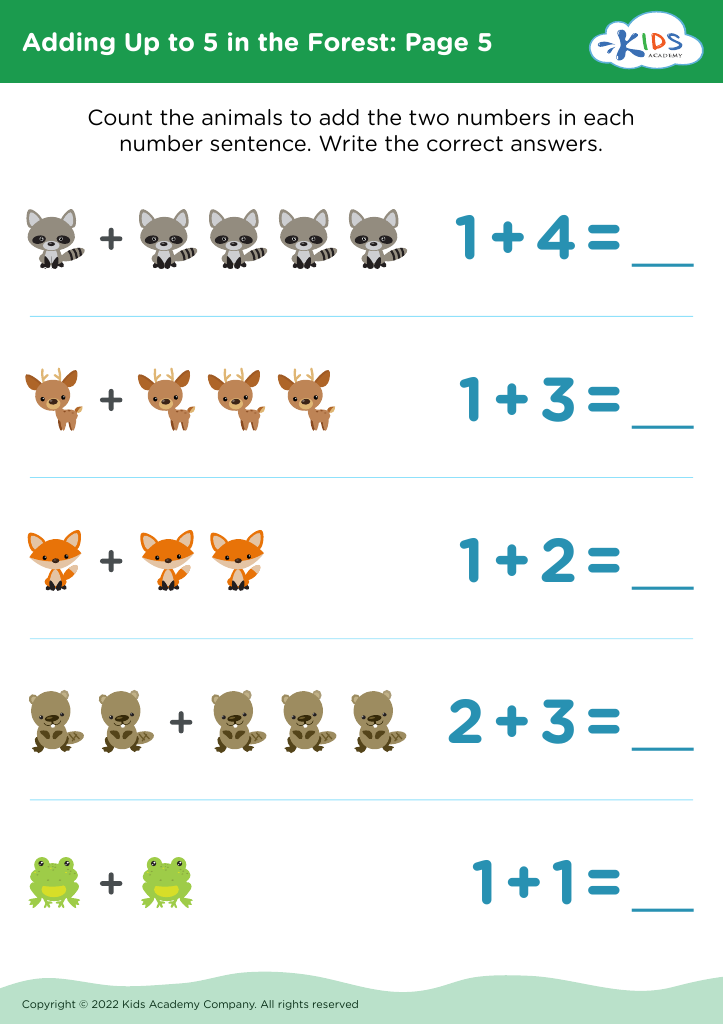
Adding Up to 5 in the Forest: Page 5
Worksheet
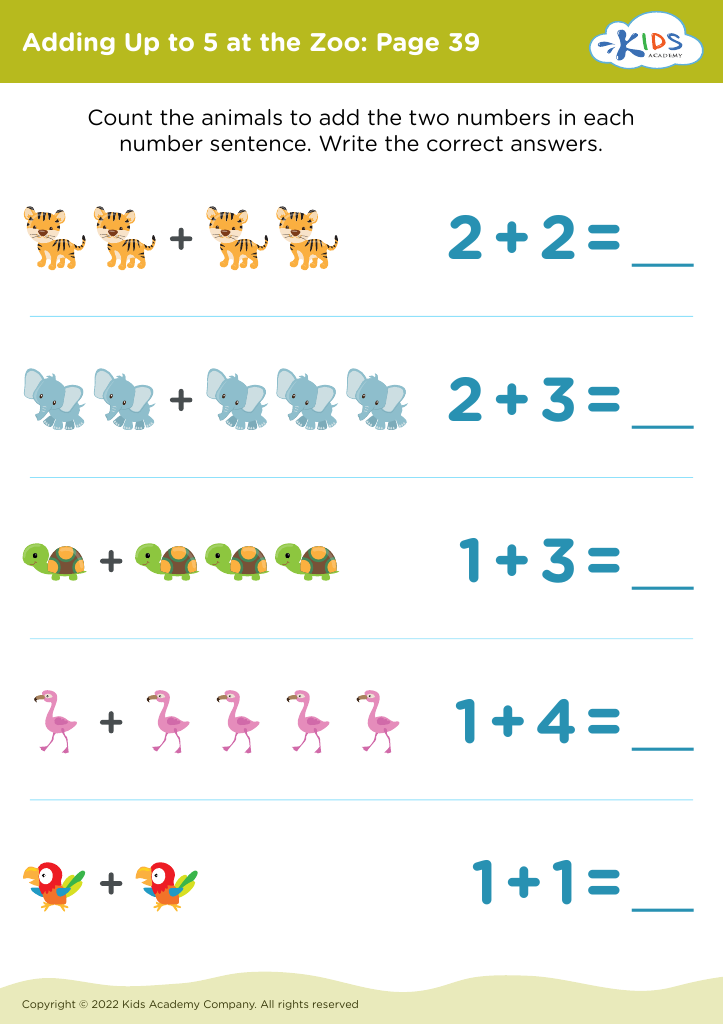
Adding Up to 5 at the Zoo: Page 39
Worksheet
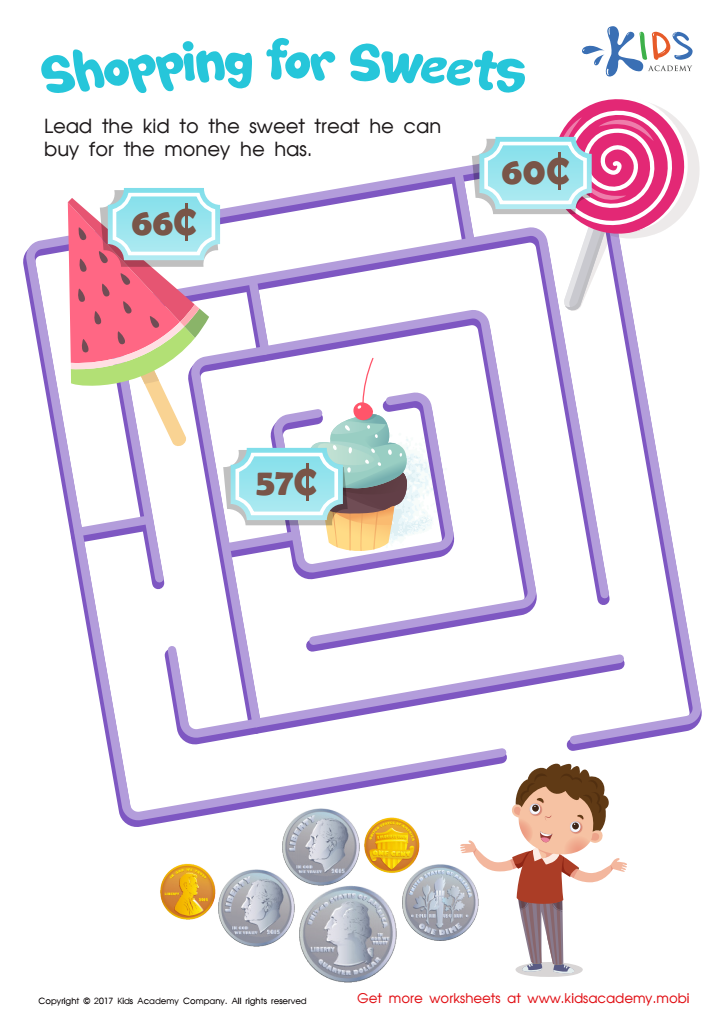
Money Worksheet: Shopping for Sweets

Shopping for Sweets Worksheet

Help your child hone their math and money skills with Shopping for Sweets! They'll count coins, work their way through a maze, and find the amount of money. Fun and educational - perfect for kids!
Shopping for Sweets Worksheet

Worksheet
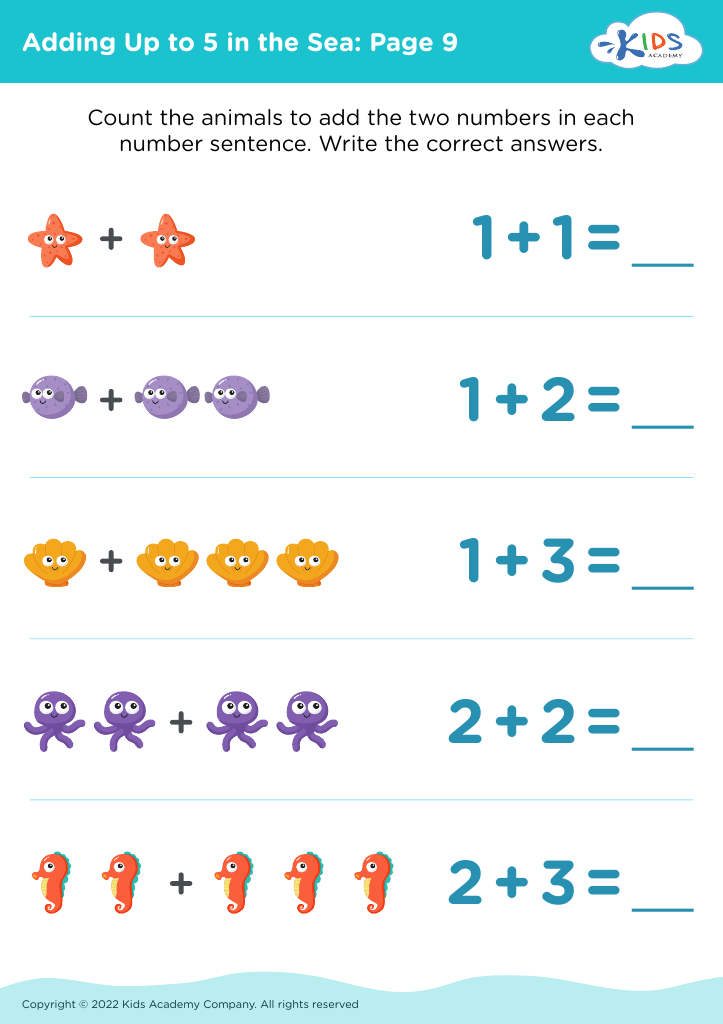
Adding Up to 5 in the Sea: Page 9

Adding Up to 5 in the Sea: Page 9

Adding Up to 5 in the Sea: Page 9
Worksheet


... 4 5

addition skills in early childhood are crucial for foundational numeracy. For children aged 3 to 5, mastering addition not only facilitates a basic understanding of math but also enhances critical cognitive, social, and emotional skills. Engaging with addition concepts during this formative stage helps to develop logical thinking and problem-solving abilities that are essential in all subject areas.

Furthermore, early exposure to addition encourages a positive attitude towards math. When parents and teachers promote playful learning experiences, such as counting objects during play, children build confidence and curiosity in exploring math concepts. These skills also extend to real-life scenarios, helping children understand budgeting, sharing, and comparison in everyday situations.

Additionally, strong addition skills foster social interactions among peers, as children engage in collaborative learning during games involving counting or simple calculations. This not only promotes math fluency but also boosts communication and teamwork skills.

In summary, nurturing addition skills in preschoolers equips them with the tools for future academic success and promotes holistic development. By prioritizing these early math skills, parents and teachers contribute to a positive learning environment that prepares children for lifelong learning.