Filters

156 filtered results

Clear all filters
Favorites
With answer key
Interactive

156 filtered results

Difficulty Level

Grade


Check out this FREE Trial Lesson on Math for age 3-5!

Z

Favorites
With answer key
Interactive
  • 3-5
  • Cognitive Development
  • Math
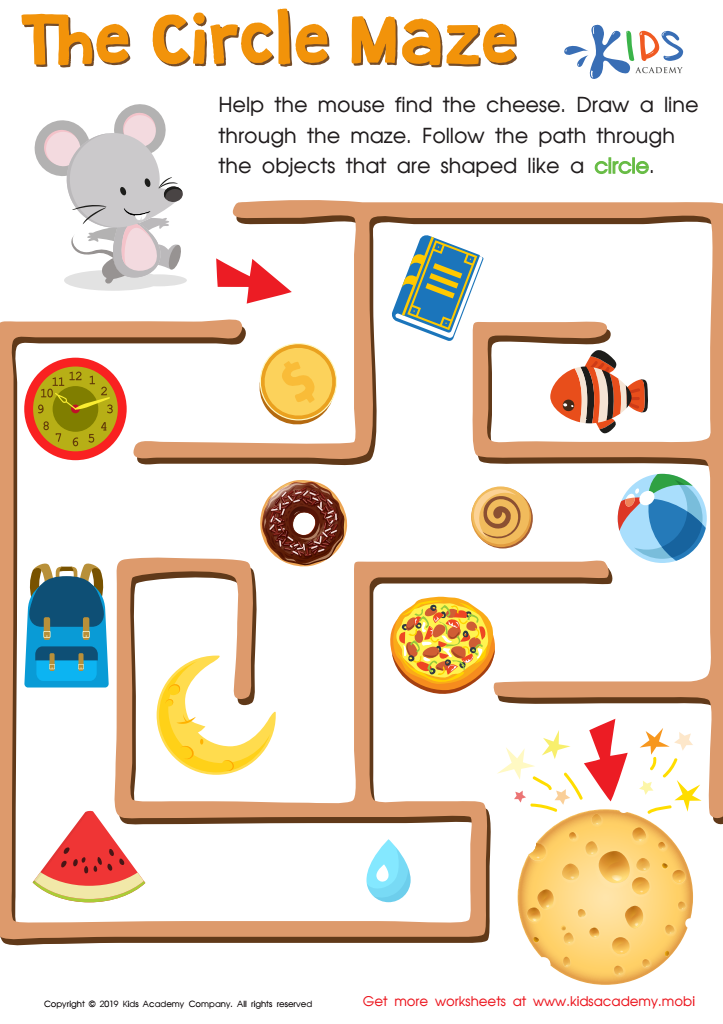
The Circle Maze Worksheet

The Circle Maze Worksheet

Kids can have fun learning shapes with this maze worksheet. They can help the mouse find its cheese by tracing the path of a circle through the maze. This printable is great for classroom learning or as an activity at home.
The Circle Maze Worksheet
Worksheet
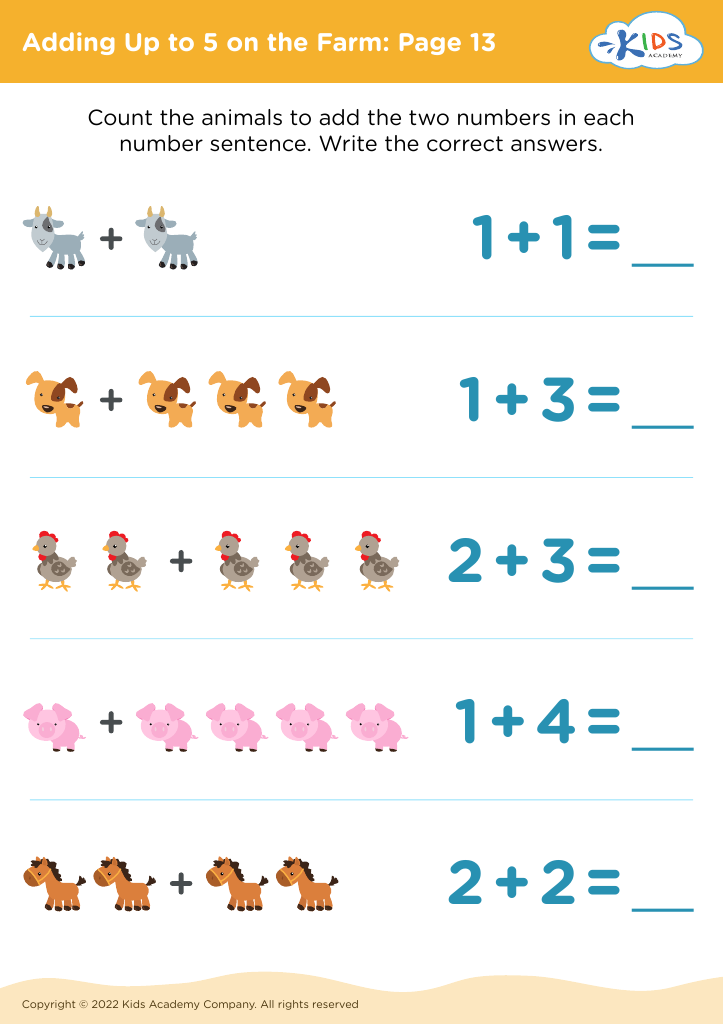
Adding Up to 5 on the Farm: Page 13
Worksheet
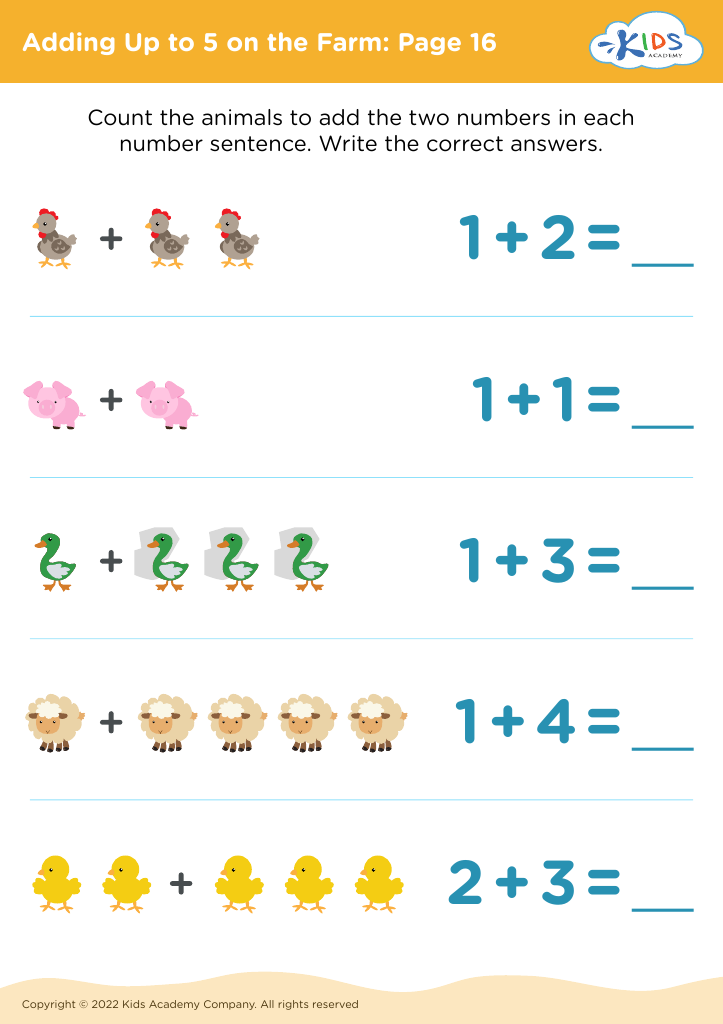
Adding Up to 5 on the Farm: Page 16
Worksheet
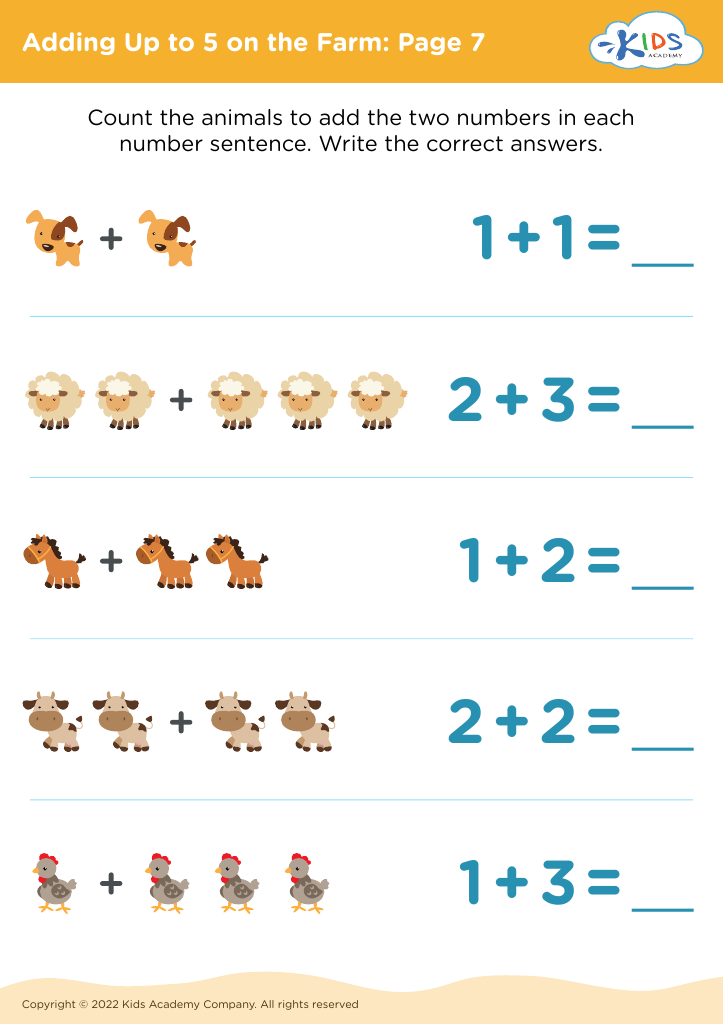
Adding Up to 5 on the Farm: Page 7
Worksheet
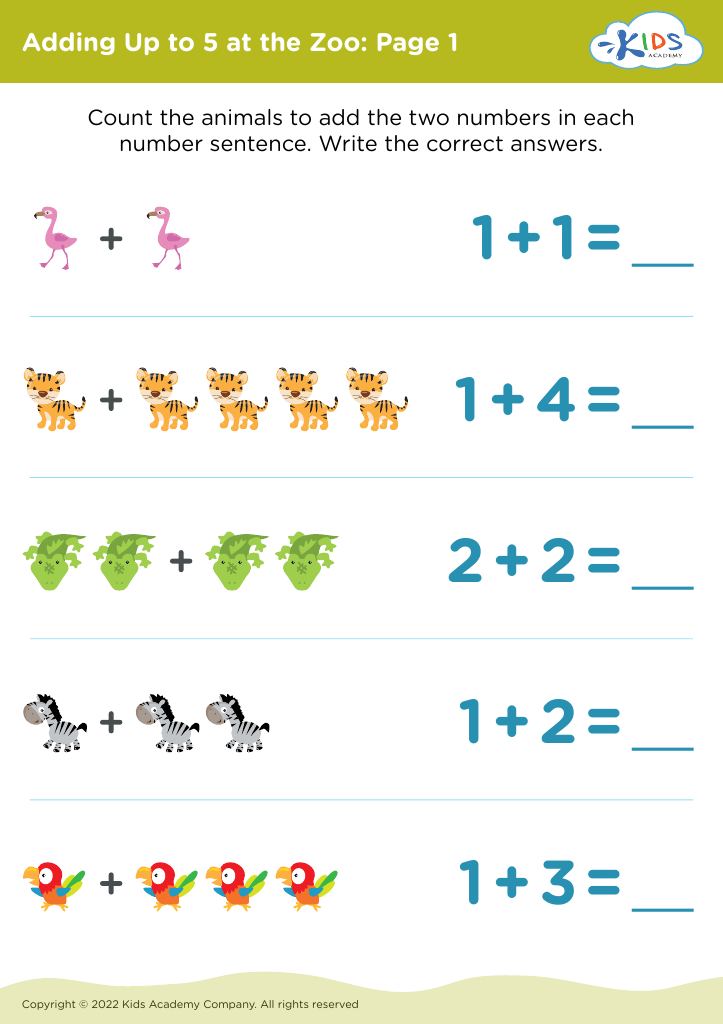
Adding Up to 5 at the Zoo: Page 1

Adding Up to 5 at the Zoo: Page 1

Adding Up to 5 at the Zoo: Page 1
Worksheet
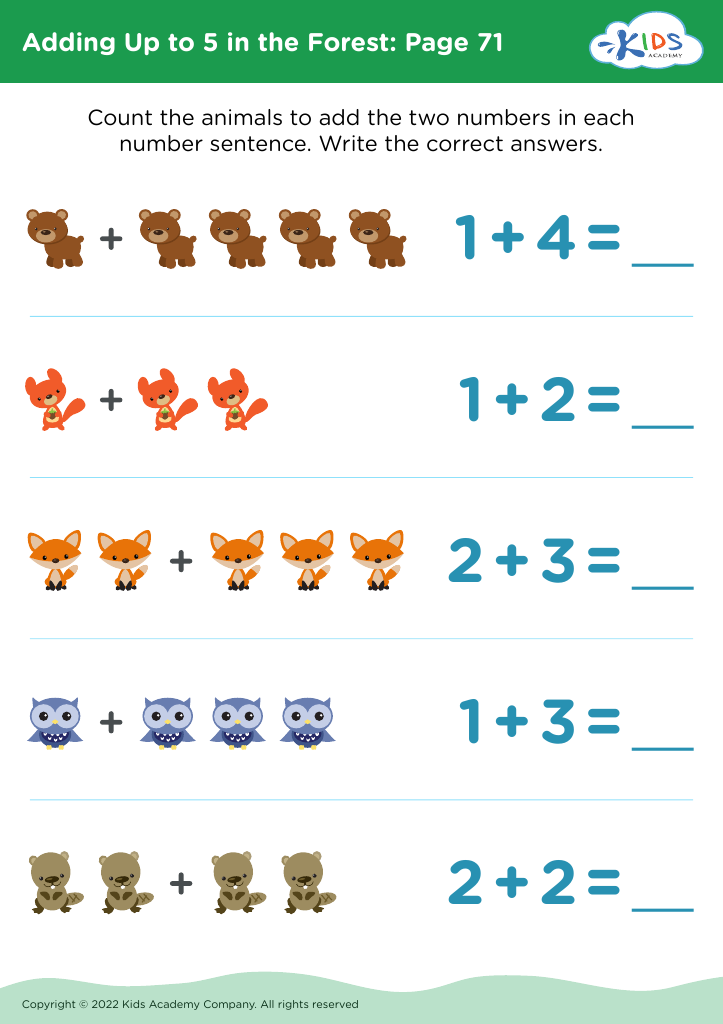
Adding Up to 5 in the Forest: Page 71
Worksheet
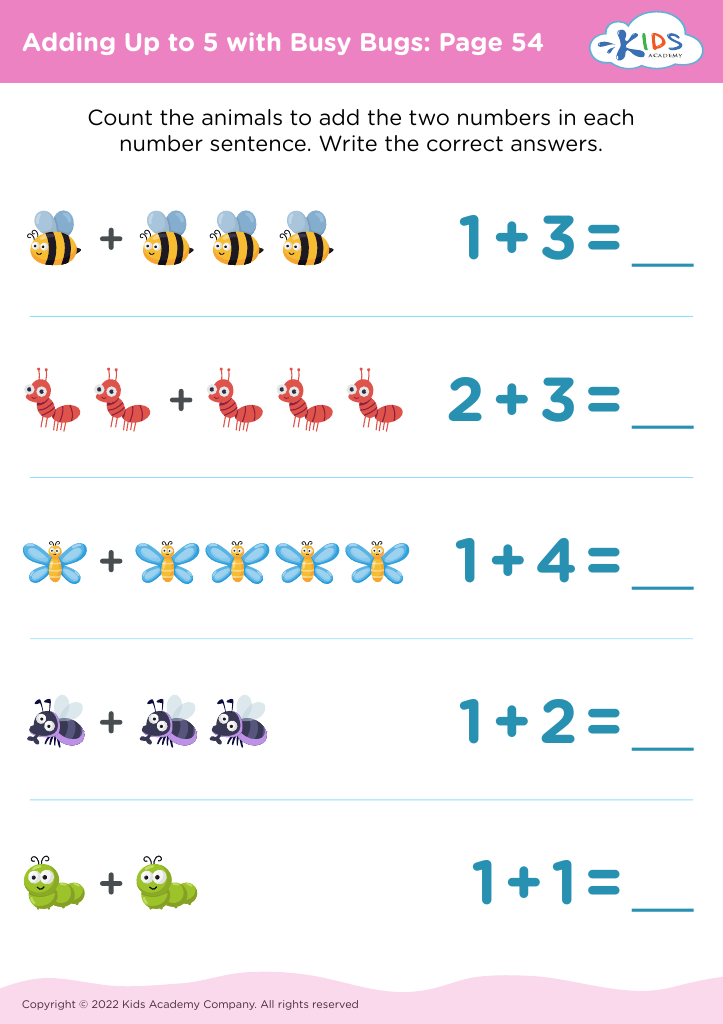
Adding Up to 5 with Busy Bugs: Page 54
Worksheet
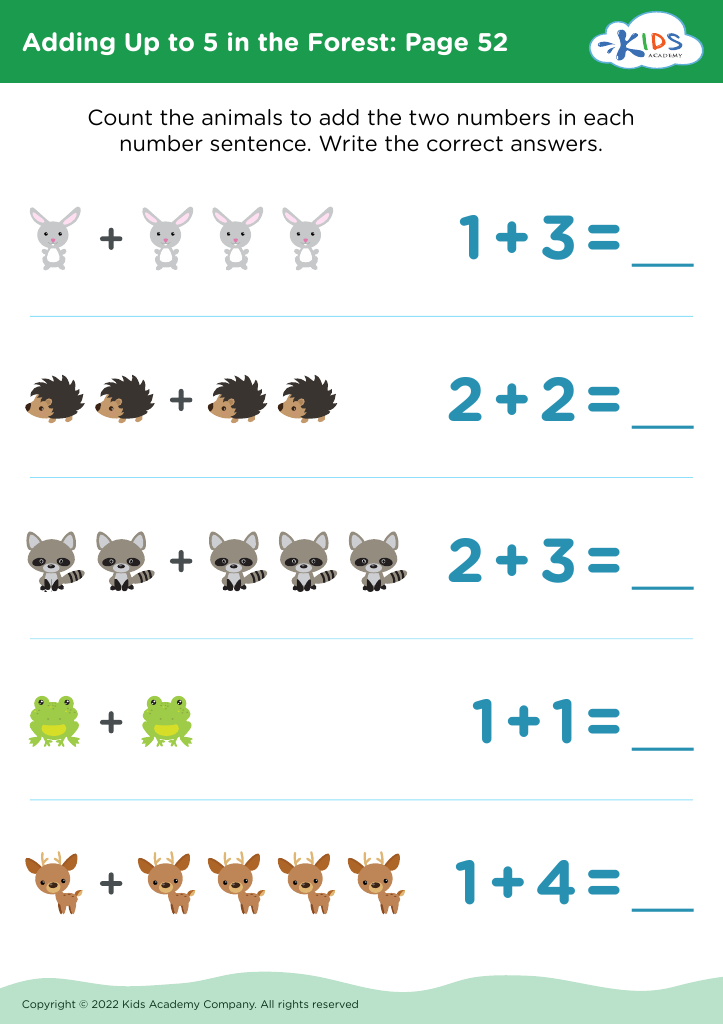
Adding Up to 5 in the Forest: Page 52
Worksheet
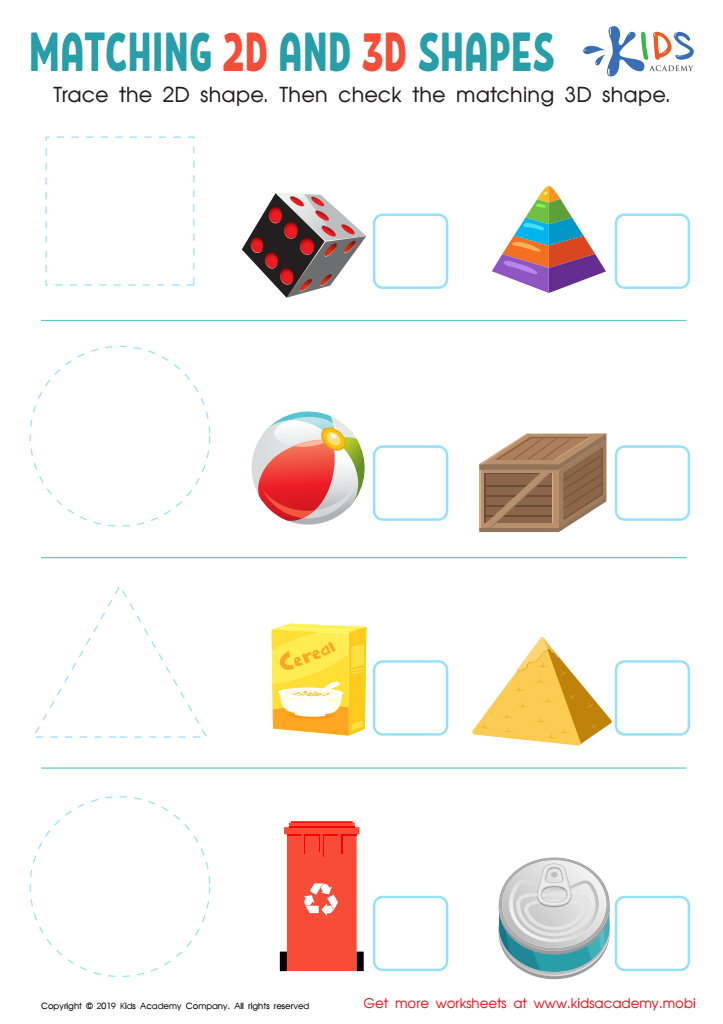
Matching 2D and 3D Shapes Worksheet
Matching 2D and 3D Shapes Worksheet
Before starting this worksheet, ask your kids what shapes they know and point out the 2D and 3D shapes on it. Help your kids trace the 2D shapes and then match them to the 3D versions. It'll be a fun new world for your kids to explore!
Matching 2D and 3D Shapes Worksheet
Worksheet
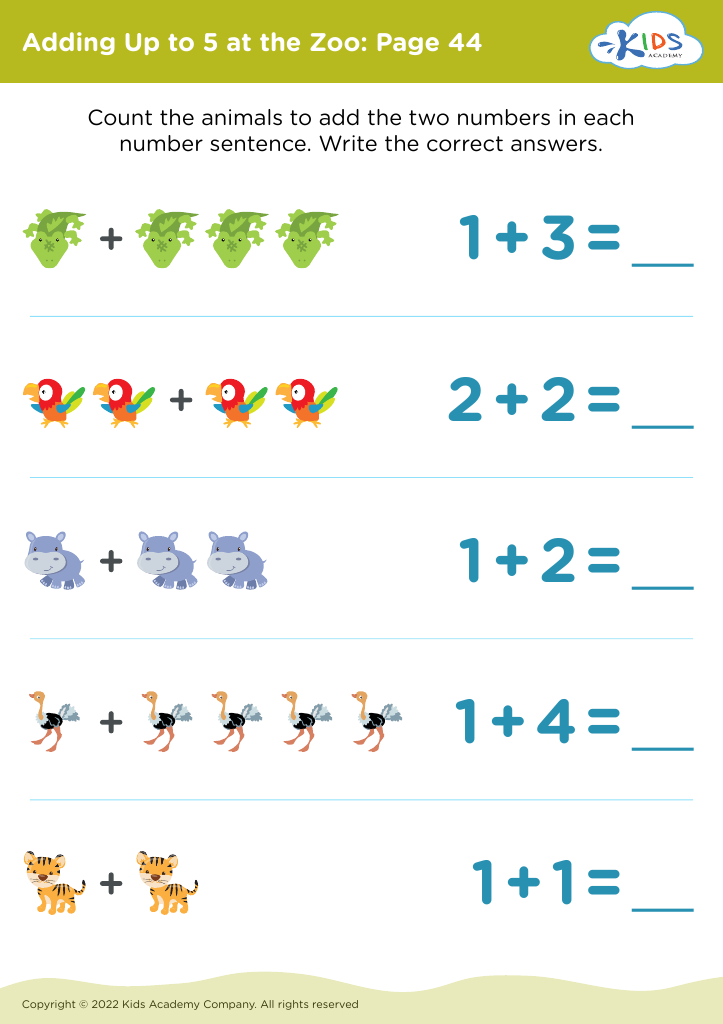
Adding Up to 5 at the Zoo: Page 44
Worksheet
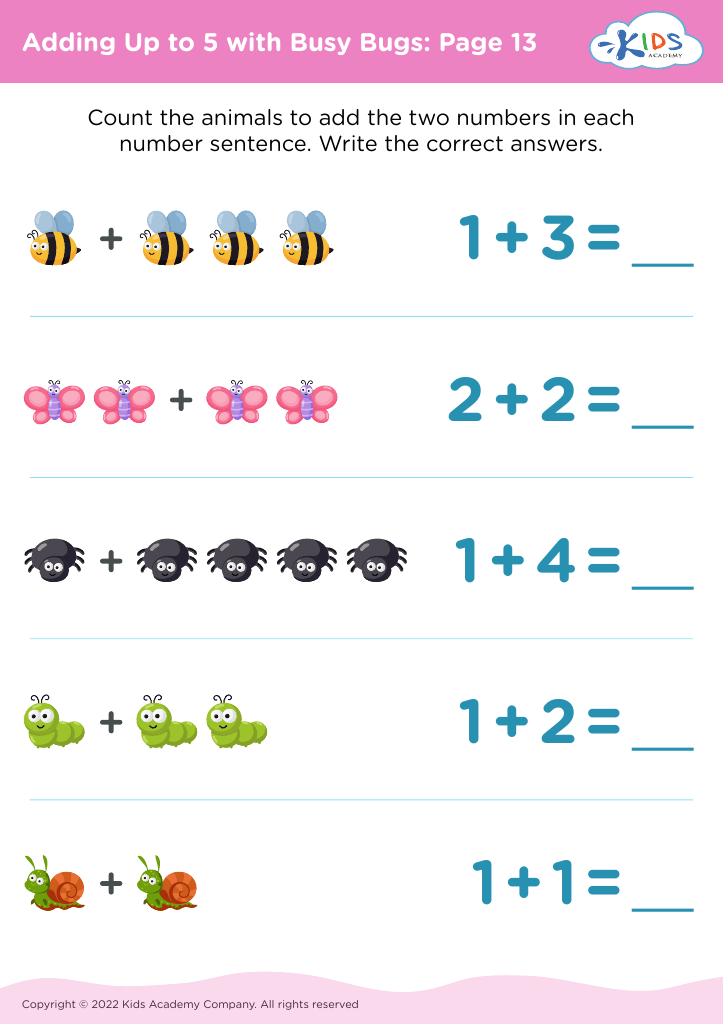
Adding Up to 5 with Busy Bugs: Page 13
Worksheet
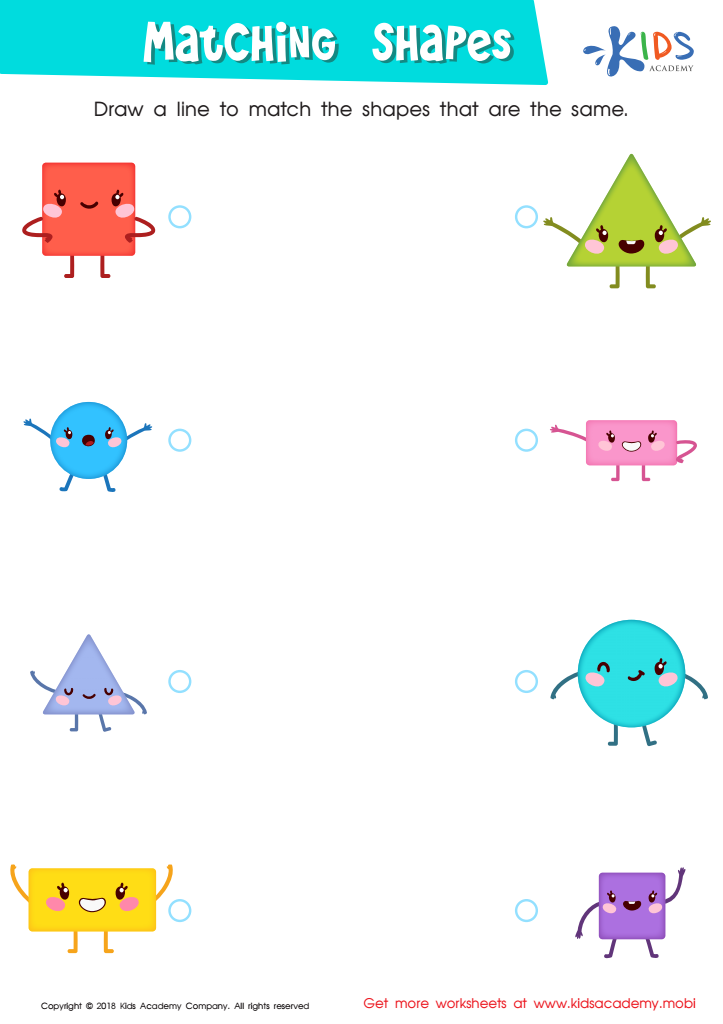
Matching Shapes Worksheet
Matching Shapes Worksheet
Introduce your students to the 4 most common shapes: squares, triangles, rectangles and circles. When they progress, show them other shapes like rhombuses and parallelograms. Use this matching shapes worksheet to help them match two identical shapes. Print out the worksheet and instruct them to draw lines connecting them.
Matching Shapes Worksheet
Worksheet
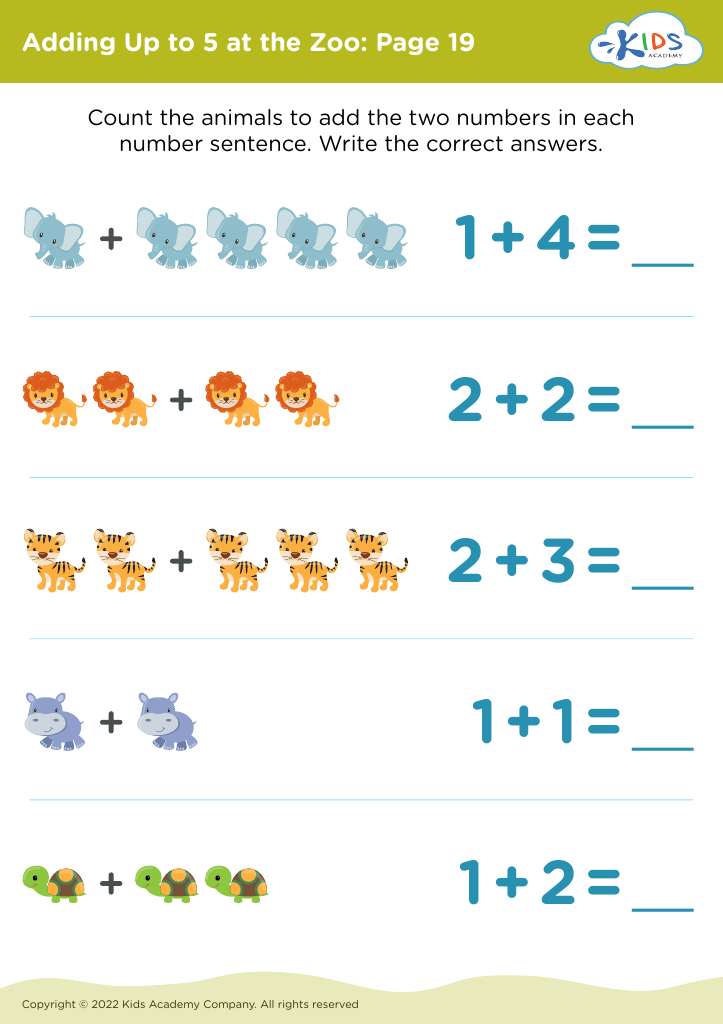
Adding Up to 5 at the Zoo: Page 19
Worksheet
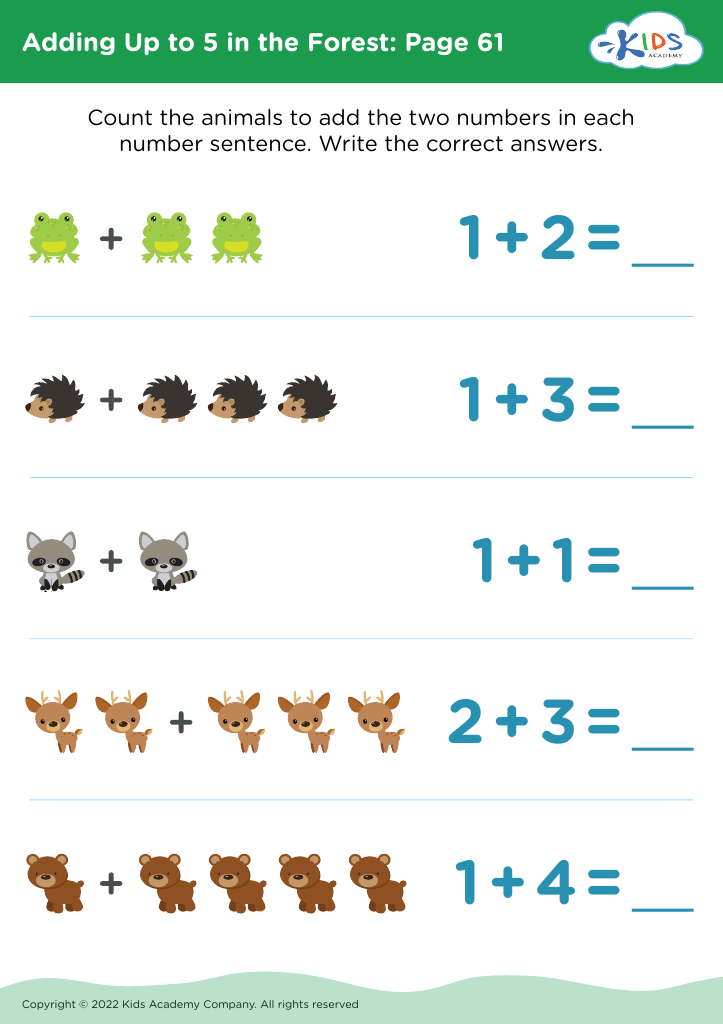
Adding Up to 5 in the Forest: Page 61
Worksheet
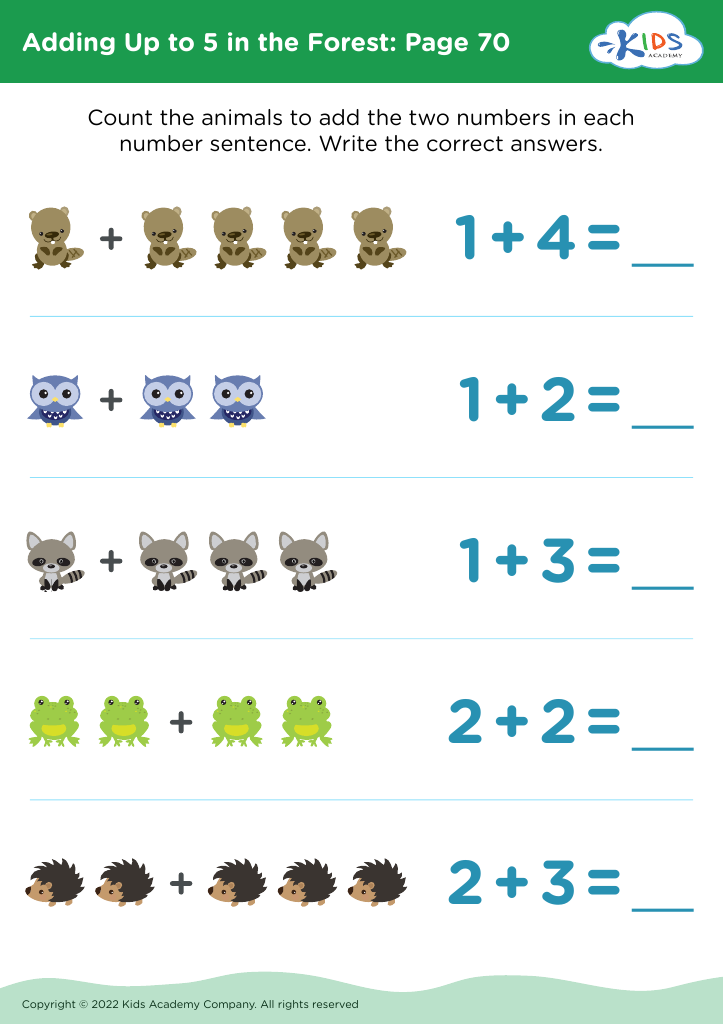
Adding Up to 5 in the Forest: Page 70
Worksheet
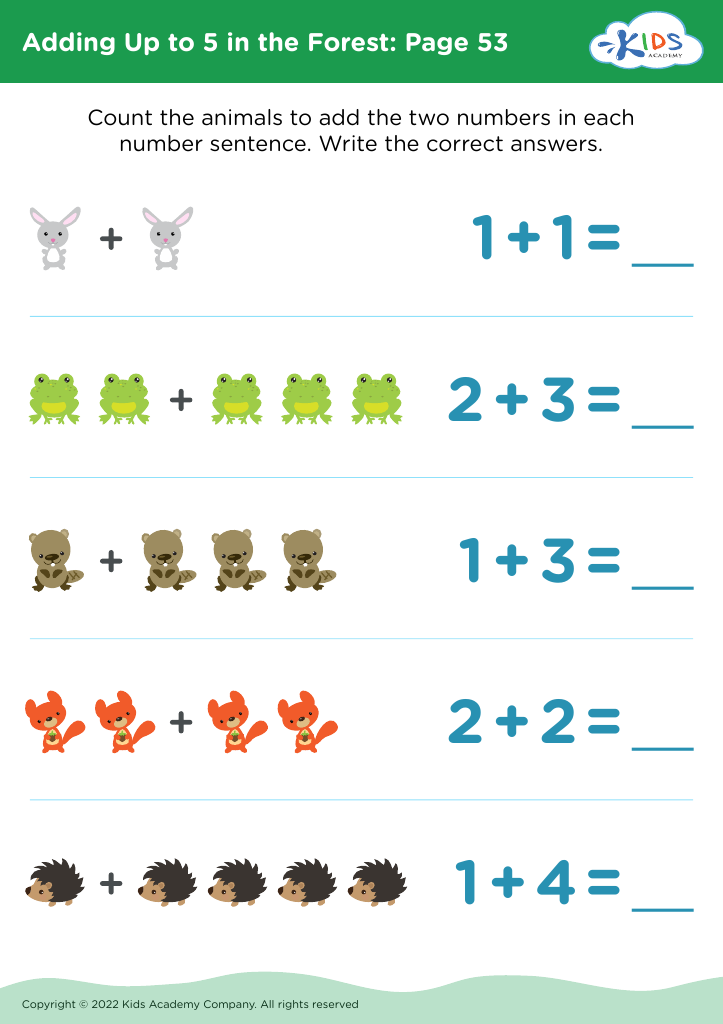
Adding Up to 5 in the Forest: Page 53
Worksheet
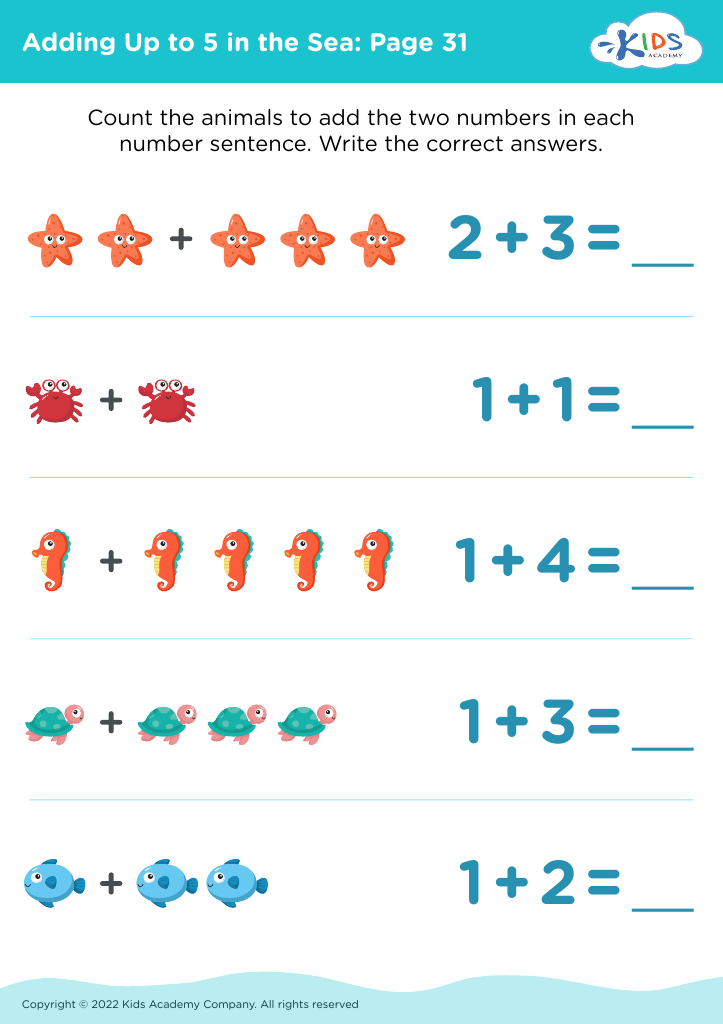
Adding Up to 5 in the Sea: Page 31
Worksheet
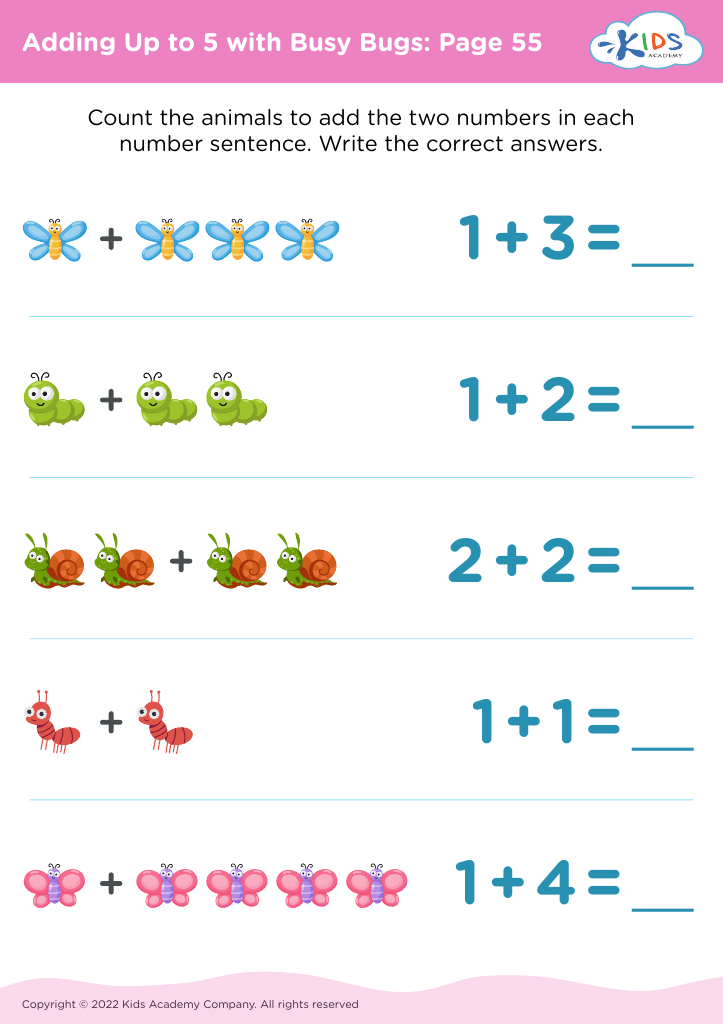
Adding Up to 5 with Busy Bugs: Page 55
Worksheet
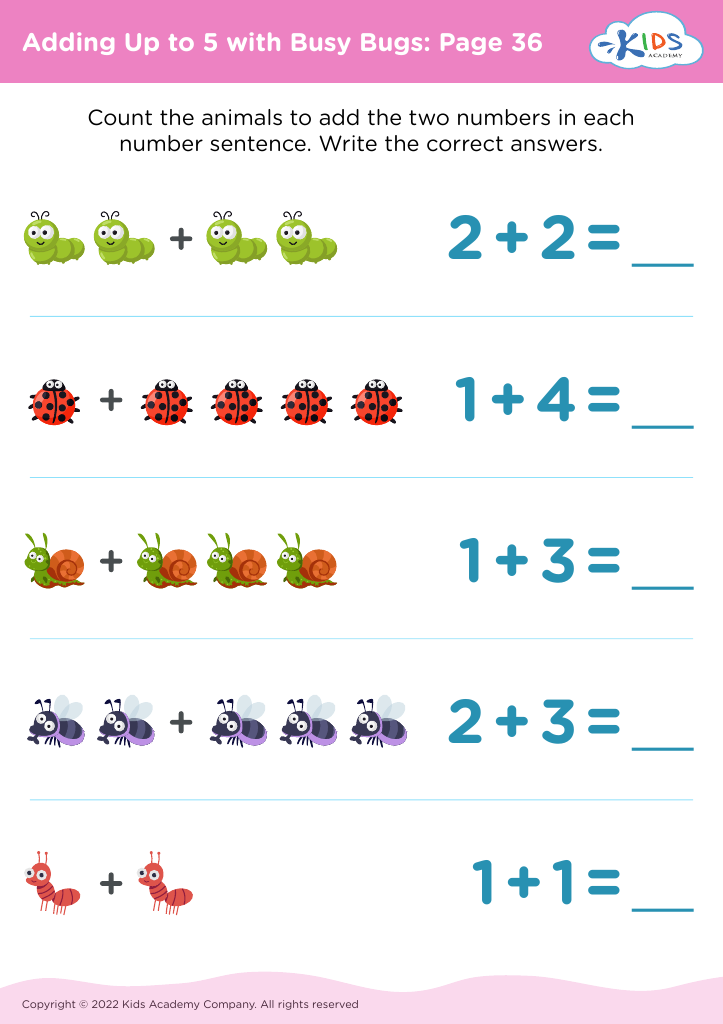
Adding Up to 5 with Busy Bugs: Page 36
Worksheet
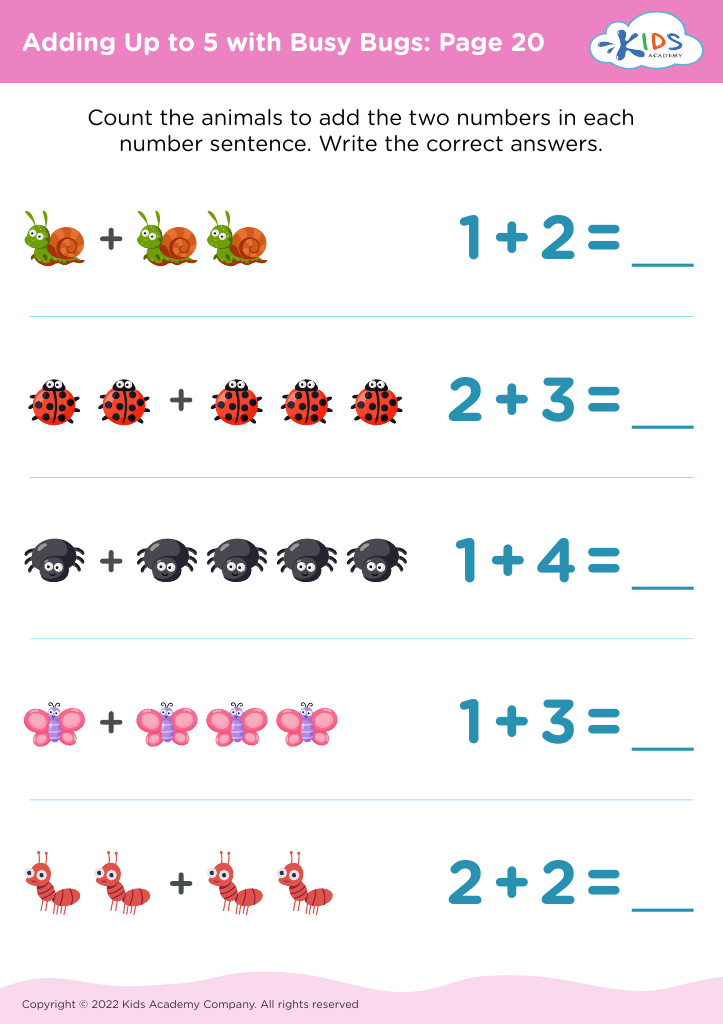
Adding Up to 5 with Busy Bugs: Page 20
Worksheet
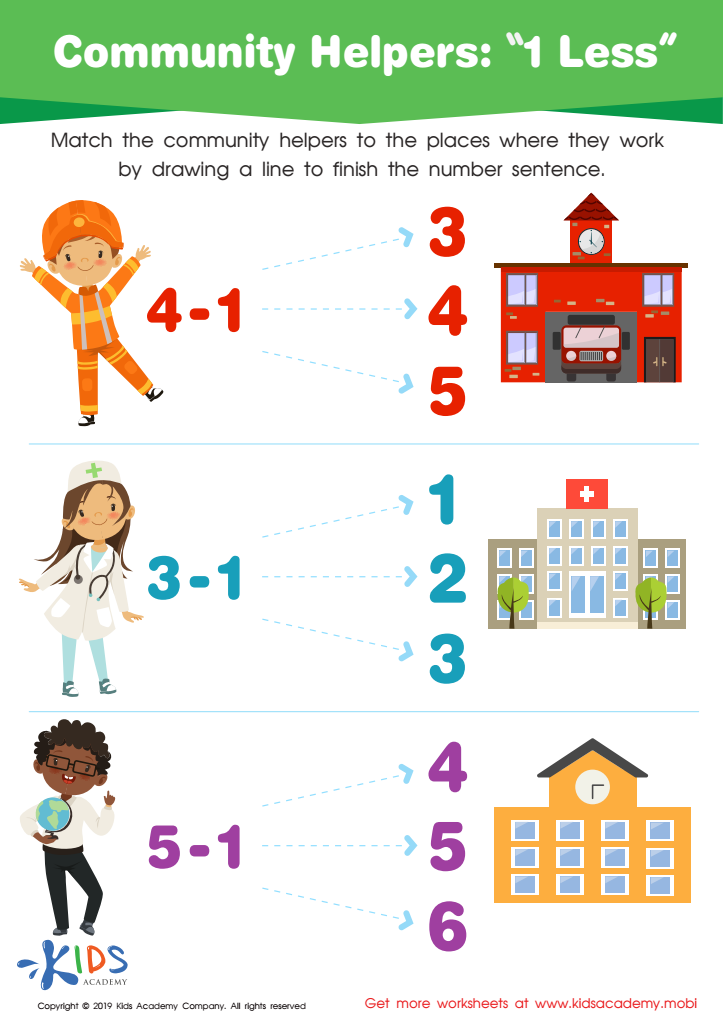
Community Helpers: 1 less Worksheet
Community Helpers: 1 less Worksheet

Look at this worksheet with your child and ask them to identify the different community helpers. Match them to the places where they work by drawing a line to finish the number sentence. This helps them identify the people that help keep the community organized and running smoothly. Examples of community helpers include doctors, police officers, firefighters, teachers, etc.
Community Helpers: 1 less Worksheet
Worksheet
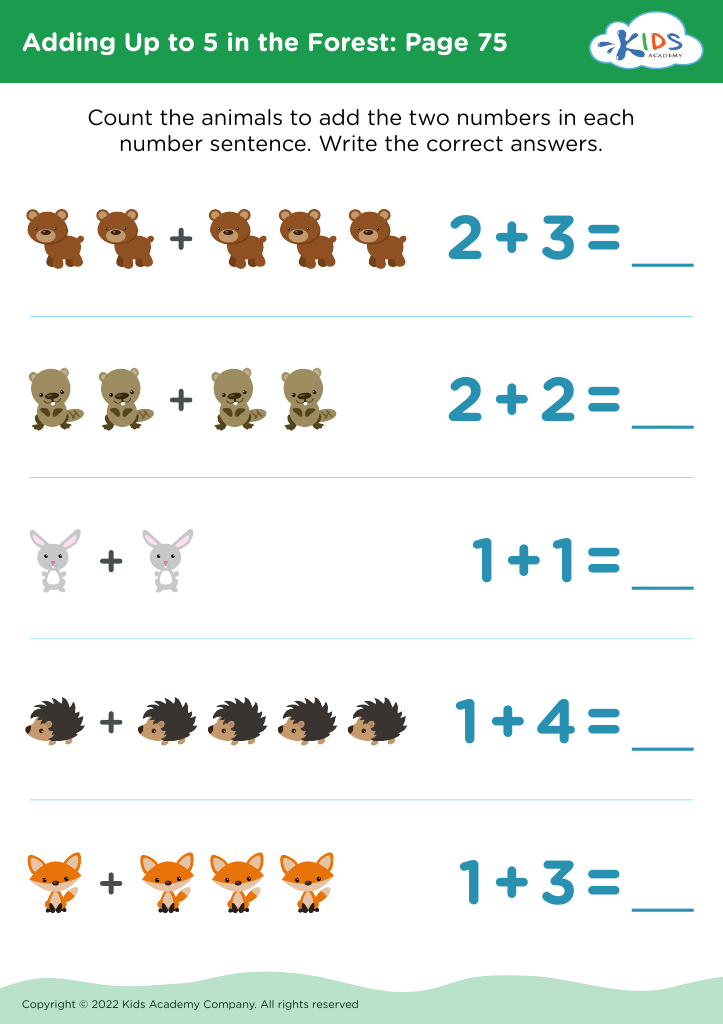
Adding Up to 5 in the Forest: Page 75
Worksheet
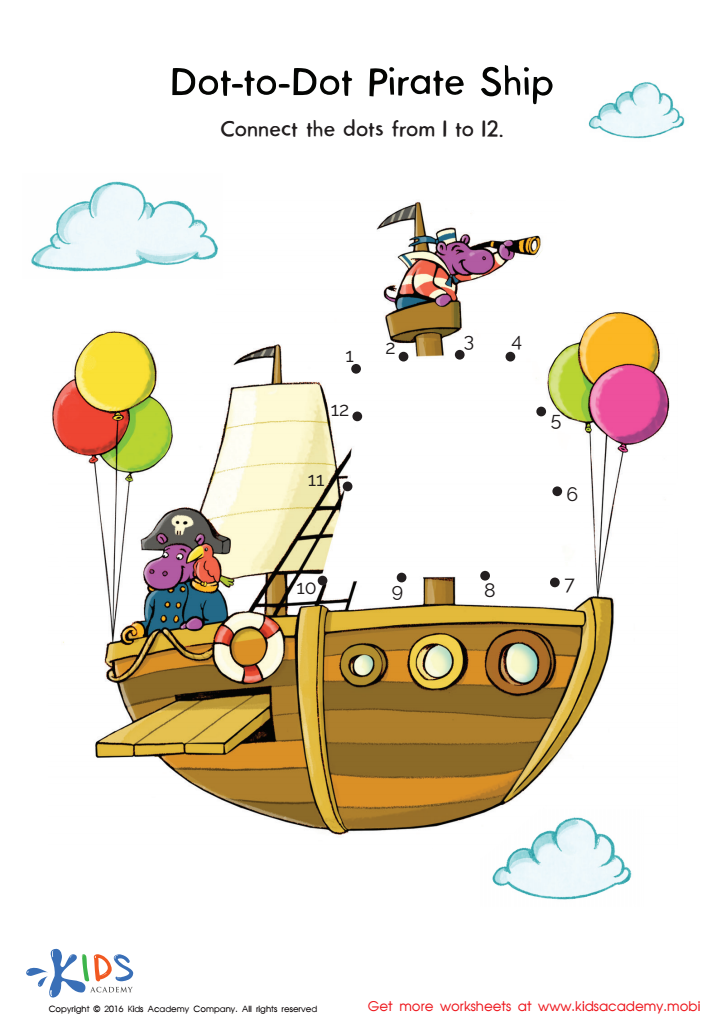
Dot to Dot: Ship
Dot to Dot: Ship

Pirate Ship Connect Dots Worksheet

Encourage your child's creativity with this pirate dot to dot! They'll connect the dots to craft a ship and then decorate the sail. This worksheet will help them practice numeracy, counting, and other reasoning skills. Once they understand how the dots come together to make a picture, they'll be motivated to move on to tougher challenges.
Pirate Ship Connect Dots Worksheet

Worksheet
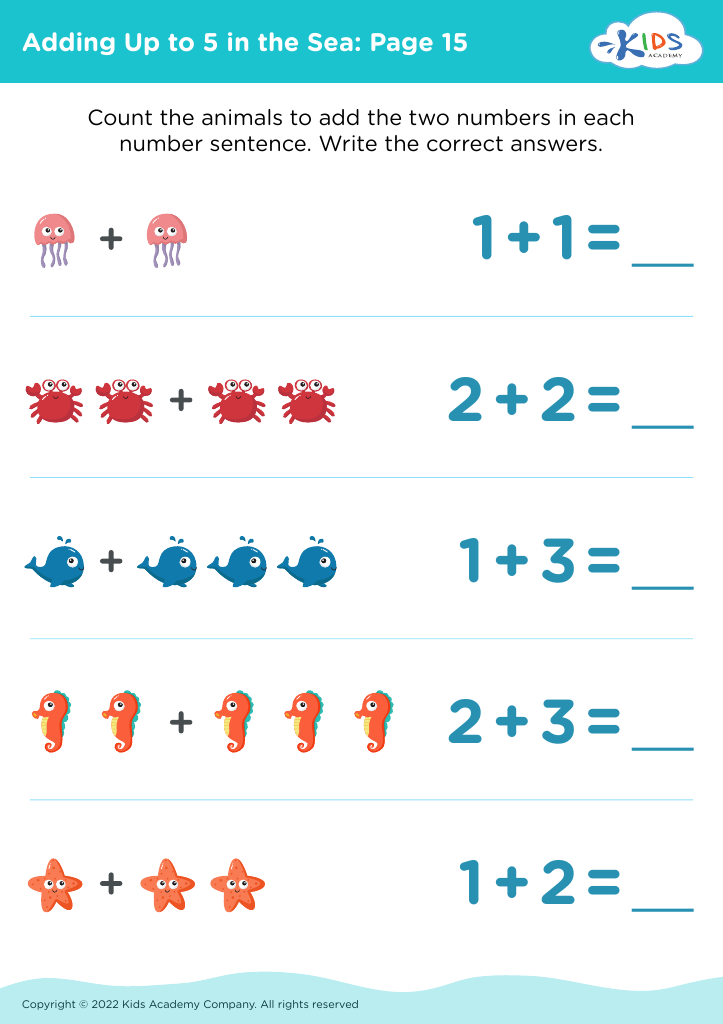
Adding Up to 5 in the Sea: Page 15
Worksheet


Cognitive development in early childhood, particularly in math, is crucial for subsequent academic success and life skills. For children aged 3-5, engaging in mathematical concepts enhances critical thinking and problem-solving abilities. Understanding basic math lays the groundwork for more complex skills, helping children to make sense of the world around them.

During these formative years, children begin to grasp concepts of number sense, patterns, shapes, and measurement. This early numeracy is not merely about rote memorization; it stimulates cognitive processes that foster logical reasoning and analytical thinking. For parents and teachers, nurturing these skills through interactive activities—like counting objects, sorting toys, or measuring ingredients in cooking—transforms learning into a fun and enjoyable experience.

Moreover, strong mathematical foundations promote confidence and independence in learning. Children who engage with math early on often develop a positive attitude towards the subject, leading to higher achievement in school. By emphasizing cognitive development in math at this age, parents and teachers can help create well-rounded individuals who excel academically and are prepared to tackle future challenges. investing time in this area now means setting children up for lifelong success in both education and everyday problem-solving situations.