Comparing object weights Math Worksheets for Ages 3-5
3 filtered results
-
From - To
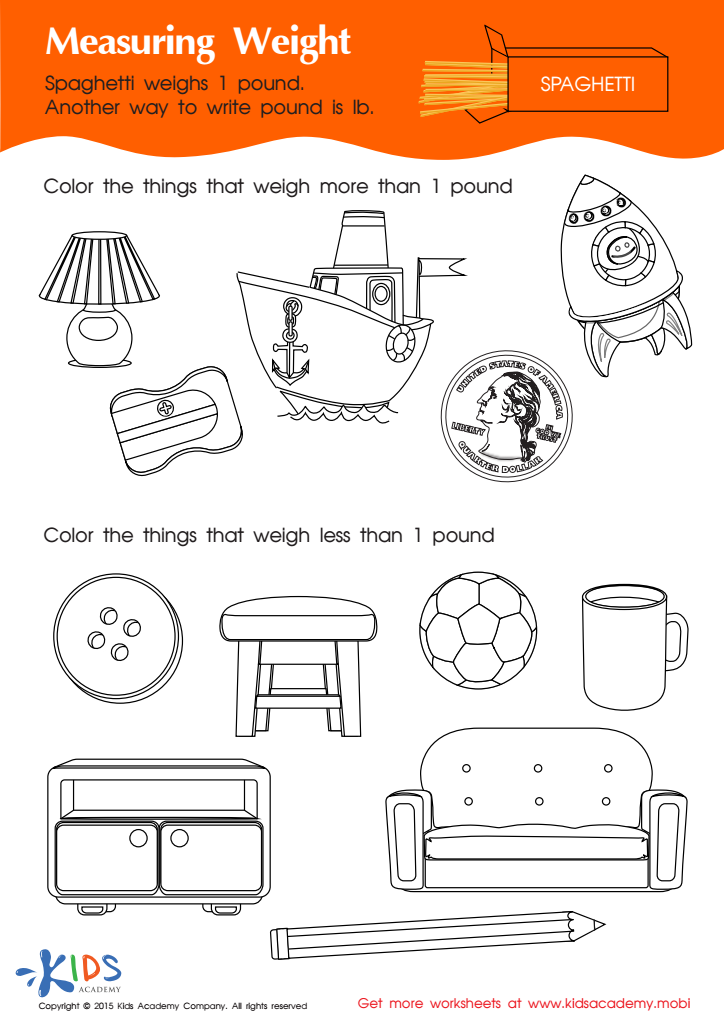
Discover engaging "Comparing Object Weights Math Worksheets" for children aged 3-5! These printable worksheets are designed to introduce young learners to the concept of weight through hands-on activities. Kids will explore the differences in weight between various objects, enhancing their observational skills and critical thinking. Our carefully crafted worksheets encourage children to compare, sort, and identify heavier and lighter items, making math fun and relatable. Perfect for preschool or home use, these worksheets foster early math skills while promoting cognitive development. Download now to ignite your child's curiosity about weight and measurement in an exciting, interactive way!
 Assign to My Students
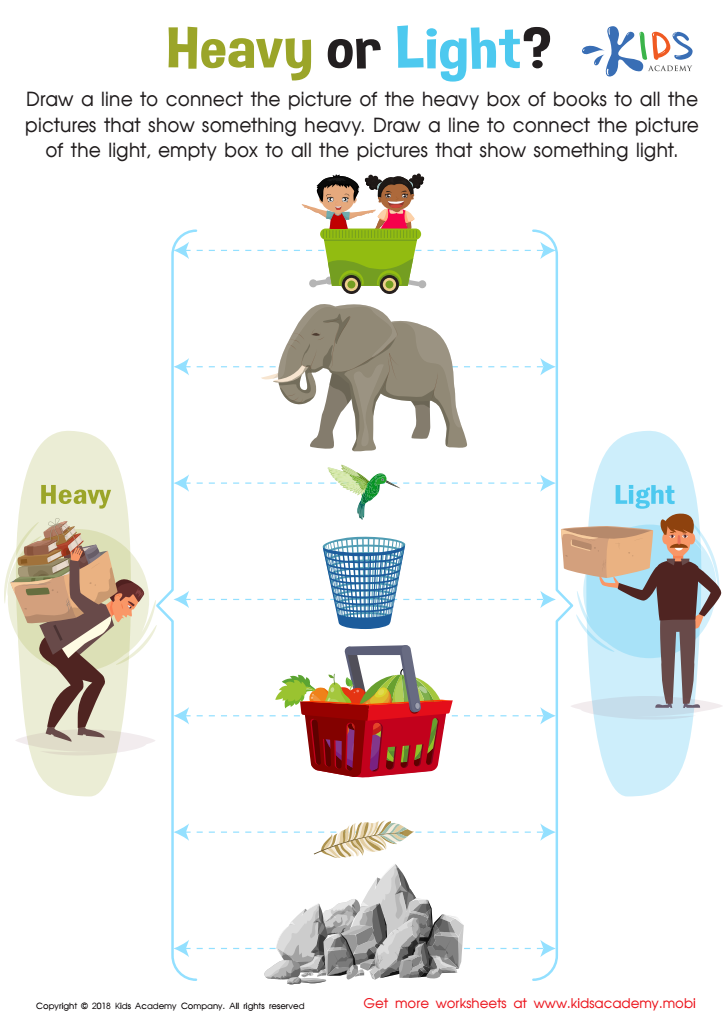
Heavy or Light? Worksheet
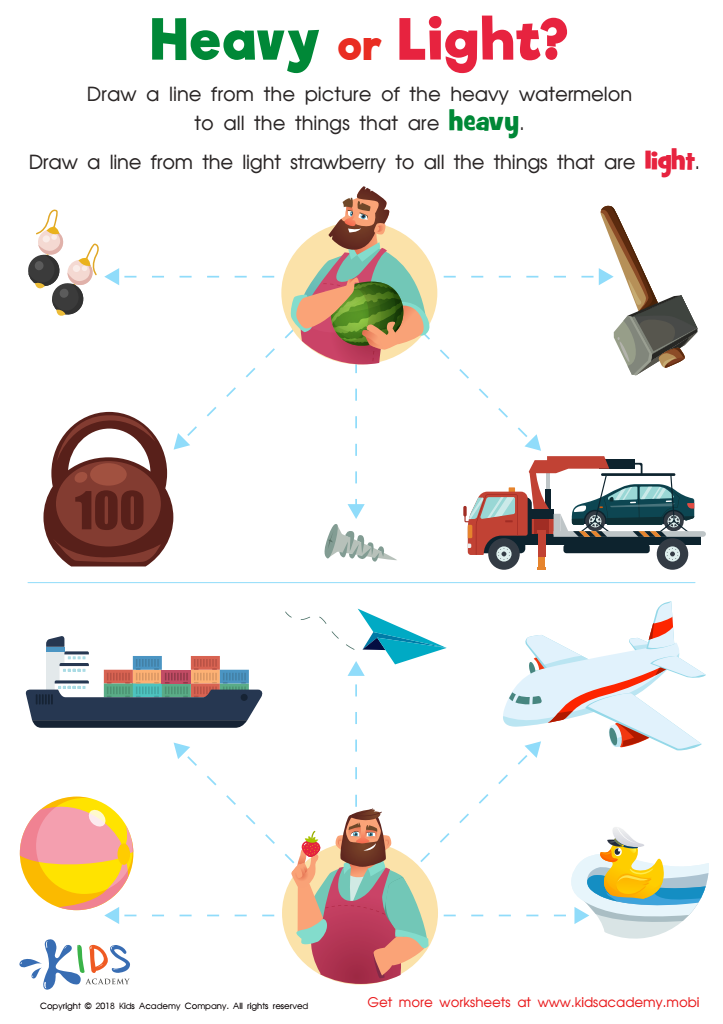
Heavy or Light? Worksheet







Comparing object weights is a fundamental mathematical concept that holds significant importance for parents and teachers of children aged 3-5. Engaging young learners in activities that involve weighing and comparing objects helps develop essential cognitive skills like critical thinking, problem-solving, and spatial awareness. By exploring weight differences, children begin to understand basic quantitative concepts that lay the groundwork for future mathematical learning.
At this stage, children are naturally curious, and incorporating playful investigation—such as using kitchen scales, balance scales, or hands-on activities with everyday objects—encourages exploration and inquiry. These early experiences not only make learning enjoyable but also enhance language skills, as children learn to describe and categorize what they observe ("heavier," "lighter," "equal") using suitable vocabulary.
Moreover, comparing weights introduces children to the concept of measurement, fostering an understanding of size, volume, and mass. It can support connections with real-life scenarios, such as cooking or shopping, making math relevant and practical. Ultimately, fostering an early interest in math through simple comparisons helps build a strong foundation for lifelong learning, promoting positive attitudes towards math and instilling confidence in their problem-solving abilities. This groundwork will play a pivotal role as they continue their educational journey.








