Understanding opposites Math Worksheets for Ages 3-5
4 filtered results
-
From - To
Explore our "Understanding Opposites" math worksheets designed for children aged 3-5! These engaging resources help young learners grasp the fundamental concept of opposites through fun and interactive activities. Each worksheet features colorful illustrations and simple exercises that encourage kids to identify contrasting concepts such as big and small, far and near, or hot and cold. Perfect for home or classroom use, these worksheets aim to enhance critical thinking and vocabulary skills. Foster a love for learning in your little ones as they master opposites in a playful and educational environment. Download our worksheets today for an enjoyable learning experience!
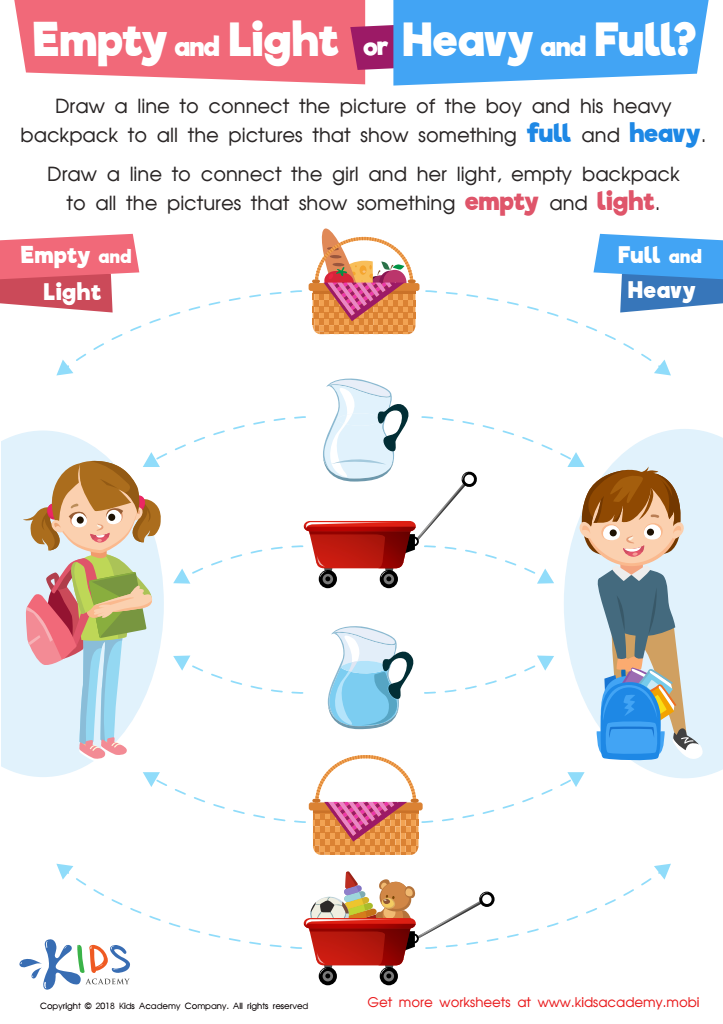
Empty and Light or Heavy and Full? Worksheet
 Assign to My Students
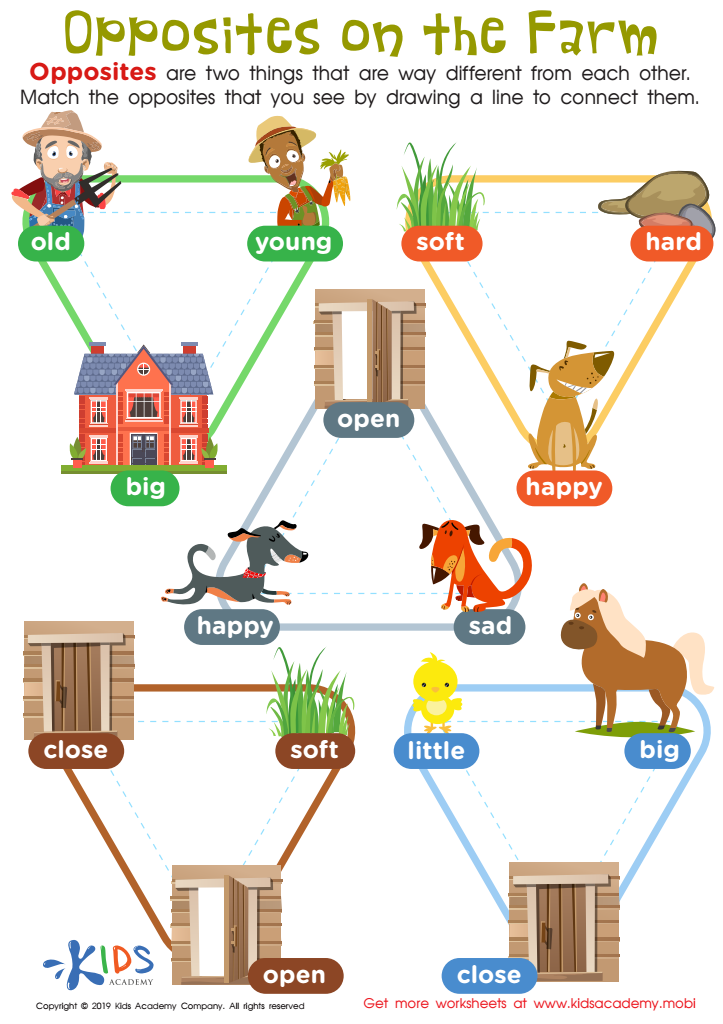
Opposites on the Farm Worksheet
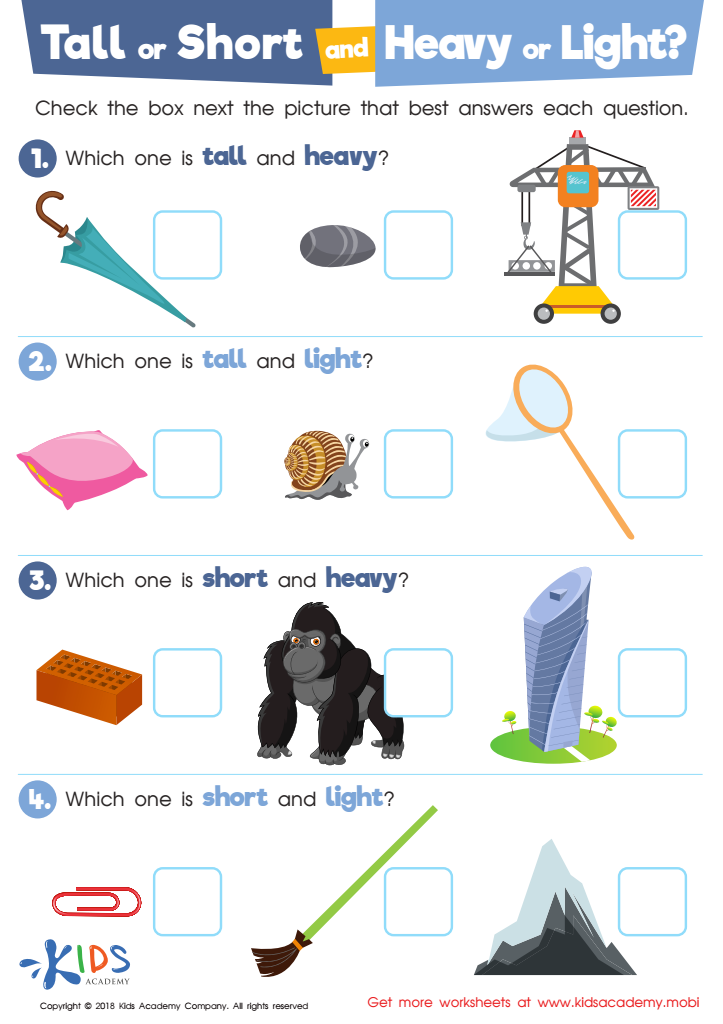
Tall or Short and Heavy or Light? Worksheet
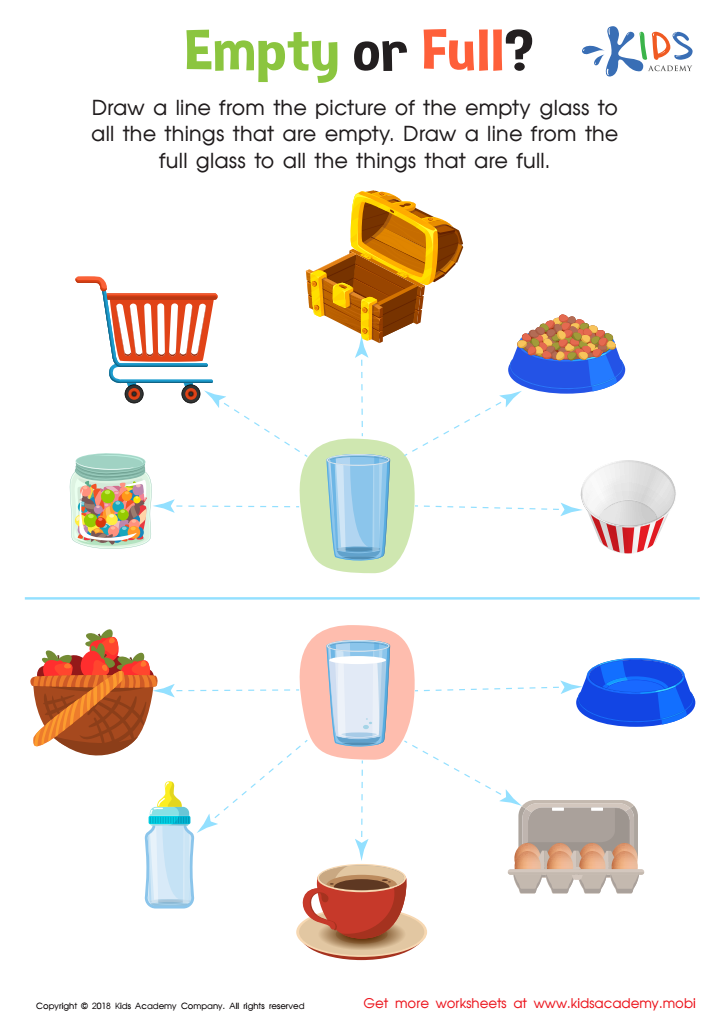
Empty or Full? Worksheet


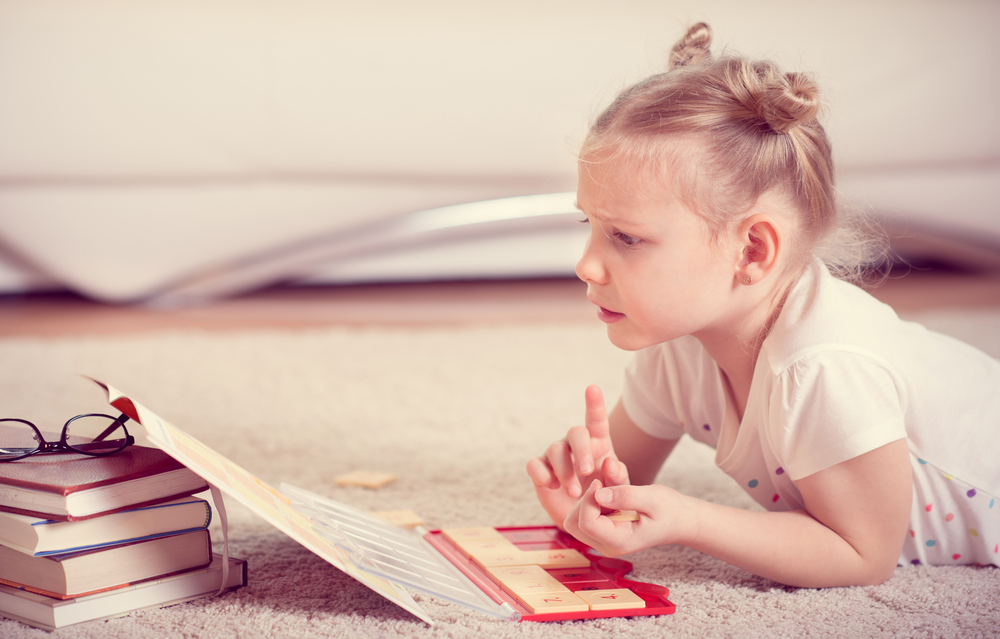




Understanding opposites is a fundamental concept in early mathematics that plays a crucial role in the cognitive development of children aged 3-5. Teaching opposites—such as big/small, above/below, or full/empty—helps children develop spatial awareness, comparison skills, and critical thinking. These skills are essential building blocks for later mathematical learning, including understanding addition, subtraction, and measurement.
When parents and teachers incorporate the concept of opposites into everyday activities or structured lessons, it encourages children to think analytically and fosters their curiosity. Engaging children in discussions about opposites can enrich their vocabulary and language skills, making them more adept at expressing their thoughts and feelings.
Moreover, understanding opposites nurtures children's ability to categorize and organize information, which enhances their problem-solving skills. It also promotes social-emotional learning as children learn to make distinctions between different experiences, fostering empathy and context in their interactions.
By focusing on mastering opposites, parents and teachers set the foundation for a child's future success in mathematics and beyond, creating a learning environment that is both playful and educational, ultimately encouraging a lifelong love for learning.








