Matching skills Matching Worksheets for Ages 3-5
6 filtered results
-
From - To
Boost your child’s matching skills with our engaging Matching Worksheets designed for ages 3-5! These fun and interactive worksheets are perfect for young learners, helping them develop essential cognitive skills through exciting activities. Each printable worksheet features vibrant images and playful themes that capture children's attention, promoting focus and learning readiness. As your little ones connect identical items and recognize patterns, they enhance their memory, attention, and early math skills. Ideal for both at-home practice and classroom use, our Matching Worksheets encourage critical thinking while ensuring plenty of fun. Start your child's learning journey today and explore the world of matching!
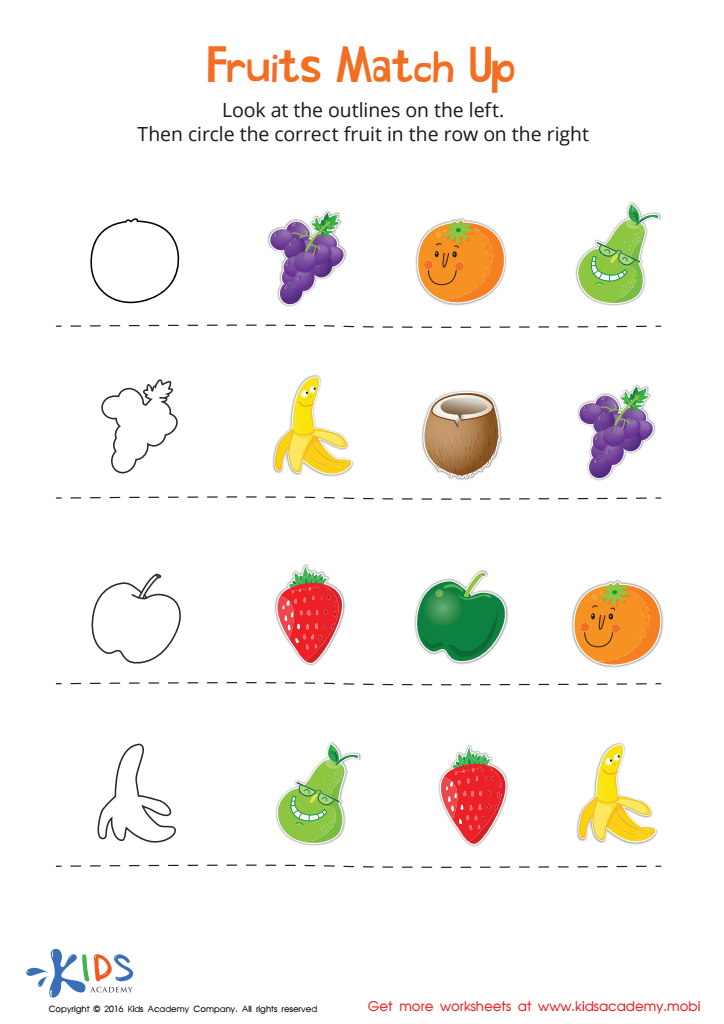
Fruits Match Up Worksheet
 Assign to My Students
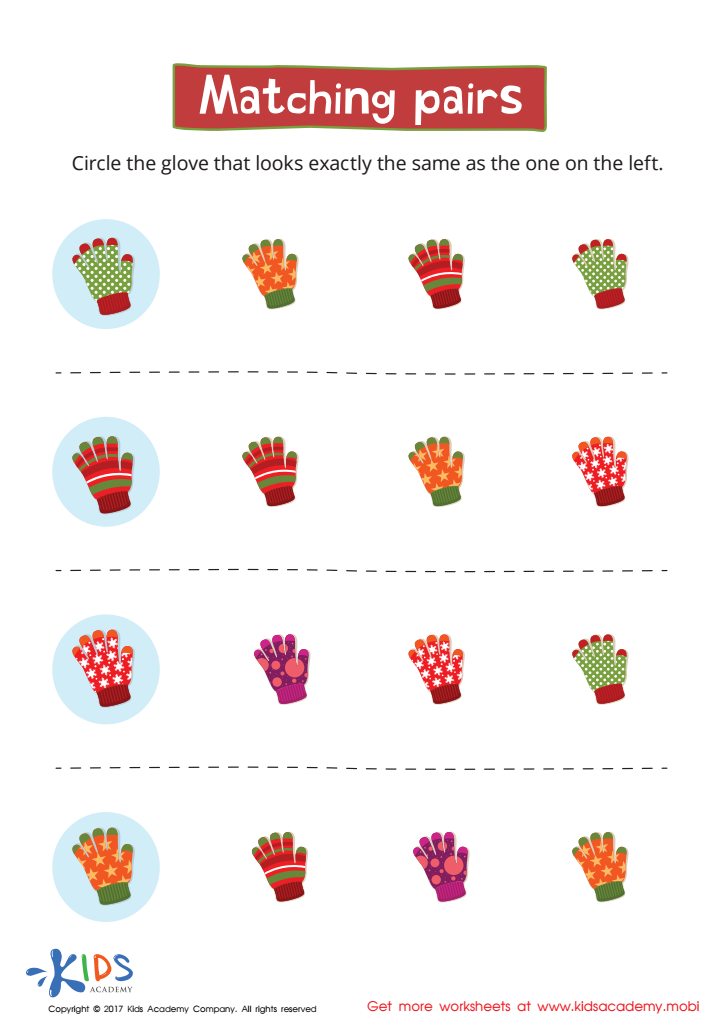
Matching: Matching Pairs Worksheet
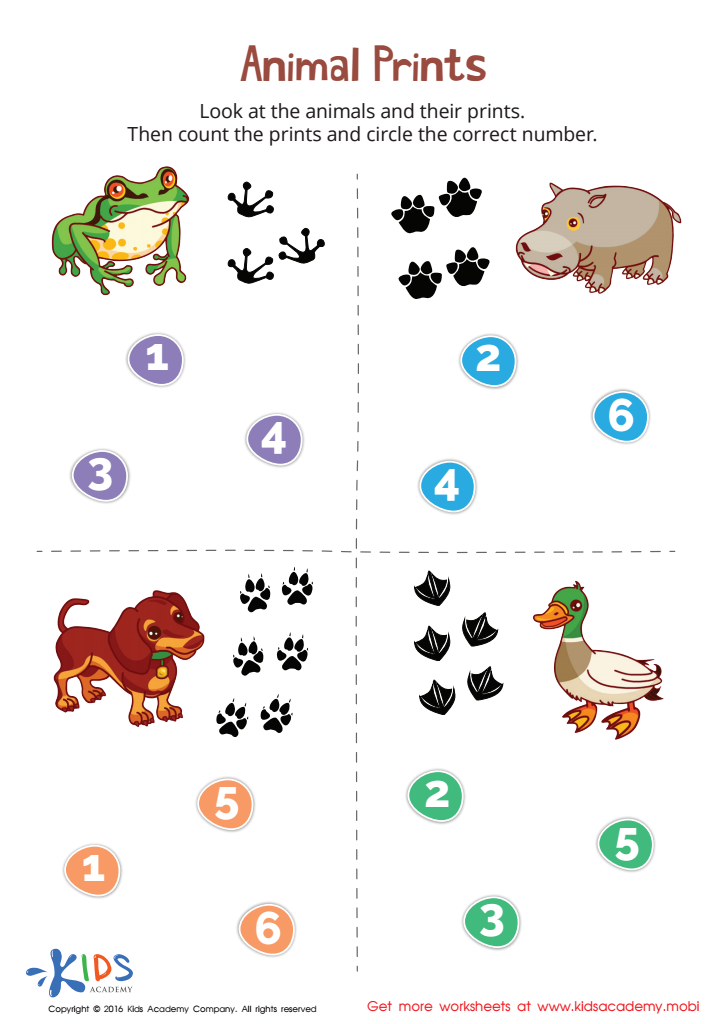
Animal Prints Match-Up Worksheet
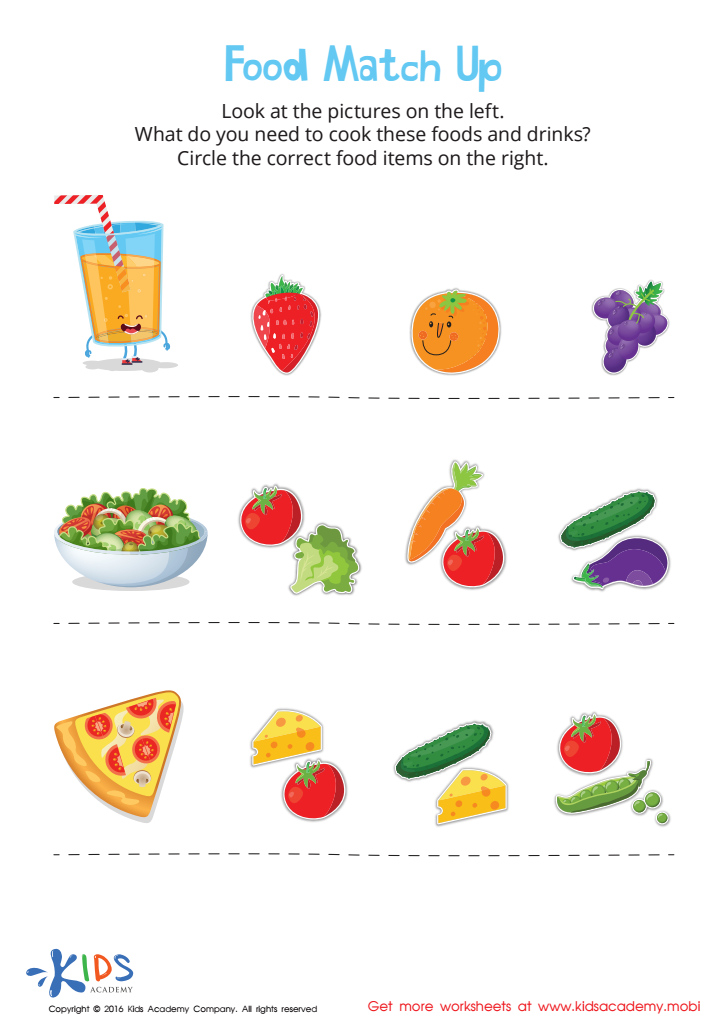
Food Match Up Worksheet
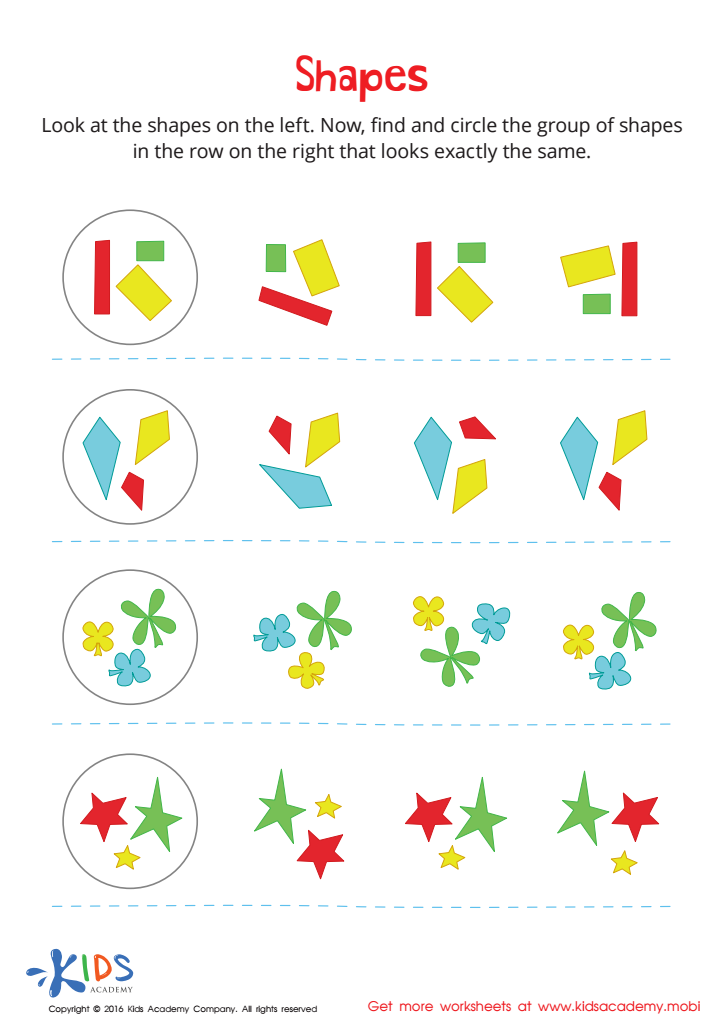
Shapes Worksheet





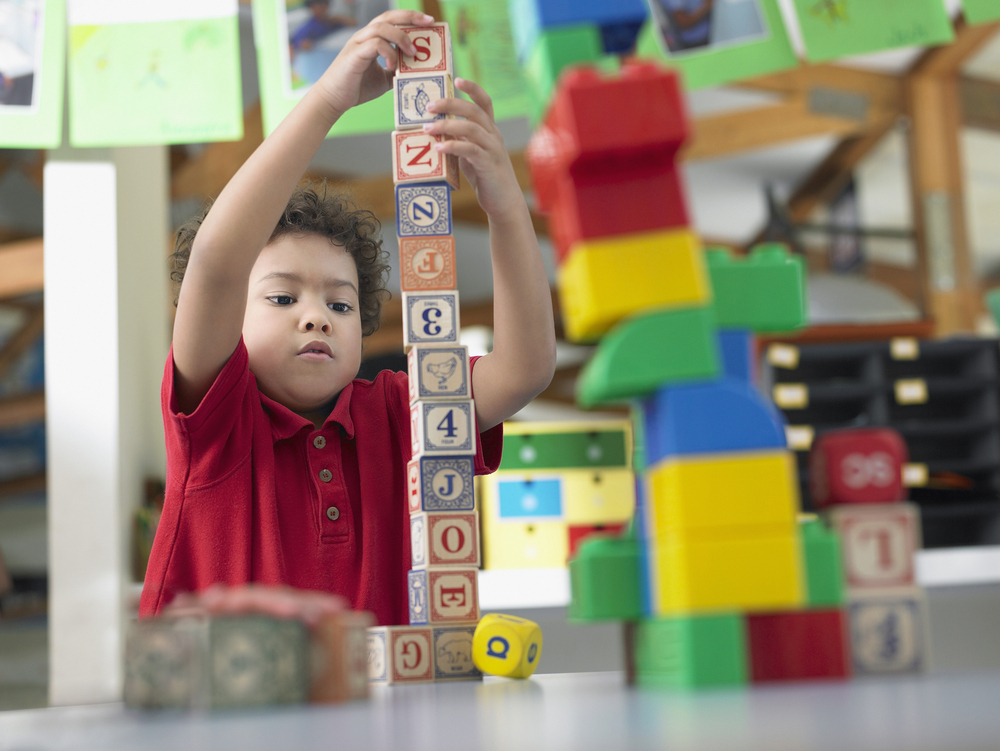


Matching skills play a crucial role in the early development of children aged 3-5, making them essential for parents and teachers to prioritize. At this age, children are rapidly developing cognitive abilities, and matching activities promote critical thinking, attention to detail, and problem-solving skills. When children learn to match items, they enhance their ability to recognize similarities and differences, which forms the foundation for more advanced concepts such as categorization and classification.
Moreover, matching activities are often linked to language development. As children engage in these tasks, they expand their vocabulary by learning words associated with colors, shapes, and objects. This linguistic enrichment is vital for their overall communication skills and social interactions.
Matching activities also foster fine motor skills as children manipulate objects, improving hand-eye coordination and dexterity. This physical engagement supports their readiness for writing and other hands-on tasks in later years.
Finally, matching games often encourage cooperative play, providing opportunities for children to interact with peers, share resources, and work collaboratively. This social aspect not only enhances their emotional intelligence but also builds critical interpersonal skills essential for their development. For these reasons, parents and teachers should prioritize matching skills as an integral part of early childhood education.








