Practical math application Measurement Worksheets for Ages 3-5
3 filtered results
-
From - To
Unlock the world of measurement for your little learners with our Practical Math Application Measurement Worksheets, designed specifically for ages 3-5! These engaging and interactive worksheets introduce essential measurement concepts through fun activities tailored to young minds. Children will explore lengths, weights, and volumes while developing fine motor skills and boosting cognitive growth. Our vibrant worksheets foster curiosity and a love for math, making learning enjoyable and effective. Perfect for hands-on experiences at home or in the classroom, these resources encourage meaningful connections between math and everyday life. Start your child's journey into the exciting world of measurements today!
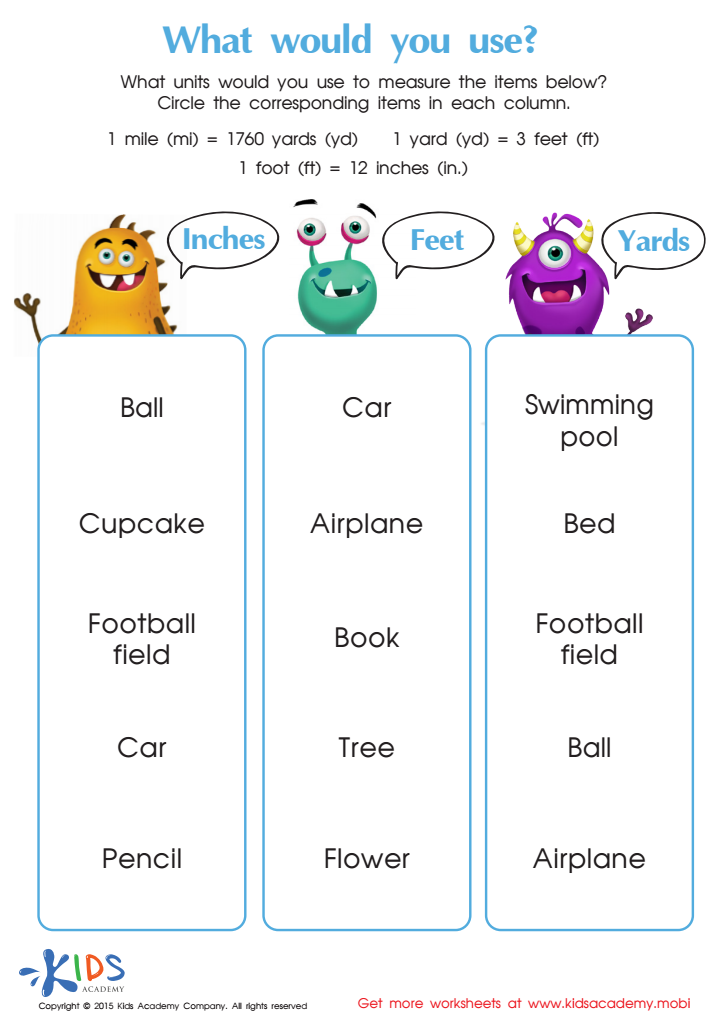
Learning about measuring objects in inches, feet and yards Worksheet
 Assign to My Students
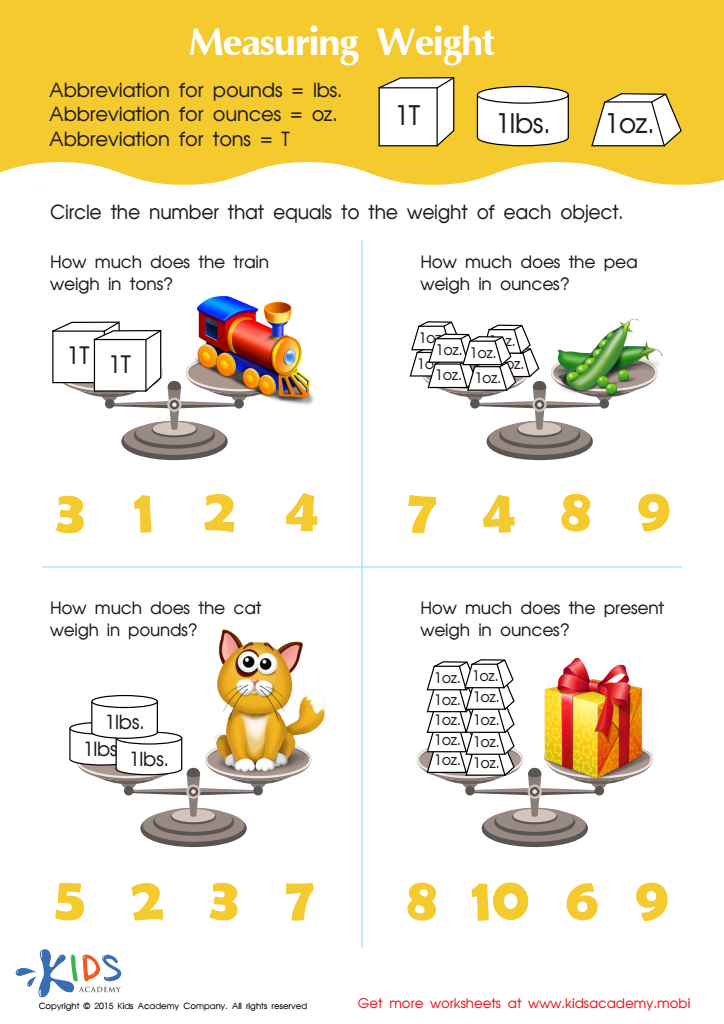
Measuring Weight in Ounces, Pounds and Tons Worksheet
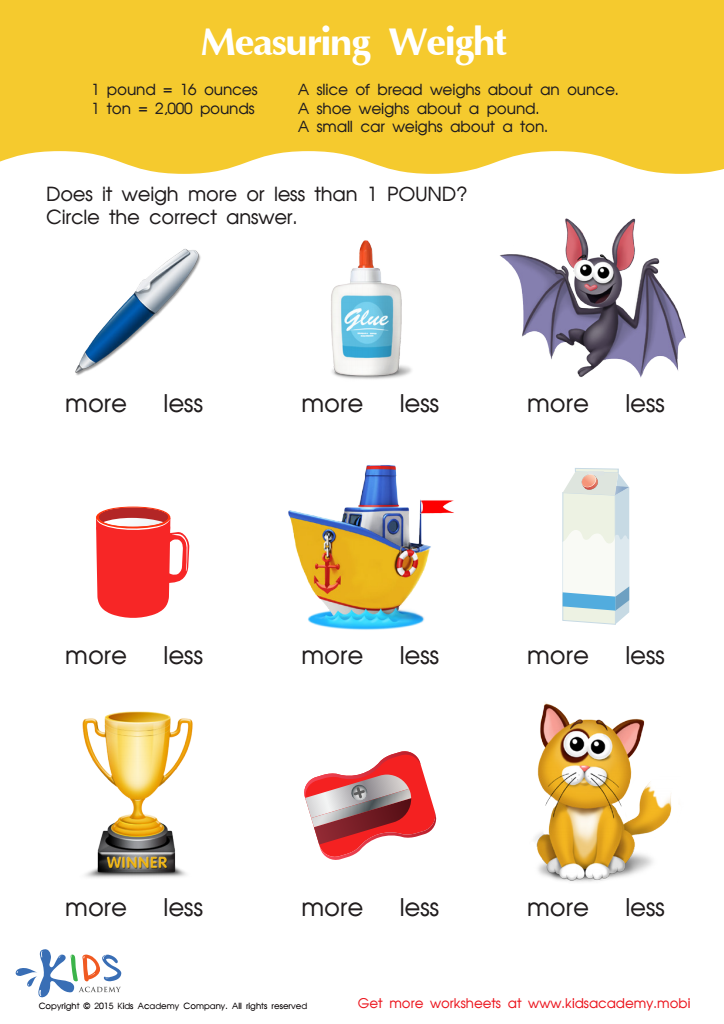
Measuring weight in pounds Worksheet








Parents and teachers should prioritize the teaching of practical math applications, particularly measurement, for children aged 3-5 as it lays a critical foundation for early cognitive development. At this age, children are naturally curious, eager to explore the world around them, and adept at hands-on learning experiences. Introducing measurement helps develop essential skills such as comparison, numeracy, and problem-solving.
Practical applications of measurement, such as comparing heights of play objects, measuring ingredients for simple recipes, or creating art projects with length and size considerations, engage children in experiential learning. These activities not only enhance their understanding of mathematical concepts but also stimulate language development as they learn to describe and discuss size, weight, and volume.
Moreover, measurement fosters critical thinking and promotes an understanding of everyday contexts where math is applicable. This nurtures a positive attitude toward mathematics, helping to alleviate anxiety around the subject later in life. When parents and teachers engage children in measurement activities, they are empowered to see themselves as mathematicians from an early age, building confidence that will serve them well in formal schooling and beyond. Ultimately, teaching measurement in these formative years makes math relevant and enjoyable, setting the stage for lifelong learning.








