
Counting practice Numbers 11–20 Worksheets for Ages 3-5
4 filtered results
Difficulty Level
Grade
Age
-
From - To
Subject
Activity
Standards
Enhance your child's early math skills with our Counting Practice Worksheets for Numbers 11–20, designed specifically for children ages 3-5! These engaging, interactive worksheets promote foundational counting abilities while helping little learners recognize and write numbers in this crucial range. Featuring colorful visuals and fun activities, these resources turn counting practice into an enjoyable experience. Perfect for homeschooling or classroom settings, our worksheets support skill development through repetition and creativity. Download them easily and watch your young mathematicians flourish as they explore counting from 11 to 20 with confidence and excitement! Start building a strong math foundation today!
Favorites
With answer key
Interactive
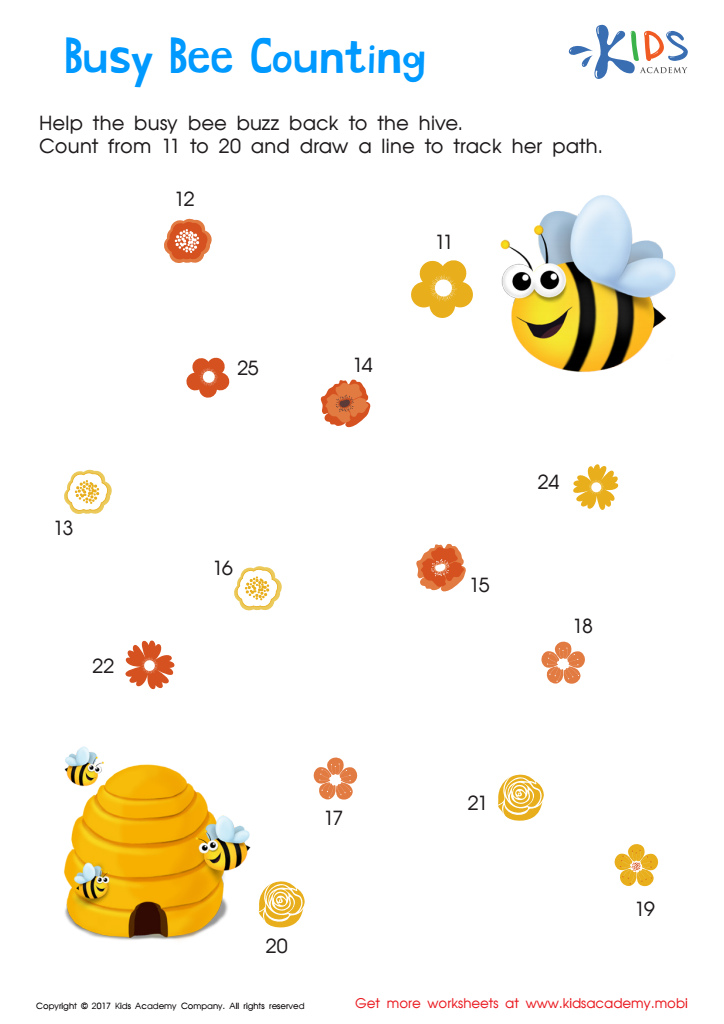
Ordering 11–20: Busy Bee Counting Worksheet
Help your child master counting from 11 to 20 with our connect the dot counting worksheet. Kids will have fun counting, drawing and problem-solving with this vibrant worksheet. With clear directions, adorable pictures and a sense of purpose, your child will develop crucial numeracy skills without even knowing it!
 Assign to My Students
Ordering 11–20: Busy Bee Counting Worksheet
Worksheet
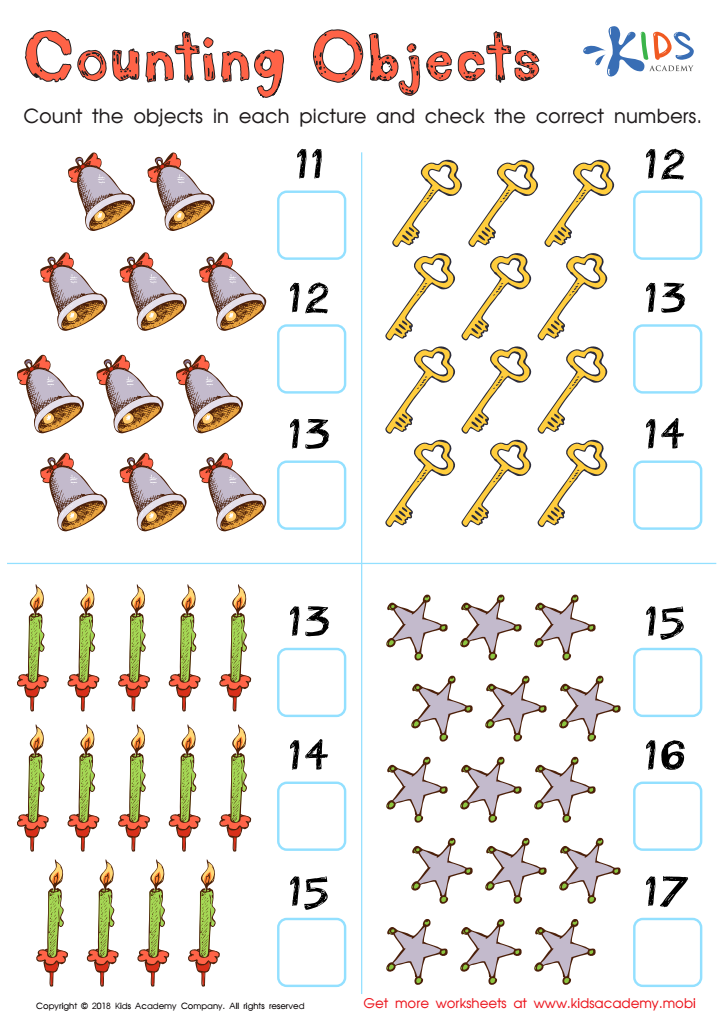
Counting Numbers Worksheet For Kindergarten
This worksheet is a great way to get your child practicing foundational math skills. With bright pictures to count, counting numbers just got a lot more fun! Get them ready for future math success and help them hone their early math skills.
Counting Numbers Worksheet For Kindergarten
Worksheet
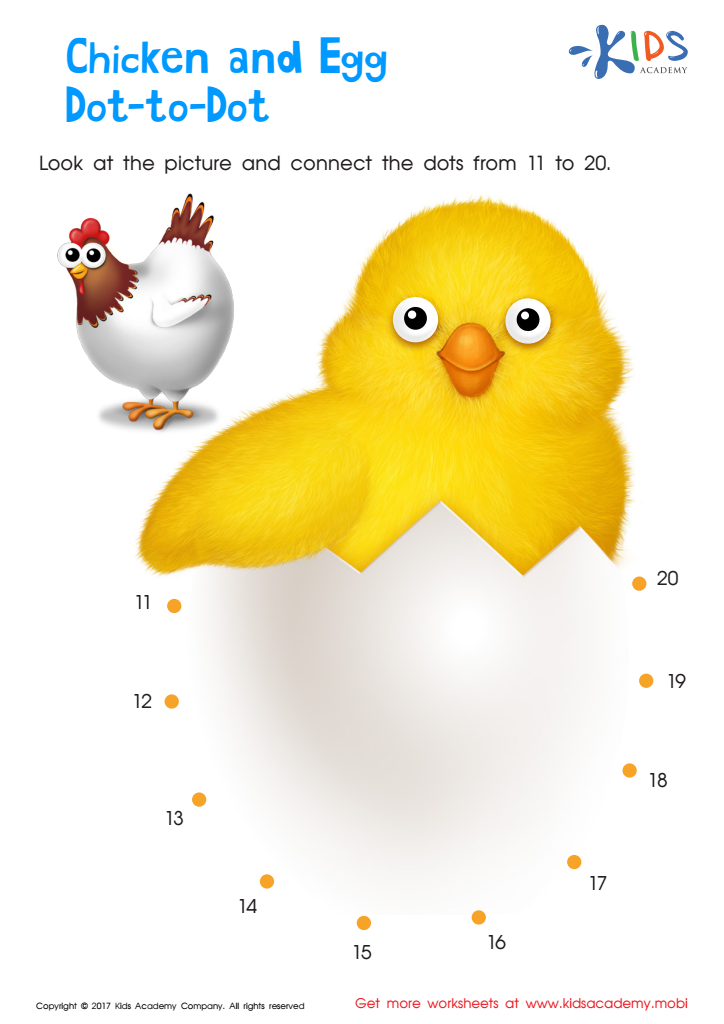
Ordering 11–20: Chicken & Egg Dot–to–dot Worksheet
Help your child hatch the chick and practice their counting skills with this dot to dot worksheet – the chicken came first! Connect the dots 11-20 to have fun and learn at the same time. Experience meaningful practice and gain confidence while drawing great pictures.
Ordering 11–20: Chicken & Egg Dot–to–dot Worksheet
Worksheet
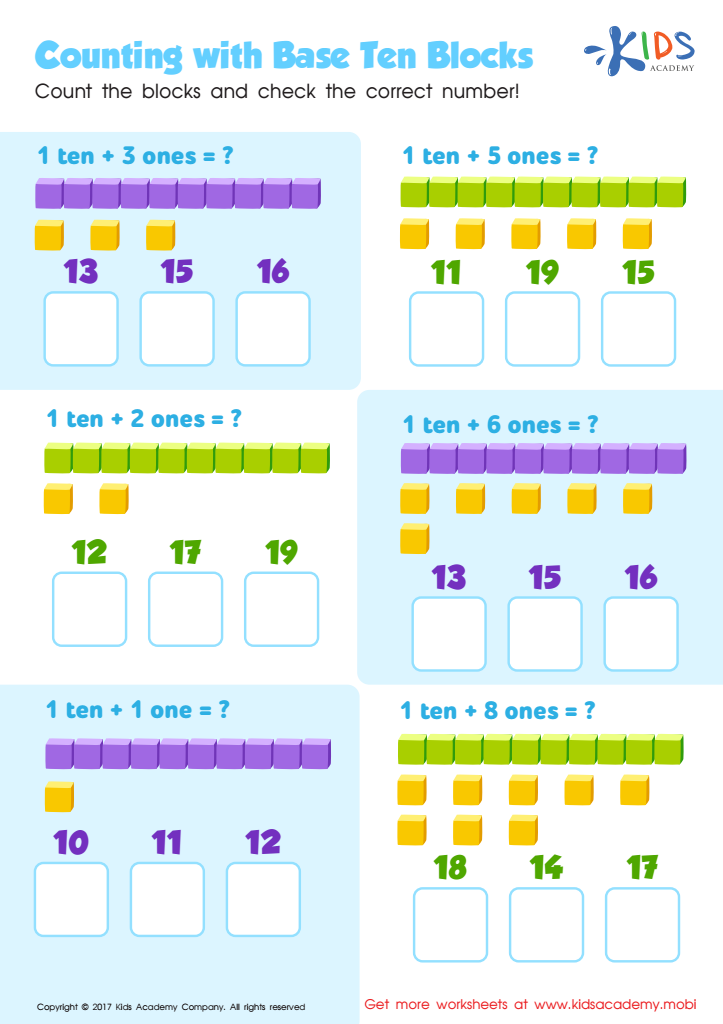
Counting with Base Ten Blocks Worksheet
Math has different levels and gets harder as your child progresses. Don't be surprised when they bring home an algebra worksheet! In this one, they will add 1 tens to varying numbers and fill in the total. This builds their understanding of base tens.
Counting with Base Ten Blocks Worksheet
Worksheet
Join Kids Academy for Free
Who is primarily going to use this learning content?



Counting practice for numbers 11-20 is crucial for children aged 3-5 years, forming a foundational skill that supports future mathematical understanding. During this early developmental stage, children begin to grasp number sense, which is essential for everyday problem-solving and cognitive growth. Practicing these numbers helps enhance their numerical recognition and sequencing abilities, fostering a stronger confidence in math concepts.
For parents and teachers, encouraging this practice enriches children’s communication and social skills, as they often engage in counting games with peers and adults. Furthermore, counting activities provide opportunities for collaborative learning, promoting teamwork and cooperation.
At this age, children are naturally curious and eager to explore their environment. Incorporating counting into playful contexts—like counting toys, snacks, or steps—makes learning enjoyable and significant. Consistent practice enables familiarity with higher numbers and prepares children for more complex math operations in later grades.
Additionally, foundational skills in counting are linked to broader educational outcomes, influencing children's performance in school. By prioritizing counting practice for this age group, parents and teachers can nurture a lifelong positive attitude towards math, equipping children with the necessary skills to thrive academically and socially.








