Problem-Solving Skills Subtraction Worksheets for Ages 3-5
11 filtered results
-
From - To
Introducing our engaging Problem-Solving Skills Subtraction Worksheets designed for children aged 3-5! These interactive worksheets are perfect for young learners to develop foundational subtraction abilities while enhancing their critical thinking skills. With colorful illustrations and age-appropriate problem scenarios, children will practice simple subtraction concepts in a fun and enjoyable way. Each worksheet not only reinforces math knowledge but also encourages problem-solving techniques, making it easier for kids to grasp mathematical principles. Ideal for home or classroom use, our worksheets foster early math skills, empowering children to tackle problems confidently and instilling a love for learning in their formative years. Start exploring today!
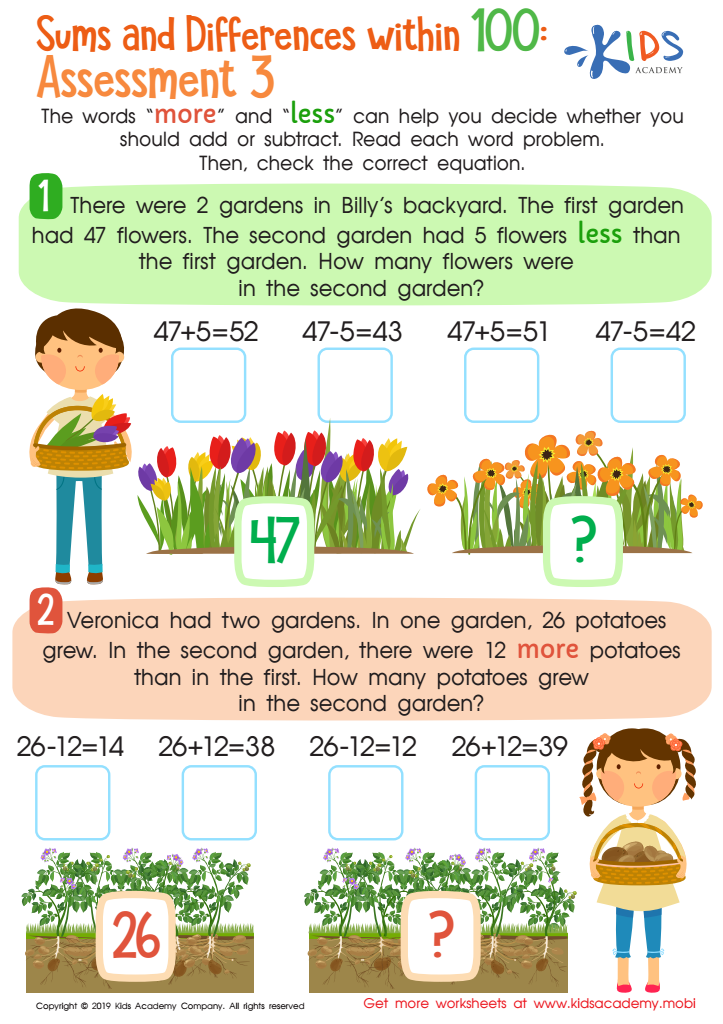
Sums and Differences Within 1 - Assessment 1 Worksheet
 Assign to My Students
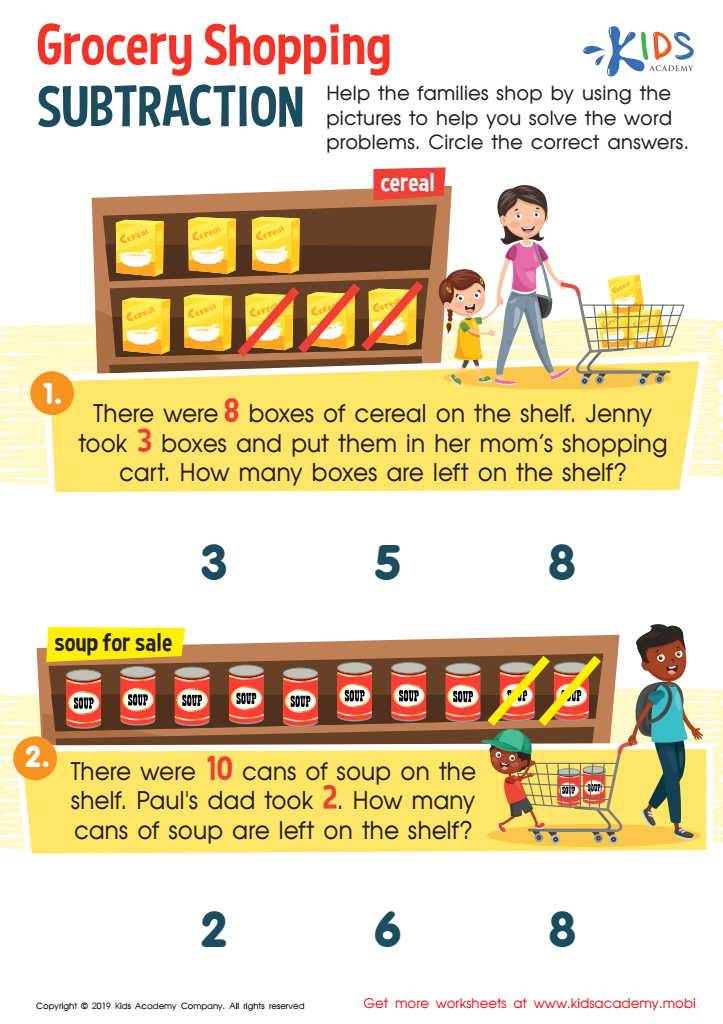
Grocery Shopping Subtraction Worksheet
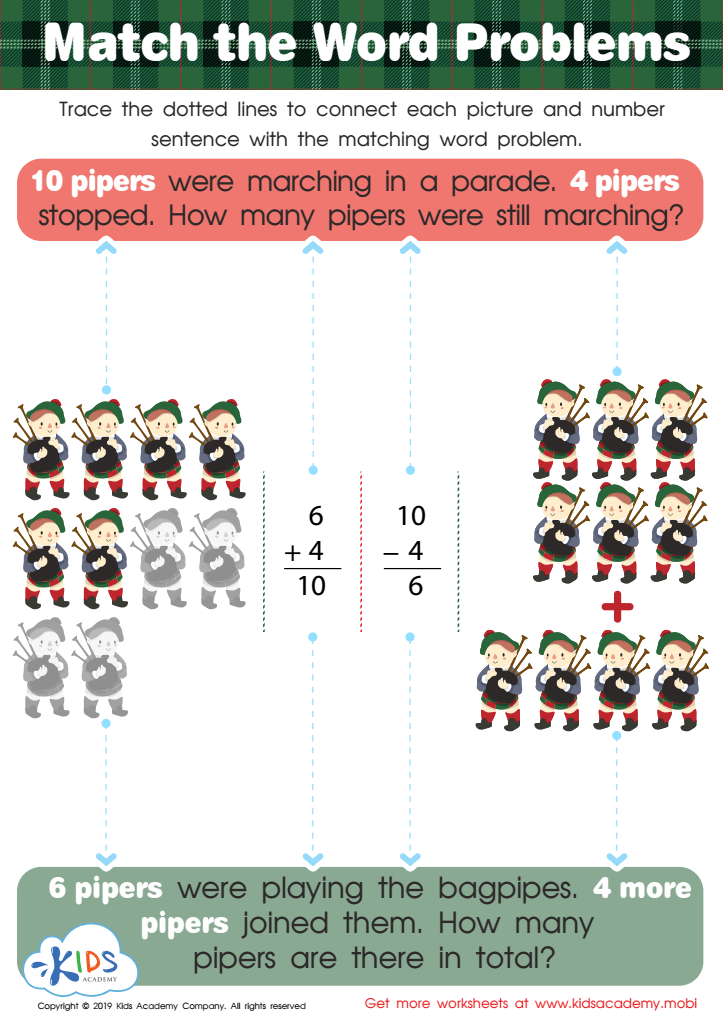
Match the Word Problems Worksheet
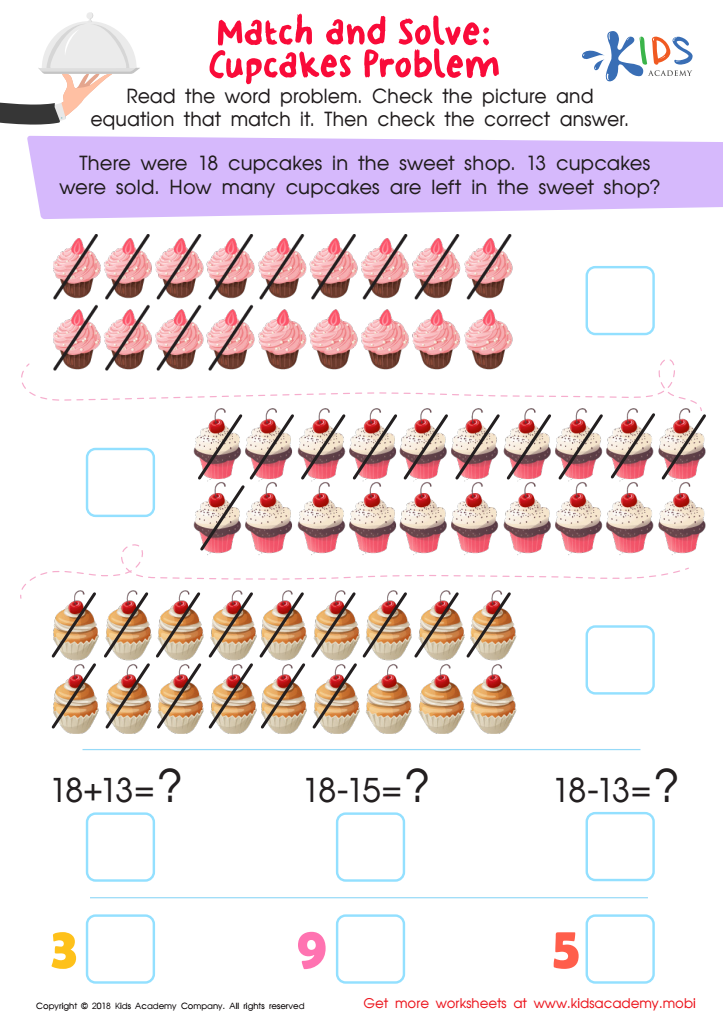
Match and Solve: Cupcakes Problem Worksheet
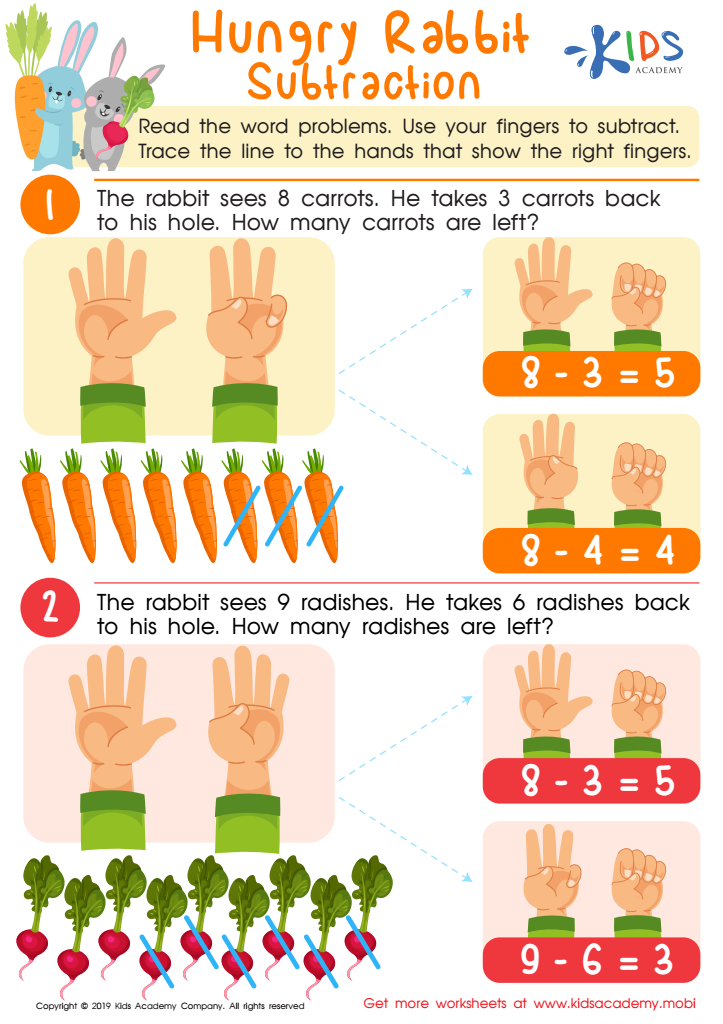
Hungry Rabbit Subtraction Worksheet
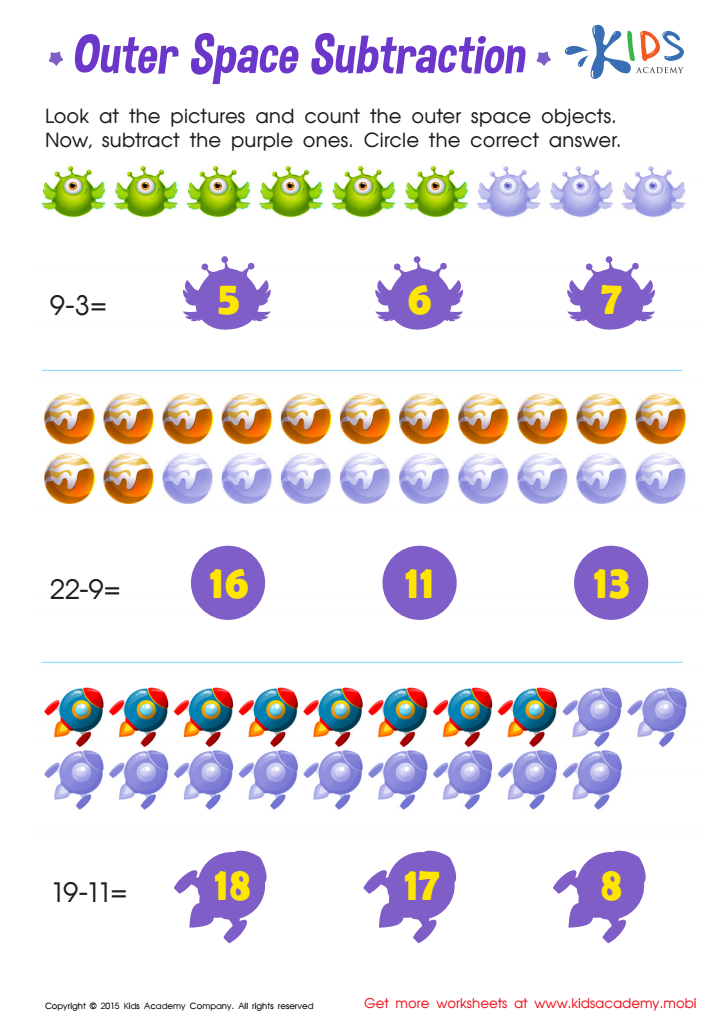
Outer Space Substraction Worksheet
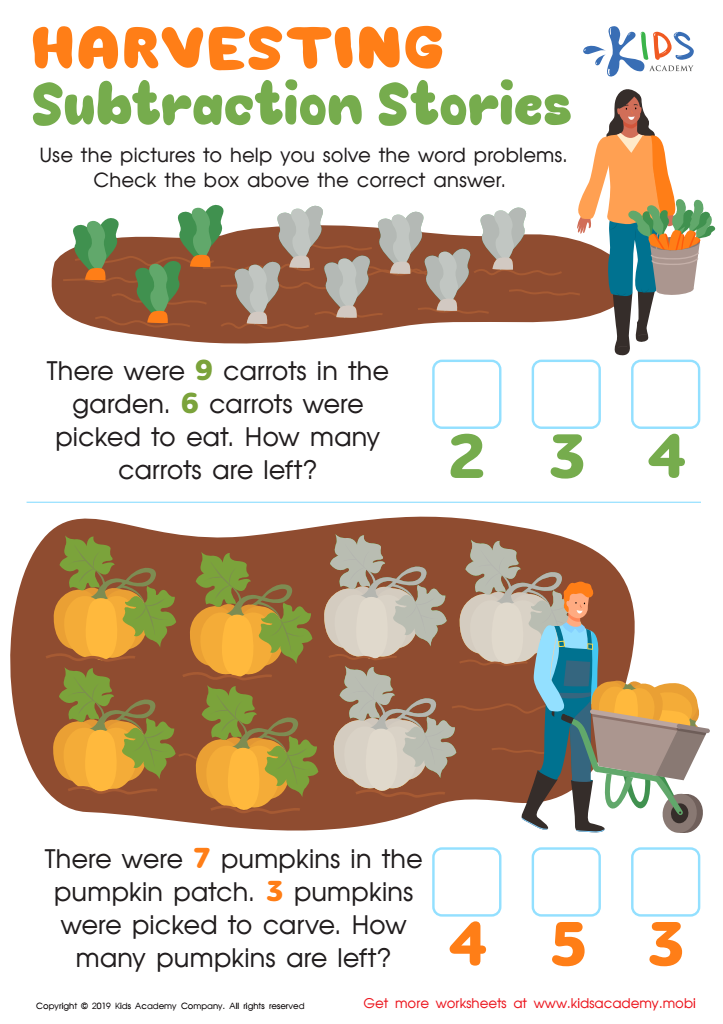
Harvesting Subtraction Stories Worksheet
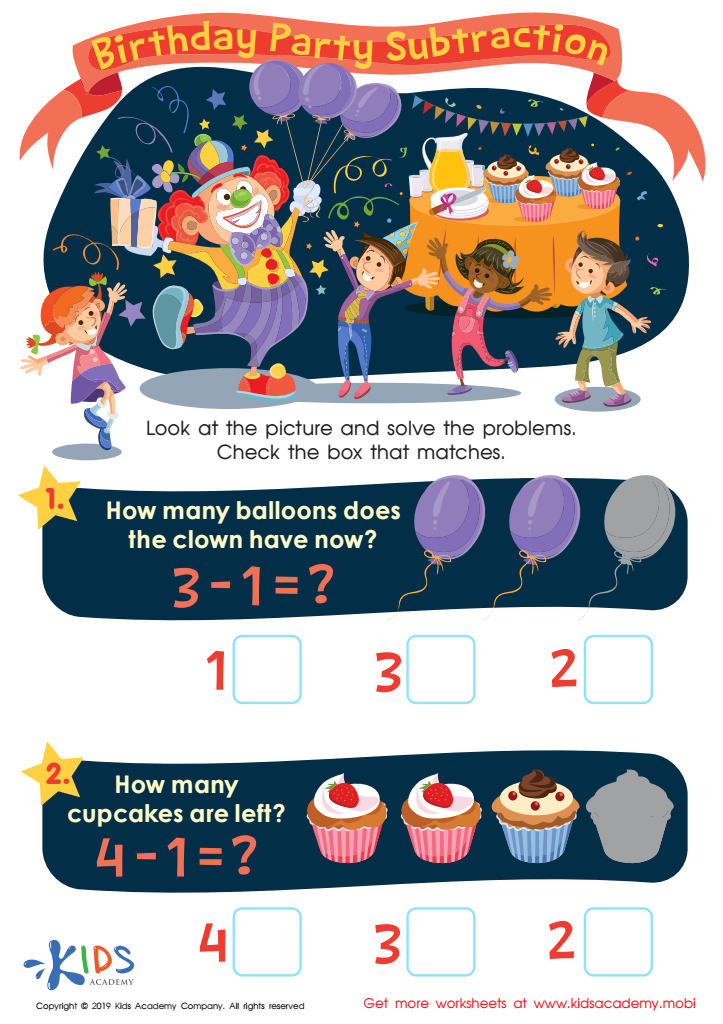
Birthday Party Subtraction Worksheet
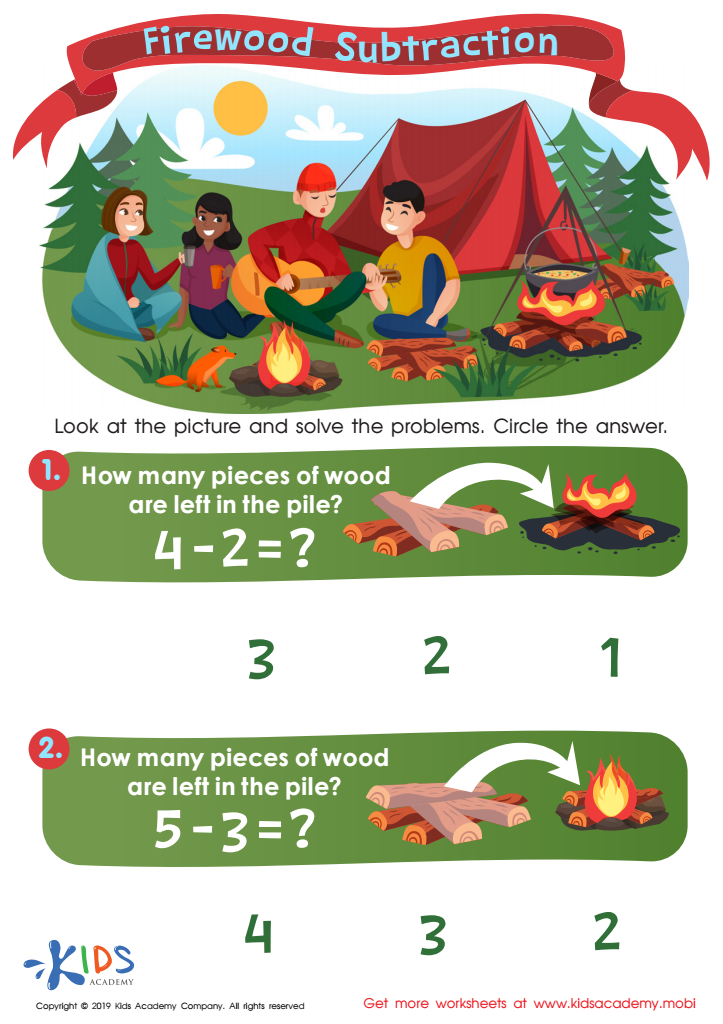
Firewood Subtraction Worksheet
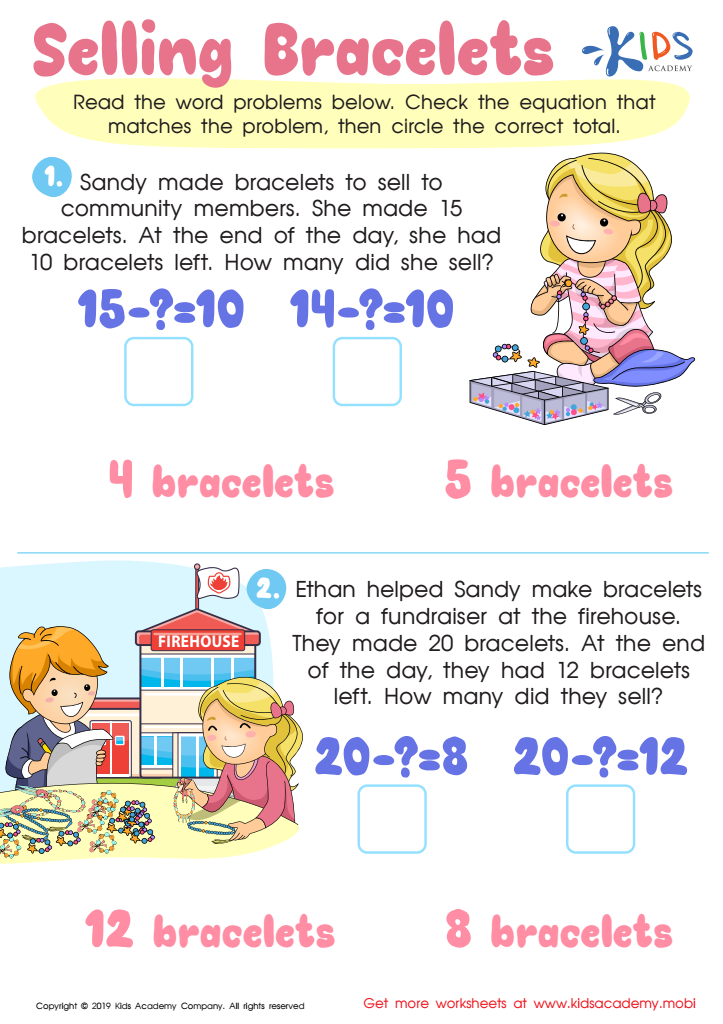
Selling the Bracelets Worksheet
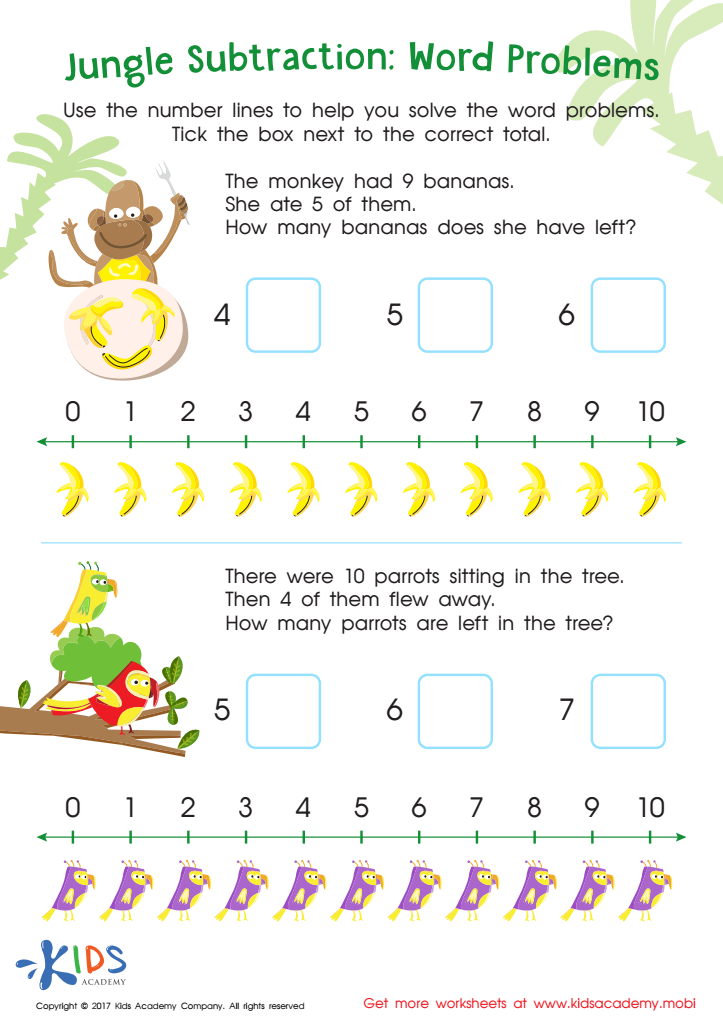
Jungle Subtraction Word Problems Substraction Worksheet



.jpg)




Problem-solving skills, particularly in subtraction, are crucial for young children aged 3 to 5. Developing these skills at an early age lays a strong foundation for critical thinking, logic, and mathematics, essential components for lifelong learning. When parents and teachers focus on subtraction and problem-solving, they nurture children's ability to analyze situations, think creatively, and explore solutions independently.
At this developmental stage, children are naturally curious and eager to explore mathematics through play and everyday activities. Teaching subtraction through playful interactions, such as sharing toys or snacks, allows children to grasp the concept of taking away in a tangible way. Moreover, these lessons support language development, as children articulate their thought processes and reasoning aloud.
Additionally, mastering subtraction fosters confidence. As children successfully tackle subtraction challenges, they develop a positive attitude toward math, reducing anxiety related to future math learning. This confidence can positively influence their academic journey, helping them embrace challenges and fostering a love for learning.
By prioritizing problem-solving skills in subtraction, parents and teachers help cultivate well-rounded, capable learners who can navigate not only mathematical concepts but also align themselves successfully in real-world problem-solving scenarios.








