Problem-Solving Skills Tracing Shapes Worksheets for Ages 3-5
4 filtered results
-
From - To
Enhance your child's problem-solving skills with our engaging tracing shapes worksheets, specially designed for ages 3-5. These colorful, interactive worksheets encourage children to practice shape recognition while strengthening their critical thinking abilities. As kids trace various shapes, they develop fine motor skills, hand-eye coordination, and persistence in overcoming challenges. Our worksheets are crafted to be fun and educational, allowing young learners to explore and solve problems through play. Perfect for home or classroom use, these activities provide a foundation for early mathematics and cognitive development. Engage your little ones in learning today with our delightful tracing shapes worksheets!
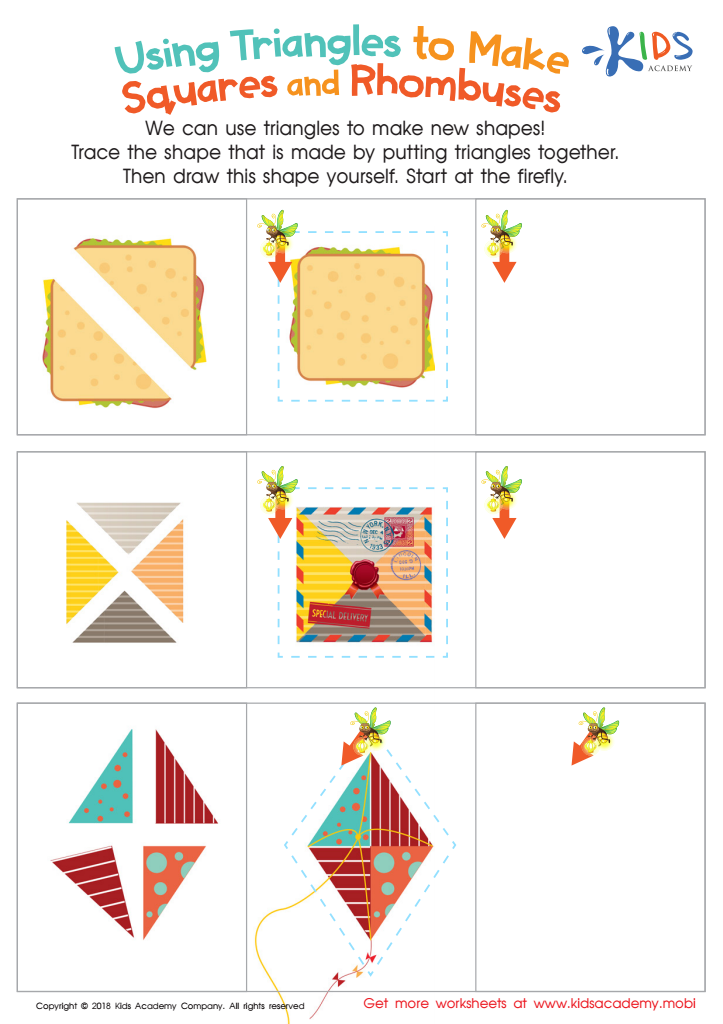
Using Triangles to Make Squares and Rhombuses Worksheet
 Assign to My Students
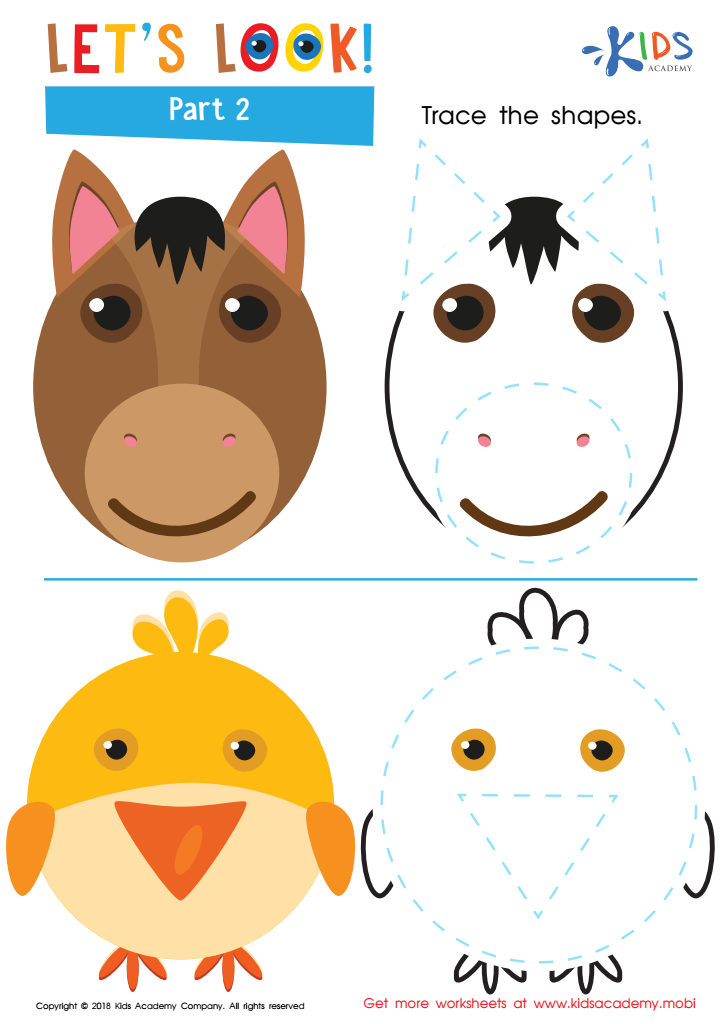
Let's Look! Part 2 Worksheet
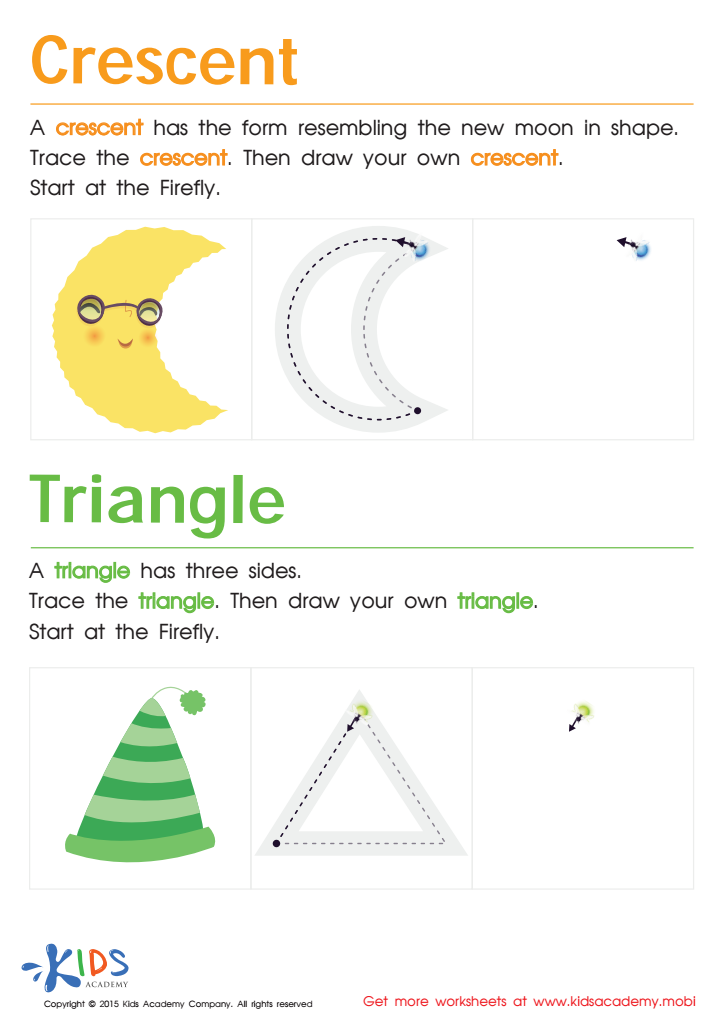
Learning to Draw Crescents And Triangles Worksheet
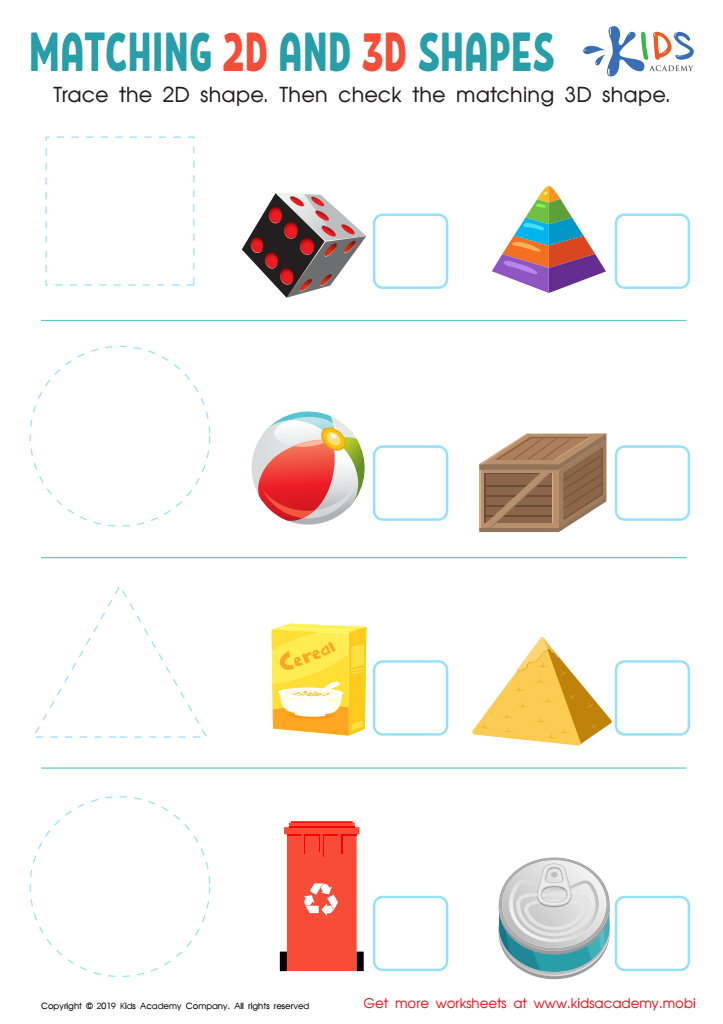
Matching 2D and 3D Shapes Worksheet








Problem-solving skills, especially in activities like tracing shapes, are fundamental for the cognitive development of children aged 3-5. This age is critical for laying the groundwork for essential skills that will benefit children's learning in various areas, including mathematics, language arts, and logical reasoning. Tracing shapes encourages children to recognize patterns, understand spatial relationships, and enhance their fine motor skills. These skills are all linked to later success in more complex problem-solving and critical thinking tasks.
Moreover, tracing shapes allows young learners to explore creativity while developing confidence in their abilities. As they successfully trace different shapes, they experience a sense of achievement that boosts their self-esteem. This positive reinforcement motivates them to take on more challenging tasks.
For parents and teachers, fostering these skills means better preparing children for future academic demands. Engaging in learning activities like tracing shapes cultivates a love for learning early on, encouraging children to become inquisitive, independent thinkers. Additionally, problem-solving skills learned in these playful and interactive ways can easily transfer to other situations, aiding in their overall development and readiness for school and beyond. Therefore, it is critical for parents and teachers to actively support and encourage these formative experiences.