Basic arithmetic skills Word Problems Worksheets for Ages 3-5
3 filtered results
-
From - To
Introducing our "Basic Arithmetic Skills Word Problems Worksheets for Ages 3-5," designed to engage and challenge young minds with fun, educational activities. These printable worksheets help children develop essential math skills through simple and relatable word problems. Each page provides a blend of addition, subtraction, counting, and number recognition exercises, fostering logical thinking and problem-solving abilities. Perfect for preschoolers and kindergarteners, our worksheets transform learning into an enjoyable experience, setting a strong foundation for future math success. Boost your child’s confidence and academic readiness with our high-quality, age-appropriate materials!
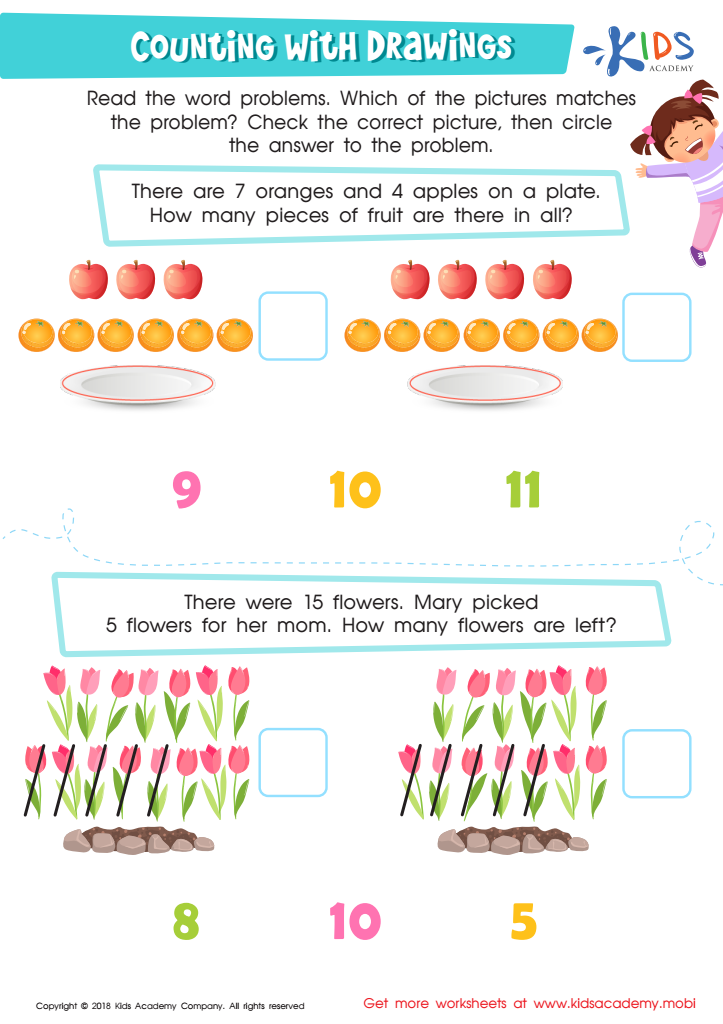
Counting with Drawings: Fruits & Chocolates Worksheet
 Assign to My Students
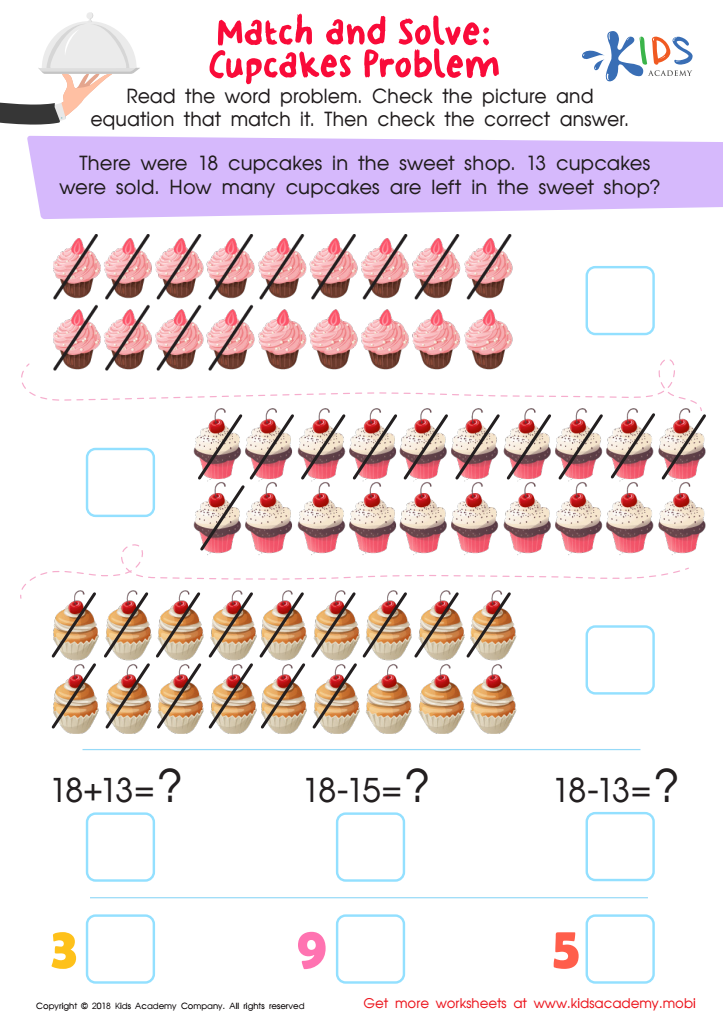
Match and Solve: Cupcakes Problem Worksheet
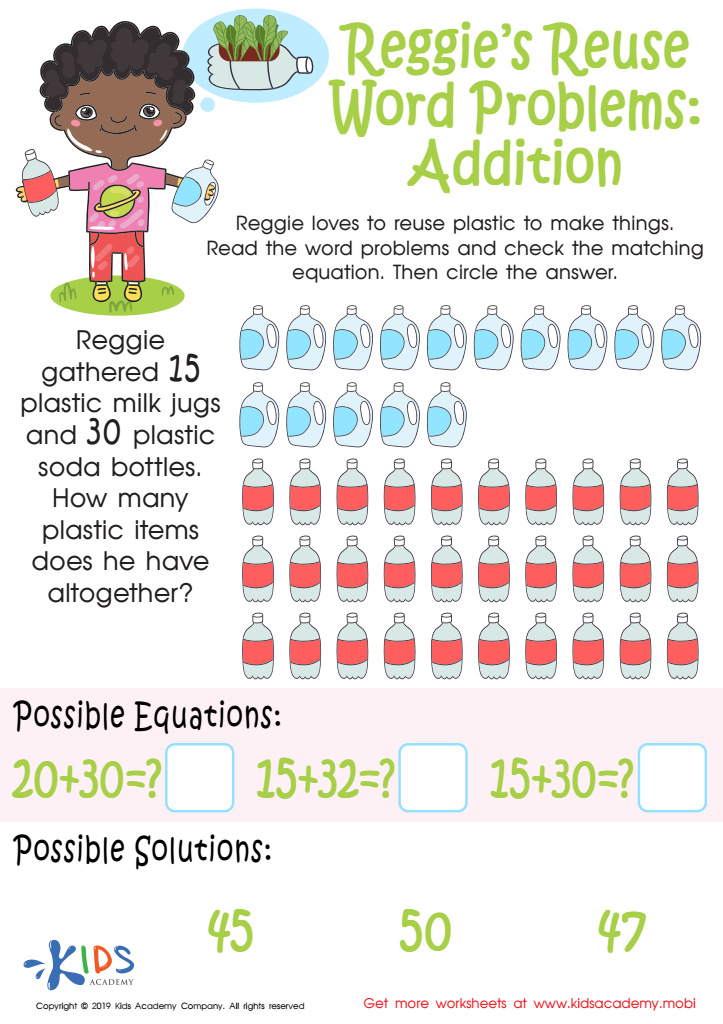
Reggie's Reuse Word Problems: Addition Worksheet








Introducing basic arithmetic skills and word problems to children aged 3-5 is crucial for several reasons. Firstly, it fosters the development of critical thinking and problem-solving abilities. As kids decipher word problems, they learn to break down scenarios, identify relevant information, and plan their approach. These skills are foundational for more complex math and everyday decision-making.
Moreover, word problems help young learners understand the practical application of math in real-life situations. Counting fruit, adding toys, or sharing treats are relatable scenarios that make abstract concepts concrete. This relevance can increase engagement and motivation, making math fun and meaningful.
Early exposure also builds a strong numerical foundation. By practicing basic addition and subtraction, children develop numerical fluency, eventually enabling them to tackle more complex math with confidence. Young mind's inherent plasticity means they can grasp and retain mathematical concepts more easily during these formative years.
Furthermore, engaging with word problems early on encourages language and reading skills. Understanding the problem requires comprehension, broadening a child's vocabulary and enhancing their communication abilities.
In essence, addressing arithmetic and word problems at an early stage lays down a robust educational framework, enhancing cognitive skills, fostering an appreciation for math, and paving the way for future academic success.








