Enhancing vocabulary Reading Worksheets for Ages 3-5
3 filtered results
-
From - To
Enhancing vocabulary is critical for young learners, and our tailored reading worksheets for ages 3-5 make it fun and effective. Through engaging activities, children will explore new words, improve reading comprehension, and develop a love for reading. Designed by educational experts, these worksheets blend colorful illustrations with age-appropriate challenges, ensuring that learning feels like play. Perfect for use at home or in the classroom, our resources support early literacy skills and pave the way for future academic success. With our enhancing vocabulary worksheets, your child is set to build a strong foundation in language, communication, and critical thinking.
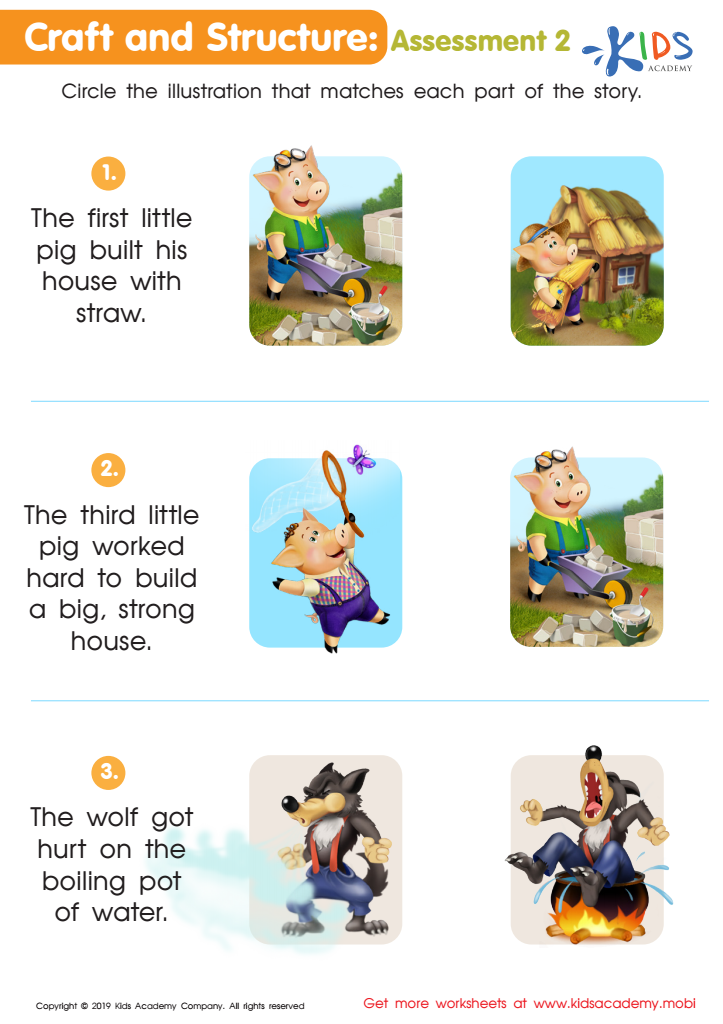
Craft and Structure: Assessment 2 Worksheet 2
 Assign to My Students
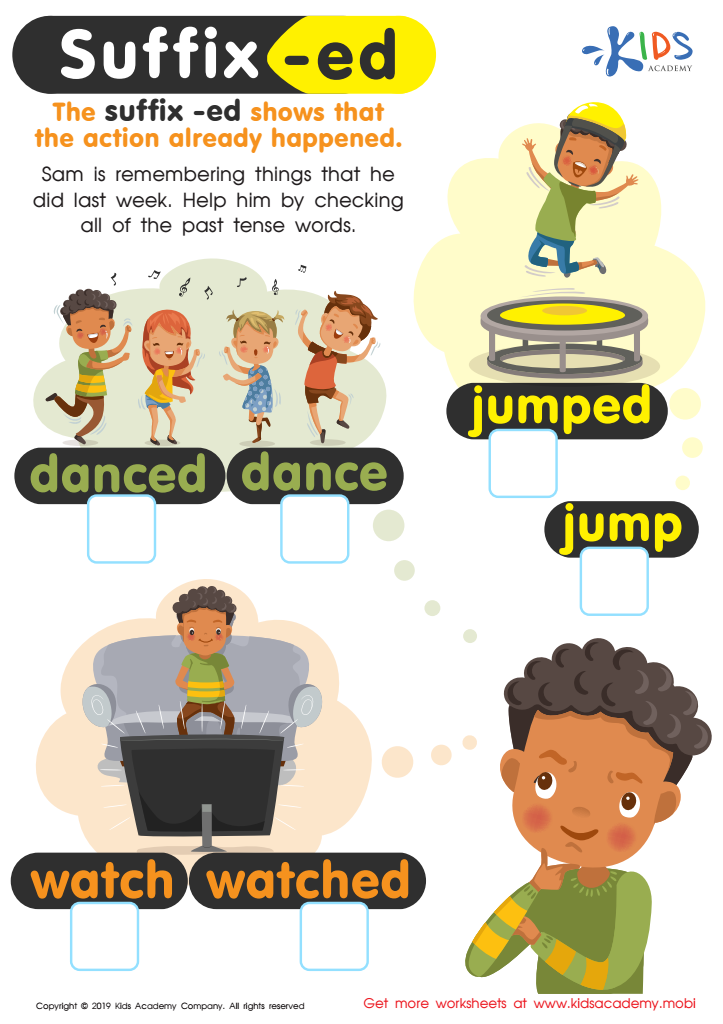
Suffix-ed Worksheet
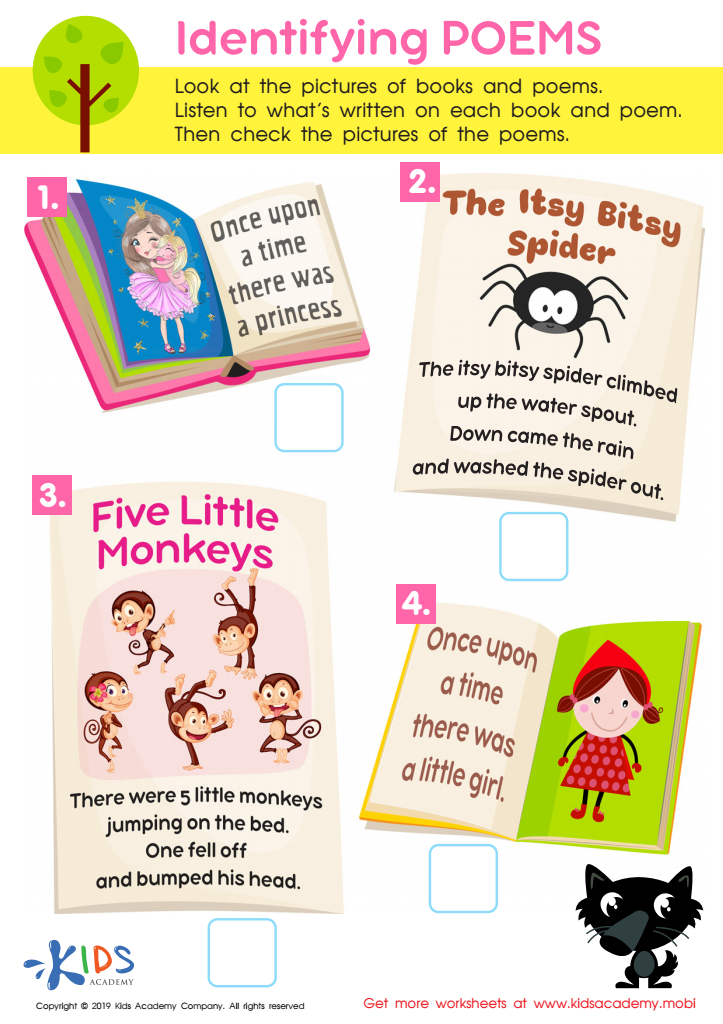
Identifying Poems Worksheet








Enhancing vocabulary in young children between the ages of 3-5 is vital for their cognitive, social, and academic development. At this formative age, children's brains are exceptionally receptive to learning new words, and a rich vocabulary lays the foundation for effective communication. When parents and teachers invest time in expanding a child's vocabulary, they are not just adding words but are also broadening their understanding of the world.
A robust vocabulary serves as a crucial building block for reading and writing skills. Children who know more words can comprehend text better, express their ideas more clearly, and experience greater success in school. Studies show that early vocabulary acquisition is a strong predictor of later reading achievement and overall academic performance.
Furthermore, a rich vocabulary enhances social interactions. Children with a wider range of words can articulate their needs, emotions, and thoughts more effectively, fostering better relationships with peers and adults. This communication competence increases their self-confidence and social competence.
Parents and teachers play an instrumental role in this process by reading to children, engaging them in conversations, and providing a language-rich environment. Activities like storytelling, singing, and descriptive play not only make learning fun but also seamlessly integrate vocabulary enhancement into daily routines. Investing time and effort into vocabulary development during these early years reaps long-term benefits, setting the stage for a lifelong love of learning and exploration.








