
Letter recognition Reading Worksheets for Ages 3-5
9 filtered results
Difficulty Level
Grade
Age
-
From - To
Subject
Activity
Standards
Discover our engaging Letter Recognition Reading Worksheets designed for children aged 3-5. These fun and interactive resources help young learners develop essential pre-reading skills by familiarizing them with letters in an enjoyable way. Featuring colorful illustrations and diverse activities, these worksheets encourage kids to identify, trace, and match letters, fostering confidence as they embark on their reading journey. Perfect for home or classroom use, our worksheets promote letter recognition through playful exercises, ensuring early literacy development while keeping learning exciting. Get started today and watch your little ones thrive as they explore the world of letters!
Favorites
With answer key
Interactive
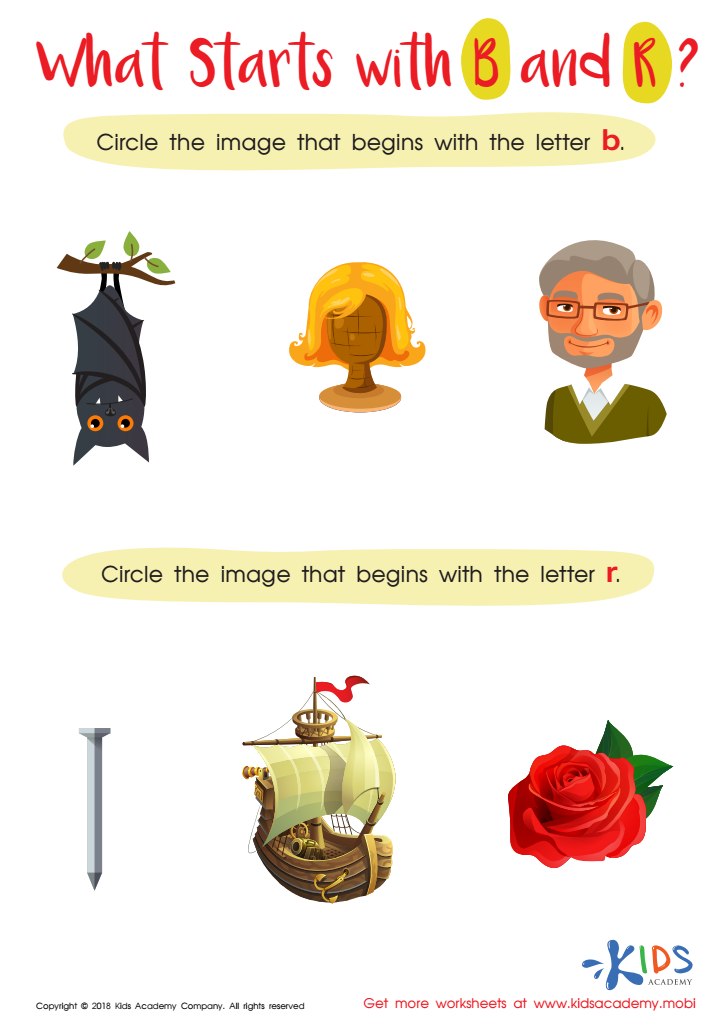
What Starts with B and R? Worksheet
Download this worksheet to help young readers practice visual and motor skills! They'll enjoy matching pictures with "B" and "R" letters while tracing the images. Bright and colorful, this engaging activity will help kids differentiate between words and have fun doing it.
What Starts with B and R? Worksheet
Worksheet
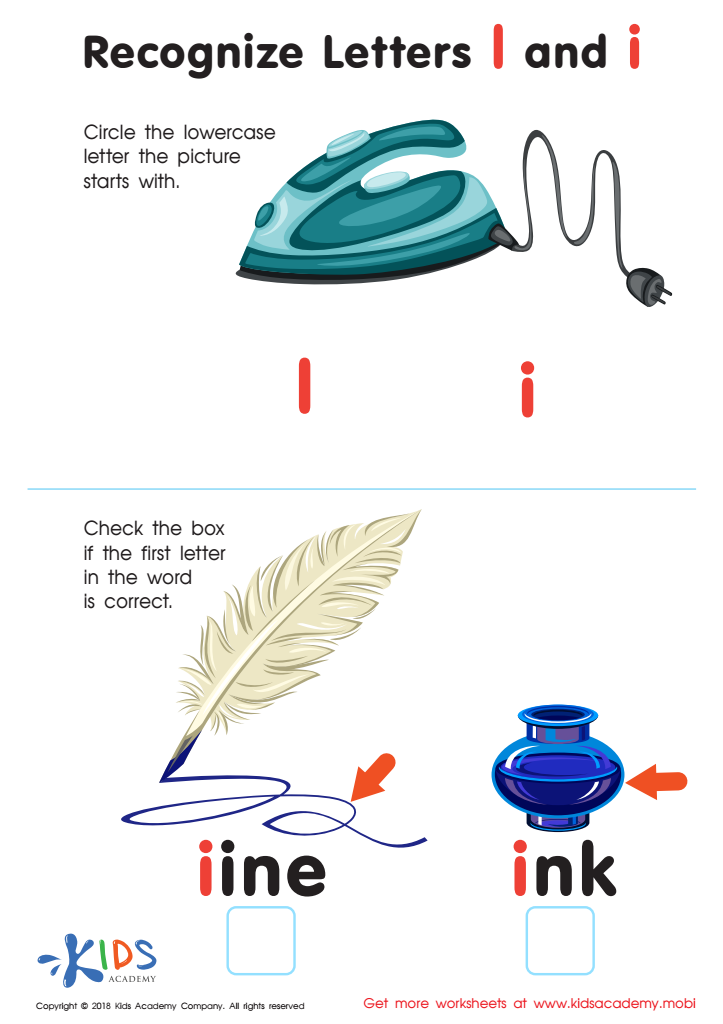
Recognize Letters l and i Worksheet
Help your child become familiar with uppercase and lowercase letters. Have them look at the pictures in the worksheet and circle the lowercase letter the picture starts with. For example: which one is the lowercase "i", the capital "I" or the small "i"?
Recognize Letters l and i Worksheet
Worksheet

Long and Short U Worksheet
Revised: Spice up your lesson on long and short vowels with this fun printout! Kids read the words "tube" and "tub," then reinforce the sound by coloring in the words and pictures. It's a great way to make phonics class enjoyable!
Download (PDF)
 Assign to My Students
Assign to My Students
Long and Short U Worksheet
Worksheet
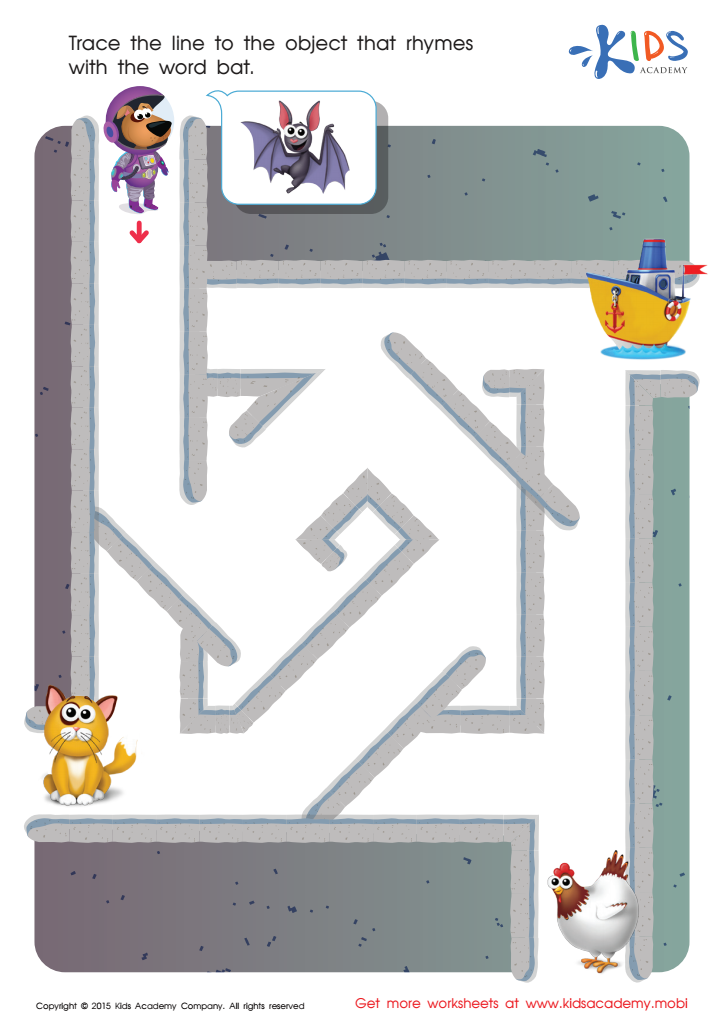
Bat Rhyming Words Worksheet
Get new reading and vocabulary worksheets to help make learning enjoyable for you and your kids. Join the dog and match the objects that rhyme. Have a blast!
Bat Rhyming Words Worksheet
Worksheet
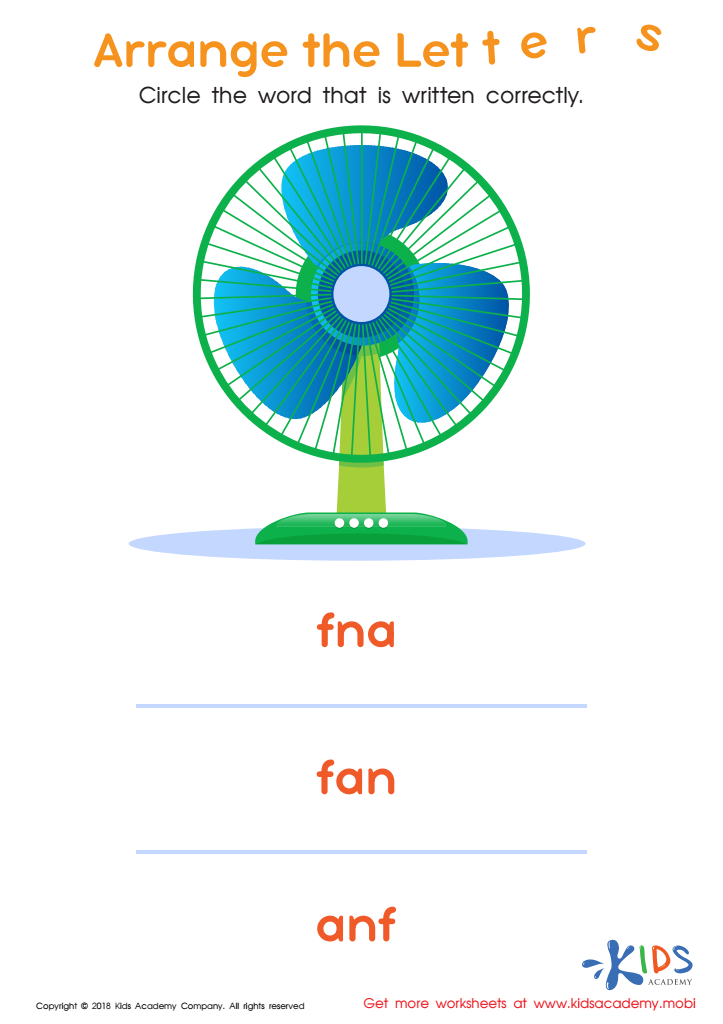
Arrange the Letters Worksheet
Test your kids' spelling skills with this worksheet! Show them the picture and ask what it stands for. Then, have them choose the correct spelling from the options given. Check their answer by circling the right one.
Arrange the Letters Worksheet
Worksheet
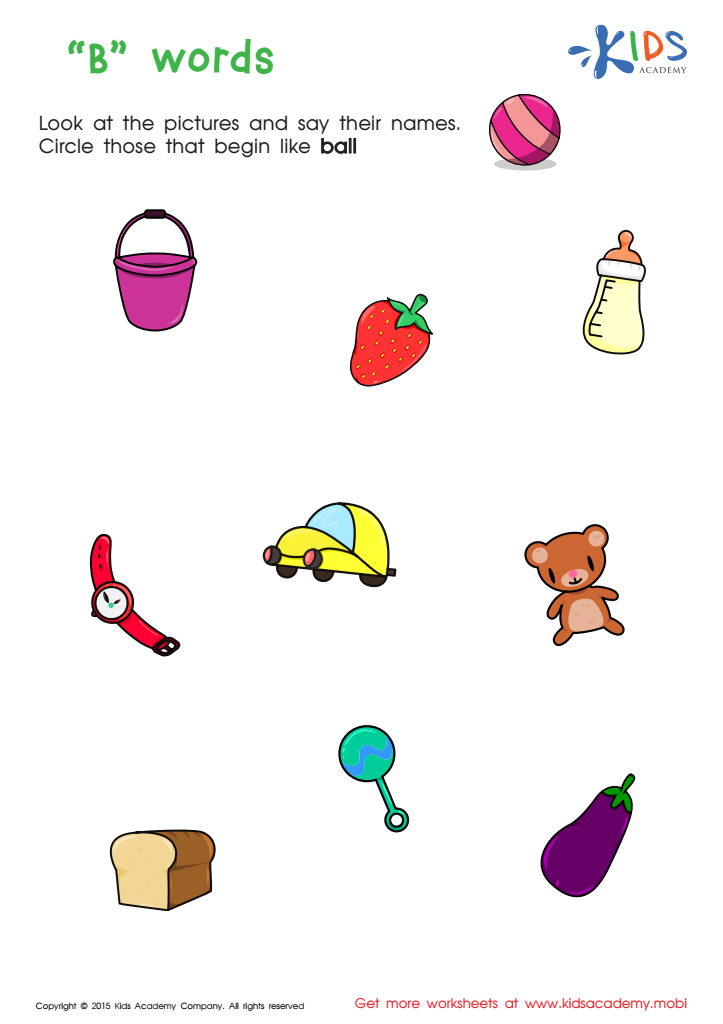
First Words Worksheet
Want to help your preschooler learn to read and write? Start with this 'B' words printable worksheet. It will help your child match pictures to the letters they know, sound out words, and build literacy. Once they understand the concept, they can start sounding out words and building reading skills.
First Words Worksheet
Worksheet
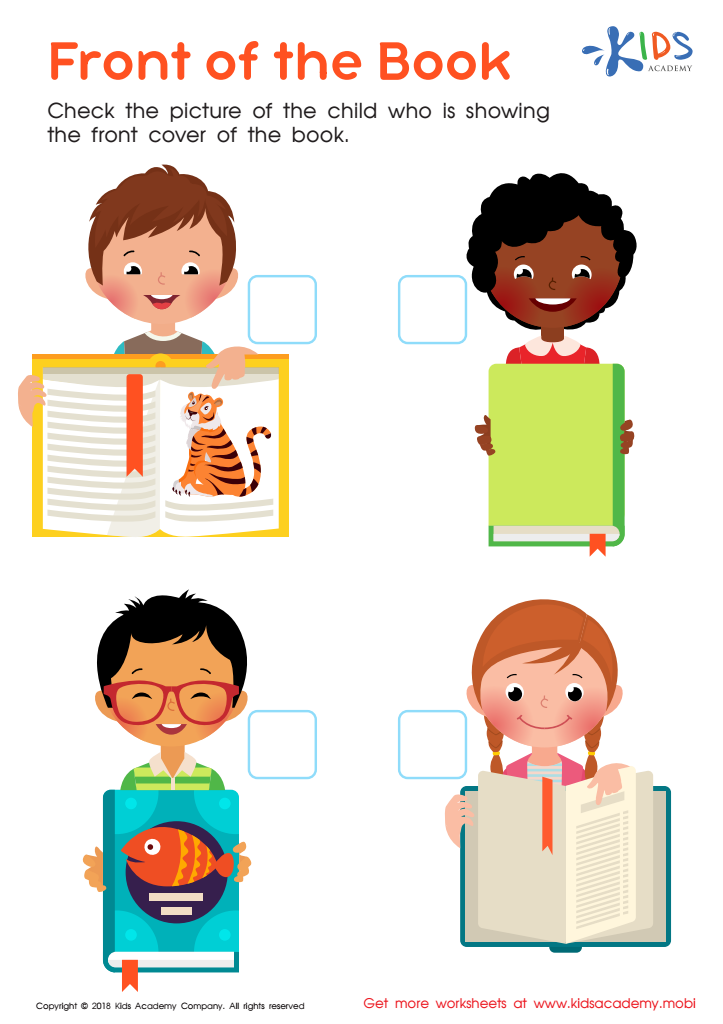
Front of the Book Worksheet
Help your child become a reader with this free worksheet! It's full of fun new friends and is designed to help kids understand concepts about the front of a book. They'll look at each picture and decide which friend is holding the book with the front cover, and check off the correct answer in the given boxes. Get your little one ready to be a reader!
Front of the Book Worksheet
Worksheet

Long and Short E Worksheet
This fun printout makes learning phonics enjoyable for Grade 3 students. Get them to read the words “tree” and “bed” to recognize the different sounds of the letter “E”. After hearing the words they can color the words and the pictures to understand differences between long and short vowels.
Download (PDF)
Assign to My Students
Assign to My Students
Long and Short E Worksheet
Worksheet
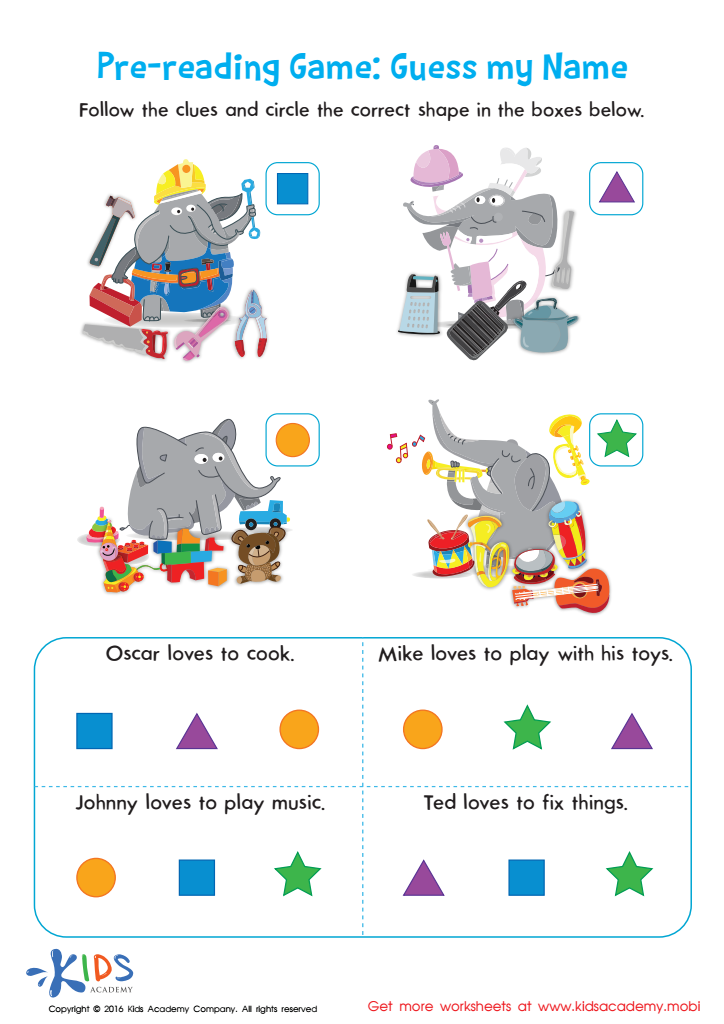
Pre Reading Worksheet Guess My Name
Guess My Name is a fun way to practice inference skills.
Guess My Name is a fun pre-reading game to help your child practice drawing inferences from clues. With colorful illustrations, they'll use clues to match each elephant with its sentence and sharpen their inference skills.
Pre Reading Worksheet Guess My Name
Worksheet
Join Kids Academy for Free
Who is primarily going to use this learning content?






.jpg)
Letter recognition is a foundational skill crucial for early literacy development in children aged 3-5. Parents and teachers should prioritize this skill because it enhances children's ability to read and write, building a strong base for future learning. Recognizing letters helps children connect sounds to symbols, which is essential in phonics and word formation.
Moreover, early exposure to letter recognition fosters cognitive development. When children identify letters, they also enhance their memory and visual discrimination skills. Engaging in activities that promote letter recognition—such as reading picture books, singing the alphabet, or using educational games—creates an enriching environment that stimulates curiosity and joy in learning.
Additionally, letter recognition supports a child's social-emotional development. It boosts confidence as children gain mastery over an essential skill, empowering them in classroom settings and enhancing their participation in literacy activities.
Involving parents in this process strengthens the home-school connection, encouraging shared reading practices and educational play. When parents and teachers collaborate to promote letter recognition, they lay the groundwork for stronger future academic performance, nurturing a lifelong love for reading and learning. Thus, prioritizing this skill is both an investment in literacy and in a child’s overall development.








