
Understanding patterns Reading Worksheets for Ages 3-5
4 filtered results
Difficulty Level
Grade
Age
-
From - To
Subject
Activity
Standards
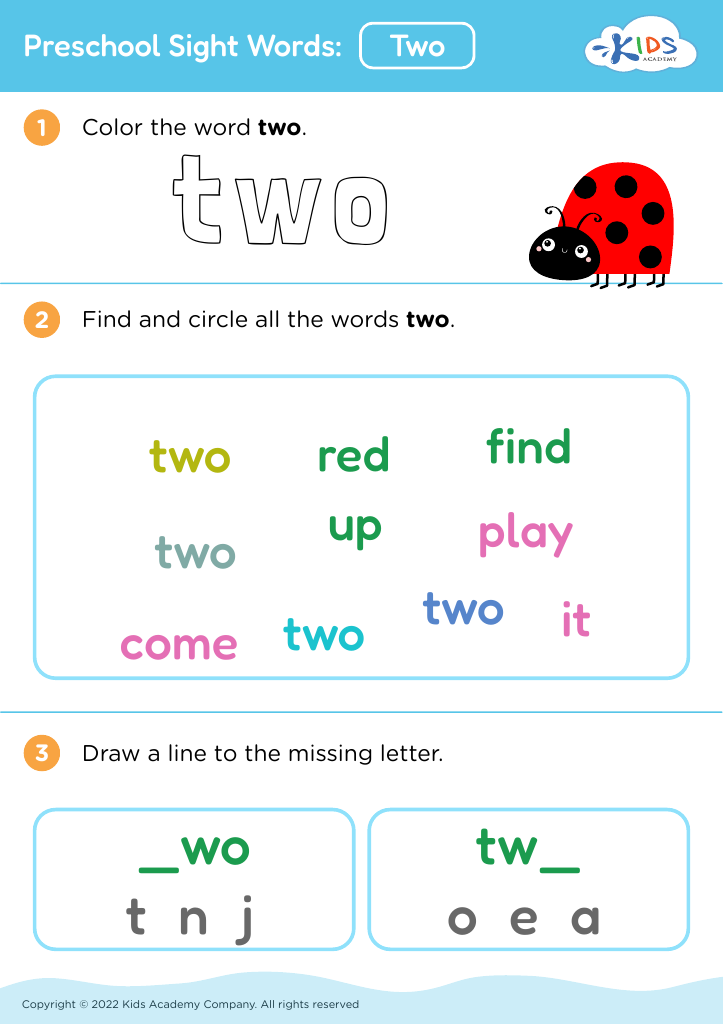
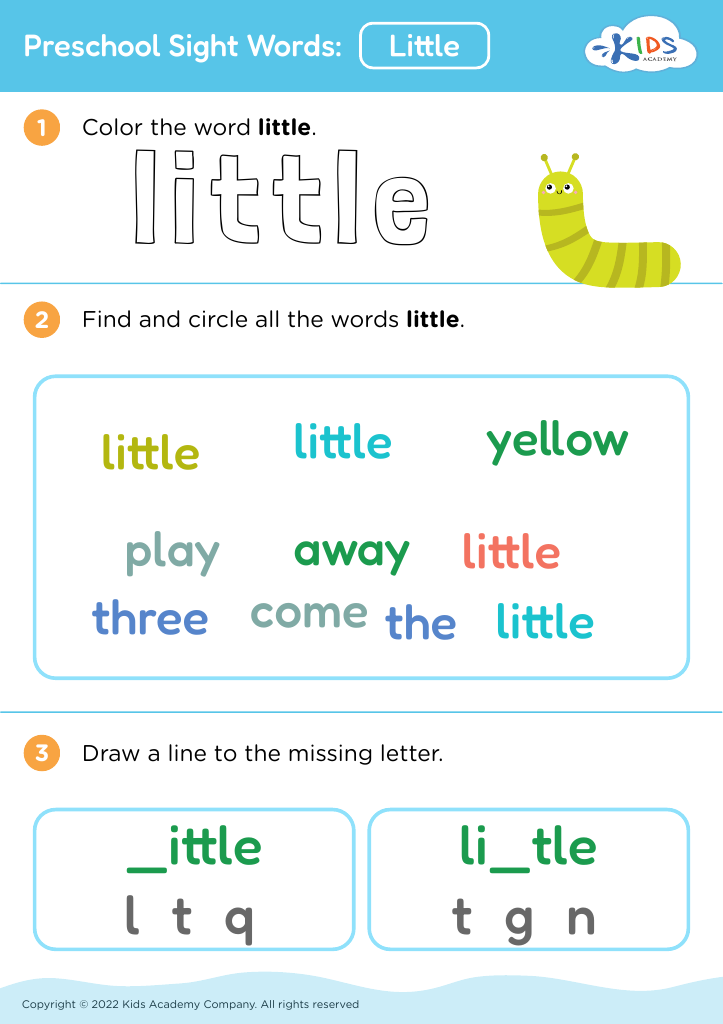
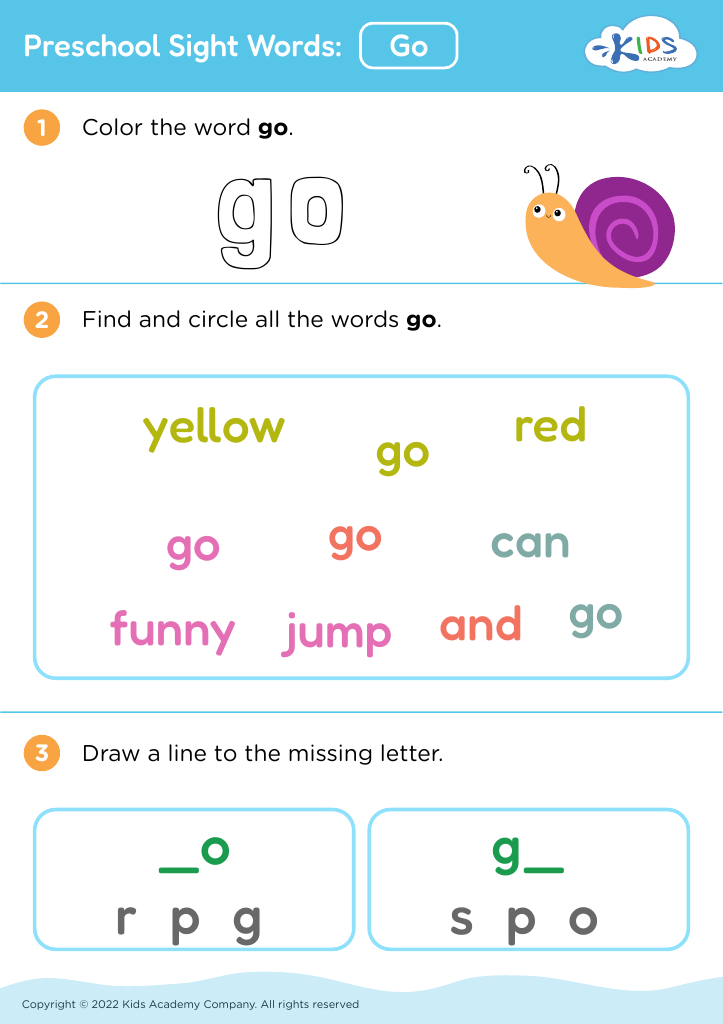
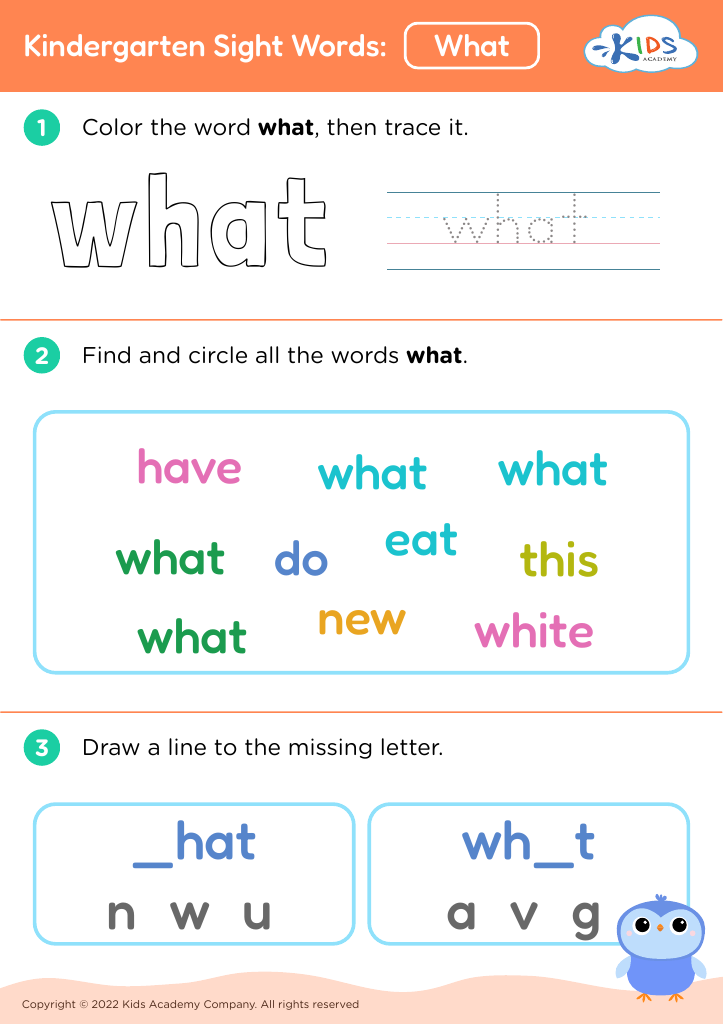
Discover our "Understanding Patterns Reading Worksheets" designed for children aged 3-5! These engaging worksheets help little learners recognize and establish patterns in reading, laying a strong foundation for their literacy skills. Through fun activities, children will enhance their ability to identify repetitive sequences and improve their overall reading comprehension. Each worksheet features colorful illustrations and simple instructions, making learning enjoyable and interactive. Ideal for use at home or in the classroom, these worksheets support early childhood development while fostering a love for reading. Explore our collection and watch your child's confidence in understanding patterns grow today!
Favorites
With answer key
Interactive
Join Kids Academy for Free
Who is primarily going to use this learning content?







Understanding patterns in reading is crucial for children aged 3-5, as it lays the foundation for their literacy development. At this age, children are developing cognitive skills that will help them recognize sequences, sounds, and structures in language. By engaging with patterns, such as rhymes, repetitions, and story structures, young learners enhance their phonemic awareness, which is essential for learning to decode words.
Parents and teachers should prioritize this aspect of reading because it fosters critical thinking and problem-solving skills. When children identify and predict patterns, they become more engaged in their learning process, which bolsters their confidence and motivation. Additionally, patterns help children make connections not just within texts but also in the world around them. This promotes a deeper comprehension of stories and enhances their ability to retell narratives.
Moreover, reading experiences that incorporate patterns often involve interactive and playful elements, making learning enjoyable. By supporting an understanding of patterns in reading, parents and teachers are equipping children with essential tools for successful literacy acquisition, preparing them for future academic success. Ultimately, by nurturing a love for reading through patterns, adults can positively influence children's lifelong learning journeys.








