Vocabulary expansion Reading Worksheets for Ages 3-5 - Page 2
26 filtered results
-
From - To
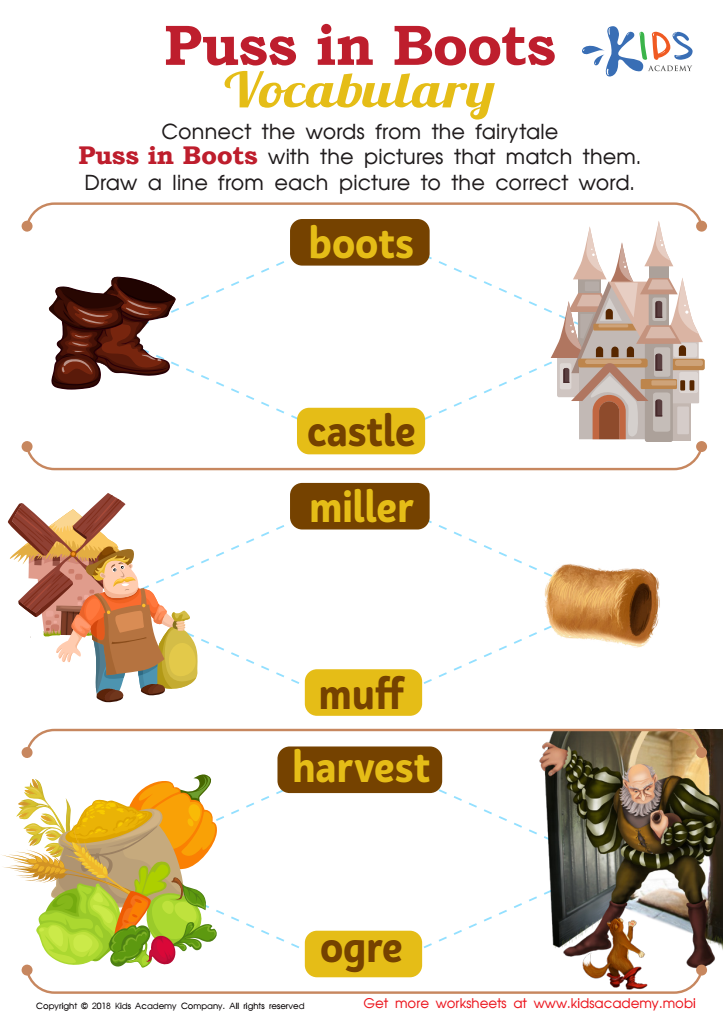
Puss in Boots Vocabulary Worksheet
 Assign to My Students
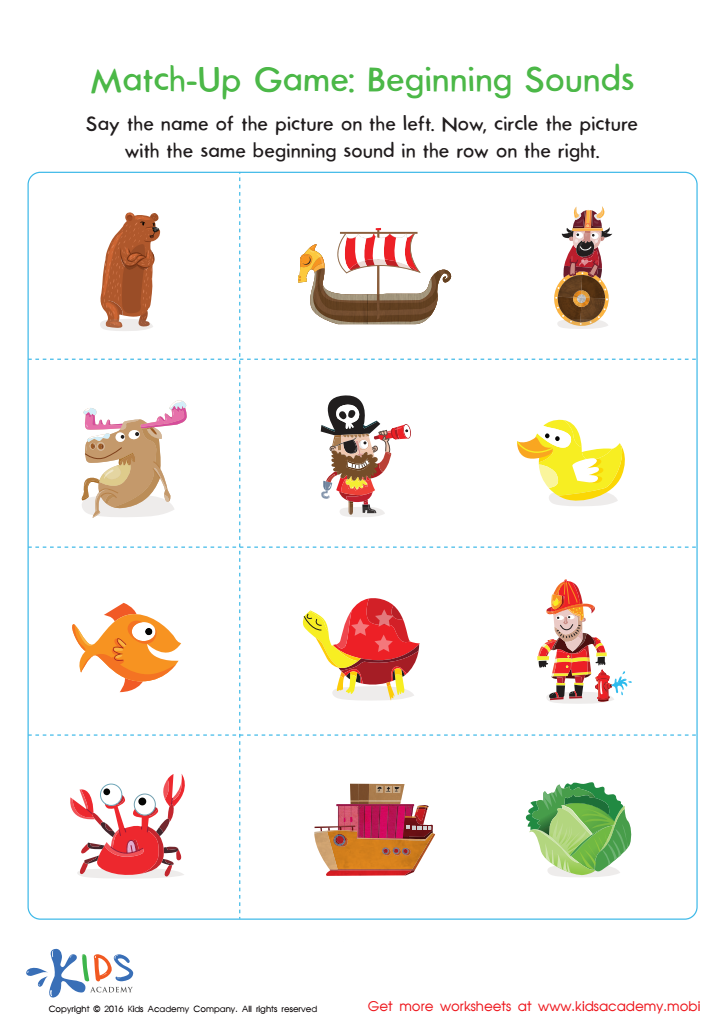
Match–Up Game: Beginning Sounds Worksheet








Vocabulary expansion through reading for children ages 3 to 5 is crucial for their overall cognitive and linguistic development. During these formative years, young children are rapidly picking up language skills, and rich vocabulary exposure significantly enhances their comprehension and communication abilities. Engaging with a variety of texts allows children to encounter new words in contextual settings, fostering retention and understanding.
Parents and teachers should prioritize vocabulary expansion because it lays the foundation for future reading and academic success. Proficient vocabulary skills are linked to better reading comprehension, which directly affects a child’s self-confidence and enthusiasm for learning. The more words children know, the better equipped they are to express their thoughts, emotions, and needs, which promotes social and emotional development.
Additionally, early vocabulary skills are often predictive of performance in later grades. By reading aloud and discussing books, parents and teachers can introduce complex concepts and ideas, stimulating critical thinking. This practice not only supports literacy but also nurtures a love for learning that can last a lifetime. In summary, reading for vocabulary expansion is a powerful tool that empowers young learners and sets them on a path toward academic achievement and effective communication.








