Story analysis Reading Comprehension Worksheets for Ages 3-5
4 filtered results
-
From - To
Enhance your child's reading skills with our Story Analysis Reading Comprehension Worksheets designed for ages 3-5. These engaging worksheets encourage young learners to dissect stories, fostering critical thinking and comprehension. Children will explore characters, settings, and plot, enhancing their ability to recall details and understand narratives. Each worksheet features fun illustrations and simple questions that align with early literacy goals, making learning enjoyable. Perfect for pre-kindergarten and kindergarten classrooms or at-home activities, our resources nurture a love for reading while developing essential comprehension skills. Discover the joy of learning through stories with Kids Academy's interactive worksheets today!
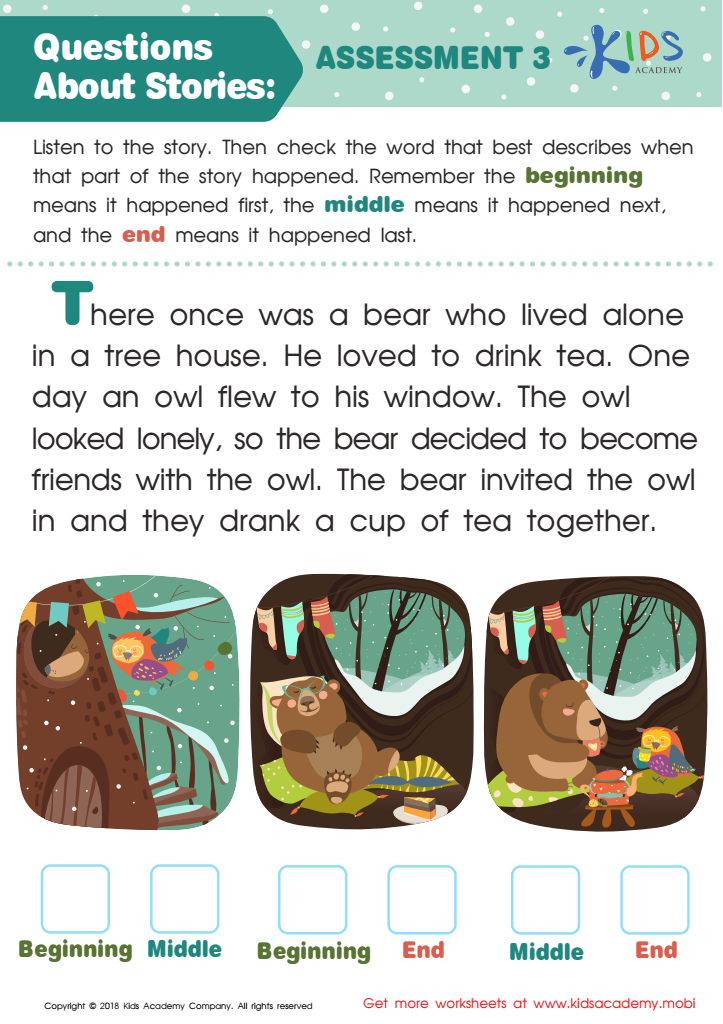
Questions About Stories: Assessment 3 Worksheet
 Assign to My Students
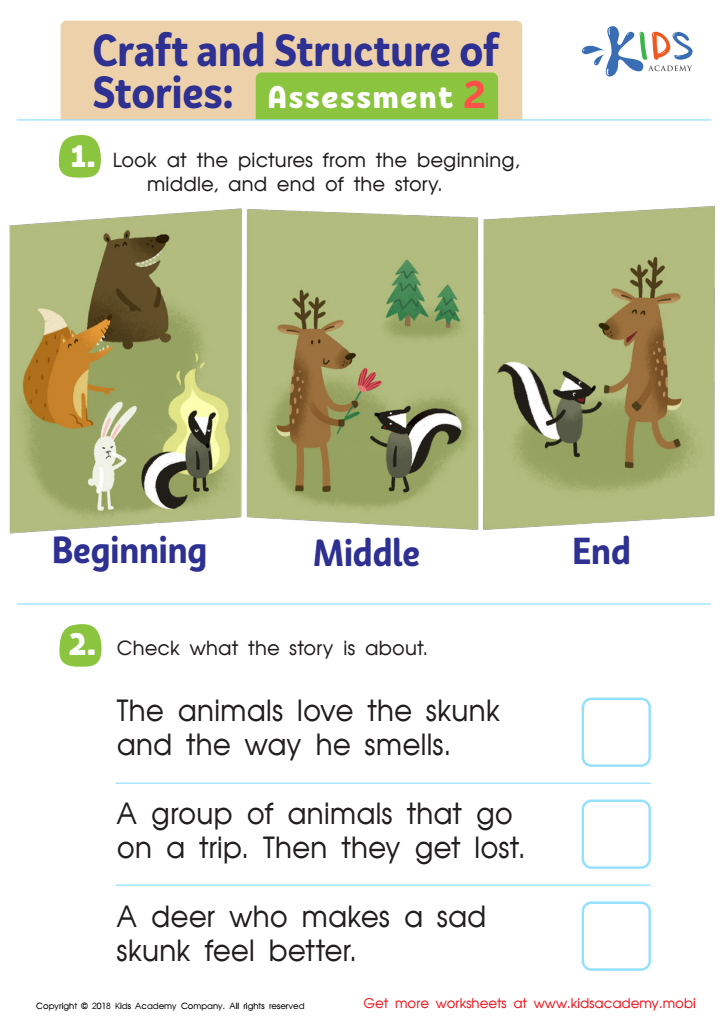
Craft and Structure of Stories: Assessment 2 Worksheet
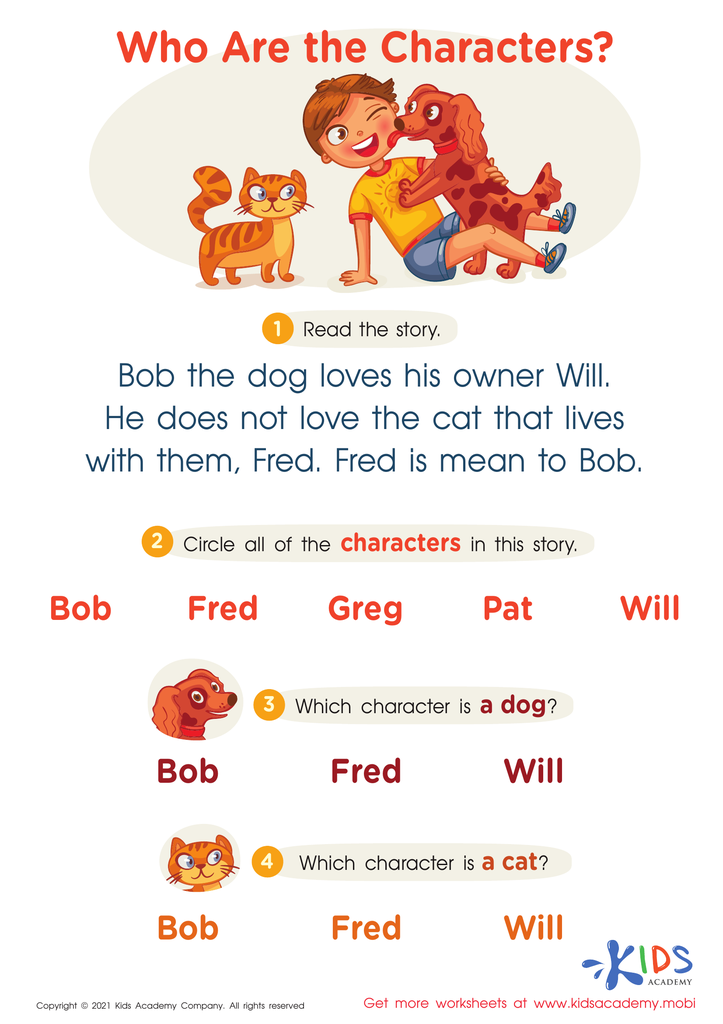
Who Are the Characters? Worksheet
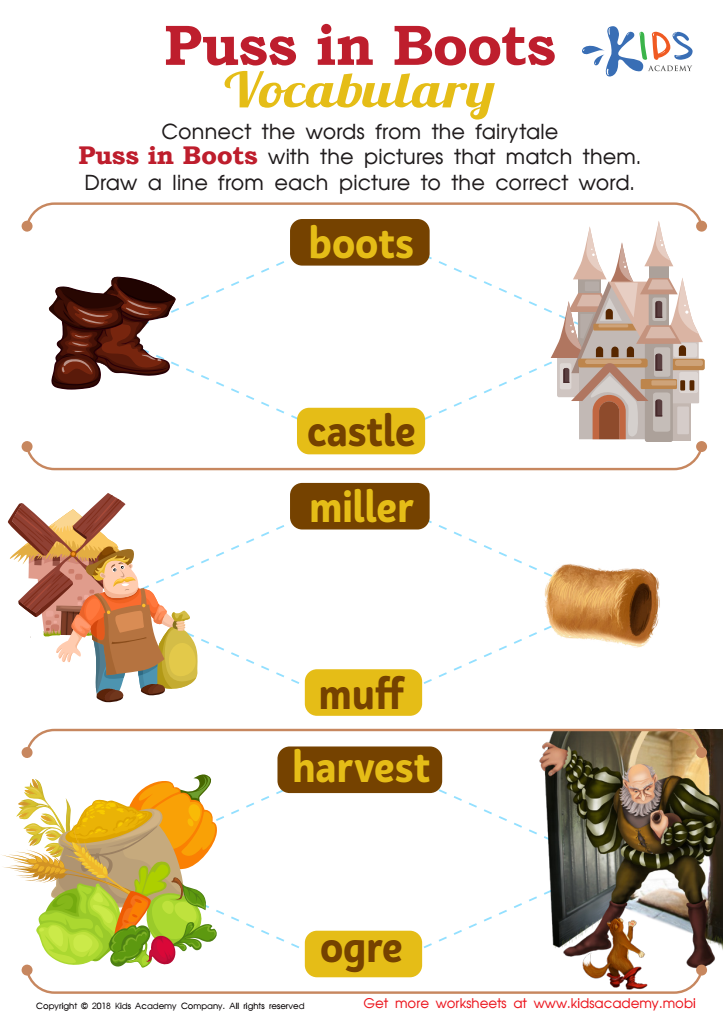
Puss in Boots Vocabulary Worksheet






Story analysis and reading comprehension are crucial for children aged 3-5 as they lay the foundation for successful literacy development and cognitive growth. At this age, children are like sponges, absorbing language, storytelling techniques, and comprehension skills. Engaging in story analysis helps them develop critical thinking, as they learn to interpret characters, plot, and settings. By discussing stories, teachers and parents can encourage deeper understanding and foster a love for reading.
Additionally, story analysis supports language development. Children expand their vocabulary, improve sentence structure, and grasp the nuances of language through exposure to diverse texts. This age group also benefits from imaginative play and narrative skills, both of which can be enhanced by analyzing stories and connecting them to personal experiences.
Finally, stimulating discussions about stories promote emotional intelligence. By relating to characters and their emotions, children learn empathy and interpersonal skills, which are essential in their social interactions. Involving caregivers and educators in this process ensures a consistent approach to support a child's literacy journey, making story analysis an integral component for fostering a lifelong love of reading and learning.








