Vocabulary development Reading Comprehension Worksheets for Ages 3-5
4 filtered results
-
From - To
Enhance your child's literacy journey with our Vocabulary Development Reading Comprehension Worksheets tailored for ages 3-5. These engaging worksheets are designed to strengthen vocabulary skills through fun and interactive activities. Each worksheet incorporates colorful visuals and age-appropriate content that captures young learners' attention while promoting critical thinking and comprehension. Activities encourage children to identify words, understand their meanings, and use them in context, laying a strong foundation for future reading success. Our carefully crafted resources not only make learning enjoyable but also foster a love for reading from an early age. Perfect for home or classroom use, let the linguistic adventure begin!
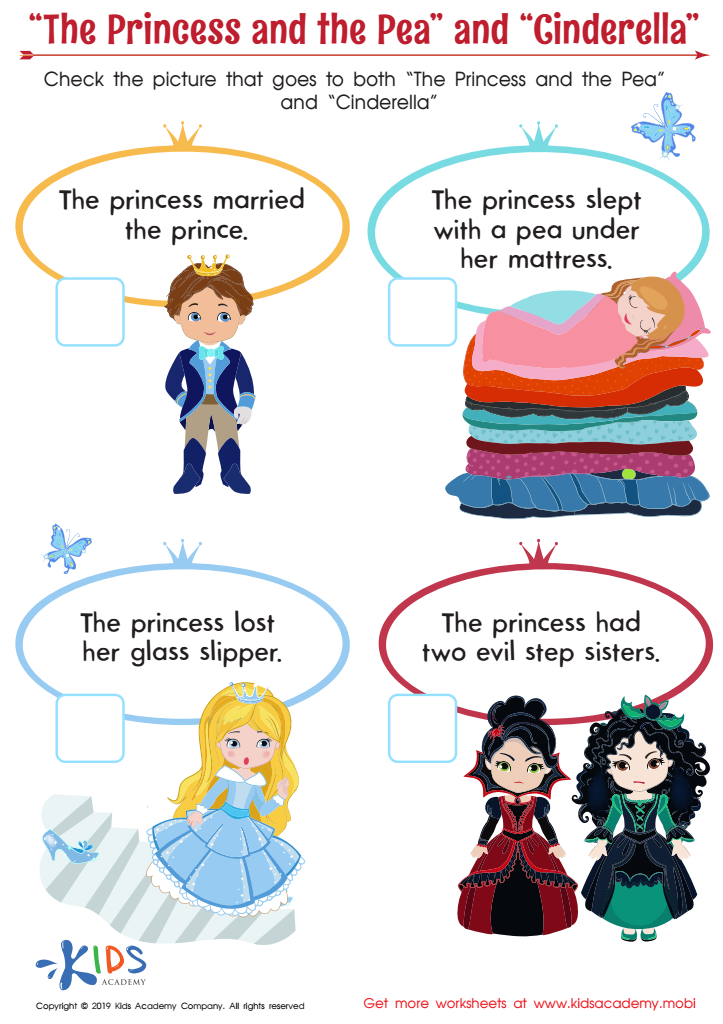
“The Princess and the Pea” and “Cinderella” Worksheet
 Assign to My Students
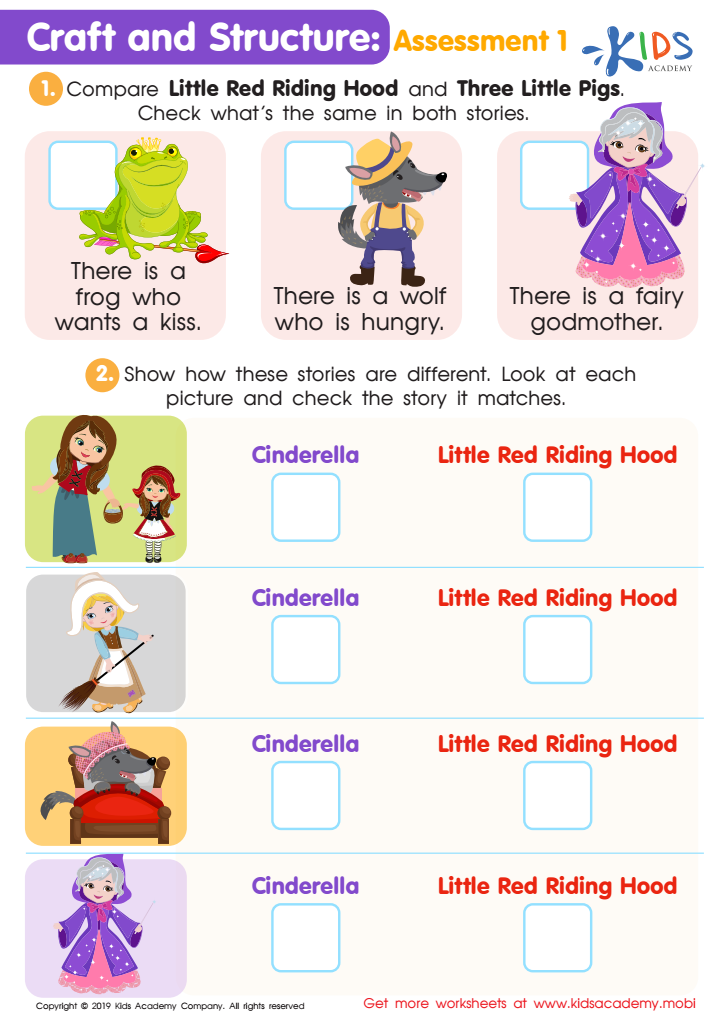
Craft and Structure: Assessment 1 Worksheet
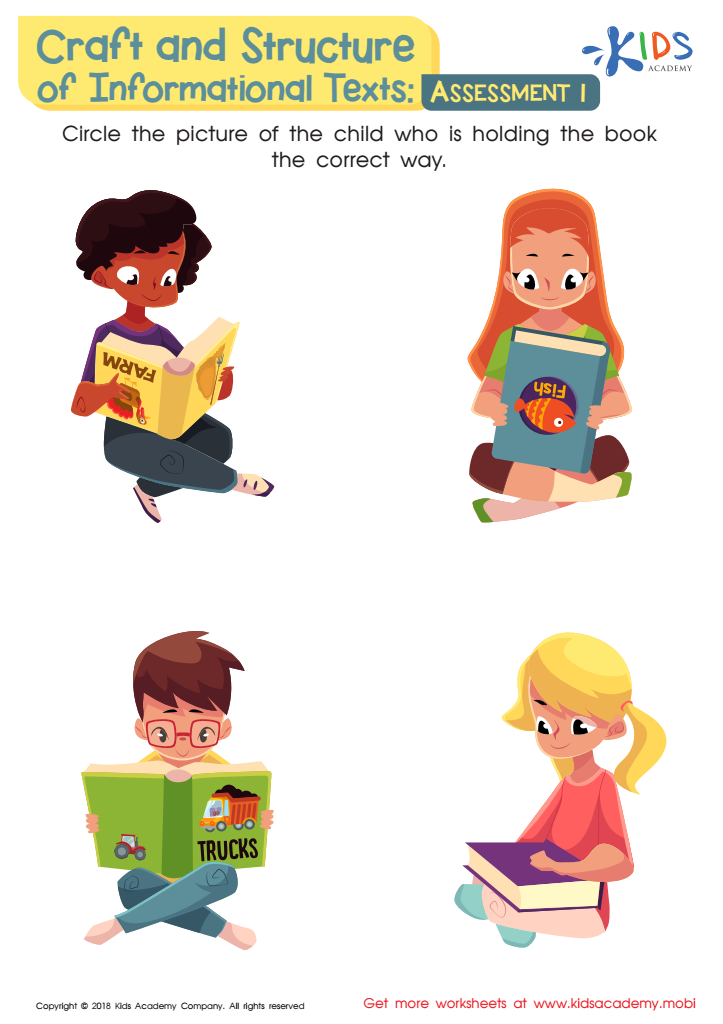
Craft and Structure of Informational Texts: Assessment 1 Worksheet
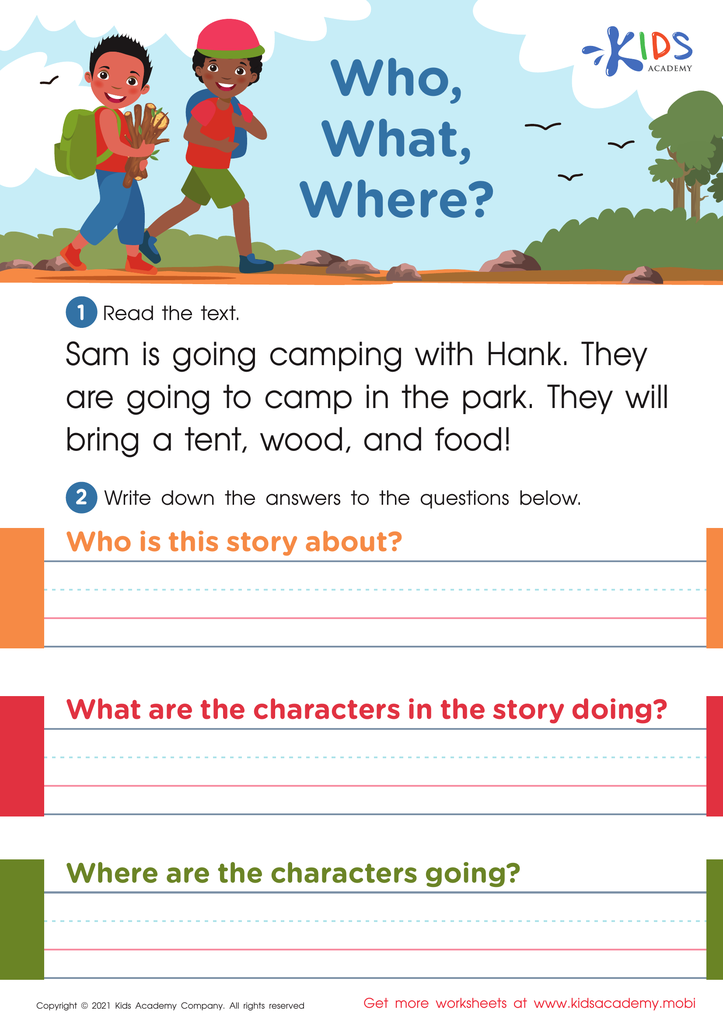
Who, What, Where? Worksheet








Vocabulary development and reading comprehension are critical components of early literacy for children ages 3-5. During these formative years, children are highly receptive to language, making it an optimal time for them to expand their vocabulary. A rich vocabulary enhances their ability to communicate effectively, express thoughts, and engage socially. Moreover, strong vocabulary foundations contribute to improved reading comprehension, which is the ability to understand and make meaning from texts.
When children encounter new words and phrases, they learn to associate them with objects, actions, and emotions, fostering cognitive development. This, in turn, equips them with the skills needed to interpret stories and relay information accurately. Teachers and parents play a vital role in this growth by incorporating varied language experiences, engaging in dialogue, and exposing children to diverse reading materials.
Furthermore, vocabulary development and reading comprehension are strongly linked to academic success in later years. Children with a robust vocabulary are better equipped to tackle more complex texts as they advance in school. By prioritizing these skills early on, parents and teachers are investing in a child’s educational journey and overall well-being, ensuring they have a solid foundation for lifelong learning.








