
Reading comprehension Animals Worksheets for Ages 3-5
5 filtered results
Difficulty Level
Grade
Age
-
From - To
Subject
Activity
Standards
Explore our engaging Reading Comprehension Animals Worksheets designed specifically for children ages 3-5. These fun, printable resources help young learners enhance their reading skills through captivating stories and relatable animal themes. Each worksheet is crafted to promote vocabulary development and critical thinking, making learning enjoyable and effective. Kids will delve into colorful illustrations and simple texts to understand different animals, fostering their curiosity about nature. Perfect for preschoolers and kindergartners, these worksheets develop foundational literacy skills through hands-on activities. Stimulate your child's imagination and build their confidence in reading with our delightful animal-themed comprehension exercises today!
Favorites
With answer key
Interactive
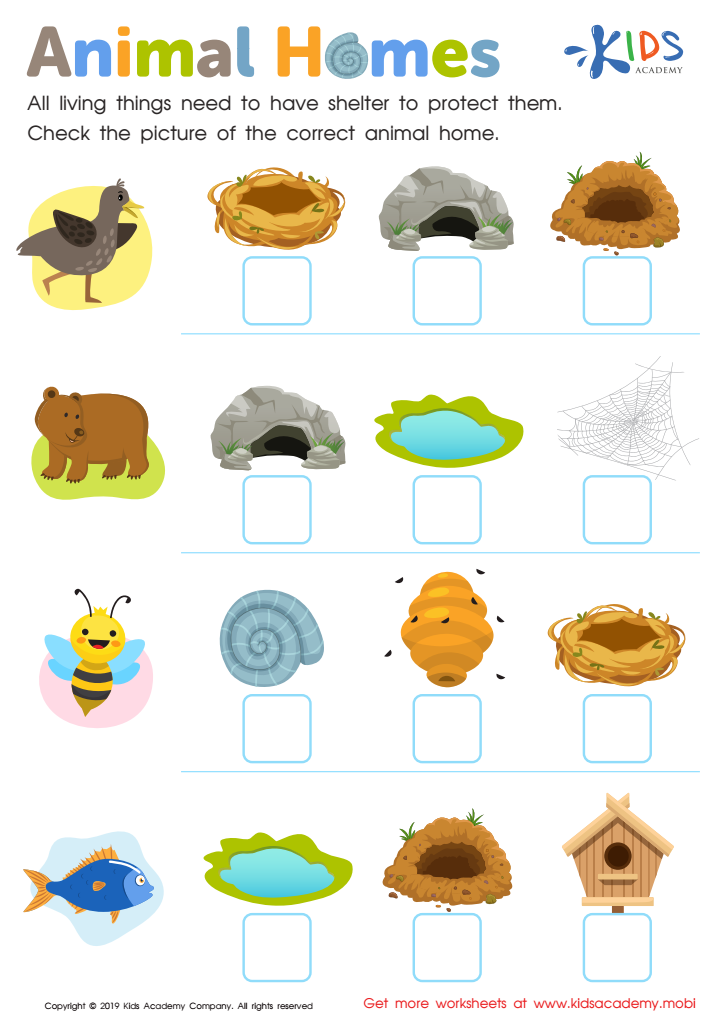
Animal Homes Worksheet
Students have homes where they can do things they love, sleep and stay safe from bad weather. Check the worksheet for animals and their shelters. Ask your kids to identify each and match the animal home to the picture. (80 words)
 Assign to My Students
Animal Homes Worksheet
Worksheet
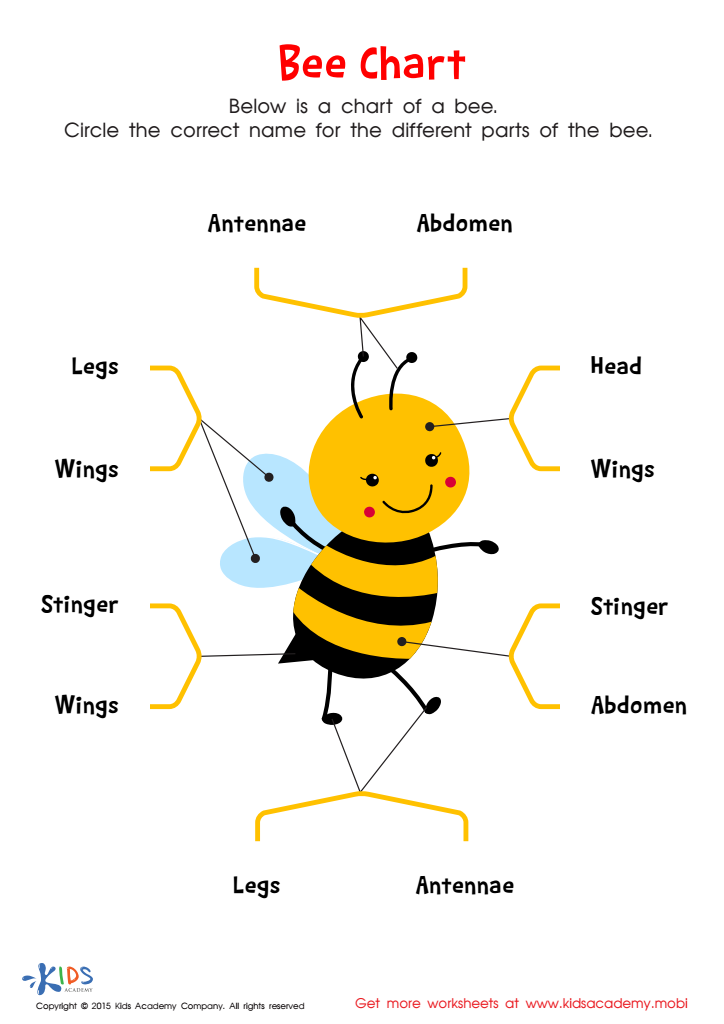
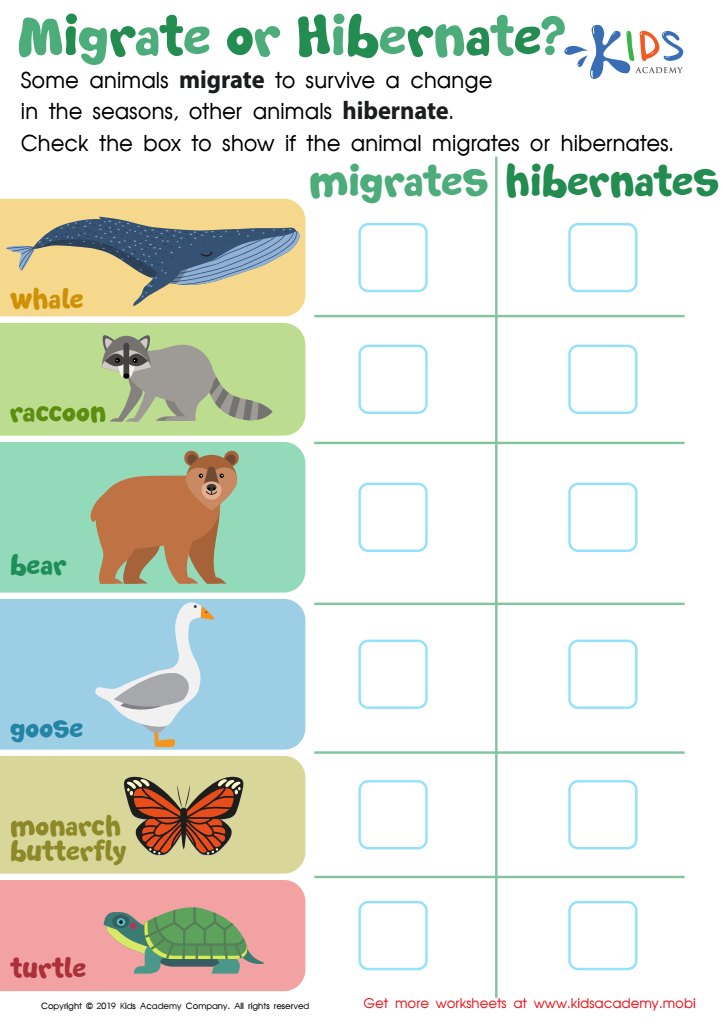
Migrate or Hibernate? Worksheet
Many animals survive by either migrating or hibernating when the weather changes. Migration involves traveling in flocks or herds to a more temperate climate, while hibernation is when animals stay in their homes and eat and sleep for a long period of time. Show your kids this worksheet and help them decide which strategy animals use to cope with the changing weather.
Migrate or Hibernate? Worksheet
Worksheet
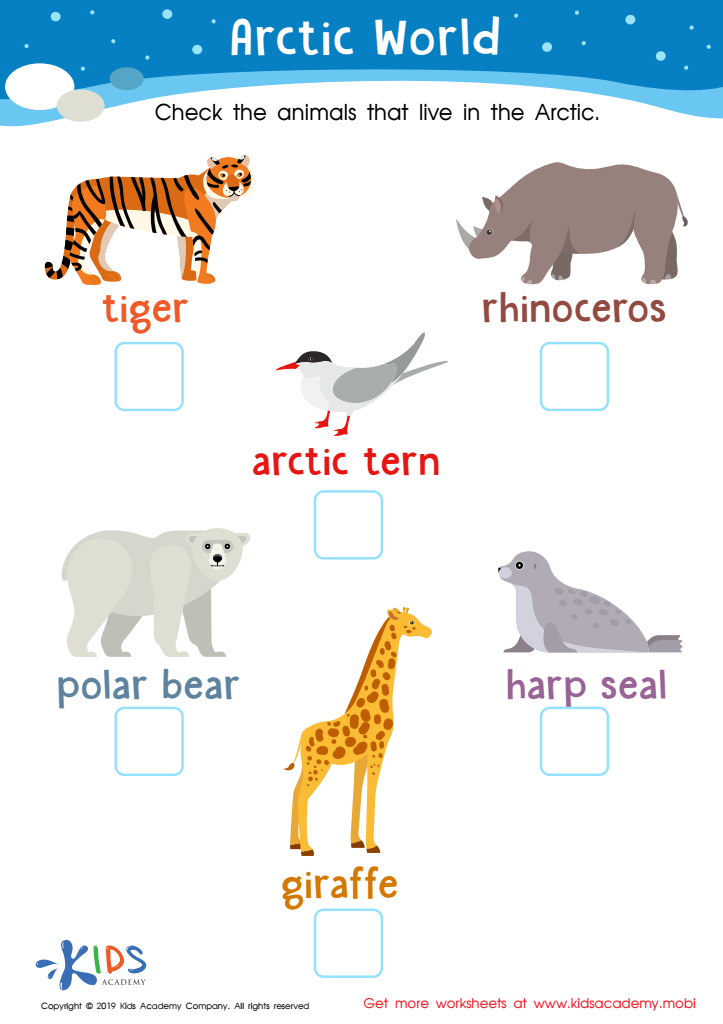
Arctic World Worksheet
Ask your students if they know where the Arctic is located and what lives there. If not, use a world atlas to show them. The Arctic is very cold and snow-covered; native animals have adapted to survive the harsh conditions. Look at the animals in the worksheet and help your students decide which ones live in the Arctic.
Arctic World Worksheet
Worksheet
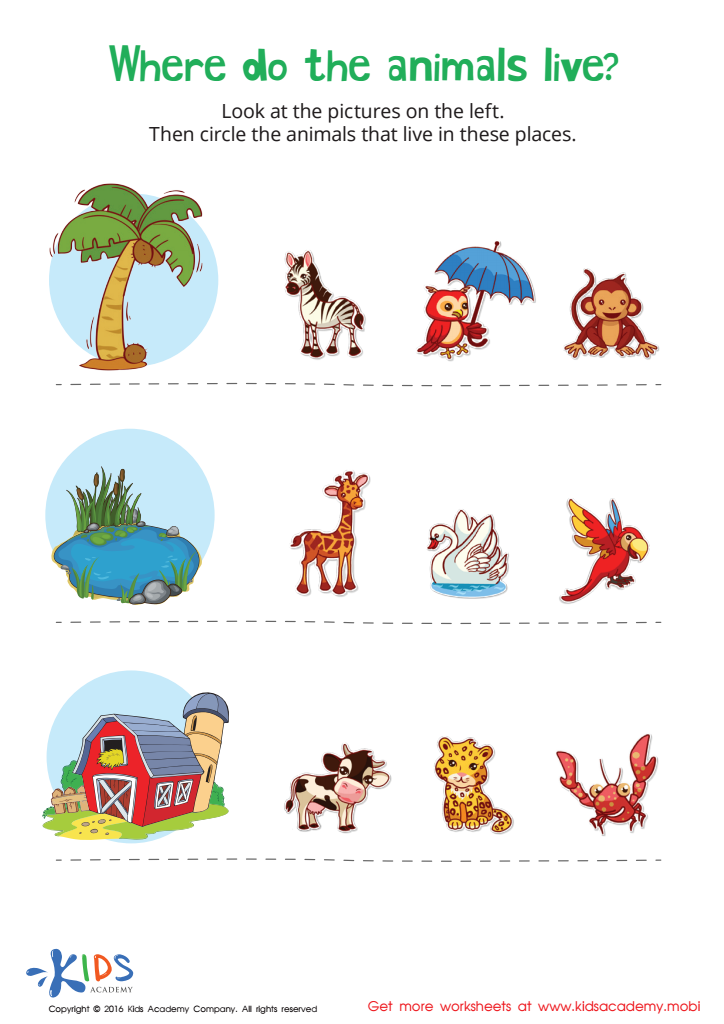
Where Animals Live Worksheet
Teaching early reading and math skills is important, but don't forget about science. With the Where Animals Live PDF worksheet, kids can identify their favorite animals and the environments they live in. Ask them what type of environment the animals like and introduce them to geography. It's great for logical reasoning and classification skills. Your kid will practice with their favorite animals and love the trip to the zoo afterwards!
Where Animals Live Worksheet
Worksheet
Join Kids Academy for Free
Who is primarily going to use this learning content?








Reading comprehension plays a crucial role in the early development of children aged 3-5, especially in the context of understanding animals. Firstly, children at this age are naturally curious about the world around them, including animals. By integrating animal-themed stories and concepts into reading, parents and teachers can capture children's interest, making literacy learning more engaging and enjoyable.
This early exposure to reading comprehension helps build critical thinking skills as children learn to identify main ideas, remember details, and make predictions about stories. It fosters vocabulary growth, teaching children new words related to animals and their habitats, behaviors, and characteristics, enriching their language skills and overall learning.
Furthermore, understanding animals can ignite a passion for science and nature, promoting empathy and awareness of living beings. It paves the way for environmental stewardship and responsible behaviors toward animals and their habitats.
By prioritizing reading comprehension about animals in early education, parents and teachers lay a solid foundation for lifelong learning, encourage bonding through shared reading experiences, and nurture a well-rounded, compassionate human being who respects the world around them. Thus, focusing on animal-related literacy is not only fun but deeply beneficial for young children's development.








