Enhancing observation skills Science Worksheets for Ages 3-5
6 filtered results
-
From - To
Discover our "Enhancing Observation Skills Science Worksheets" designed for children ages 3-5! These engaging printable worksheets help young learners develop crucial observational skills through fun and interactive activities. Focused on fostering curiosity, these resources encourage kids to explore their surroundings, ask questions, and identify patterns in nature. Each worksheet is thoughtfully crafted to stimulate critical thinking, promote creativity, and enhance scientific understanding while making learning enjoyable. Ideal for parents and teachers alike, these worksheets are perfect for both classroom and home settings. Unlock your child’s potential and nurture a lifelong love for science with our captivating observation skills worksheets!
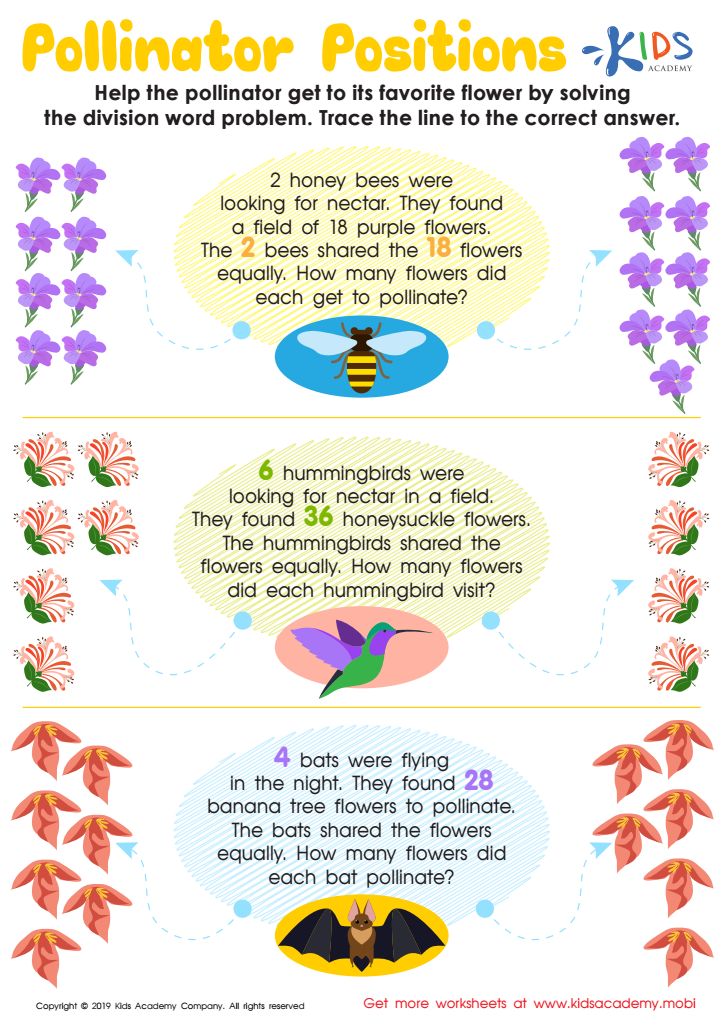
Pollinator Positions Worksheet
 Assign to My Students
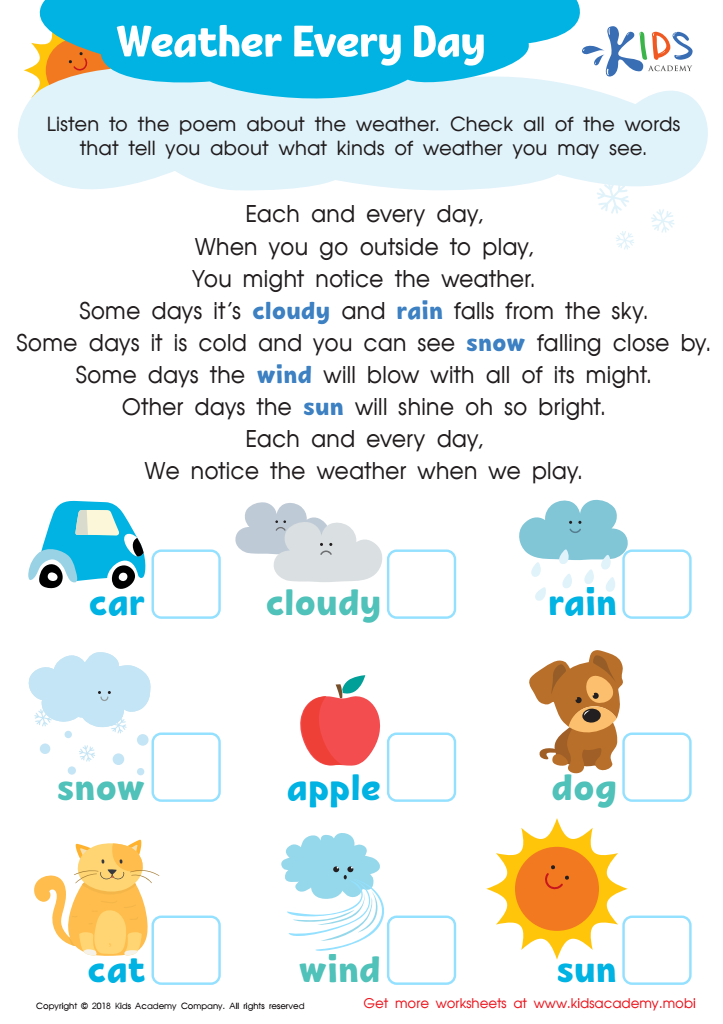
Weather Every Day Worksheet
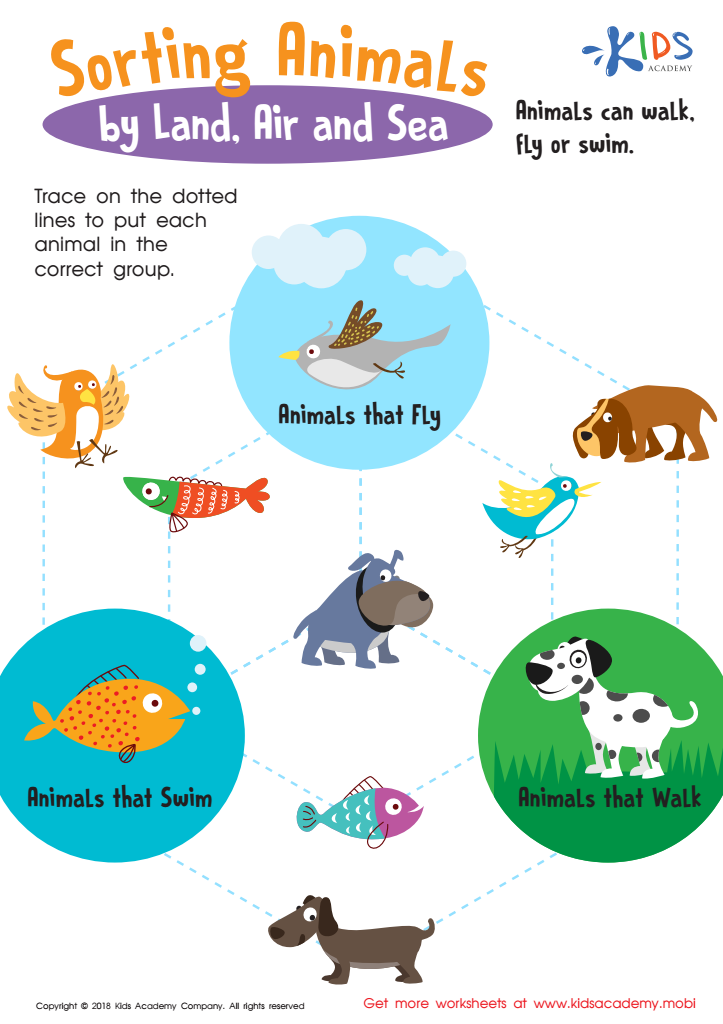
Sorting Animals by Land, Air and Sea Worksheet
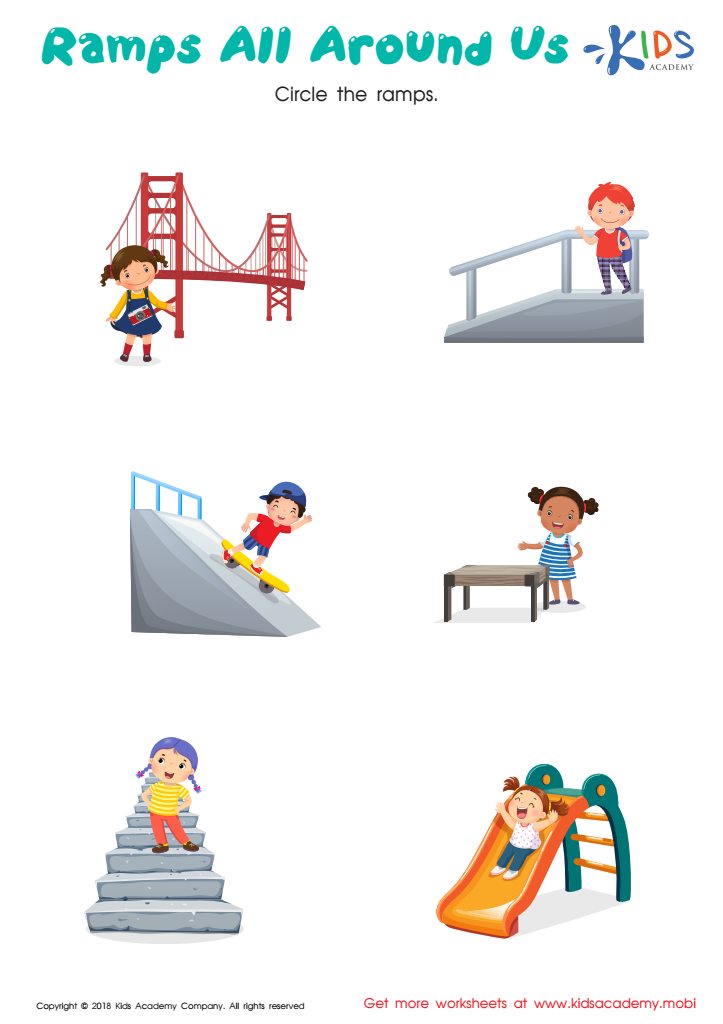
Ramps All Around us Worksheet
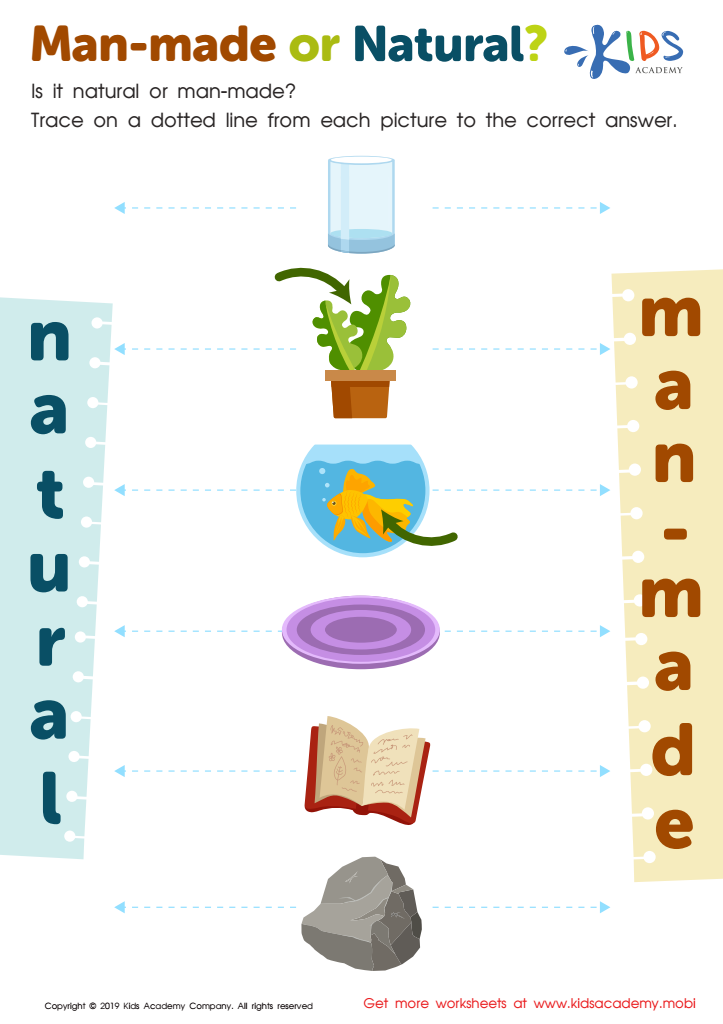
Man-Made or Natural? Worksheet
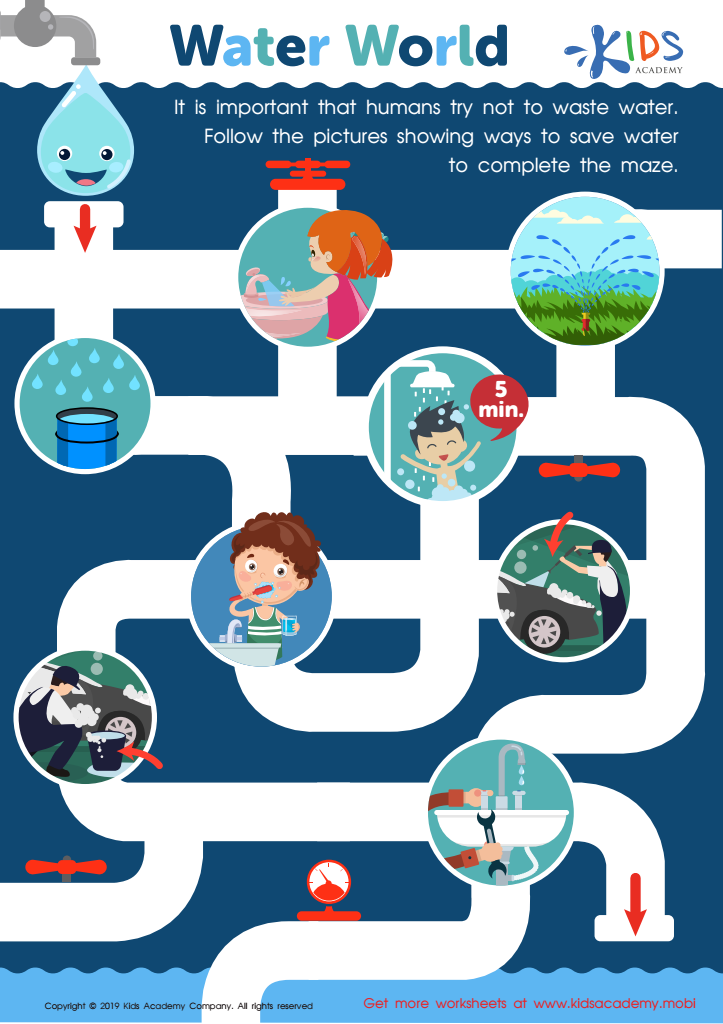
Water World Worksheet








Enhancing observation skills in young children aged 3-5 is crucial for several reasons. At this age, children are naturally curious, and fostering their ability to observe helps deepen their understanding of the world around them. Observation is the foundation of scientific inquiry; it encourages children to pay attention to details, ask questions, and develop critical thinking skills.
When parents or teachers support observation activities, they cultivate a sense of wonder and exploration in children, making learning more engaging and enjoyable. Activities like nature walks, exploring textures, or even simple tasks like sorting objects promote active engagement, facilitating better retention of information and concepts.
Moreover, enhanced observation skills can significantly support various areas of development, including language, social-emotional growth, and cognitive development. Children learn to communicate their findings, express opinions, and collaborate with peers during observation-based activities, thereby promoting effective communication and teamwork skills.
Ultimately, nurturing observation skills prepares children for future academic success, laying the groundwork for STEM learning and other subjects. By investing in these skills early, parents and teachers help children develop a lifelong love for learning and inquiry.







