Understanding directions Science Worksheets for Ages 3-5
3 filtered results
-
From - To
Enhance early learners' navigation and comprehension abilities with our 'Understanding Directions' science worksheets designed for ages 3-5. These engaging printable activities from Kids Academy help young children develop essential skills in following directions through fun, interactive exercises. Our carefully curated worksheets encourage spatial awareness, cognitive development, and critical thinking. With a focus on simple, easy-to-follow instructions, kids will enjoy learning how to understand and interpret directions. Help your child build a strong foundation in science and everyday life skills with these reliable and educational resources. Discover the joy of learning with Kids Academy today!
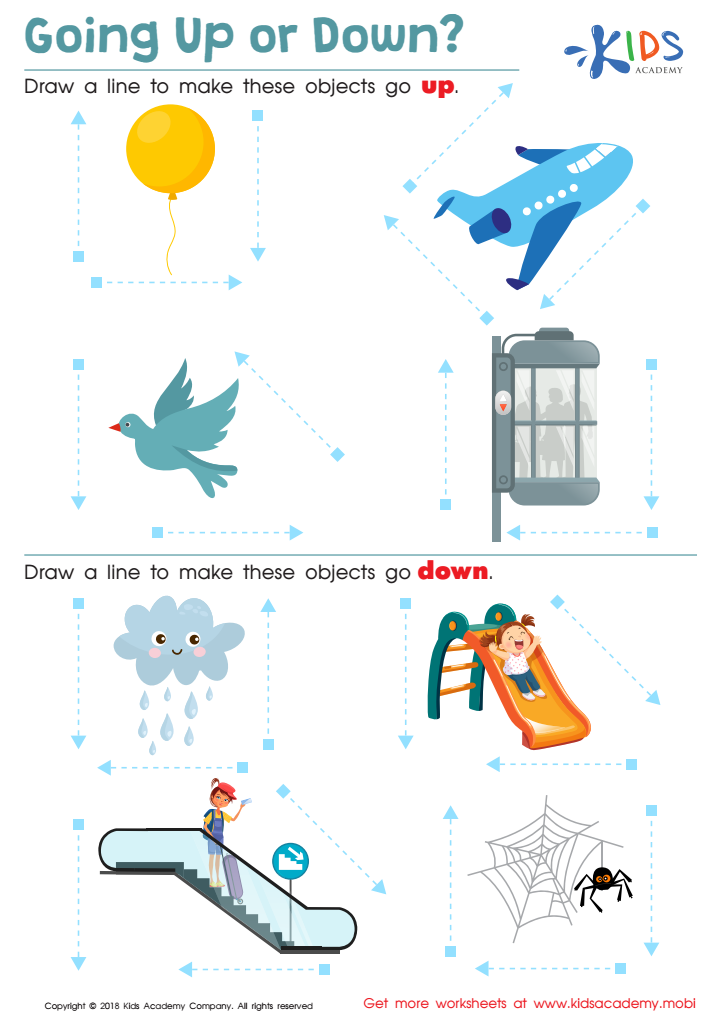
Going up or Down? Worksheet
 Assign to My Students
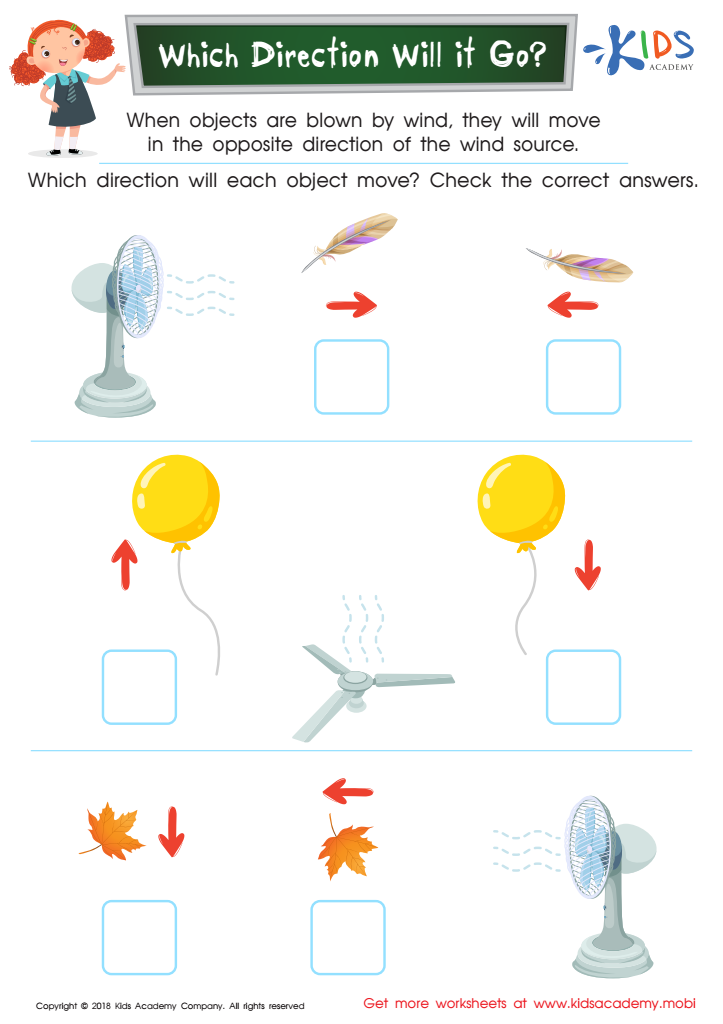
Which Direction Will it Go? Worksheet
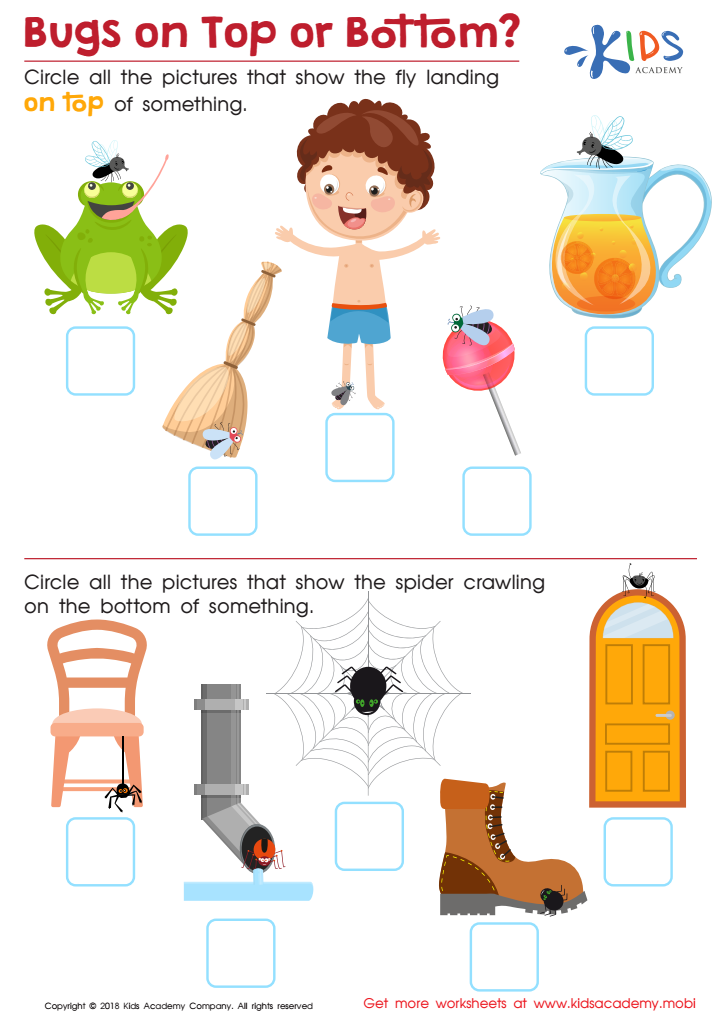
Bugs on Top or Bottom? Worksheet







Understanding directions in science for ages 3-5 is crucial because it lays the foundation for critical thinking, problem-solving, and a lifelong love of learning. At this tender age, children are naturally curious and eager to explore the world around them. Introducing them to basic scientific concepts through directed activities and simple experiments nurtures this innate curiosity.
When children follow directions in scientific tasks, they learn to observe, ask questions, and think logically. Simple activities such as mixing colors, observing plant growth, or experimenting with water and sand teach kids about cause and effect, a fundamental scientific principle.
Moreover, parents and teachers play a pivotal role in shaping children's attitudes toward learning. By engaging young children in science, adults demonstrate that learning is enjoyable and valuable. This fosters a positive learning environment and helps develop persistence and attention to detail, skills that are critical not only in science but in everyday life.
Additionally, early exposure to science sets the stage for future academic success. It promotes language development as children learn new vocabulary and fine motor skills as they manipulate objects. Thus, investing time and effort in understanding and encouraging science directions for young children can have lasting benefits.







