Spatial awareness Physical Science Worksheets for Ages 3-5
3 filtered results
-
From - To
Boost your child's curiosity and foundational knowledge with our Spatial Awareness Physical Science Worksheets, ideal for ages 3-5. These carefully designed activities encourage young learners to explore and understand their surroundings through hands-on experiences. Each worksheet features engaging visuals and interactive elements that foster critical thinking skills related to space, shapes, and relationships. As children complete these worksheets, they enhance their problem-solving abilities and develop a better understanding of spatial concepts crucial for early physical science education. Perfect for home or classroom use, our worksheets are a fun and educational tool to support your child's growth and exploration of the world around them.
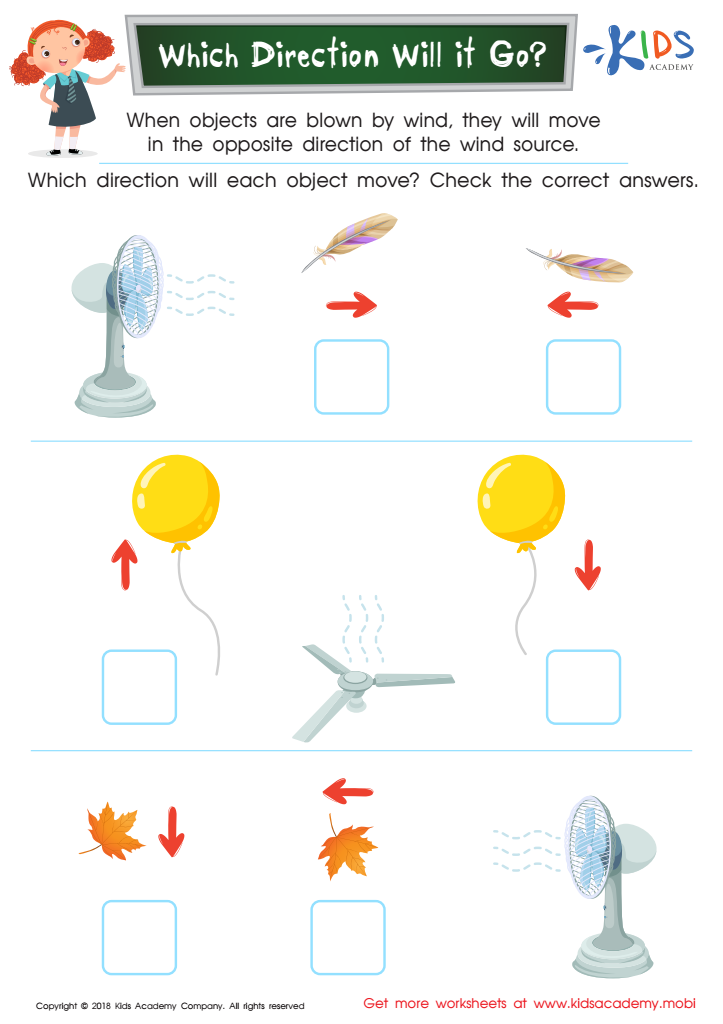
Which Direction Will it Go? Worksheet
 Assign to My Students
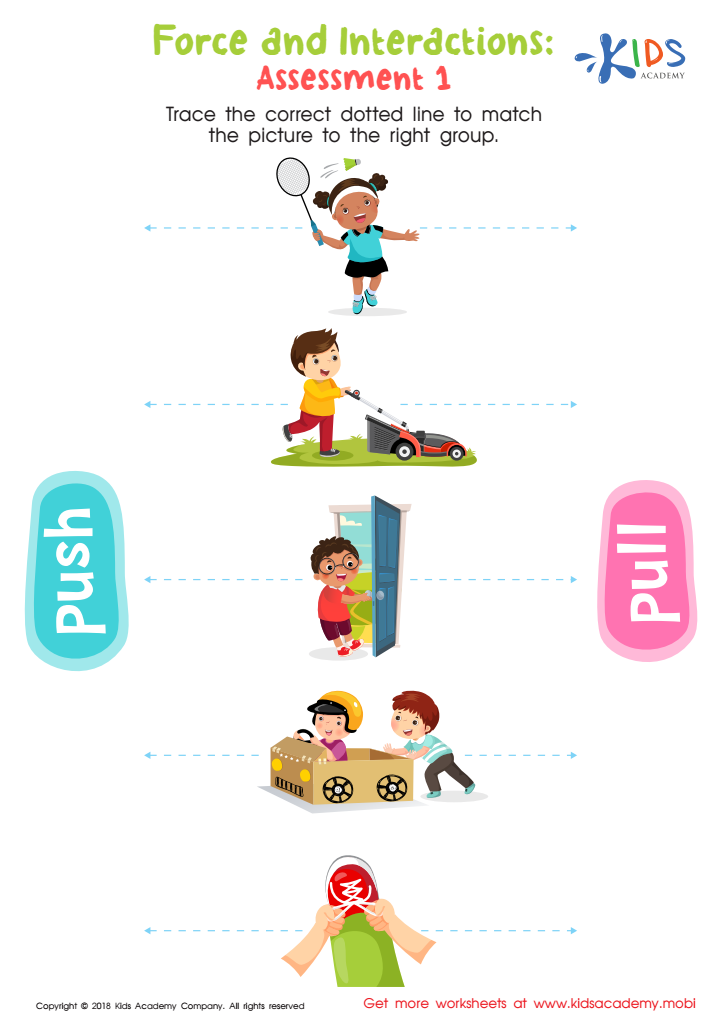
Force and Interactions: Assessment 2 Worksheet
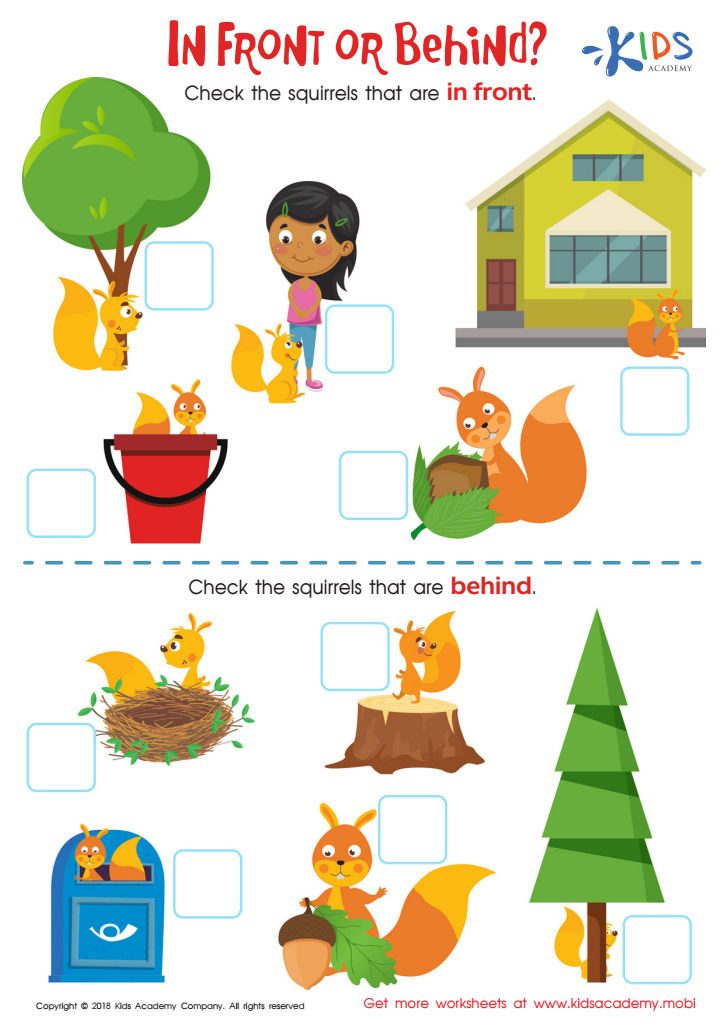
In Front or Behind: Part 2 Worksheet








Spatial awareness is a crucial aspect of development for children ages 3 to 5 and plays a vital role in their everyday learning and interactions. Parents and teachers should recognize its significance because it lays the groundwork for essential cognitive skills like problem-solving, critical thinking, and even mathematical understanding. By promoting spatial awareness, young children enhance their ability to understand relationships between objects, navigate their environment, and grasp concepts related to shapes, dimensions, and directions.
Engaging children in spatial activities—such as building blocks, puzzles, or outdoor play—supports their physical science learning. It helps them discover concepts like balance, gravity, and coordinate movement, making science more relatable and enjoyable. These foundational experiences stimulate curiosity and encourage exploration, vital components in early education.
Moreover, fostering spatial awareness aids in developing fine and gross motor skills, crucial for overall physical coordination. When parents and teachers actively integrate spatial activities into play and learning, they contribute to a more well-rounded, enriched educational experience that prepares children for future academic success. In summary, understanding spatial awareness is vital for cognitive and physical development, making it an essential focus for caregivers of young learners.







