Reading Skills Writing Worksheets for Ages 3-5
5 filtered results
-
From - To
Introduce your child to the magical world of reading with our "Reading Skills Writing Worksheets for Ages 3-5." Specially designed for preschoolers and kindergartners, these worksheets make learning to read exciting and engaging. Each activity encourages letter recognition, phonics awareness, and vocabulary building through fun and interactive exercises. Perfect for both classroom use and at-home practice, our worksheets help young learners develop a strong foundation in reading, ensuring they are prepared for future academic success. Foster a love for reading while enhancing essential language skills with our comprehensive and playful resources.
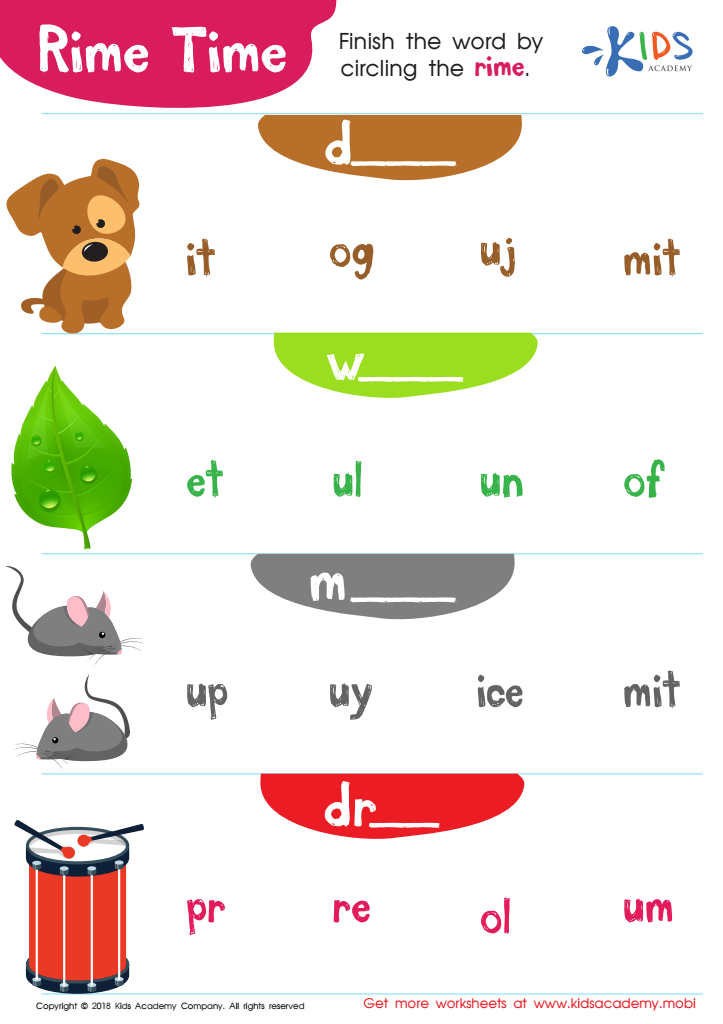
Rime Time Worksheet
 Assign to My Students
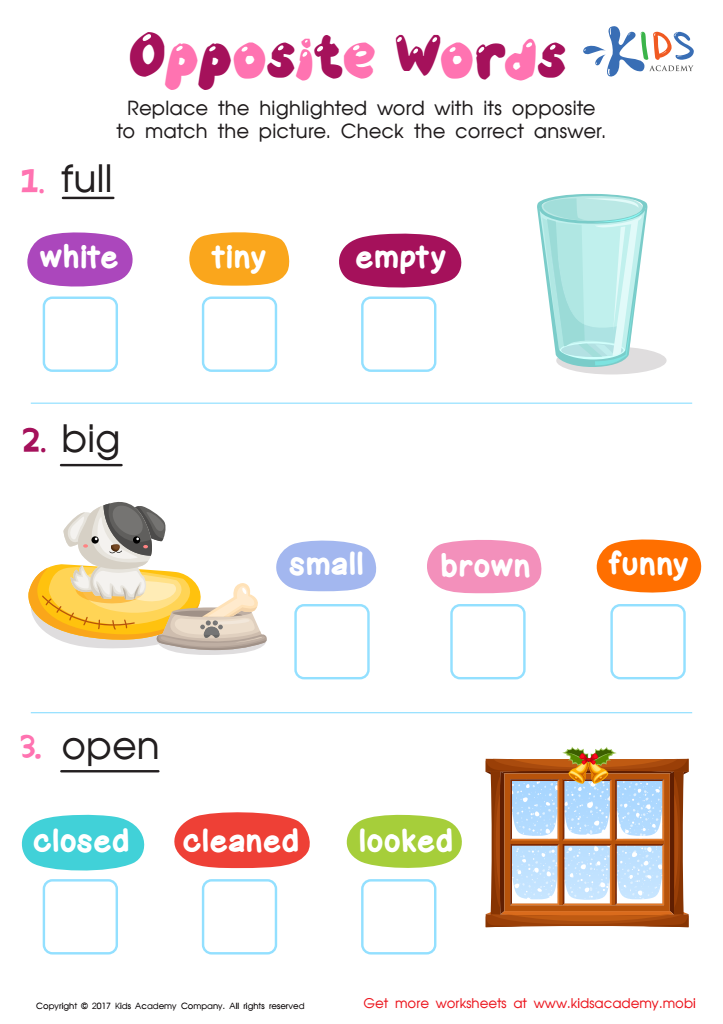
Opposite Words Worksheet
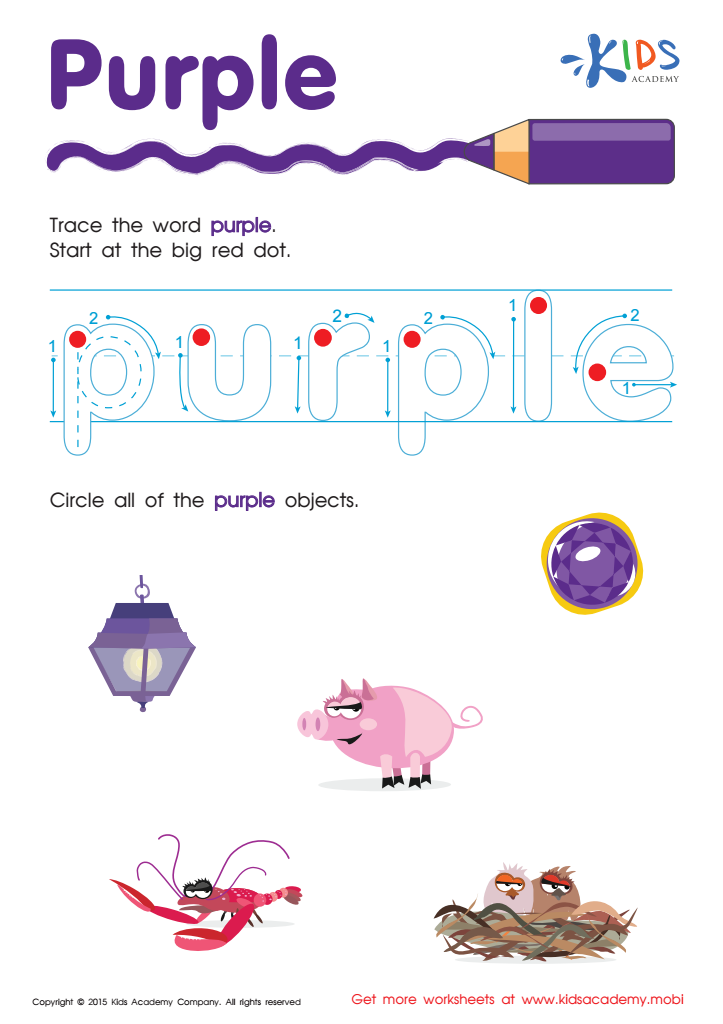
Purple Tracing Color Words Worksheet
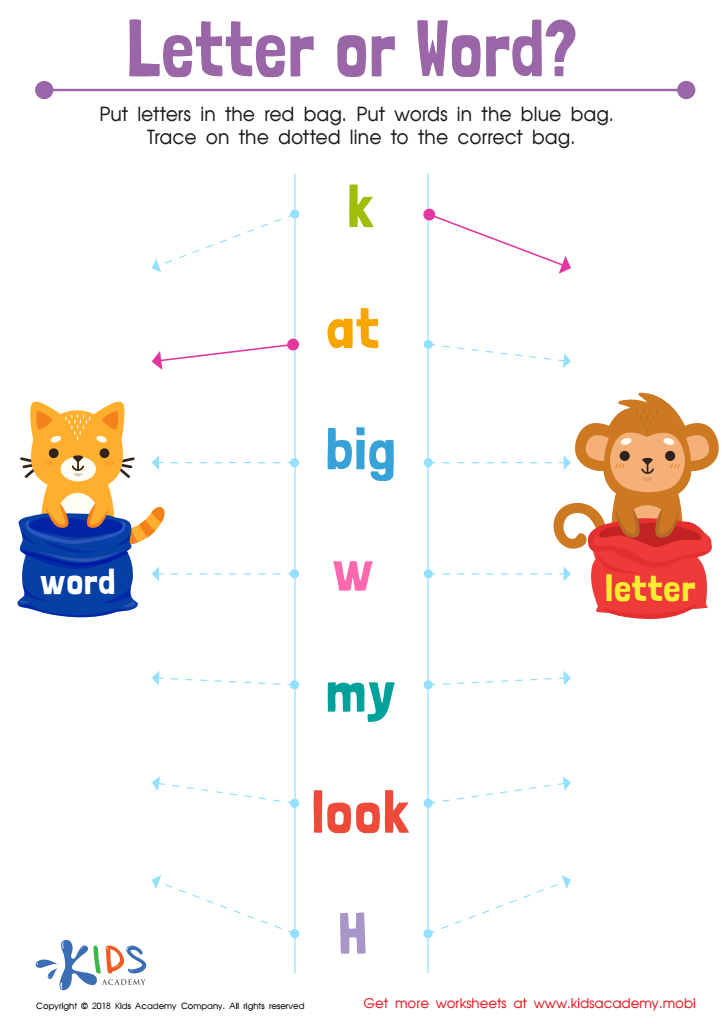
Letter or Word? Worksheet
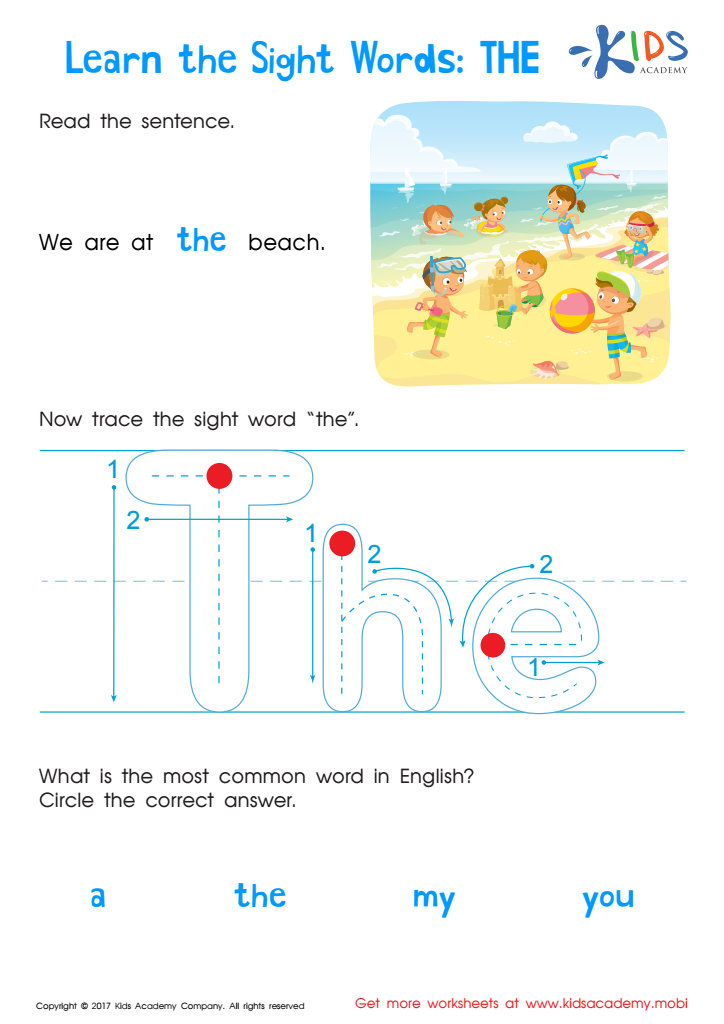
Sight Words: The Worksheet








Reading and writing skills are foundational to a child's overall development, particularly in the crucial ages between three and five. These early years are a period of rapid growth in the brain, making it an ideal time to introduce literacy skills.
Firstly, strong reading skills at this age foster cognitive development by enhancing critical thinking, vocabulary, and comprehension. Children who are well-read tend to perform better academically because they can understand and process information more effectively.
Teachers or parents investing in reading and writing encourage a life-long love for learning. Storytime can become a cherished routine, sparking imagination and curiosity about the world. This early exposure helps children become more empathetic individuals by understanding diverse characters and scenarios.
Furthermore, writing skills complement reading by allowing children to express their thoughts and emotions constructively. Writing activities improve fine motor skills and hand-eye coordination, which are vital before starting formal education.
Both capabilities serve as communication tools, influencing social skills positively. Children who can read and write articulate their needs and feelings more clearly, interconnecting personal and academic growth.
In summary, nurturing reading and writing skills from a young age lays a strong educational foundation, promotes intellectual curiosity, and fosters emotional and social well-being. Parents and teachers who emphasize these skills offer vital support for the child's future success.








