Sentence construction Writing Worksheets for Ages 3-5
5 filtered results
-
From - To
Enhance your child's writing skills with our engaging Sentence Construction Writing Worksheets designed specifically for ages 3-5! These worksheets offer a fun and interactive way for young learners to explore sentence structure, building their vocabulary and comprehension skills. Through playful activities, kids will learn to construct simple sentences, fostering creativity and confidence in their writing. Each worksheet is tailored to the developmental needs of preschoolers, making learning enjoyable. Perfect for use at home or in the classroom, these worksheets serve as a valuable resource for early literacy development. Start your child's writing journey today with exciting and educational sentence construction practice!
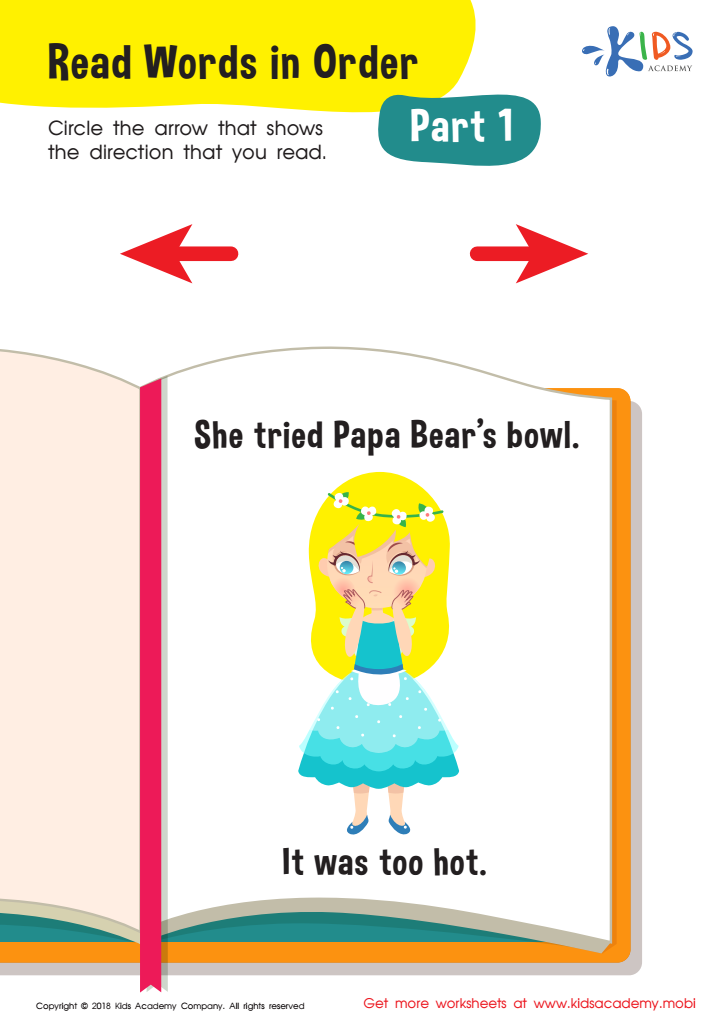
Read Words Order Part 1 Worksheet
 Assign to My Students
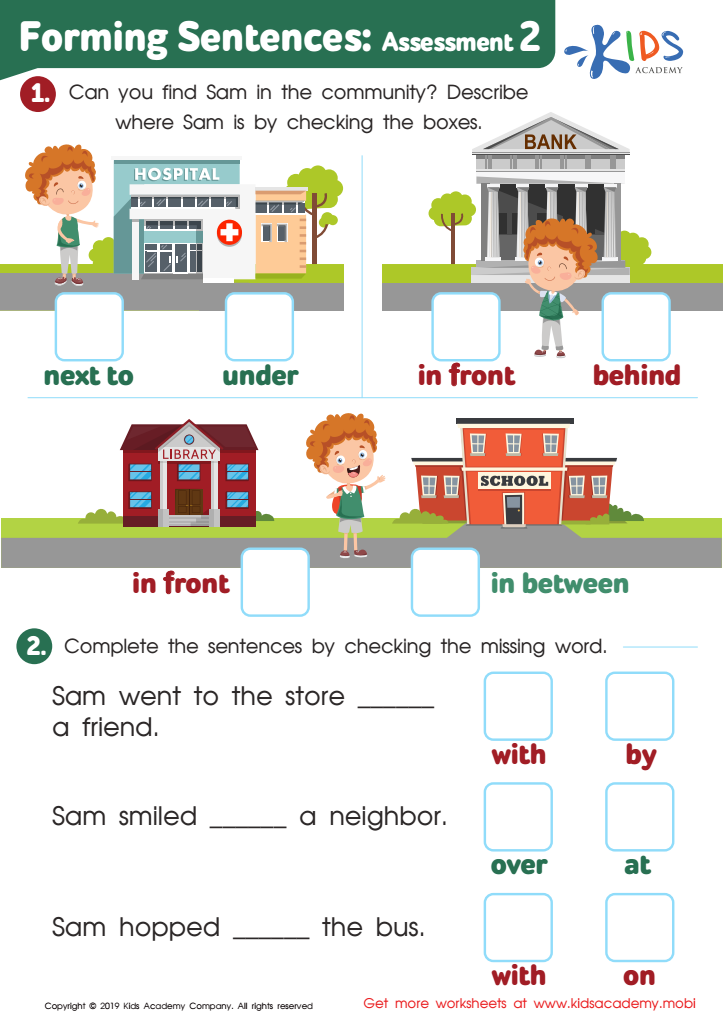
Forming Sentences: Assessment 2 Worksheet
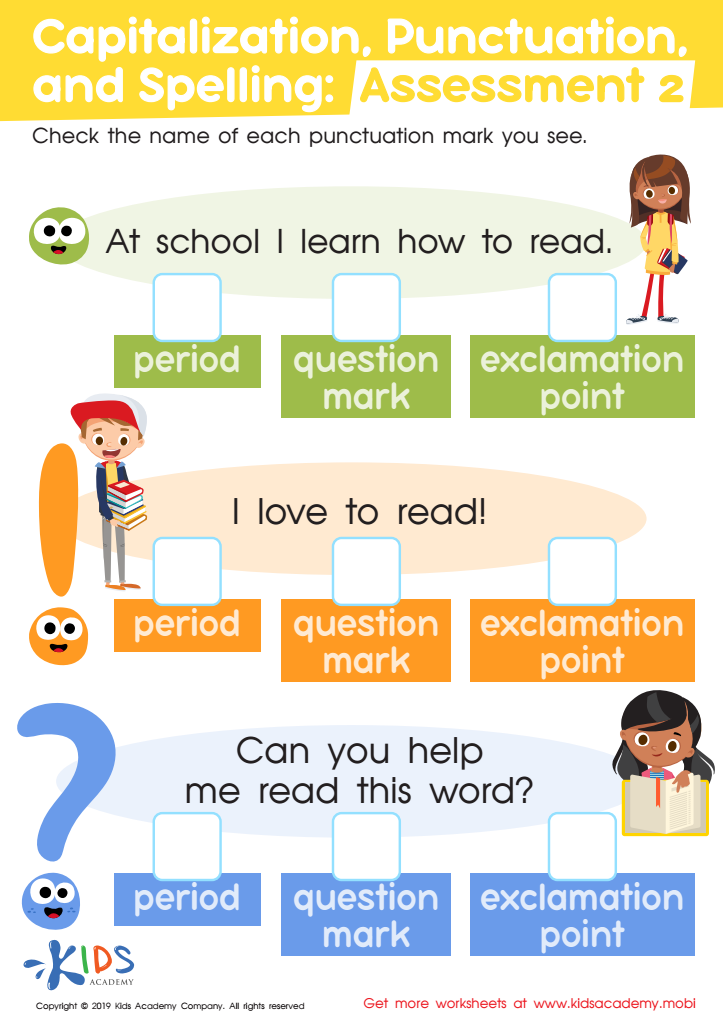
Capitalization. Punctuation. Spelling: Assessment 2 Worksheet
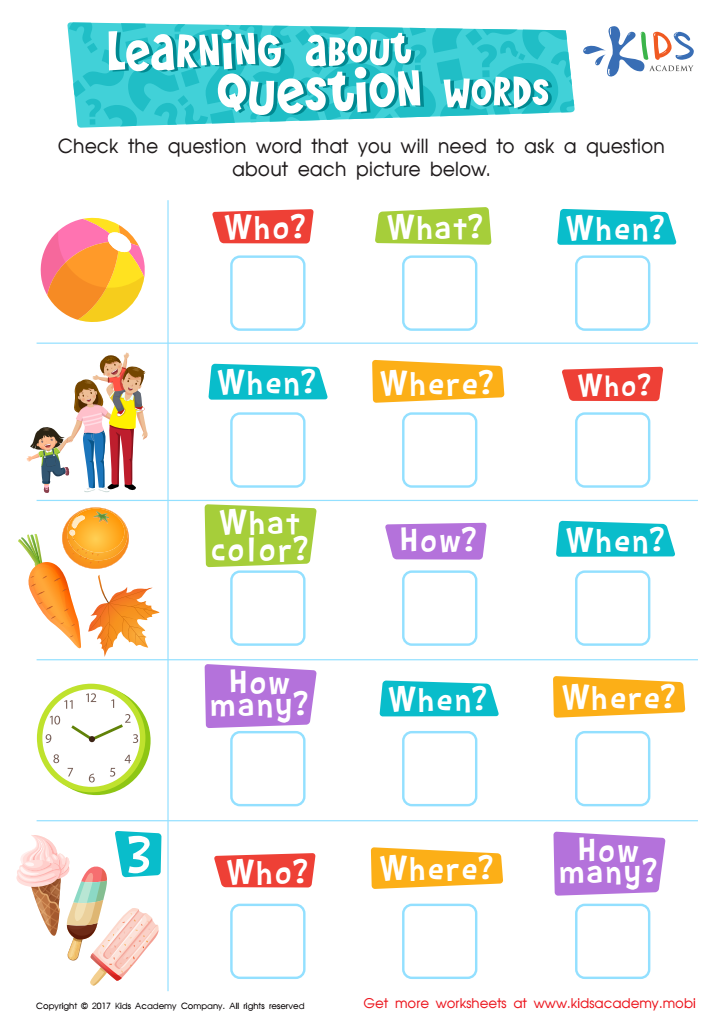
Learning about Question Words Worksheet
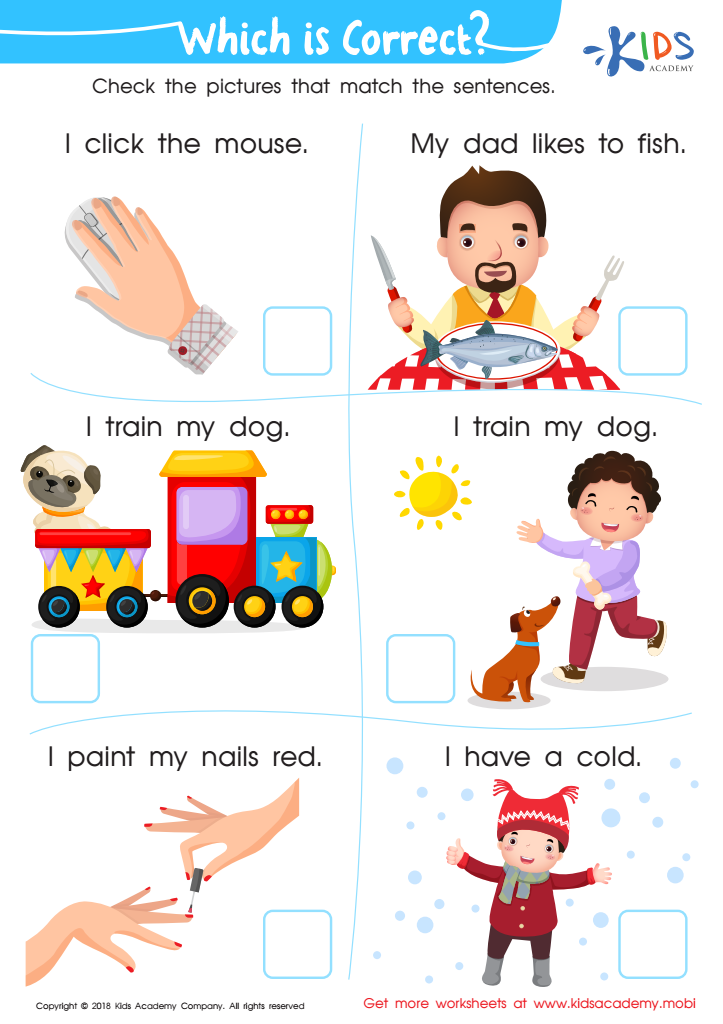
Which Is Correct? Worksheet








Sentence construction is a vital skill for children aged 3-5 as it lays the foundation for effective communication and literacy development. At this early stage, children are like sponges, absorbing new language patterns, and learning how to express their thoughts. By focusing on sentence construction, parents and teachers help children understand the structure and function of language, which is essential for cognitive development.
Encouraging young children to create sentences allows them to articulate their ideas and emotions confidently. This skill promotes social interaction, as children learn to express themselves clearly in conversations with peers and adults. Additionally, mastering sentence construction improves listening and comprehension skills, enabling children to follow directions and engage in discussions.
Furthermore, strong sentence construction skills lead to enhanced literacy development. As children begin to write, understanding how to form sentences allows them to convey stories and information more effectively. This can foster a lifelong interest in reading and writing, leading to improved academic outcomes.
Overall, focusing on sentence construction in early childhood enriches language skills, supports social development, and sets the groundwork for future educational success, making it crucial for parents and teachers to emphasize this aspect of learning.








