Verb identification Writing Worksheets for Ages 3-5
3 filtered results
-
From - To
Introduce your young learners to the exciting world of verbs with our vibrant "Verb Identification Writing Worksheets for Ages 3-5." Designed to spark curiosity and enhance early literacy skills, these worksheets provide fun and interactive activities that help children recognize and use verbs in simple sentences. Each worksheet combines colorful illustrations with engaging exercises, promoting hands-on learning and keeping young minds captivated. Ideal for home or classroom use, these printable worksheets are perfect for developing foundational language skills while making learning playful. Join us in turning everyday actions into a delightful adventure in learning verbs!
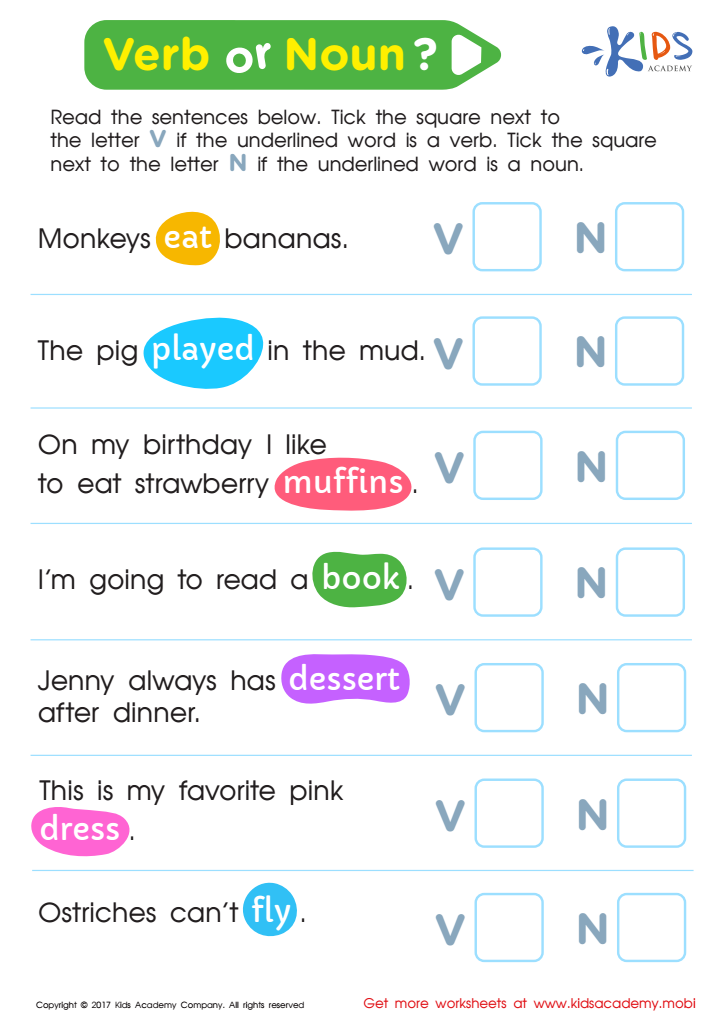
Verb or Noun Worksheet
 Assign to My Students
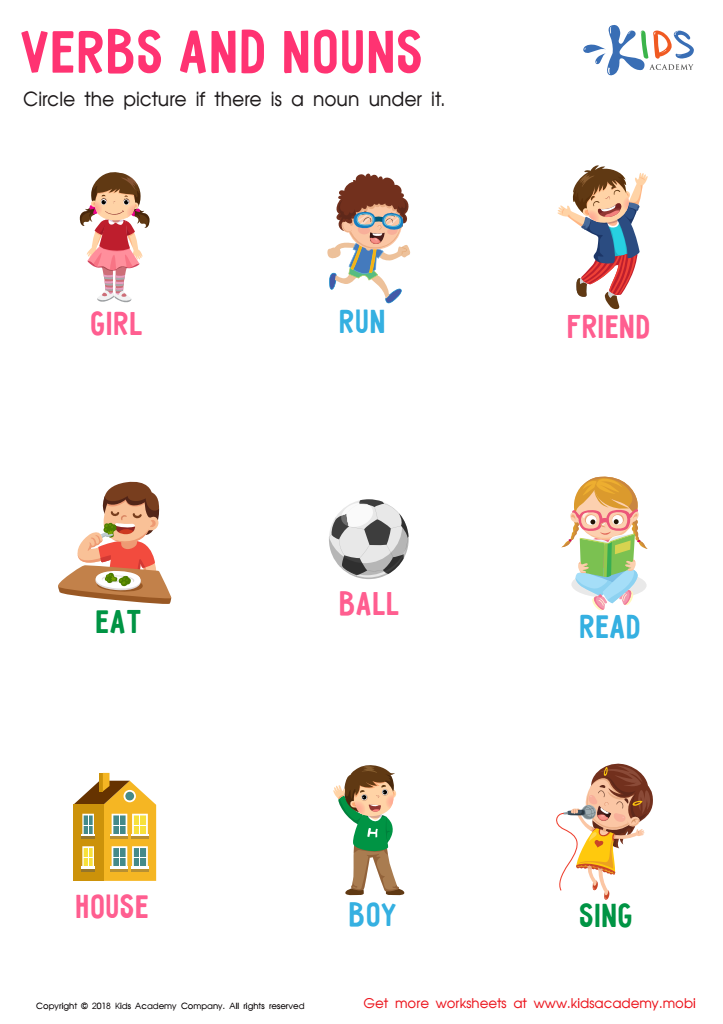
Verbs and Nouns Worksheet
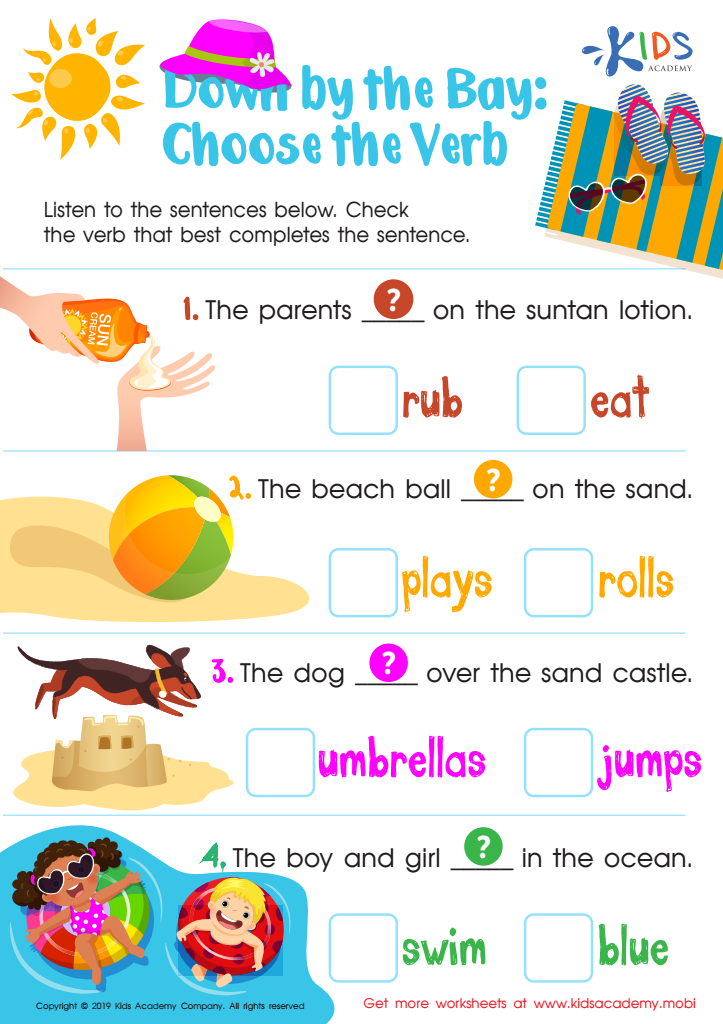
Down by the Bay: Choose the Verb Worksheet








Verb identification is a critical component in early childhood education for several reasons. Firstly, understanding verbs forms the foundation of language development. Verbs are action words that describe what people or objects are doing, and recognizing them helps children comprehend the basic structure of sentences. For ages 3-5, this knowledge boosts their ability to communicate effectively and express their needs, thoughts, and feelings.
Secondly, learning to identify verbs enhances cognitive development. It encourages kids to observe actions and events, thus fostering critical-thinking and observational skills. These skills are essential for problem-solving and decision-making later in life.
Thirdly, verb identification aids in literacy development. When young children begin to recognize and use verbs, they improve their vocabulary and sentence-building skills. This early grasp on language structures is fundamentally linked to reading comprehension and writing abilities, which are crucial for academic success.
Teachers and parents who focus on verb identification in young learners also help instill a love for storytelling and imaginative play. Children can create more vivid and dynamic narratives, whether spoken or drawn, bolstering their creativity and sense of accomplishment.
In summary, emphasizing verb identification for children ages 3-5 is pivotal for their language, cognitive, and literacy development, setting a groundwork for future educational success.








