
Word association Writing Worksheets for Ages 3-5
4 filtered results
Difficulty Level
Grade
Age
-
From - To
Subject
Activity
Standards
Help your little ones enhance their vocabulary and cognitive skills with the "Word Association Writing Worksheets" designed for ages 3-5. These engaging and fun worksheets encourage children to connect related words and improve their early literacy. Through a variety of colorful and interactive activities, kids will learn to recognize word relationships and develop their writing abilities. Perfect for preschool and kindergarten students, these worksheets support language development and critical thinking in a playful and educational way. Unlock your child’s potential with this wonderful resource and watch their confidence soar as they master word associations.
Favorites
With answer key
Interactive
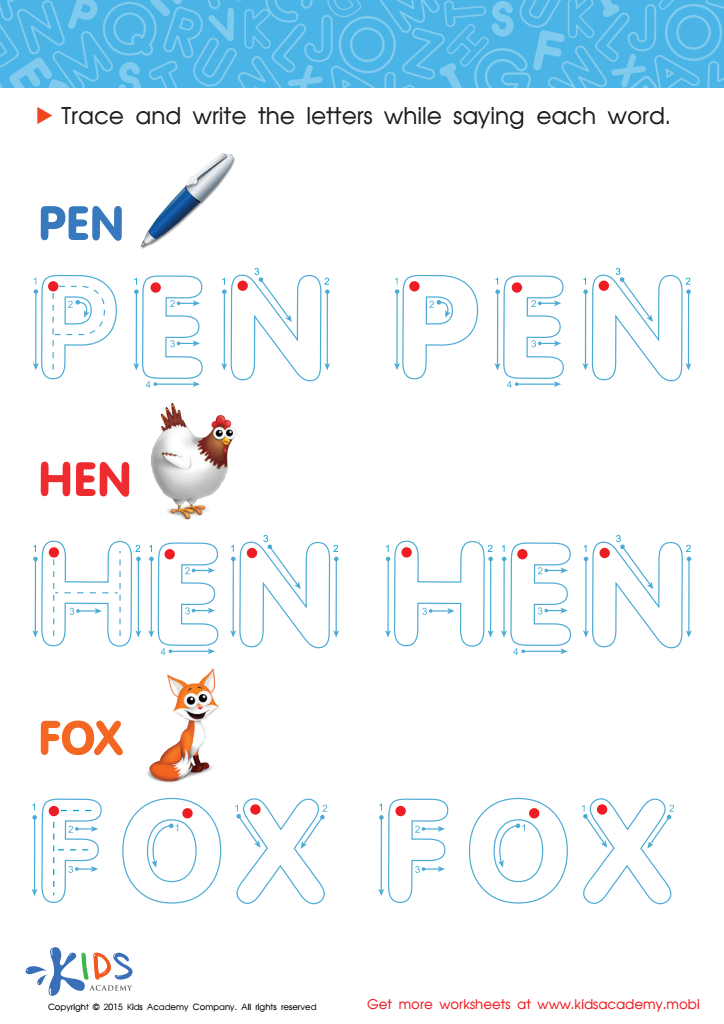
A Pen, a Hen and a Fox Spelling Worksheet
Practice spelling with this free worksheet: three lines, three new words. Say them, trace them, write them correctly. Keep learning with Kids Academy for more printable worksheets and more fun! (80 words)
 Assign to My Students
A Pen, a Hen and a Fox Spelling Worksheet
Worksheet
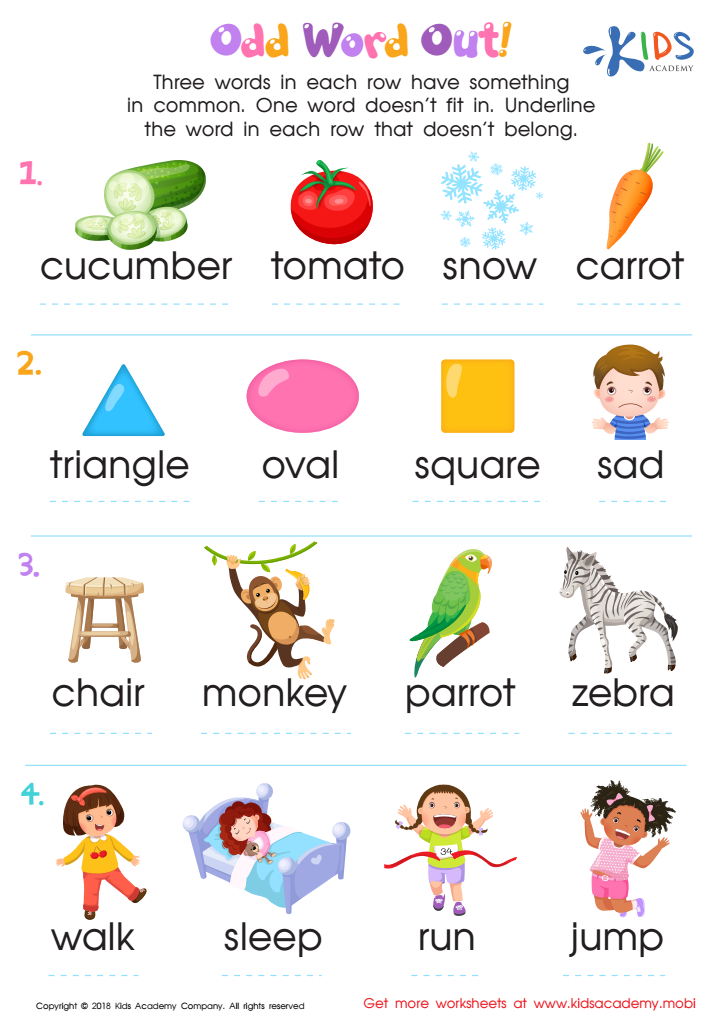
Odd Word Out Worksheet
Ask your child to name all pictures in each row and see if there's something they share. Then, have them identify the odd one out and underline it. Repeat for all words in the rows to help them understand how to identify words.
Odd Word Out Worksheet
Worksheet
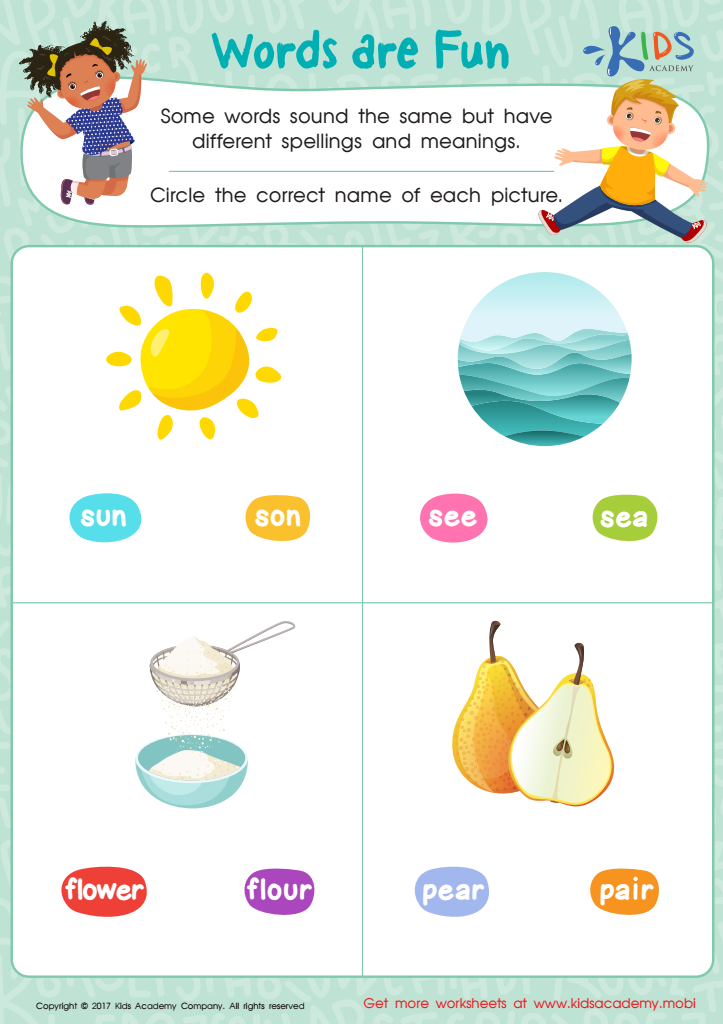
Words Are Fun Worksheet
Homonyms are words that sound the same but have different meaning and spelling. Young authors may get confused. This PDF worksheet helps them practice by matching the homonyms to pictures. They'll also build fine motor skills, important for legible writing.
Words Are Fun Worksheet
Worksheet
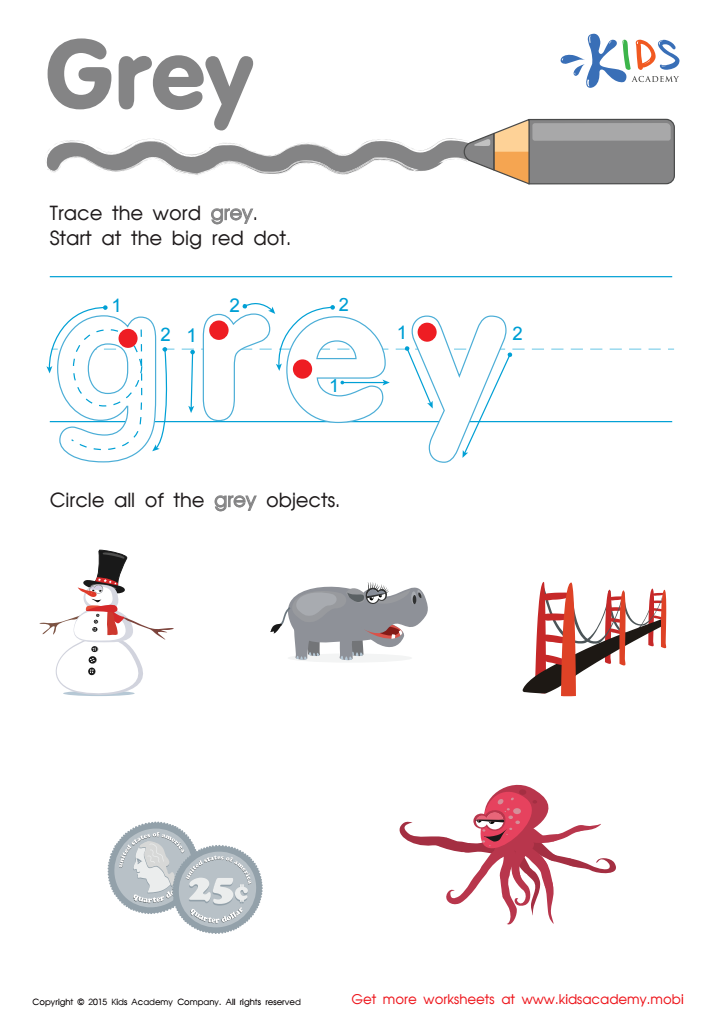
Grey Tracing Color Words Worksheet
Help your kindergartener boost their writing skills with this free printable handwriting worksheet! They can trace the sight word "grey" with a grey crayon, starting at the big red dots. Sounding out and tracing the letters can help strengthen their handwriting. Ask them to name and circle all the grey objects to give extra practice. Get more free worksheets here!
Grey Tracing Color Words Worksheet
Worksheet
Join Kids Academy for Free
Who is primarily going to use this learning content?








Word association writing is an invaluable activity for children ages 3-5. During these early years, the brain is exceptionally receptive to language development, and engaging in word association activities helps to harness this crucial developmental window. For both parents and teachers, fostering a love for words and language in young children is foundational for several reasons.
Firstly, word association writing nurtures vocabulary expansion. When children draw connections between words (“cat” and “kitten” or “sun” and “sky”), they not only learn new terms but also understand relational meanings, enriching their language framework. This enrichment is crucial for reading readiness and overall communication skills.
Secondly, it enhances cognitive skills, such as memory and logic. Associating words helps in building neuro pathways, which strengthens memory recall and problem-solving abilities. This is vital for academic and lifelong learning success.
Emotionally and socially, children who engage in these activities tend to express themselves better. Clear and effective communication skills build a stronger sense of self-esteem and facilitate smoother interactions with peers and adults.
Lastly, these activities bridge home and school learning environments. Parents and teachers working collaboratively on word association writing ensure consistency in children’s language development, creating a supportive circle of learning and reinforcing positive reinforcement both at school and home.








