Subtraction practice Worksheets for Ages 3-6
78 filtered results
-
From - To
Explore our engaging subtraction practice worksheets designed specifically for children ages 3-6! These printable resources help develop early math skills through fun and interactive activities. Perfect for teachers and parents alike, our worksheets feature colorful illustrations and age-appropriate exercises that make learning subtraction enjoyable. From simple counting exercises to engaging story problems, children will build a solid foundation in math concepts while developing critical thinking skills. Enhance your child's confidence in subtraction with our carefully crafted materials that cater to young learners. Start your subtraction journey today and watch your little ones thrive in their mathematical abilities!
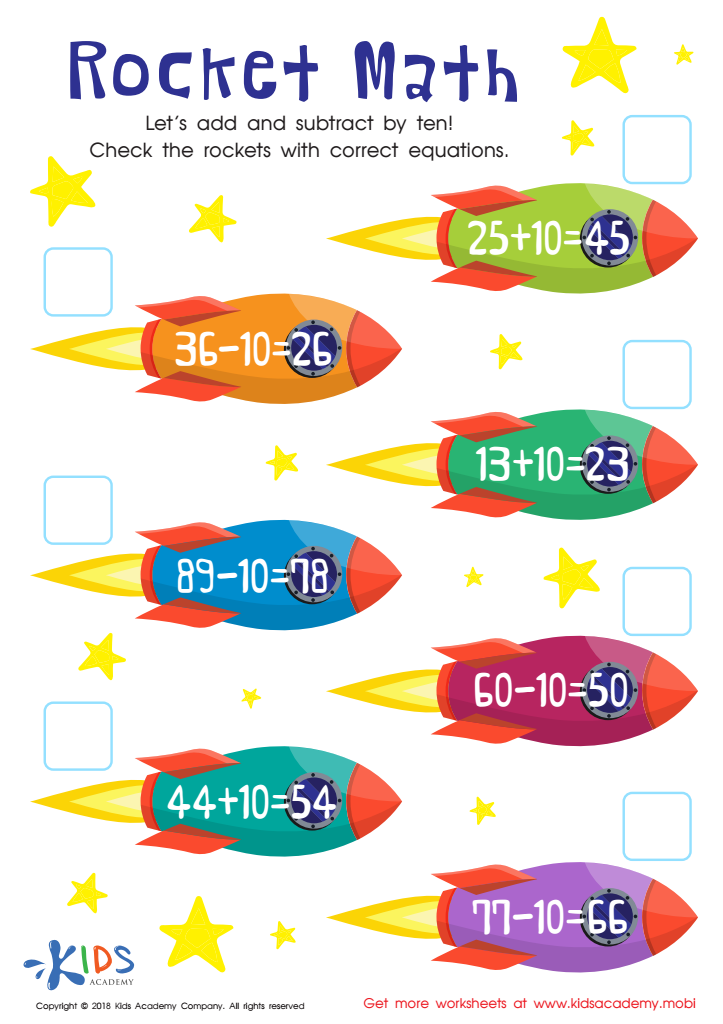
Rocket Math Worksheet
 Assign to My Students
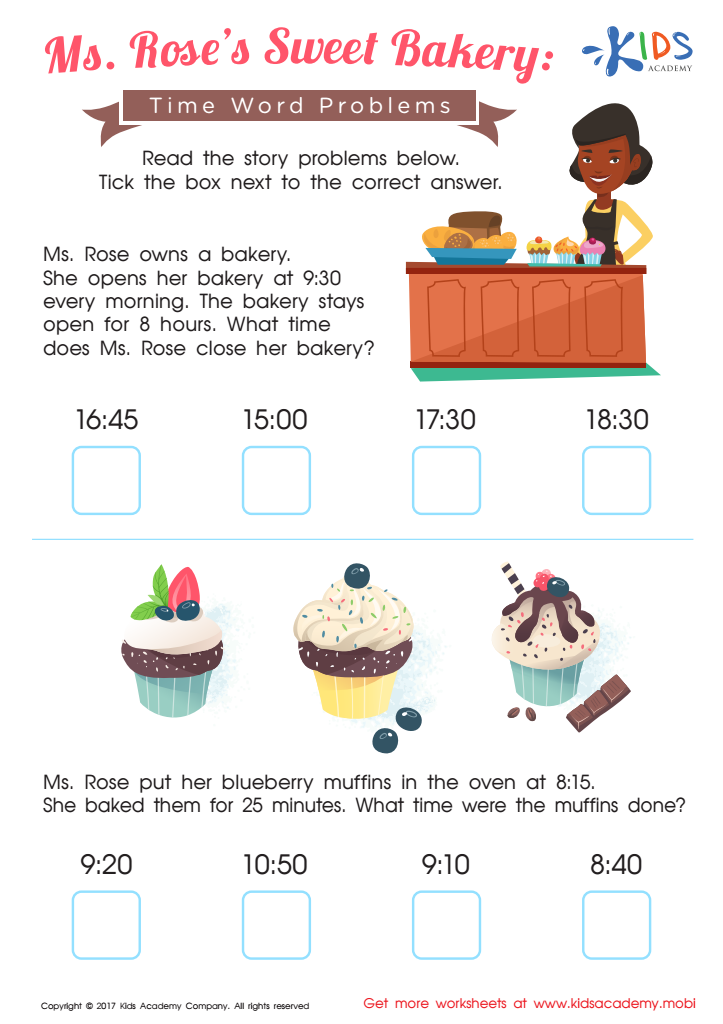
Ms. Roseв's Sweet Bakery Time Worksheet
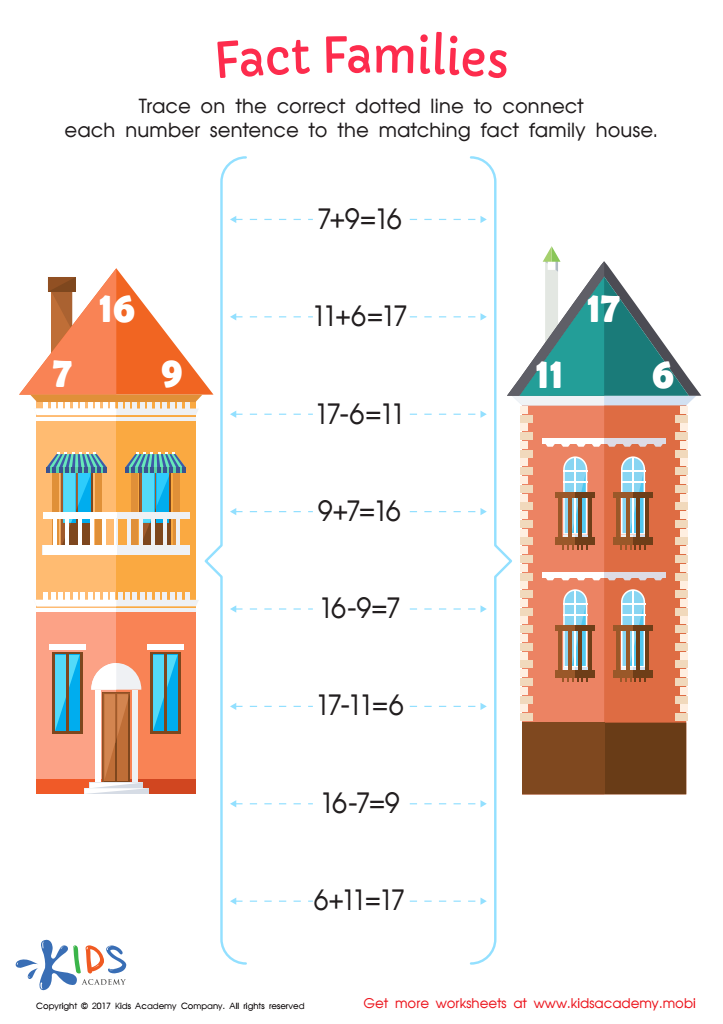
Fact Families — Add and Subtract Worksheet
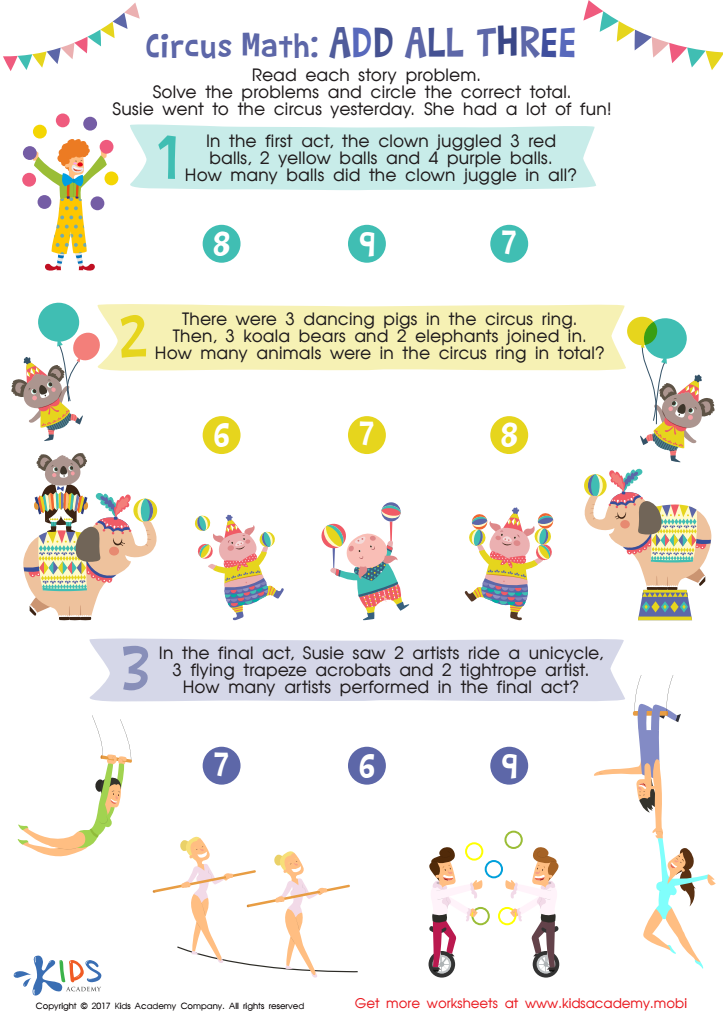
Circus Math Printable
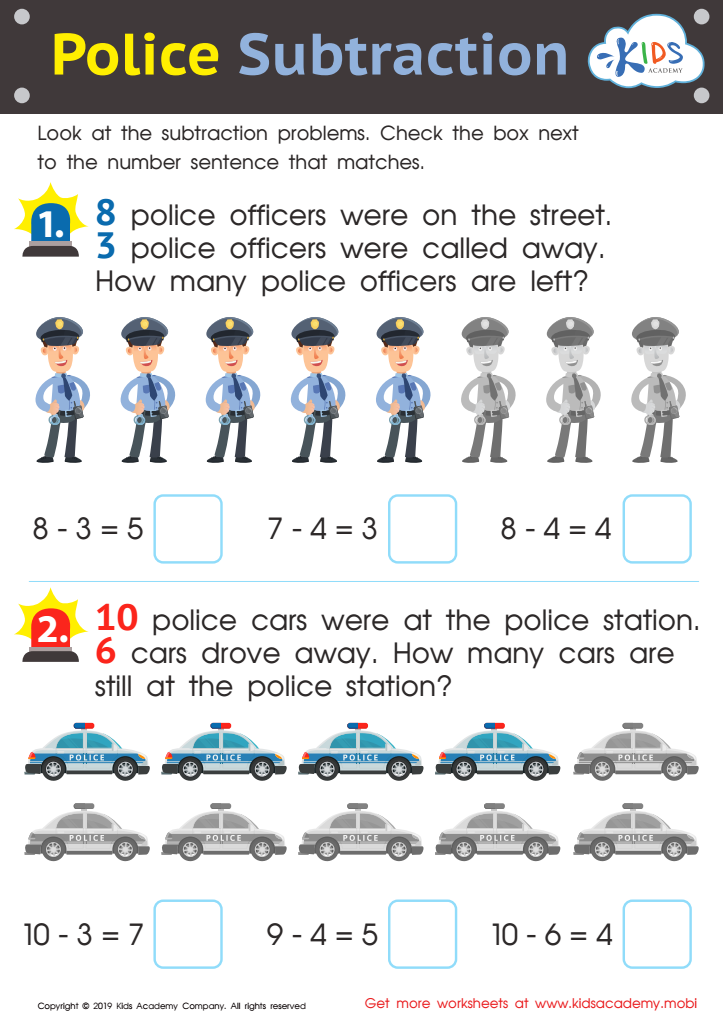
Police Subtraction Worksheet
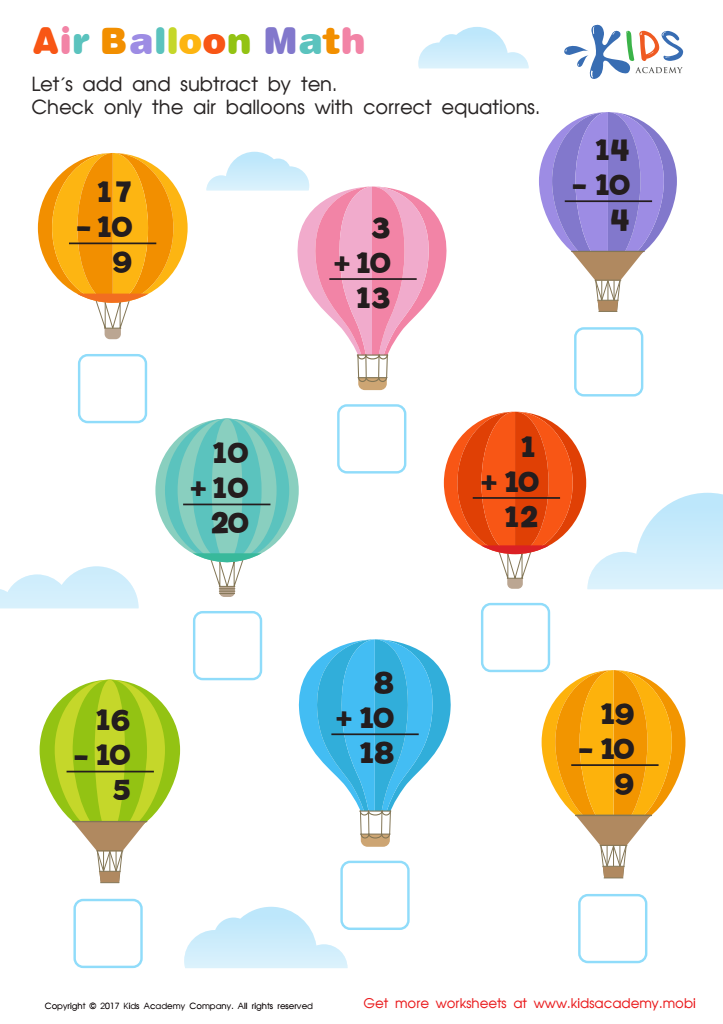
Air Balloon Math Worksheet
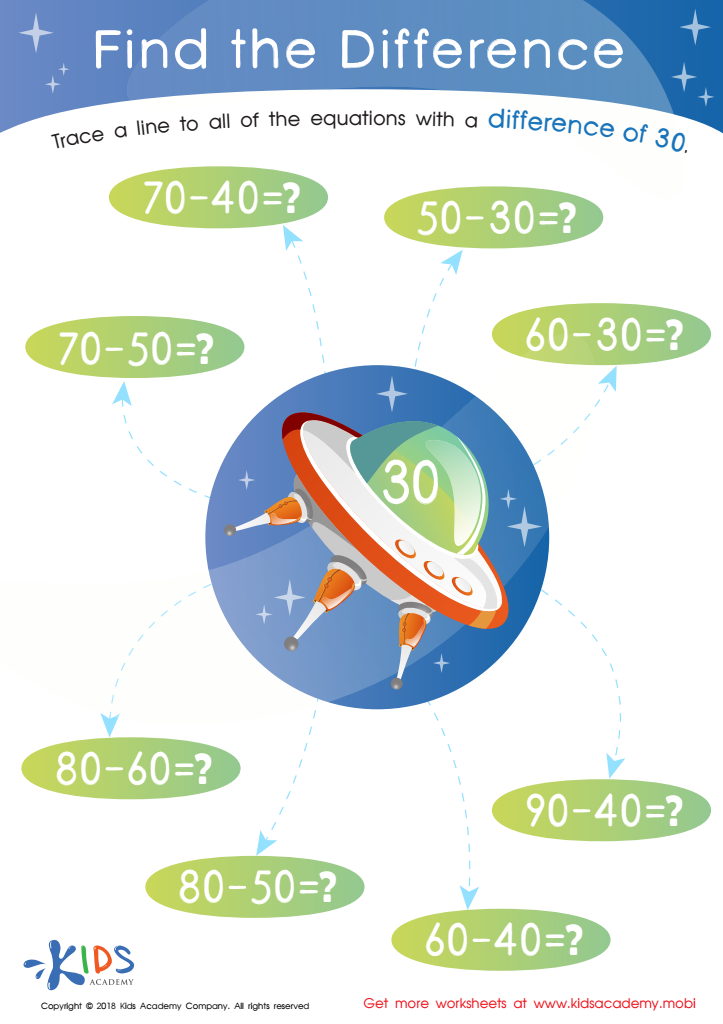
Find The Difference Worksheet
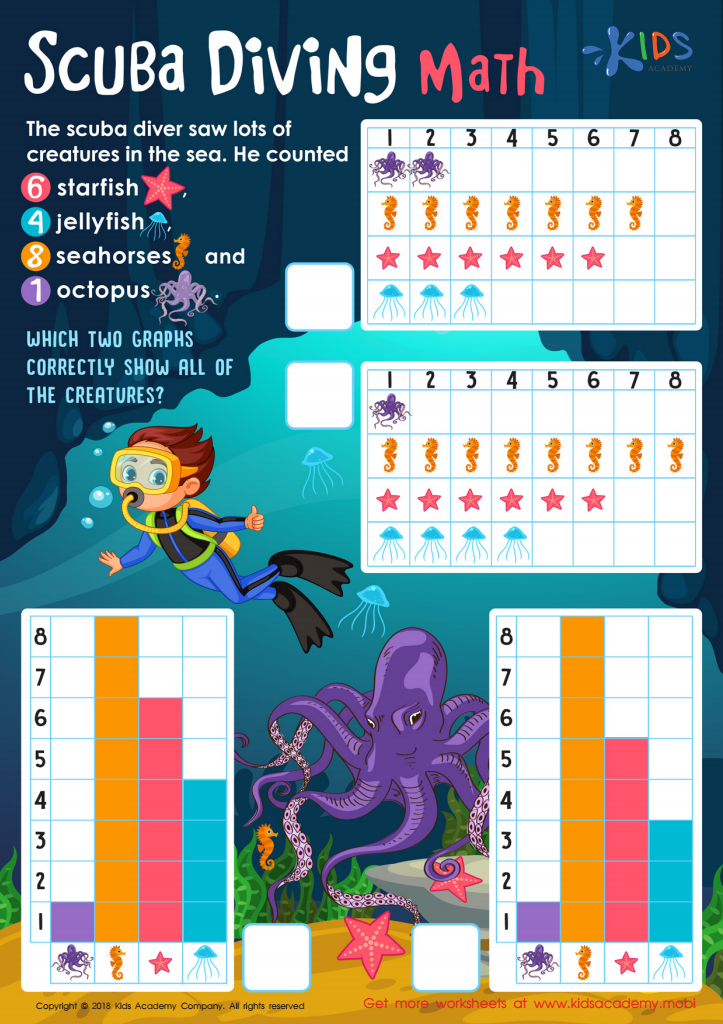
Scuba Diving Math Worksheet
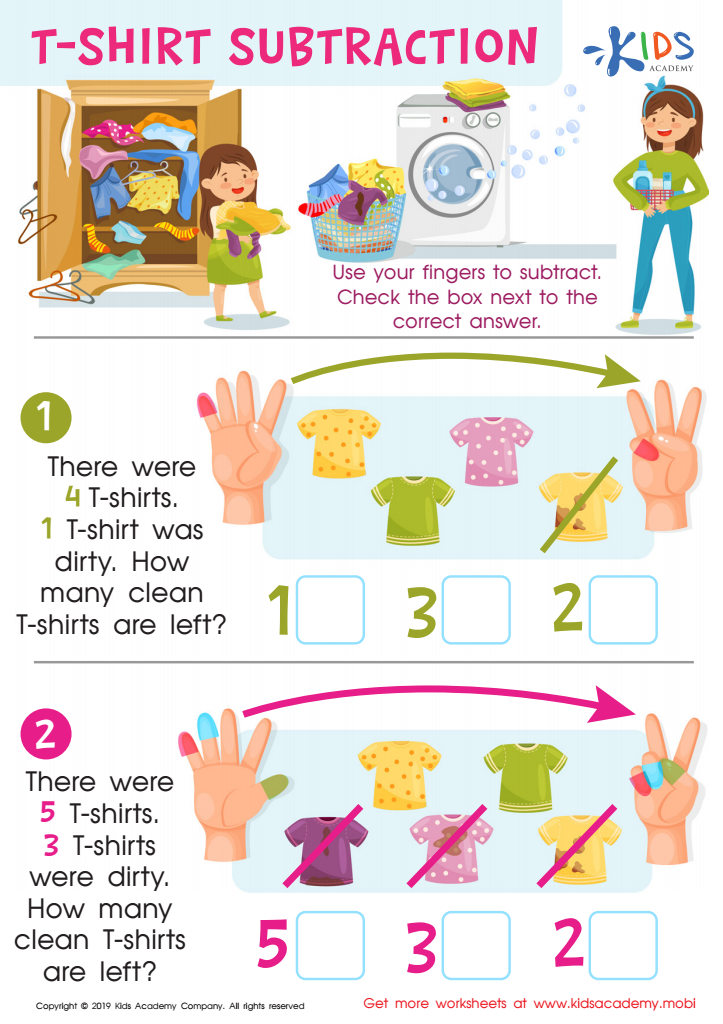
T-shirt Subtraction Worksheet
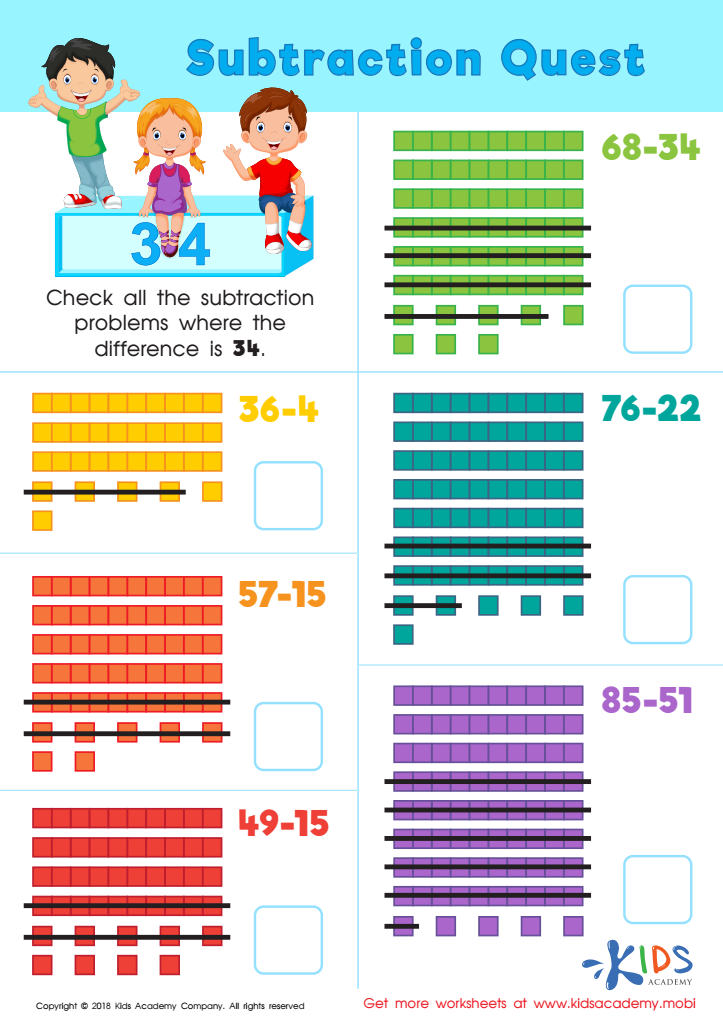
Subtraction Quest Worksheet
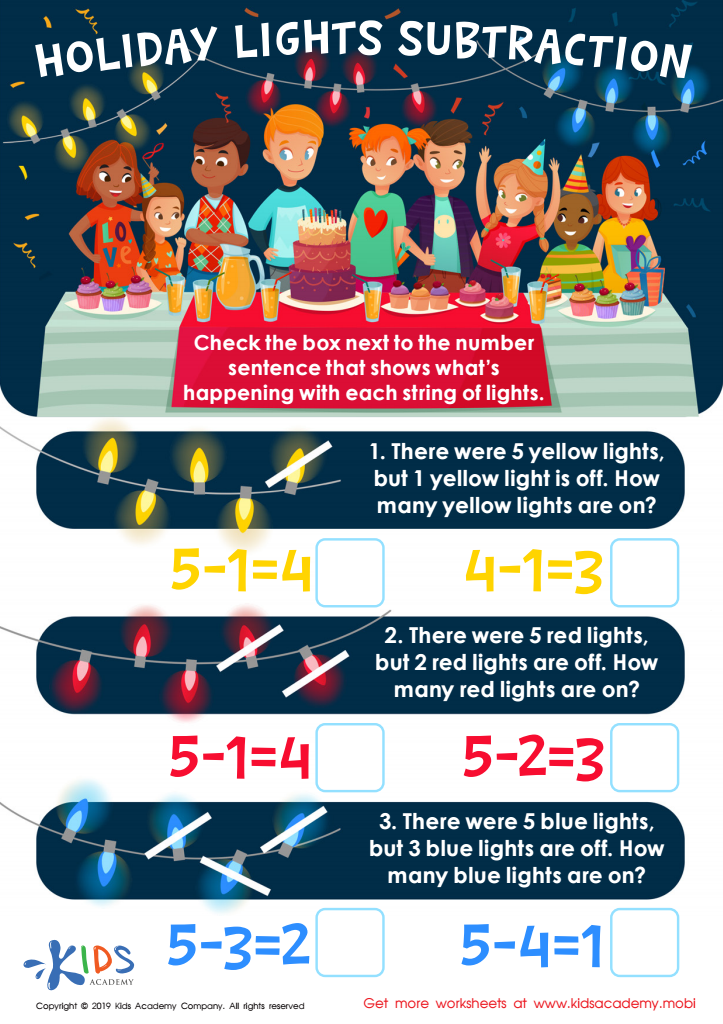
Holiday Lights Subtraction Worksheet
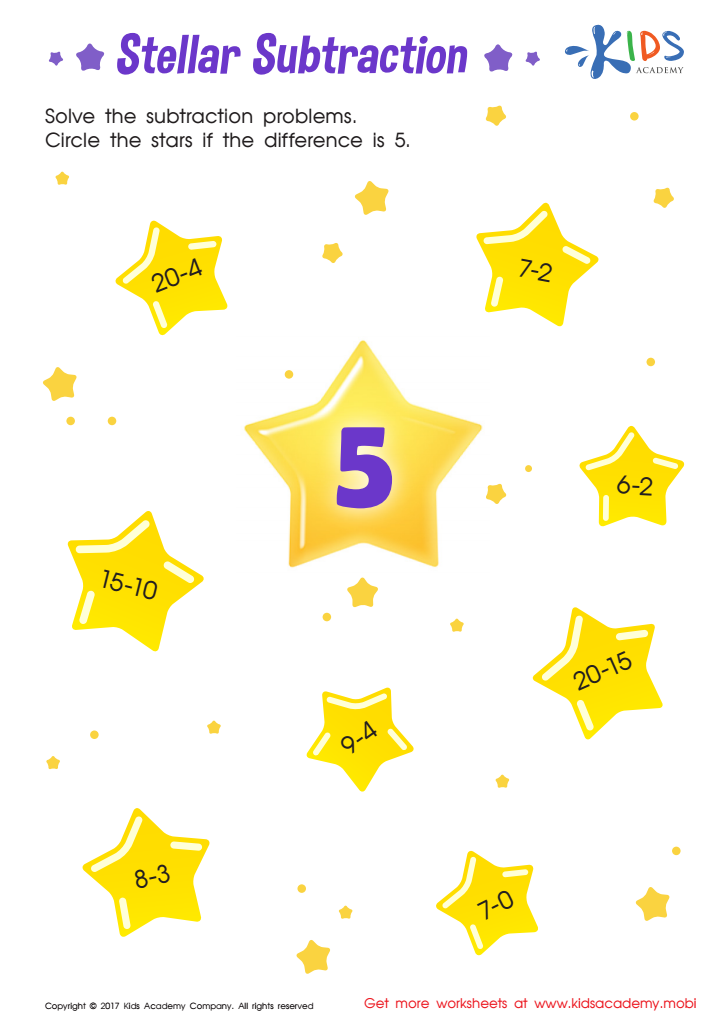
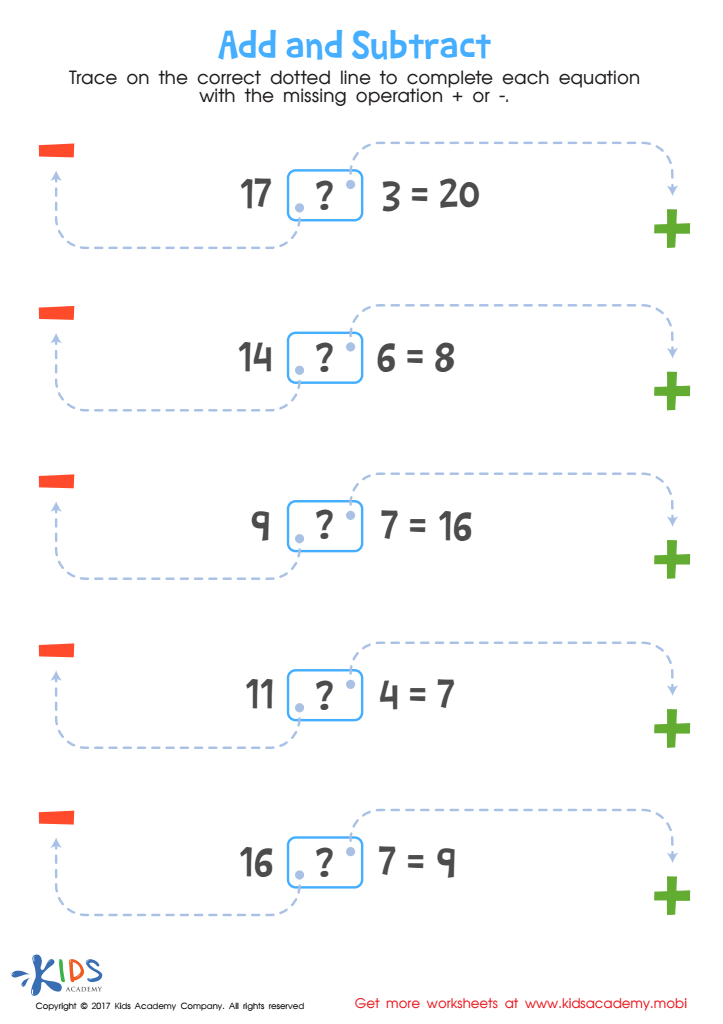
Add and Subtract Worksheet

Find 9 Worksheet
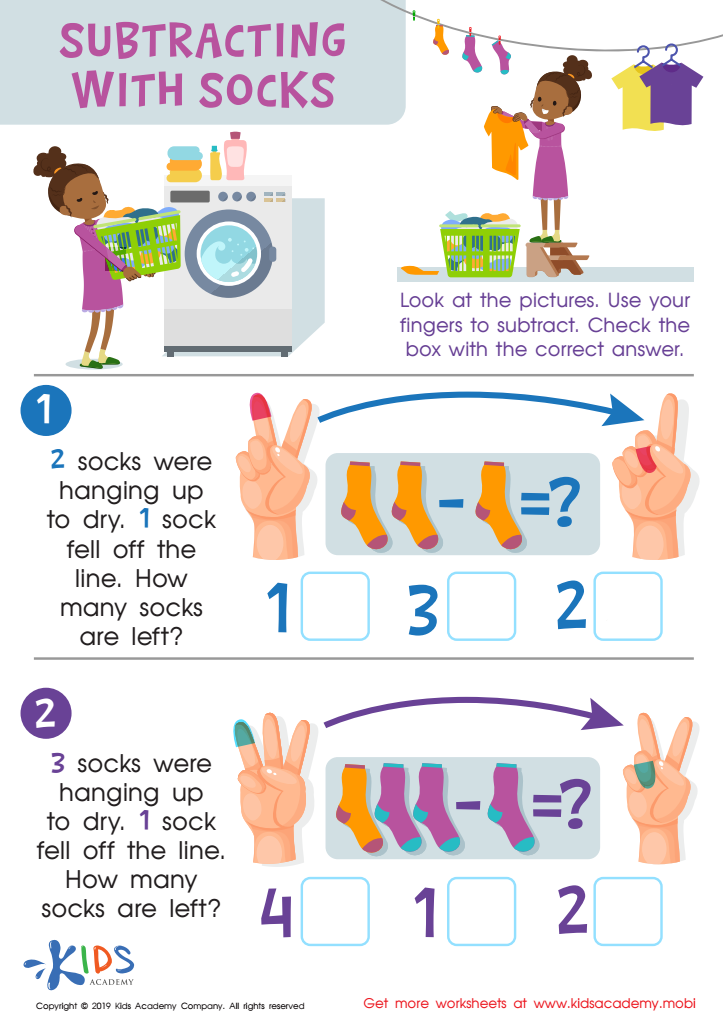
Subtracting Socks Worksheet
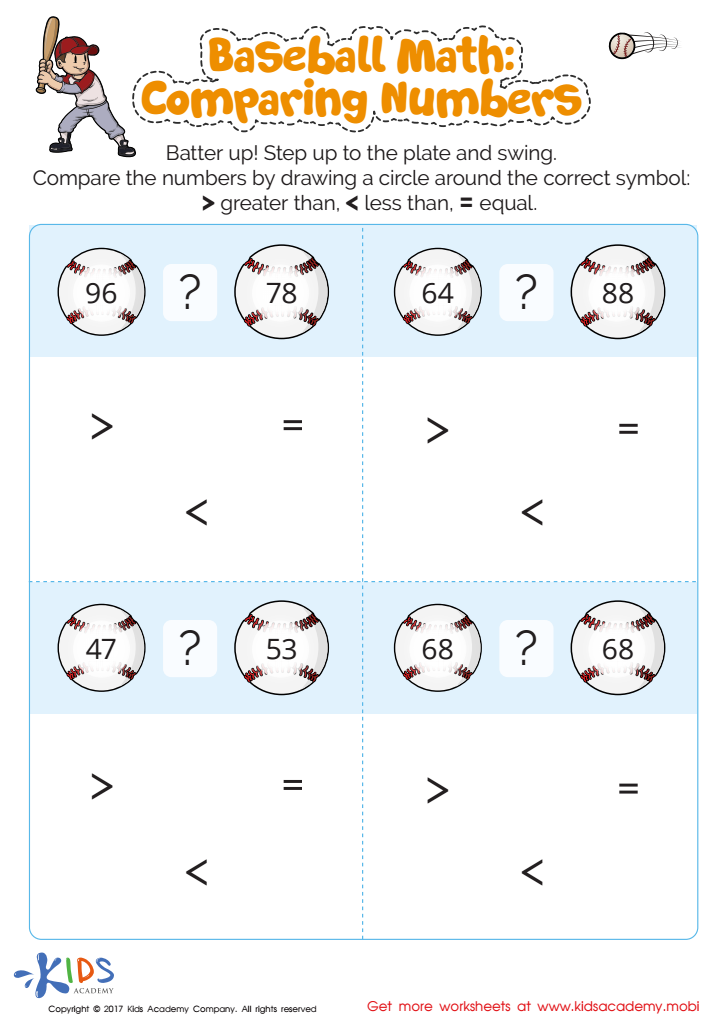
Compare Numbers Printable
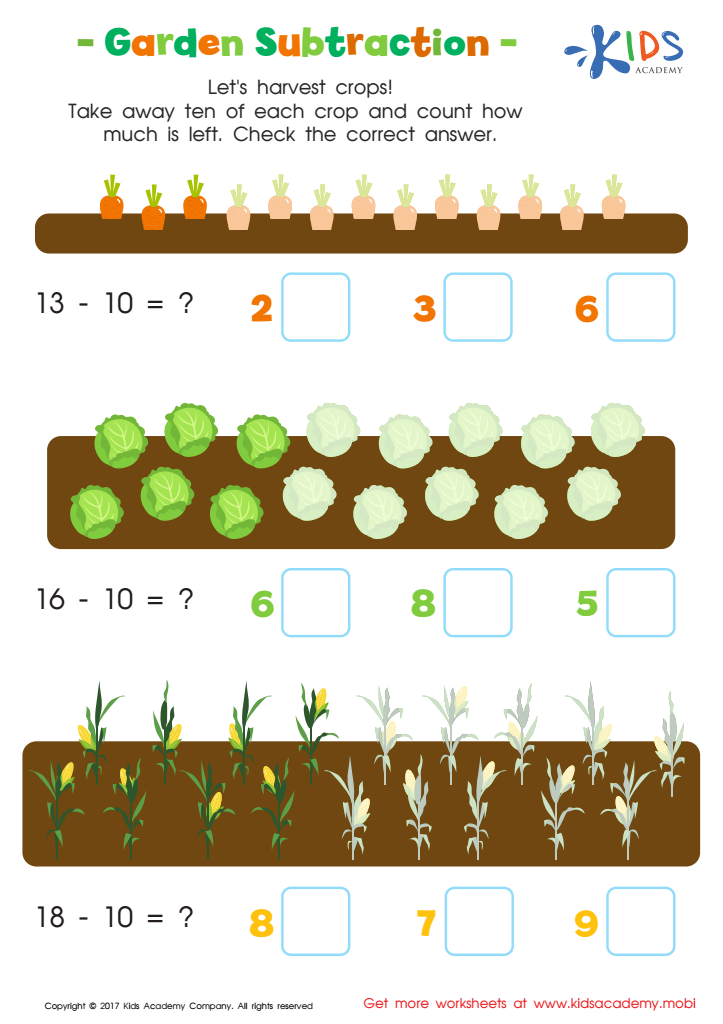
Garden Subtraction Worksheet
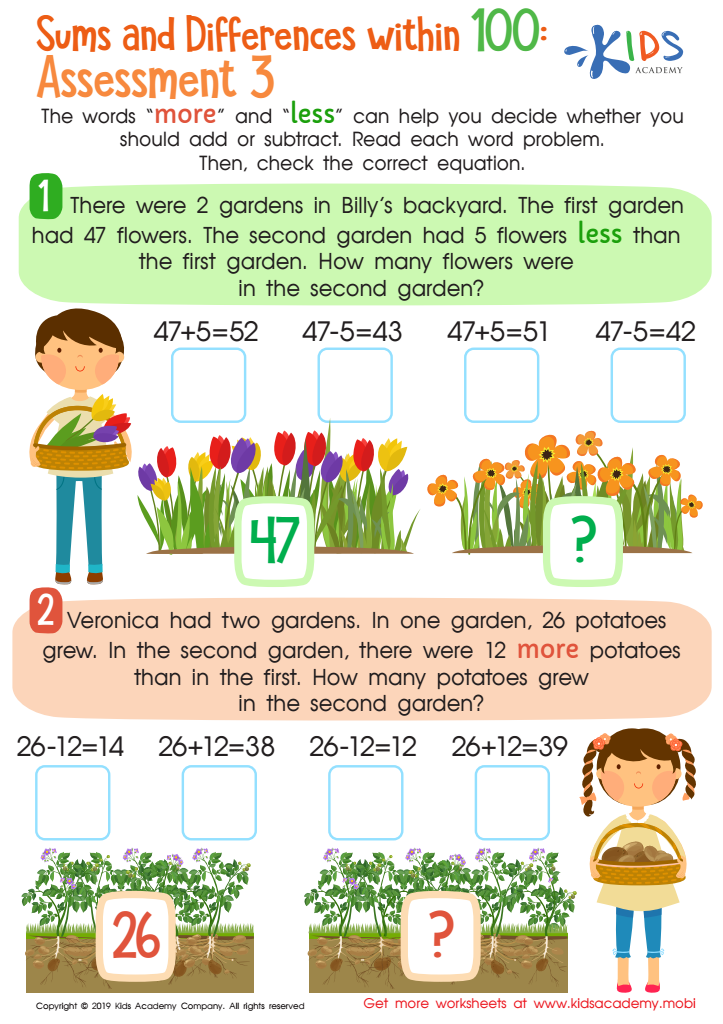
Sums and Differences Within 1 - Assessment 1 Worksheet
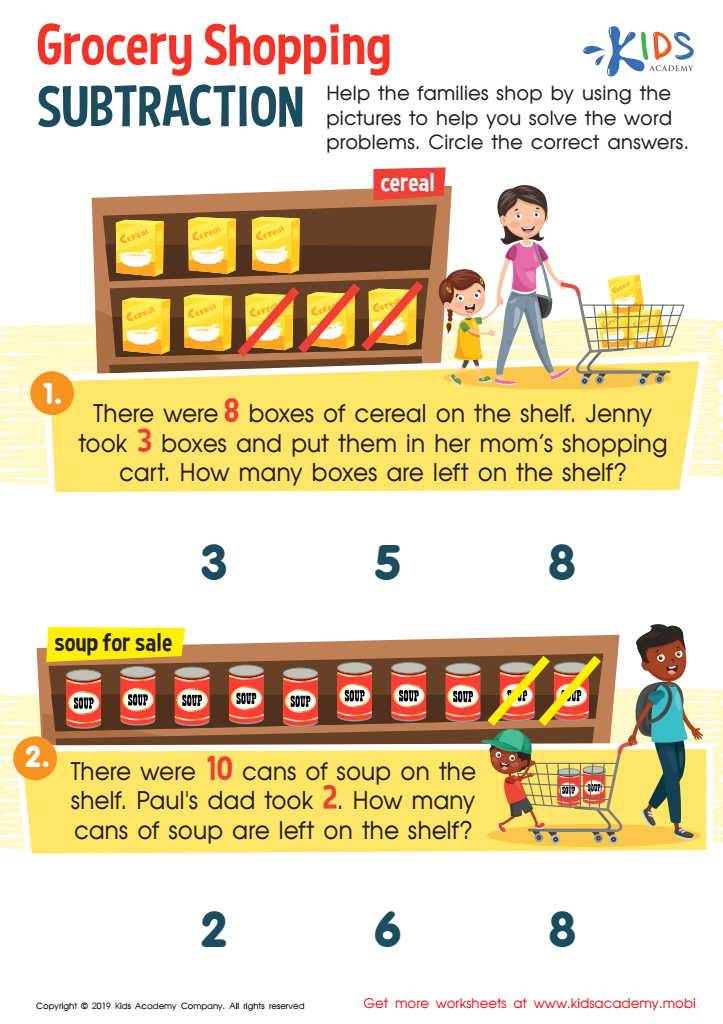
Grocery Shopping Subtraction Worksheet
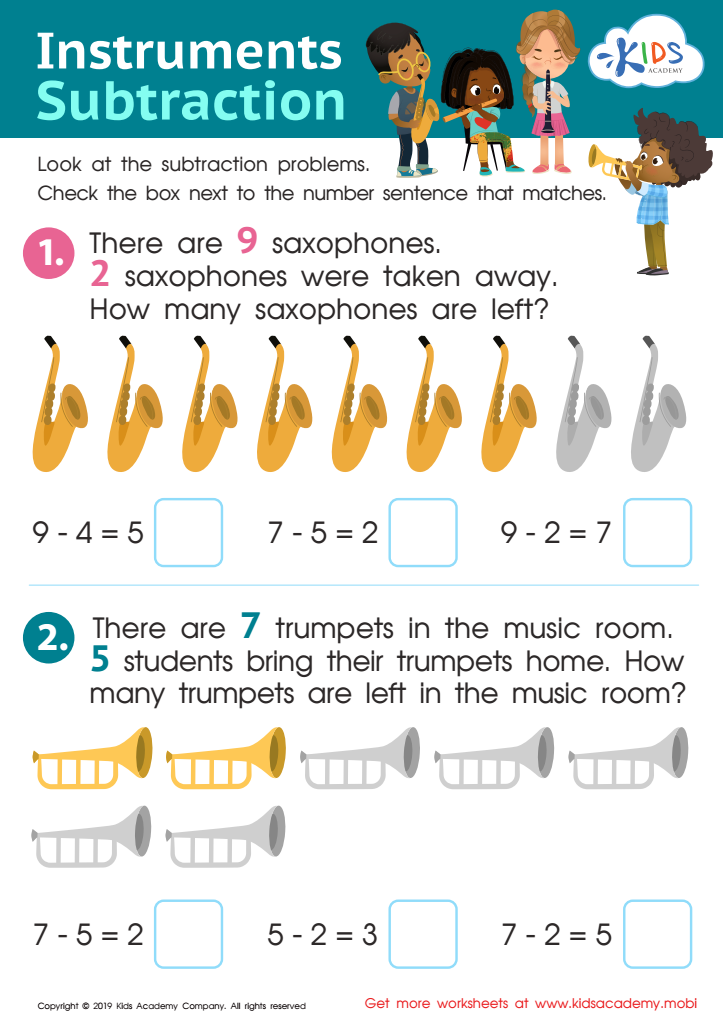
Instrument Subtraction Worksheet
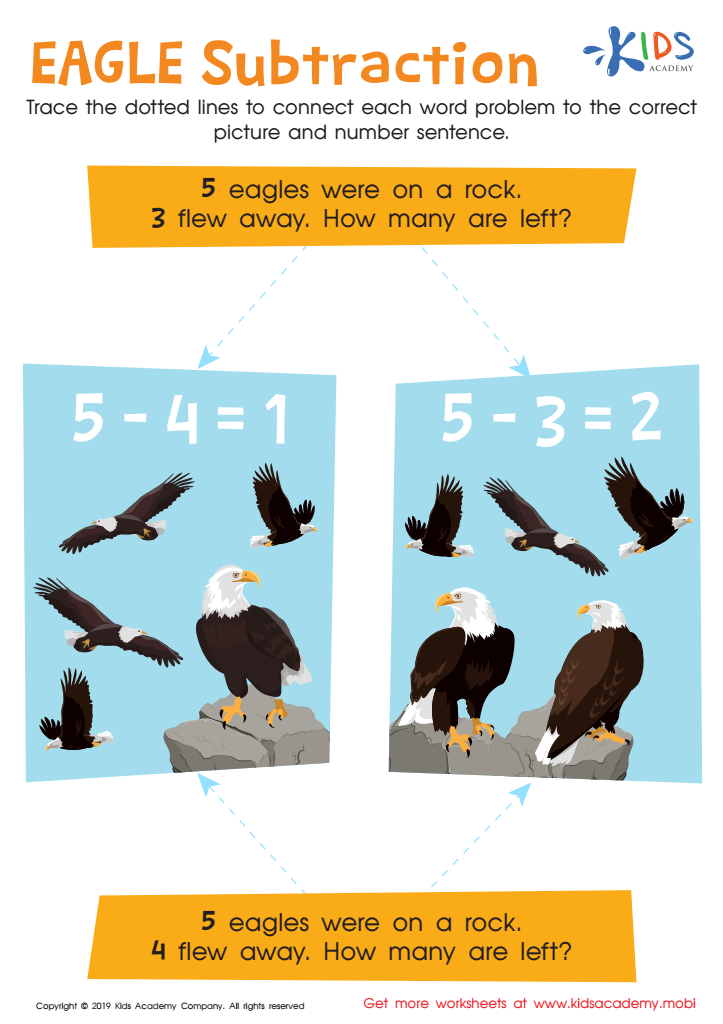
Eagle Subtraction Worksheet
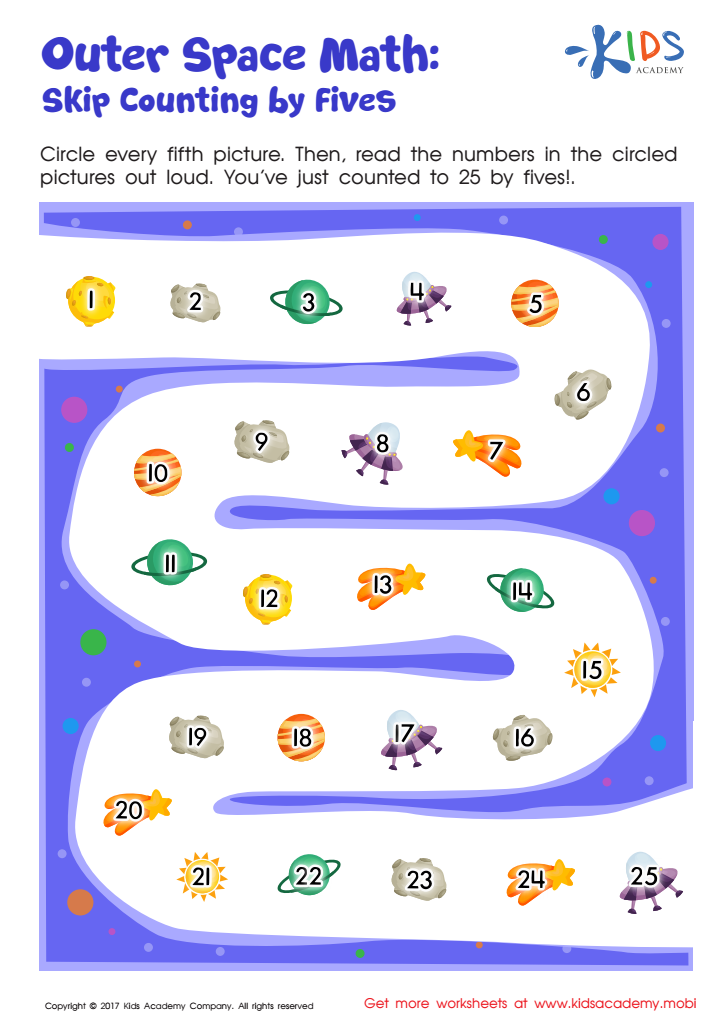
Skip Counting by 5s: Outer Space Math Printable
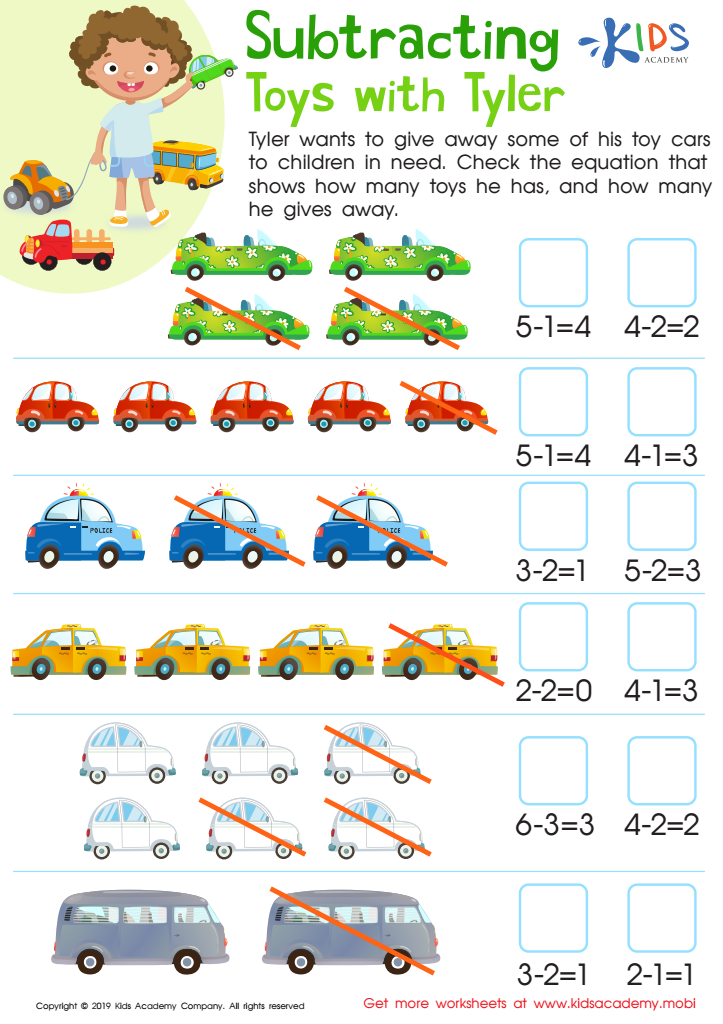
Subtracting Toys with Tyler Worksheet







Subtraction practice for children ages 3-6 plays a pivotal role in their cognitive and emotional development, making it essential for parents and teachers to prioritize it. At this early stage, children are naturally curious and eager to learn, creating a perfect opportunity for introducing mathematical concepts. Subtraction, as a foundation of arithmetic, helps develop critical thinking and problem-solving skills.
Engaging in subtraction activities enhances number sense, teaching children the relationships between quantities. This not only aids their mathematical understanding but also fosters logical reasoning—skills that are crucial in everyday life. Children learn to see how taking away affects the total, thereby strengthening their comprehension of basic mathematical principles.
Moreover, subtraction practice can be made fun and engaging through games, stories, or hands-on activities, which can boost a child’s confidence and motivation in learning. It also encourages cooperation and social interaction during group exercises, laying the groundwork for better communication skills.
In summary, subtraction practice is an integral stepping stone in early education that supports math fluency, cognitive abilities, and crucial life skills. By investing time in these activities, parents and teachers shape confident learners equipped for future educational challenges.








