Discover our engaging Visual Learning Worksheets designed for children aged 3-6! These printable resources promote early childhood development by stimulating visual recognition and cognitive skills. Each worksheet is thoughtfully crafted to capture young learners' imaginations while fostering essential skills such as shape identification, color recognition, and pattern matching. Perfect for both homeschooling and classroom settings, these interactive activities not only make learning fun but also enhance memory retention. Explore our variety of worksheets and provide your child with a solid foundation for future learning. Unlock the joys of visual learning and watch your little one's skills bloom with every page!
Check out this FREE "Visual Learning" Trial Lesson for age 3-6!

Cut Rectangles: Halves and Wholes

Favorites
With answer key
Interactive
  • 3-6
  • Visual Learning
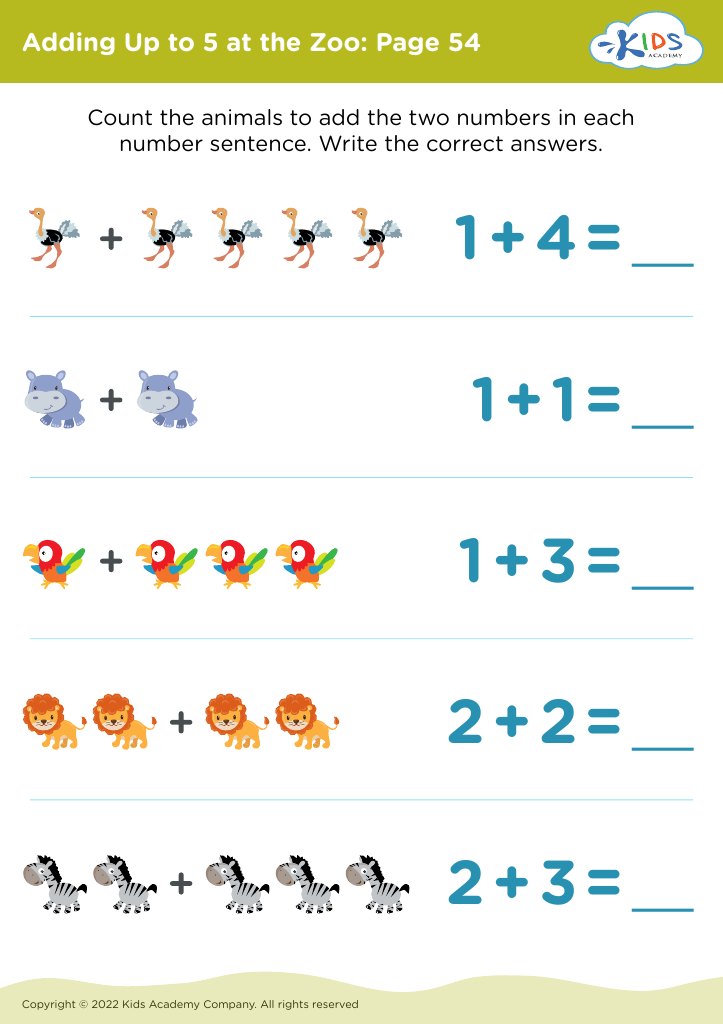
Adding Up to 5 at the Zoo: Page 54
Worksheet
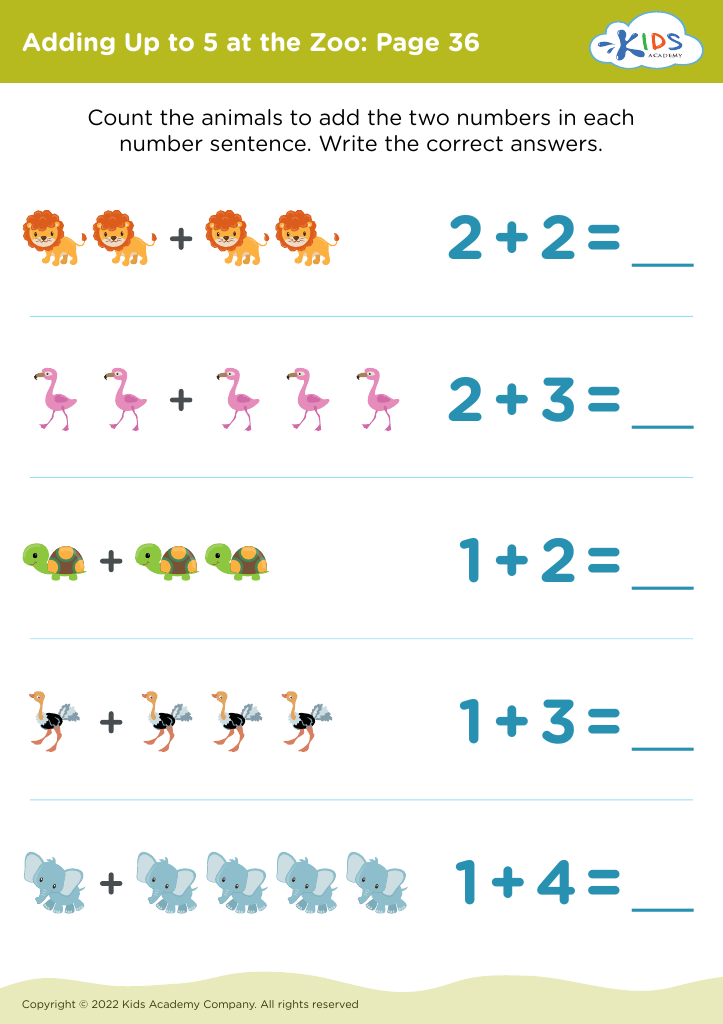
Adding Up to 5 at the Zoo: Page 36
Worksheet
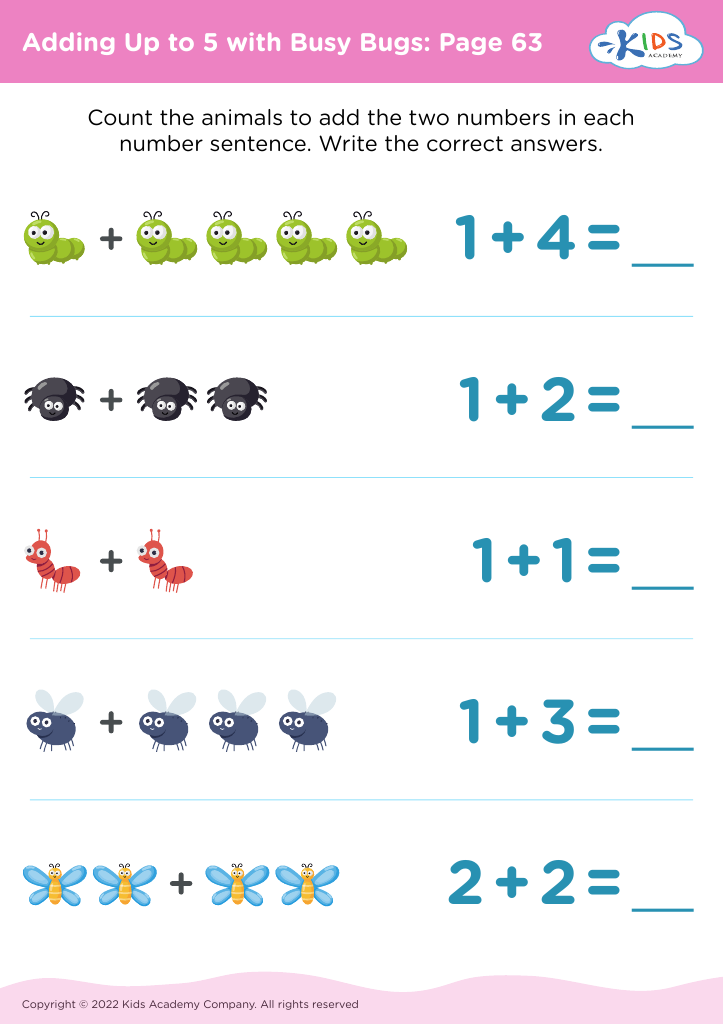
Adding Up to 5 with Busy Bugs: Page 63
Worksheet
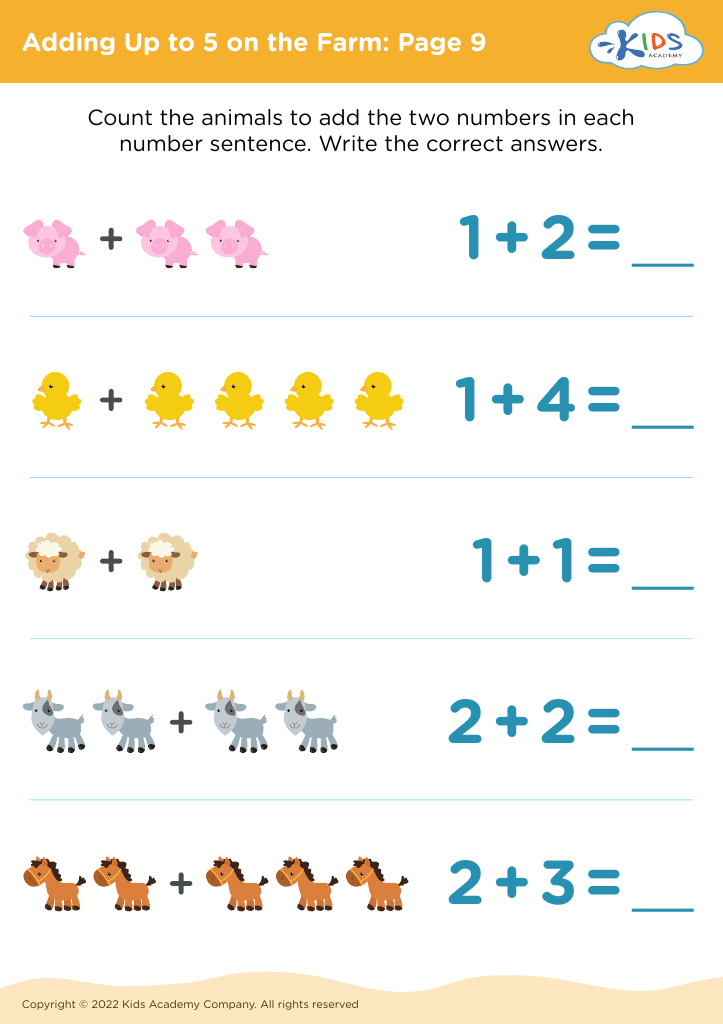
Adding Up to 5 on the Farm: Page 9
Worksheet
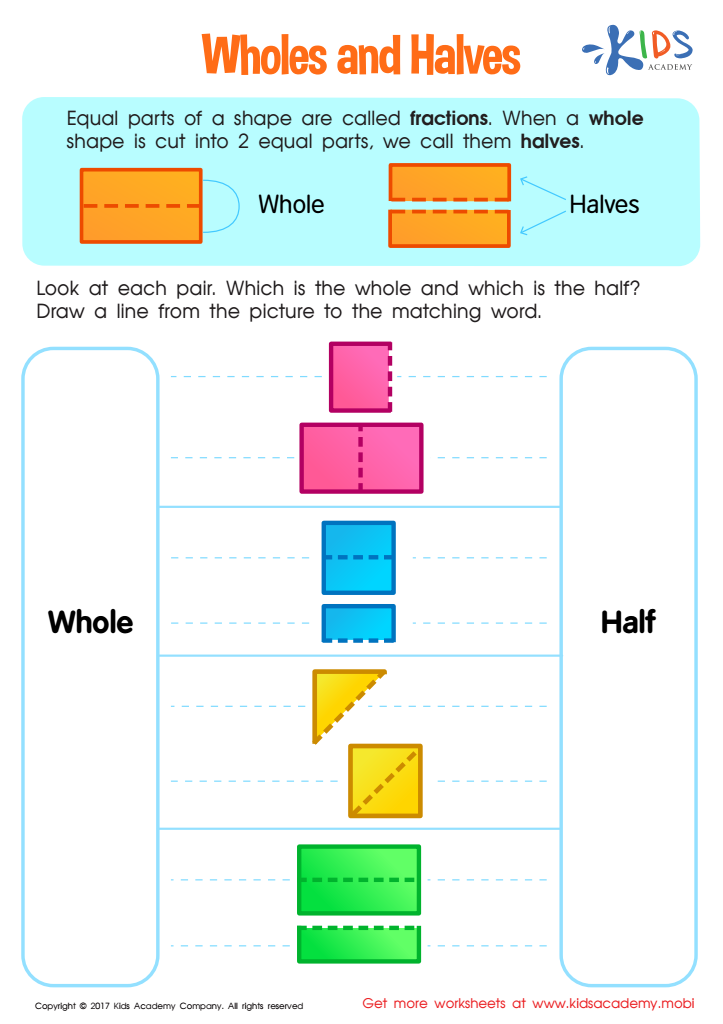
Wholes and Halves Worksheet

Wholes and Halves Worksheet

Students can feel overwhelmed with fractions. Help take the stress off by using a colorful worksheet to explain whole shapes and how to find halves. Ask them to identify the whole and point to the matching word for the half. A free printout can help guide them.
Wholes and Halves Worksheet
Worksheet
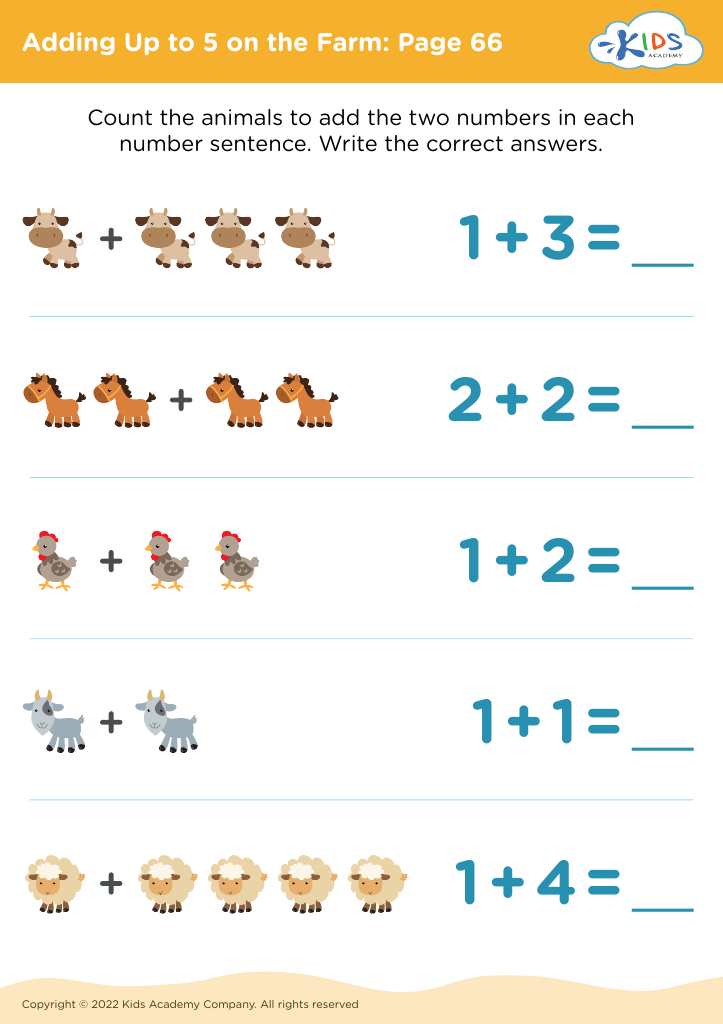
Adding Up to 5 on the Farm: Page 66
Worksheet
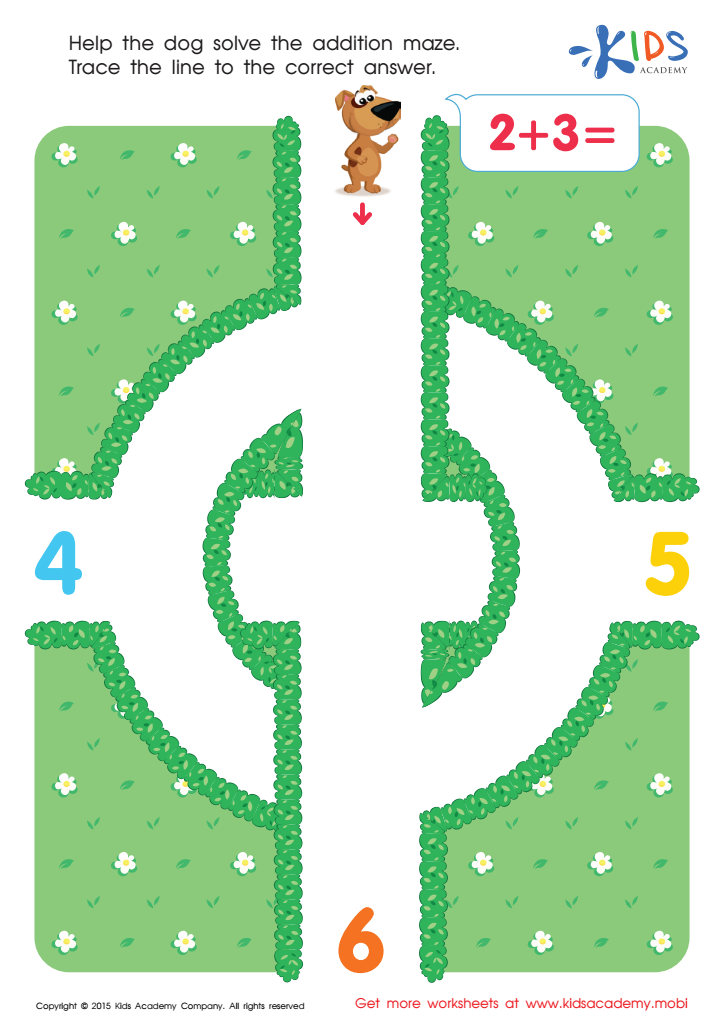
Math: Two And Three Addition PDF Worksheet

Two And Three Addition Worksheet

Give your children the task and let them find the path to the right answer while they make their way through the maze, and don't forget to let them trace the path.
Two And Three Addition Worksheet
Worksheet
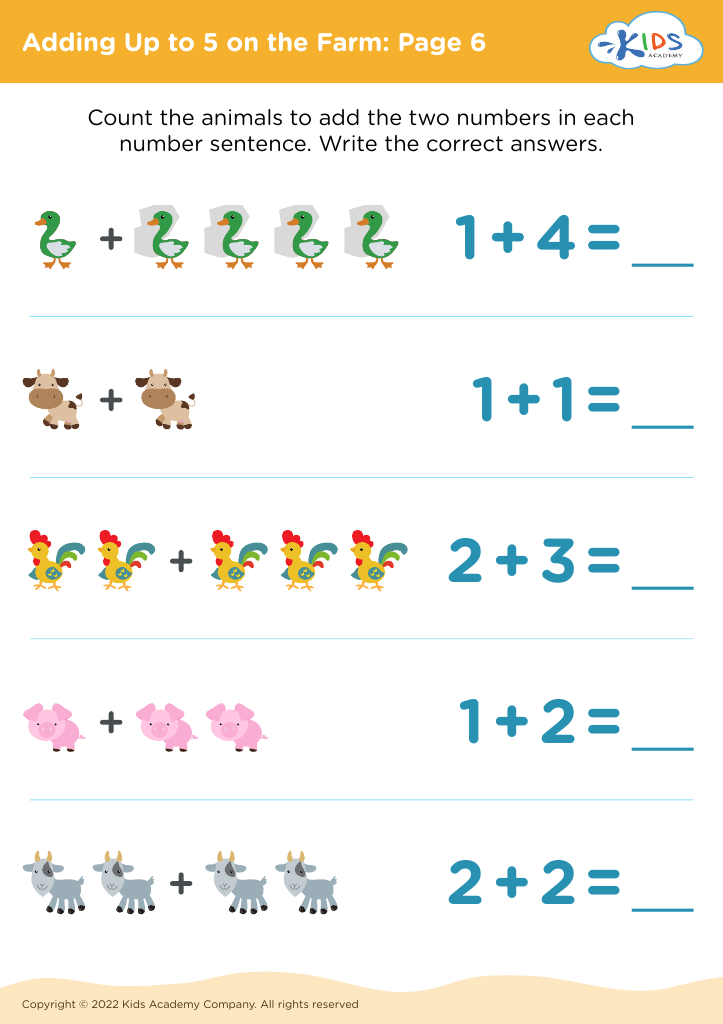
Adding Up to 5 on the Farm: Page 6
Worksheet
Butterfly Addition Worksheet

Butterfly Addition Worksheet

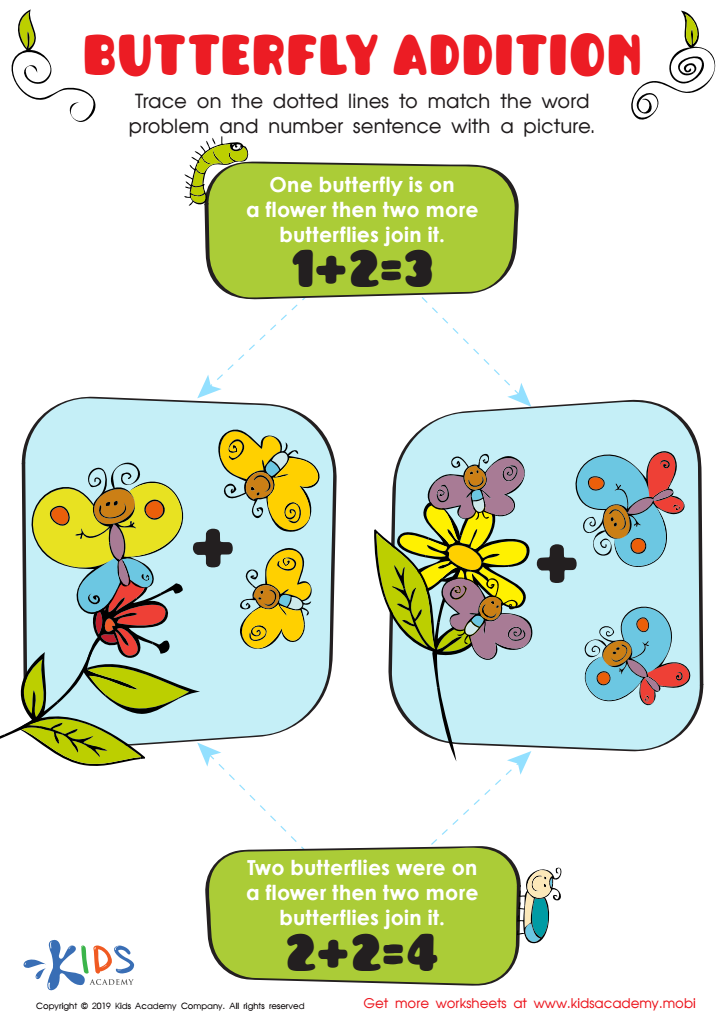
This tracing sheet is great for kids to work on math skills and have fun too. Read the word problems to them, then help them trace the dotted lines to match the problem and number sentence to a picture. Not only is it educational, it's beautiful too - your kids will love learning about butterflies!
Butterfly Addition Worksheet
Worksheet
Subtracting Socks Worksheet
Subtracting Socks Worksheet
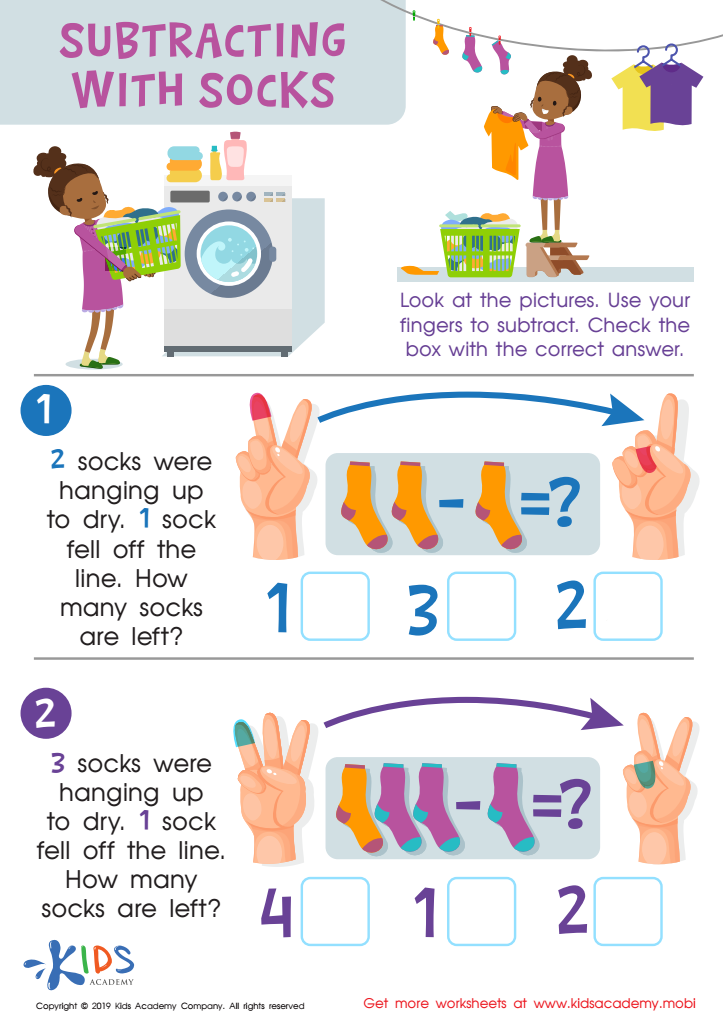
Before beginning this exercise with your children, warm them up with a counting game. If math is not their favorite subject, use this worksheet. Help them read the two word problems, then use their fingers to count and subtract. Ask them to select the correct answer and check the box.
Subtracting Socks Worksheet
Worksheet
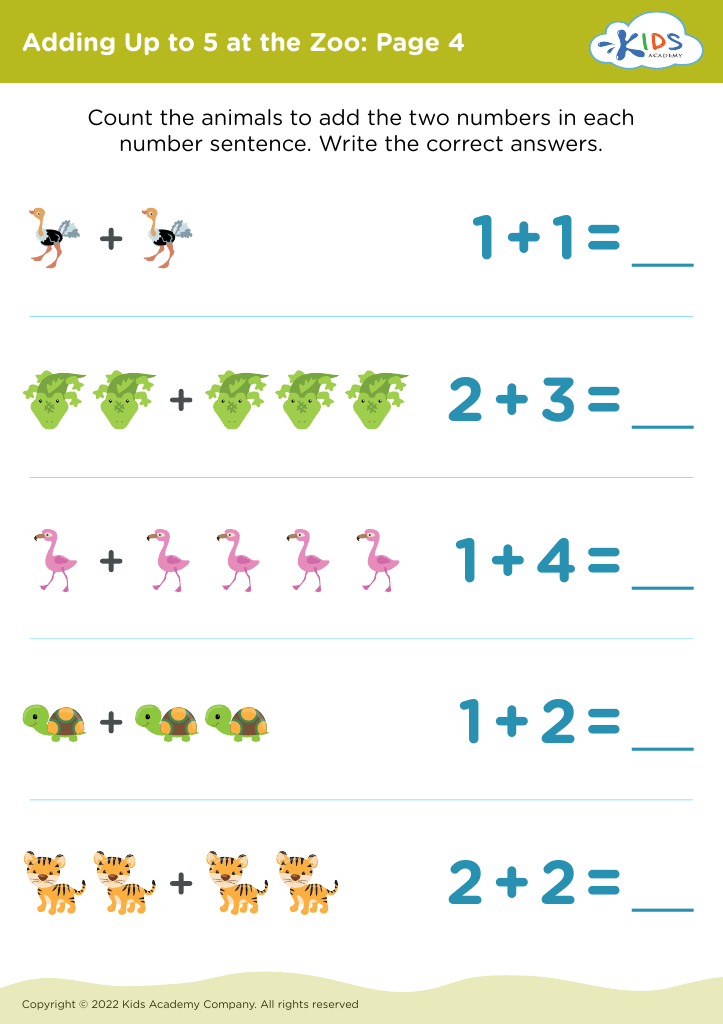
Adding Up to 5 at the Zoo: Page 4

Adding Up to 5 at the Zoo: Page 4

Adding Up to 5 at the Zoo: Page 4
Worksheet
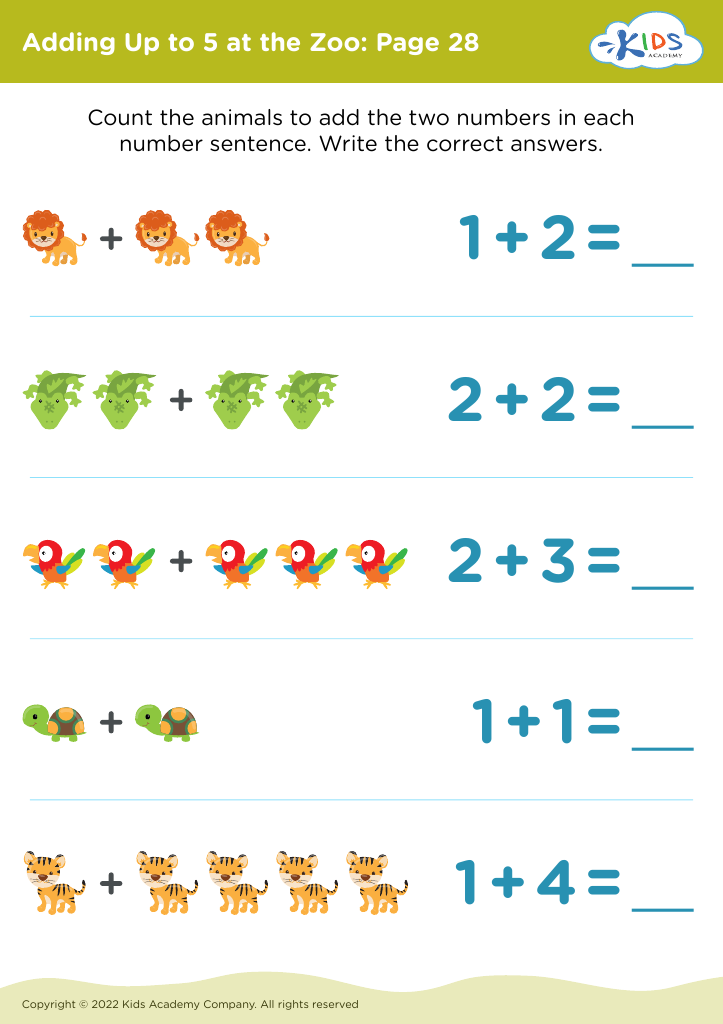
Adding Up to 5 at the Zoo: Page 28
Worksheet
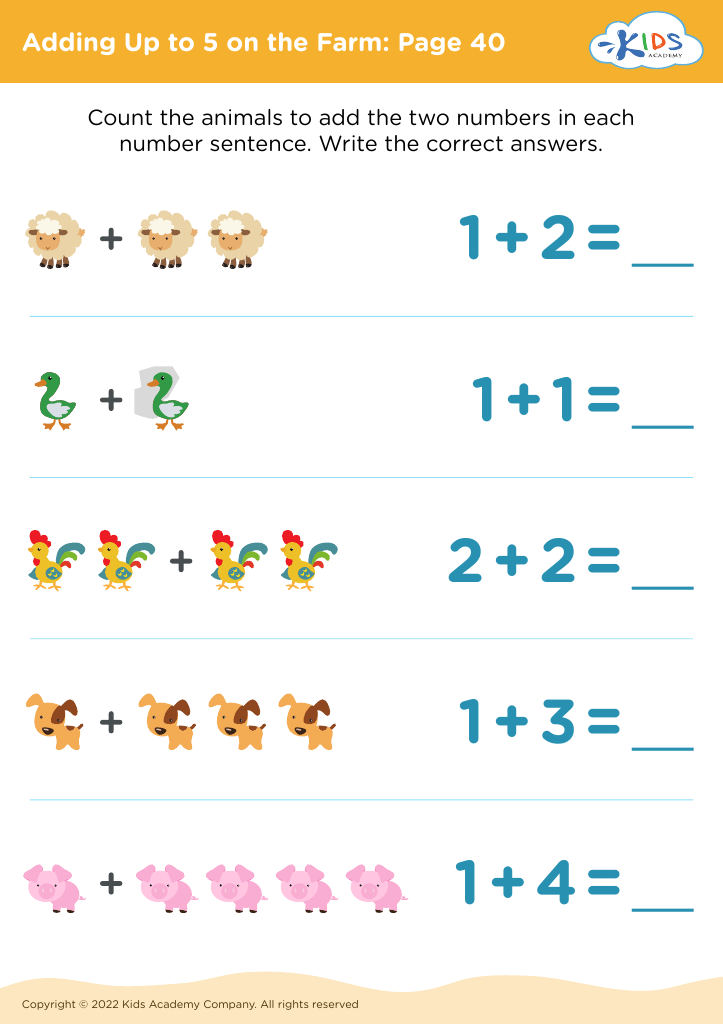
Adding Up to 5 on the Farm: Page 40
Worksheet
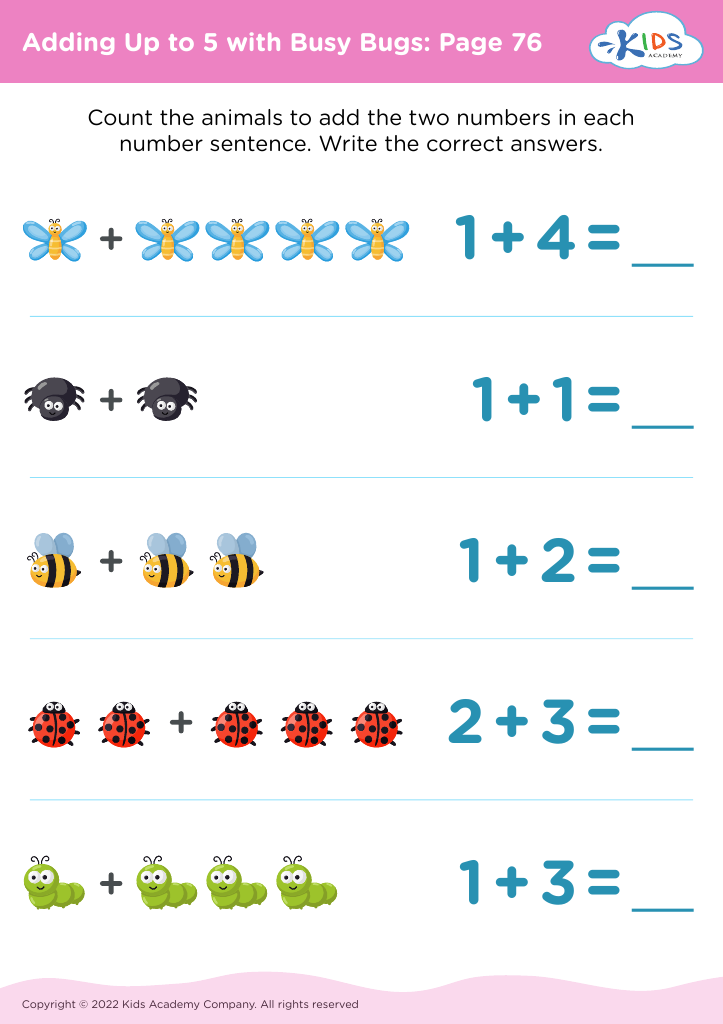
Adding Up to 5 with Busy Bugs: Page 76
Worksheet
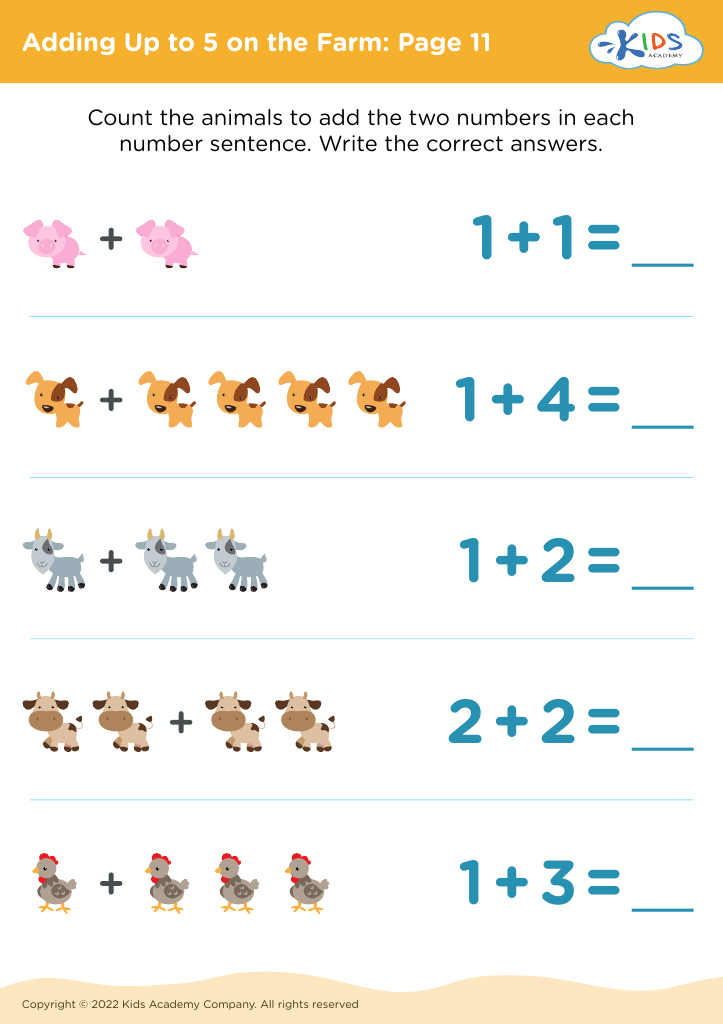
Adding Up to 5 on the Farm: Page 11
Worksheet
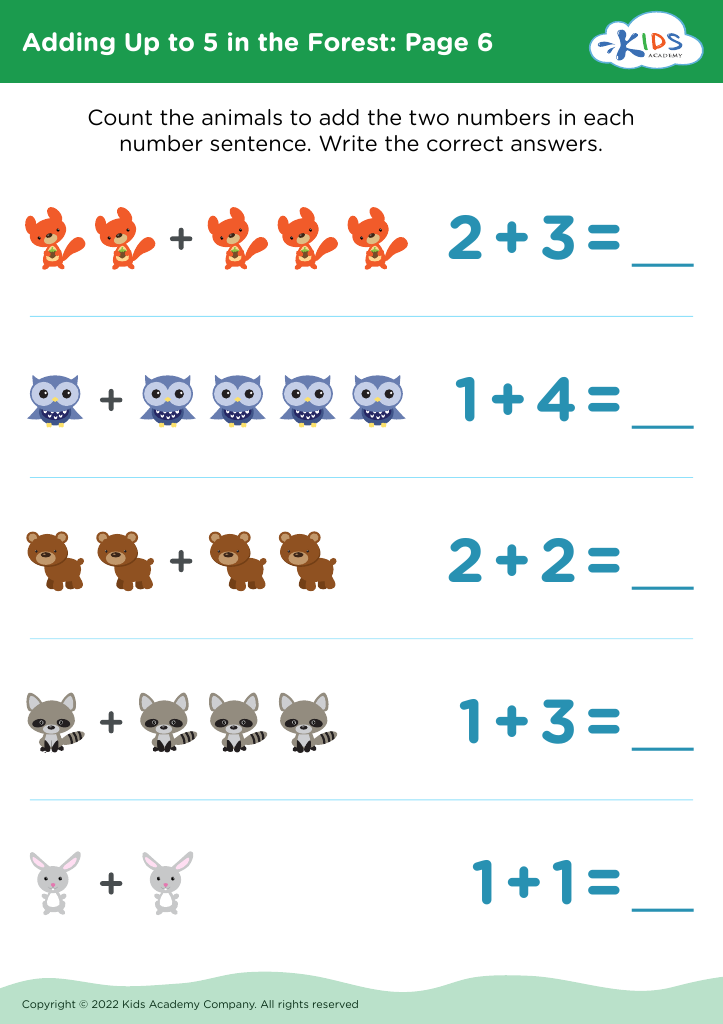
Adding Up to 5 in the Forest: Page 6
Worksheet
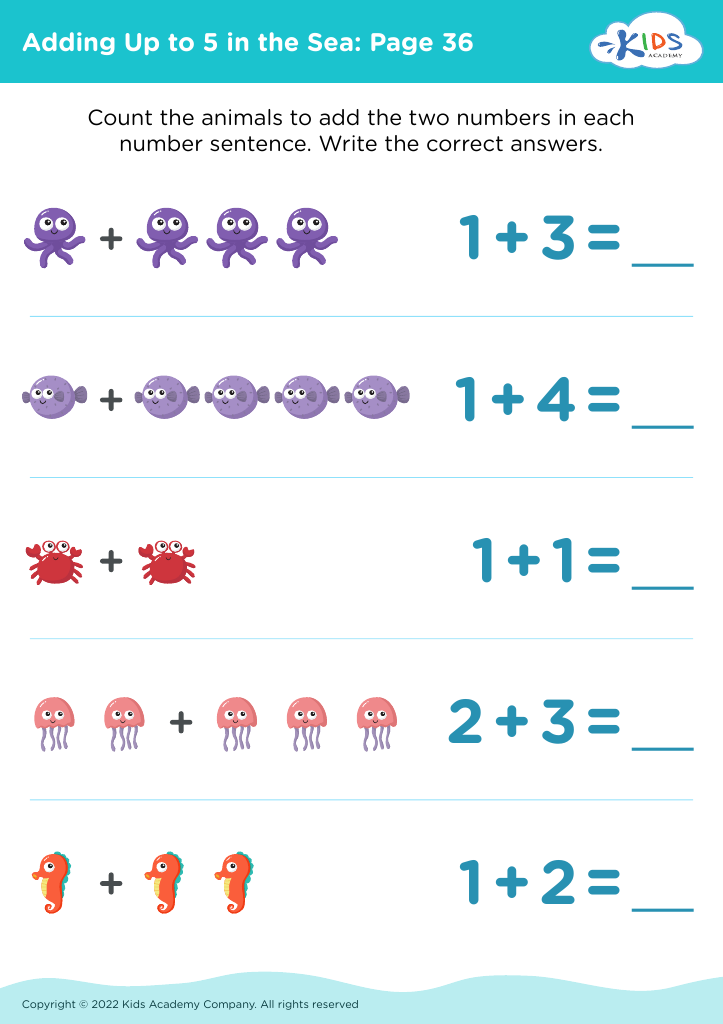
Adding Up to 5 in the Sea: Page 36
Worksheet
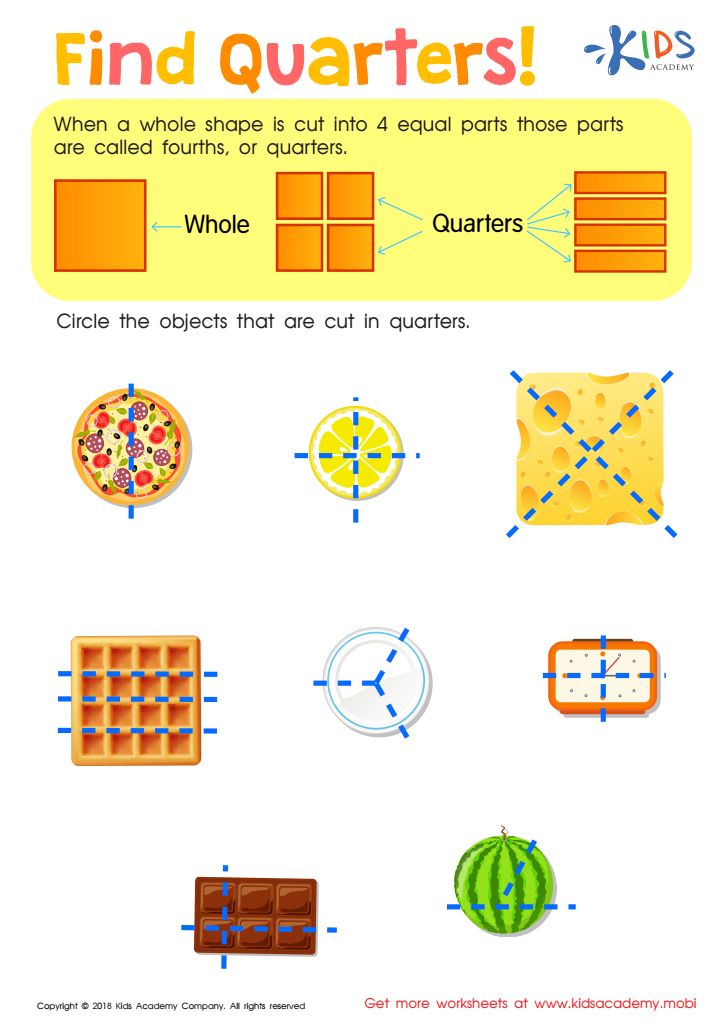
Find Quarters Worksheet
Find Quarters Worksheet
Ask your child if they know what it is called when a shape is cut into two equal parts. If yes, introduce them to quarters. Tell them that when a shape is cut into 4 equal parts, each part is called a quarter. Have them do this exercise by finding and circling objects split into quarters.
Find Quarters Worksheet

Worksheet
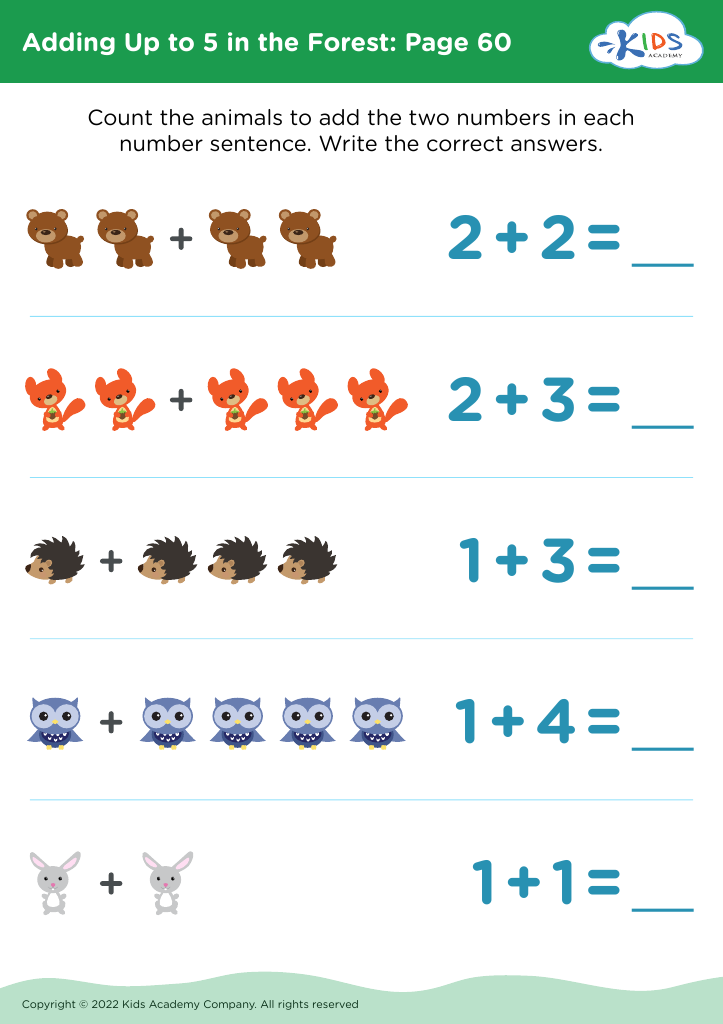
Adding Up to 5 in the Forest: Page 60
Worksheet
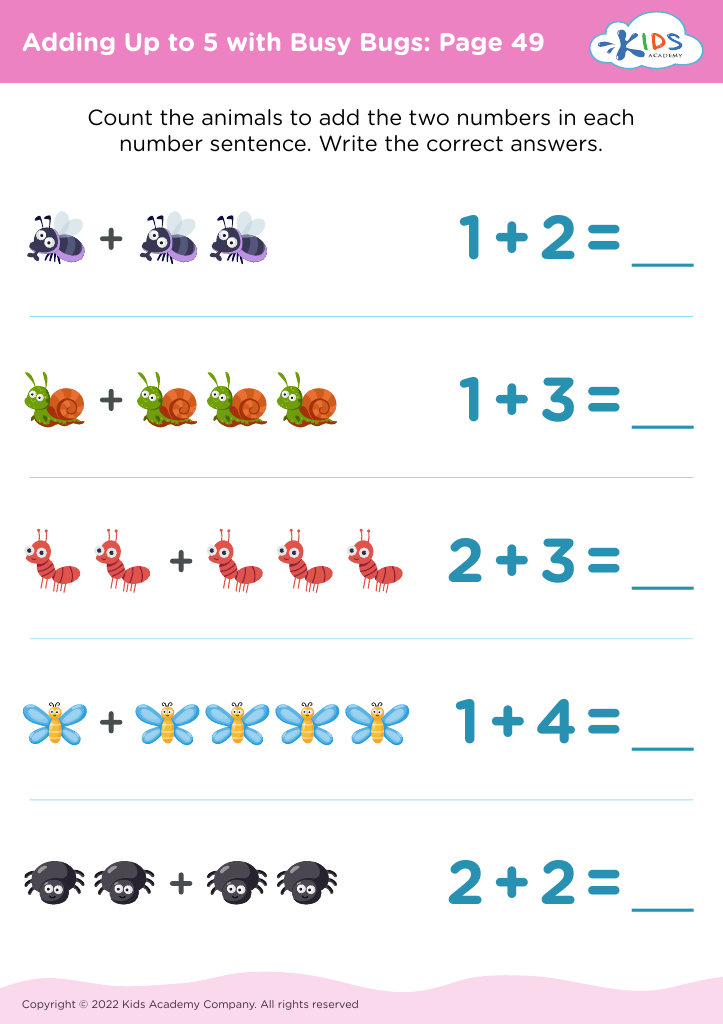
Adding Up to 5 with Busy Bugs: Page 49
Worksheet
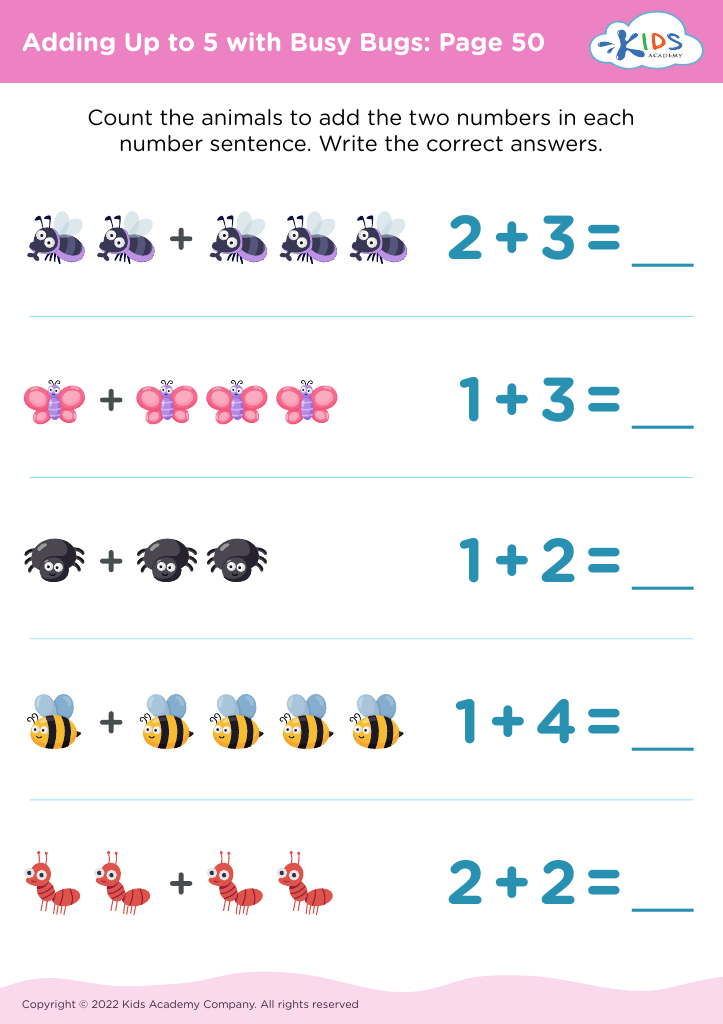
Adding Up to 5 with Busy Bugs: Page 50
Worksheet
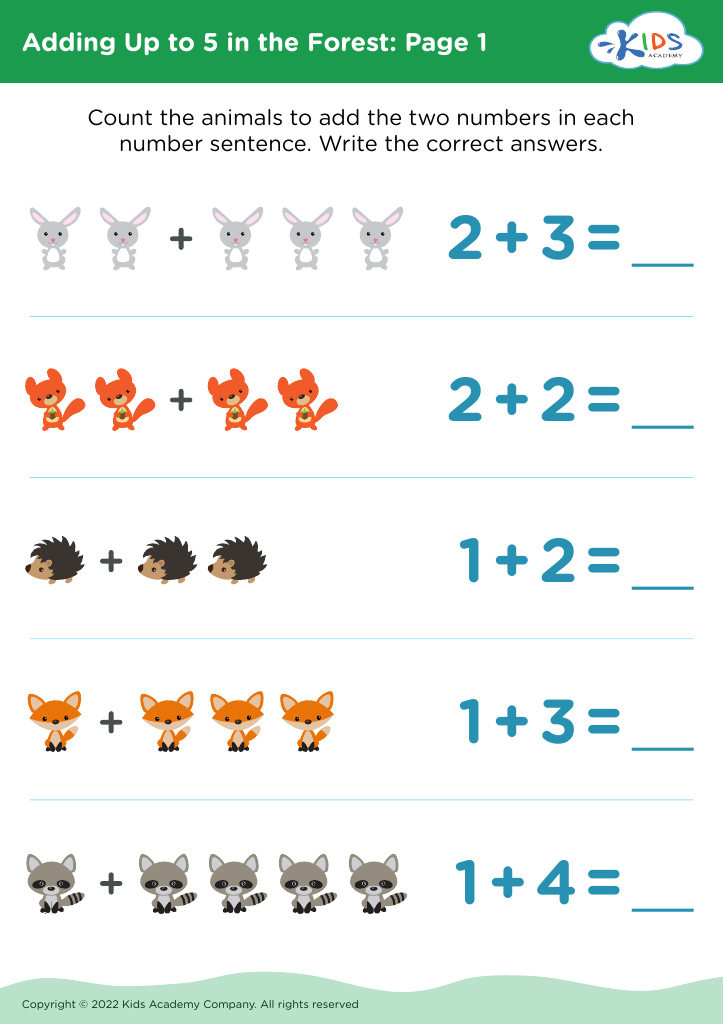
Adding Up to 5 in the Forest: Page 1
Worksheet
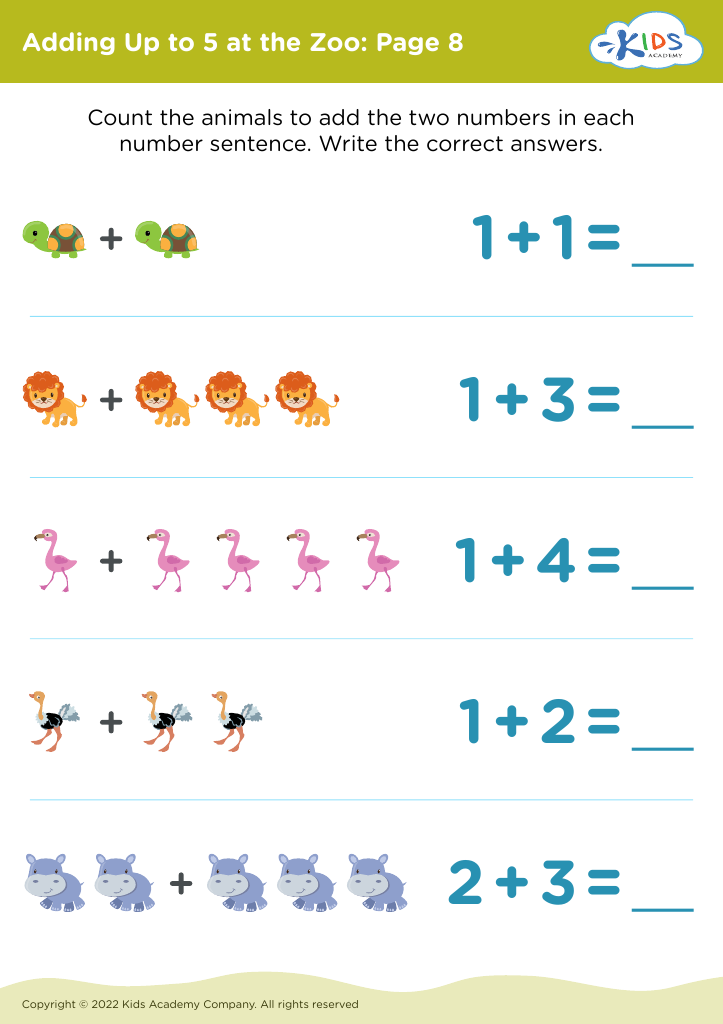
Adding Up to 5 at the Zoo: Page 8

Adding Up to 5 at the Zoo: Page 8

Adding Up to 5 at the Zoo: Page 8
Worksheet
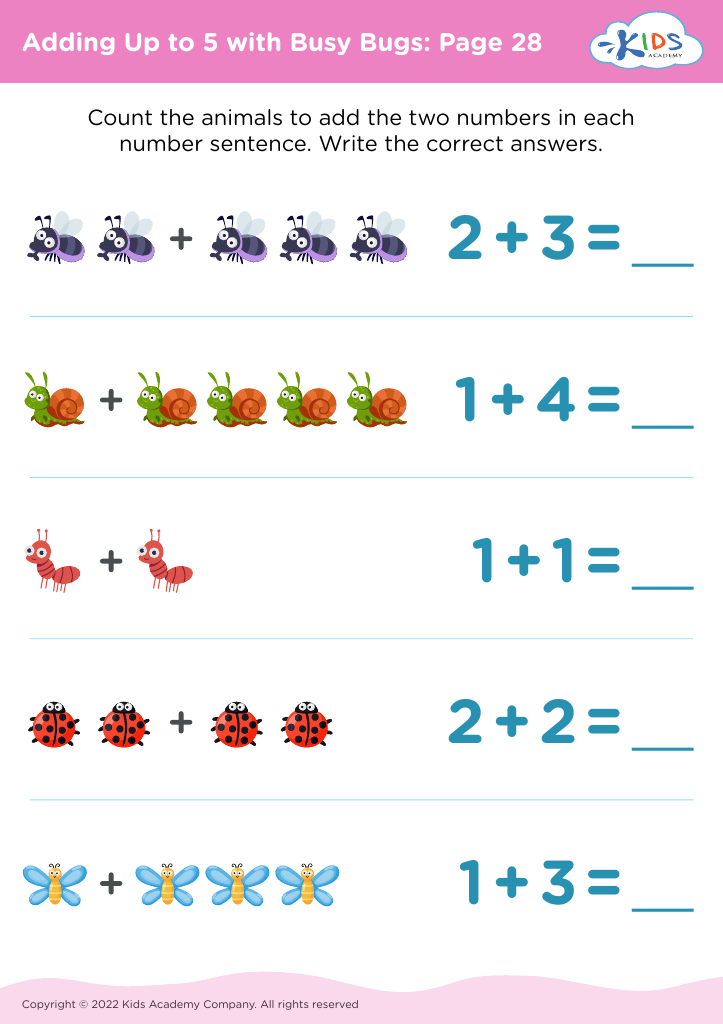
Adding Up to 5 with Busy Bugs: Page 28
Worksheet


Visual learning is paramount for children aged 3-6 as it taps into their natural curiosity and desire to explore the world around them. At this crucial developmental stage, children are naturally inclined to learn through visual stimuli. Engaging with colorful images, illustrations, and diagrams can greatly enhance their understanding and retention of information. By focusing on visual learning, parents and teachers can create stimulating environments that cater to various learning styles, thus fostering a love for education.

Visual learning not only aids in grasping basic concepts such as shapes, colors, and patterns, but it also supports cognitive development. Young learners are able to process information more effectively when it is presented visually, leading to improved problem-solving skills and critical thinking. Additionally, visual aids can ease communication barriers, especially for children who may struggle with verbal expression.

Furthermore, nurturing visual learning helps in building essential skills, such as observation and attention to detail, that form the foundation for future academic success. Parents and teachers who prioritize visual learning are investing in children's current and future potential, ensuring a holistic approach to education that is engaging, inclusive, and effective.