Subtraction practice Numbers Worksheets for Ages 3-6
14 filtered results
-
From - To
Introduce young learners to the world of subtraction with our engaging Subtraction Practice Numbers Worksheets for Ages 3-6. Designed to make learning simple and fun, these worksheets help children grasp the basics of subtraction through colorful and interactive exercises. Featuring various themes and difficulty levels, our worksheets promote critical thinking, improve counting skills, and build a strong mathematical foundation. Perfect for both classroom and home use, these worksheets are tailored to keep kids motivated and excited about math. Download today to watch your preschoolers and kindergartners excel in subtraction!
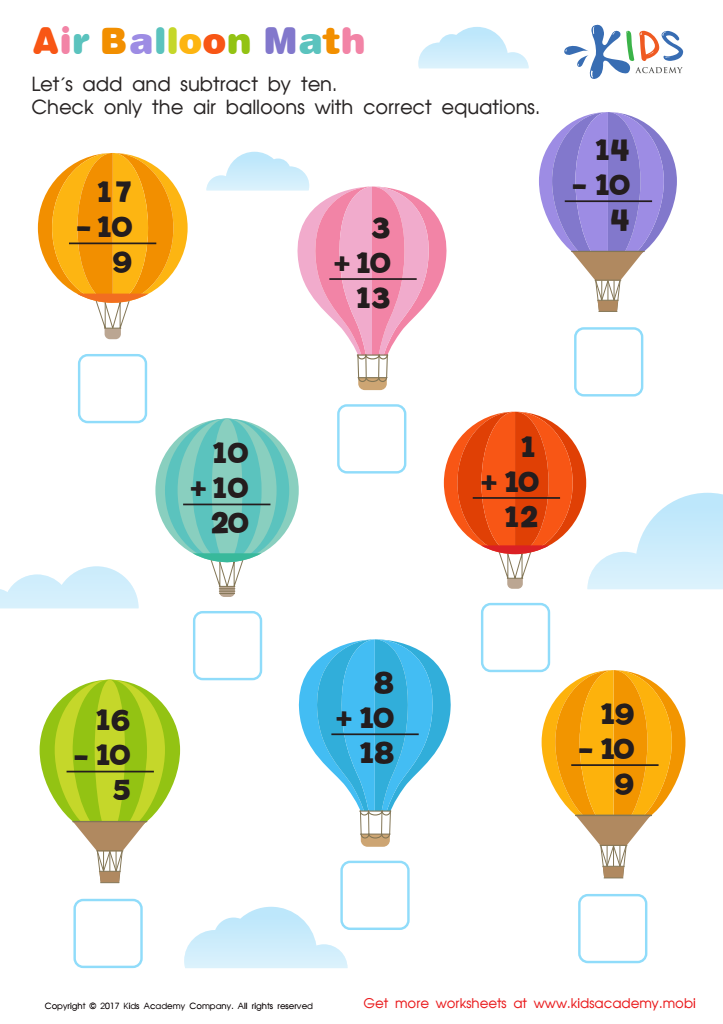
Air Balloon Math Worksheet
 Assign to My Students
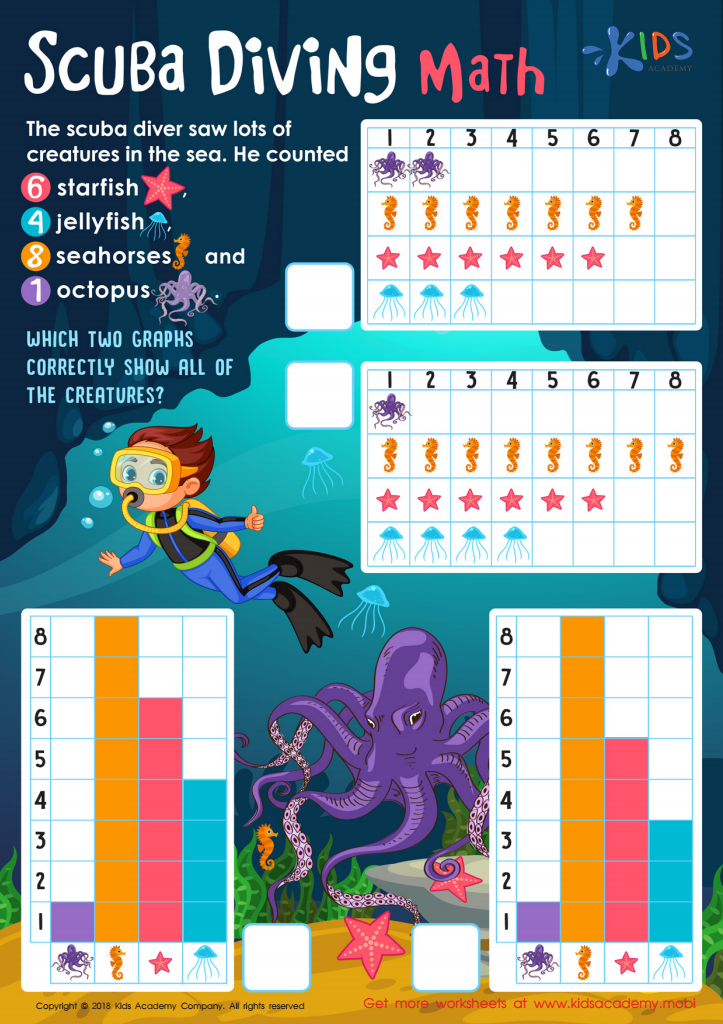
Scuba Diving Math Worksheet

Find 9 Worksheet
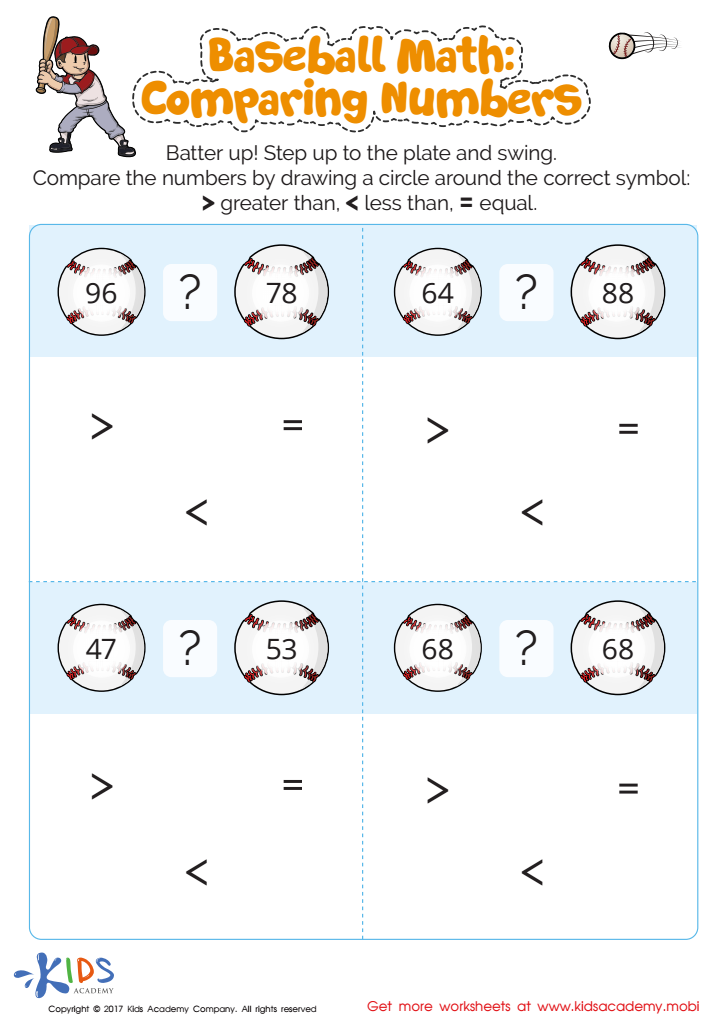
Compare Numbers Printable
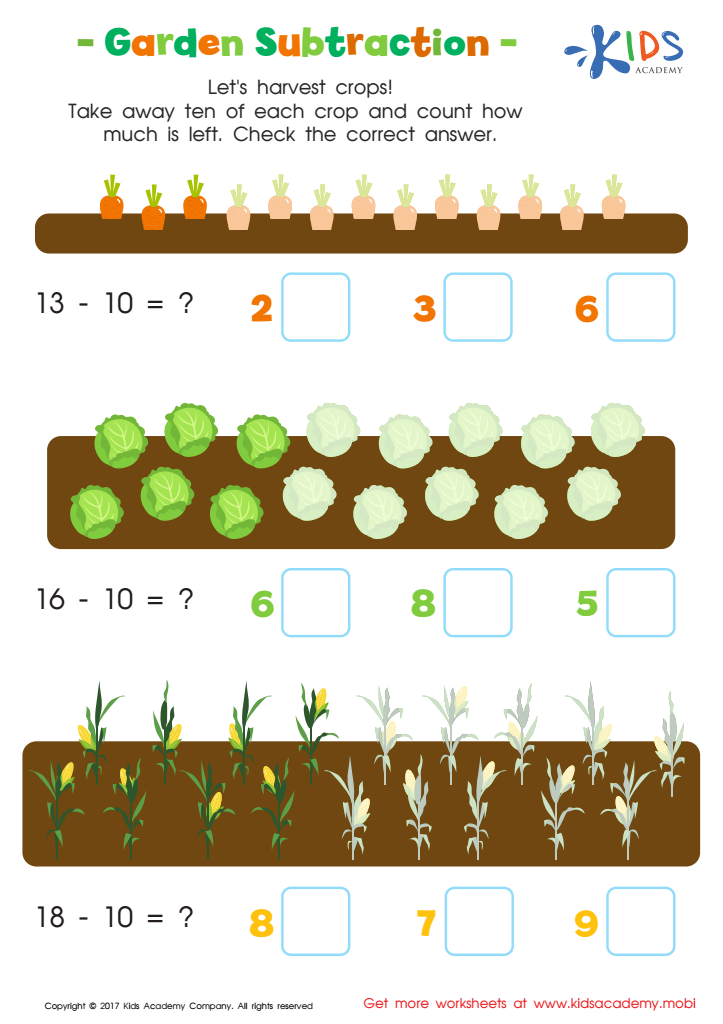
Garden Subtraction Worksheet
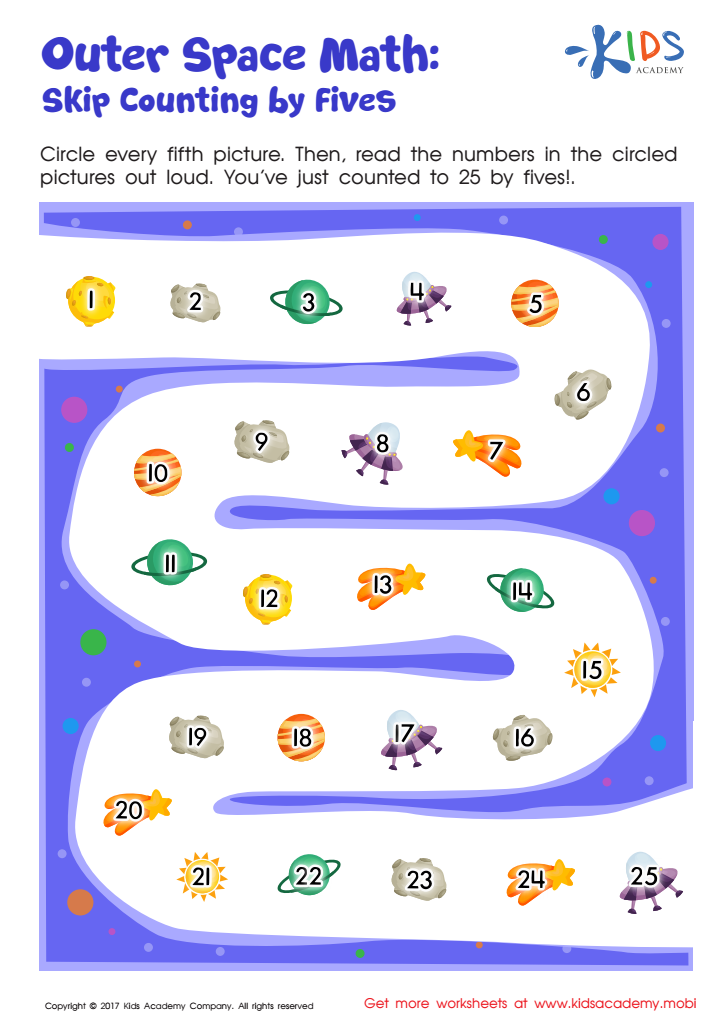
Skip Counting by 5s: Outer Space Math Printable
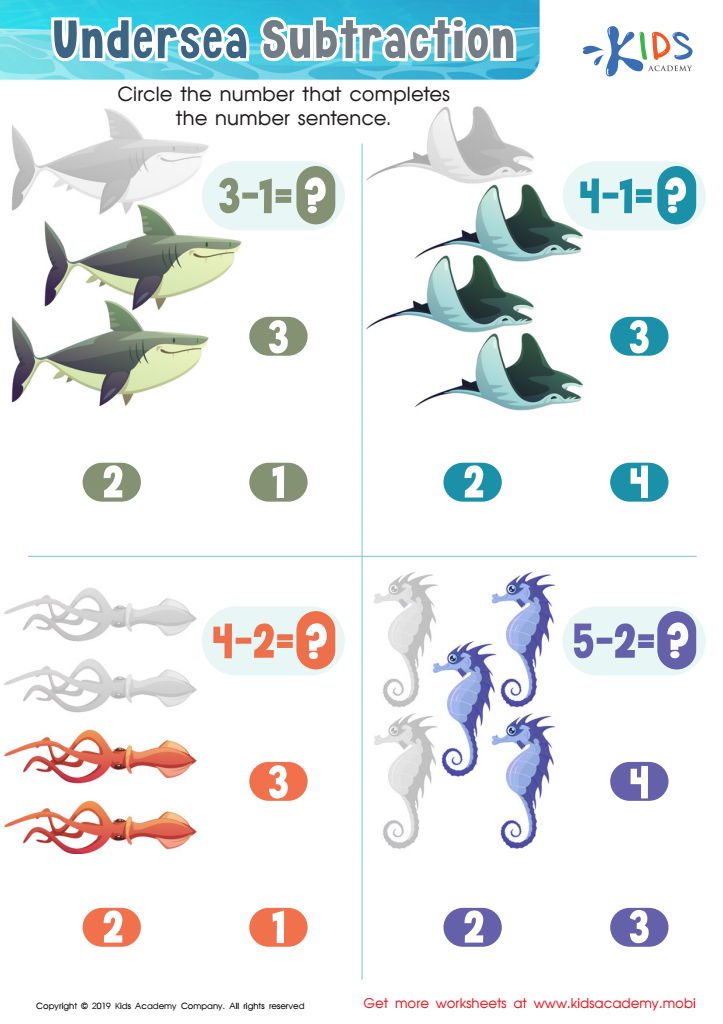
Undersea Subtraction Worksheet
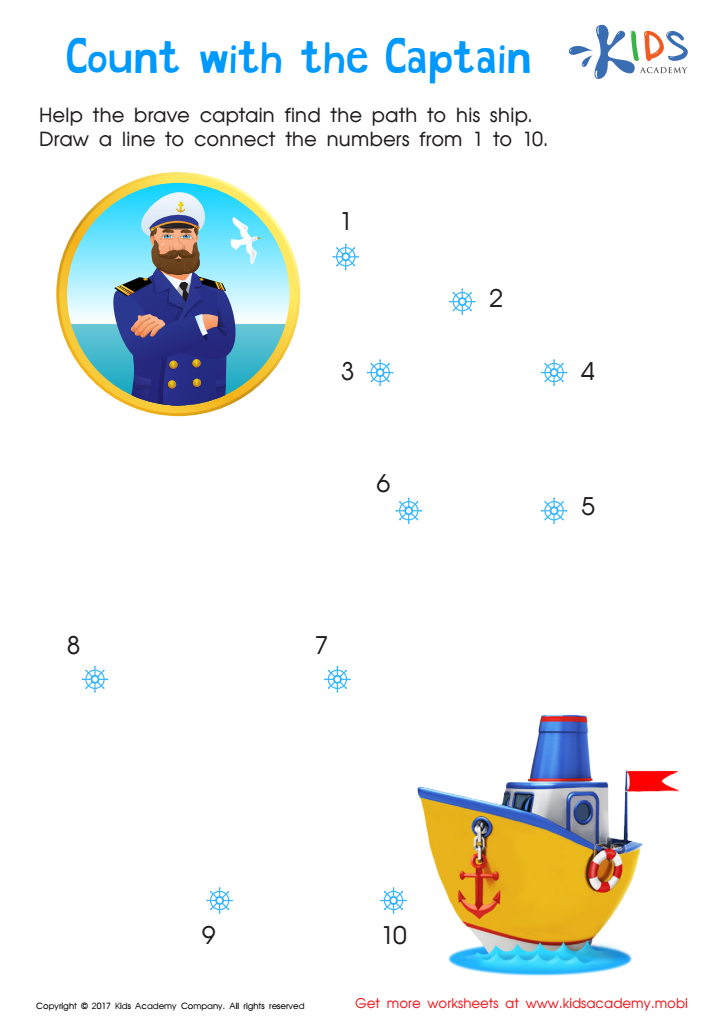
Count with the Captain Connect Dots Worksheet
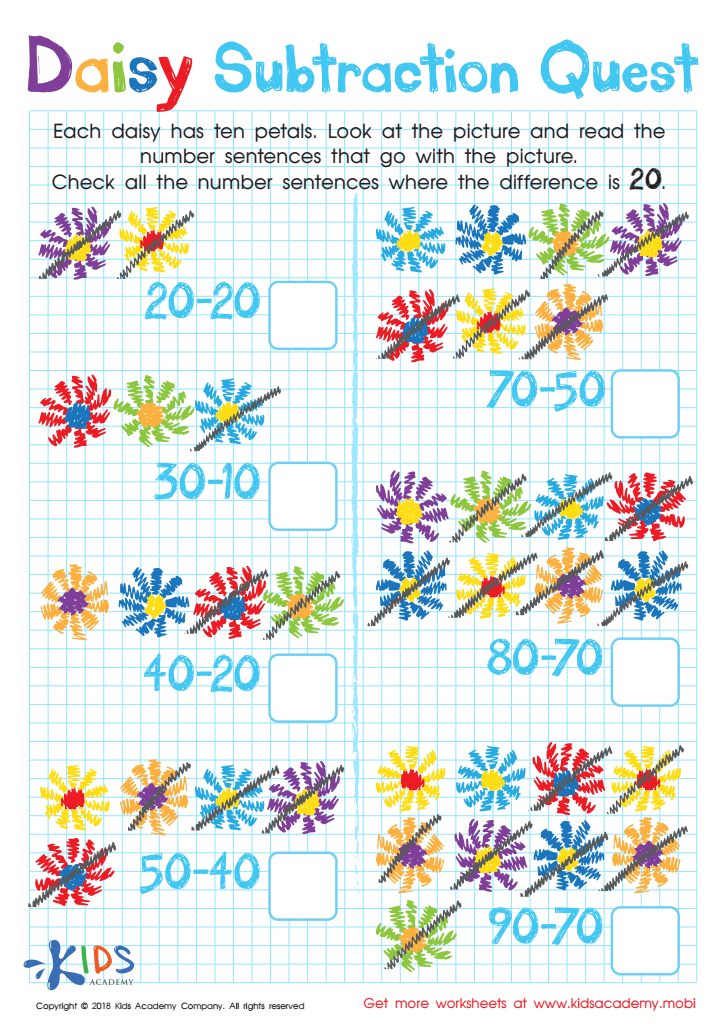
Daisy Subtraction Quest Worksheet
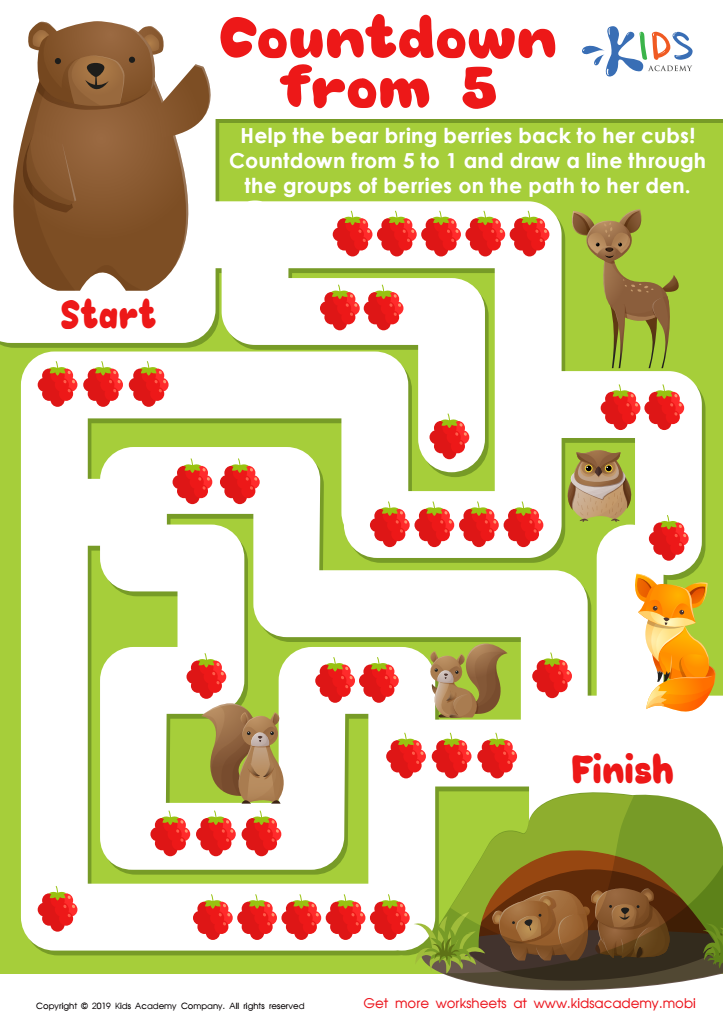
Countdown from 5 Worksheet
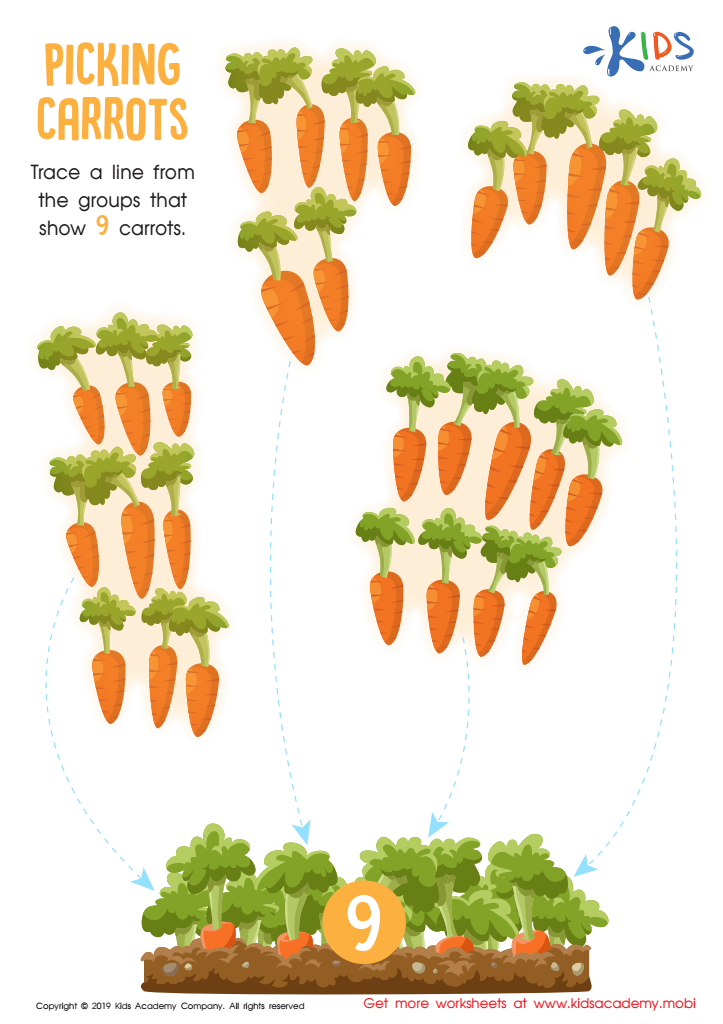
Picking Carrots Worksheet
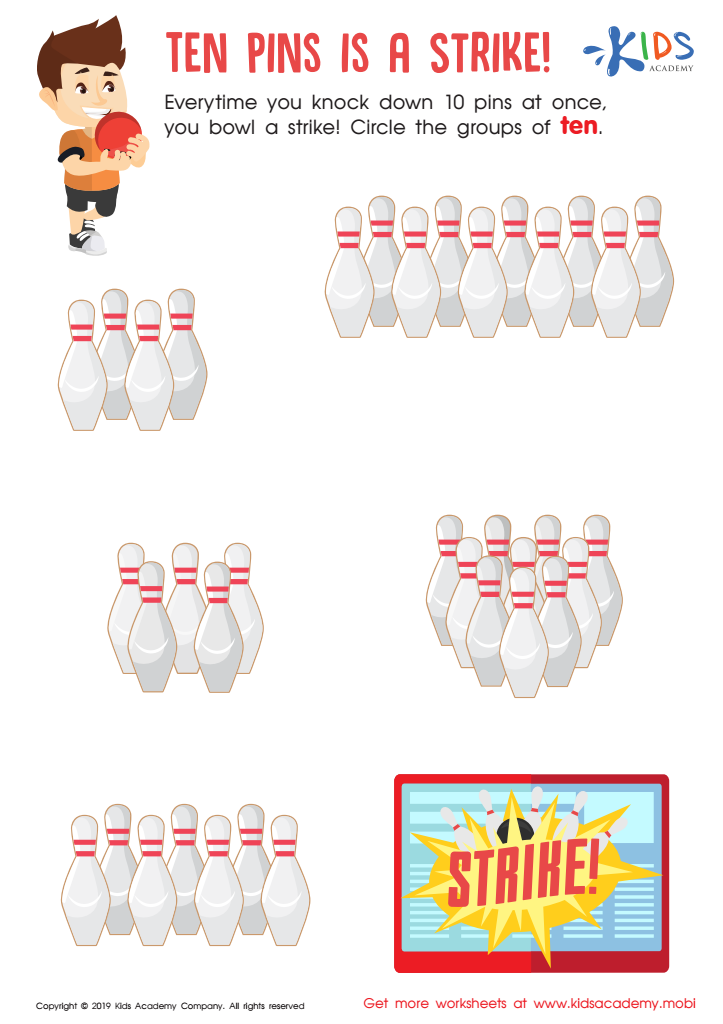
Ten Pins is a Strike Worksheet
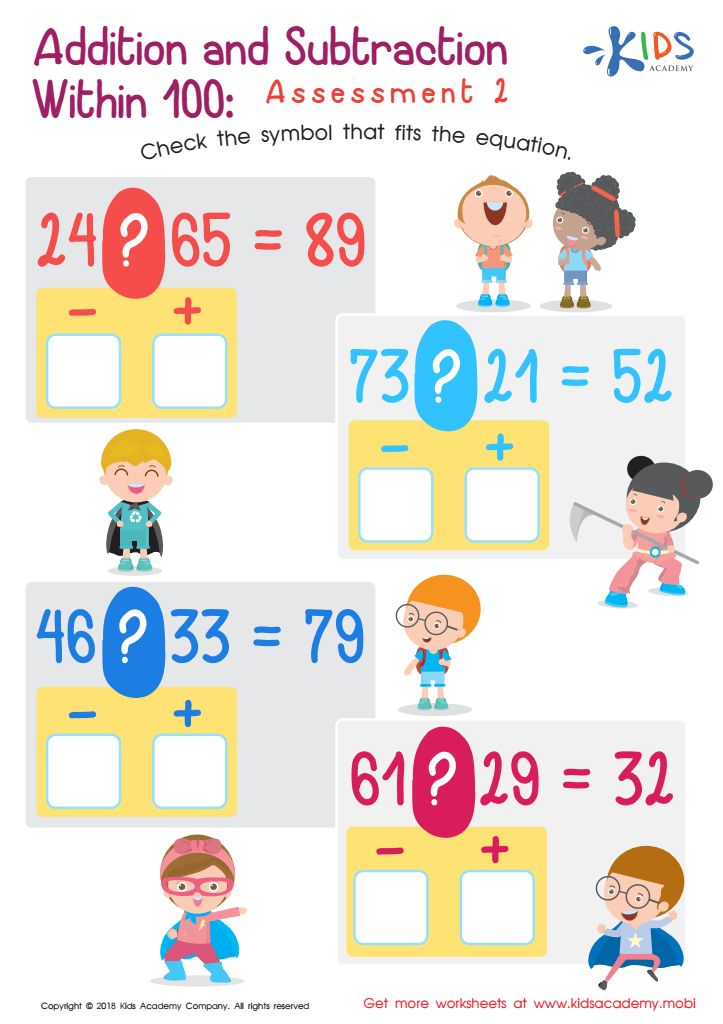
Addition and Subtraction Within 1: Assessment 2 Worksheet

Ten in the Bed Worksheet








Subtraction practice for ages 3-6 is crucial in a child's early development because it lays the foundation for essential math skills that they will build upon as they grow older. At this stage, children's brains are highly receptive and can grasp fundamental concepts through engaging, hands-on activities that make learning fun and effective.
Early subtraction practice nurtures a child’s ability to think critically and solve problems. These are vital skills that go beyond math and help children in various aspects of life. For instance, understanding subtraction can aid in developing resource management skills such as knowing how to evenly distribute resources or budget allowances.
Subtraction also fosters a solid number sense, helping children to better understand the relationships between numbers. This, in turn, prepares them for more complex mathematical operations and concepts they will encounter in later grades. Additionally, consistent practice helps improve a child's focus, attention span, and perseverance.
Parents and teachers who focus on subtraction practice recognize its importance in lifelong learning. They help instill confidence and a positive attitude towards math, eliminating early fears or apprehensions concerning the subject. By providing children with these foundational skills, parents and teachers set them on the path to academic success and everyday logical thinking.








