Understanding tens Numbers Worksheets for Ages 3-6
4 filtered results
-
From - To
"Understanding Tens Numbers Worksheets for Ages 3-6" provide young learners with a fun and interactive way to grasp the concept of tens. Designed to align with early math skills, these worksheets introduce children to counting by tens, enhancing their understanding of basic number operations. With engaging activities and colorful visuals, kids will effortlessly learn to group numbers, identify patterns, and build a strong numerical foundation. Perfect for preschoolers and kindergarteners, these worksheets are an excellent resource for both parents and teachers aiming to foster early mathematical confidence and readiness. Download now and watch your child's math skills flourish!
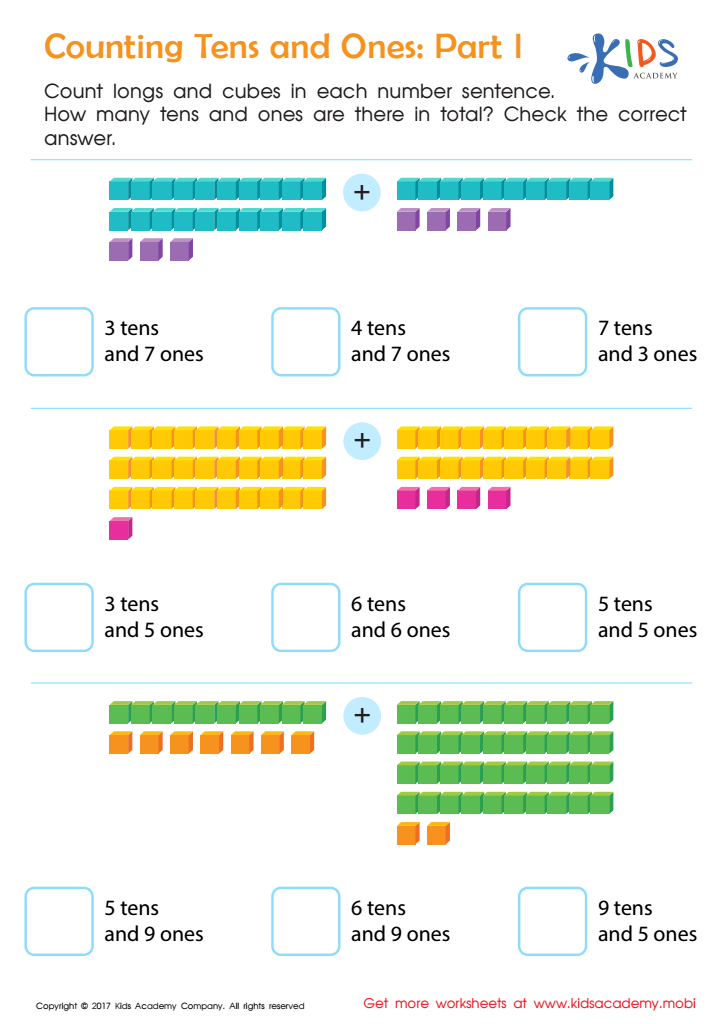
Counting Tens and Ones: Part 1 Worksheet
 Assign to My Students
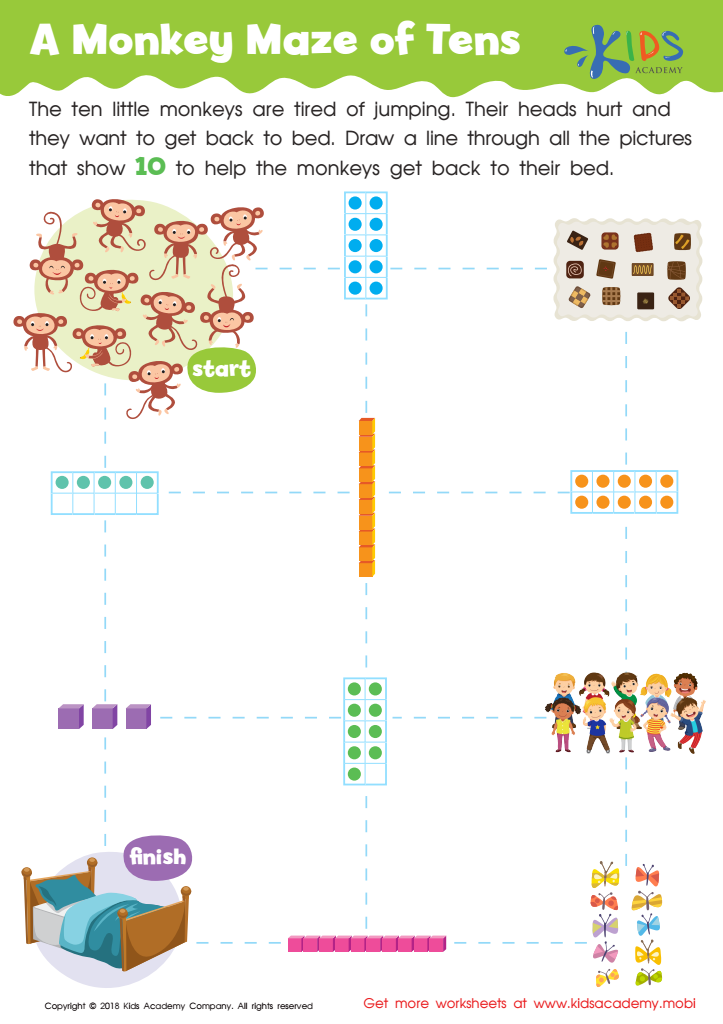
A Monkey Maze of Tens Worksheet
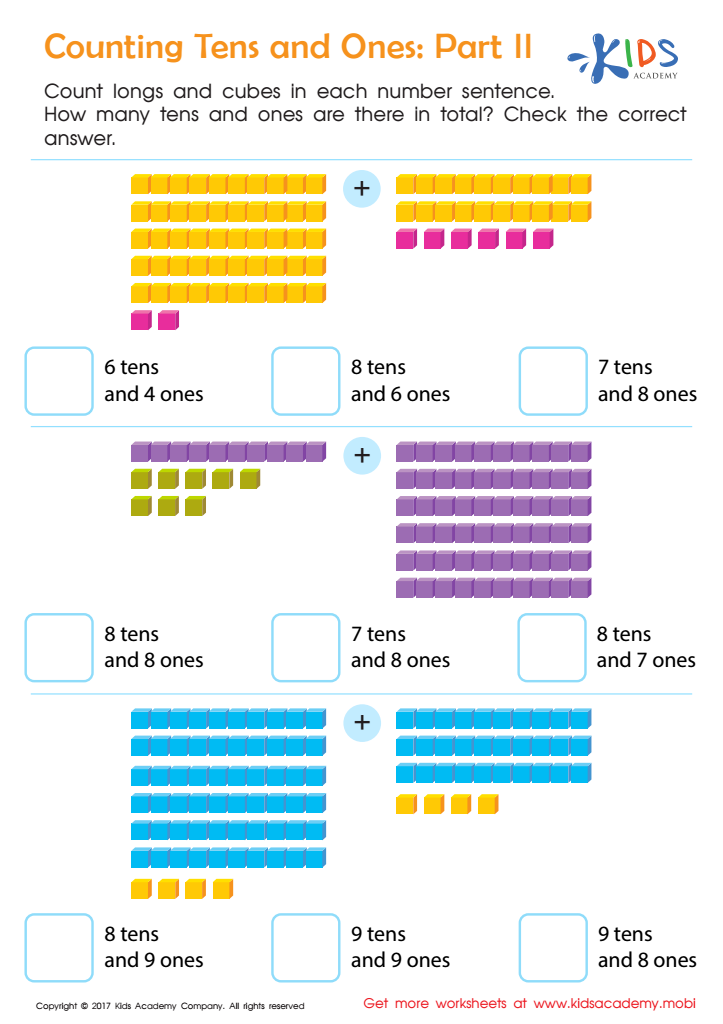
Counting Tens and Ones: Part 2 Worksheet
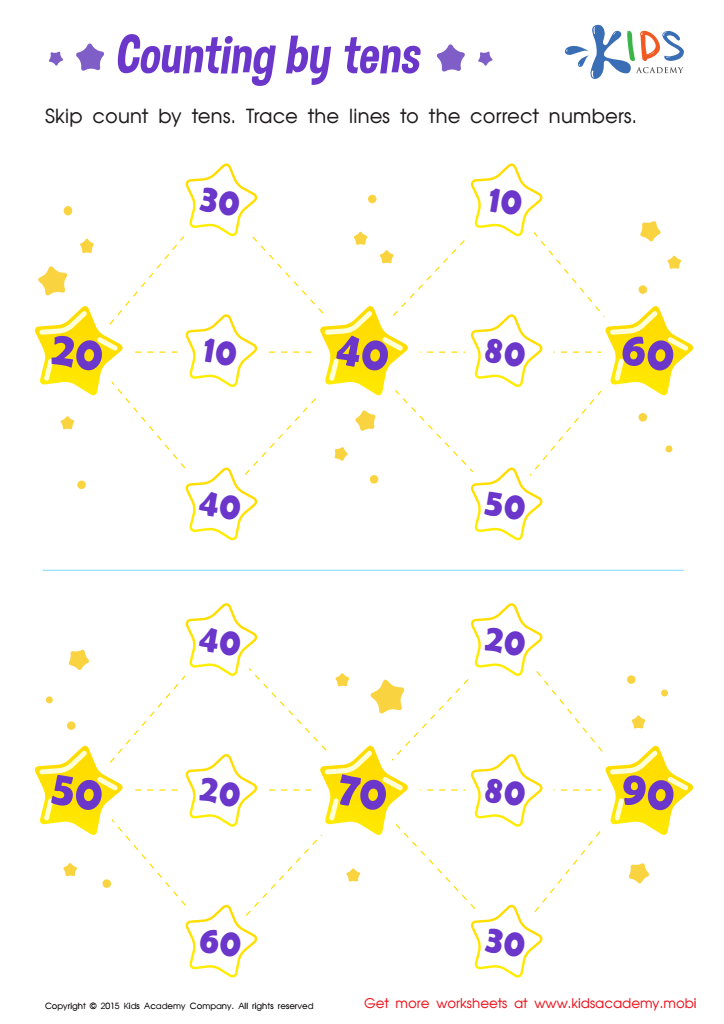
Learn Dozens: Counting by Tens Printable







Understanding the concept of tens is a cornerstone in early childhood numeracy, particularly for children aged 3-6. This foundational skill is crucial for several reasons. Firstly, grasping the idea of tens helps young learners comprehend the base-10 number system, which is central to all higher-level math. It lays the groundwork for basic arithmetic operations like addition and subtraction.
When children understand that 10 individual units can be grouped into one 'ten', they develop the ability to see relationships between numbers, enhancing their cognitive and abstract reasoning. This is not just rote learning but imbibes a deeper understanding of how numbers interact, making future math tasks less intimidating and more intuitive.
Additionally, knowing tens aids in developing efficient counting skills. Rather than counting by ones, children can count groups of ten, which significantly speeds up the process and reduces errors. This efficiency is essential in everyday activities like telling time, understanding money, or measuring objects.
For teachers and parents, focusing on tens enriches children's educational experiences, promoting confidence and competence in math from a young age. Investing in this understanding supports a child's overall academic journey and lays a robust foundation for lifelong mathematical skills.








