Categorization skills Matching Worksheets for Ages 3-6
6 filtered results
-
From - To
Develop crucial categorization skills with our engaging Matching Worksheets designed for children aged 3-6. These printable activities foster critical thinking, boost observational abilities, and enhance problem-solving skills in young learners. Featuring vibrant images and simple matching exercises, our worksheets provide a fun and educational way for kids to practice grouping similar items, recognizing patterns, and understanding relationships between objects. Perfect for both classroom and home use, these resources cater to various learning styles, ensuring every child can excel. Cultivate your child's categorization abilities today and lay a strong foundation for their future learning journey!
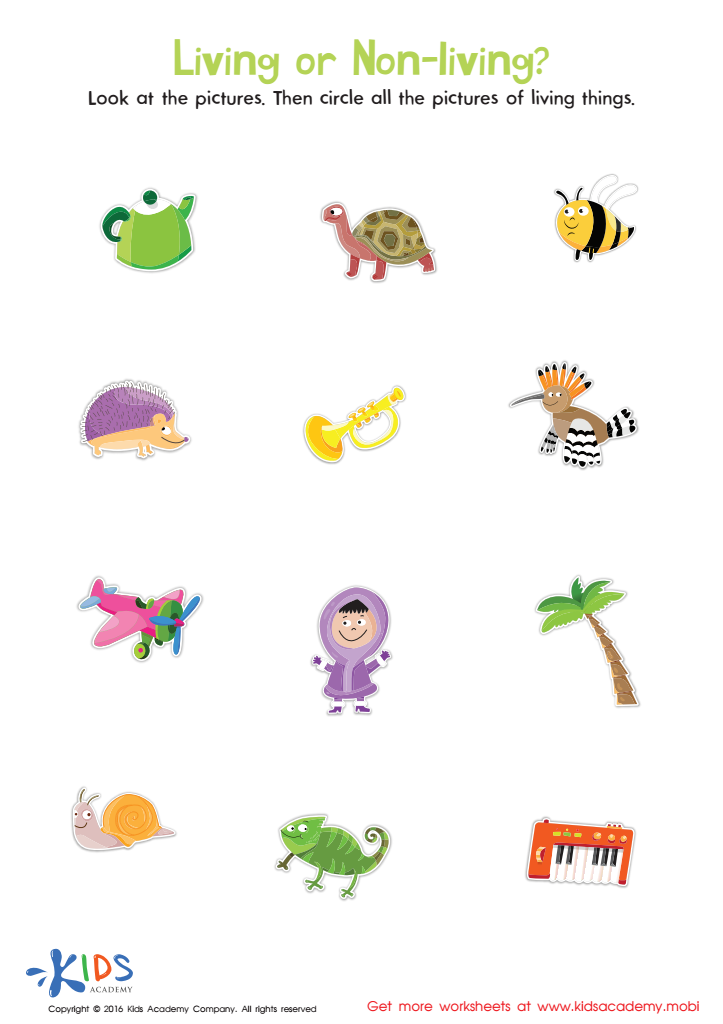
Identifying Living and Non–living Things Sorting Worksheet
 Assign to My Students
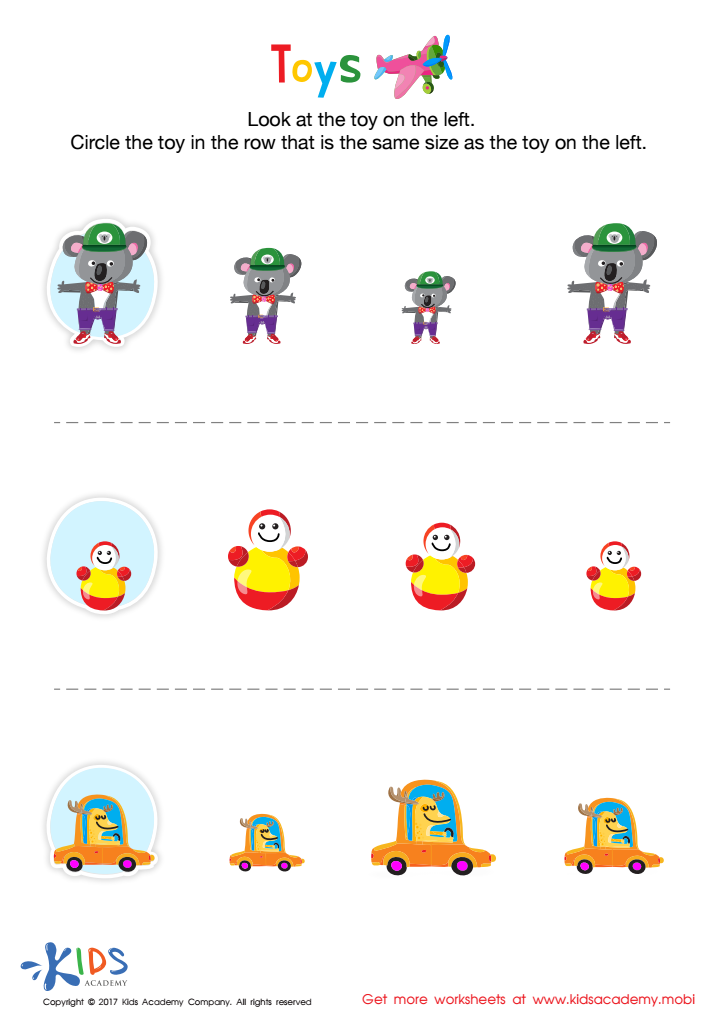
Matching: Classifying Toys by Size Worksheet
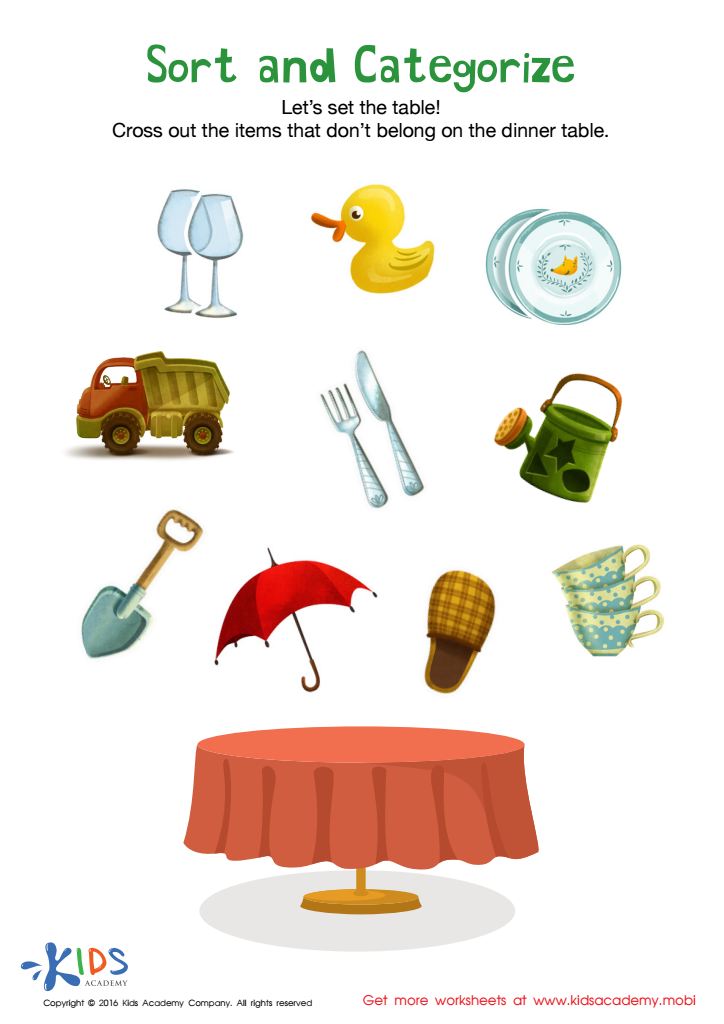
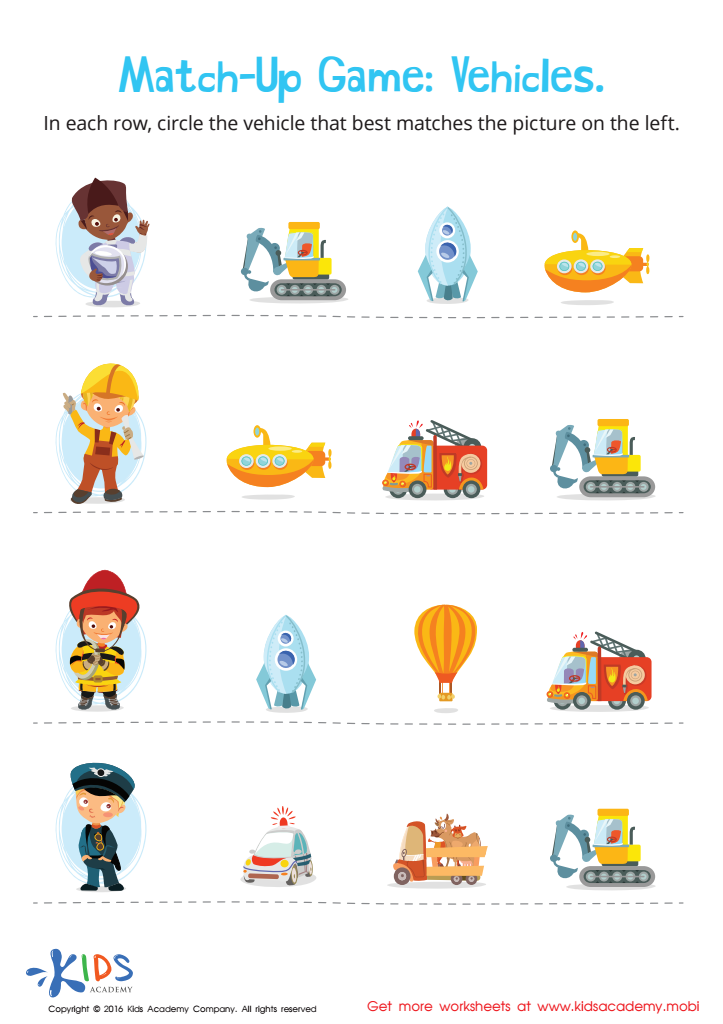
Vehicles Worksheet
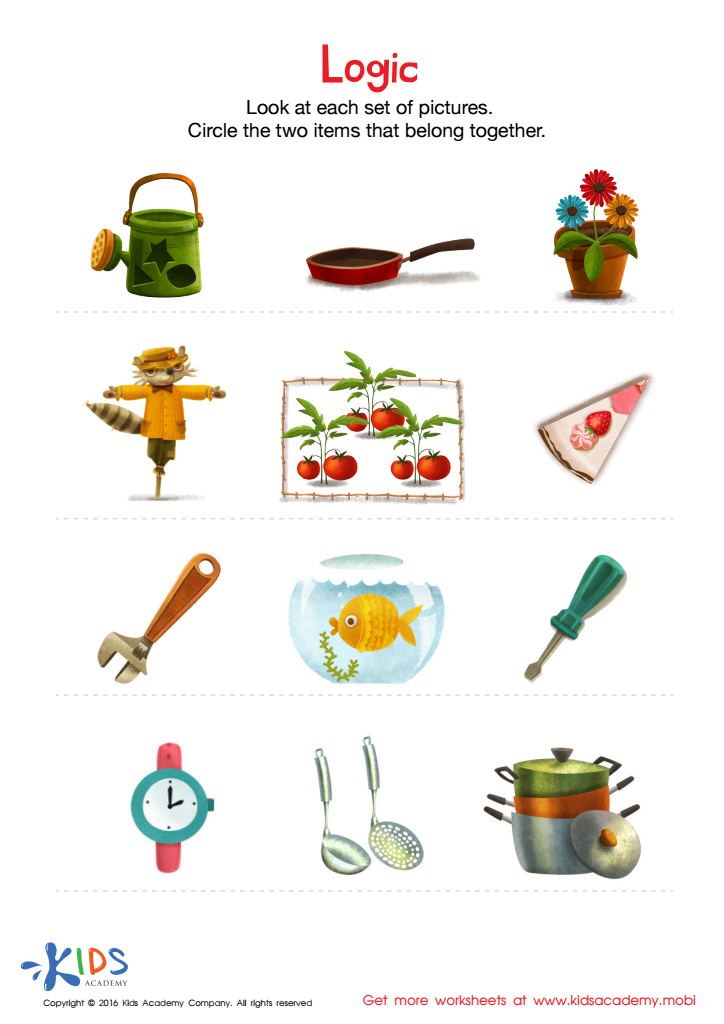
Logic Game Sorting Worksheet








Categorization skills are foundational cognitive abilities crucial for young learners aged 3-6. These skills involve grouping objects, ideas, or information based on common characteristics, and they significantly impact early cognitive development.
Developing categorization skills allows children to make sense of the world around them. When kids categorize, they learn to identify patterns and relationships, facilitating better memory retention and recall. In early childhood education, these skills underpin critical thinking and problem-solving abilities, giving children a structured way to understand new information and experiences.
Parents and teachers should focus on nurturing categorization because it directly influences language development. When children match objects by attributes such as shape, color, or size, they simultaneously learn new vocabulary. For example, categorizing animals into farm animals or wild animals expands their word bank and helps them express ideas more effectively.
Moreover, categorization forms the basis for mathematical and scientific thinking. By grouping objects, children become better at recognizing numerical patterns, leading to a more robust understanding of math concepts.
Finally, categorization is pivotal for social learning. It helps children navigate social cues and group dynamics, improving interpersonal skills. By encouraging categorization through playful activities and guided learning, parents and teachers lay a critical groundwork for a child’s holistic educational journey.








