Fine Motor Skills Tracing Shapes Worksheets for Ages 3-6
7 filtered results
Difficulty Level
Grade
Age
-
From - To
Subject
Activity
Standards
Discover our vibrant Fine Motor Skills Tracing Shapes Worksheets, designed for children ages 3-6. Delight young learners with engaging and colorful activities that enhance their fine motor skills. These expertly crafted worksheets guide children through tracing various shapes, developing crucial hand-eye coordination and precision. Perfect for preschool to kindergarten-aged kids, our worksheets make learning fun while building a solid foundation for writing. Parents and teachers alike will appreciate the easy-to-follow tasks that keep children motivated and entertained. Unlock your child's potential today with our Fine Motor Skills Tracing Shapes Worksheets, where learning and play go hand in hand!
Favorites
With answer key
Interactive
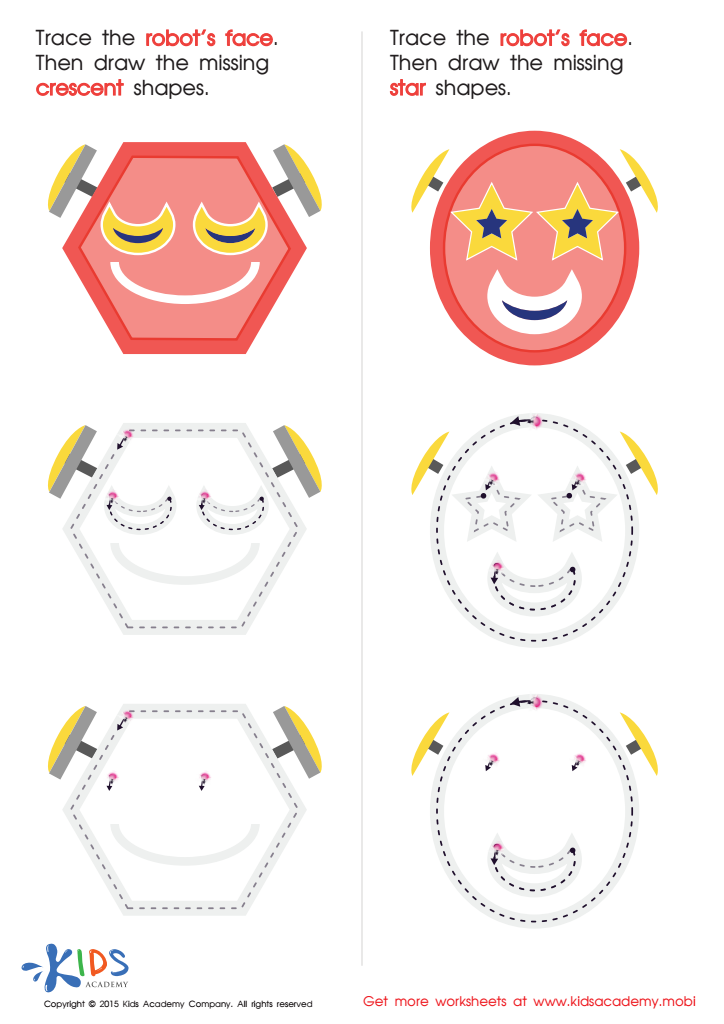
Composing a Robot's Face of Crescents And Stars Worksheet
Get free math geometry worksheets at Kids Academy! Help your child learn by practicing together - trace the robot's face and draw the missing crescent and star shapes. Be sure to remember their names! Have fun and learn with shapes for kids.
 Assign to My Students
Composing a Robot's Face of Crescents And Stars Worksheet
Worksheet
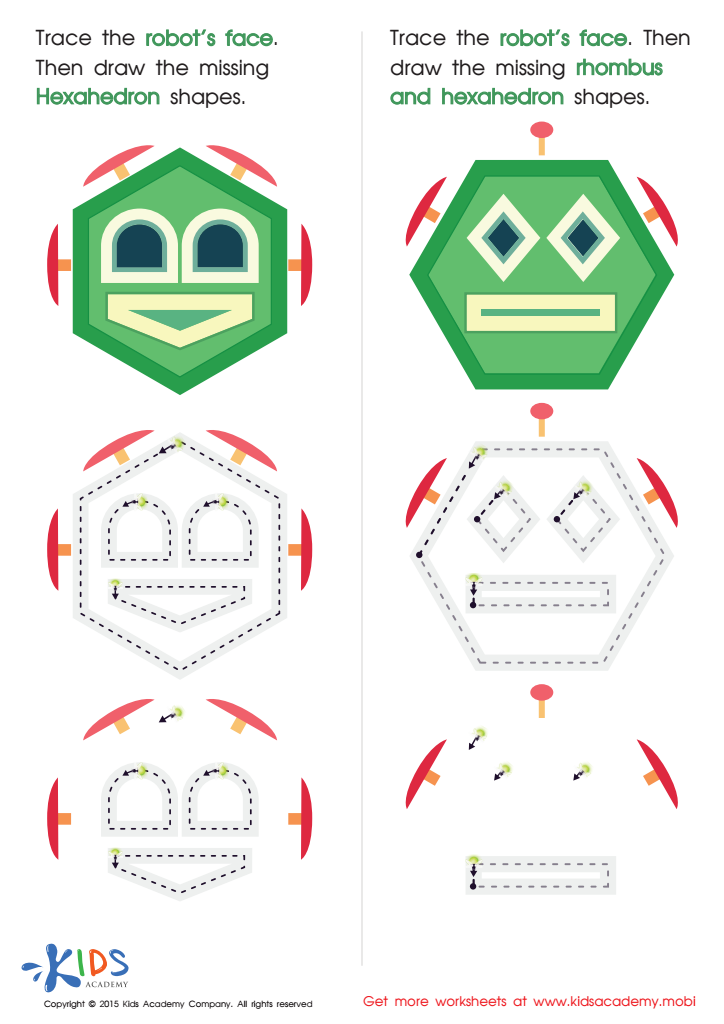
Practice Drawing Hexahedrons And a Rhombus Worksheet
Trace the Robot's face, draw hexahedron and rhombus shapes, then trace again. Our tracing shapes worksheets make it easy for kids to learn geometry. Get more materials from Kids Academy to practice all the shapes.
Practice Drawing Hexahedrons And a Rhombus Worksheet
Worksheet
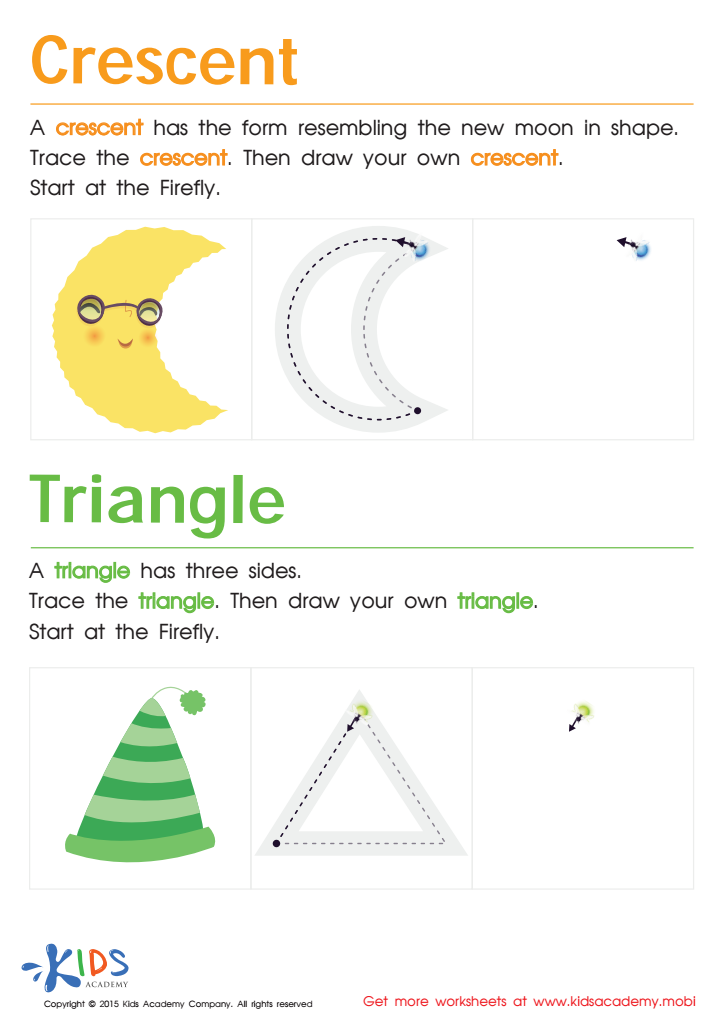
Learning to Draw Crescents And Triangles Worksheet
Help your kids draw a crescent and triangle with this free printable worksheet! Start by tracing a crescent in the form of the new moon, and then teach them that a triangle has three sides and looks like a hat. Find more geometry practice worksheets at Kids Academy!
Learning to Draw Crescents And Triangles Worksheet
Worksheet
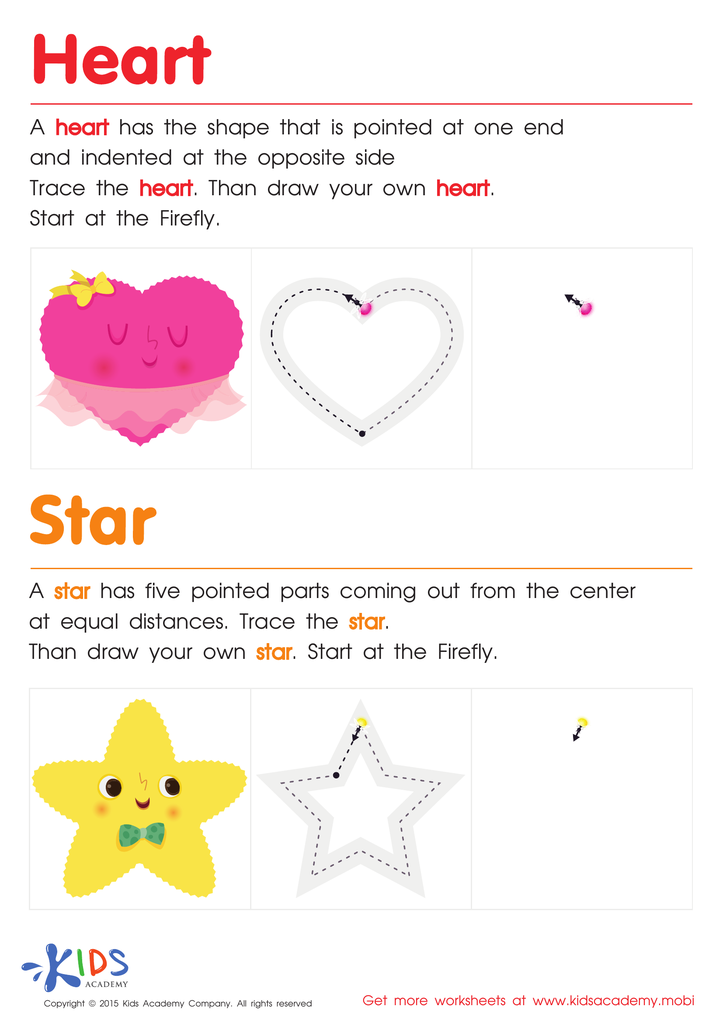
Let's Learn to Draw Hearts And Stars Printable
Trace and draw hearts and stars, learn their names and use them in your drawings. Start with the firefly and be creative!
Let's Learn to Draw Hearts And Stars Printable
Worksheet
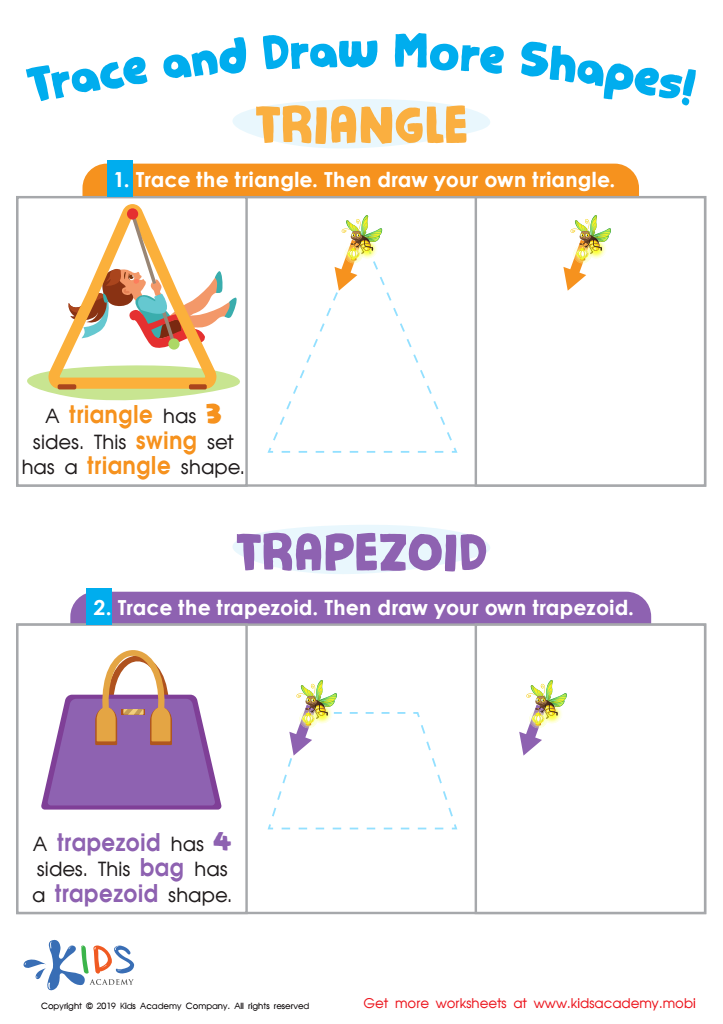
Trace and Draw More Shapes Worksheet
Help your kids with more learning! Look at images in the worksheet, read facts about the shapes, then help your kids trace and draw. This reinforces that learning is never done; use this simple worksheet to help your kids with school homework and more!
Trace and Draw More Shapes Worksheet
Worksheet
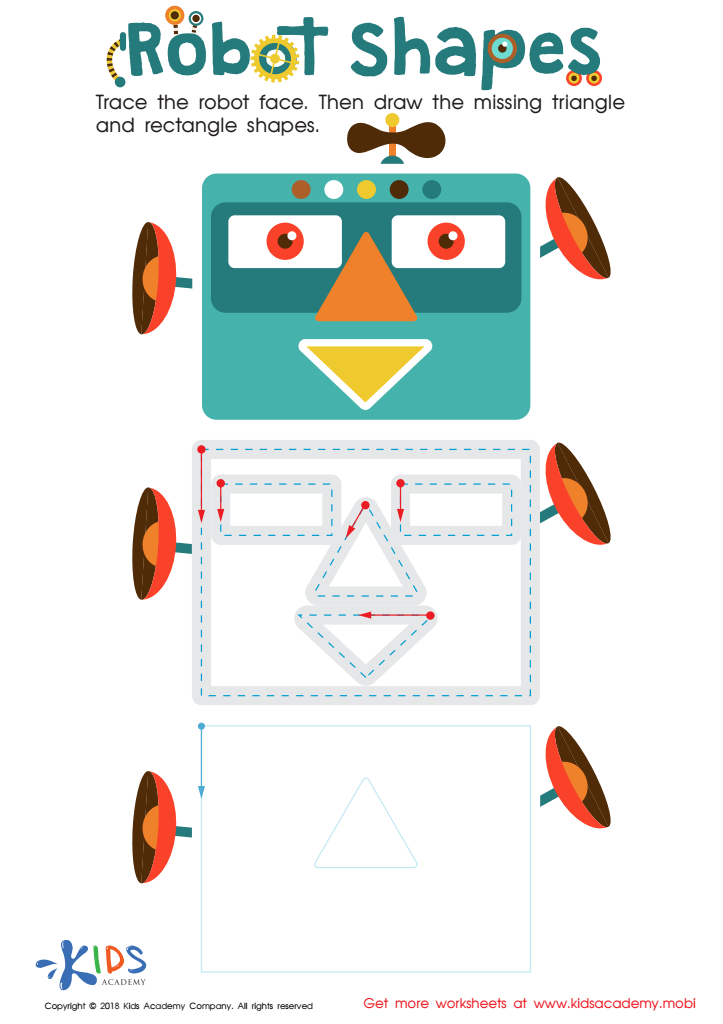
Robot Shapes Worksheet
Help your preschooler get started with math skills while having fun with this shape tracing worksheet featuring a cute robot! Ask them to study the first image, trace the dotted lines to draw the shapes in the second, and color the third. With this activity, they'll learn shapes while enjoying the funny robot pictures!
Robot Shapes Worksheet
Worksheet
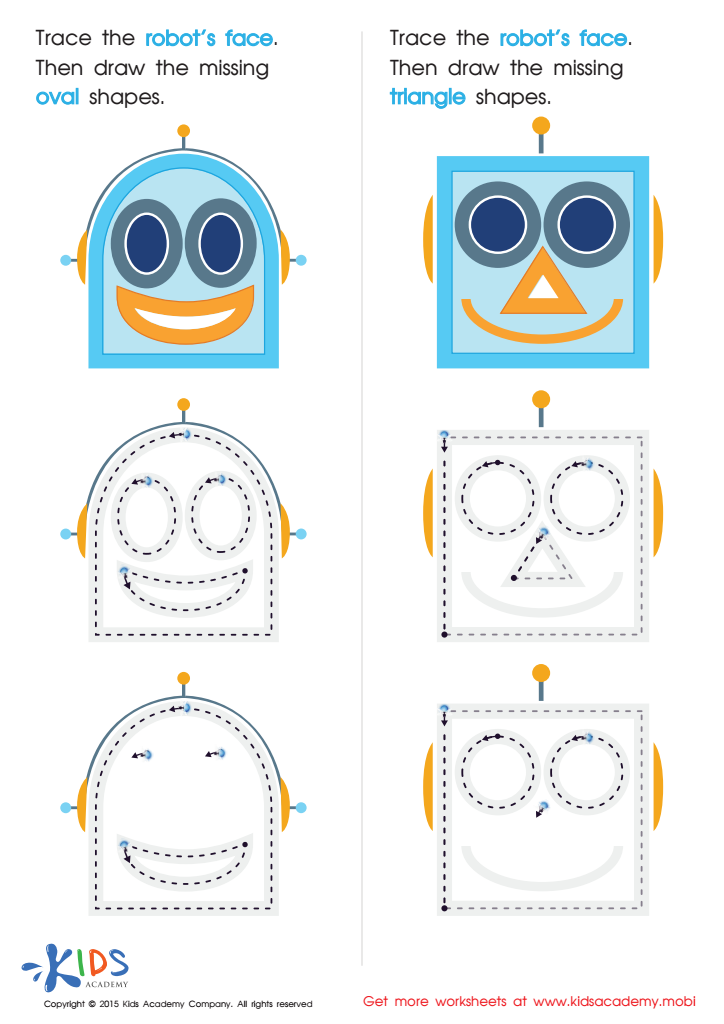
Drawing Ovals And Triangles with Fun Printable
Trace the face and draw missing ovals and triangles. Test your memory and recall shapes' names. Check if you remember how to draw them!
Drawing Ovals And Triangles with Fun Printable
Worksheet
Join Kids Academy for Free
Who is primarily going to use this learning content?








Fine motor skills play a crucial role in the early development of children aged 3-6, and tracing shapes is a fundamental activity that directly supports this growth. At this age, children's hand muscles and coordination are still developing, which are essential for tasks such as writing, buttoning clothing, and using utensils. Tracing shapes helps to strengthen the small muscles in their hands and fingers while improving hand-eye coordination and control.
Moreover, engaging in shape tracing lays the groundwork for literacy and numeracy skills. As children concentrate on tracing lines and curves, they learn to control their hand movements, which is foundational for letter and number formation. Recognizing and recreating different shapes is linked to spatial awareness, an early math skill. These tasks also enhance cognitive development by promoting patience, attention to detail, and the ability to follow instructions.
Additionally, successful experiences during shape tracing activities build children’s confidence and motivation to tackle more complex tasks, fostering a positive attitude toward learning. For parents and teachers, focusing on fine motor activities such as tracing shapes helps identify early developmental issues, allowing for timely intervention if needed.
Overall, tracing shapes is not just a simple activity; it is a vital stepping stone in a child's holistic development, therefore parents and teachers should ensure it is an integral part of early education.