Reading Comprehension Worksheets for Ages 3-6 - Page 8
170 filtered results
-
From - To
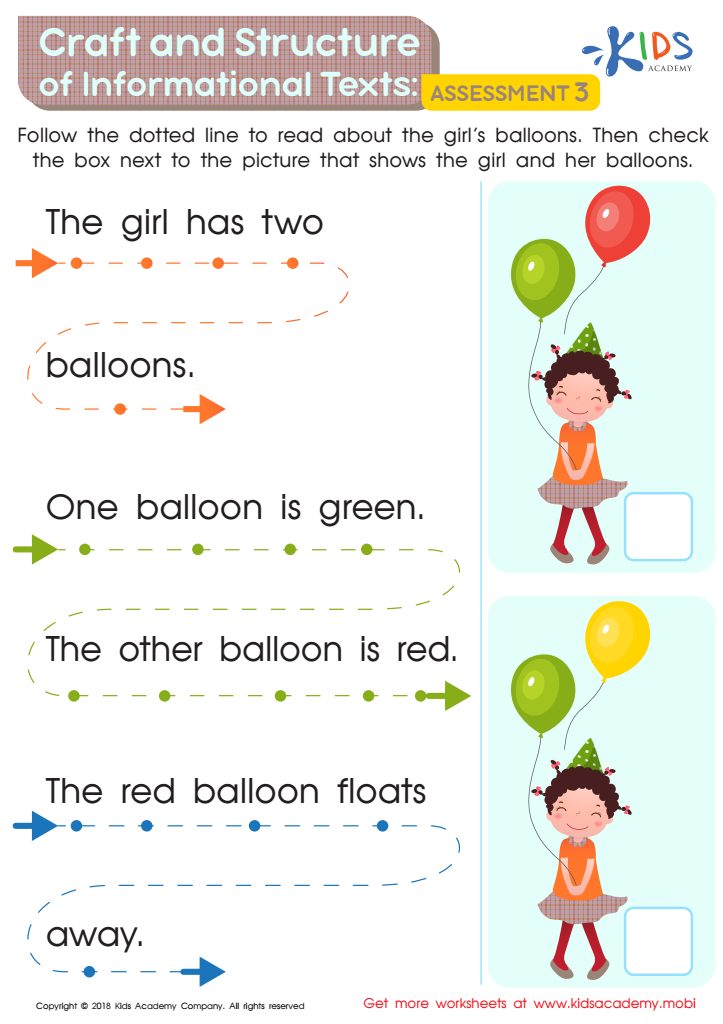
Craft and Structure of Informational Texts: Assessment 3 Worksheet
 Assign to My Students
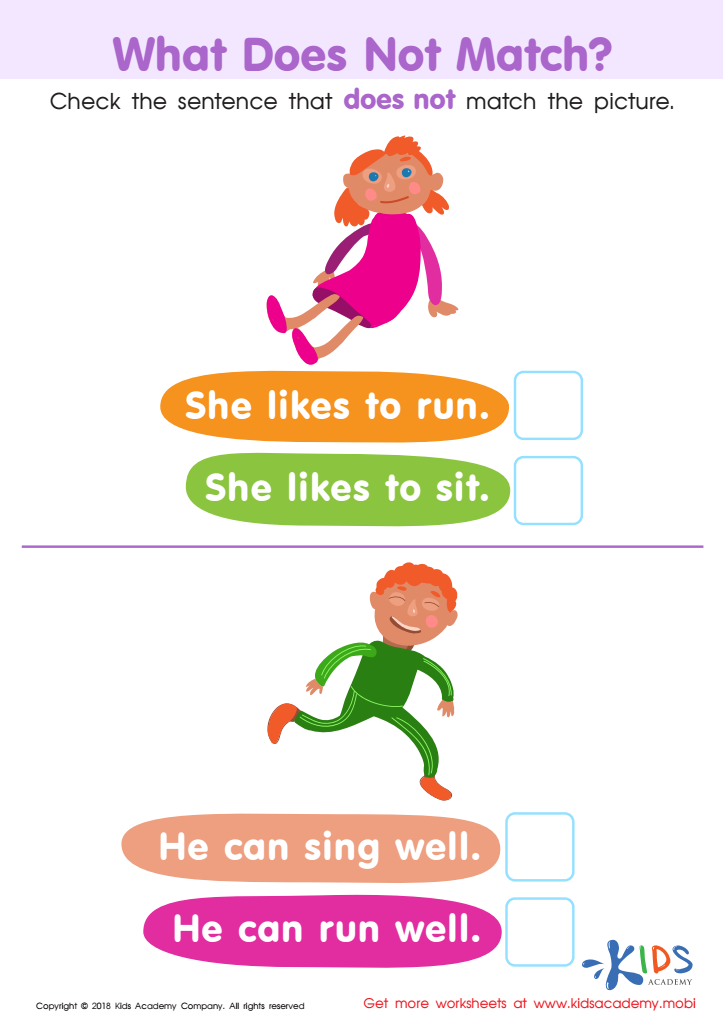
What Does Not Match? Worksheet








Reading comprehension is a crucial skill that sets the foundation for all future learning, particularly for children ages 3 to 6. During these formative years, children are naturally curious, and developing effective reading comprehension skills can enhance their understanding of the world around them.
Parents and teachers should care about reading comprehension because it fosters critical thinking, language development, and emotional intelligence. As children engage with stories, they not only learn new vocabulary, but also learn to infer meaning, analyze characters' motivations, and relate to diverse situations—all vital skills for effective communication and problem-solving.
Moreover, strong reading comprehension enhances a child's confidence in literacy, encouraging a lifelong love for reading. It equips them to connect their experiences with text, driving both academic success and personal growth.
Additionally, early intervention can help identify learning difficulties, allowing for timely support. Parents and teachers can create enriching reading environments by discussing stories, asking open-ended questions, and promoting dialogue. Ultimately, prioritizing reading comprehension in early childhood sets children on a path to thrive academically and socially as they navigate their educational journey and beyond.








