Vocabulary expansion Vowel Diphthongs Worksheets for Ages 3-7
11 filtered results
-
From - To
Enhance your child's language skills with our engaging Vocabulary Expansion Vowel Diphthongs Worksheets, specially designed for ages 3-7! These fun and interactive resources help young learners grasp the concept of diphthongs, vital for pronunciation and reading fluency. Each worksheet features colorful illustrations and age-appropriate exercises that encourage vocabulary building and phonetic awareness. As children explore diphthongs through creative activities, they will develop essential literacy skills in an enjoyable way. Perfect for homeschooling or classroom use, our printable worksheets make learning both effective and entertaining, setting a strong foundation for a lifelong love of language. Start expanding your child's vocabulary today!
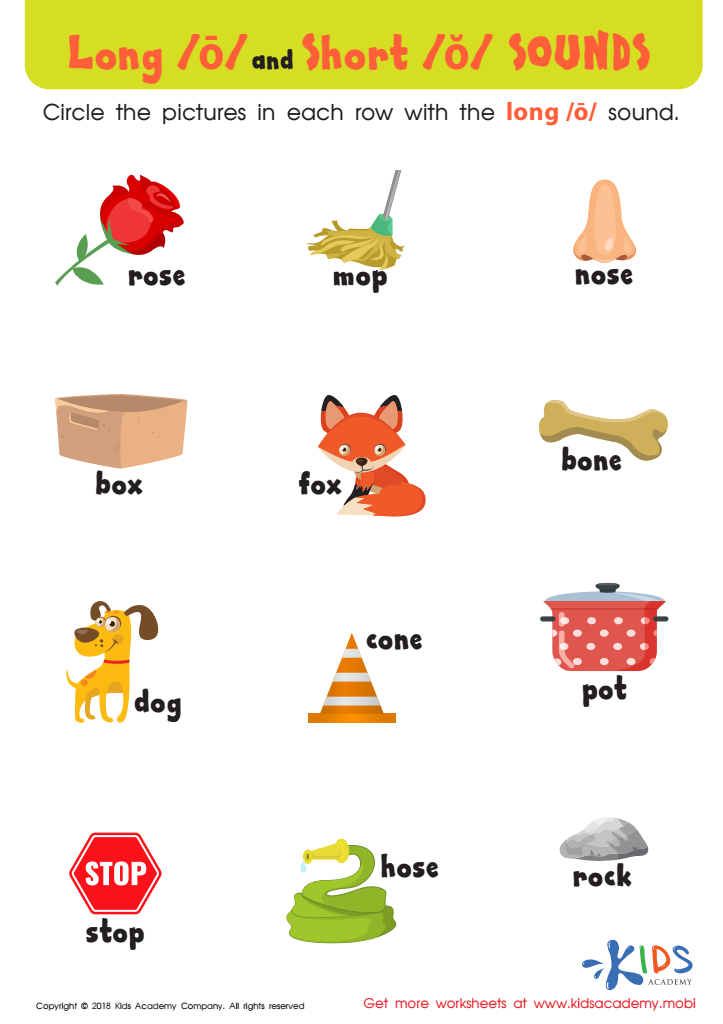
Reading: Long O and Short O Sounds Worksheet
 Assign to My Students
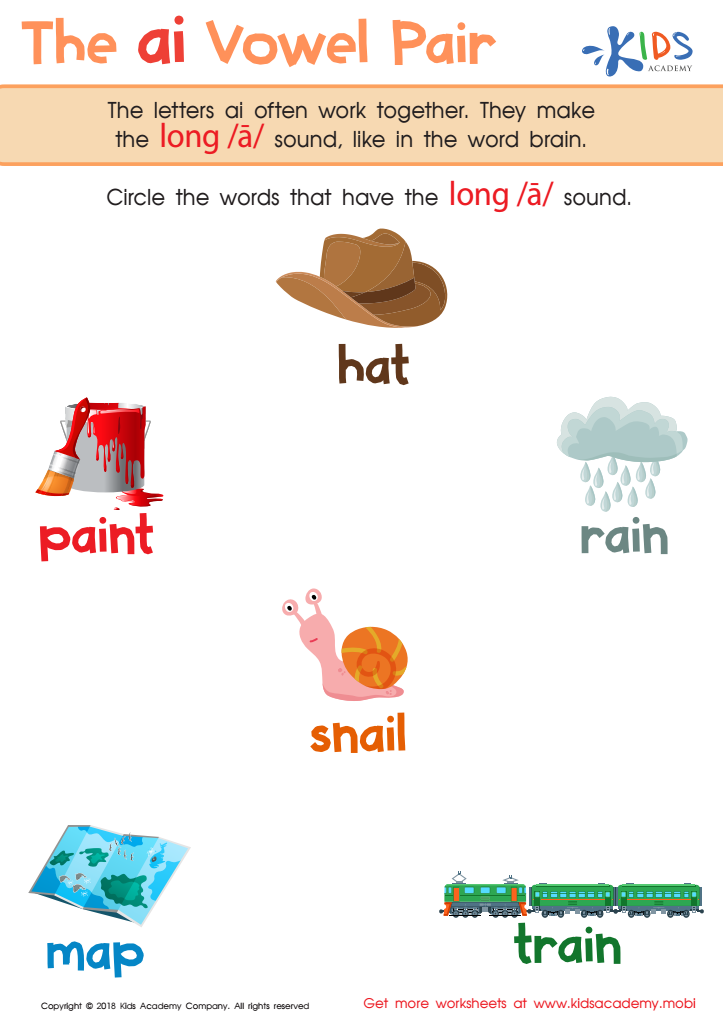
The AI Vowel Pair Worksheet
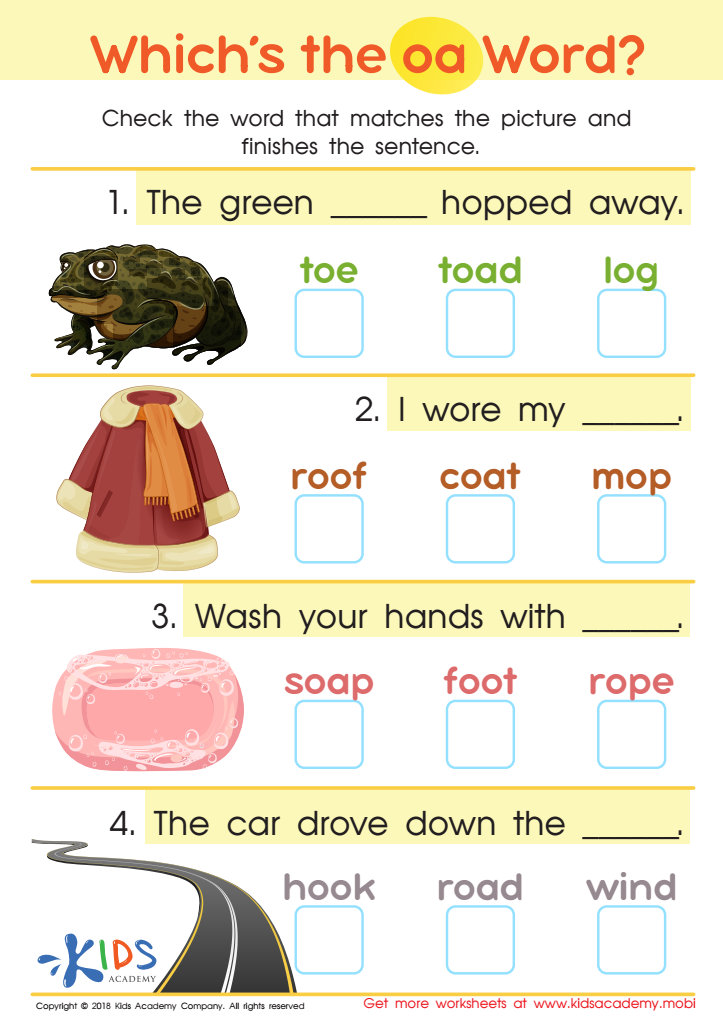
Which's the OA Word? Worksheet
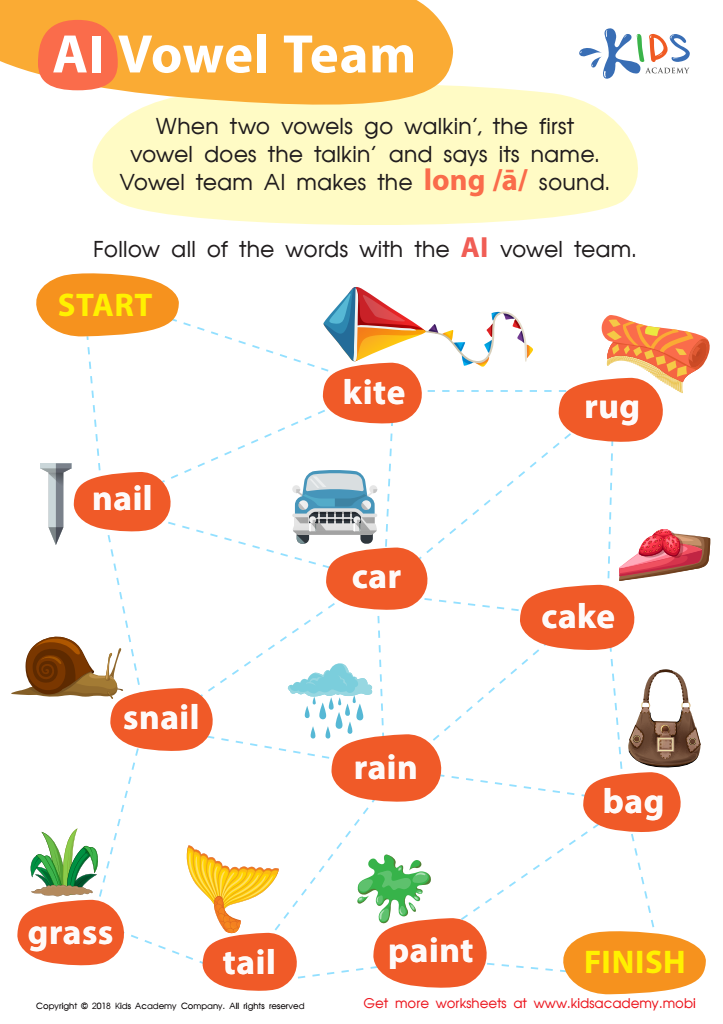
Reading: AI Vowel Team Worksheet
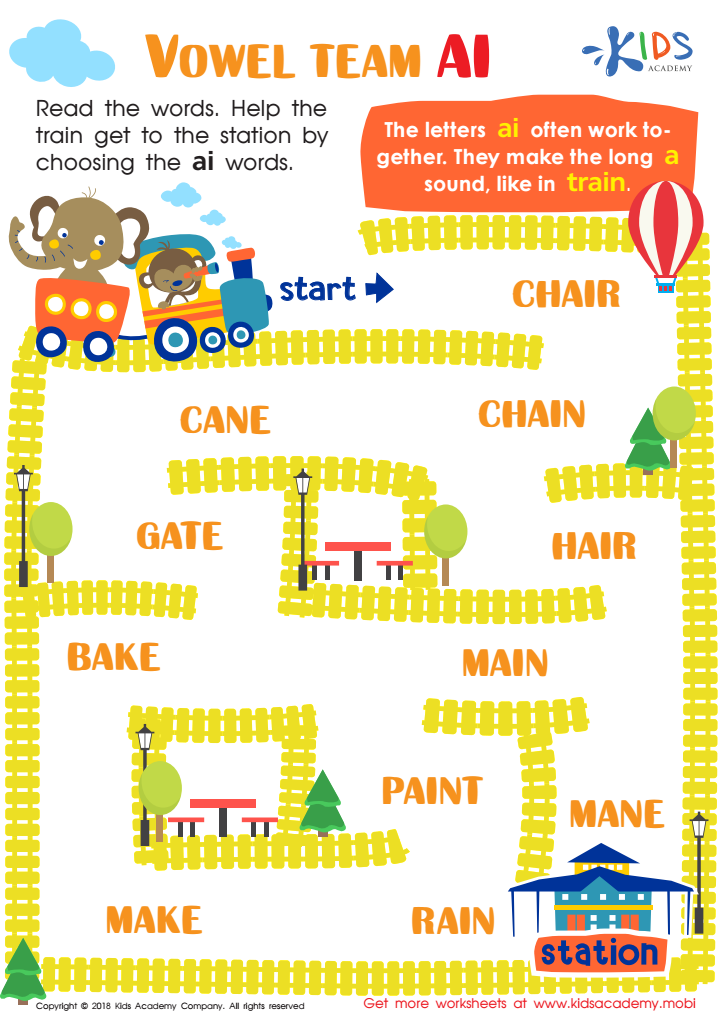
Vowel team ai Worksheet
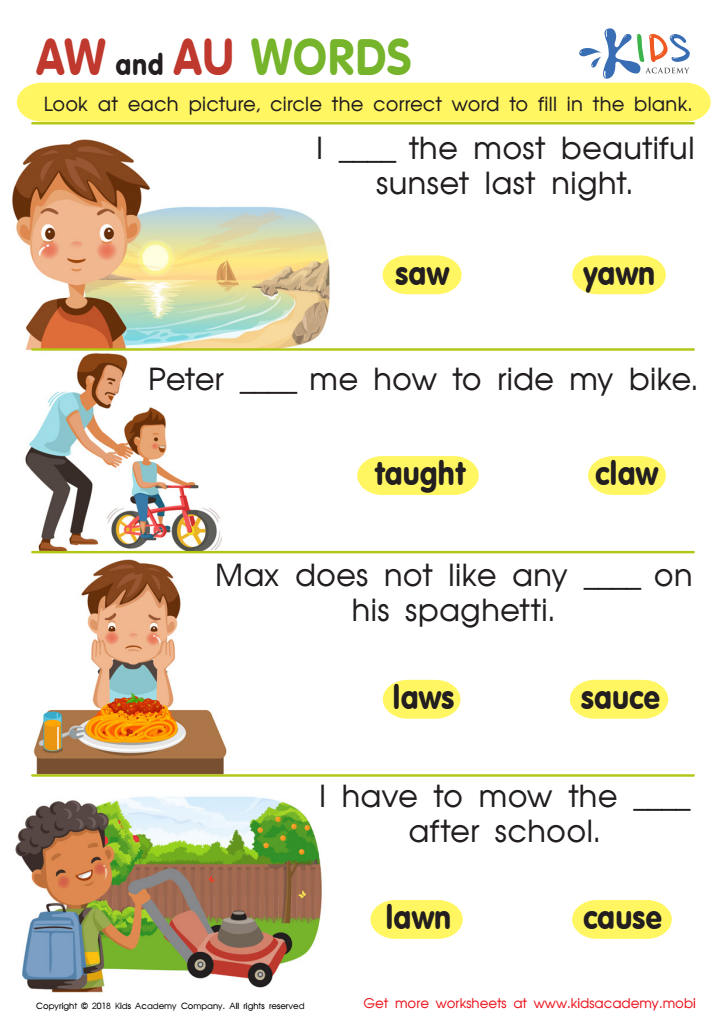
Reading: AW and AU Words Worksheet
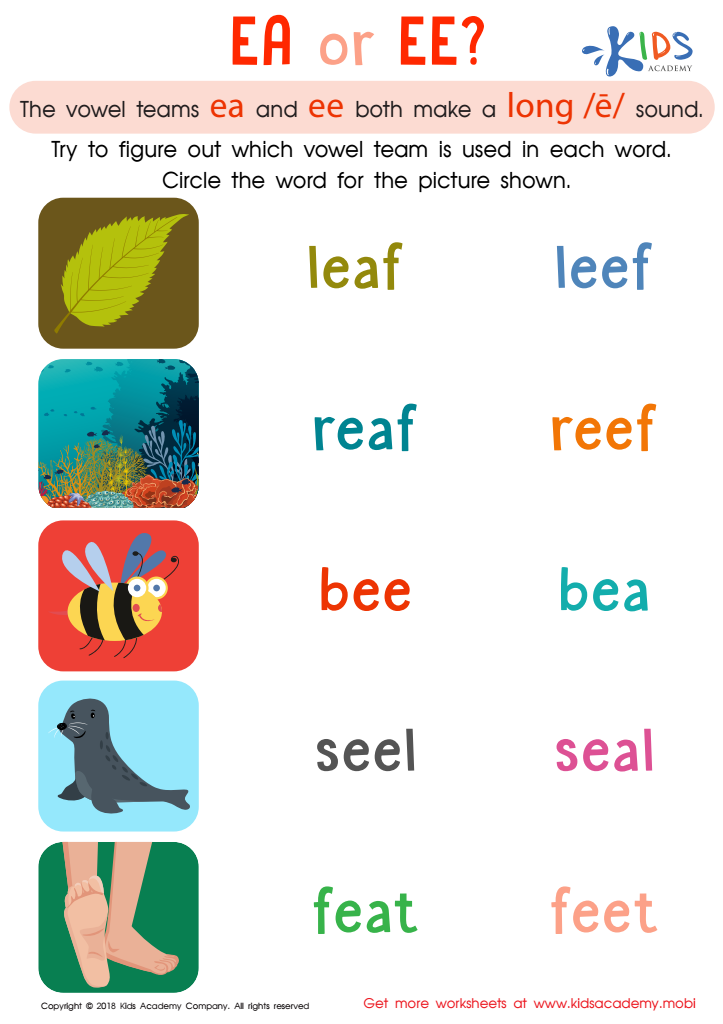
Reading: EA and EE Worksheet
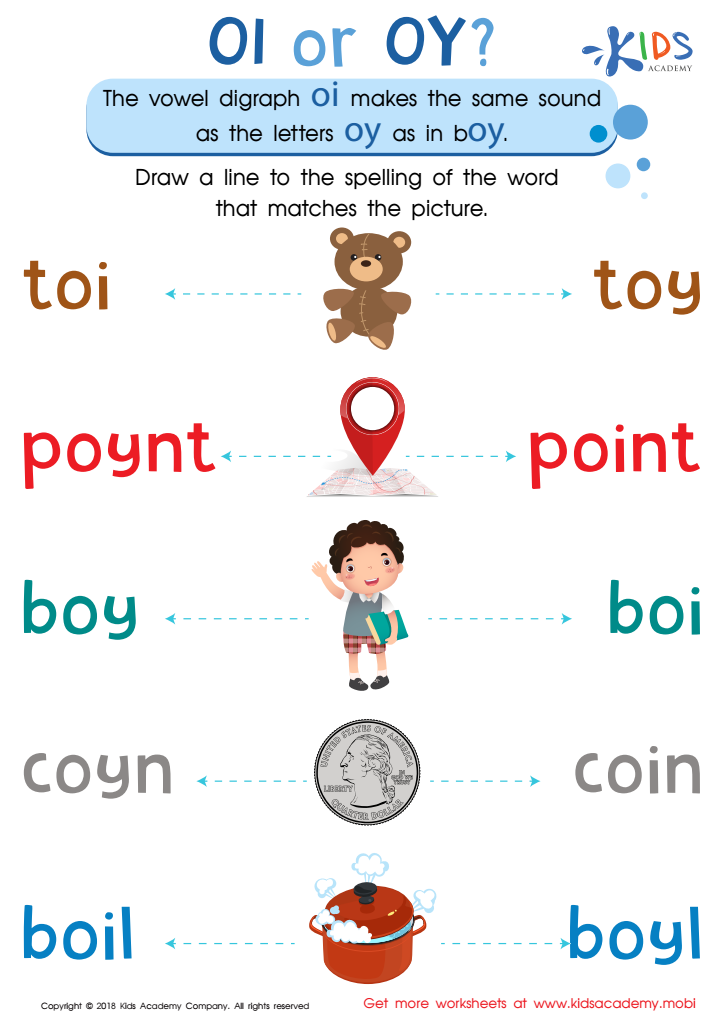
Reading: OI and OY Worksheet
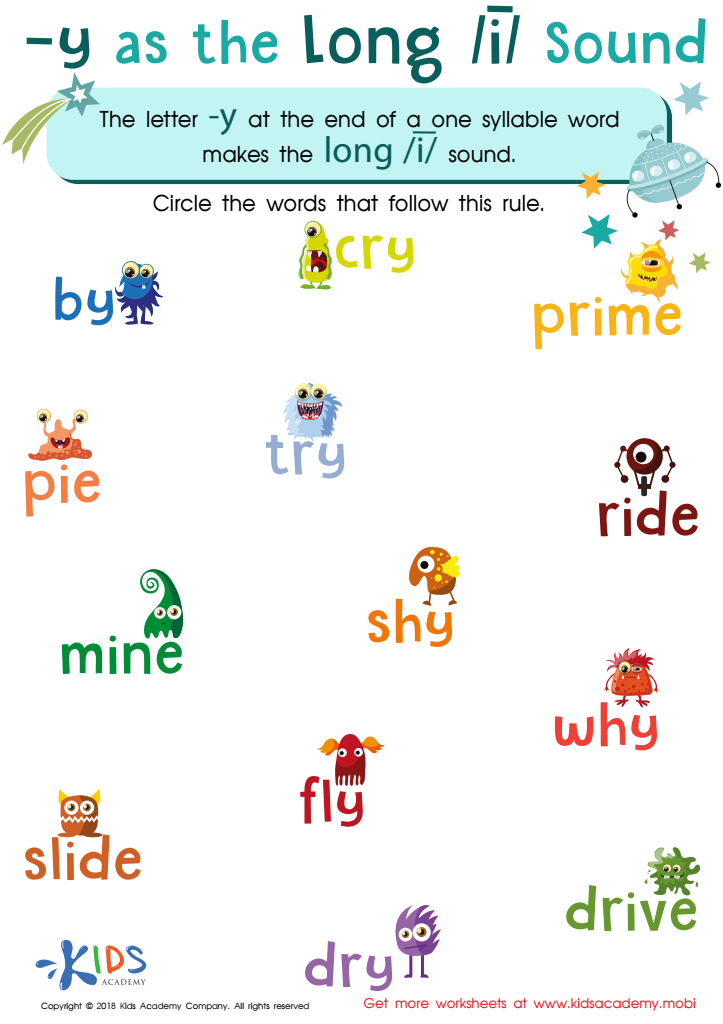
Reading: Y as Long I Worksheet
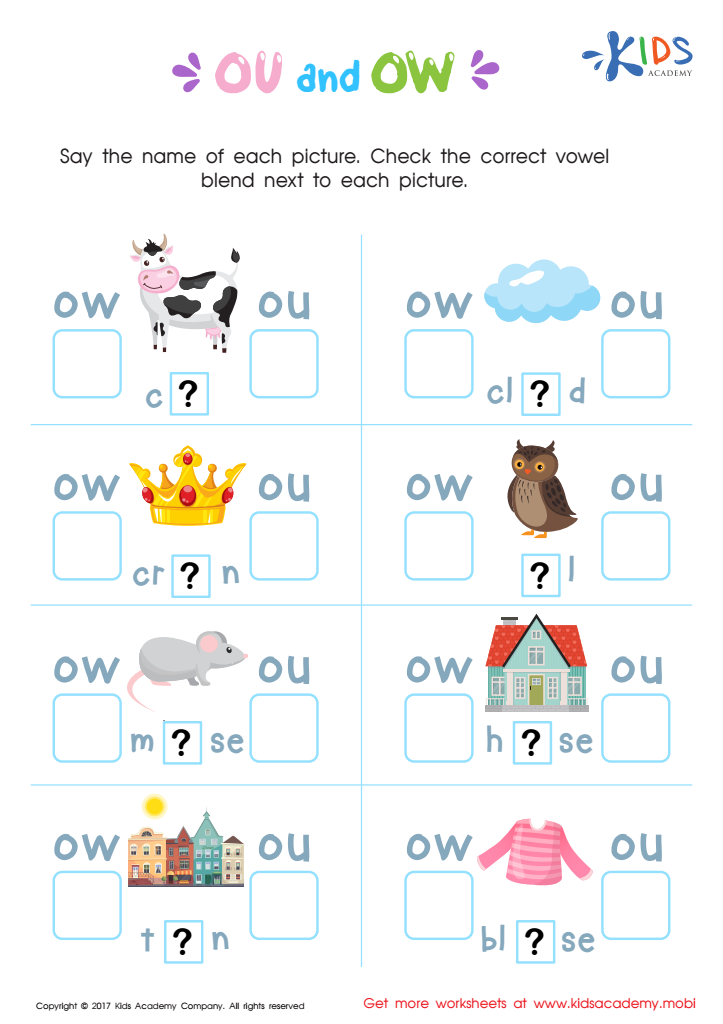
OU and OW Words Worksheet
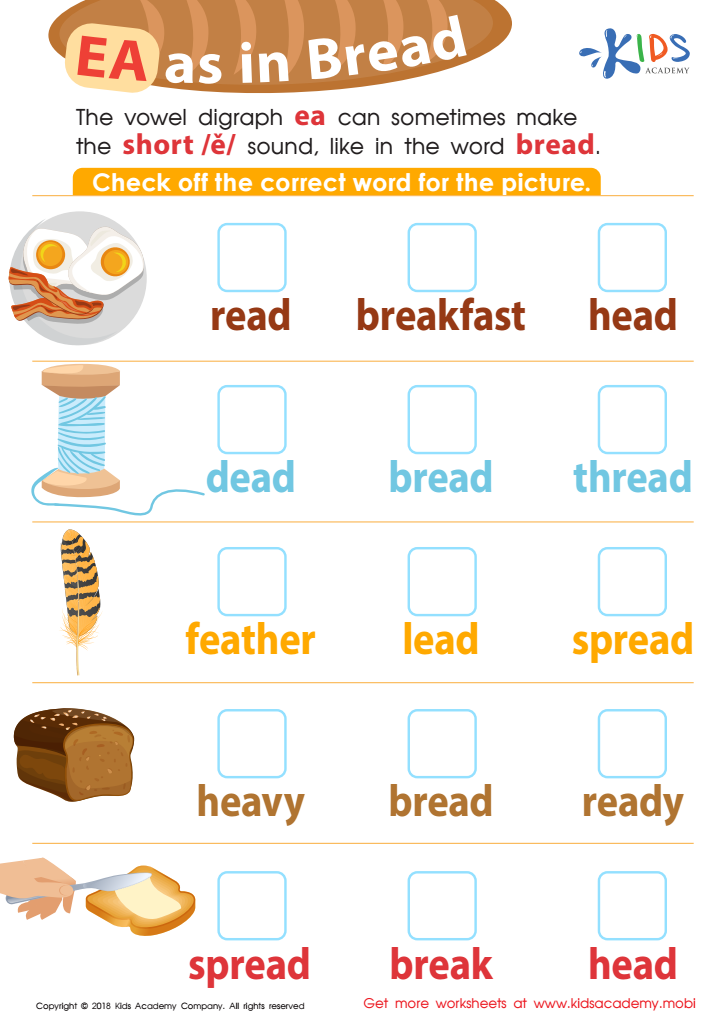
Reading: EA as in Bread Worksheet


Vocabulary expansion, particularly in relation to vowel diphthongs, is crucial for children ages 3-7 because it lays the foundation for effective communication, reading, and overall literacy development. Vowel diphthongs are complex sounds formed when two vowel sounds are blended together, such as in "coin," "out," or "how." Recognizing and mastering these sounds enhances children's phonemic awareness, which is the ability to identify and manipulate sounds in spoken language.
For parents and teachers, fostering an understanding of vowel diphthongs is essential. Children who develop robust vocabulary skills at an early age are more likely to succeed academically, participate confidently in discussions, and express themselves clearly. When children grasp these unique sounds, they improve their spelling and pronunciation, which are vital for reading fluency.
Engaging with diphthongs helps children develop critical listening and speaking skills, enabling them to differentiate similar-sounding words and enhancing their comprehension abilities. Moreover, a strong vocabulary nurtures curiosity and a love for learning, encouraging lifelong educational pursuits. By investing time in teaching vocabulary expansion with an emphasis on vowel diphthongs, parents and teachers can create a solid linguistic foundation that will benefit children far beyond their early years.