Welcome to our Fraction Comparison Worksheets for Ages 3-7! Designed specifically for early learners, these engaging and colorful worksheets make learning about fractions fun and accessible. Through interactive activities, kids will practice comparing simple fractions, enhancing their understanding while developing critical math skills. Our resources cater to various learning styles, ensuring that each child can master fraction comparison at their own pace. Ideal for both classroom use and at-home learning, these worksheets are a perfect tool for parents and teachers alike to support young math enthusiasts. Explore our collection and help your little ones build a solid foundation in fractions today!
Check out this FREE "Fraction comparison" Trial Lesson for age 3-7!

Divide Words into Syllables

Favorites
With answer key
Interactive
  • 3-7
  • Fraction comparison
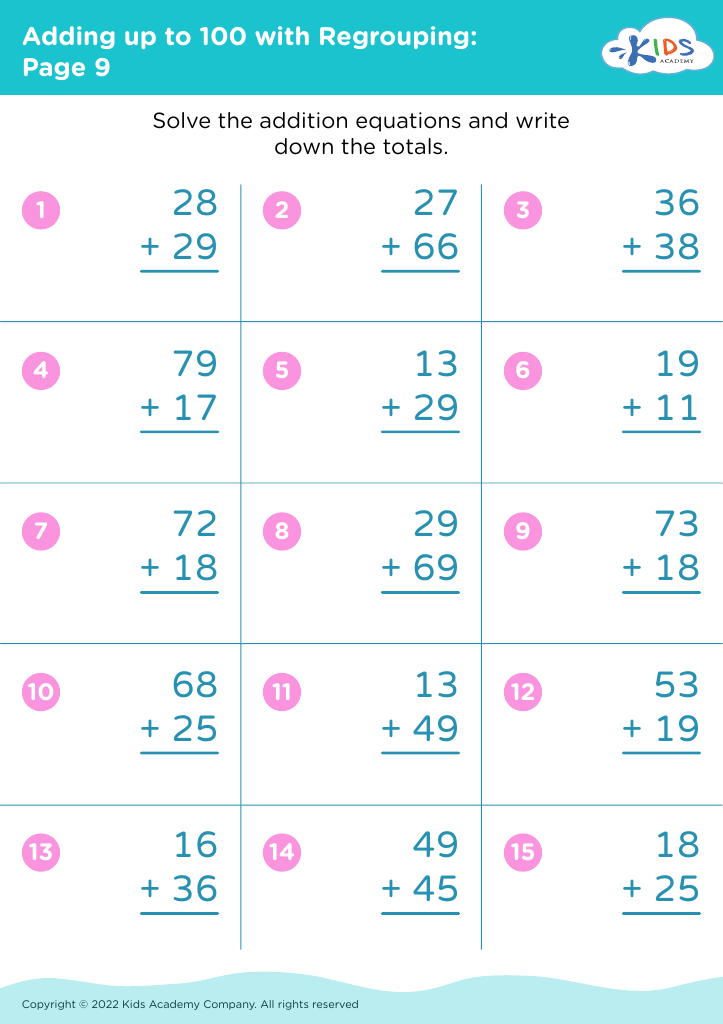
Adding up to 100 with Regrouping: Page 9
Worksheet
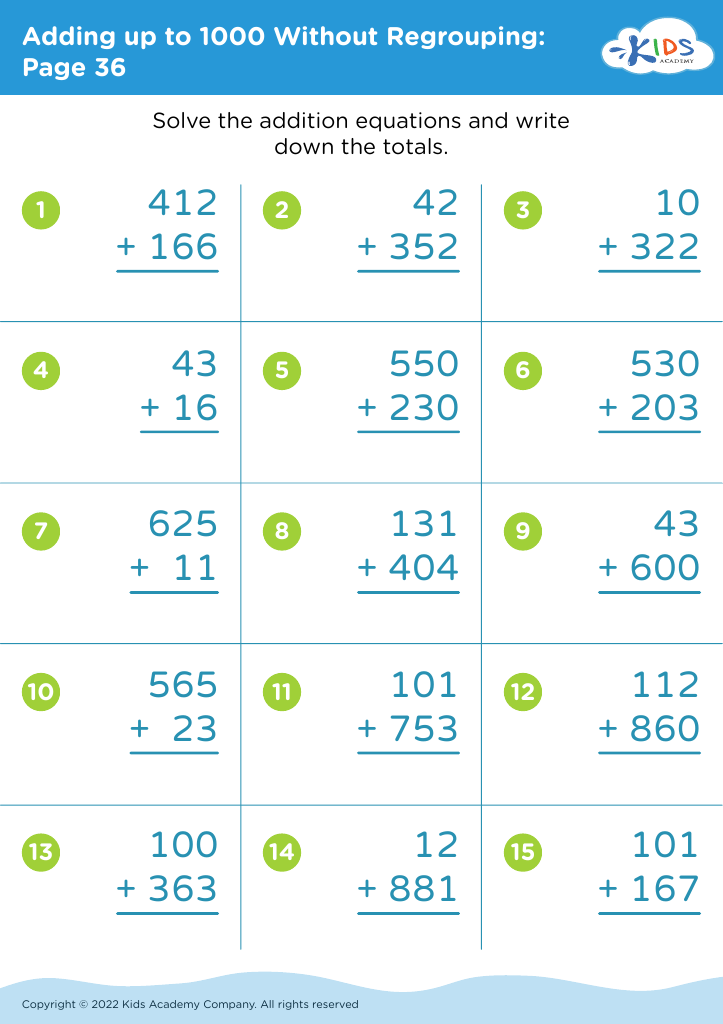
Adding up to 1000 Without Regrouping: Page 36
Worksheet
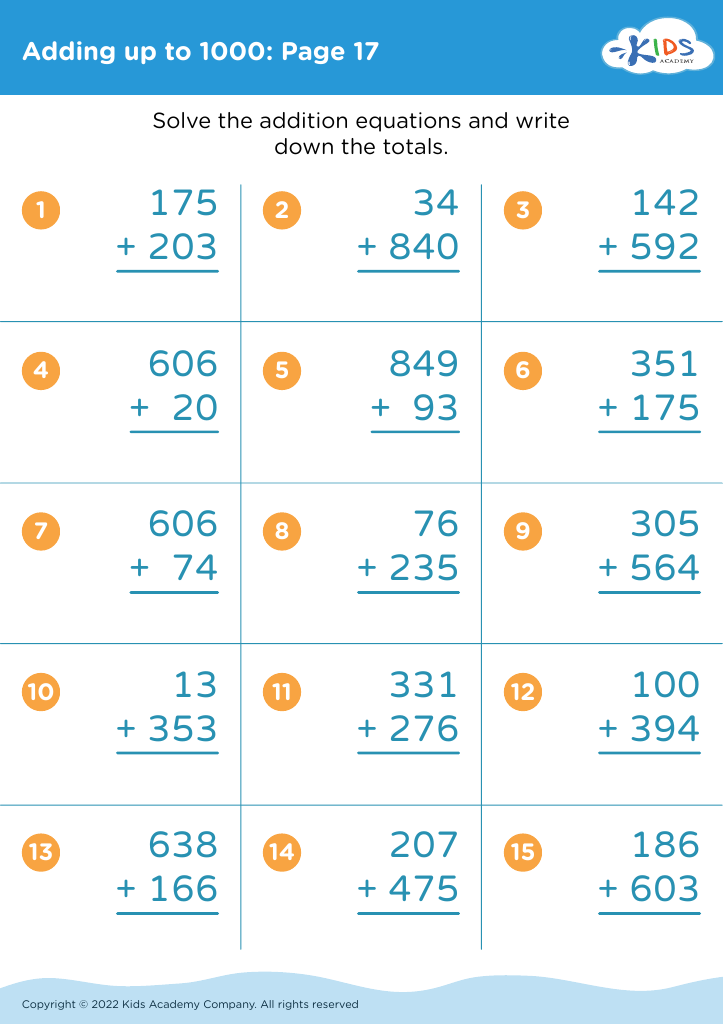
Adding up to 1000: Page 17

Adding up to 1000: Page 17

Adding up to 1000: Page 17
Worksheet
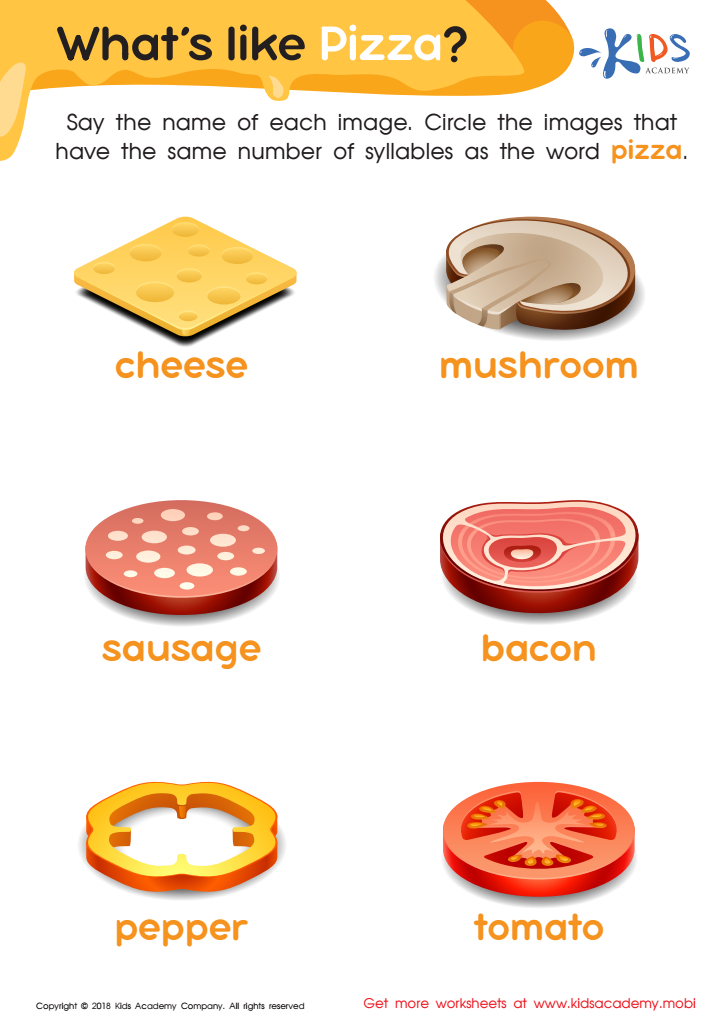
What's Like Pizza? Worksheet

What's Like Pizza? Worksheet

Encourage your kids to exercise their minds with this pizza worksheet! Ask them to name the ingredients they like on their favourite pizzas. Then, help them circle the images that have the same number of syllables as 'pizza'. They'll have fun while learning too!
What's Like Pizza? Worksheet
Worksheet
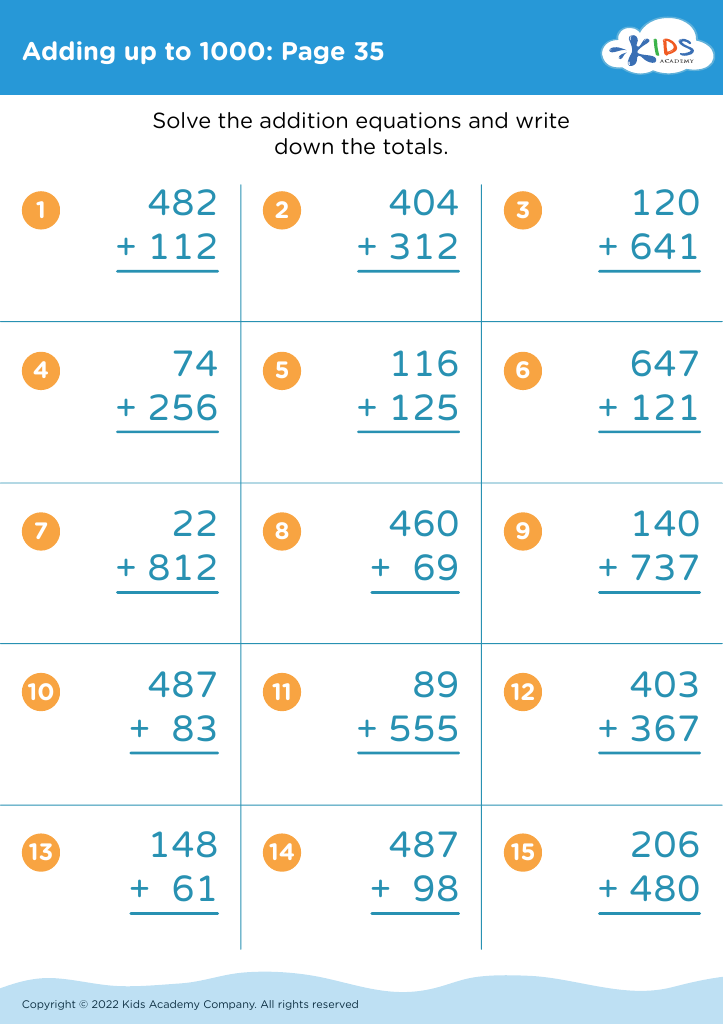
Adding up to 1000: Page 35

Adding up to 1000: Page 35

Adding up to 1000: Page 35
Worksheet
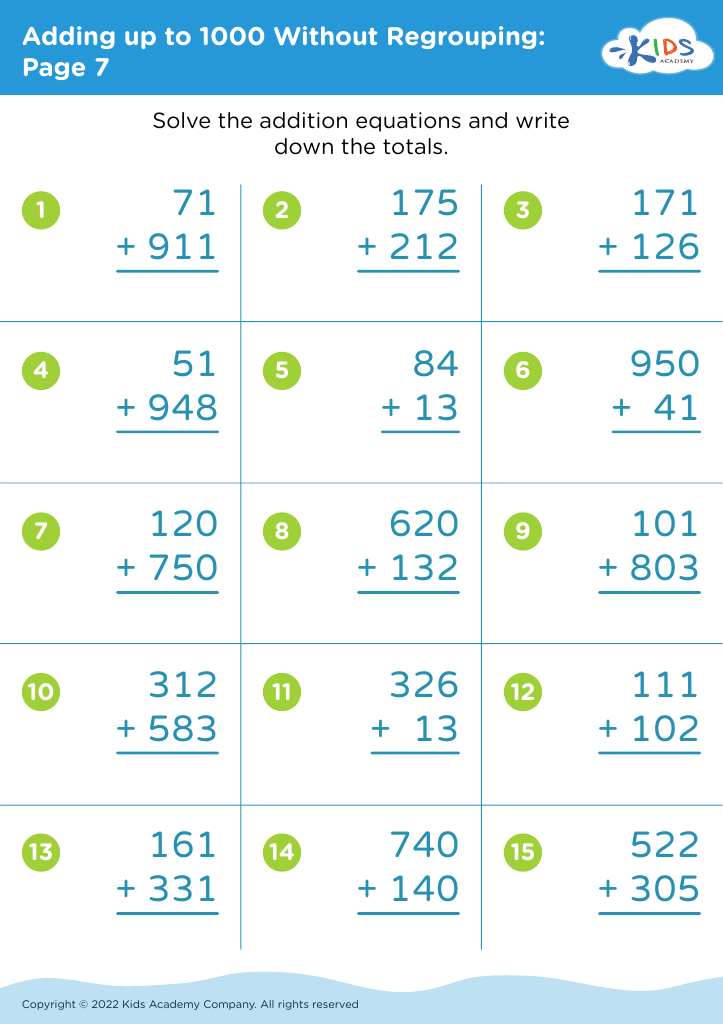
Adding up to 1000 Without Regrouping: Page 7
Worksheet
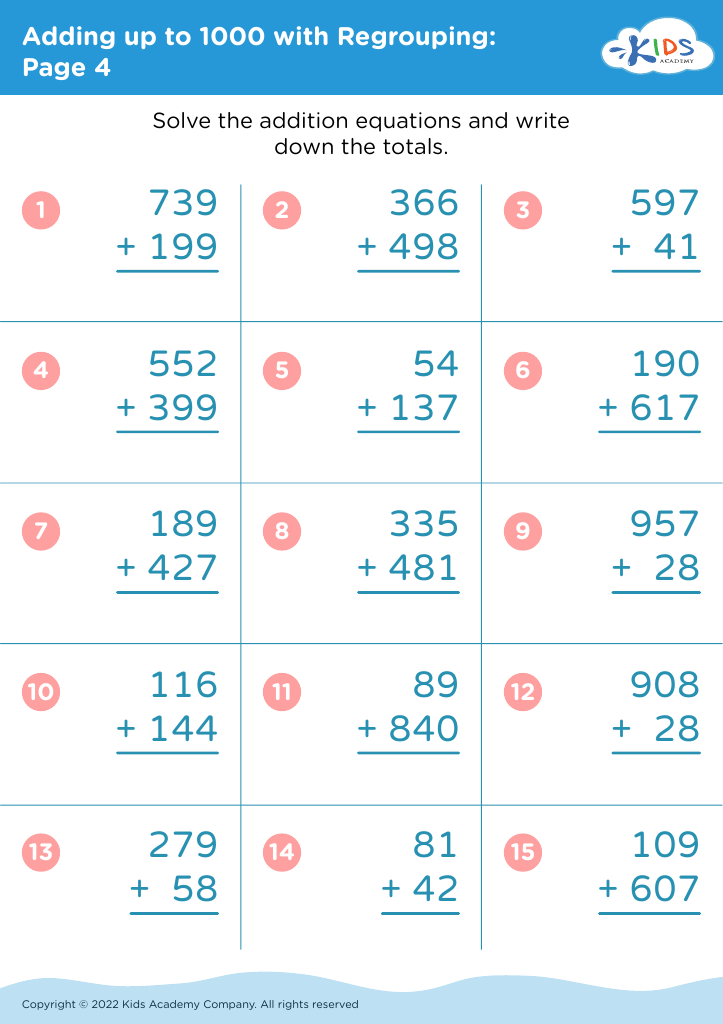
Adding up to 1000 with Regrouping: Page 4
Worksheet
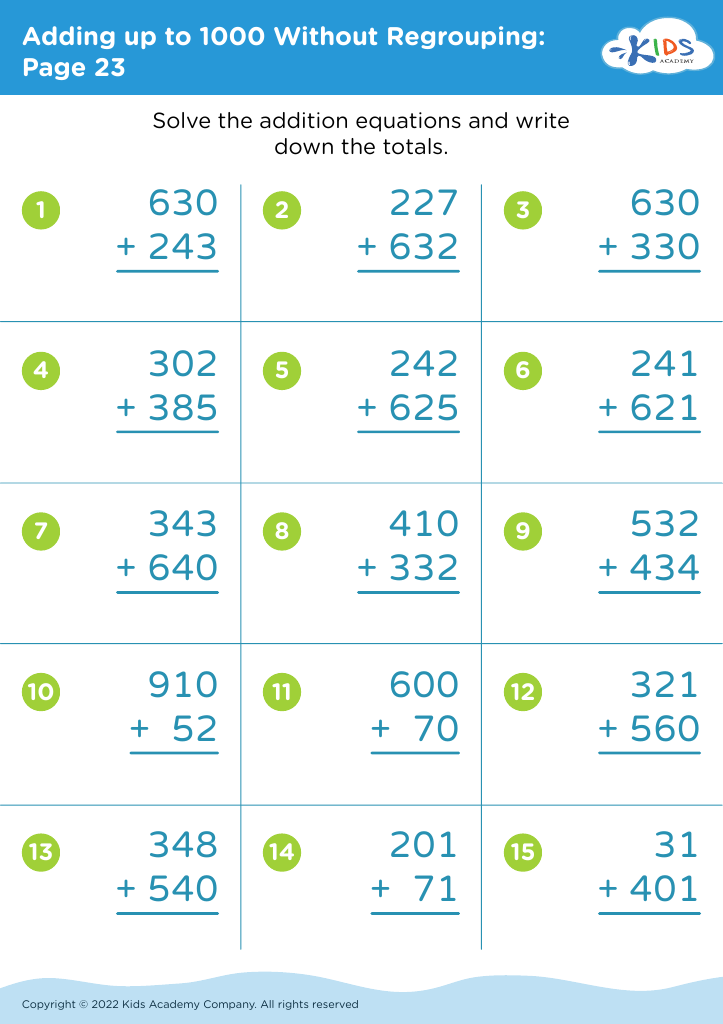
Adding up to 1000 Without Regrouping: Page 23
Worksheet
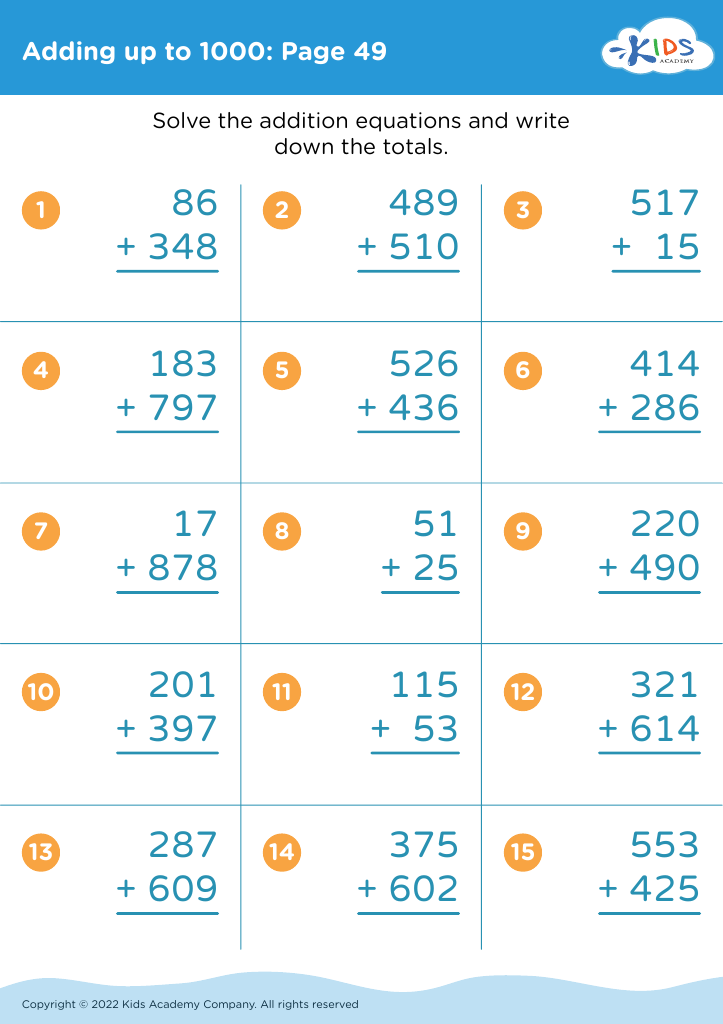
Adding up to 1000: Page 49

Adding up to 1000: Page 49

Adding up to 1000: Page 49
Worksheet
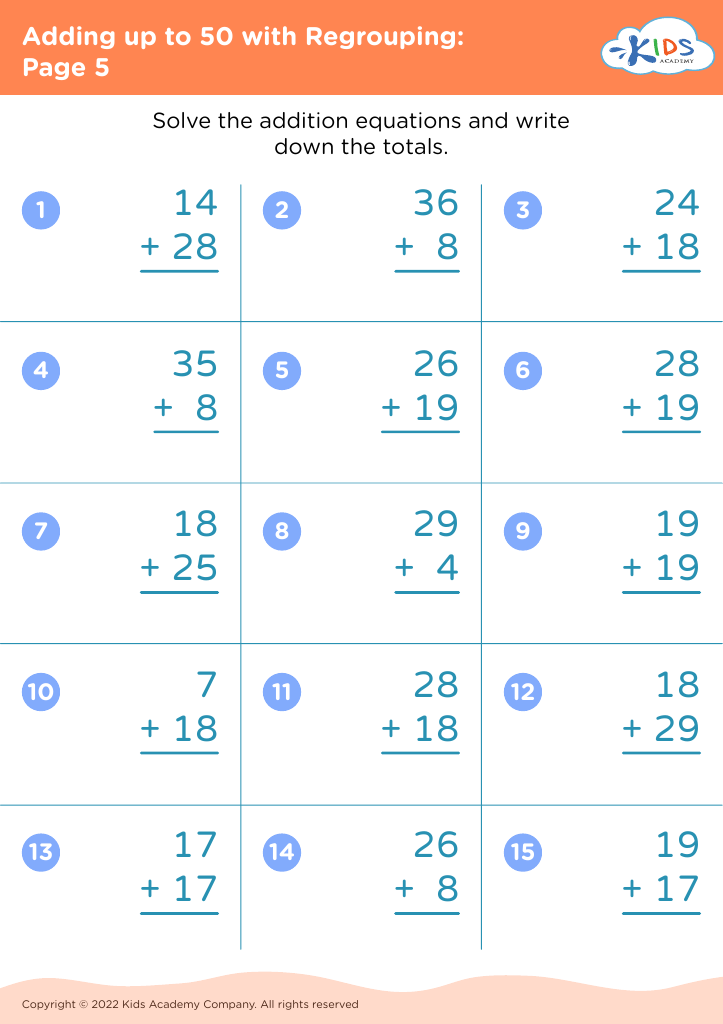
Adding up to 50 with Regrouping: Page 5
Worksheet
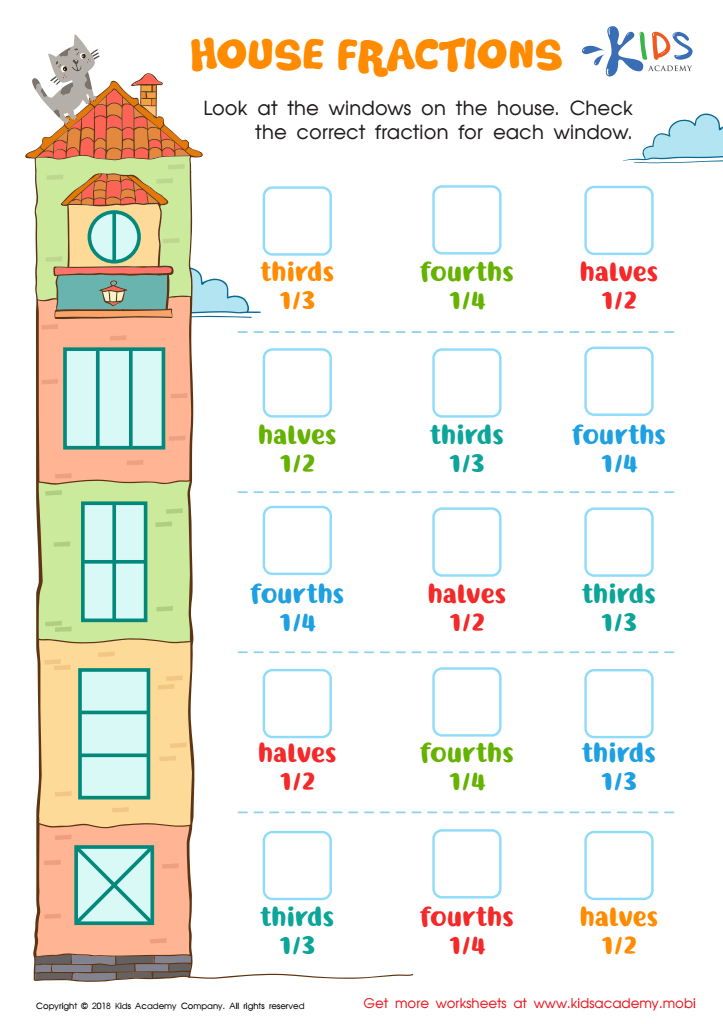
House Fractions Worksheet

House Fractions Worksheet

Test your child's knowledge of fractions with this worksheet! Have them examine the windows of a house and select the correct fraction from the options given. This is a great way to see how much they understand about wholes, fractions, halves, one thirds, and one fourths.
House Fractions Worksheet
Worksheet
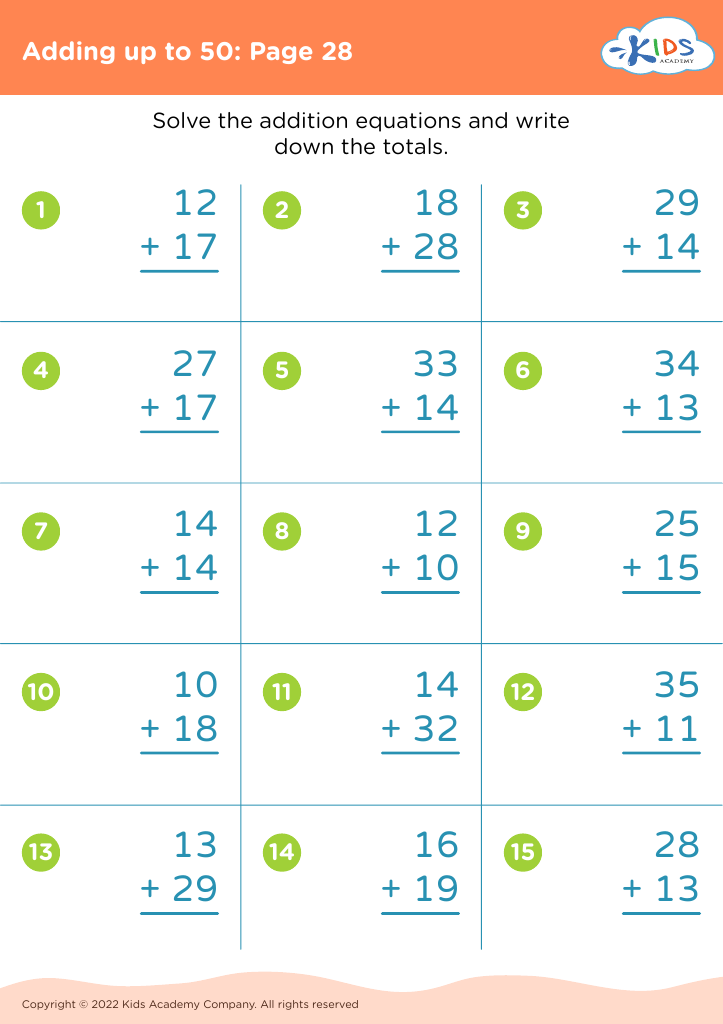
Adding up to 50: Page 28

Adding up to 50: Page 28

Adding up to 50: Page 28
Worksheet
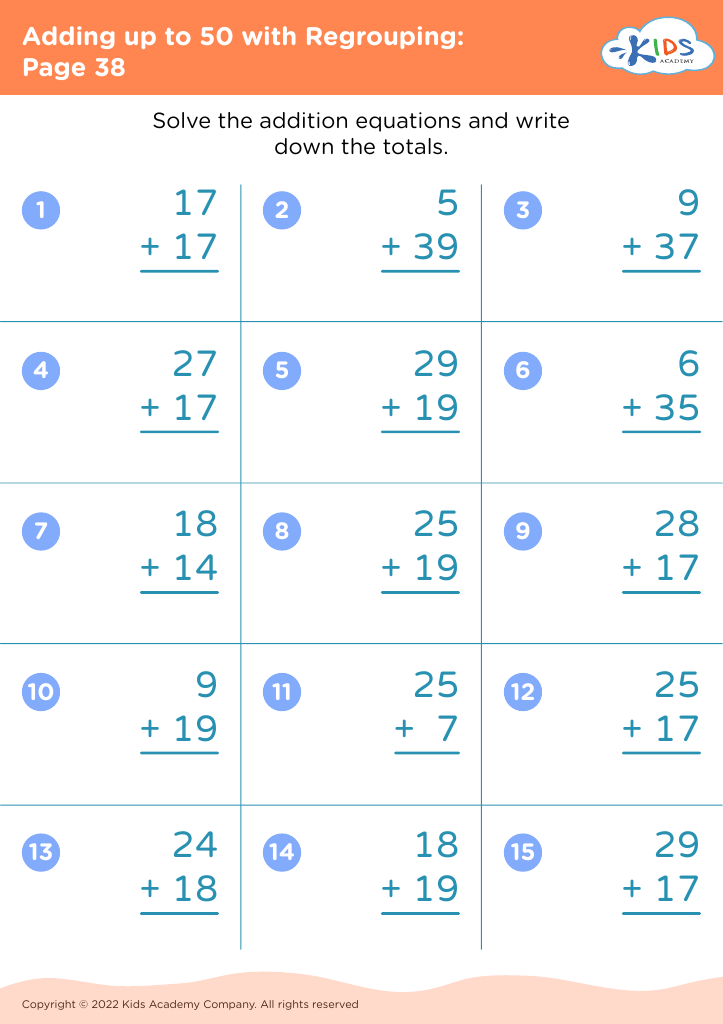
Adding up to 50 with Regrouping: Page 38
Worksheet
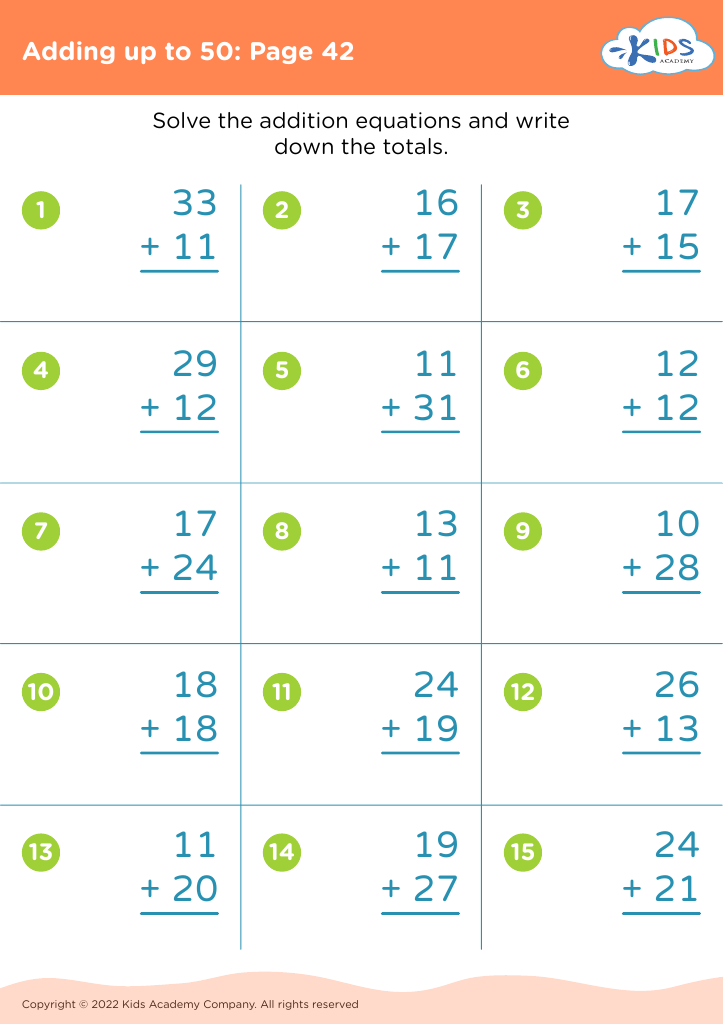
Adding up to 50: Page 42

Adding up to 50: Page 42

Adding up to 50: Page 42
Worksheet
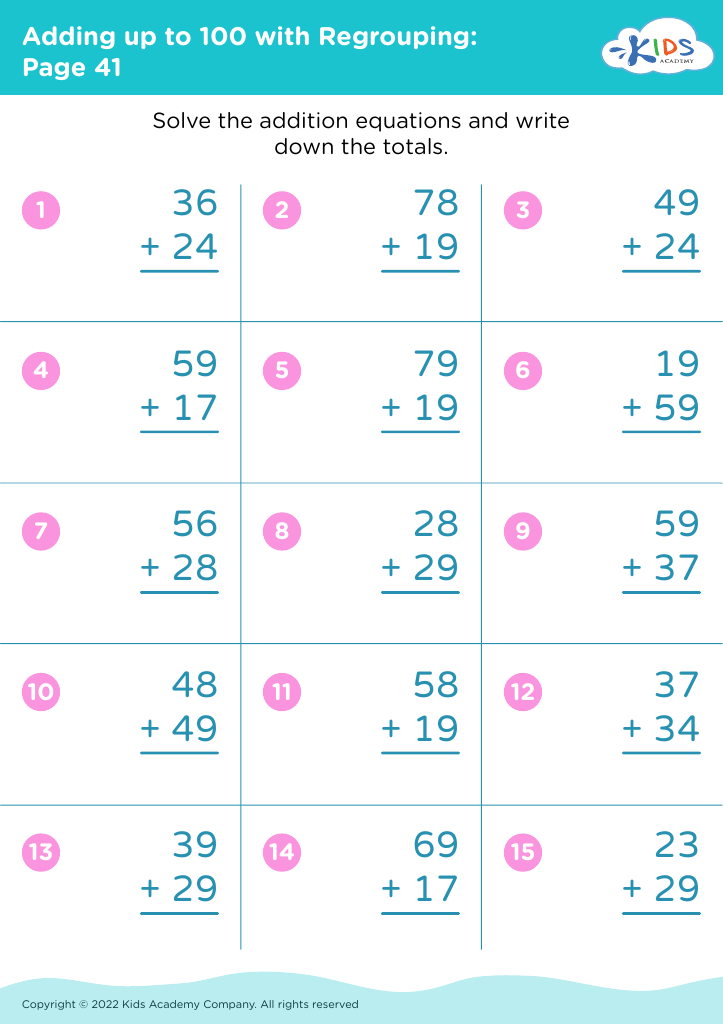
Adding up to 100 with Regrouping: Page 41
Worksheet
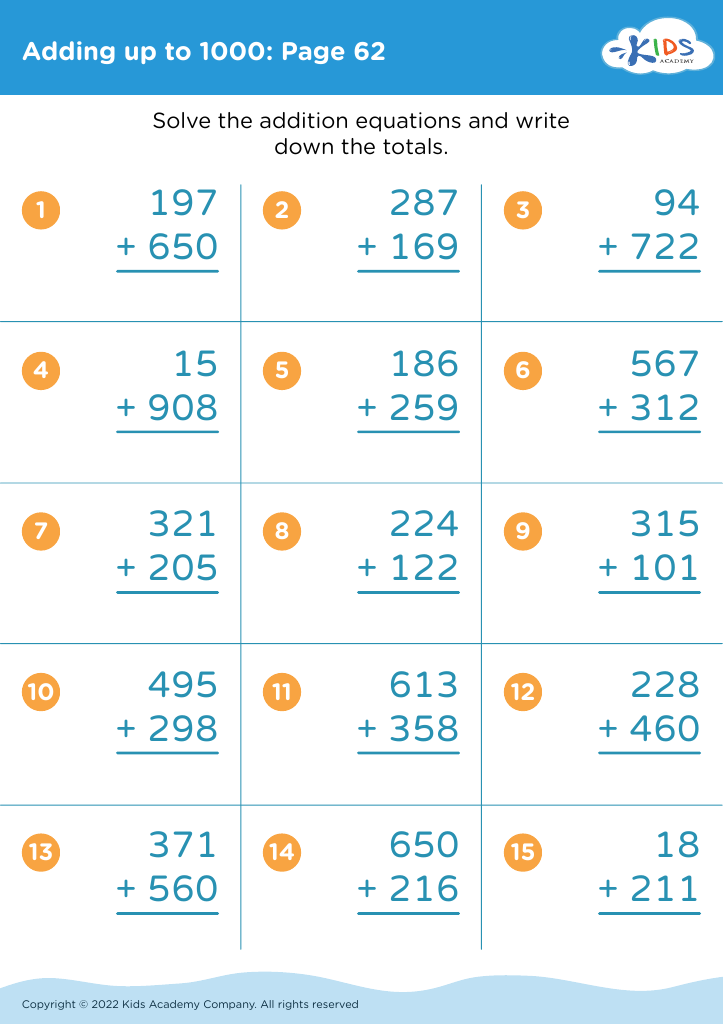
Adding up to 1000: Page 62

Adding up to 1000: Page 62

Adding up to 1000: Page 62
Worksheet
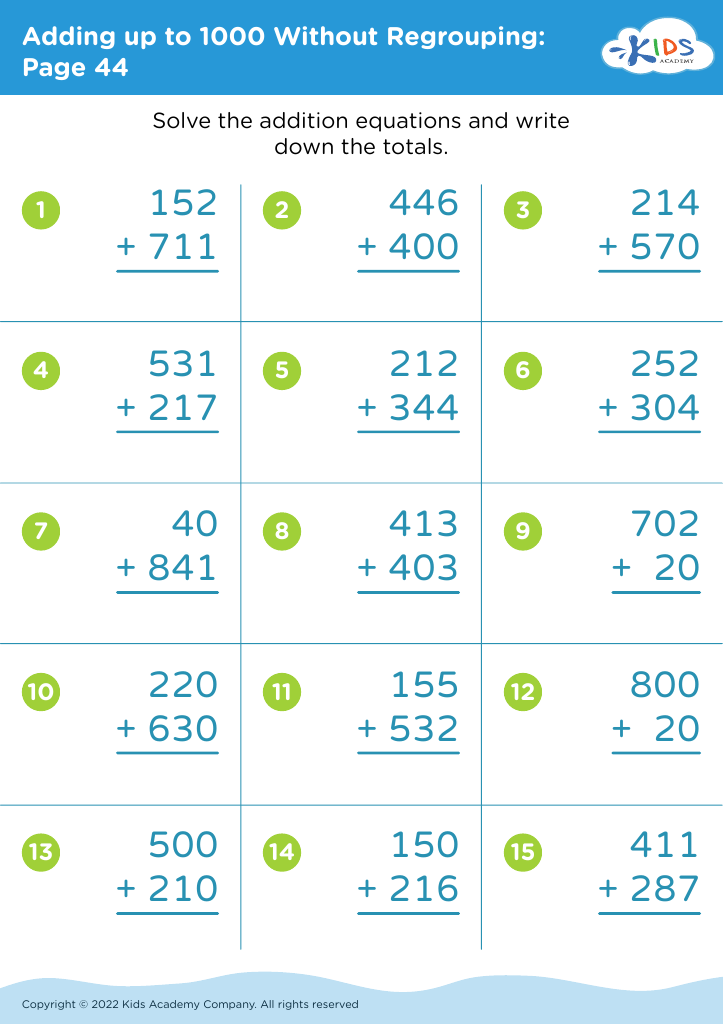
Adding up to 1000 Without Regrouping: Page 44
Worksheet
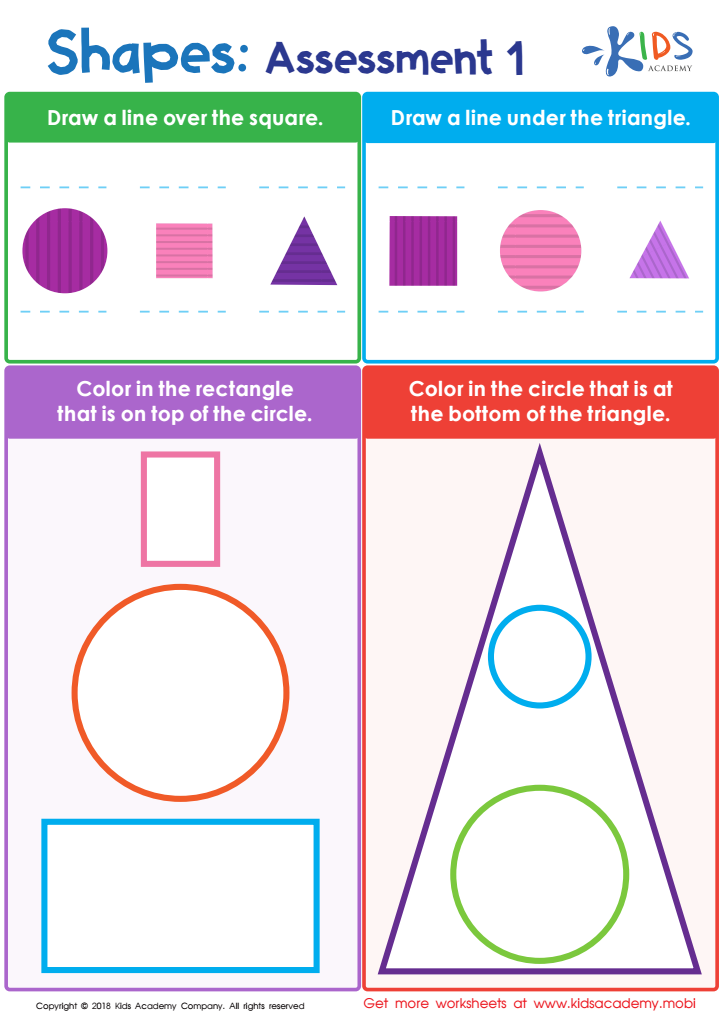
Shapes: Assessment 1 Worksheet
Shapes: Assessment 1 Worksheet
Test your students' understanding of the four basic shapes - circle, square, triangle and rectangle - with this assessment worksheet. Get them to draw a line over or under the shape indicated in the directions to show they can identify it correctly.
Shapes: Assessment 1 Worksheet
Worksheet
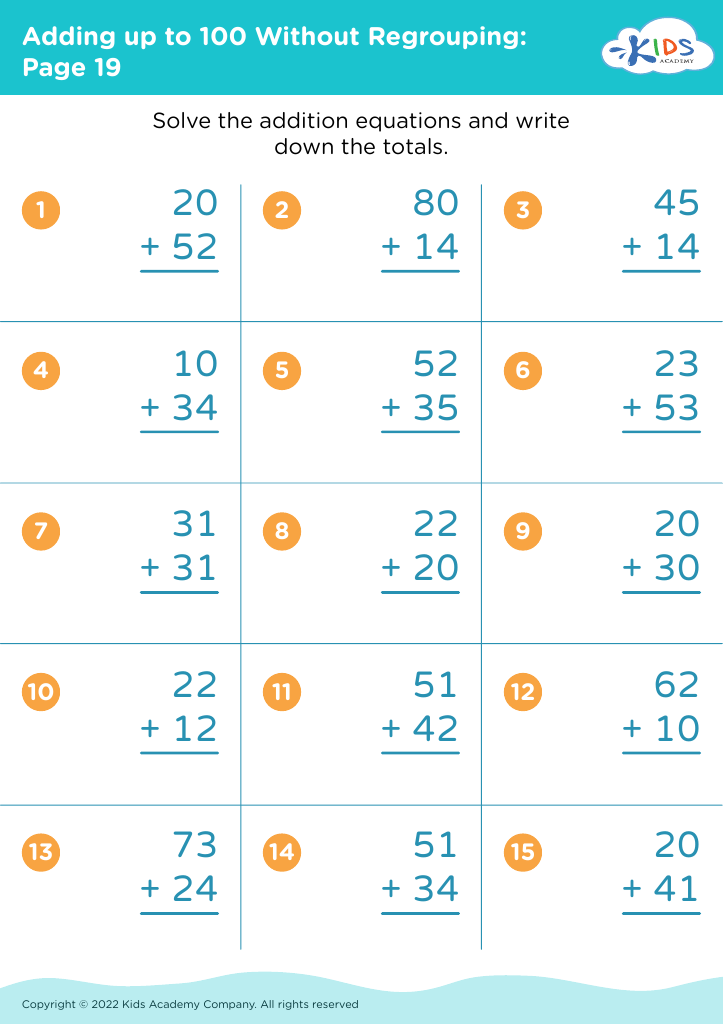
Adding up to 100 Without Regrouping: Page 19
Worksheet
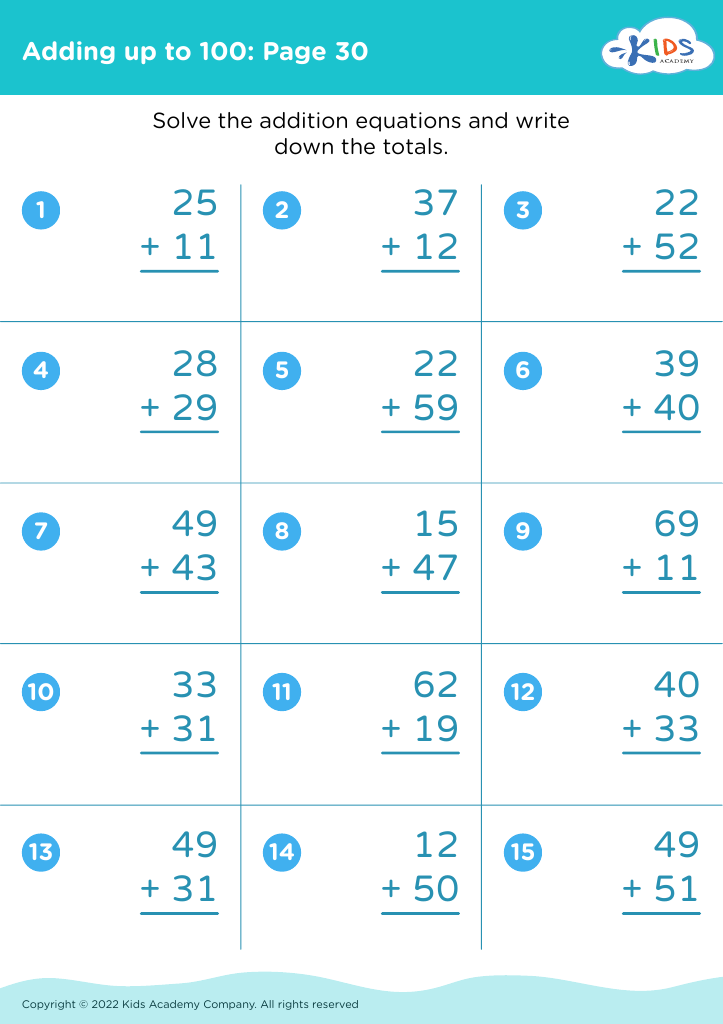
Adding up to 100: Page 30

Adding up to 100: Page 30

Adding up to 100: Page 30
Worksheet
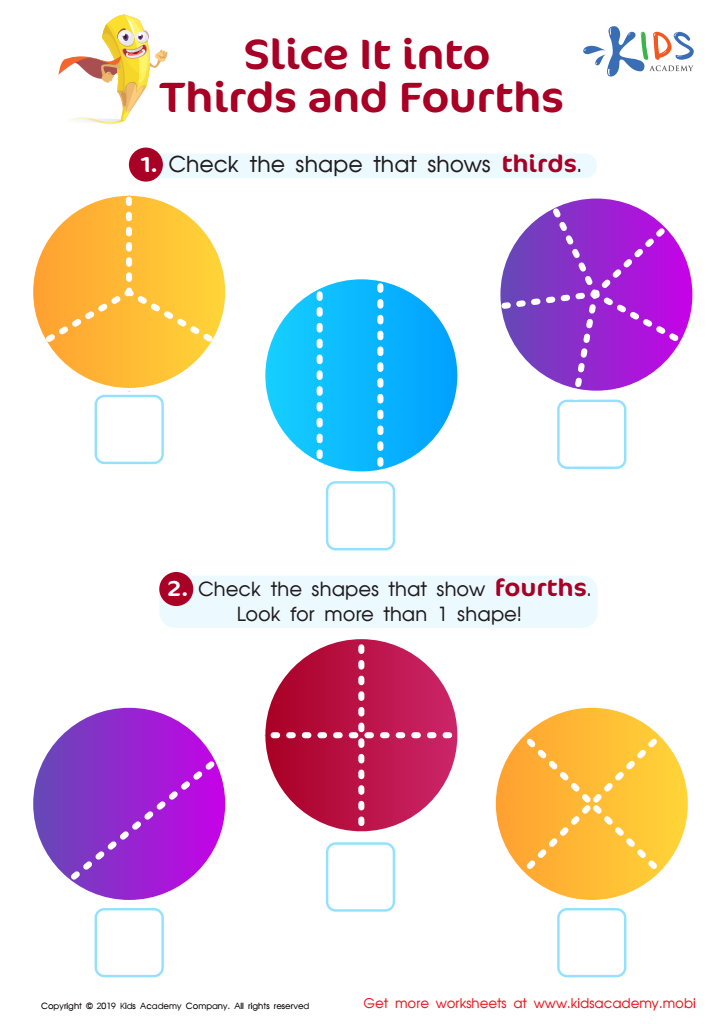
Slice in Thirds Fourths Worksheet
Slice in Thirds Fourths Worksheet
This worksheet helps kids learn fractions visually by dividing circles into thirds and fourths. They will learn that fractions must be equal parts, not just sets, by choosing the right colorful circles. It's an easy way to master fractions and have fun doing it!
Slice in Thirds Fourths Worksheet

Worksheet
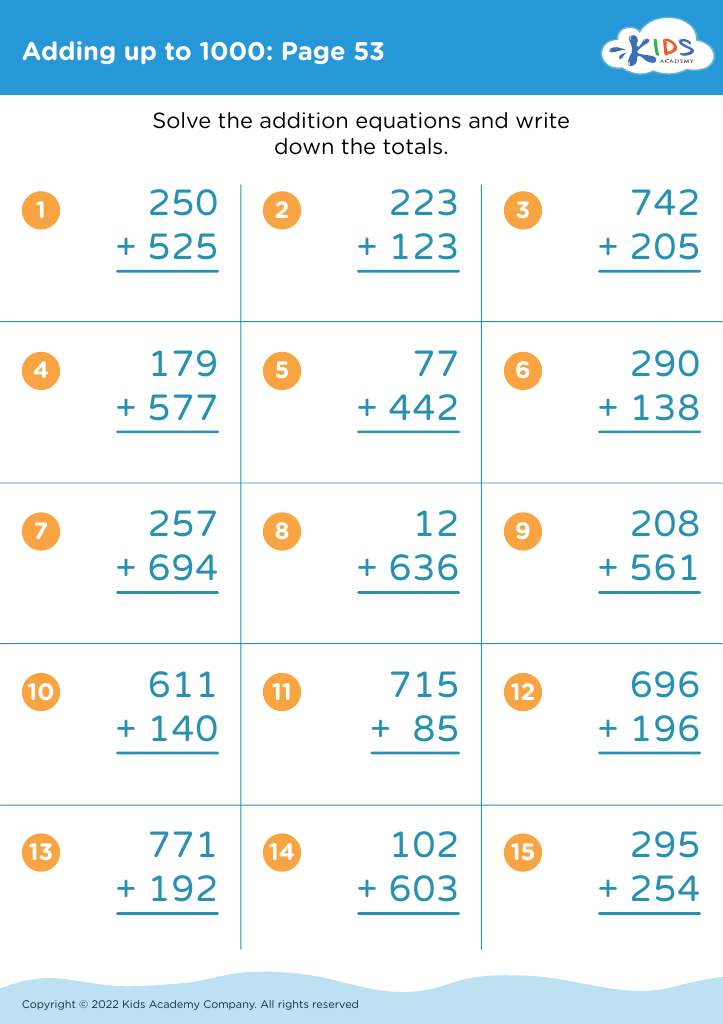
Adding up to 1000: Page 53

Adding up to 1000: Page 53

Adding up to 1000: Page 53
Worksheet
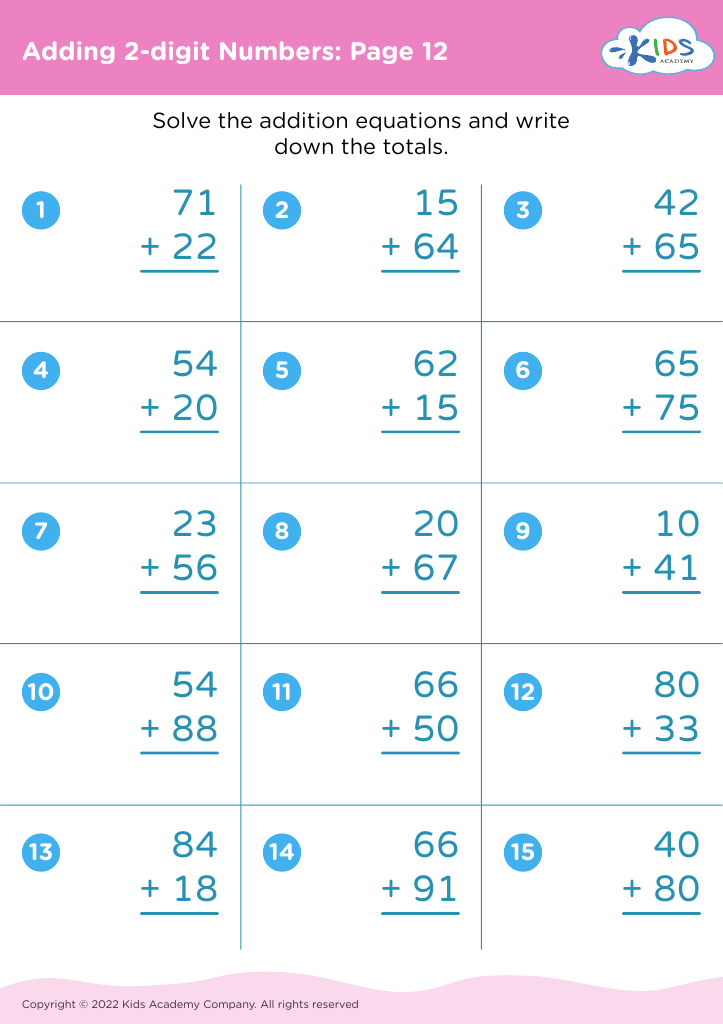
Adding 2-digit Numbers: Page 12

Adding 2-digit Numbers: Page 12

Adding 2-digit Numbers: Page 12
Worksheet
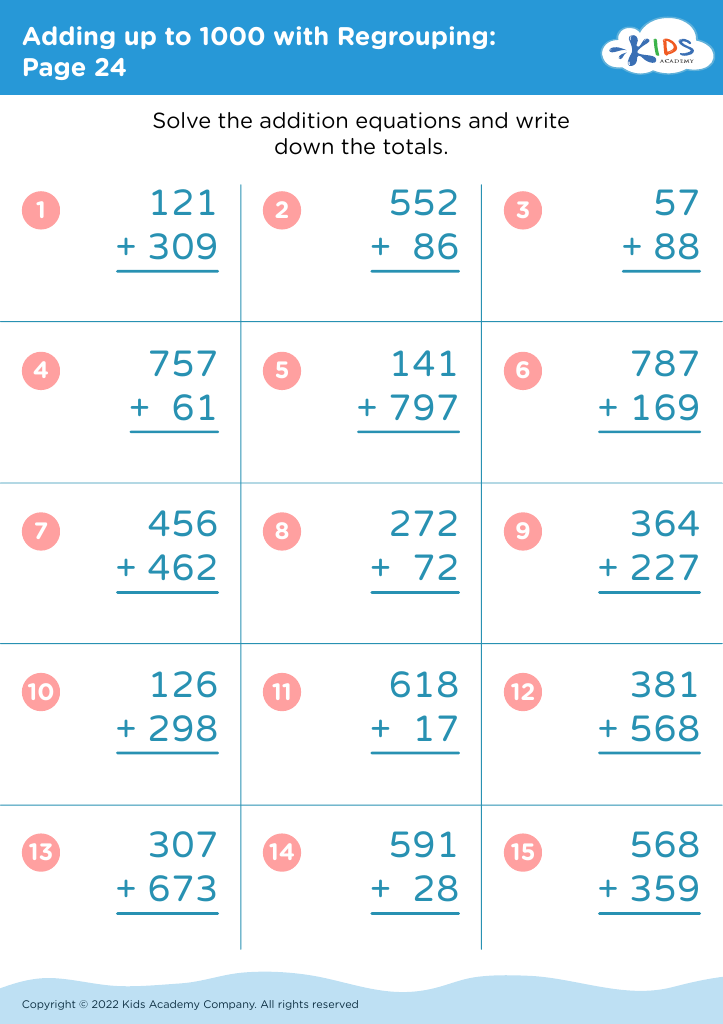
Adding up to 1000 with Regrouping: Page 24
Worksheet


Understanding fraction comparison is crucial for children aged 3-7, as it lays the foundation for their mathematical development. At this stage, kids are naturally curious and eager to experiment with numbers and relationships, making it an ideal time to introduce concepts like fractions. Learning to compare fractions helps kids develop crucial skills such as critical thinking, problem-solving, and analysis.

When children grasp fraction comparison, they begin to understand concepts of quantity and proportion, which are essential not only in mathematics but also in everyday life. For instance, understanding that ( \frac{1}{2} ) is larger than ( \frac{1}{3} ) helps them make sense of sharing, measuring, and cooking. These foundational skills serve as stepping stones to more complex mathematical concepts like ratios and percentages.

Additionally, introducing this concept early fosters a positive attitude towards math, nurturing confidence and curiosity in their abilities. By actively engaging with this topic, parents and teachers encourage a collaborative learning environment. This fosters a sense of accomplishment and a love for learning. Promoting a clear understanding of fractions in these formative years equips children with strategies to tackle various mathematical challenges in their future education.