Fraction representation Worksheets for Ages 3-7
5 filtered results
-
From - To
Discover our engaging Fraction Representation Worksheets designed for children aged 3-7! These interactive printables introduce young learners to the essential concept of fractions in a fun and approachable way. With colorful illustrations and age-appropriate exercises, kids will effortlessly grasp how to identify, compare, and represent fractions. Our worksheets encourage critical thinking and problem-solving skills while fostering a love for mathematics. Perfect for classrooms or at-home learning, these resources support early math curriculum standards and promote hands-on learning. Dive into the world of fractions and watch your child’s confidence grow as they become little math whizzes! Get started today!
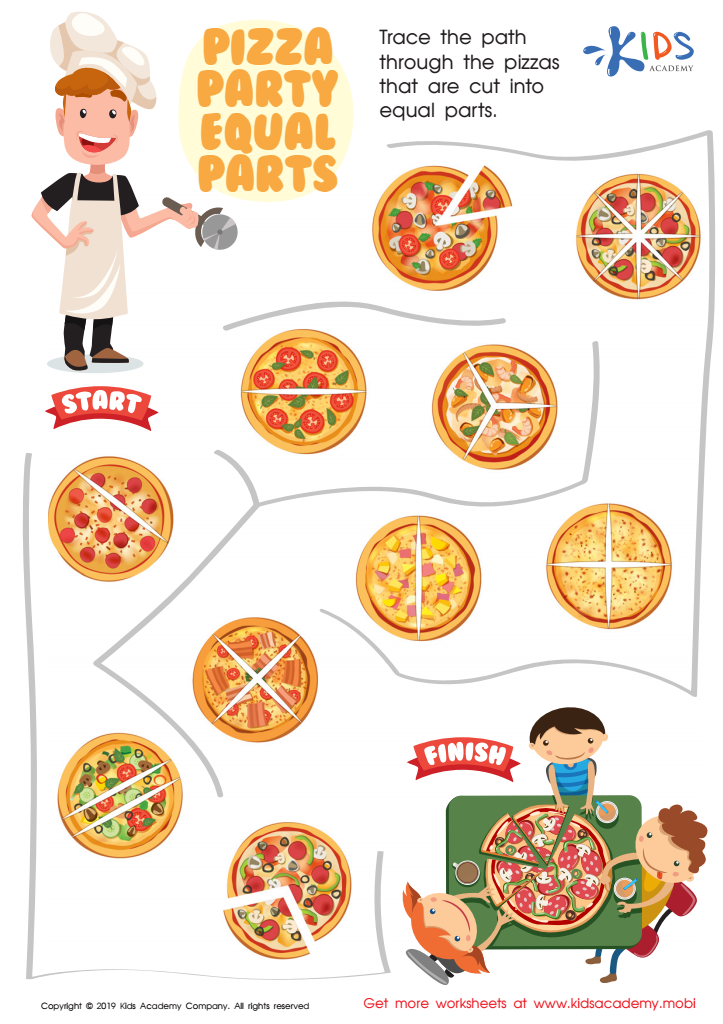
Pizza Party Equal Parts Worksheet
 Assign to My Students
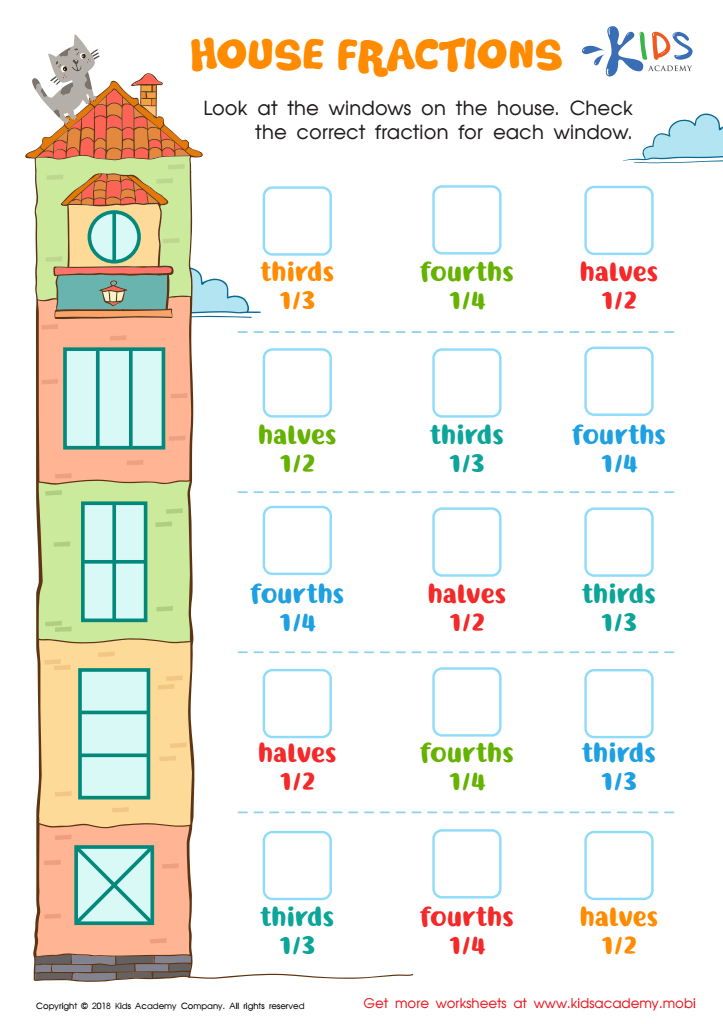
House Fractions Worksheet
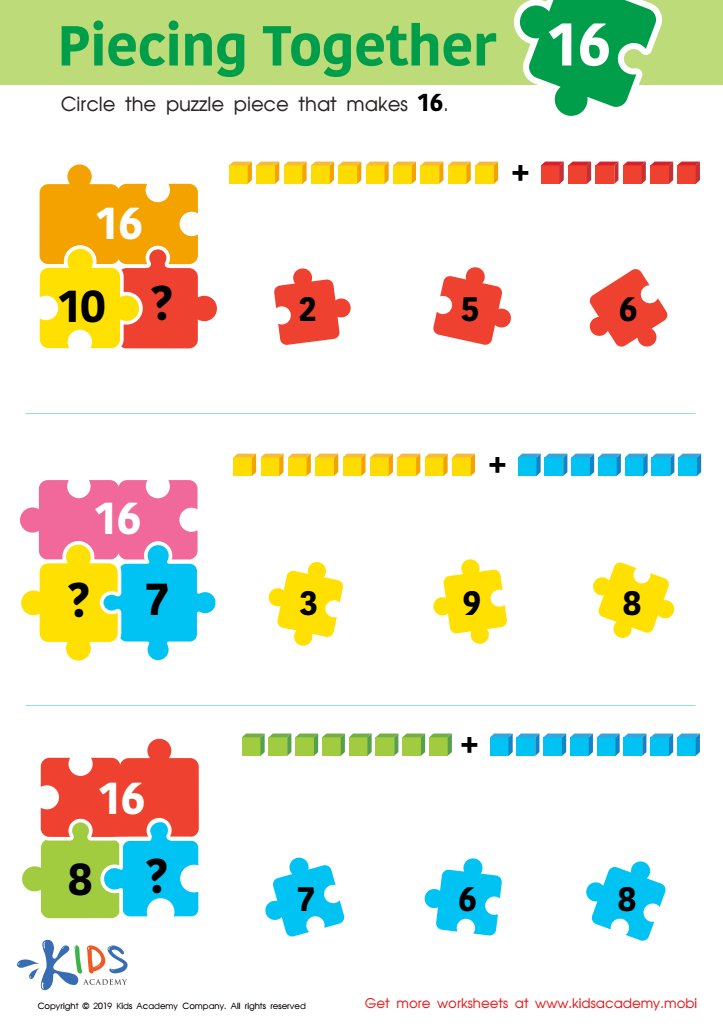
Piecing Together 16 Worksheet
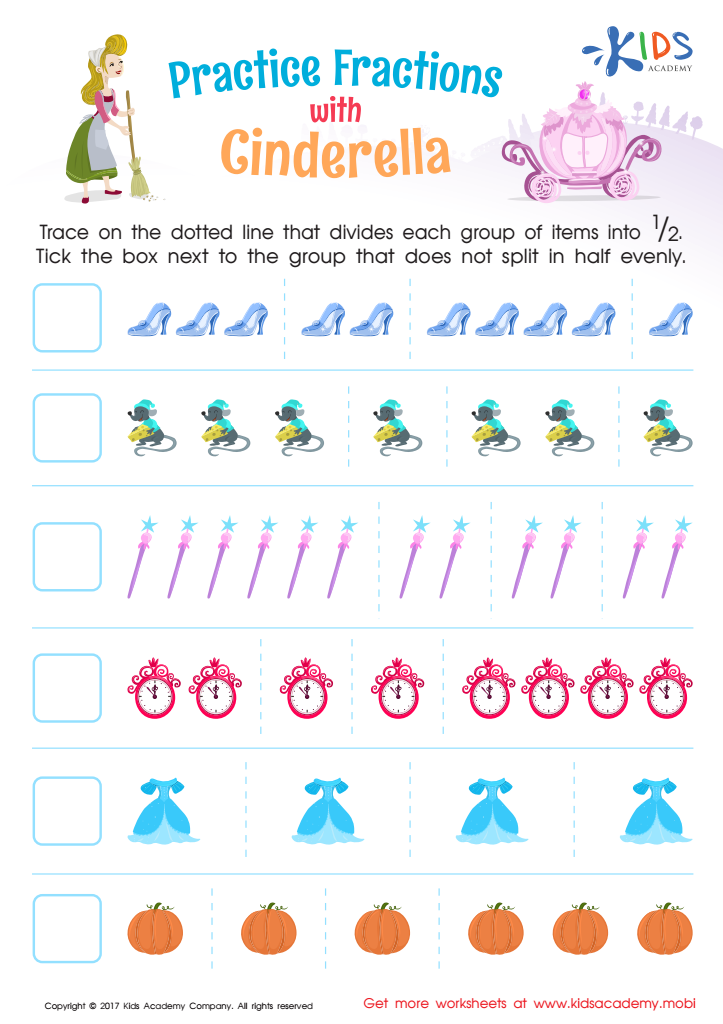
Fractions: Cinderella Printable






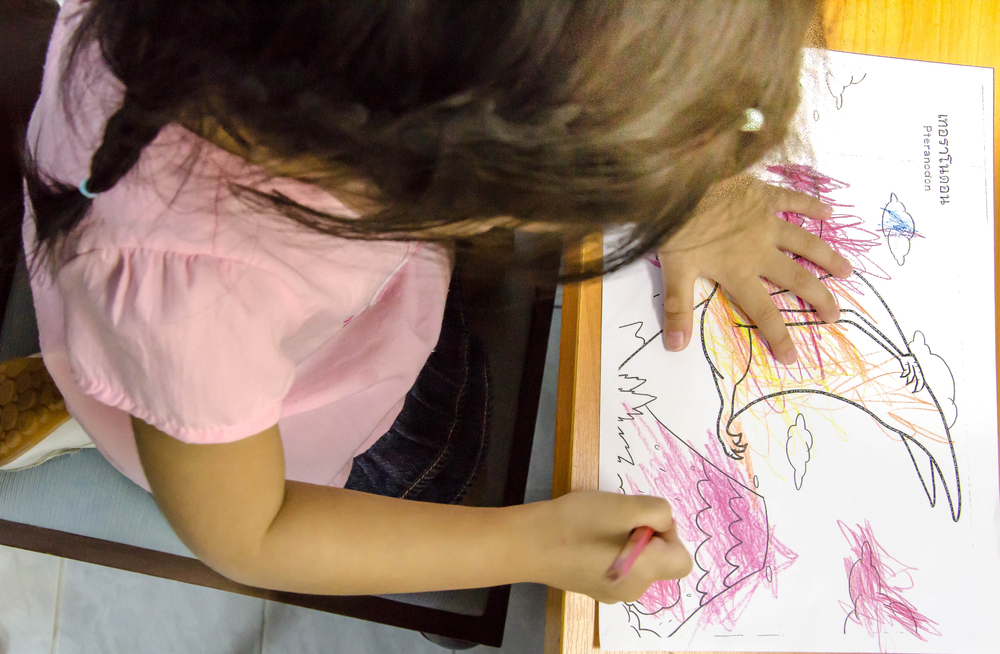
Fraction representation is essential for children ages 3-7 as it lays the groundwork for their mathematical understanding and problem-solving skills. During these formative years, children develop cognitive abilities that enable them to grasp abstract concepts, and fractions are one of those foundational ideas. Effective fraction representation helps children visualize and comprehend proportions, which they encounter in everyday situations, such as sharing food or measuring ingredients.
For parents and teachers, introducing fractions early fosters a number sense that is crucial for success in mathematics. Engaging children with visual aids such as number lines, pie charts, or manipulatives can make fractions more accessible and relatable. This helps to prevent math anxiety and builds a positive attitude towards numeracy.
Moreover, a strong understanding of fractions encourages logical thinking and reasoning skills, which are vital for later academic achievement. As children learn to represent fractions, they also learn to recognize patterns and relationships, which are key components of critical thinking.
Incorporating fraction representation into early education supports a child's overall development, preparing them for more advanced mathematical concepts in the future and helping them navigate real-world challenges effectively. Parents and teachers play a critical role in nurturing this foundational knowledge.








