Learn addition Worksheets for Ages 3-7
3 filtered results
-
From - To
Introducing our "Learn Addition Worksheets for Ages 3-7," designed to make math fun and engaging for young learners. Our worksheets progressively build essential addition skills through colorful and interactive activities tailored to early childhood education. Each sheet incorporates playful themes, visual aids, and practical exercises to help children grasp basic addition concepts with ease. Created by educational experts, these resources not only foster a love for math but also enhance problem-solving and cognitive development. Whether for at-home practice or classroom use, our printables are the perfect tool to support your child's mathematical journey. Download now and see the difference!
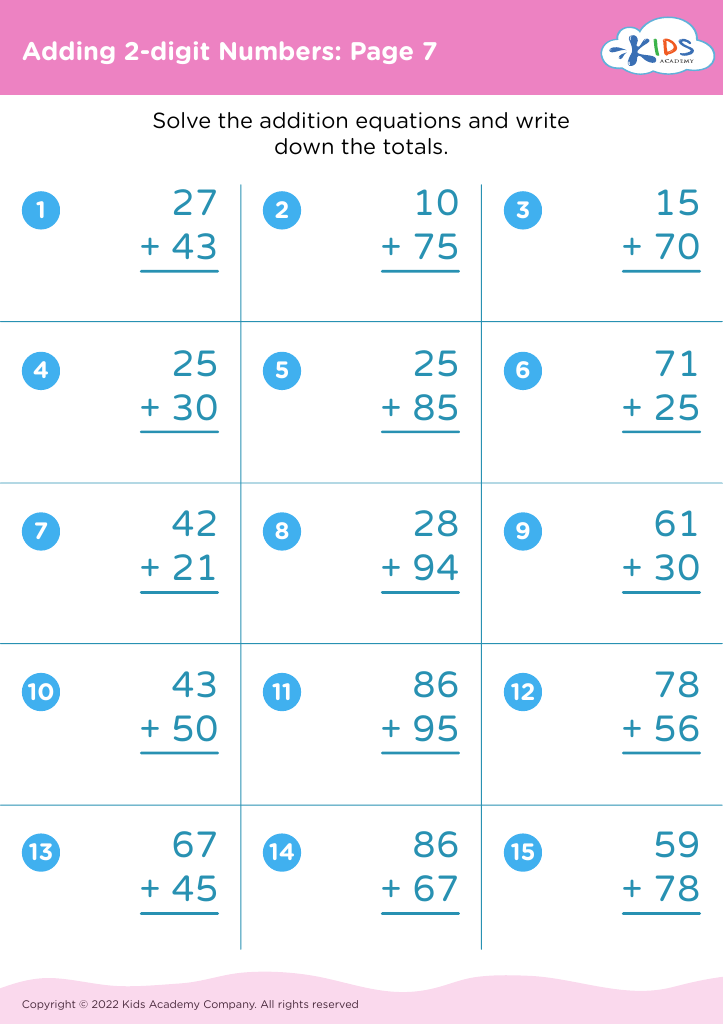
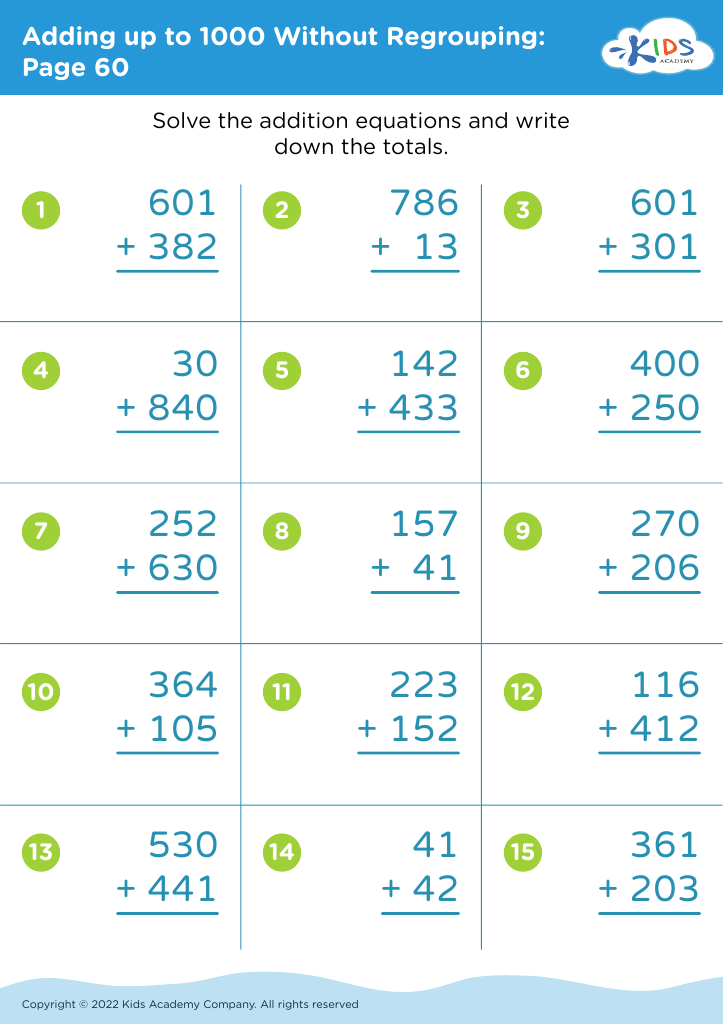
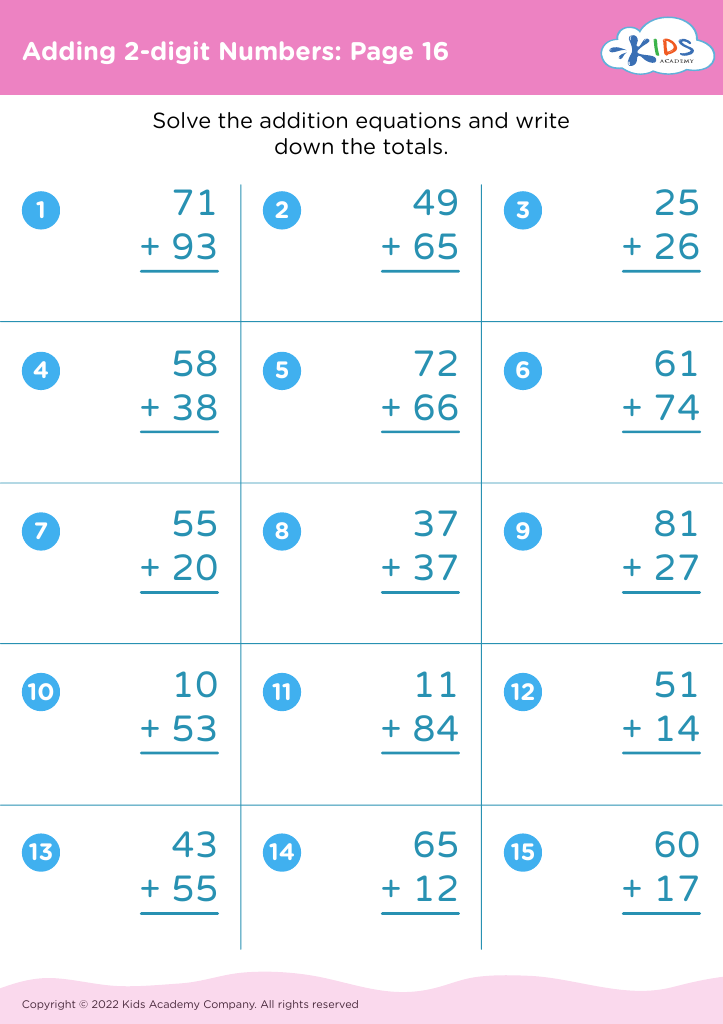







Parents and teachers should prioritize ensuring that children aged 3-7 learn addition because it lays a foundational stone for future academic success and cognitive development. At this developmental stage, the brain is highly receptive to new information and learning basic arithmetic sets the stage for more complex mathematical concepts. Mastering addition not only enhances numerical literacy but also promotes logical reasoning and problem-solving skills essential for everyday life and future academics.
Early engagement with addition helps young learners develop number sense, an intuitive understanding of numbers and their relationships. Teachers and parents who incorporate playful and interactive methods—like counting games, visual aids, and hands-on activities—spark children's interest and make learning enjoyable.
Understanding addition also increases confidence, providing children with a sense of achievement that encourages a positive attitude towards learning. As children progress in their education, proficiency in early math skills becomes critical for success in subjects like science, technology, and economics. Therefore, investing time and effort in teaching addition pays long-term dividends, forming a cornerstone for academic success and fostering a lifelong appreciation for mathematics.








