Phonological awareness Worksheets for Ages 3-7
10 filtered results
-
From - To
Enhance your child's pre-reading skills with our engaging Phonological Awareness Worksheets for Ages 3-7. Specially designed for early learners, these worksheets help children develop crucial skills like recognizing sounds, rhymes, and syllables. Each activity is crafted to be fun and interactive, ensuring young minds stay entertained while they learn. Perfect for both classroom use and at-home practice, our printable worksheets support early literacy development, preparing your child for reading success. Visit Kids Academy to access our extensive collection and give your child the foundation they need to thrive. Start fostering a love for reading today!
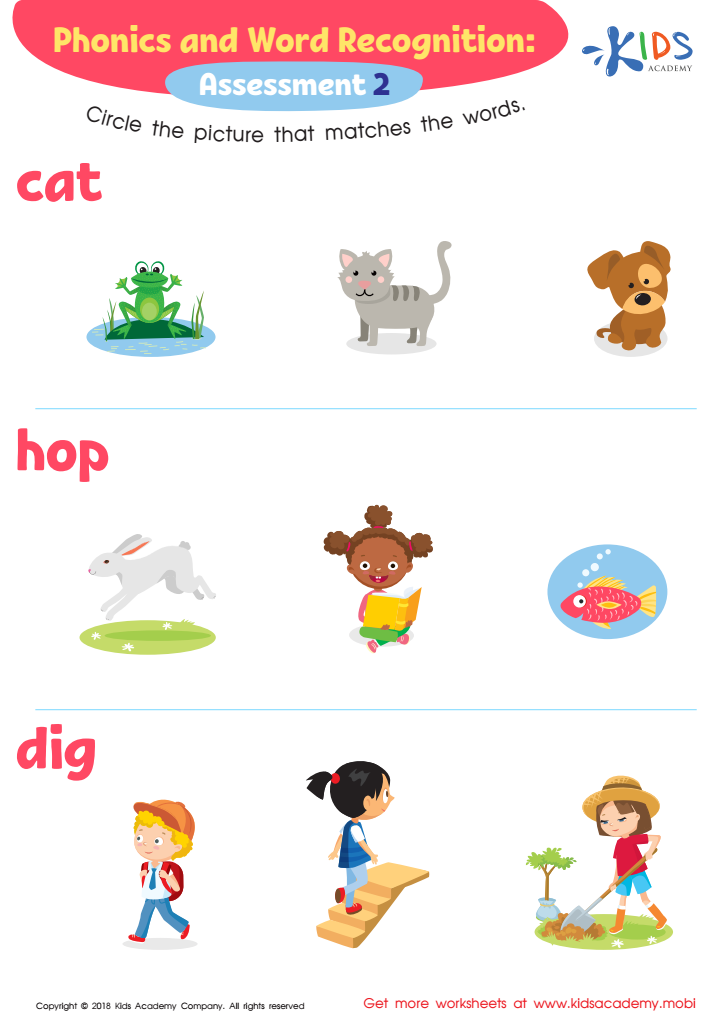
Phonological Awareness: Assessment 2 ELA Worksheet
 Assign to My Students
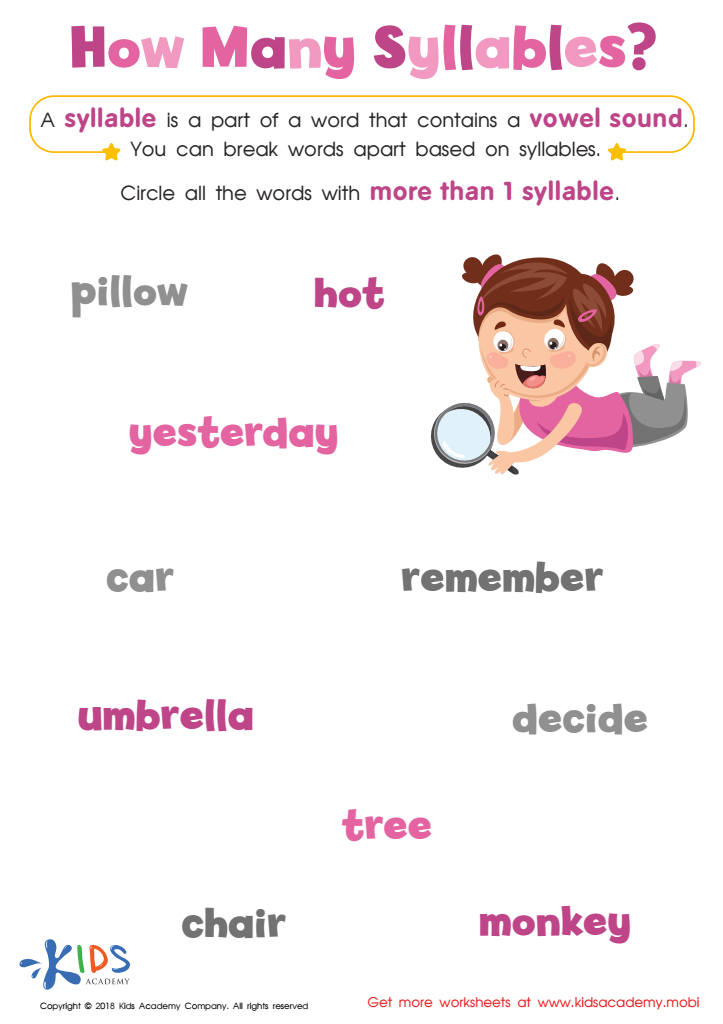
Reading: How Many Syllables Worksheet
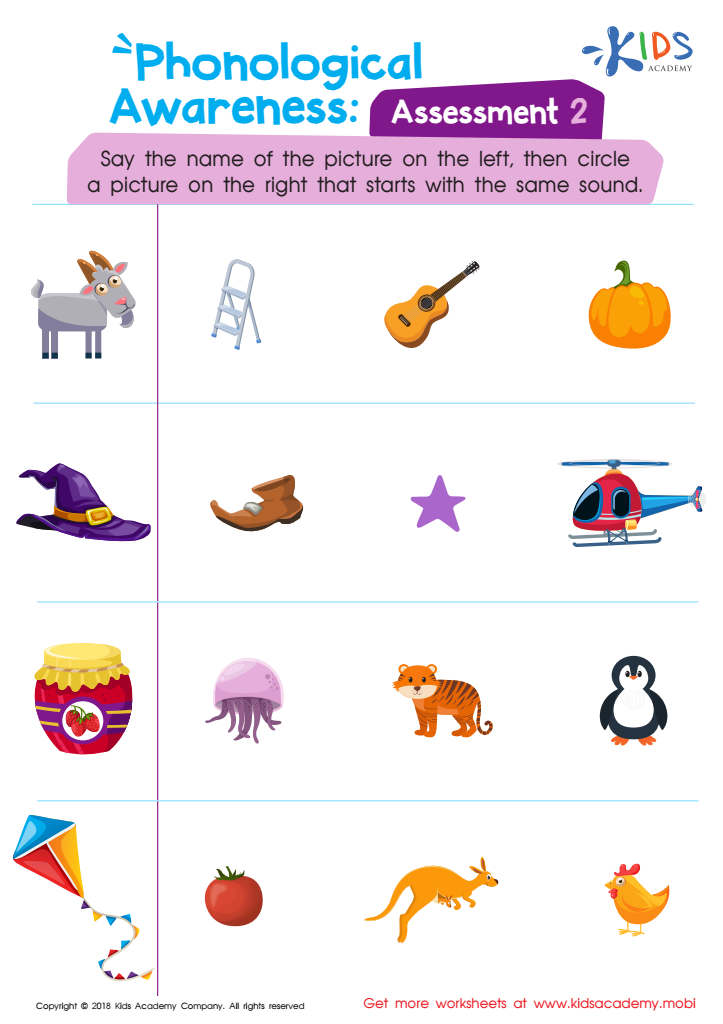
Phonological Awareness: Assessment 2 Worksheet
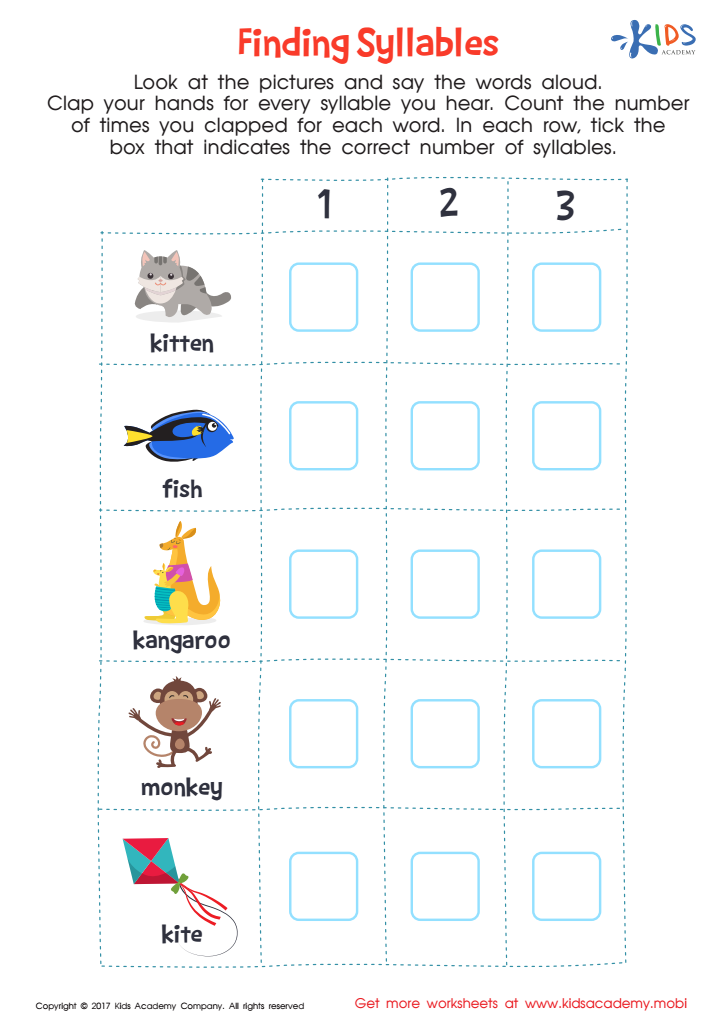
Finding Syllables Word Structure Worksheet
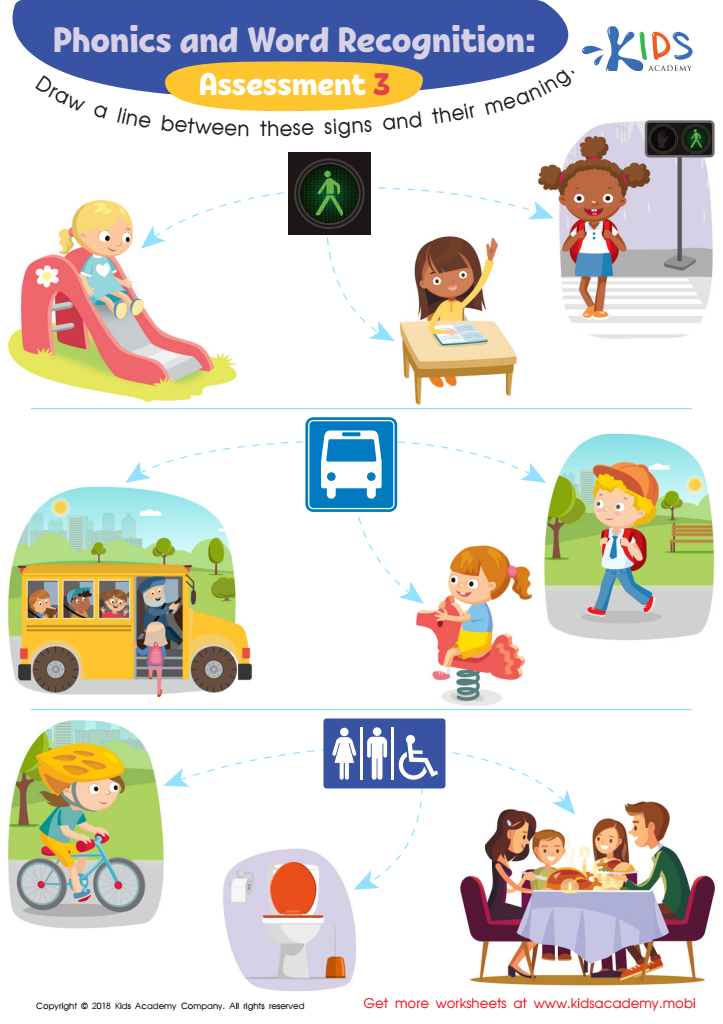
Phonological Awareness: Assessment 3 ELA Worksheet
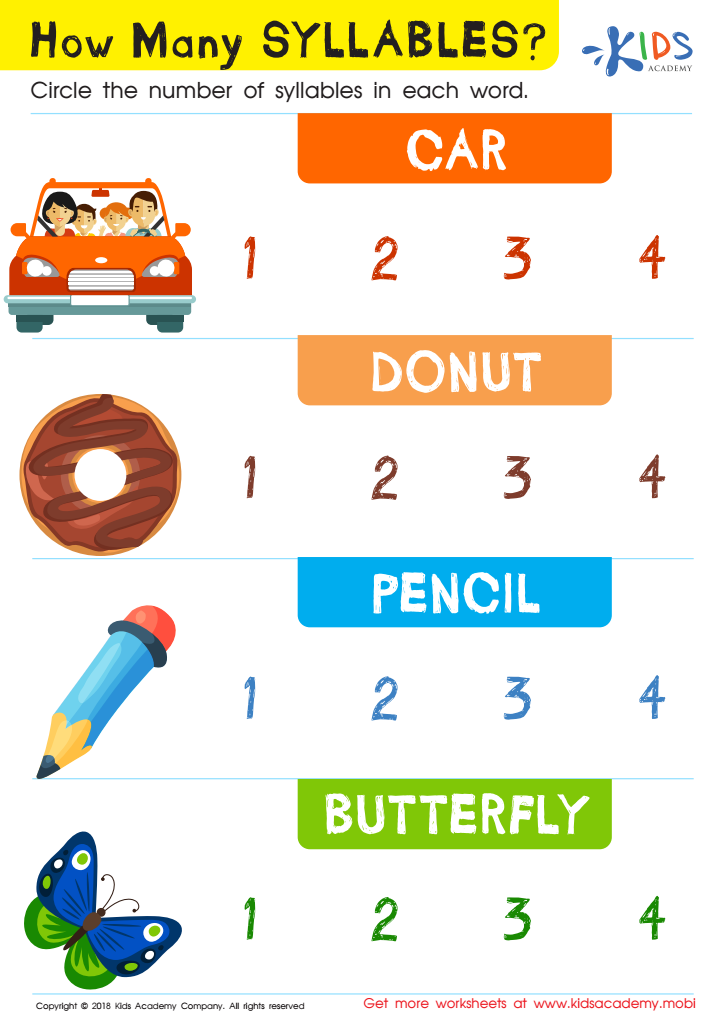
How Many Syllables? Worksheet
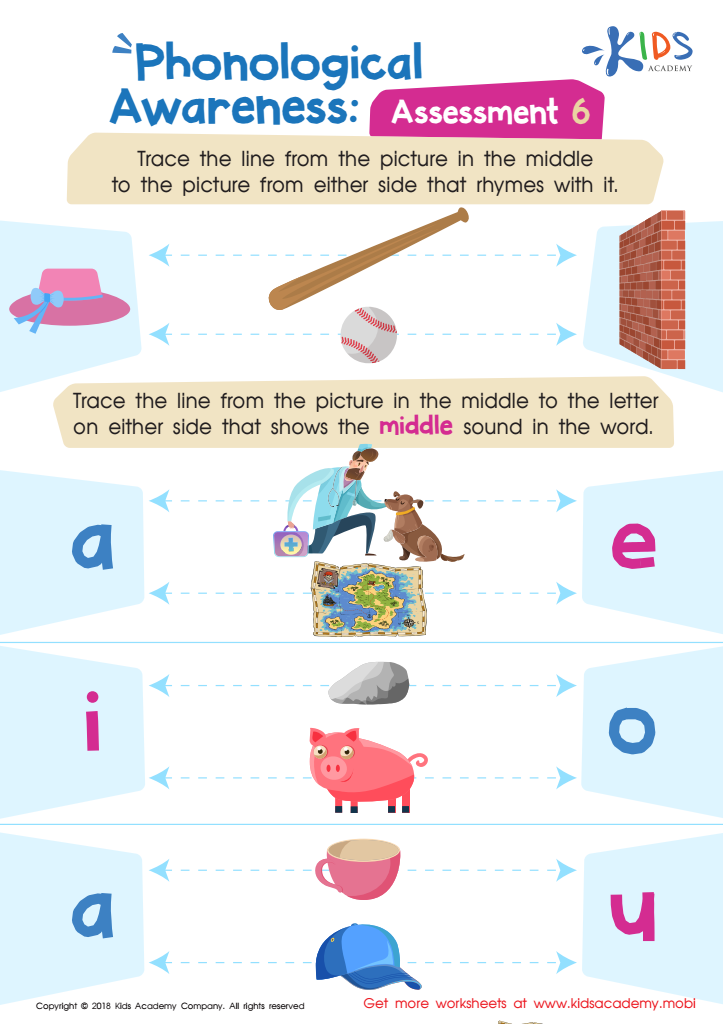
Phonological Awareness: Assessment 6 Worksheet
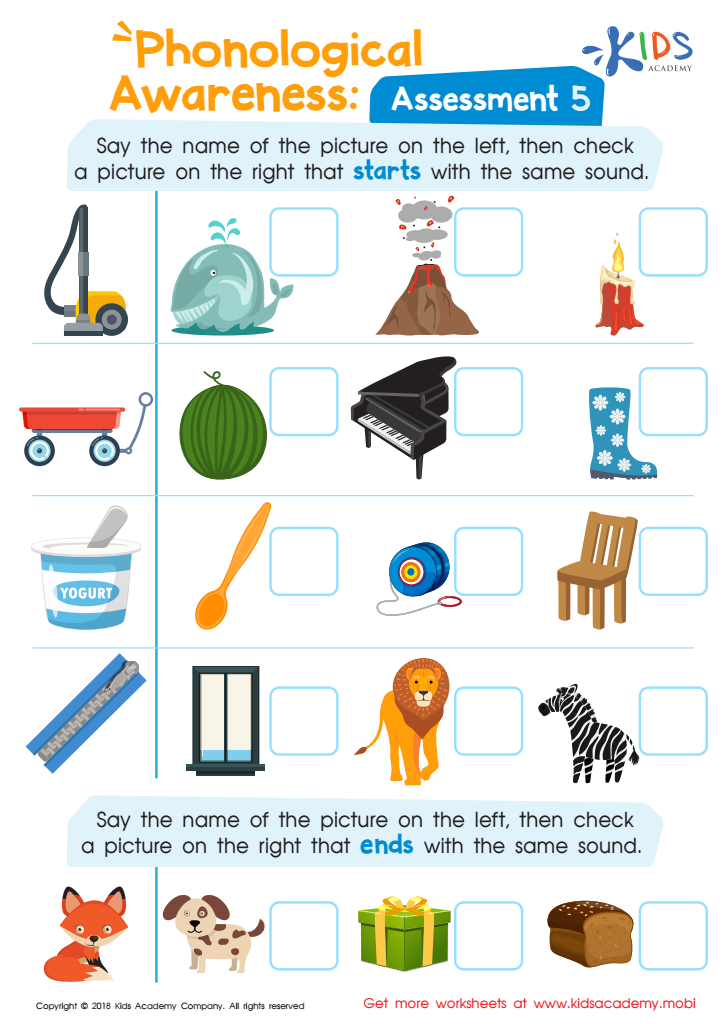
Phonological Awareness: Assessment 5 Worksheet
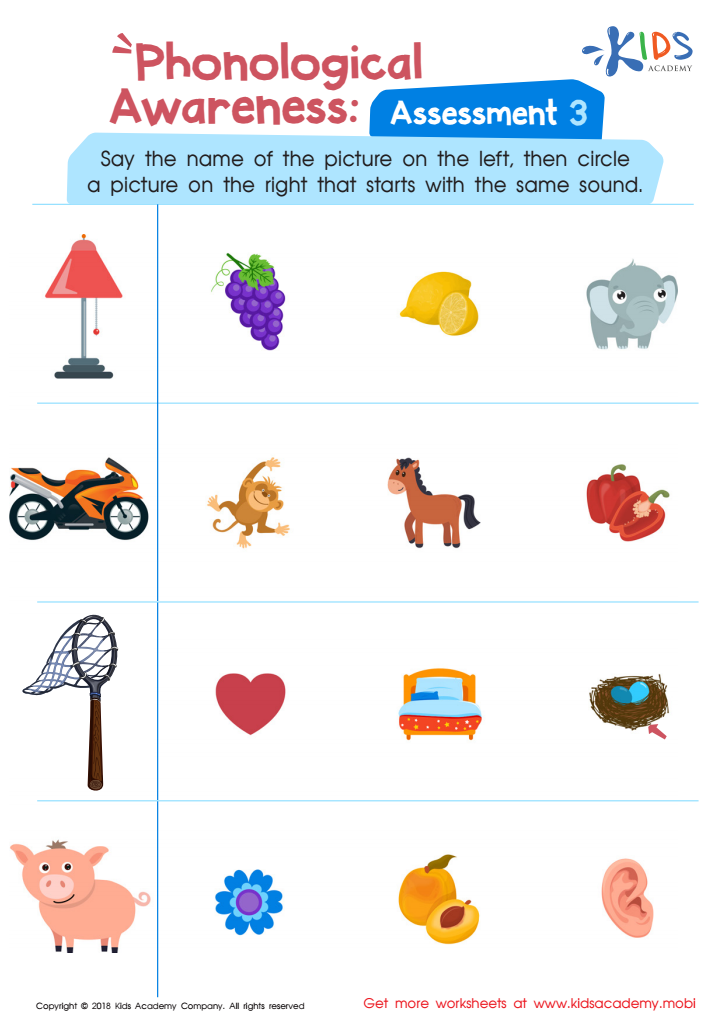
Phonological Awareness: Assessment 3 Worksheet
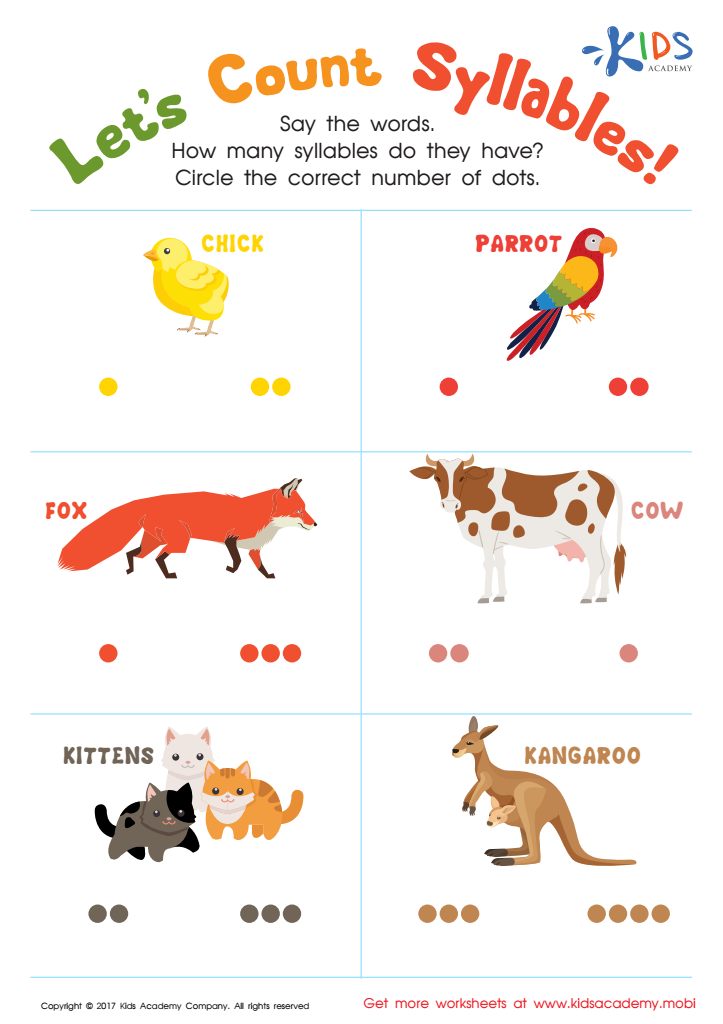
Lets Count Syllables Worksheet








Phonological awareness is a critical aspect of early childhood education that parents and teachers should prioritize because it forms the foundation for successful reading and language development. Phonological awareness refers to the ability to recognize and manipulate sounds in spoken language, including recognizing rhymes, segmenting words into syllables, and identifying individual phonemes. For ages 3-7, this skill is crucial as it directly impacts a child's ability to decode words, a fundamental step in reading proficiency.
Children with strong phonological awareness are more likely to excel in reading and writing because these skills enable them to understand the relationship between sounds and letters. This understanding is essential for children to phonetically "sound out" words, an important strategy in early reading. Furthermore, phonological awareness enhances vocabulary, comprehension, and overall language skills, all of which contribute to academic success.
Moreover, early development of these skills helps in identifying children who might be at risk for reading difficulties, allowing for timely intervention. Engaging children in playful activities like rhyming games, clapping to syllables, and phoneme manipulation exercises can make this learning process enjoyable and effective. Therefore, focusing on phonological awareness from an early age sets a strong educational foundation, cultivating competent and confident readers.








