Understanding sizes Worksheets for Ages 3-7
4 filtered results
-
From - To
Explore our "Understanding Sizes Worksheets" designed for children aged 3-7! These engaging worksheets help young learners grasp the concept of sizes through interactive activities that promote critical thinking and vocabulary development. Each worksheet features fun illustrations and age-appropriate exercises that encourage children to identify, compare, and categorize objects by size. Perfect for both classroom and home use, our resources support early education goals and foster essential cognitive skills. Enhance your child’s learning experience with our thoughtfully crafted worksheets that make understanding sizes exciting and enjoyable!Unlock the world of sizes and boost your child’s confidence in learning today!
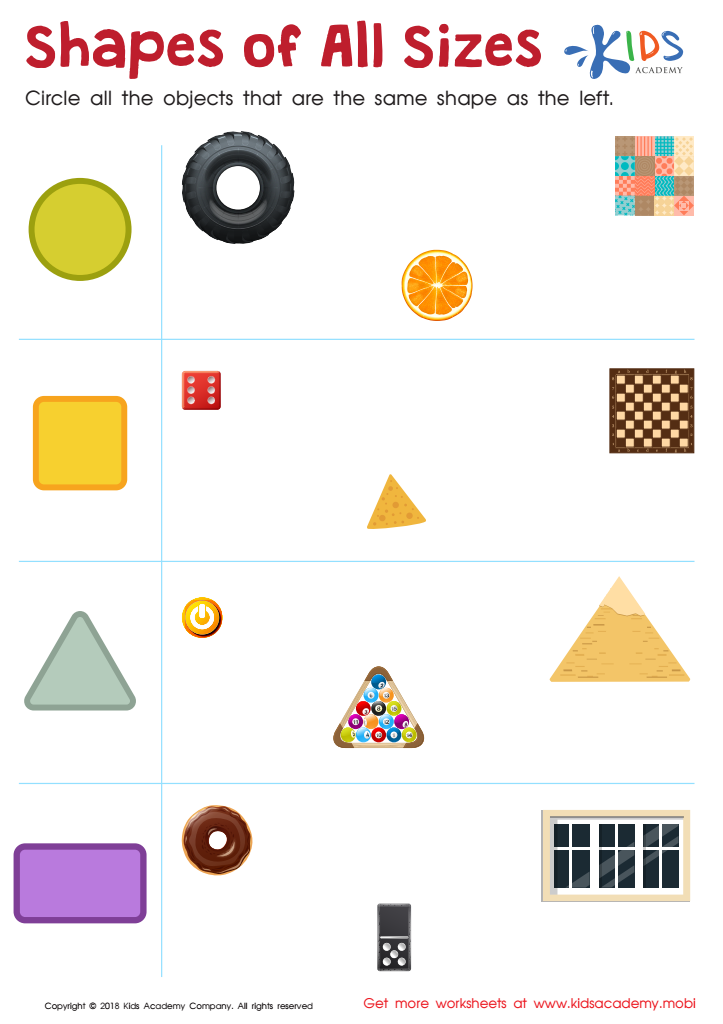
Shapes of All Sizes Worksheet
 Assign to My Students
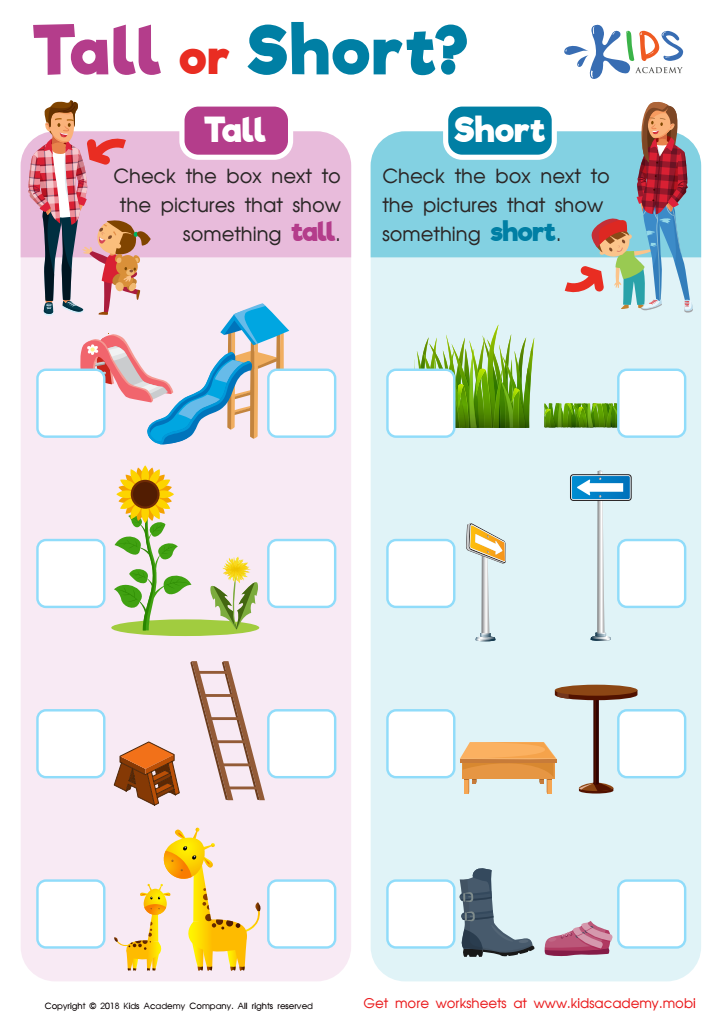
Tall or Short? Worksheet
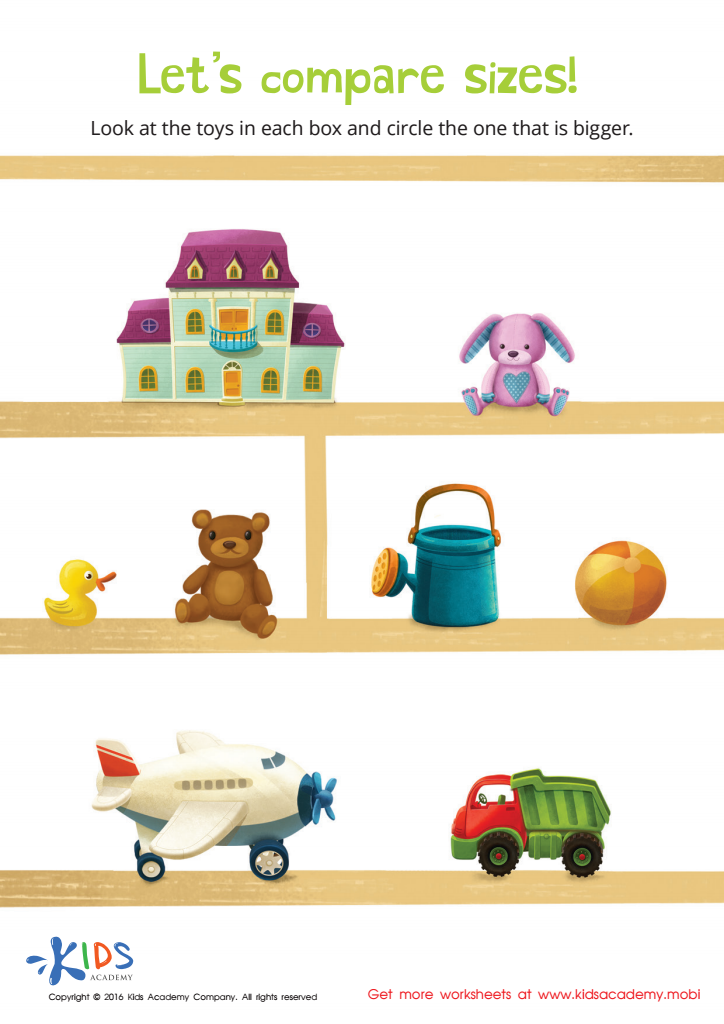
Classifying by Size Sorting Worksheet
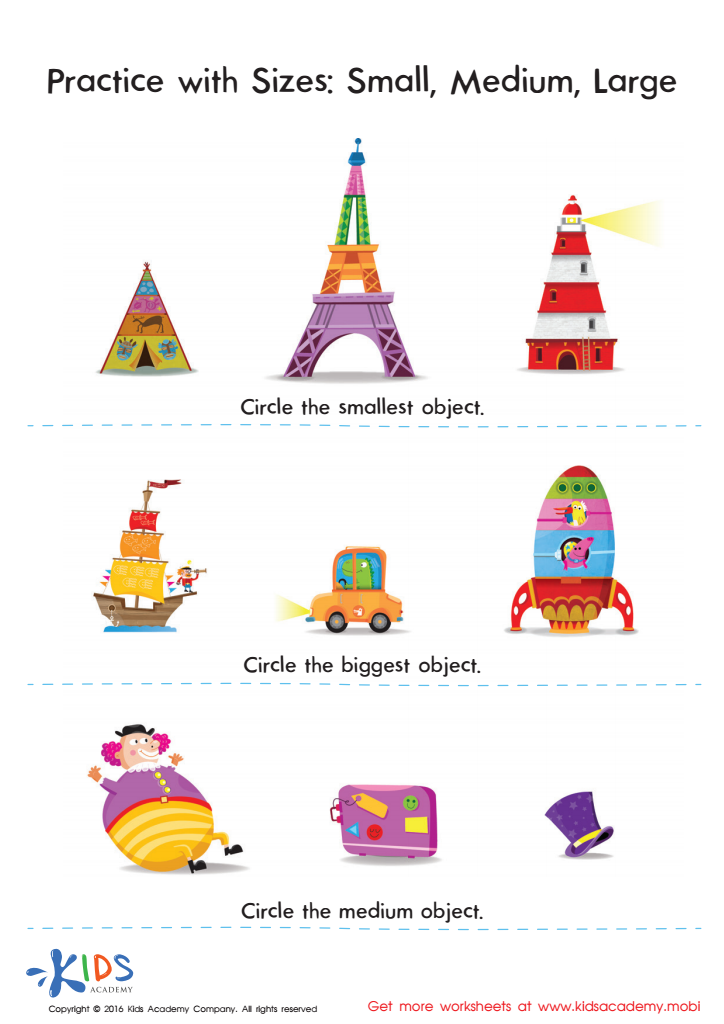








Understanding sizes is crucial for children aged 3-7 as it lays the foundation for essential cognitive and mathematical skills. During these formative years, children learn to categorize and make sense of their world, which includes recognizing and comparing sizes—big, small, tall, short, wide, and narrow. This skill is not just a mathematical concept; it enhances their ability to communicate effectively and engage with their environment.
For parents and teachers, promoting size awareness fosters critical thinking and problem-solving abilities. Activities such as sorting objects by size or comparing heights promote hands-on learning that encourages curiosity and exploration. Recognizing sizes aids in everyday life skills, helping children understand spatial relationships and develop their observational skills.
Moreover, size concepts are linked to literacy development, as stories often include comparisons, and understanding character sizes can deepen comprehension. By integrating size discussions in learning experiences, caregivers can ensure children are better prepared for future math challenges and develop a strong foundation for reading comprehension.
Overall, understanding sizes not only supports academic growth but also enhances children's ability to interact socially and communicate effectively in various contexts. Engaging with these concepts helps nurture well-rounded learners equipped for more complex tasks and ideas as they grow.








