Critical Thinking 2D Shapes Worksheets for Ages 3-7
5 filtered results
-
From - To
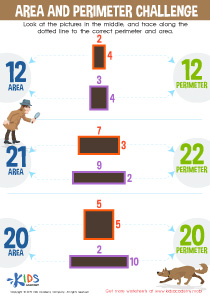
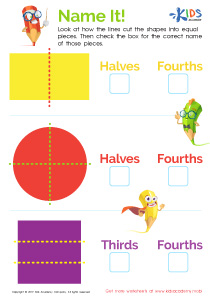
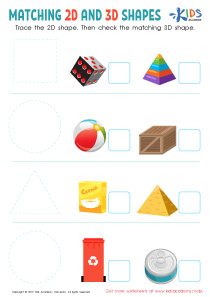
Unlock your child's potential with our "Critical Thinking 2D Shapes Worksheets" designed for ages 3-7. These engaging worksheets go beyond basic shape recognition, encouraging young minds to explore, analyze, and compare different 2D shapes. Perfect for enhancing problem-solving and analytical skills, each activity combines fun with learning to keep your child engaged. Compatible with early learning curriculums, our worksheets help develop spatial awareness, reasoning, and creativity. Ideal for parents and educators, these printables ensure a solid foundation in geometry and critical thinking. Cultivate curiosity and boost confidence with our expertly crafted resources. Try them today!
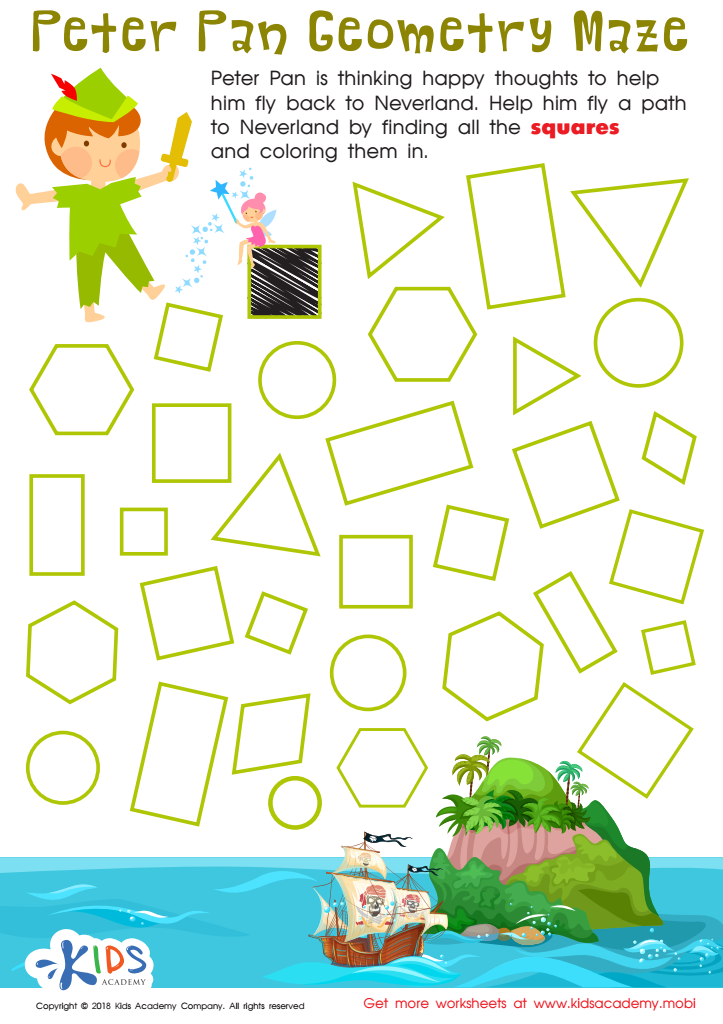
Peter Pan Worksheet
 Assign to My Students


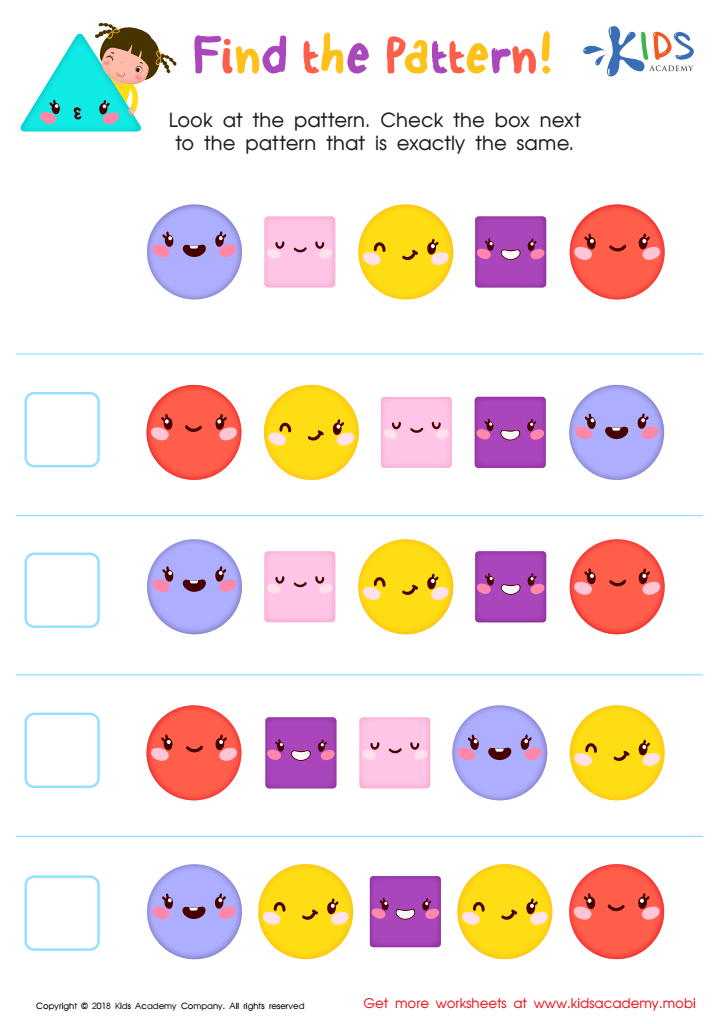
Find the Pattern Worksheet
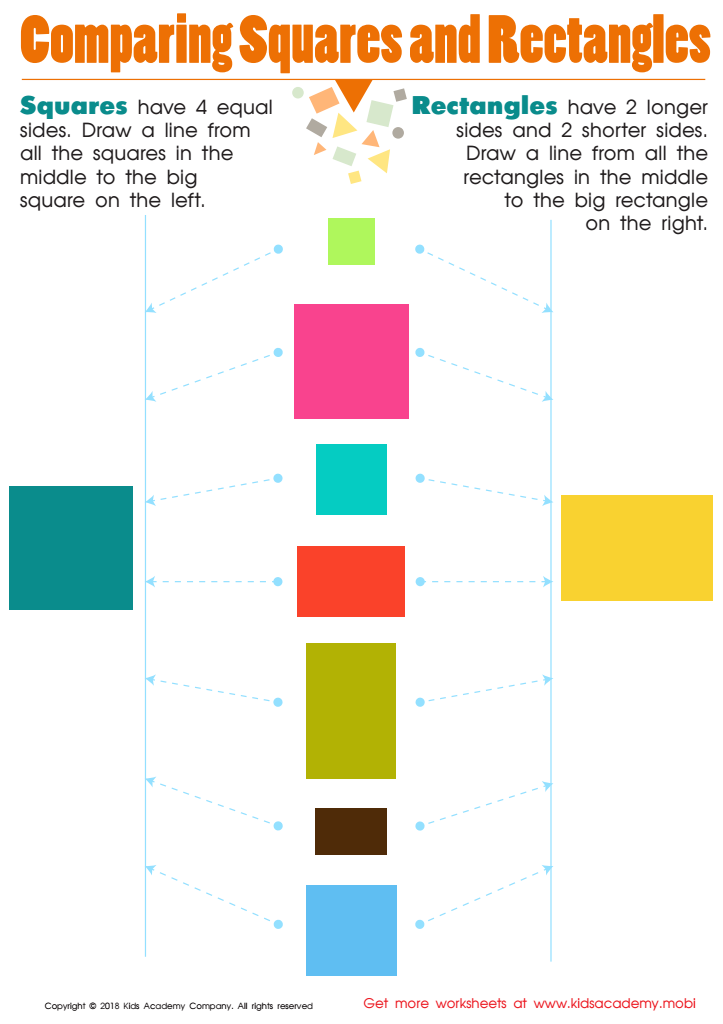
Comparing Squares Rectangles Worksheet
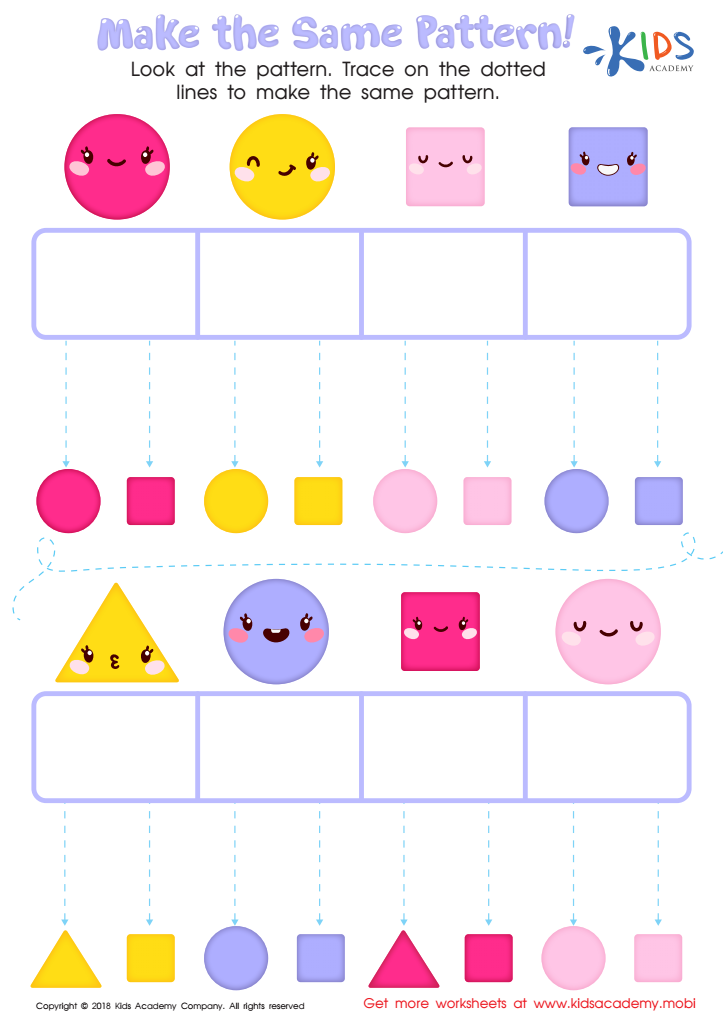
Make the Same Pattern Worksheet
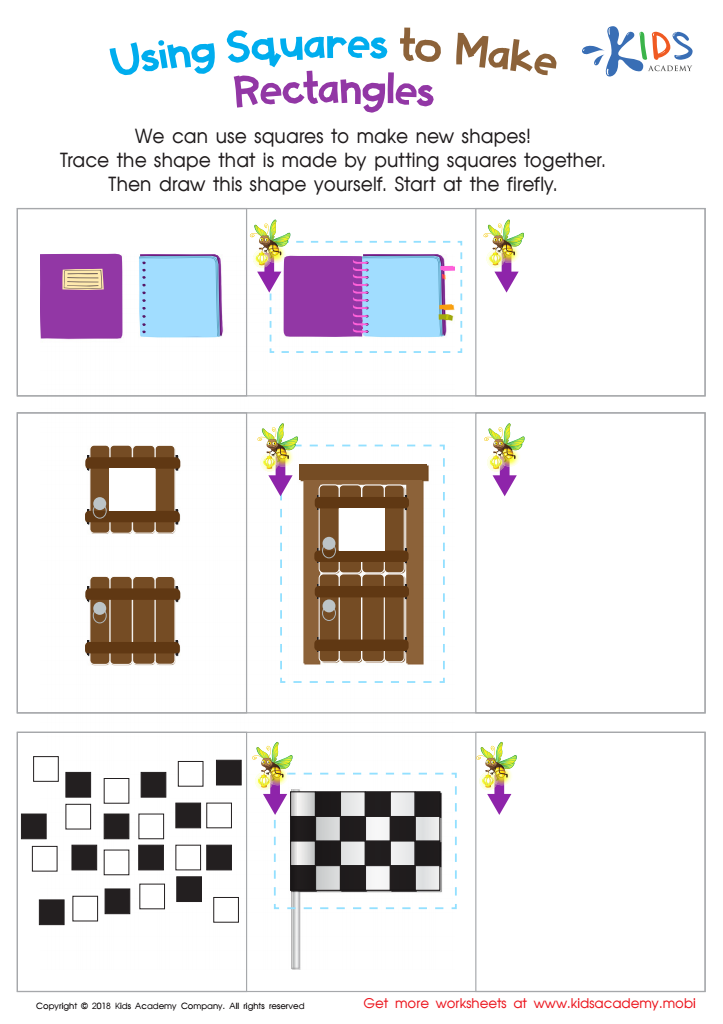
Using Squares to Make Rectangles Worksheet








Critical thinking in relation to 2D shapes for young children aged 3-7 is essential for a multitude of reasons that extend beyond basic shape recognition. At this formative age, children's cognitive abilities are rapidly developing. Engaging with 2D shapes supports spatial awareness, which is foundational for later math skills such as geometry and graphing. By recognizing and manipulating shapes, children learn to observe, compare, and categorize, which are fundamental critical thinking skills.
Incorporating critical thinking with shapes also helps children understand attributes such as sides, vertices, and angles. This can enhance their problem-solving skills as they predict outcomes, recognize patterns, and develop reasoning abilities. Moreover, discussing shapes encourages language development as children describe features, differentiate between shapes, and use correct terminology.
From a socio-emotional perspective, success in these activities fosters a sense of accomplishment and confidence, further motivating children to engage in new challenges. Collaborative shape-related tasks also encourage cooperation and communication among peers.
Ultimately, early experiences with critical thinking and 2D shapes lay a strong foundation for future learning across various subjects. Parents and teachers should prioritize these activities to bolster children's comprehensive development, ensuring they acquire the skills needed for academic and real-world success.