Filters

9 filtered results

Clear all filters
Favorites
With answer key
Interactive

9 filtered results

Difficulty Level

Grade


Subject

    Unlock the power of numbers with our Problem-Solving Skills Addition Facts Worksheets designed for children ages 3-7! Our engaging and educational worksheets help young learners develop essential addition skills in a fun, interactive way. These printables focus on problem-solving techniques, providing varied scenarios where kids can apply their addition knowledge. With colorful activities and child-friendly exercises, our worksheets make math enjoyable and approachable. Ideal for both classroom and at-home learning, they will boost your child's confidence in tackling challenges and improve their arithmetic abilities. Enhance your child's math journey with our expert-crafted worksheets and watch them thrive!

    Check out this FREE Trial Lesson on Addition Facts for age 3-7!

    More Word Problems

    Favorites
    With answer key
    Interactive
    • 3-7
    • Problem-Solving Skills
    • Addition Facts
    Tricky Problems Worksheet: Part 1
    Tricky Problems Worksheet: Part 1

    Tricky Problems Worksheet: Part 1

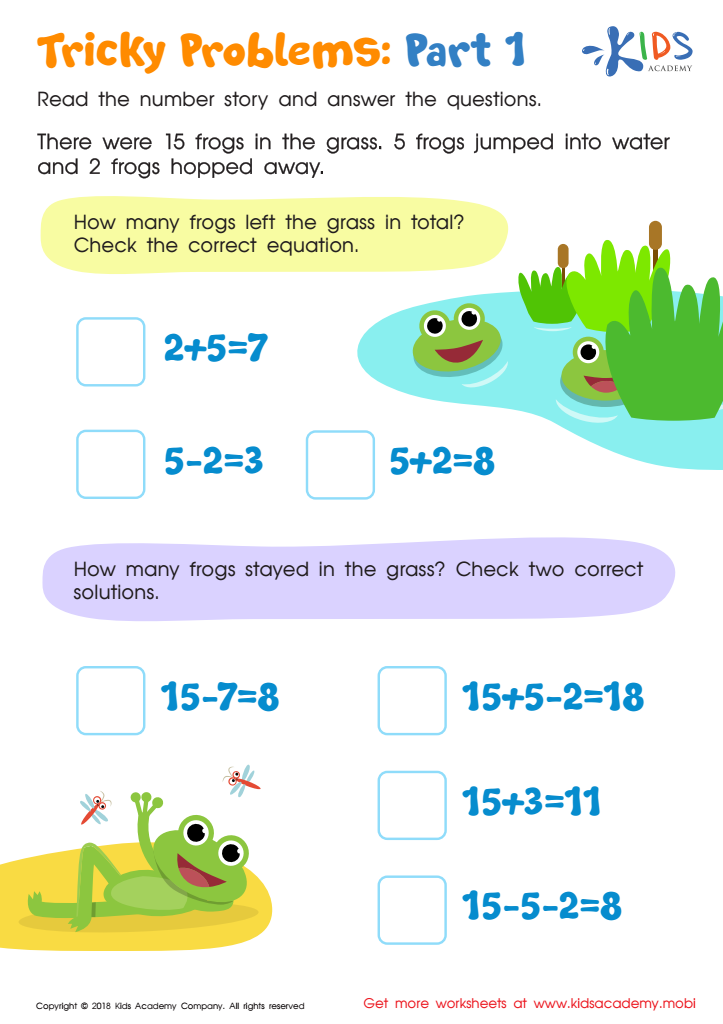
    Visualizing word problems can help students solve them. This fun PDF worksheet encourages students to create mental images using math facts, then check boxes to match the equations for basic addition problems. It's a great way to build confidence in solving math.
    Tricky Problems Worksheet: Part 1
    Worksheet
    7 Continents and 7 Seas Worksheet
    7 Continents and 7 Seas Worksheet

    7 Continents and 7 Seas Worksheet

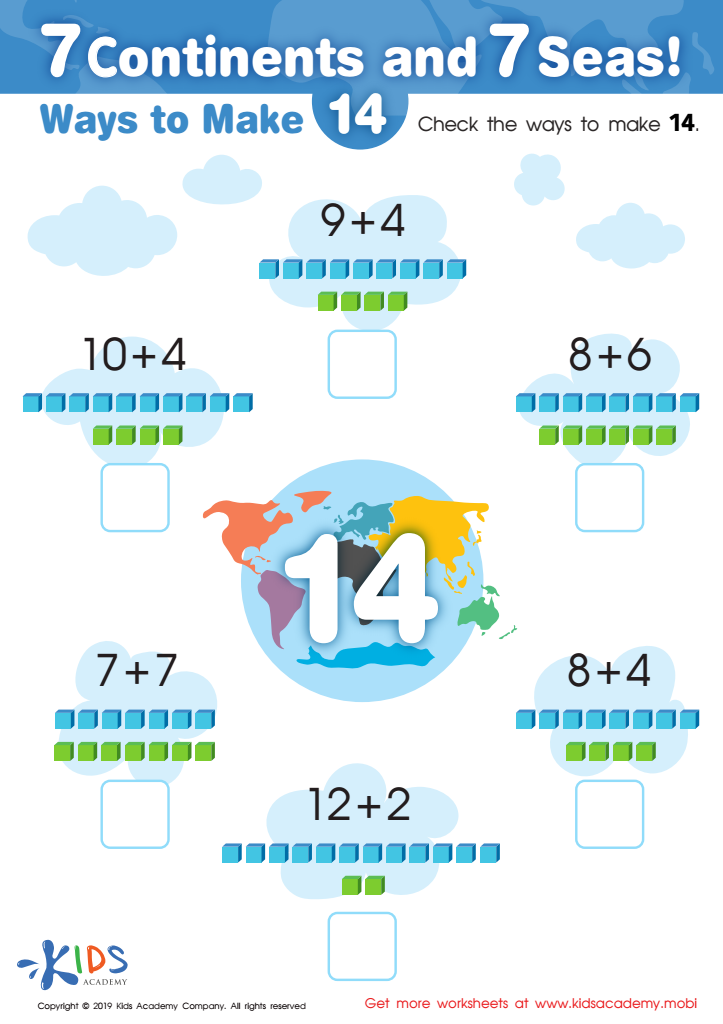
    Remind kids of the continents and show them how different numbers can add up to the same figure. Give examples, like 2+2 =4, and 3+1 =4. Ask if they can provide other examples, then work through the simple additions in this worksheet with them. Ask them to circle all equations that make 14.
    7 Continents and 7 Seas Worksheet
    Worksheet
    Find 10 Worksheet
    Find 10 Worksheet

    Find 10 Worksheet

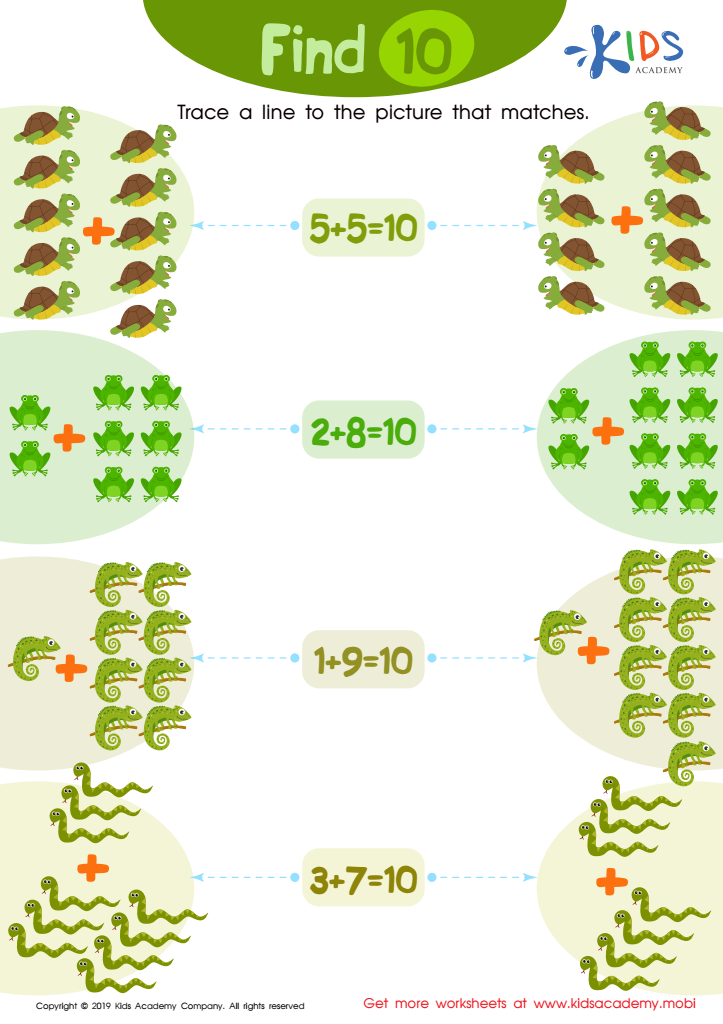
    Counting can be tricky, but your kids can master it with regular practice. Here's a fun activity to help: count the animals, then trace a line to the pictures that matches. With these tips, math will be an easy walk in the park.
    Find 10 Worksheet
    Worksheet
    Equations Matching Word Problems Worksheet
    Equations Matching Word Problems Worksheet

    Equations Matching Word Problems Worksheet

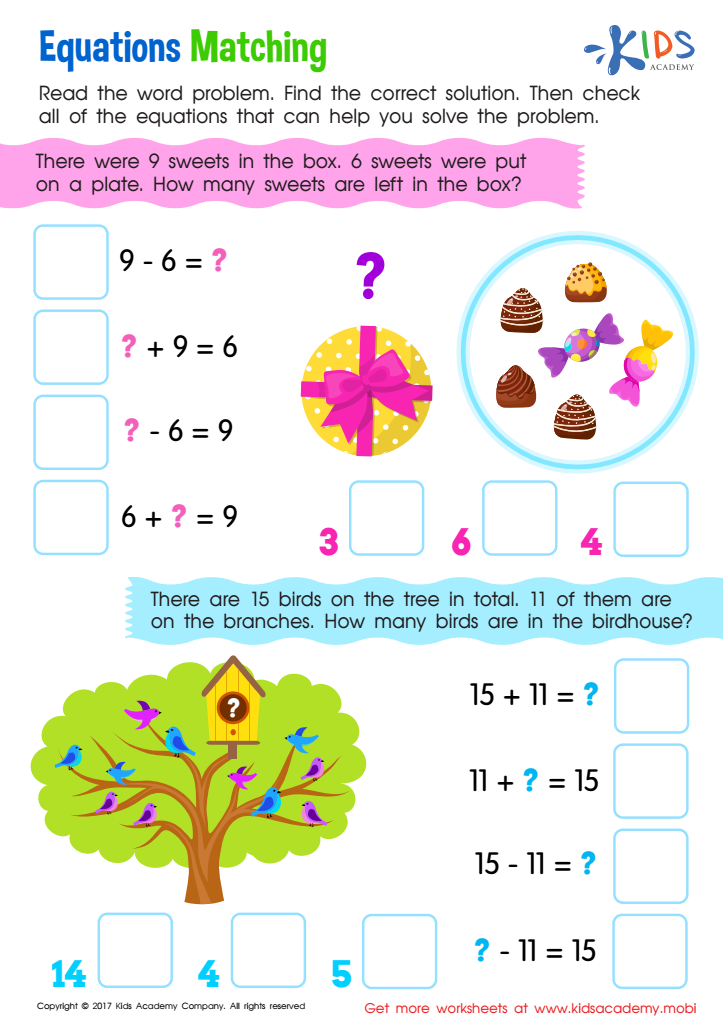
    Download this worksheet and give your young mathematician practice in solving equations using matching numbers and number family facts. They'll solve word problems, develop critical thinking and algebraic reasoning, and gain success with addition and subtraction.
    Equations Matching Word Problems Worksheet
    Worksheet
    Tricky Problems Worksheet: Part 2
    Tricky Problems Worksheet: Part 2

    Tricky Problems Worksheet: Part 2

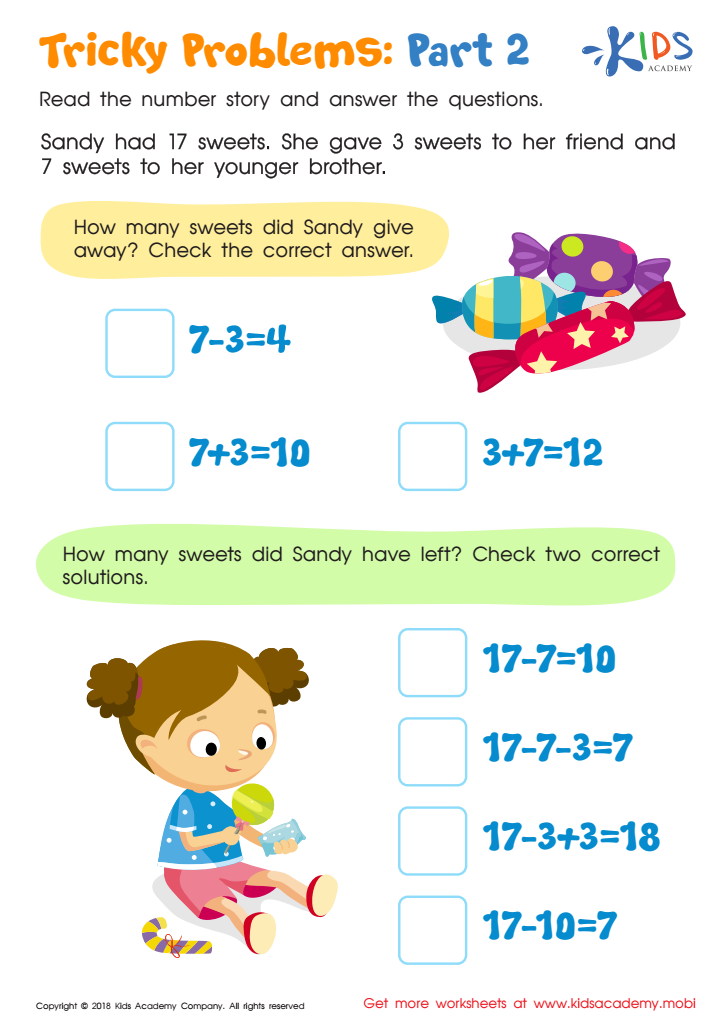
    Help your little math learner visualize number stories with this engaging worksheet. They'll connect pictures to the story and use math facts to find the sums. After that, they'll be able to identify the correct number sentences to match. Let them practice and get better at problem solving!
    Tricky Problems Worksheet: Part 2
    Worksheet
    Fact Families: Easter Math Worksheet
    Fact Families: Easter Math Worksheet

    Fact Families: Easter Math Worksheet

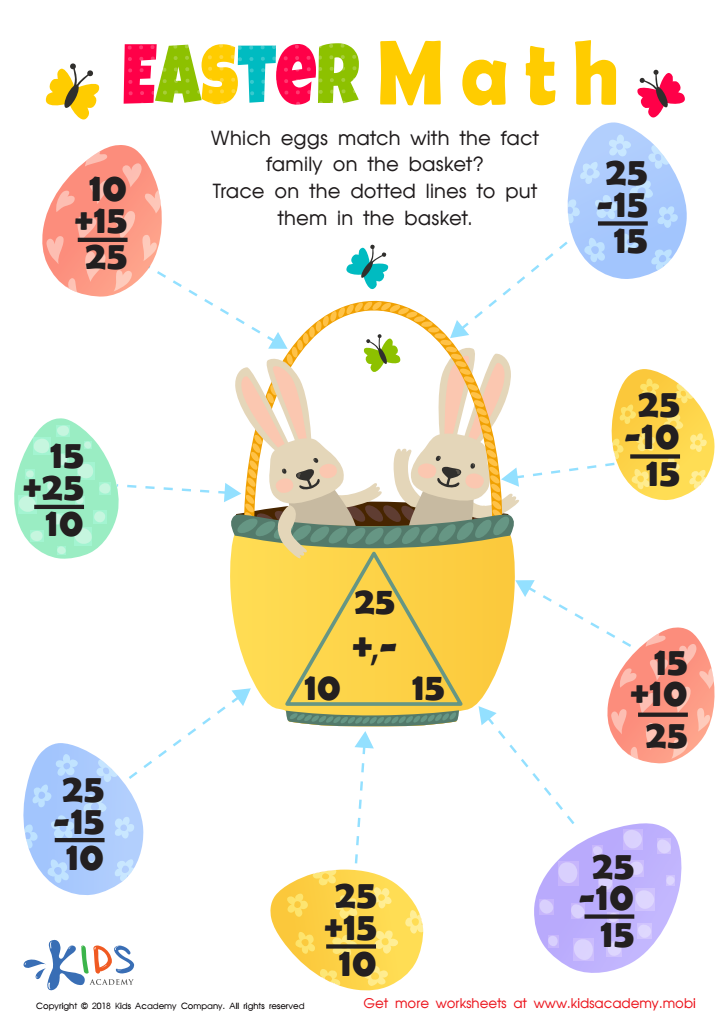
    Kids will love this vibrant PDF packed with Easter math fun! Match facts with the colorful eggs, add and subtract multiples of five to boost automaticity, and have a blast with the bunny friends!
    Fact Families: Easter Math Worksheet
    Worksheet
    Domino +4 Worksheet
    Domino +4 Worksheet

    Domino +4 Worksheet

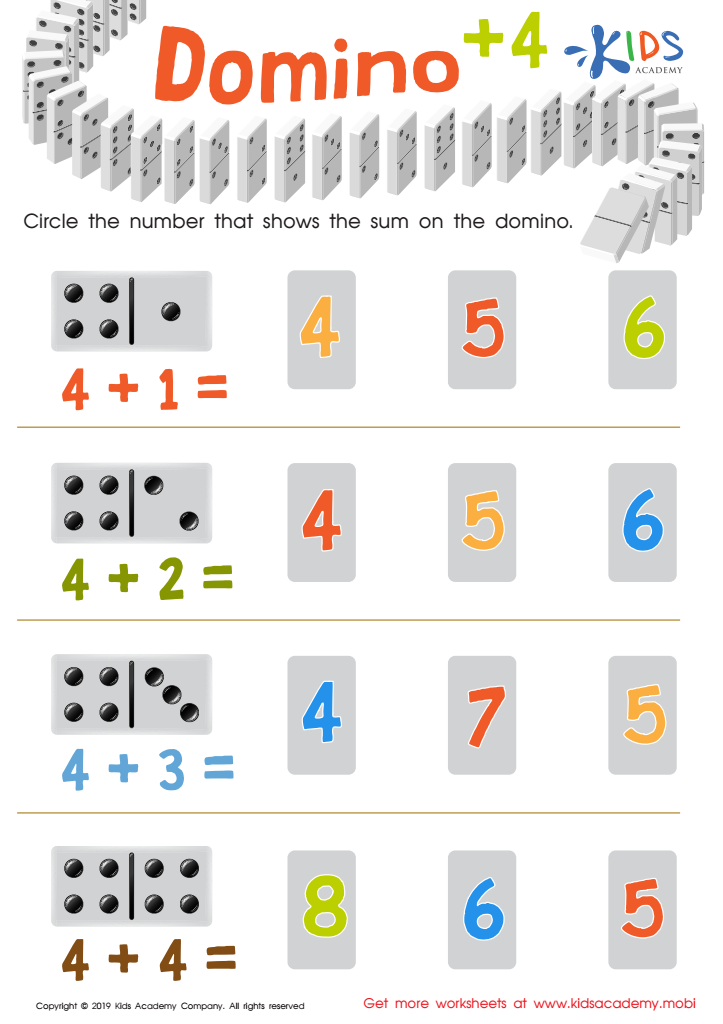
    Ask your kids if they know what a domino is. Explain, then move on to solving the four simple equations on this printout, adding a number to 4. Help them find the sum and circle the number.
    Domino +4 Worksheet
    Worksheet
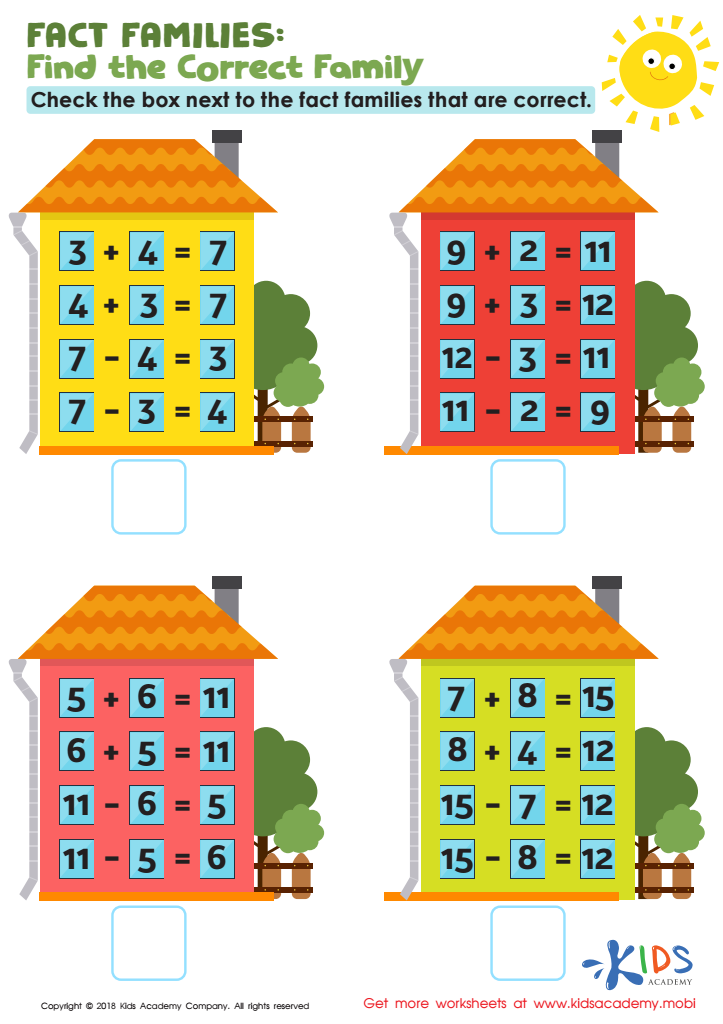
    Fact Families: Find Correct Family Worksheet
    Fact Families: Find Correct Family Worksheet

    Fact Families: Find Correct Family Worksheet

    Test your students' math and reasoning skills with this worksheet. It features 4 houses, each with a group of fact families on it. Some are correct, some are wrong - help students identify which are correct and circle the box next to them. This will help them progress in school.
    Fact Families: Find Correct Family Worksheet
    Worksheet
    Flags and Fours Worksheet

    Flags and Fours Worksheet

    Flags and Fours Worksheet

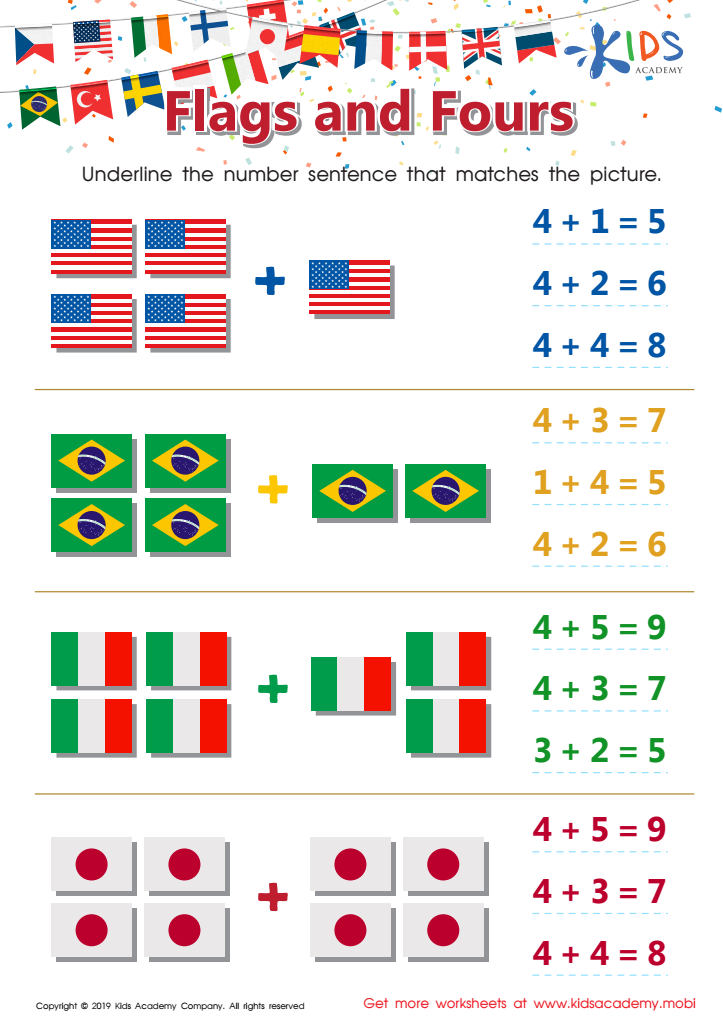
    Have your kids identify country flags from this colorful printout. Then, ask them to underline the number sentence that goes with each flag. Combining math with national flag recognition strengthens kids' knowledge of both, promoting an understanding of identity and numbers.
    Flags and Fours Worksheet
    Worksheet


    Problem-solving skills for ages 3-7 are crucial because they lay the foundation for critical thinking and academic success in later years. Early exposure to problem-solving can develop children's cognitive abilities, enhance their logical thinking, and improve their capacity to tackle real-world challenges. These skills are at the core of learning addition facts, a fundamental mathematical concept that is integral to their education.

    When parents and teachers focus on building problem-solving skills through addition facts, they help children recognize patterns, understand relationships, and improve their numerical fluency. This not only boosts their confidence in math but also encourages a positive attitude toward learning and academic persistence.

    Moreover, early problem-solving activities promote independence and resilience. As children learn to approach and solve basic problems, they develop a sense of responsibility for their own learning, which is key to lifelong educational development.

    Early emphasis on problem-solving also equips children with essential life skills such as reasoning, planning, and strategic thinking, which are valuable beyond academic settings. By nurturing these skills at an early age, parents and teachers help children navigate challenges, make informed decisions, and achieve their potential both in school and in future everyday situations.

    Thus, prioritizing problem-solving skills and addition facts for young learners sets the stage for holistic development and long-term success.