Filters

21 filtered results

Clear all filters
Favorites
With answer key
Interactive

21 filtered results

Difficulty Level

Grade


Explore our expertly designed "Basic Addition & Subtraction Worksheets" perfect for children ages 3-7! These fun, engaging worksheets help young learners develop essential math skills in a playful and educational way. Focused on basic addition and subtraction, the exercises are crafted to boost confidence and build a strong foundation. Ideal for preschool, kindergarten, and early grade students, our printable resources feature colorful illustrations and simple, step-by-step problems that make learning math enjoyable and effective. With our worksheets, children will quickly master the fundamental concepts needed for future math success. Get started today for free at Kids Academy!
Check out this FREE Trial Lesson on Addition & Subtraction for age 3-7!

Short and Long Vowel Sort

Favorites
With answer key
Interactive
  • 3-7
  • Basic Addition
  • Addition & Subtraction
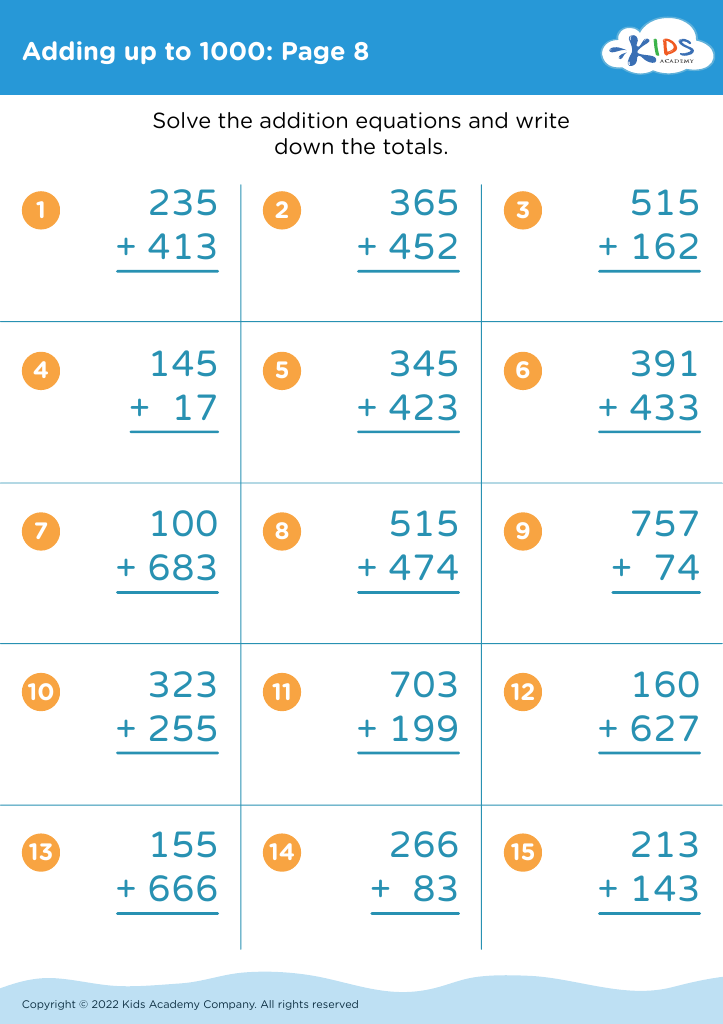
Adding up to 1000: Page 8

Adding up to 1000: Page 8

Adding up to 1000: Page 8
Worksheet
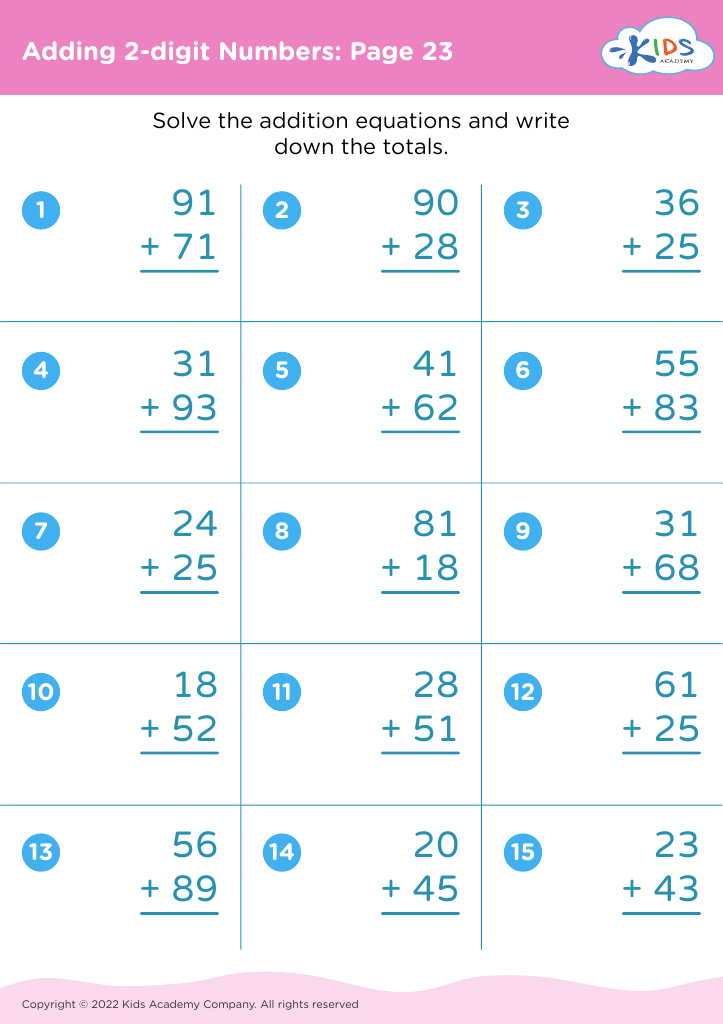
Adding 2-digit Numbers: Page 23

Adding 2-digit Numbers: Page 23

Adding 2-digit Numbers: Page 23
Worksheet
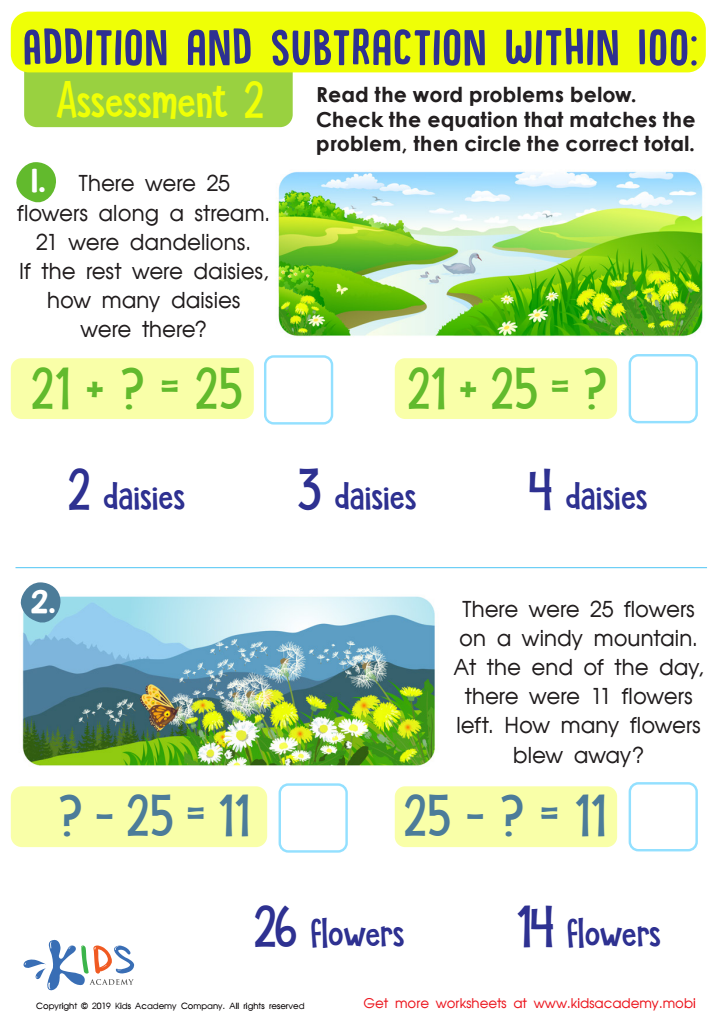
Assessment 2 Math Worksheet

Assessment 2 Math Worksheet

Using fun exercises and pictures, you can get kids excited about math. With practice and reminders of what they've learnt, they'll be solving simple addition and subtraction equations with ease. Read the word problems in the picture to them, then help them check the equation and choose the correct answer.
Assessment 2 Math Worksheet
Worksheet
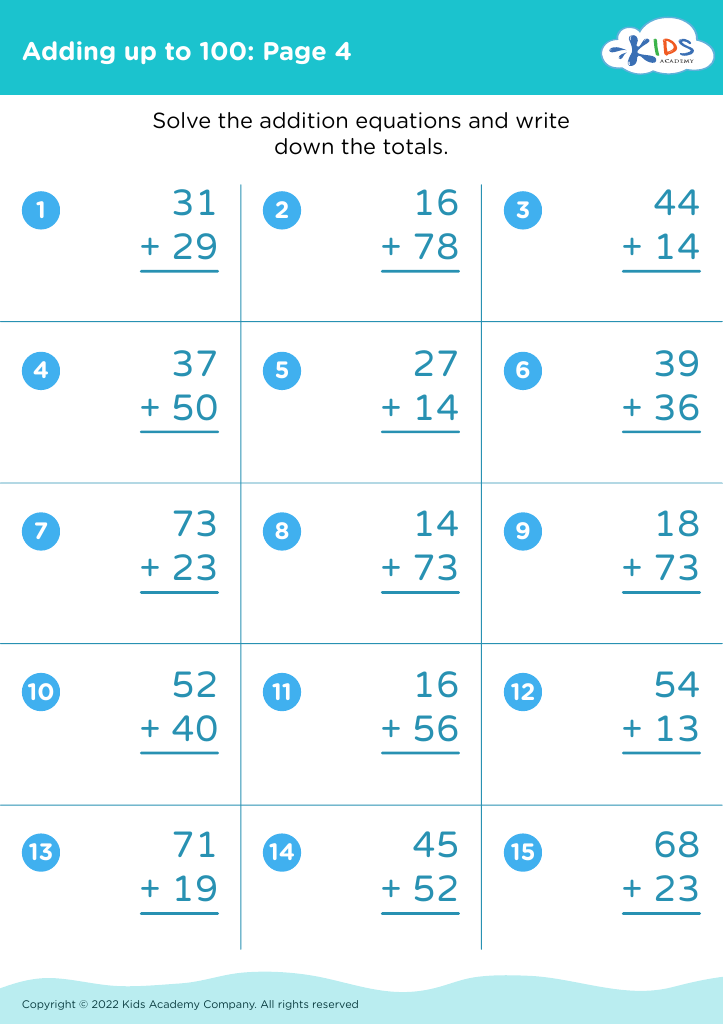
Adding up to 100: Page 4

Adding up to 100: Page 4

Adding up to 100: Page 4
Worksheet
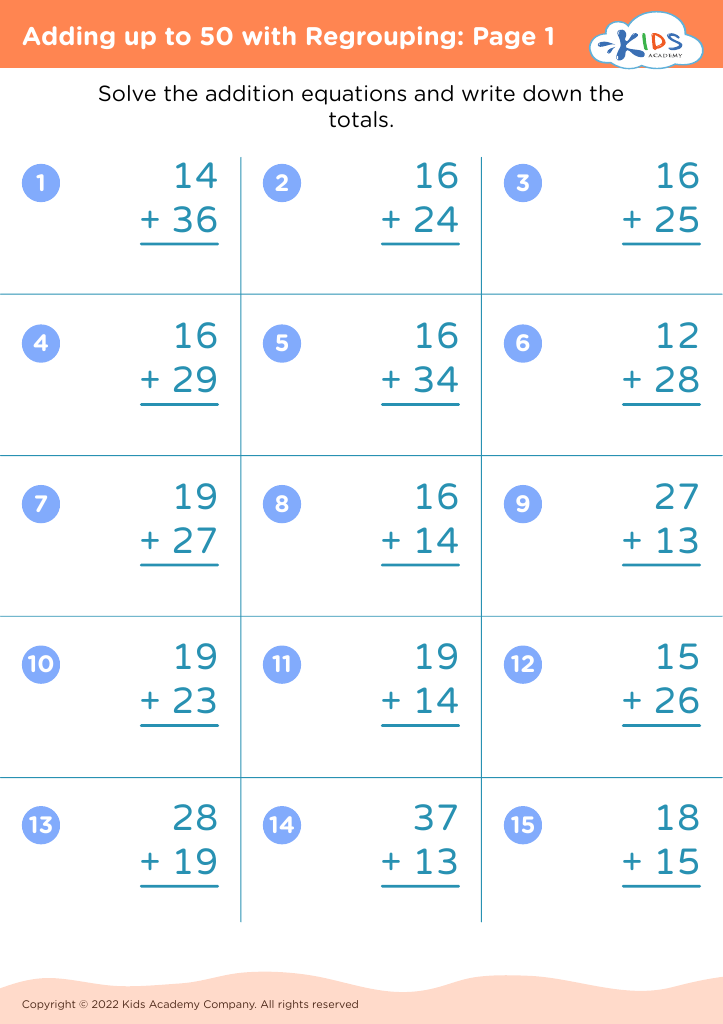
Adding up to 50 with Regrouping: Page 1
Worksheet
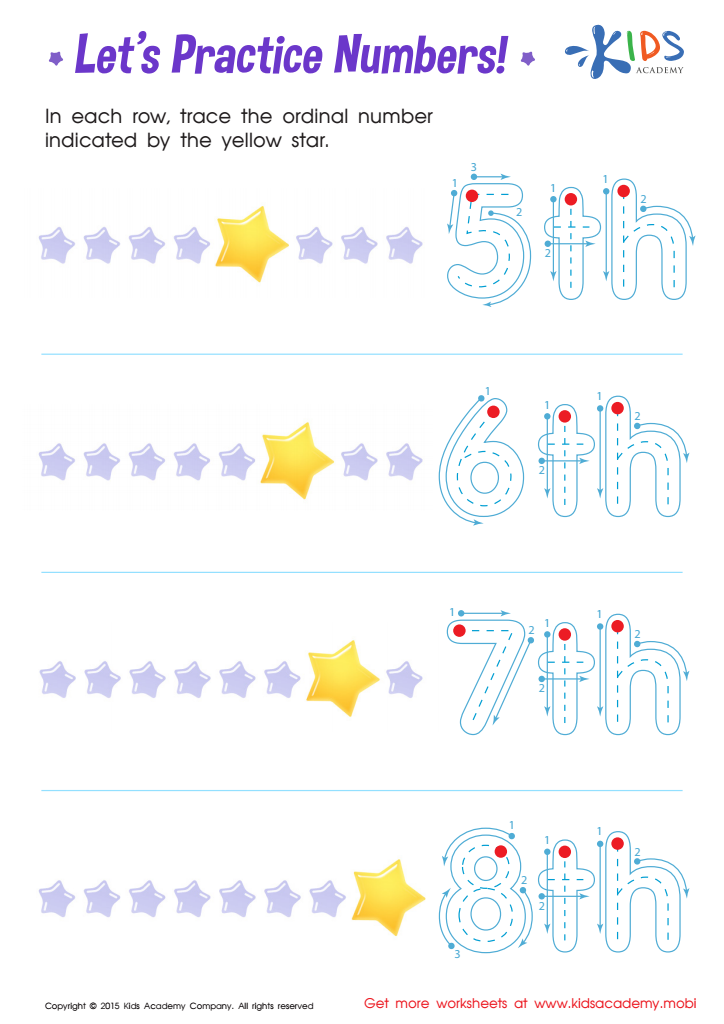
Practice Ordinal Numbers Worksheets PDF
Ordinal Numbers: Let's Practice Numbers Printable
Worksheet
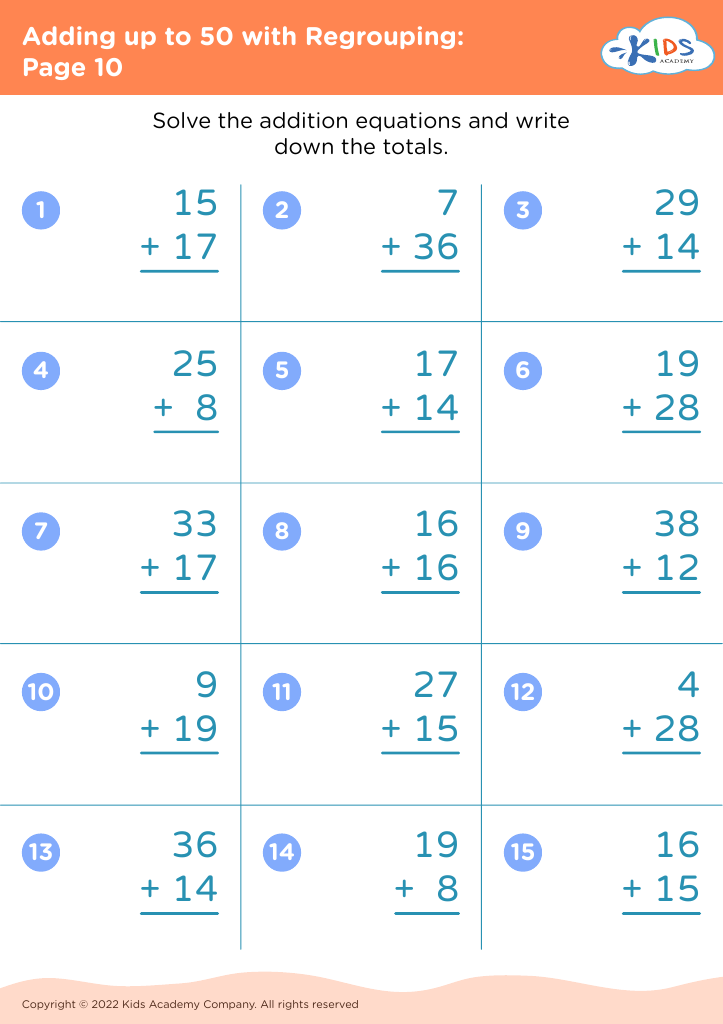
Adding up to 50 with Regrouping: Page 10
Worksheet
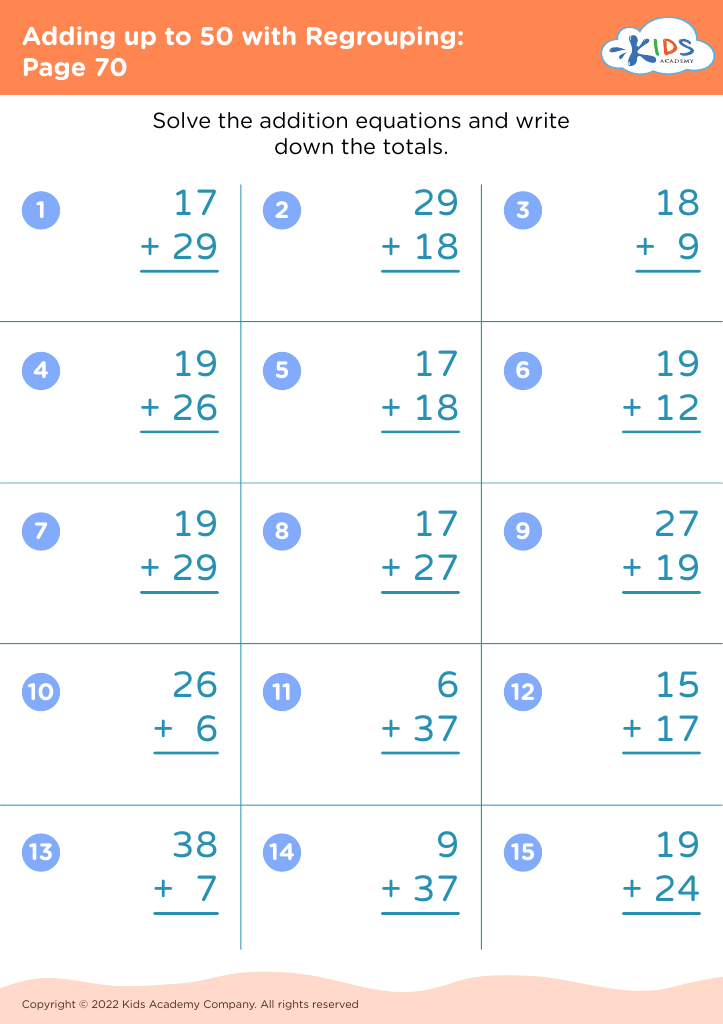
Adding up to 50 with Regrouping: Page 70
Worksheet
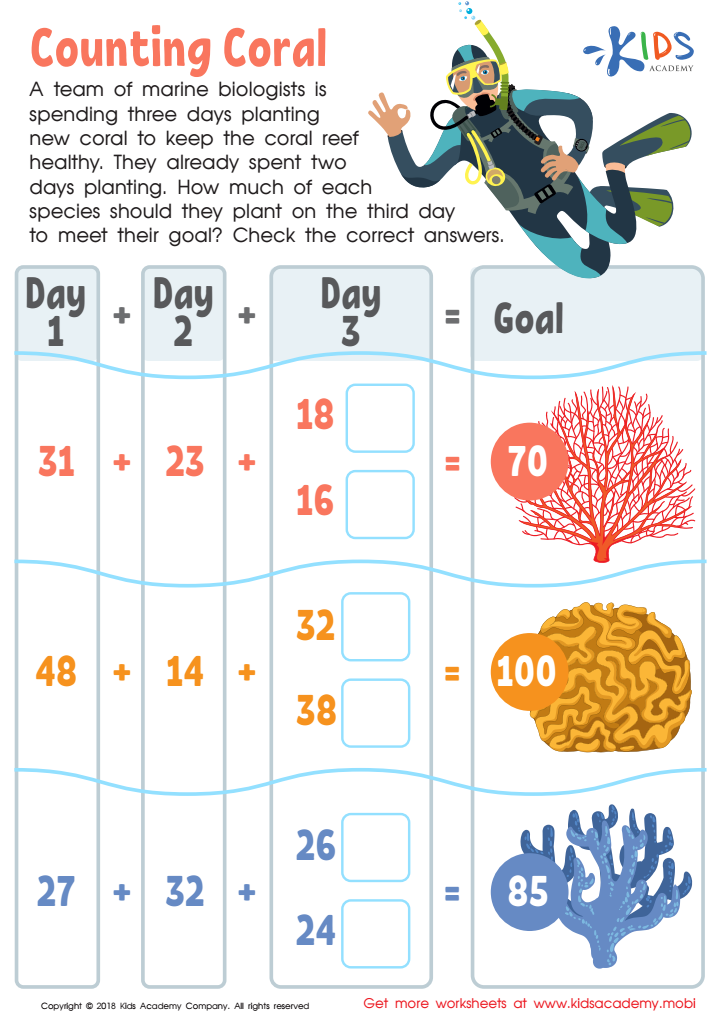
Counting Coral Worksheet

Counting Coral Worksheet

Introduce your child to the team of marine biologists planting coral to keep a reef healthy. They've planted for two days and need to figure out how much of each specie to plant on the third day to reach their goal. Help your child answer the questions on the printout and learn what it takes to be a marine biologist.
Counting Coral Worksheet
Worksheet
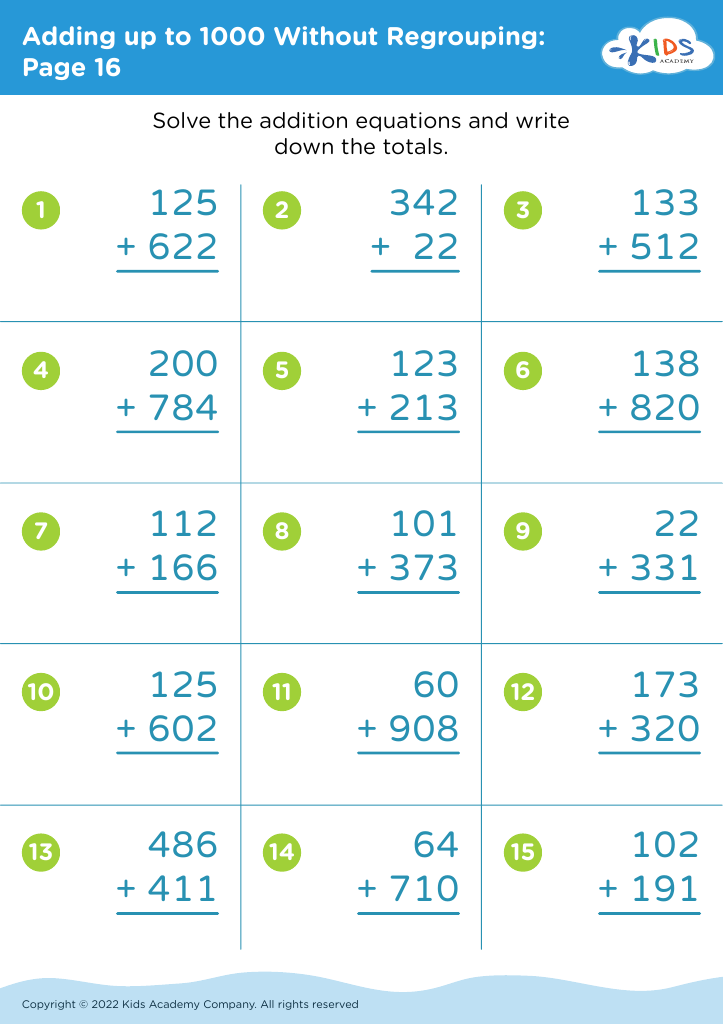
Adding up to 1000 Without Regrouping: Page 16
Worksheet
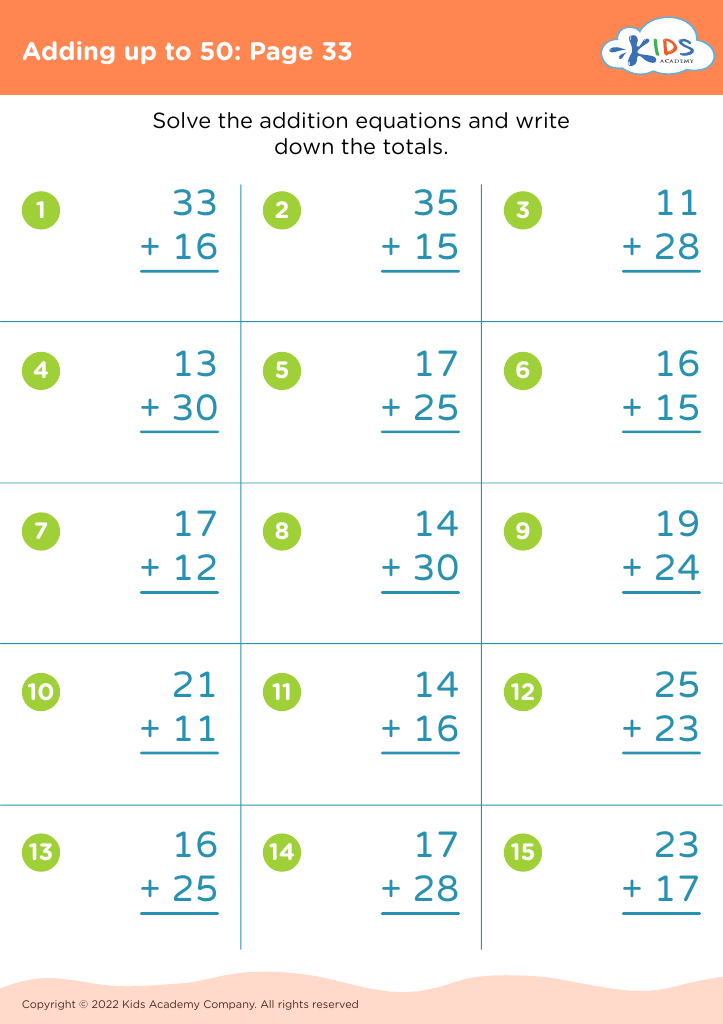
Adding up to 50: Page 33

Adding up to 50: Page 33

Adding up to 50: Page 33
Worksheet
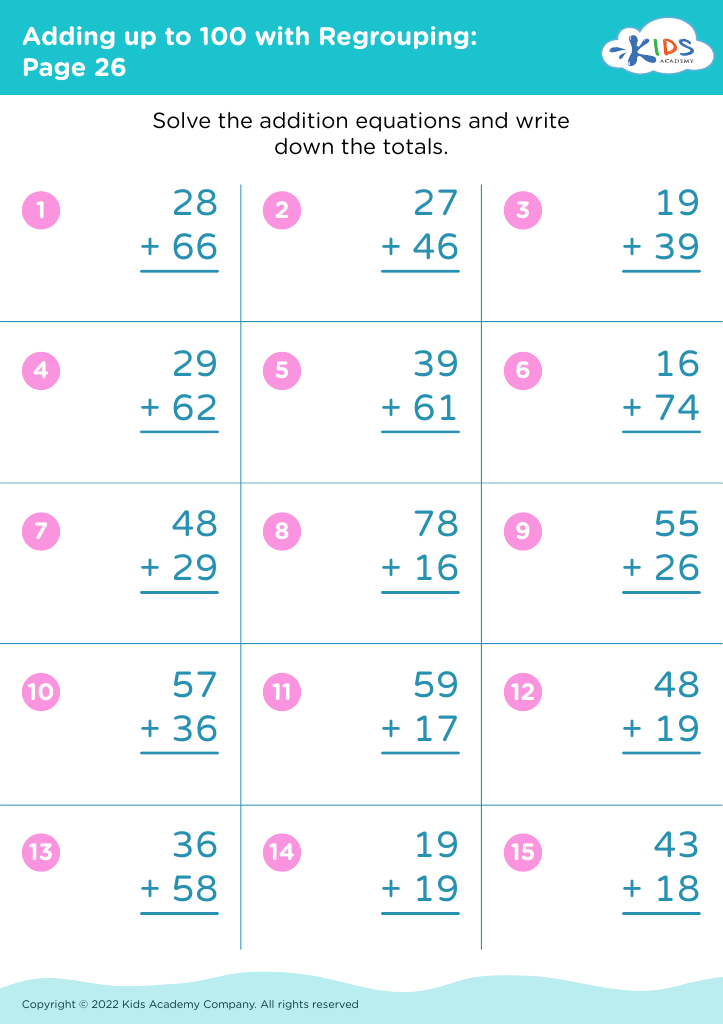
Adding up to 100 with Regrouping: Page 26
Worksheet
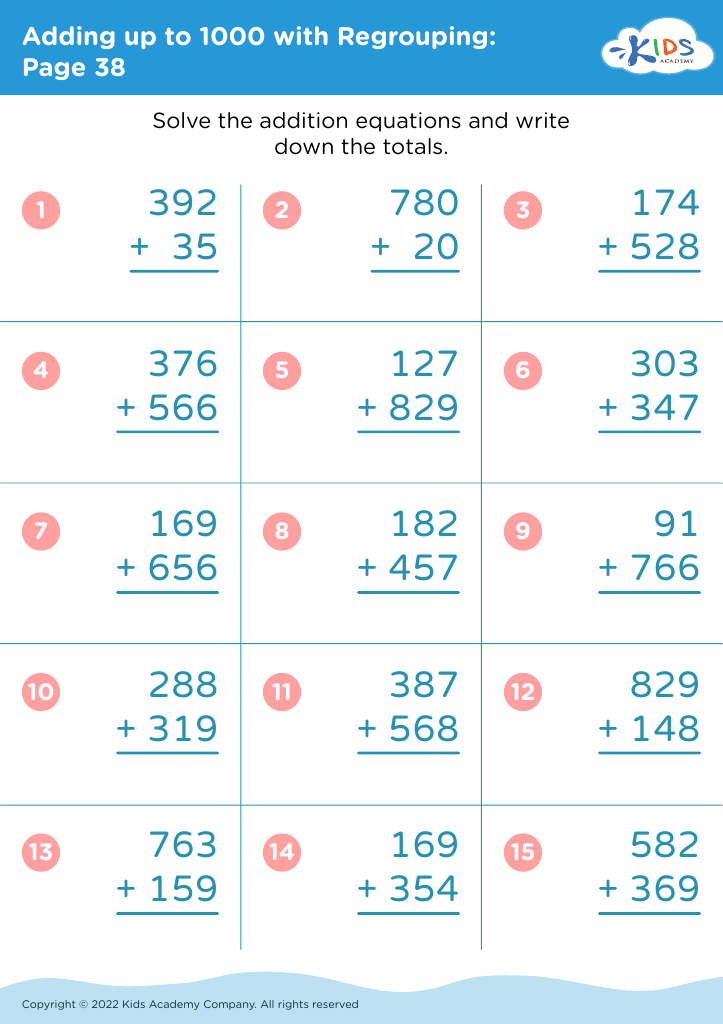
Adding up to 1000 with Regrouping: Page 38
Worksheet
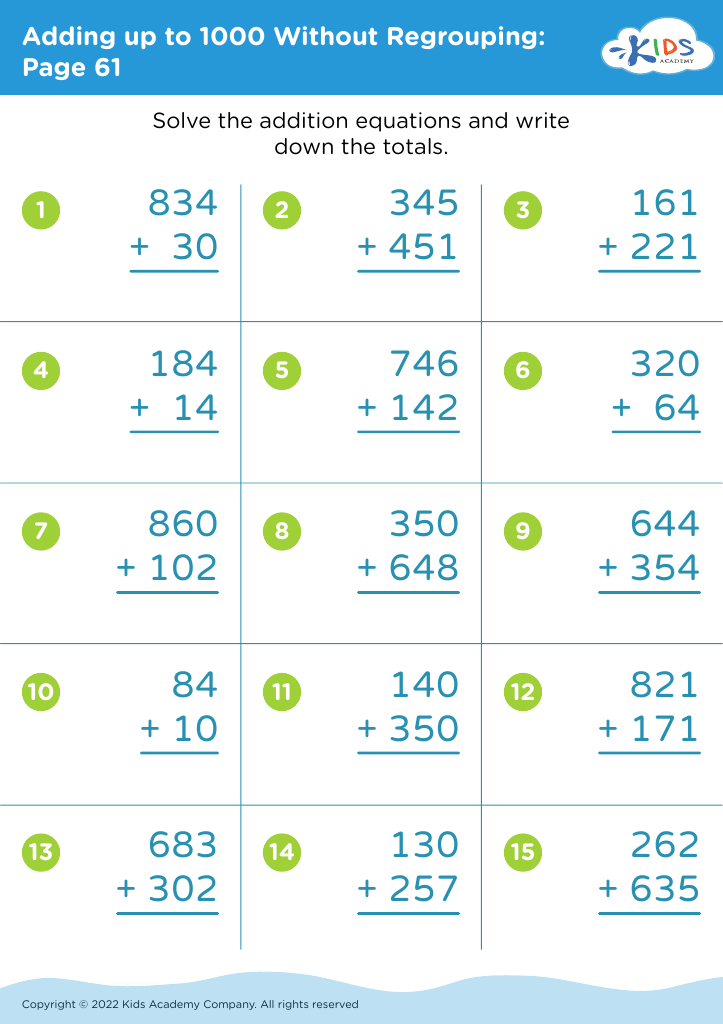
Adding up to 1000 Without Regrouping: Page 61
Worksheet
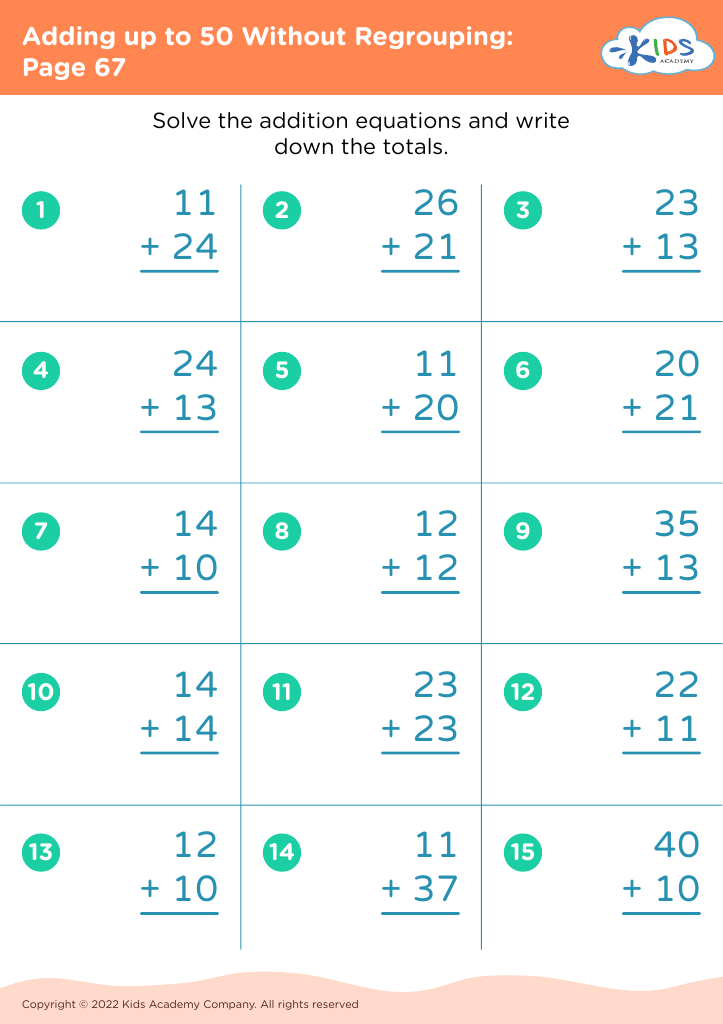
Adding up to 50 Without Regrouping: Page 67
Worksheet
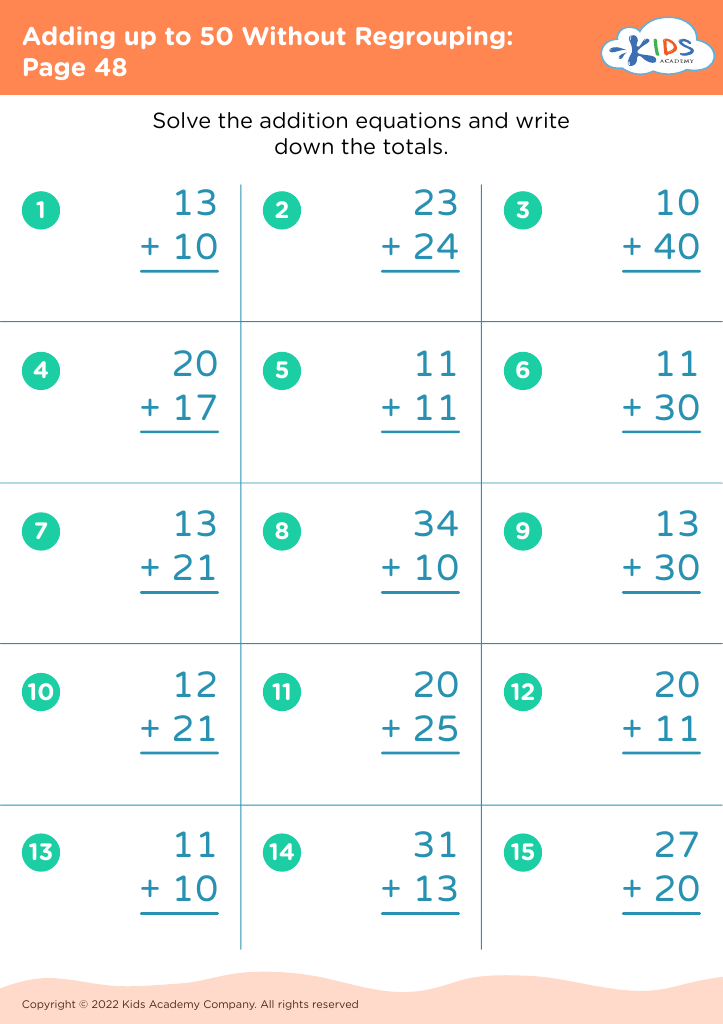
Adding up to 50 Without Regrouping: Page 48
Worksheet
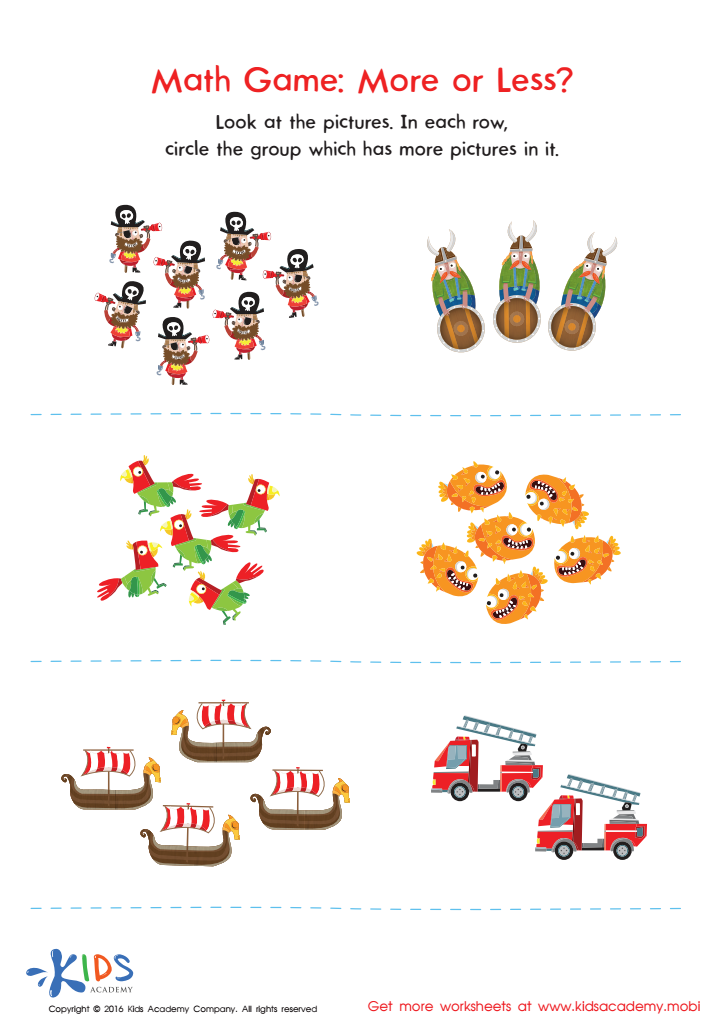
Free Printable More or Less Worksheets for Kindergarten

More or Less Worksheet

Counting and understanding quantity are essential skills for kindergarteners. Get your free printable more or less worksheet now!
More or Less Worksheet
Worksheet
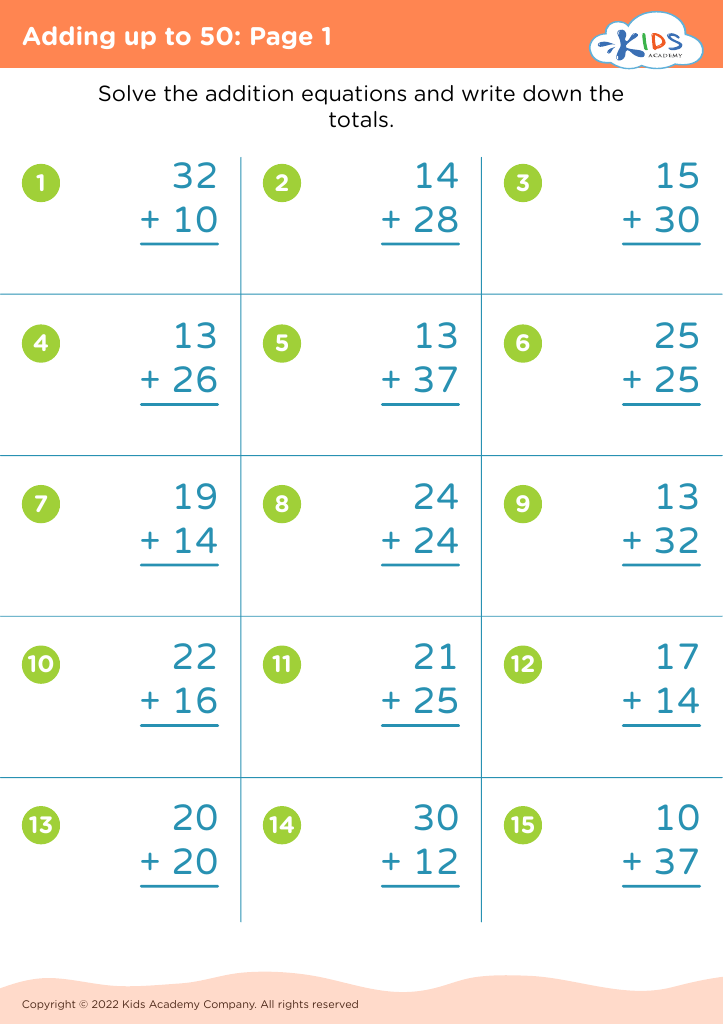
Adding up to 50: Page 1

Adding up to 50: Page 1

Adding up to 50: Page 1
Worksheet
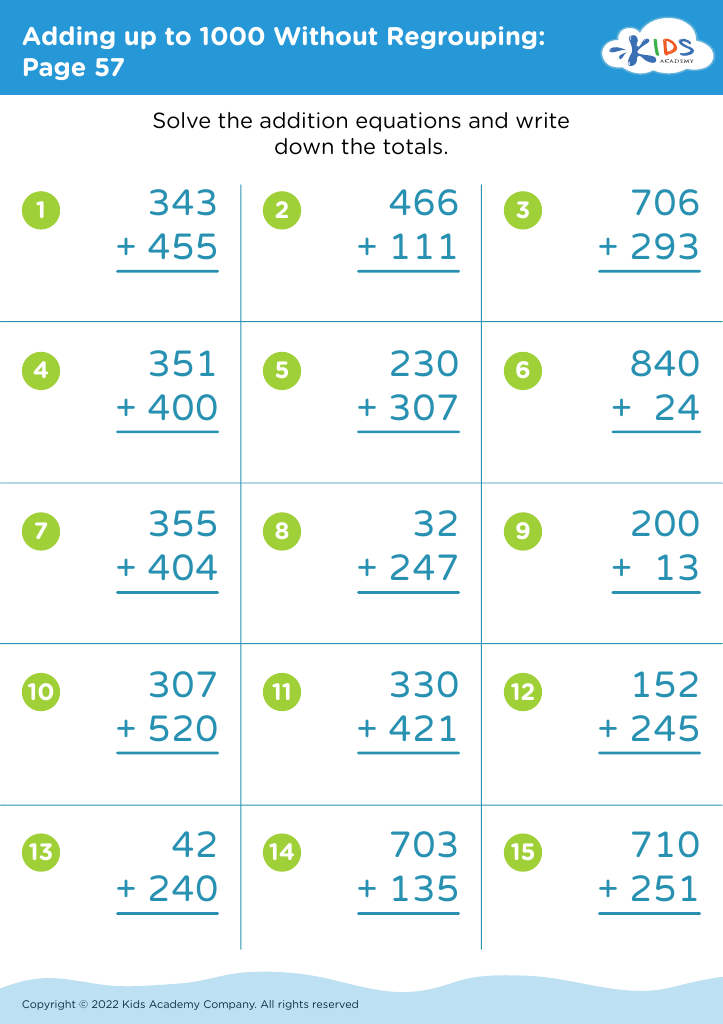
Adding up to 1000 Without Regrouping: Page 57
Worksheet
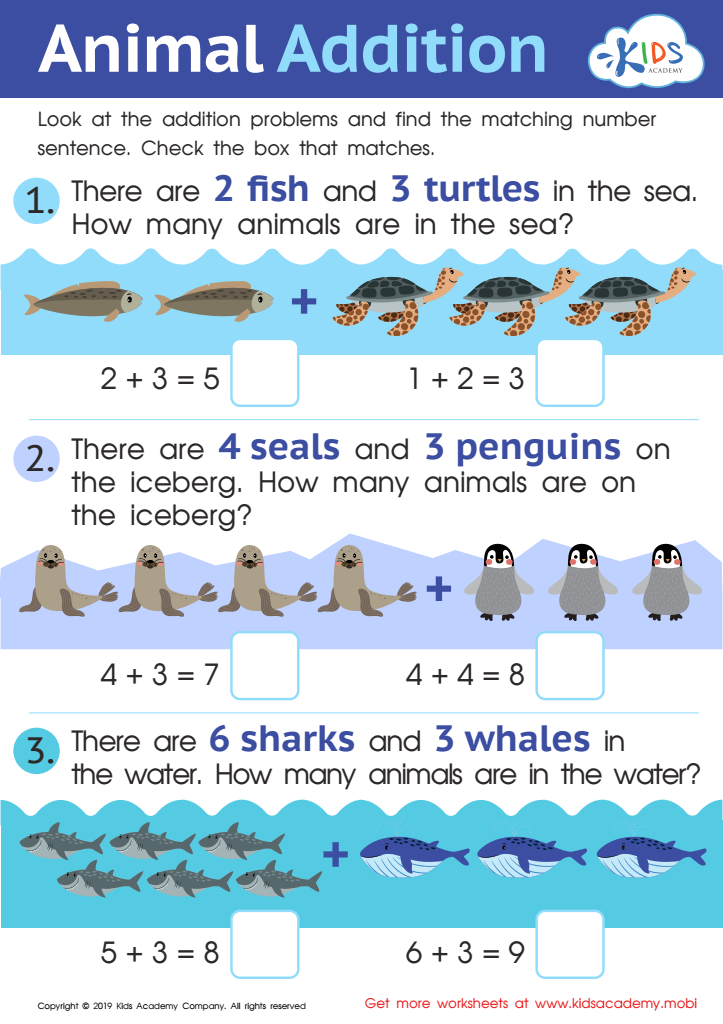
Animal Addition Worksheet

Animal Addition Worksheet

Get your kids learning addition and subtraction with this fun worksheet! Show them that solving equations can be enjoyable and help them match number sentences to the correct boxes. By doing this together, you'll create a positive learning experience that your kids won't forget.
Animal Addition Worksheet
Worksheet
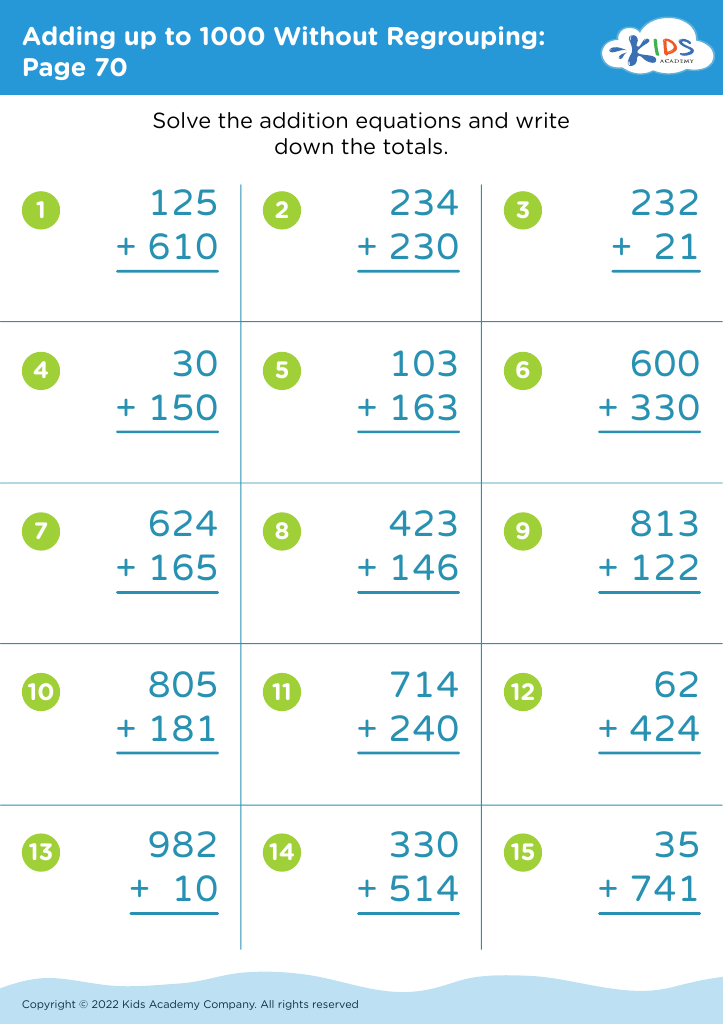
Adding up to 1000 Without Regrouping: Page 70
Worksheet


Parents and teachers should care about basic addition and subtraction for children ages 3-7 because these fundamental math skills lay the groundwork for future academic success and everyday problem-solving abilities. During these formative years, children's brains are highly receptive to learning new concepts, making it an ideal time to introduce basic arithmetic.

Learning addition and subtraction helps young children develop number sense, which is a crucial cognitive skill. Number sense involves understanding numbers, their relationships, and how they are affected by operations like adding and subtracting. This understanding goes beyond merely knowing how to count and opens the door to more complex mathematical concepts they will encounter later in their education.

Moreover, basic arithmetic fosters critical thinking and logical reasoning skills. When children practice solving addition and subtraction problems, they learn how to approach and solve problems methodically. These skills are not confined to math but are applicable across all subjects and in everyday life situations.

Additionally, early mastery of these concepts boosts children's confidence and academic self-esteem, positioning them for a positive attitude toward learning. This enthusiasm can lead to ongoing engagement in more challenging subjects. Therefore, ensuring that children grasp these essential math skills during ages 3-7 sets a strong foundation for their educational journey and life skills development.