Check out this FREE Trial Lesson on Addition & Subtraction for age 3-7!

Match Objects that Fit Together

Favorites
With answer key
Interactive
  • 3-7
  • Understanding fractions
  • Addition & Subtraction
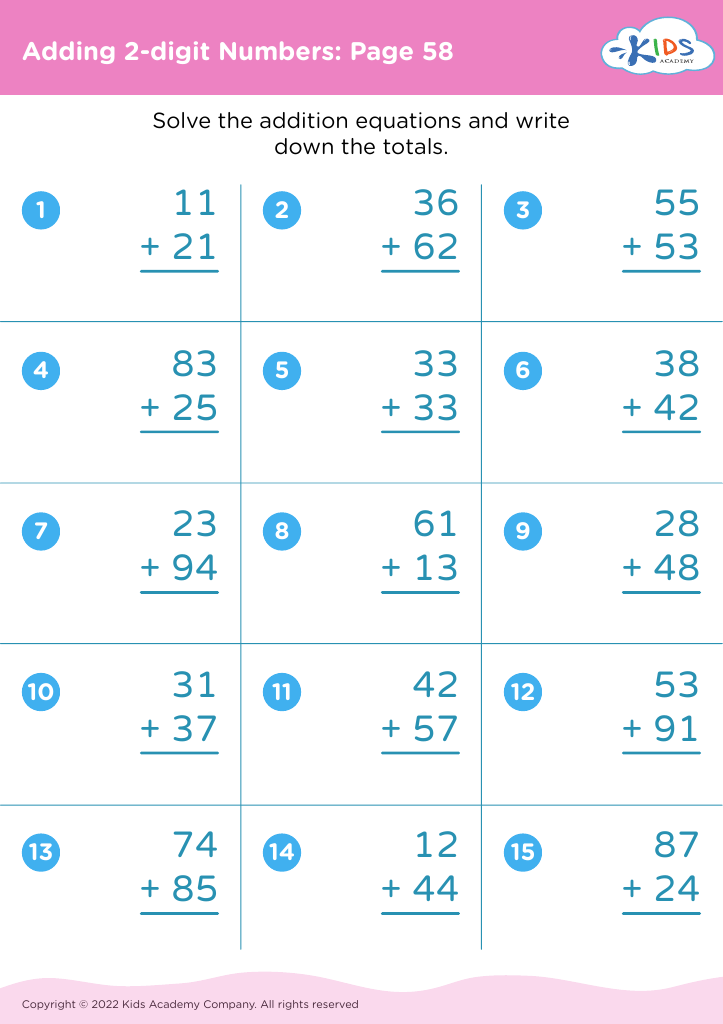
Adding 2-digit Numbers: Page 58

Adding 2-digit Numbers: Page 58

Adding 2-digit Numbers: Page 58
Worksheet
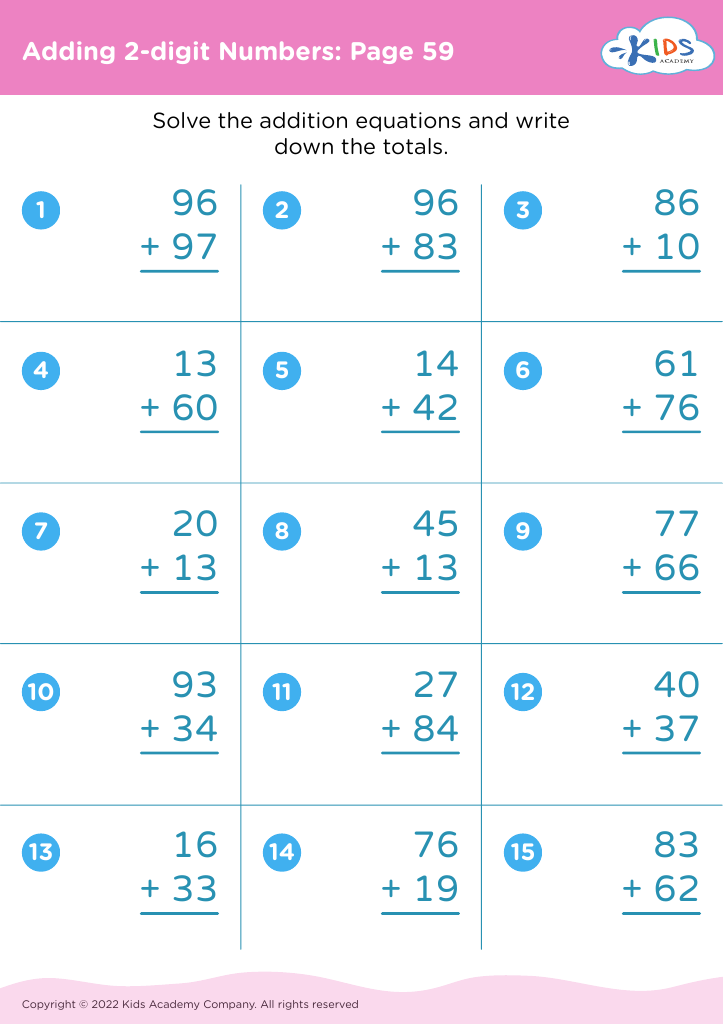
Adding 2-digit Numbers: Page 59

Adding 2-digit Numbers: Page 59

Adding 2-digit Numbers: Page 59
Worksheet
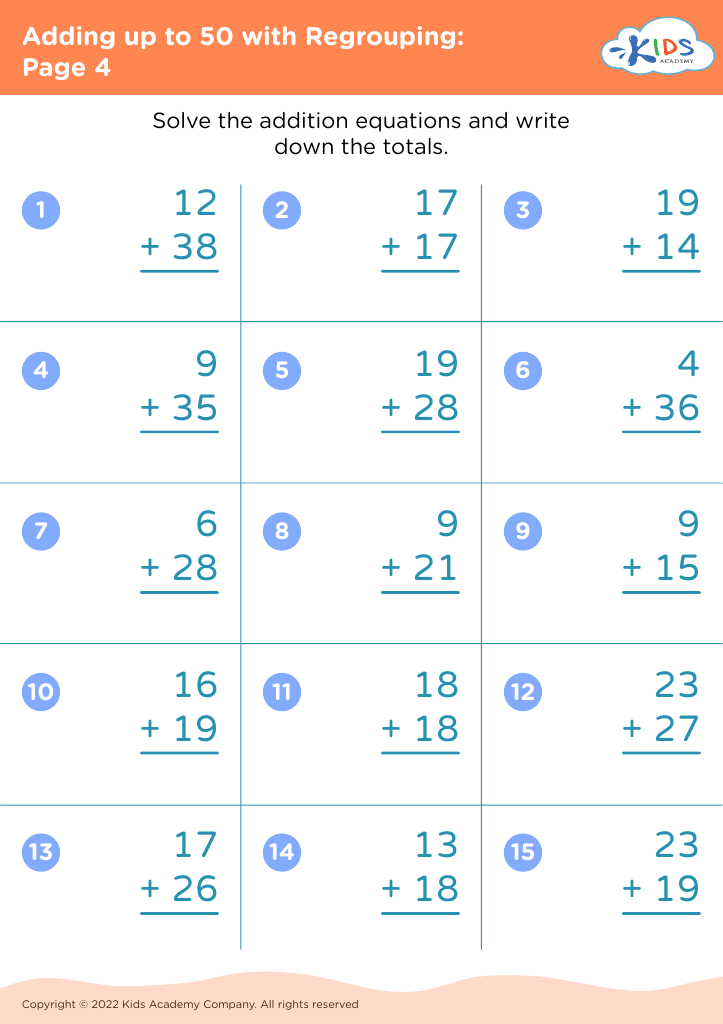
Adding up to 50 with Regrouping: Page 4
Worksheet
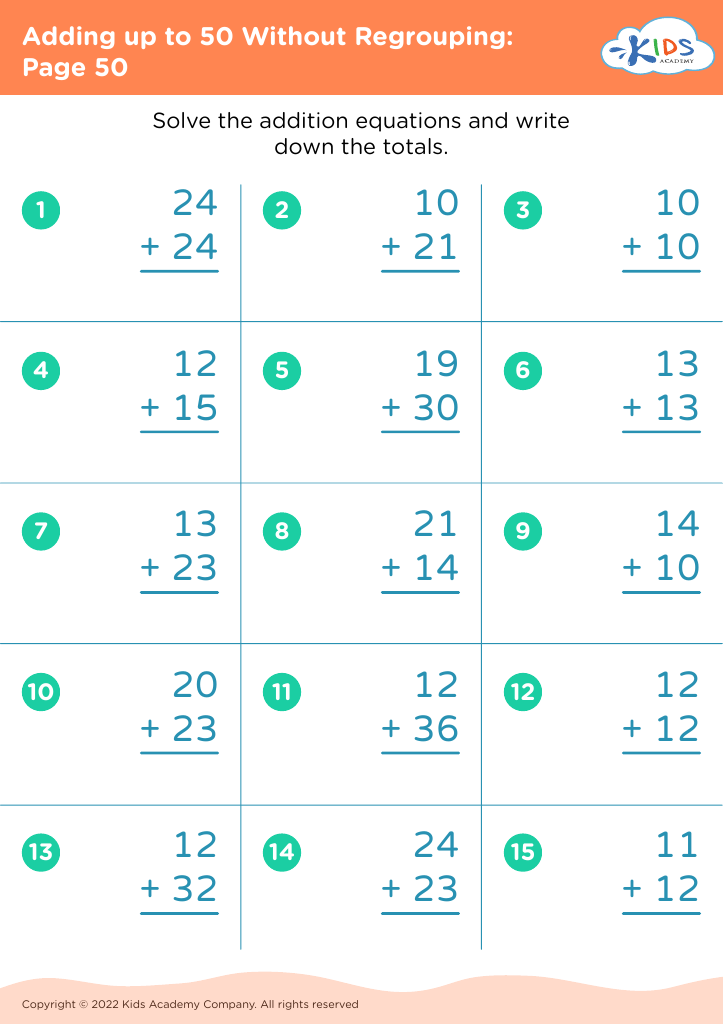
Adding up to 50 Without Regrouping: Page 50
Worksheet
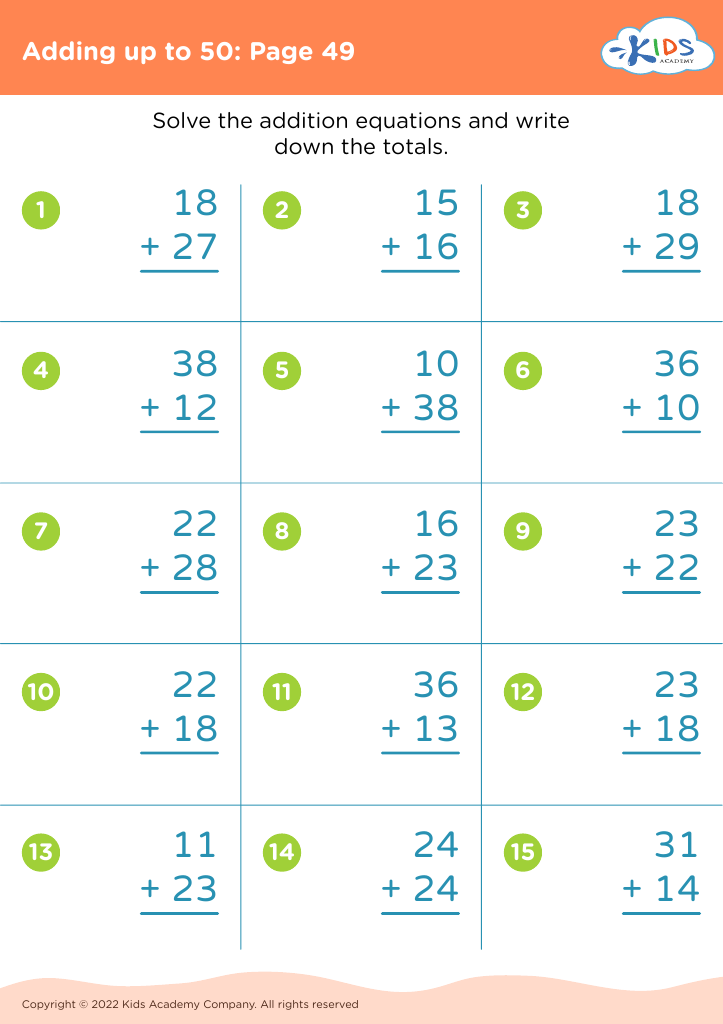
Adding up to 50: Page 49

Adding up to 50: Page 49

Adding up to 50: Page 49
Worksheet
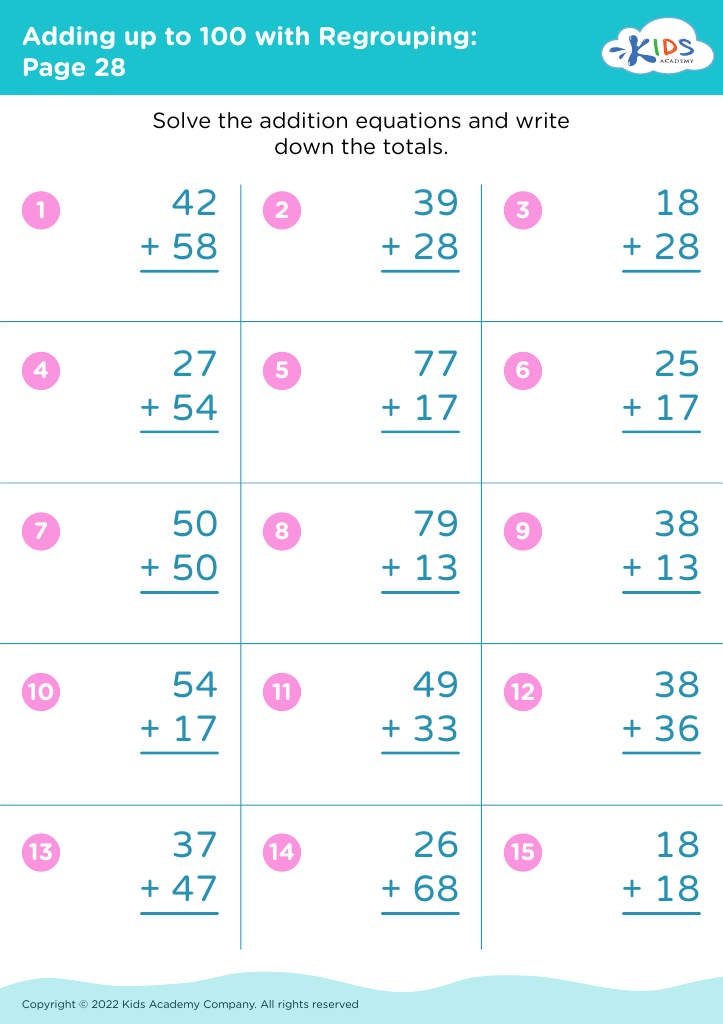
Adding up to 100 with Regrouping: Page 28
Worksheet
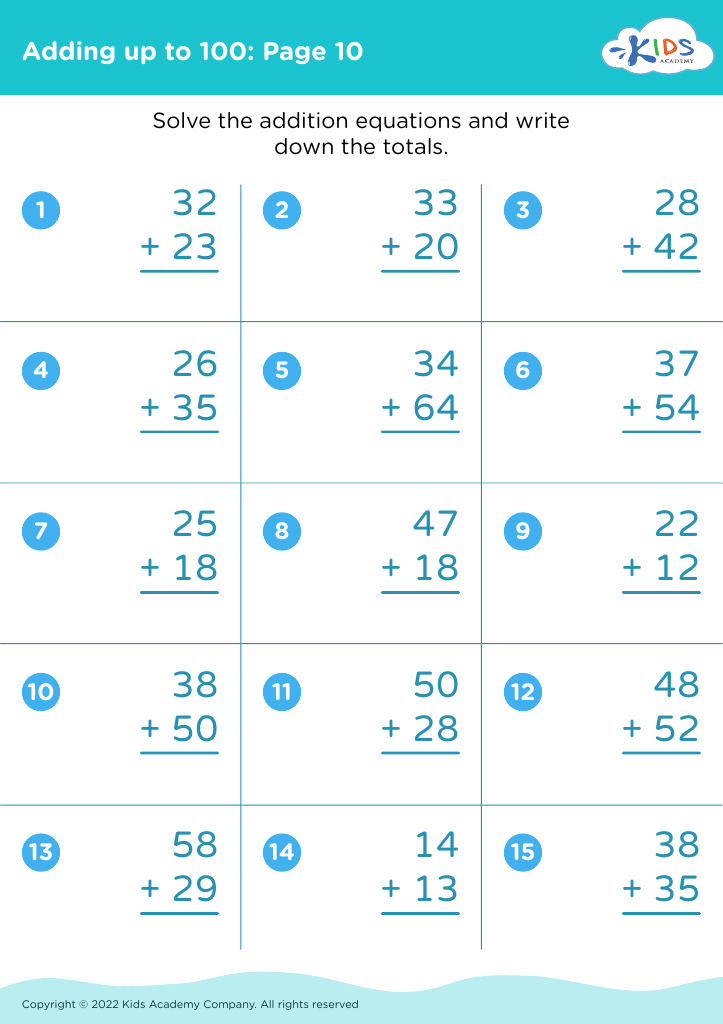
Adding up to 100: Page 10

Adding up to 100: Page 10

Adding up to 100: Page 10
Worksheet
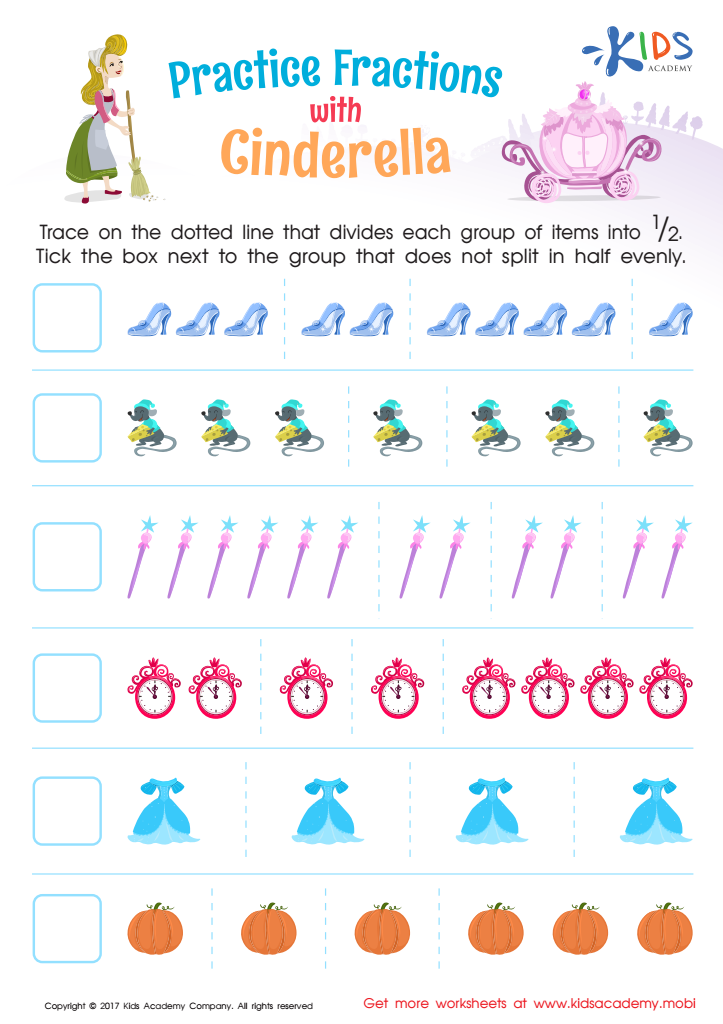
Cinderella Fraction Practice

Fractions: Cinderella Printable

Cinderella and ½ are the perfect pair to excite your child about learning fractions.
Fractions: Cinderella Printable
Worksheet
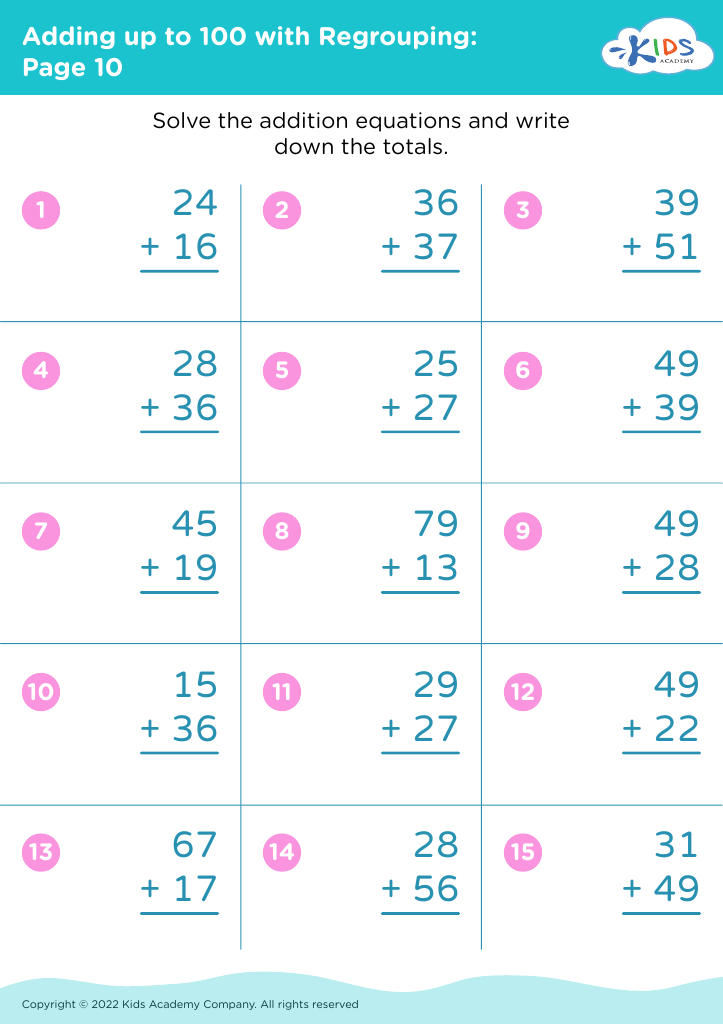
Adding up to 100 with Regrouping: Page 10
Worksheet
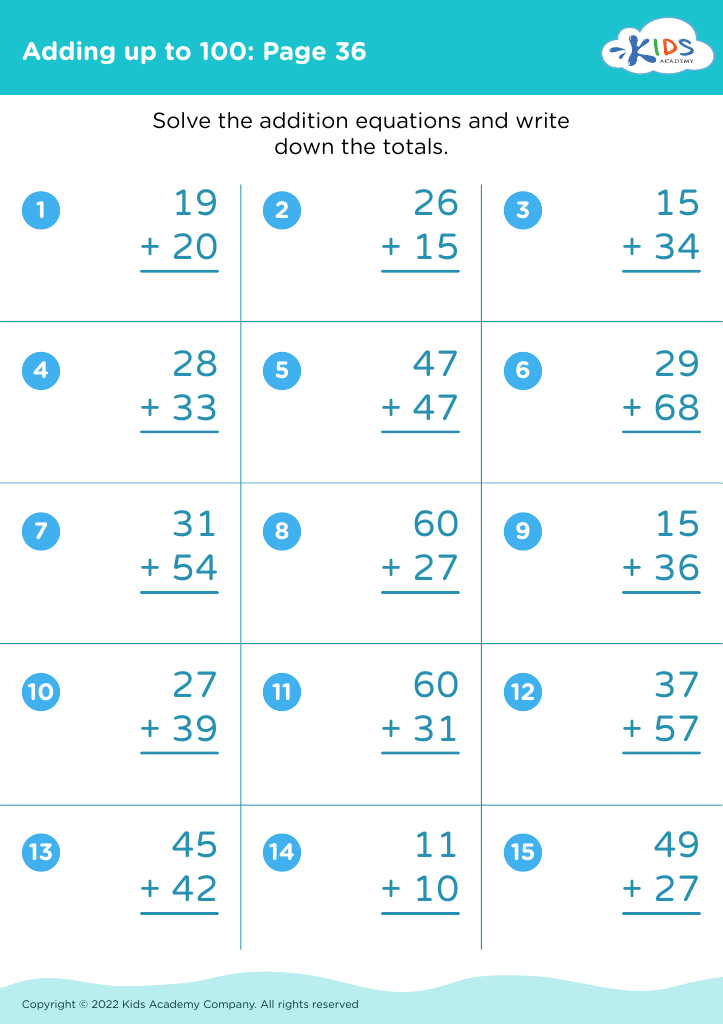
Adding up to 100: Page 36

Adding up to 100: Page 36

Adding up to 100: Page 36
Worksheet
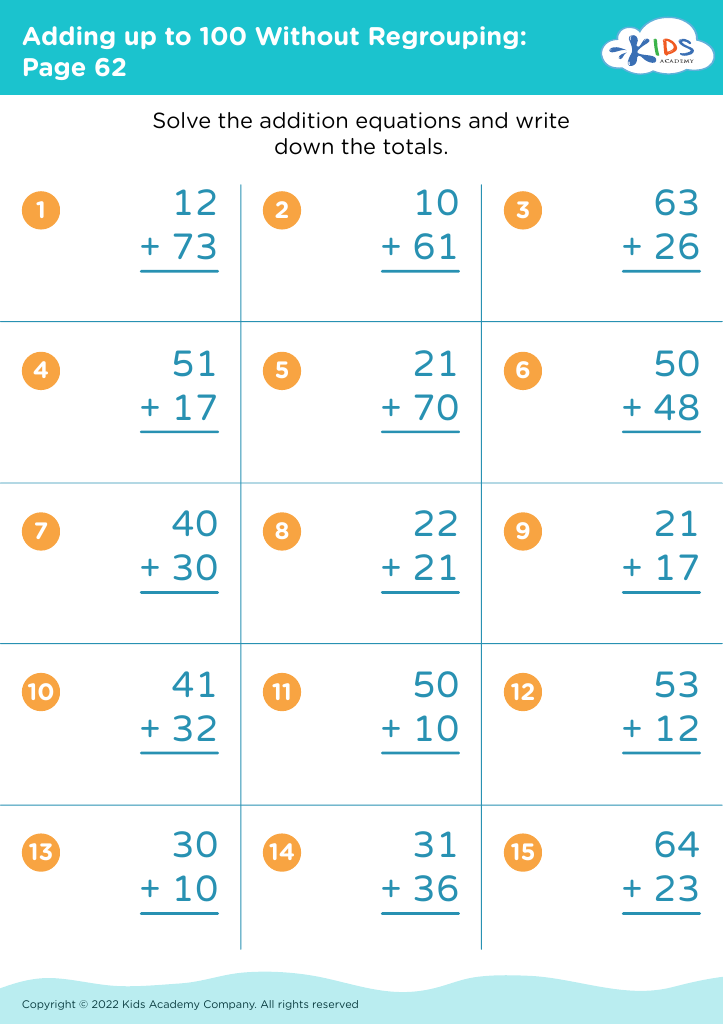
Adding up to 100 Without Regrouping: Page 62
Worksheet
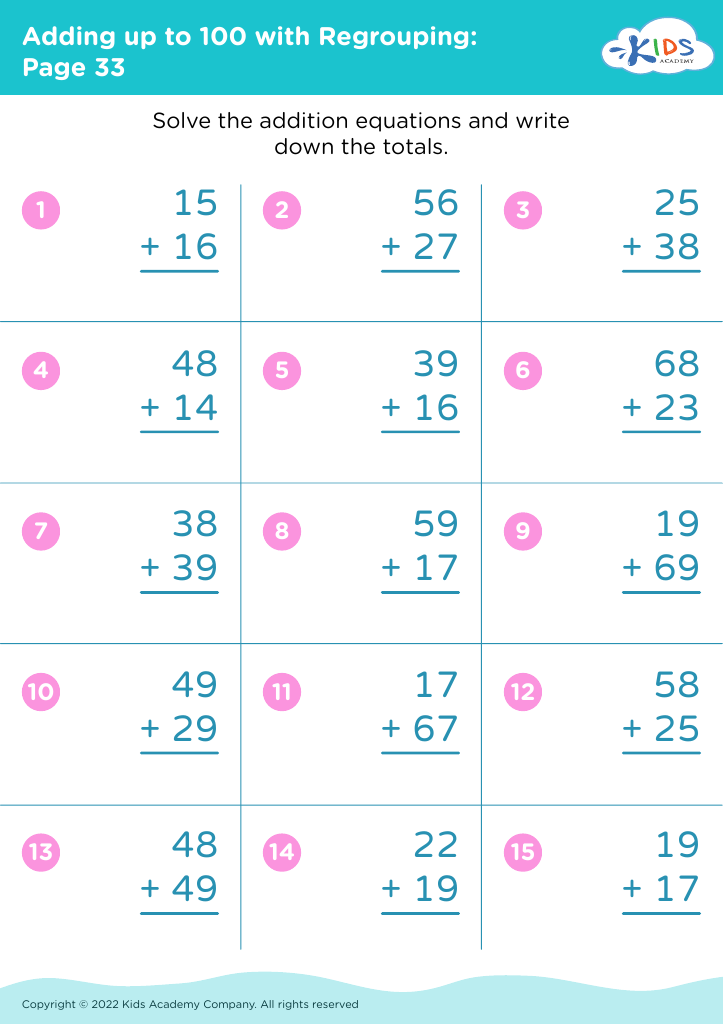
Adding up to 100 with Regrouping: Page 33
Worksheet
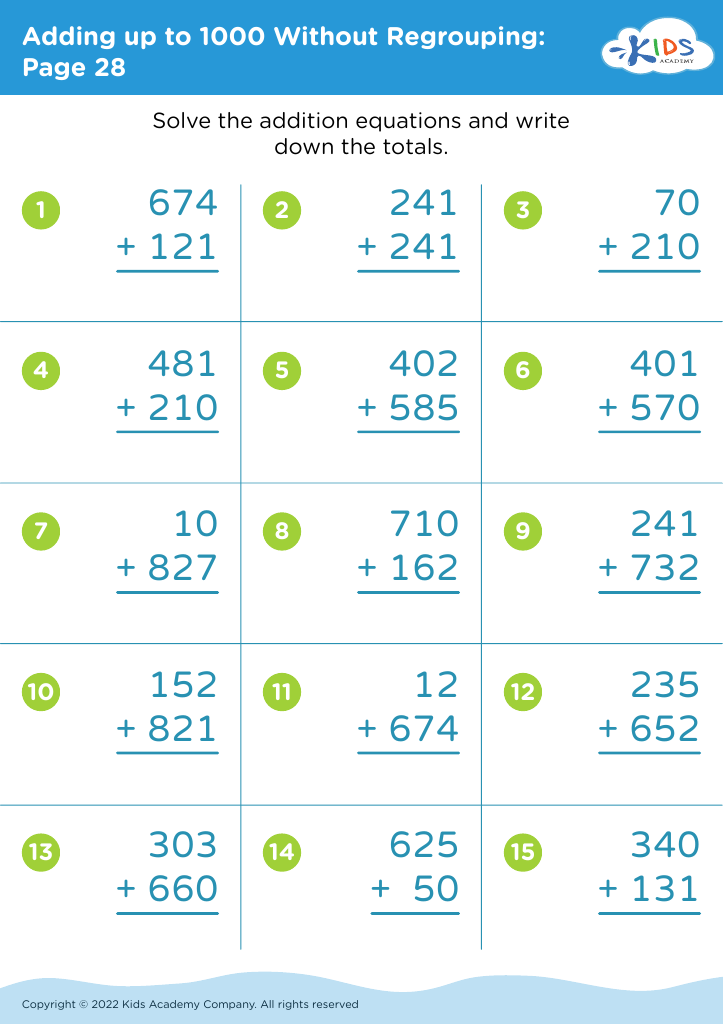
Adding up to 1000 Without Regrouping: Page 28
Worksheet
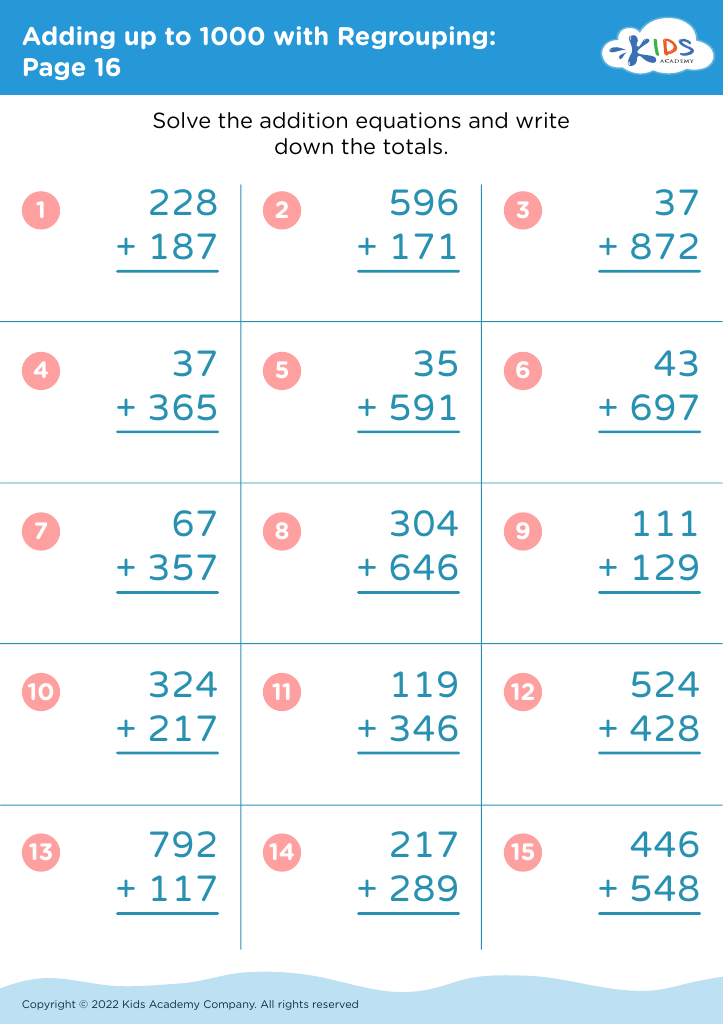
Adding up to 1000 with Regrouping: Page 16
Worksheet
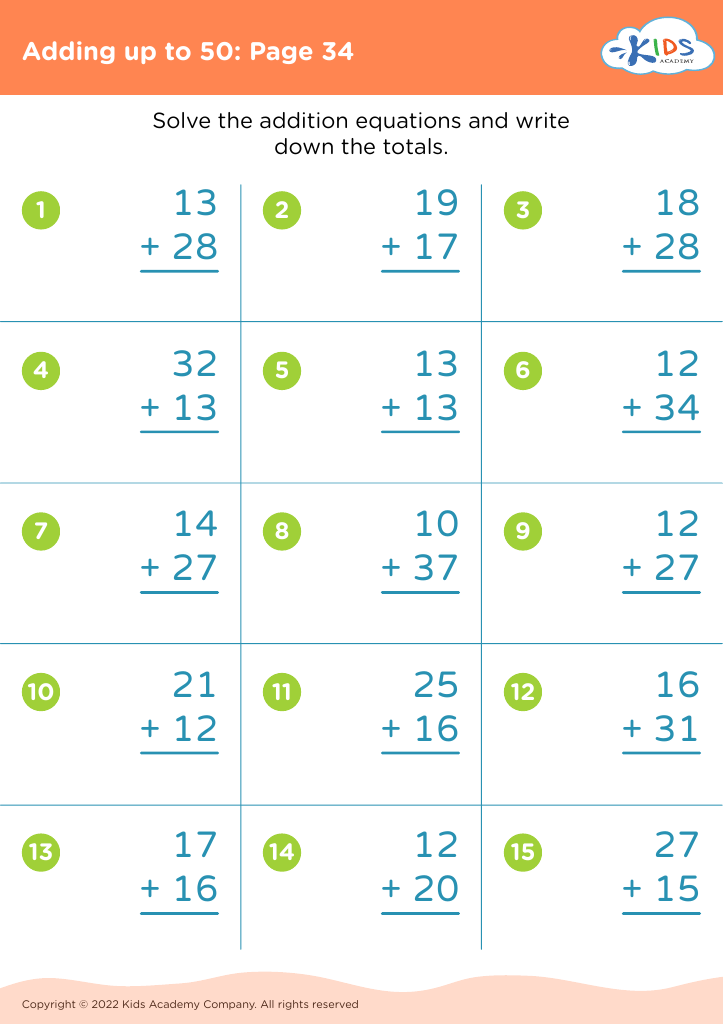
Adding up to 50: Page 34

Adding up to 50: Page 34

Adding up to 50: Page 34
Worksheet
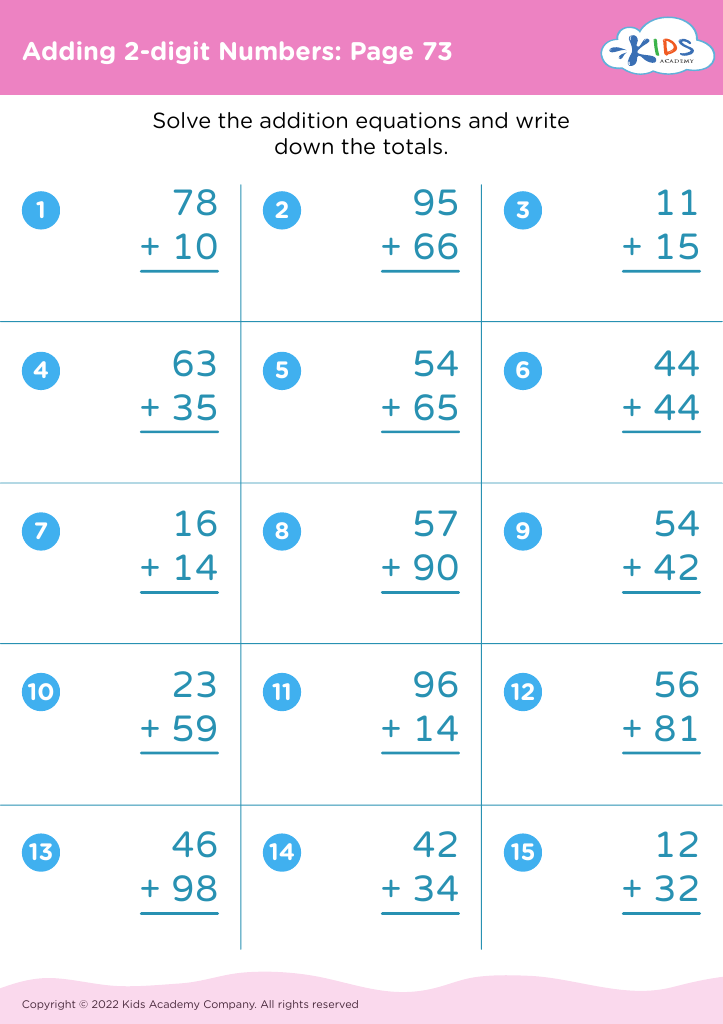
Adding 2-digit Numbers: Page 73

Adding 2-digit Numbers: Page 73

Adding 2-digit Numbers: Page 73
Worksheet
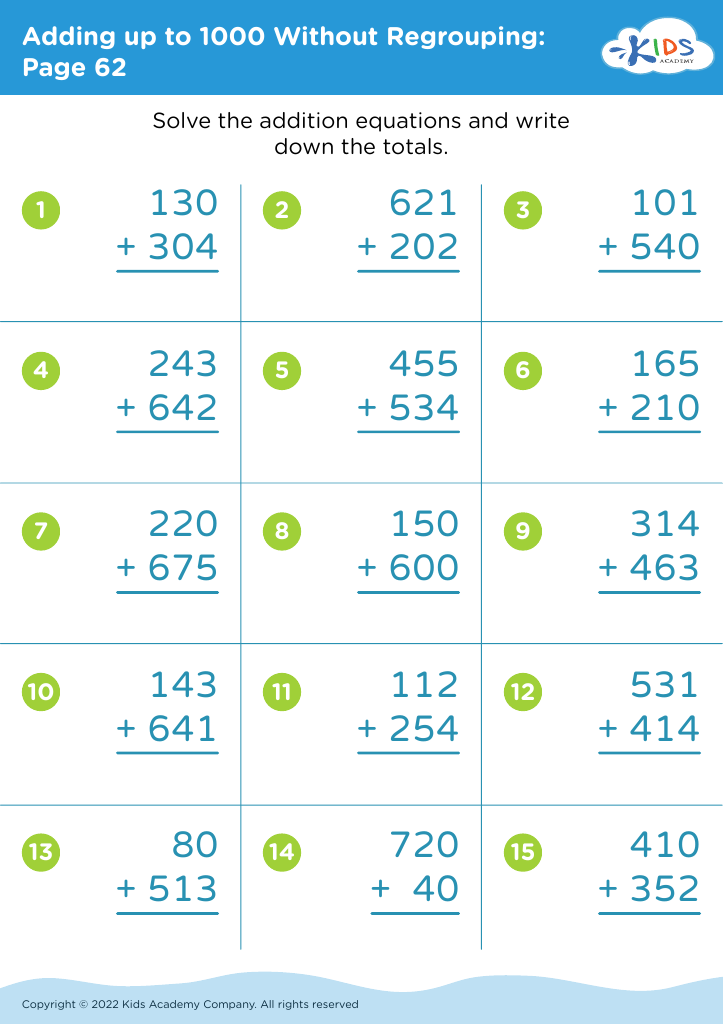
Adding up to 1000 Without Regrouping: Page 62
Worksheet
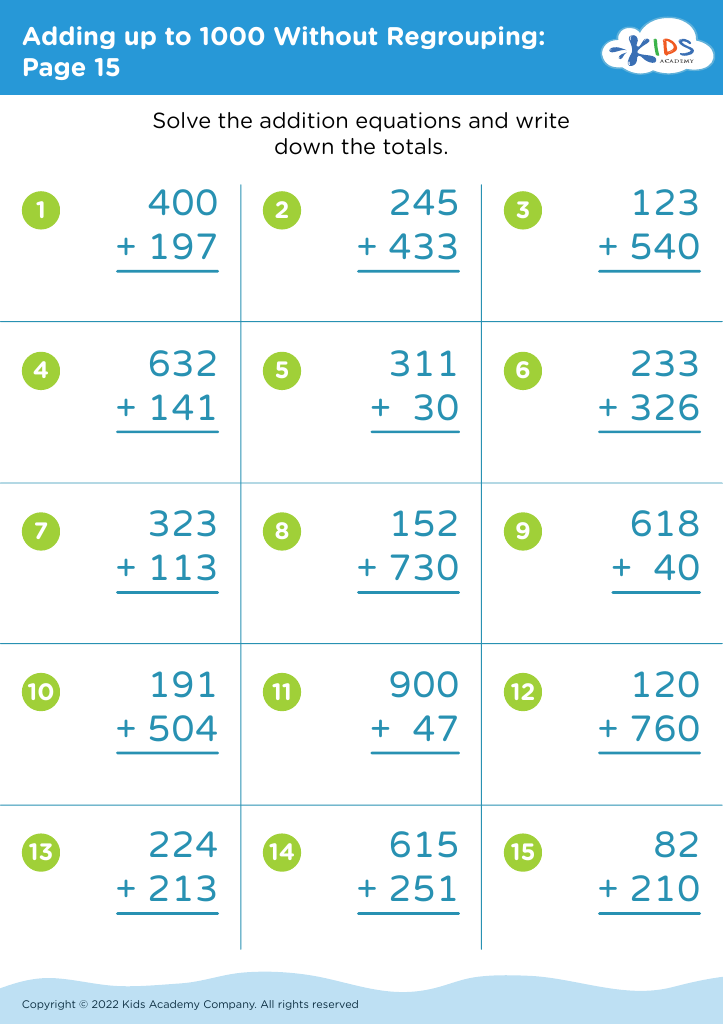
Adding up to 1000 Without Regrouping: Page 15
Worksheet
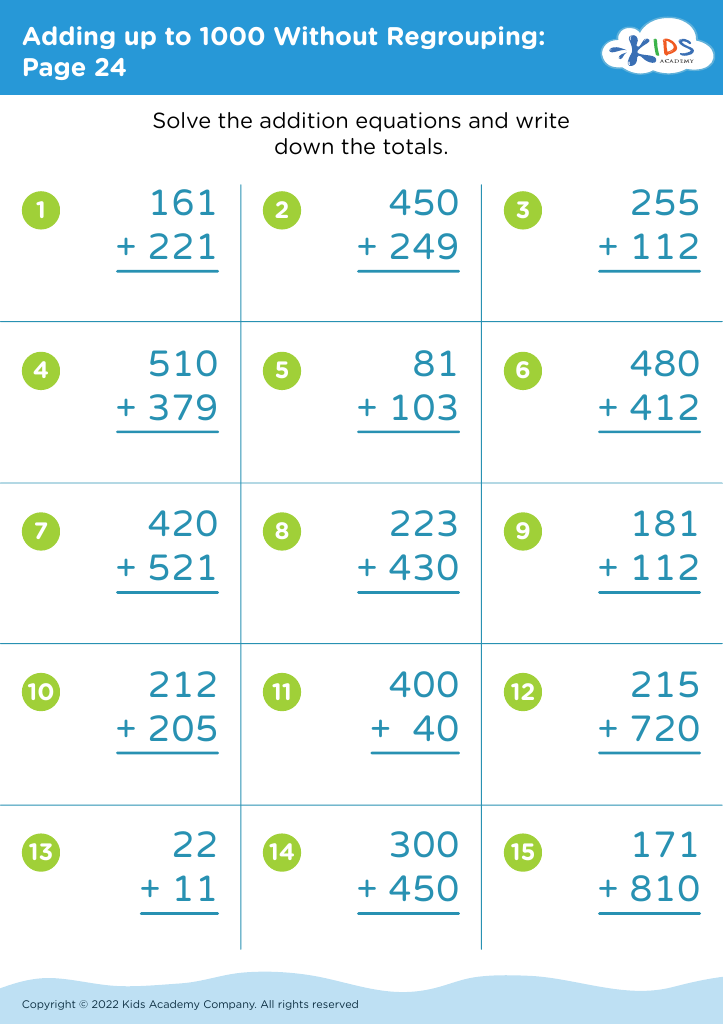
Adding up to 1000 Without Regrouping: Page 24
Worksheet


... 6 7

Understanding fractions, addition, and subtraction at an early age is crucial for young children's cognitive and academic development. For parents and teachers of children aged 3-7, focusing on these foundational math skills is essential as they constitute the building blocks for future, more complex math concepts. Fractions help children grasp the idea of divisible quantities and parts of a whole, which is foundational not just in mathematics, but also in everyday activities, such as cooking or dividing objects evenly among friends.

Addition and subtraction form the basis of numerical operations and problem-solving skills. Early mastery of these skills boosts a child’s confidence and sets the stage for more advanced arithmetic and algebra in later years. It also enhances logical thinking and the ability to perform calculations mentally, beneficial in various real-life situations.

Engaging early learners with fractions, addition, and subtraction can develop their numeracy in a playful, engaging manner that encourages a positive attitude towards math from an early age. This makes math less intimidating and more approachable, ultimately fostering long-term academic success. Moreover, involving parents in this learning process allows for a deeper connection and support system, enriching the child's educational journey.