
Improve counting skills Numbers Worksheets for Ages 3-7
5 filtered results
Difficulty Level
Grade
Age
-
From - To
Subject
Activity
Standards
Boost your child's number proficiency with our "Improve Counting Skills Numbers Worksheets for Ages 3-7"! Tailored to young learners, these engaging worksheets are designed to help children enhance their counting abilities through fun and interactive activities. Featuring colorful illustrations and diverse exercises, our worksheets cover essential math skills, ensuring a strong numerical foundation. Ideal for preschoolers and early elementary students, they improve number recognition, sequencing, and basic math operations. Perfect for parents and teachers looking to foster a love for math in young children, our worksheets make learning numbers an enjoyable adventure! Visit Kids Academy and start boosting their skills today!
Favorites
With answer key
Interactive
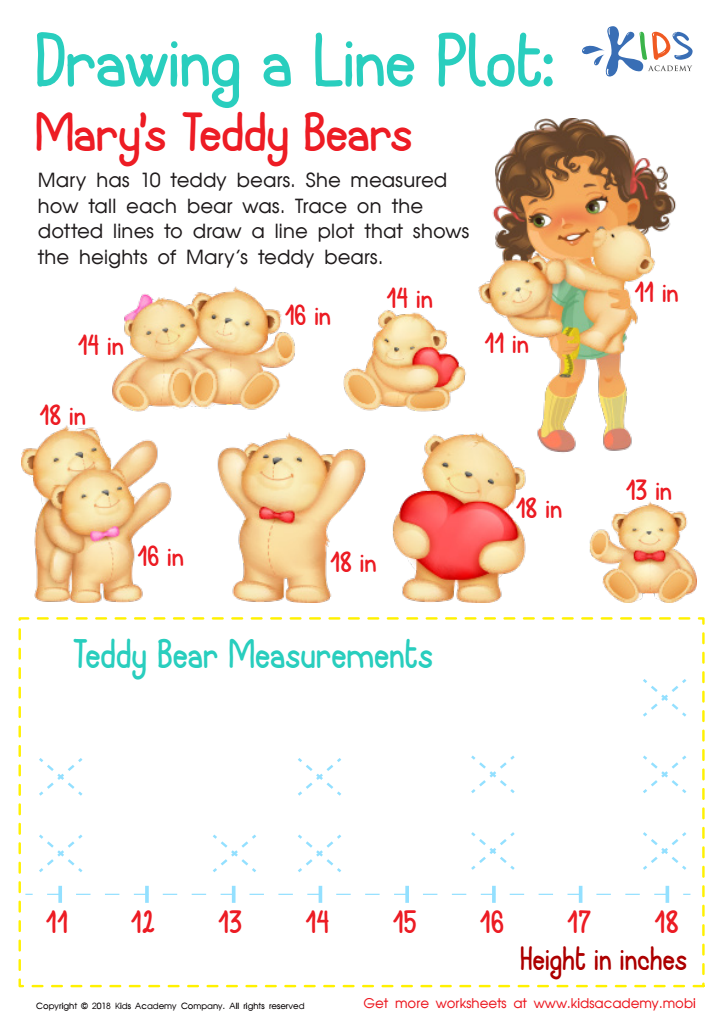
Drawing and Line Plot: Mary's Teddy Bears Worksheet
This worksheet teaches kids to draw and interpret line plots. Mary has 10 teddy bears and has measured their heights. Ask your child to draw a line plot showing the heights of Mary's teddy bears. It's a great way for little ones to learn how to organize information quickly and correctly.
 Assign to My Students
Drawing and Line Plot: Mary's Teddy Bears Worksheet
Worksheet
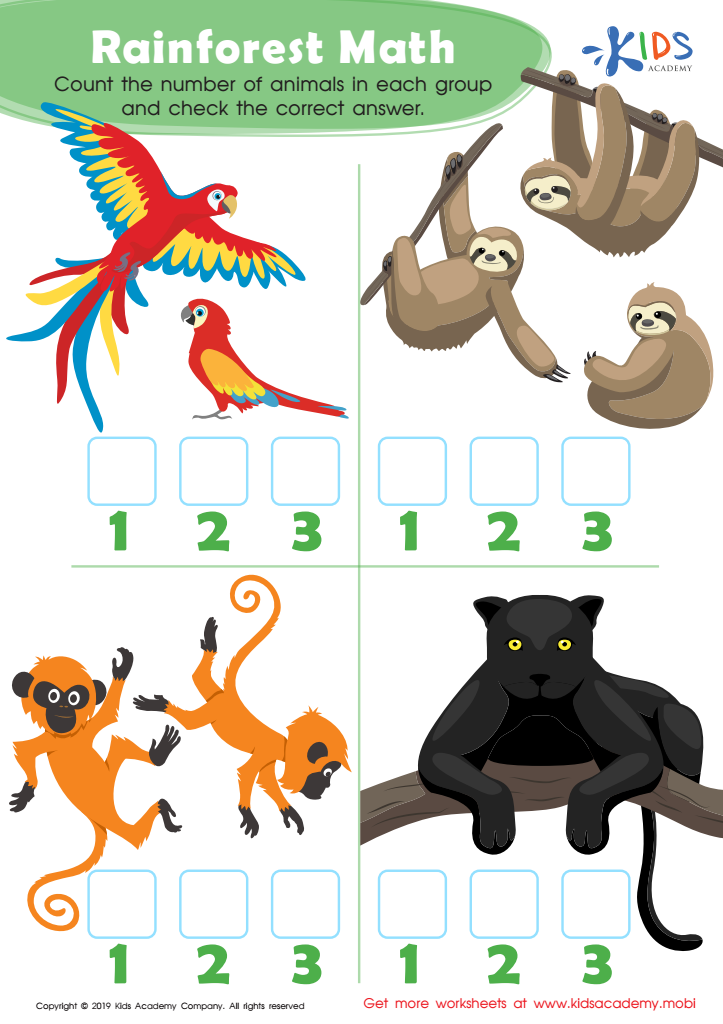
Rainforest Math Worksheet
Kids love learning about rainforest animals! This worksheet helps them with counting and number sense. It features recognizable rainforest animals and asks children to choose the correct number from the answer choices. It's a fun way for children to build their skills - without even knowing it!
Rainforest Math Worksheet
Worksheet
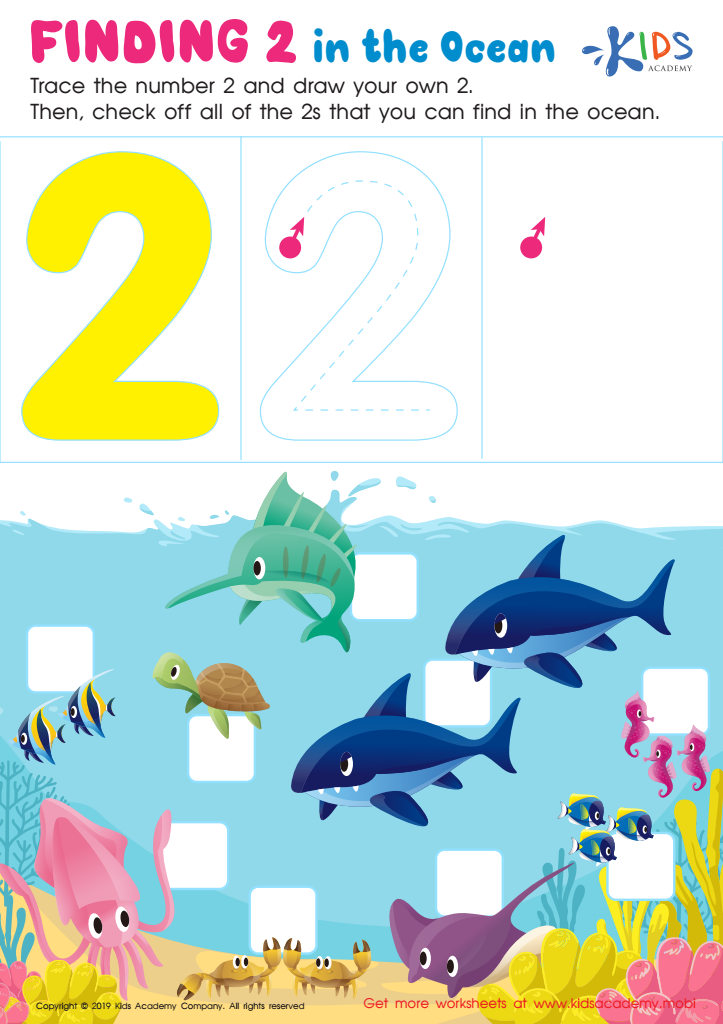
Finding 2: In the Ocean Worksheet
Kids start their math journey with basic numbers. Finger counting, number representation with pictures and this worksheet help build number sense. Kids trace lines and dots to write the number two and identify groups of two sea creatures for easy success and to feel proud of their math skills.
Finding 2: In the Ocean Worksheet
Worksheet
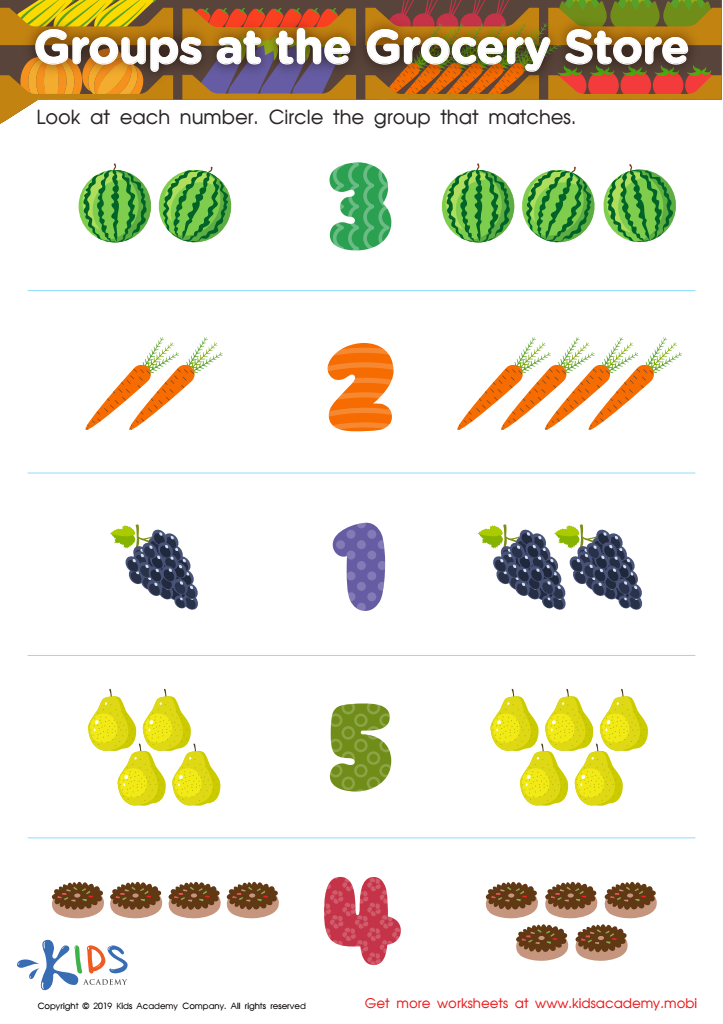
Groups at the Grocery Store Worksheet
Help your kids learn about counting with this worksheet! Look at each group of objects and circle the one that matches. It's a fun way to support what they're learning at school and give them a boost in counting.
Groups at the Grocery Store Worksheet
Worksheet
Join Kids Academy for Free
Who is primarily going to use this learning content?








Improving counting skills for children aged 3-7 is crucial for their overall development and future academic success. At this early stage, the brain is highly adaptable and capable of absorbing new information swiftly. Understanding numbers and basic counting sets the foundation for more complex mathematical concepts they will encounter later in school.
Counting helps children recognize patterns, understand order, and develop a sense of quantity. For instance, knowing there are five apples on a table vs. seven introduces the concepts of more or less, which is the basis for comparison and arithmetic. Moreover, incorporating counting in daily activities nurtures problem-solving skills and logical thinking.
Parents and teachers should care about improving counting skills because these are fundamental competencies that influence other learning areas, such as reading and writing. Engaging children with numbers through playful activities, like counting toys or steps, makes learning enjoyable and natural.
Counting skills are also linked with cognitive development and the ability to follow sequences and instructions, which are crucial for daily tasks and school performance. Early proficiency in numbers can boost confidence, foster a positive attitude towards learning, and lay the groundwork for future academic achievements, benefitting children's educational trajectory profoundly.








