Understanding measurements Numbers Worksheets for Ages 3-7
3 filtered results
-
From - To
Welcome to our "Understanding Measurements Numbers Worksheets" page designed specifically for children aged 3-7. Here, young learners will explore the fascinating world of measurements through engaging and interactive worksheets. These resources help kids develop essential skills in understanding height, weight, volume, and distance, fostering a solid foundation for mathematical concepts. With fun activities tailored to capture their interest, children will learn to compare objects, use standard units, and apply measurement skills in real-life situations. Perfect for parents and educators, these worksheets aim to make learning about measurements enjoyable and effective, setting your child on a path to mathematical confidence and proficiency.
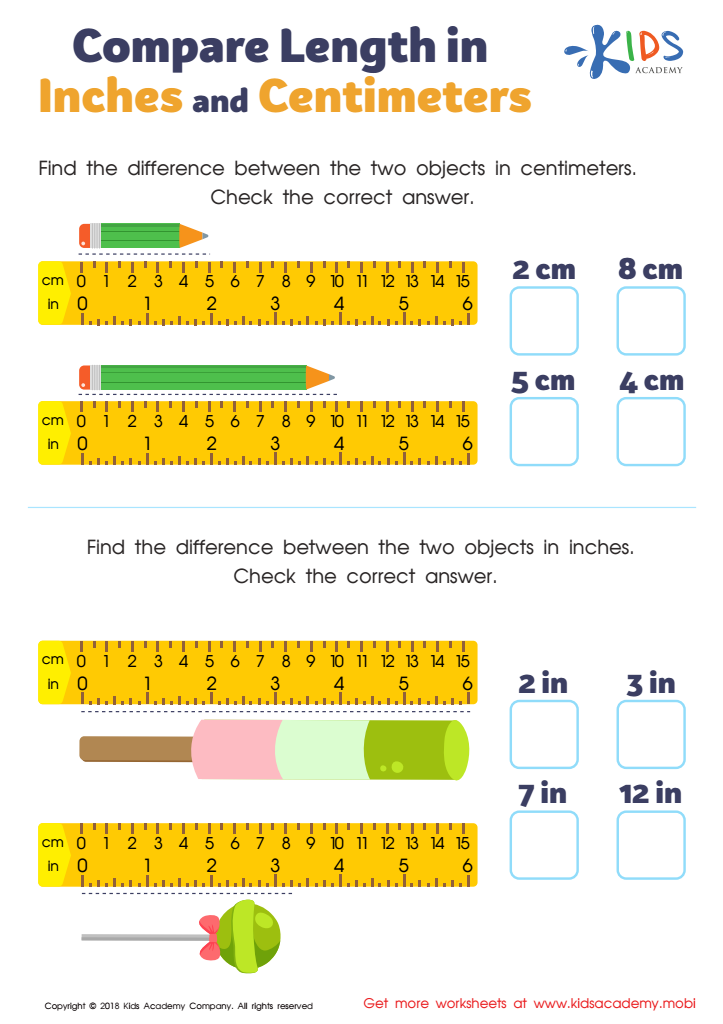
Compare Length in Inches and Centimeters Worksheet
 Assign to My Students
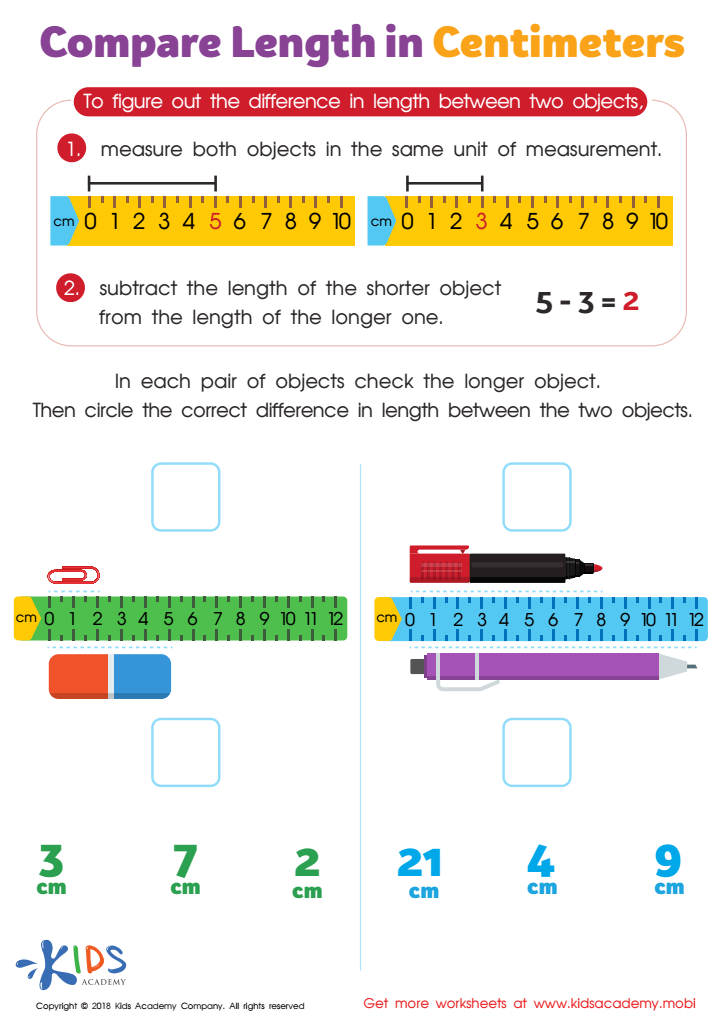
Compare Length in Centimeters Worksheet
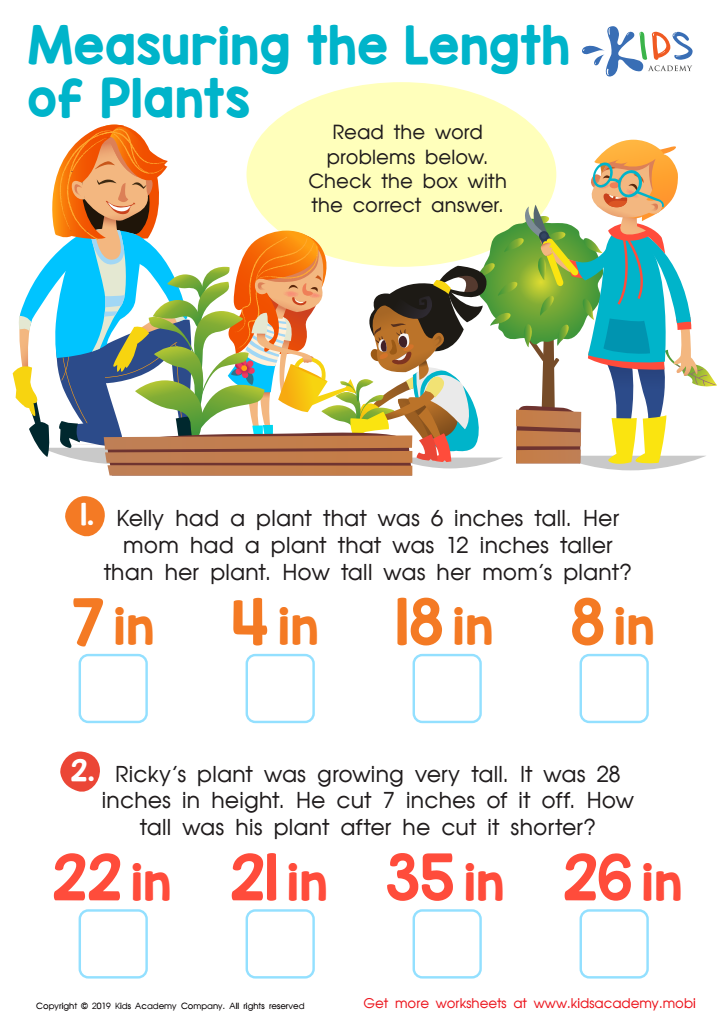
Measuring the Length of Plants Worksheet







%20(1).jpg)
Understanding measurements is crucial for children aged 3-7, as it lays the foundation for vital mathematical concepts they will encounter throughout their education and everyday life. During these early years, children develop essential cognitive skills, such as spatial awareness, comparison, and estimation, through hands-on interactions with size, shape, length, weight, and volume.
Parents and teachers should care about teaching measurements because it not only improves mathematical literacy but also enhances critical thinking. Engaging children in measurement activities can promote problem-solving skills and logical reasoning, essential traits for academic success. Furthermore, integrating measurements into daily routines, like cooking or building, creates meaningful learning experiences, making mathematics relatable and fun.
Additionally, early mastery of measurement concepts fosters confidence in children as they navigate their world. It can spark curiosity and encourage exploration, driving a lifelong interest in STEM (Science, Technology, Engineering, and Mathematics) fields.
In supporting measurement understanding, educators and parents equip children with practical skills that will serve them well into adulthood, allowing them to make informed decisions, solve real-world problems, and approach tasks with accuracy and precision. By prioritizing measurement education, we nurture well-rounded, capable learners ready to tackle future challenges.








