
Fruit identification Math Worksheets for Ages 3-7
4 filtered results
Difficulty Level
Grade
Age
-
From - To
Subject
Activity
Standards
Discover our Fruit Identification Math Worksheets designed for children ages 3-7! These engaging, colorful worksheets effortlessly blend math skills with fun fruit facts. Your little learners will explore counting, sorting, and comparing various fruits while enhancing their critical thinking abilities. Perfect for classroom activities or at-home learning, these worksheets promote early math competencies through interactive exercises. Watch as your child develops a love for learning while improving their identification skills with vibrant images of apples, bananas, strawberries, and more. Make math enjoyable with our unique resources, encouraging curiosity and the joy of discovery through the delightful world of fruits!
Favorites
With answer key
Interactive
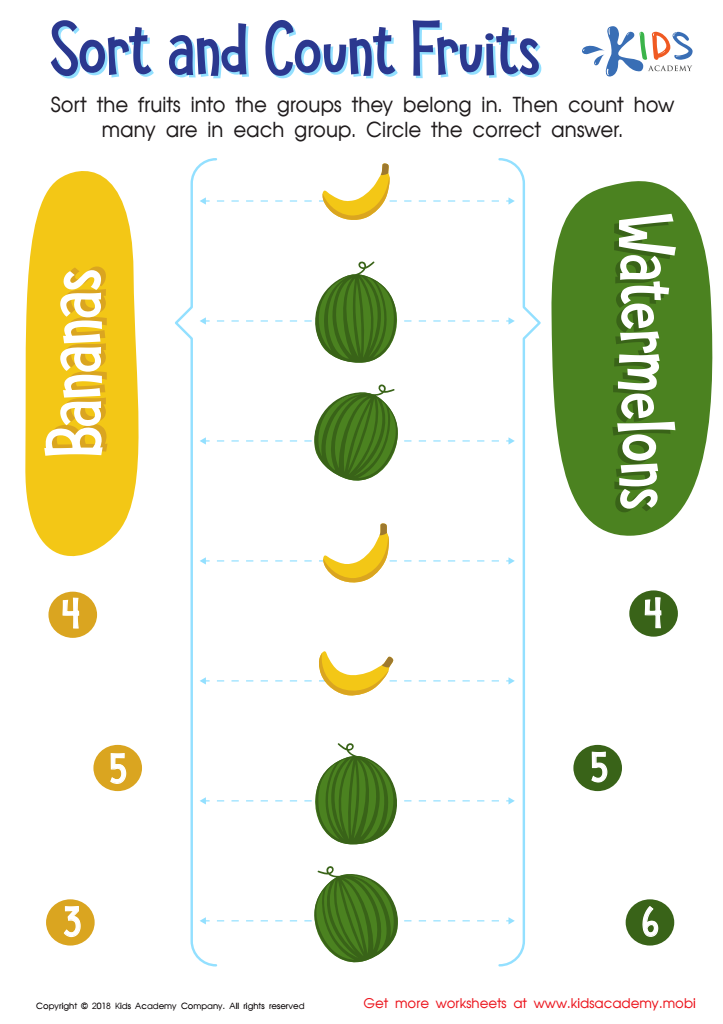
Sort and Count Fruits Worksheet
Allow your children to hone their critical thinking and number reasoning skills with this free worksheet. They'll sort, count, and trace fruits while learning basic number sense. A fun, delicious learning experience with familiar pictures they'll love.
 Assign to My Students
Sort and Count Fruits Worksheet
Worksheet
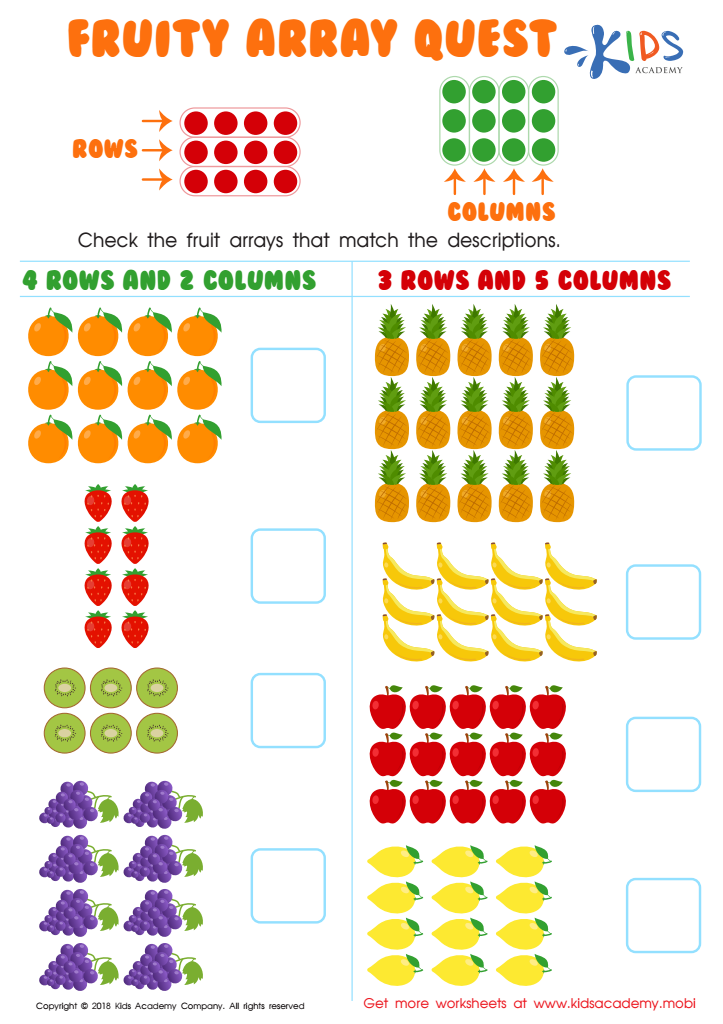
Fruity Array Quest Worksheet
Explain rows (horizontal) and columns (vertical) to your child before starting the worksheet. Show them the picture and the arrows indicating direction. Your child should be able to answer the questions easily after that. Help them match the fruit arrays that match the descriptions.
Fruity Array Quest Worksheet
Worksheet
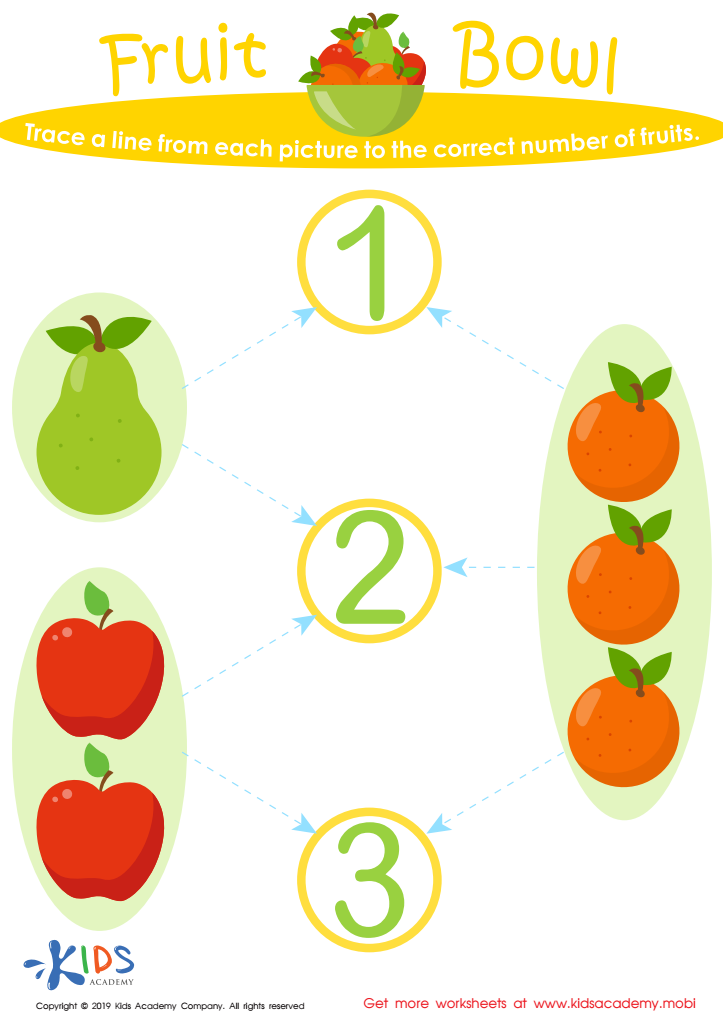
Fruit Bowl Worksheet
Kids love counting fruit! This fun math worksheet lets them count the number of fruit in each group and use the traceable lines to connect the correct number. It's a great way to learn one-to-one number representation, plus it's yummy and delicious!
Fruit Bowl Worksheet
Worksheet
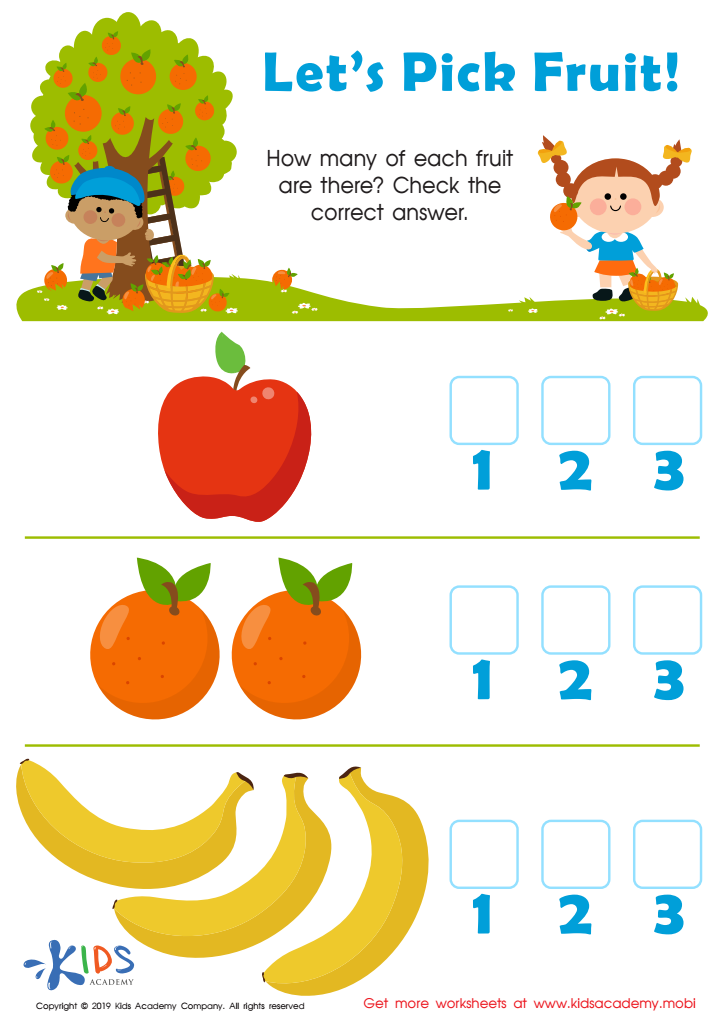
Let's Pick Fruit Worksheet
Picking fruit is fun - and counting it is even better! This free worksheet is perfect for young math learners. They'll use picture representation to count the fruit in each problem and then select the correct answer from the multiple-choice boxes. It's a great way to teach number sense in an easy, fun way!
Let's Pick Fruit Worksheet
Worksheet
Join Kids Academy for Free
Who is primarily going to use this learning content?







Fruit identification math is an engaging and beneficial activity for children ages 3-7, combining learning with play to foster essential cognitive skills. Parents and teachers should care about this approach for several reasons.
First, it promotes early numeracy skills. By counting fruits, sorting them by size or color, and recognizing patterns, children develop basic math concepts in a natural and enjoyable way. These activities lay a strong foundation for future mathematical understanding.
Second, fruit identification adds an element of science education. Children learn about the variety of fruits and their health benefits, fostering a sense of curiosity and encouraging healthy eating habits from an early age.
Moreover, the activity enhances vocabulary acquisition, as kids expand their language by learning the names and characteristics of different fruits, enhancing verbal skills in both a math and science context.
Finally, fruit identification math encourages hands-on learning, motivating children through sensory experiences. Working with real or plastic fruits allows children to actively explore their environment, keeping their interest piqued while developing fine motor skills.
Incorporating fruit identification math into early education cultivates critical thinking, promotes health awareness, and supports holistic child development. Parents and teachers can significantly enhance learning and growth during this crucial early age.








