Discover the perfect way to enhance your child's critical thinking and math skills with our Problem-Solving Practice Math Worksheets for Ages 3-7!Specially designed to cater to young learners, these engaging worksheets cover a range of foundational topics, including counting, number patterns, and basic arithmetic. Developed by education experts, each worksheet encourages logical reasoning and offers fun, interactive challenges that foster confidence in problem-solving. Ideal for both classroom and home learning, these resources are aligned with early childhood education standards, ensuring your child builds a solid math foundation while enjoying the journey of learning. Explore them today!
Check out this FREE Trial Lesson on Math for age 3-7!

Relate Place Value (base 10 block) addition to standard algorithm addition

Favorites
With answer key
Interactive
  • 3-7
  • Problem-solving practice
  • Math
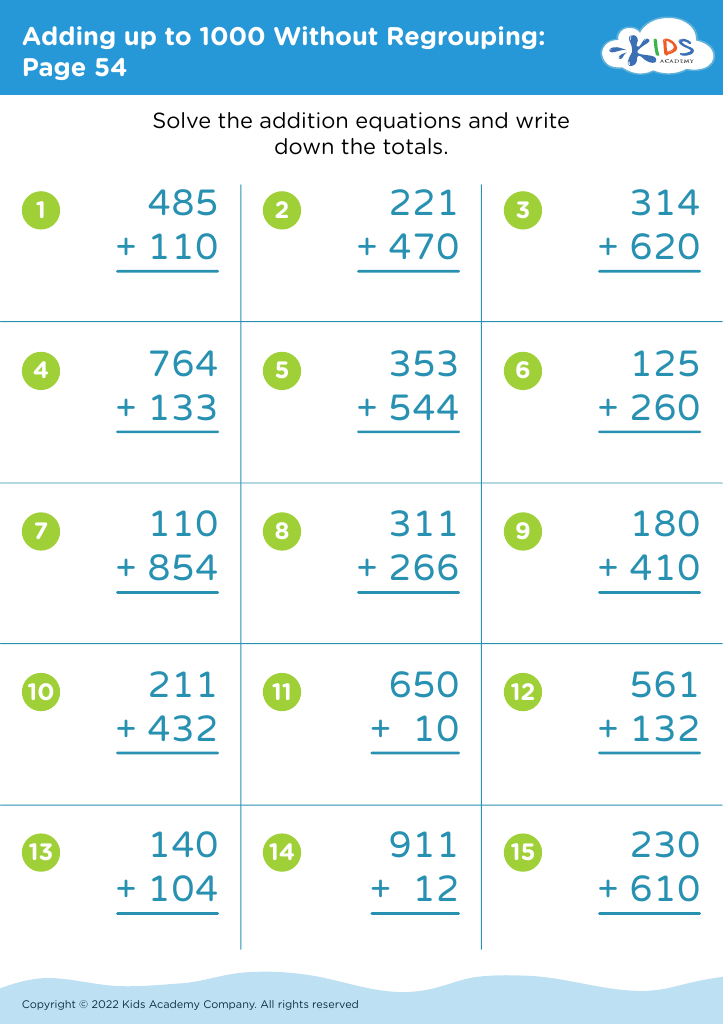
Adding up to 1000 Without Regrouping: Page 54
Worksheet
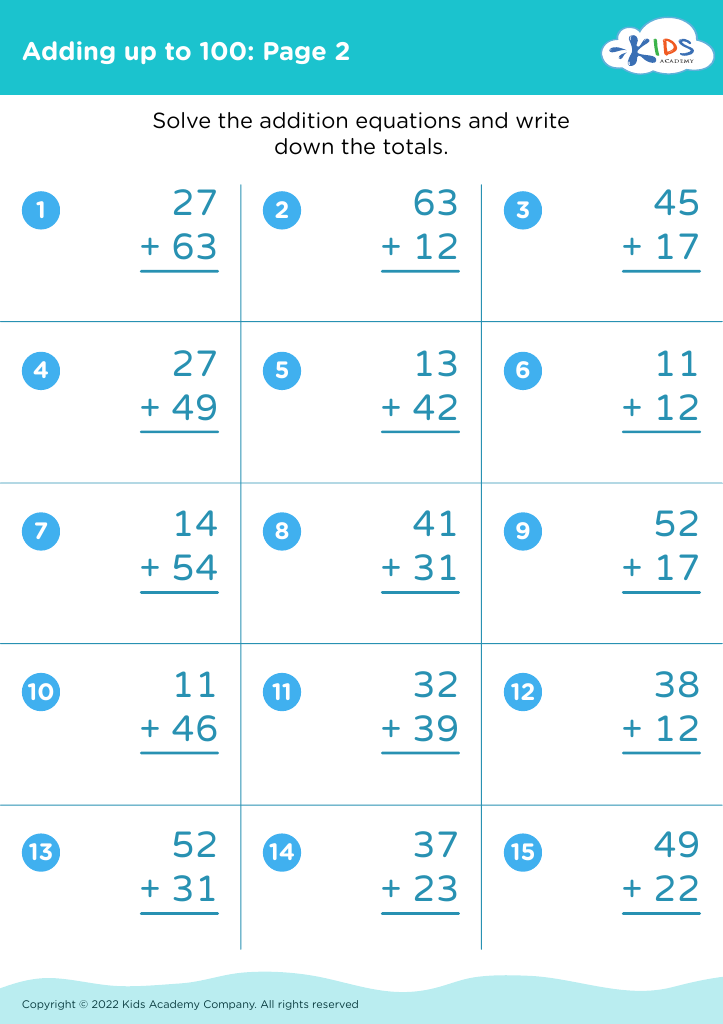
Adding up to 100: Page 2

Adding up to 100: Page 2

Adding up to 100: Page 2
Worksheet
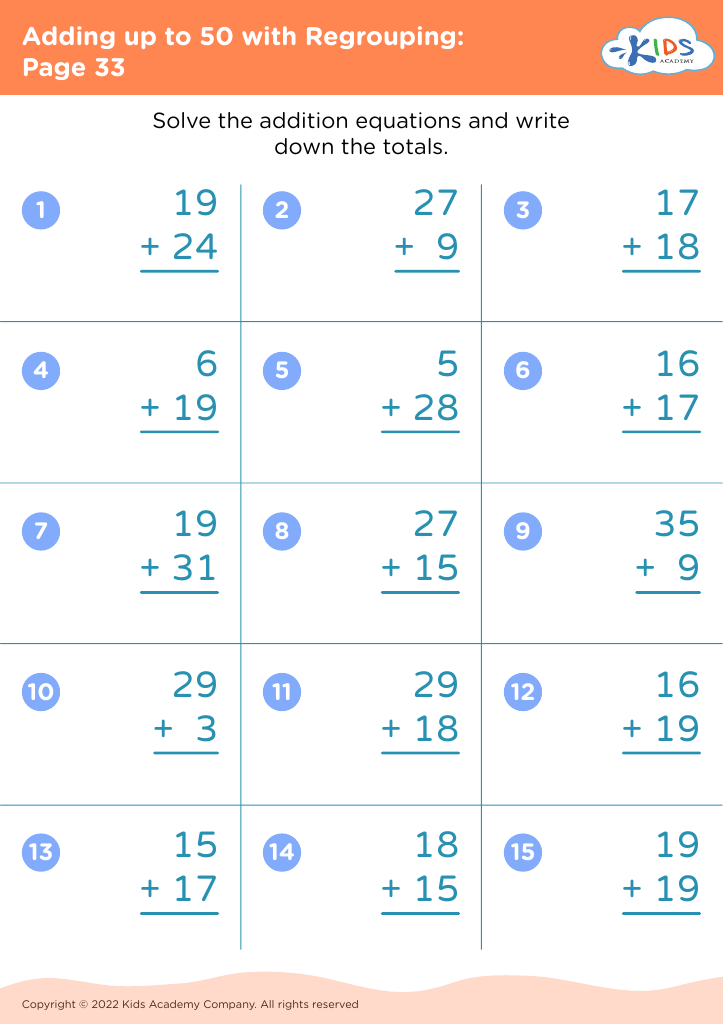
Adding up to 50 with Regrouping: Page 33
Worksheet
Merry Bus Equations Worksheet

Merry Bus Equations Worksheet

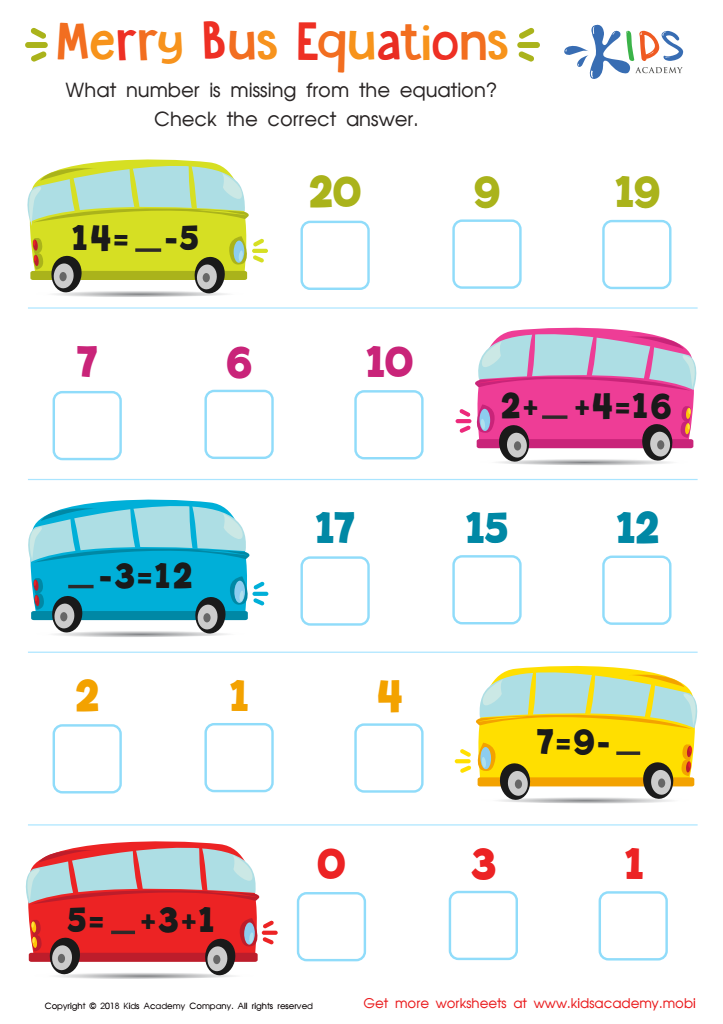
Help your child master elementary math with this fun worksheet! Featuring colorful buses and a variety of addition and subtraction equations, some with 3-digit numbers, it encourages kids to find the missing number and choose the correct answer. Give them the practice they need for success!
Merry Bus Equations Worksheet
Worksheet
Addition Equations With Base 10 Blocks Worksheet

Addition Equations With Base 10 Blocks Worksheet

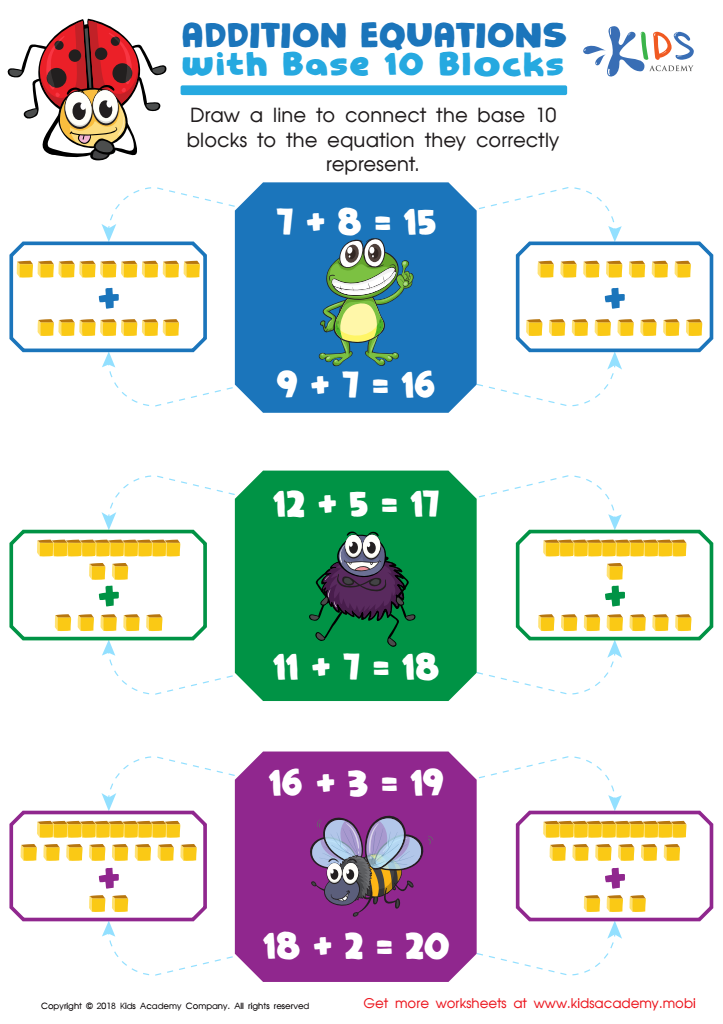
If your students are struggling with base 10 addition, this worksheet is here to help. Guide them with connecting the blocks to the equation with a line. It's a fun and colourful way to encourage learning.
Addition Equations With Base 10 Blocks Worksheet
Worksheet
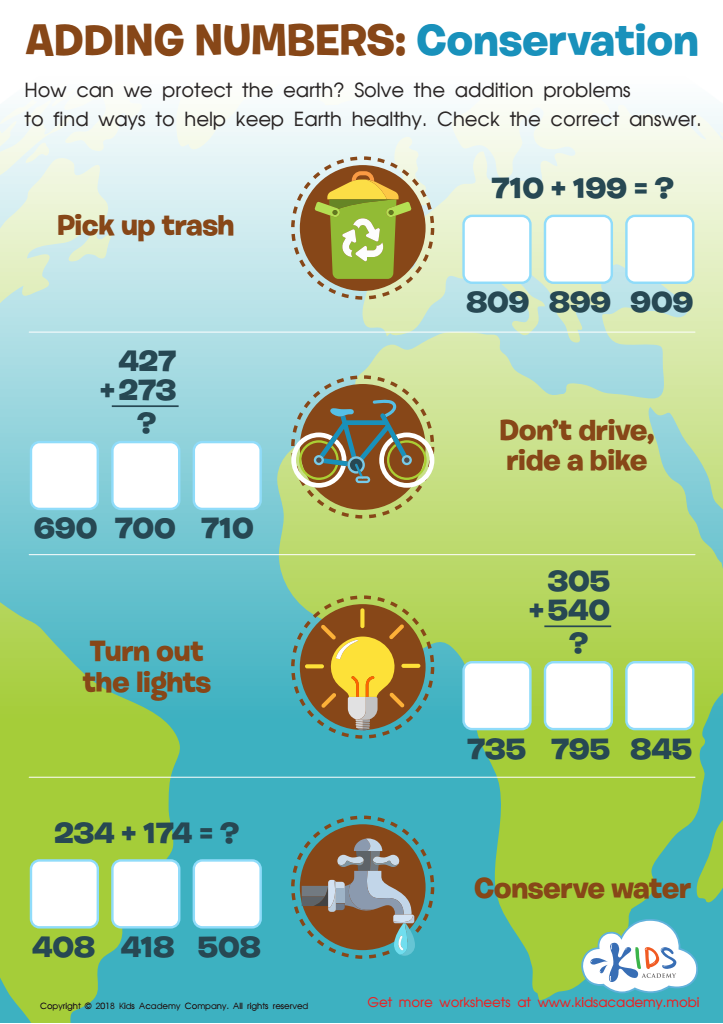
Adding Numbers: Conservation Worksheet
Adding Numbers: Conservation Worksheet
We all live on the Earth, which provides us with the vital necessities for survival. Unfortunately, we too often take advantage of this, causing pollution, water wastage and global warming. Help teach your kids how we can protect our planet - ask them to come up with good ideas and work together to find solutions. Challenge them to solve the subtraction problems to see what they can do to help keep the Earth healthy.
Adding Numbers: Conservation Worksheet
Worksheet
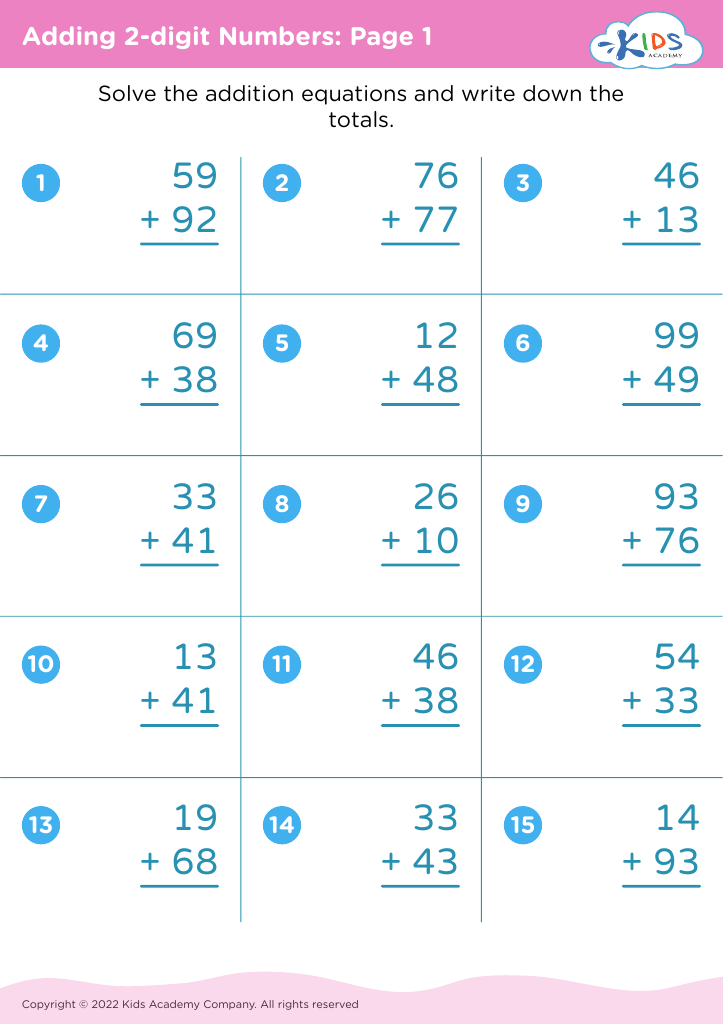
Adding 2-digit Numbers: Page 1

Adding 2-digit Numbers: Page 1

Adding 2-digit Numbers: Page 1
Worksheet
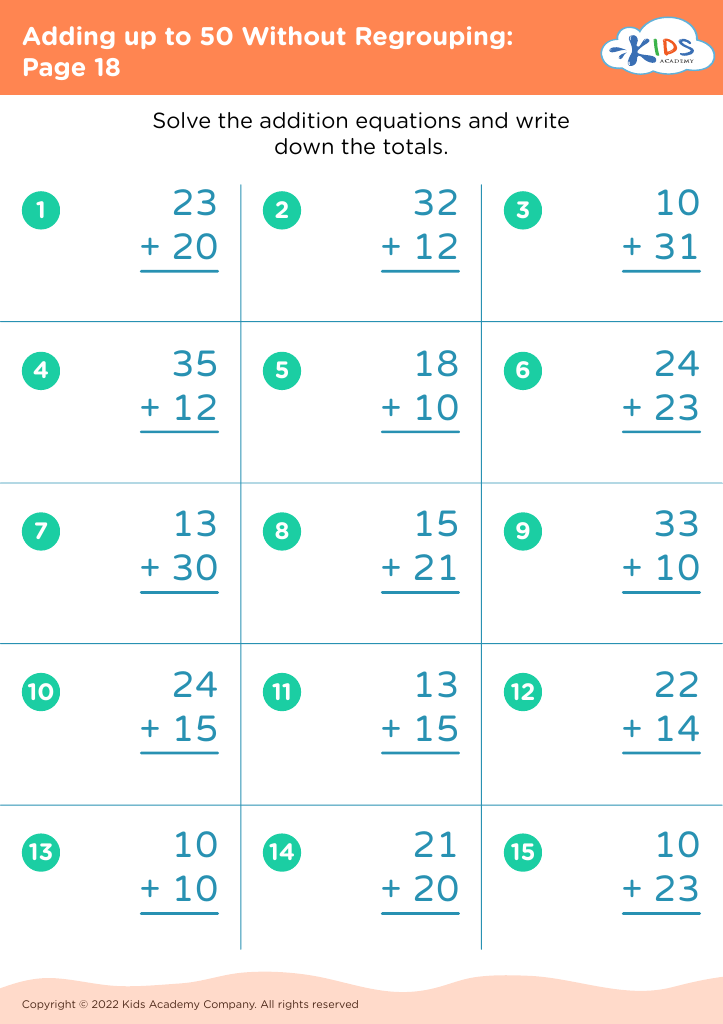
Adding up to 50 Without Regrouping: Page 18
Worksheet
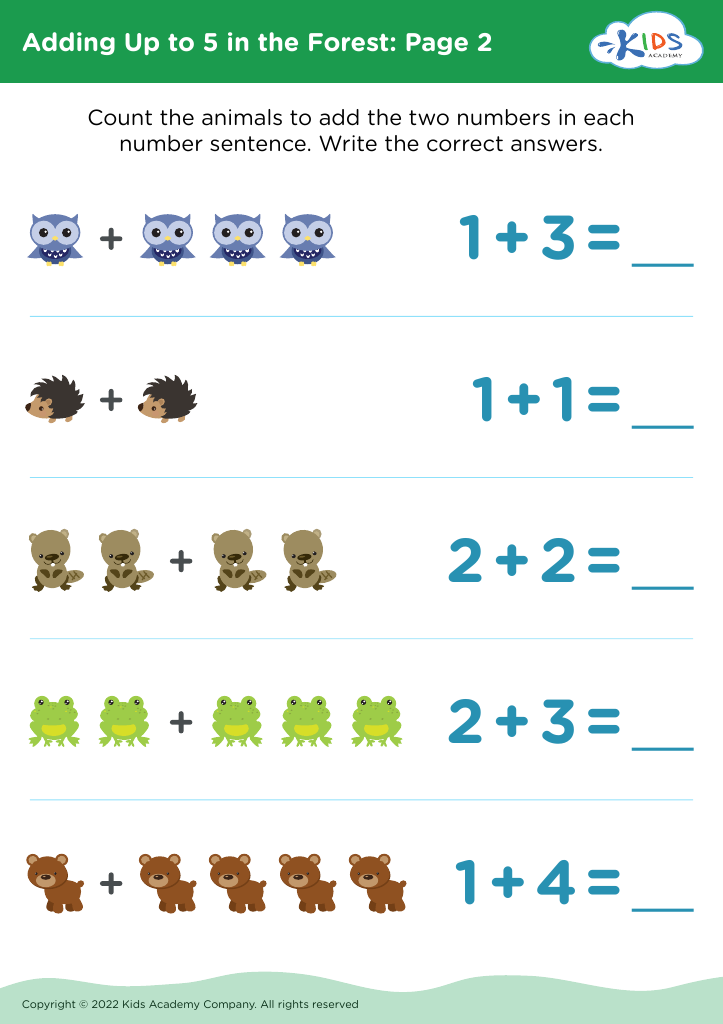
Adding Up to 5 in the Forest: Page 2
Worksheet
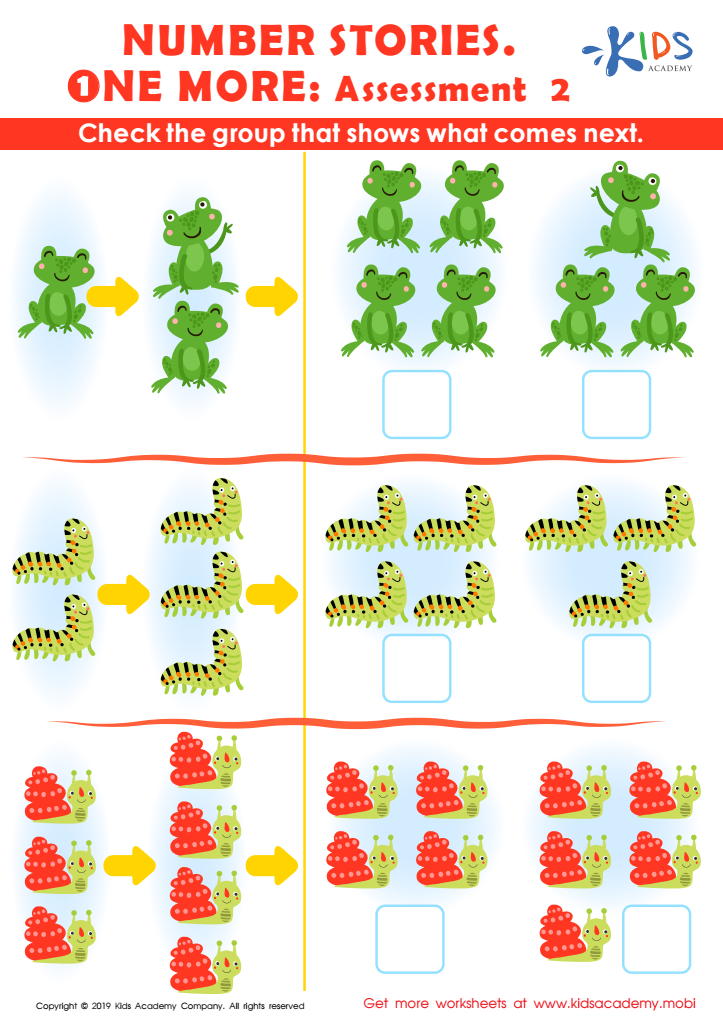
Number Stories One More - Assessment 2 Worksheet Preview

Number Stories One More – Assessment 2 Worksheet
Tracing is a great activity for kids. They can count and trace numbers, recognize animals, and practice drawing on dotted lines. It's entertaining and educational, helping children learn valuable counting skills.
Number Stories One More – Assessment 2 Worksheet
Worksheet
Smart Shopping: Trade Tens for a Hundred Worksheet

Smart Shopping: Trade Tens for a Hundred Worksheet

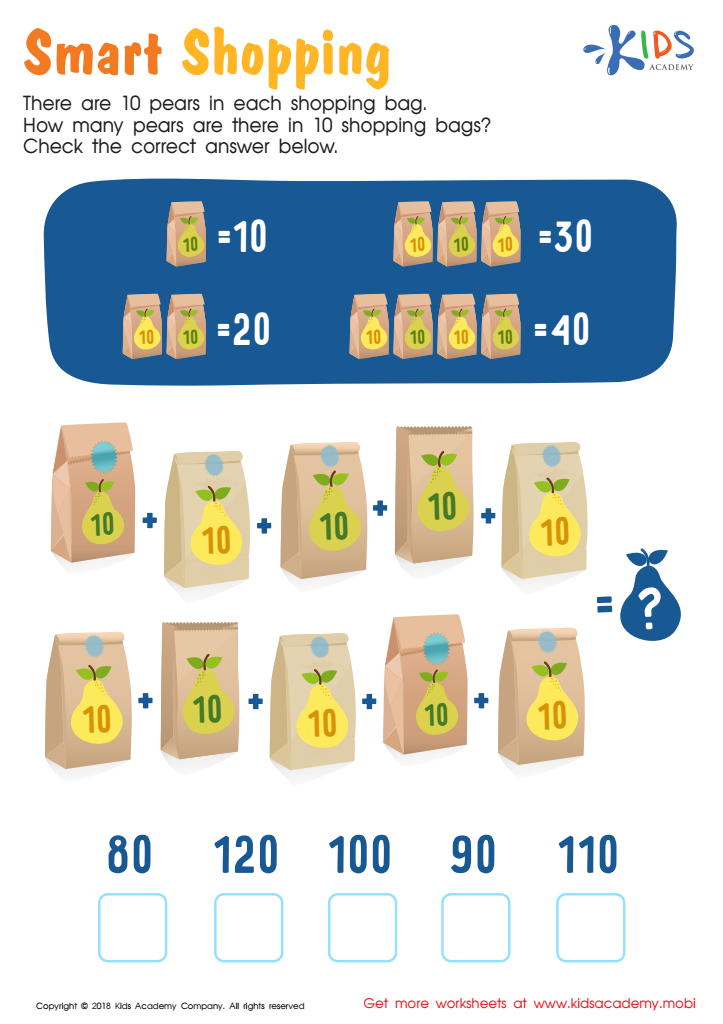
Use this worksheet to test counting skills: each bag has 10 pears. Ask your child how many pears are in 10 bags. Guide them as they count through the printout and check the answer below. See if they got it right!
Smart Shopping: Trade Tens for a Hundred Worksheet
Worksheet
What Is a Line Plot? Worksheet
What Is a Line Plot? Worksheet

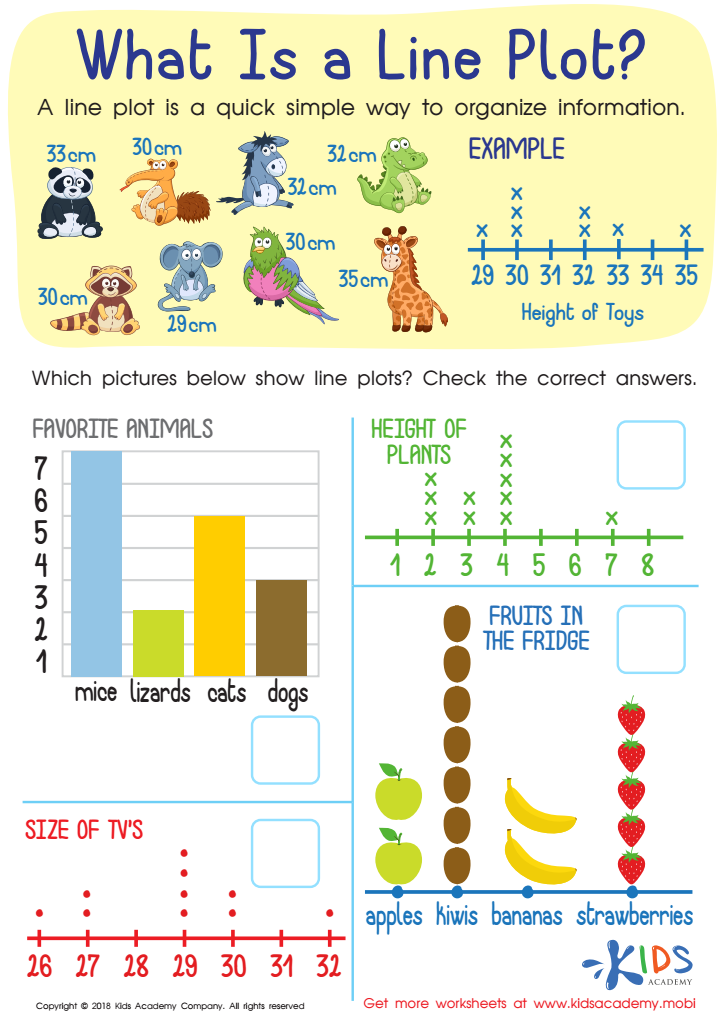
A line plot is an ideal method to organize data. For example, if your child needs to arrange objects for easy recognition, draw a line plot. This worksheet can help teach the skill. Kids must identify correct pictures that display line plots.
What Is a Line Plot? Worksheet
Worksheet
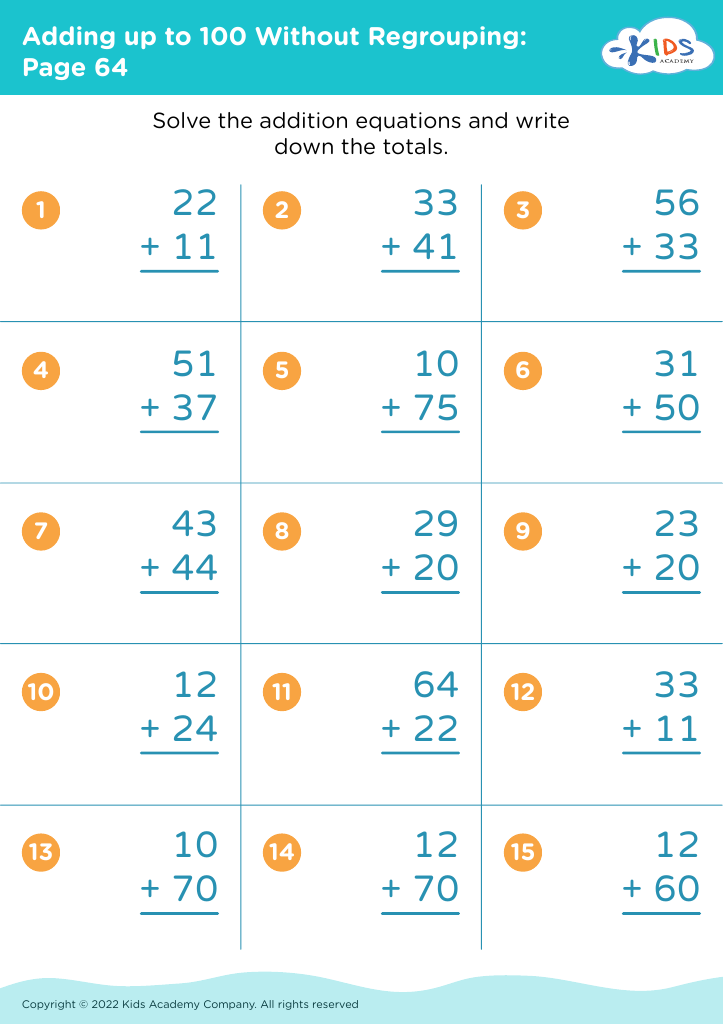
Adding up to 100 Without Regrouping: Page 64
Worksheet
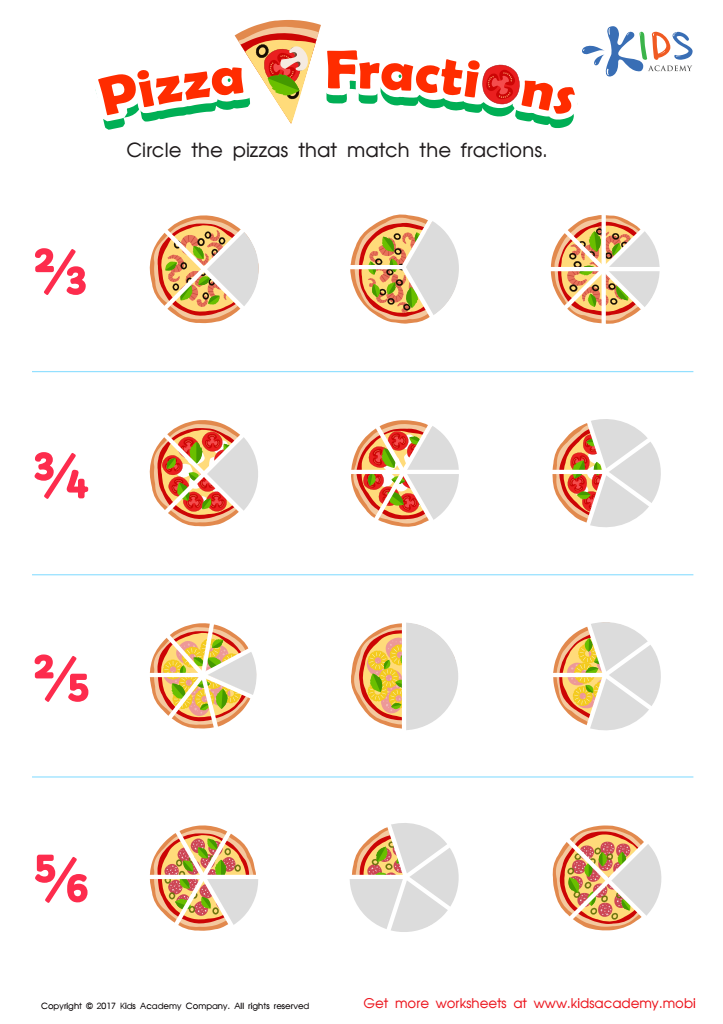
Pizza Fraction Printable

Fractions: Pizza Printable

Fractions can be tricky for kids, but this pizza fractions printable can help! Kids can understand fractions by seeing them, as they use one of their favorite foods. It helps them grasp the concept and gain a deeper understanding of what fractions represent. Extend their learning by quizzing them when you order pizza next time.
Fractions: Pizza Printable
Worksheet
Adding Up to 5 with Busy Bugs: Page 71
Worksheet
Comparing Shares Worksheet


Comparing Shares Worksheet

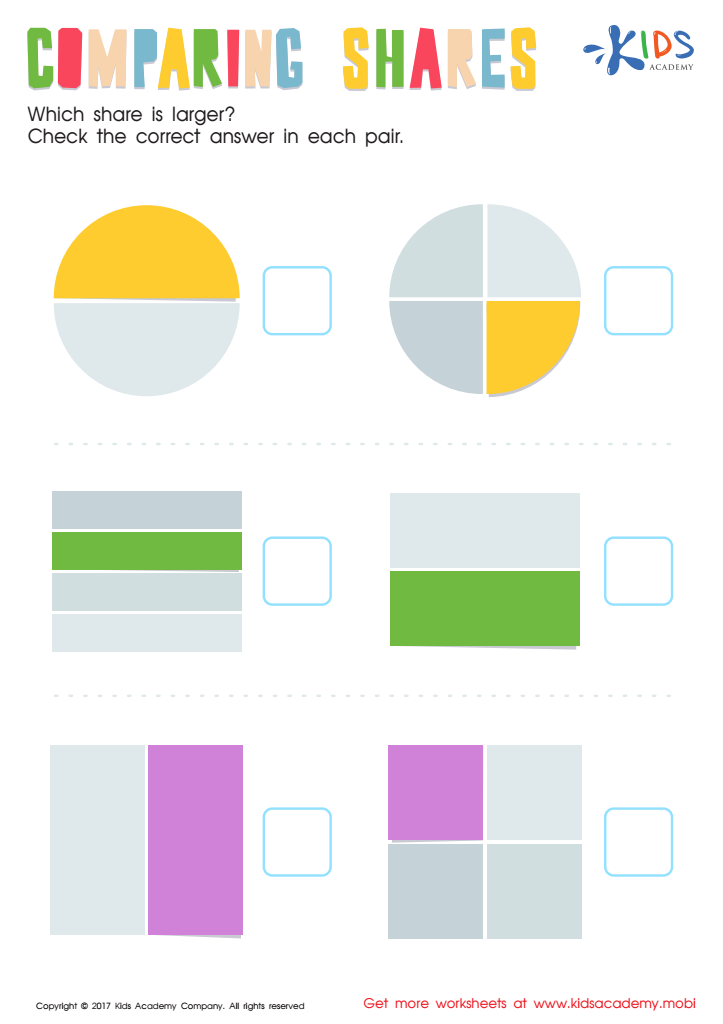
Can your students identify and draw shapes correctly? If so, this exercise may be too easy. For those who are still learning, extra help may be needed. The worksheet requires students to select which shape is larger in each pair; circles and squares are included.
Comparing Shares Worksheet

Worksheet
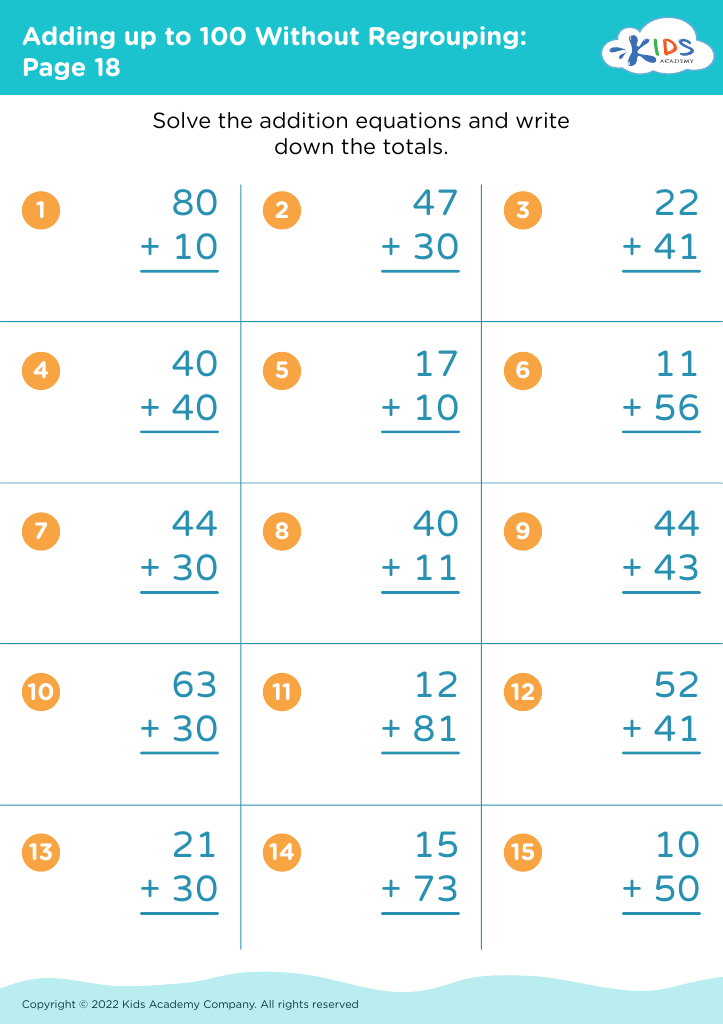
Adding up to 100 Without Regrouping: Page 18
Worksheet
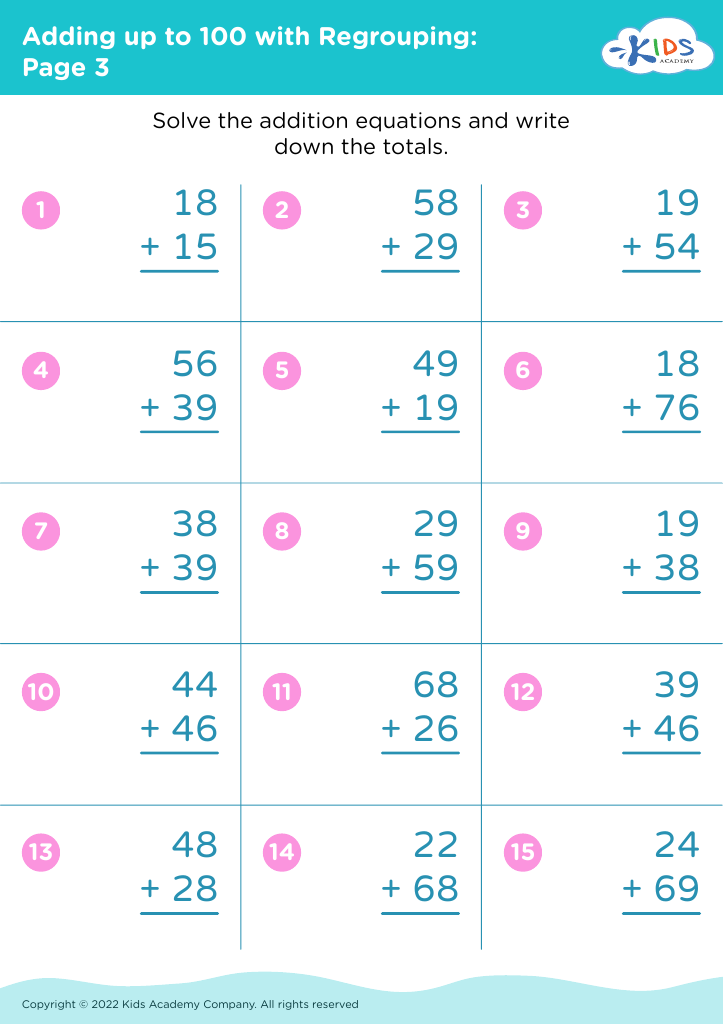
Adding up to 100 with Regrouping: Page 3
Worksheet
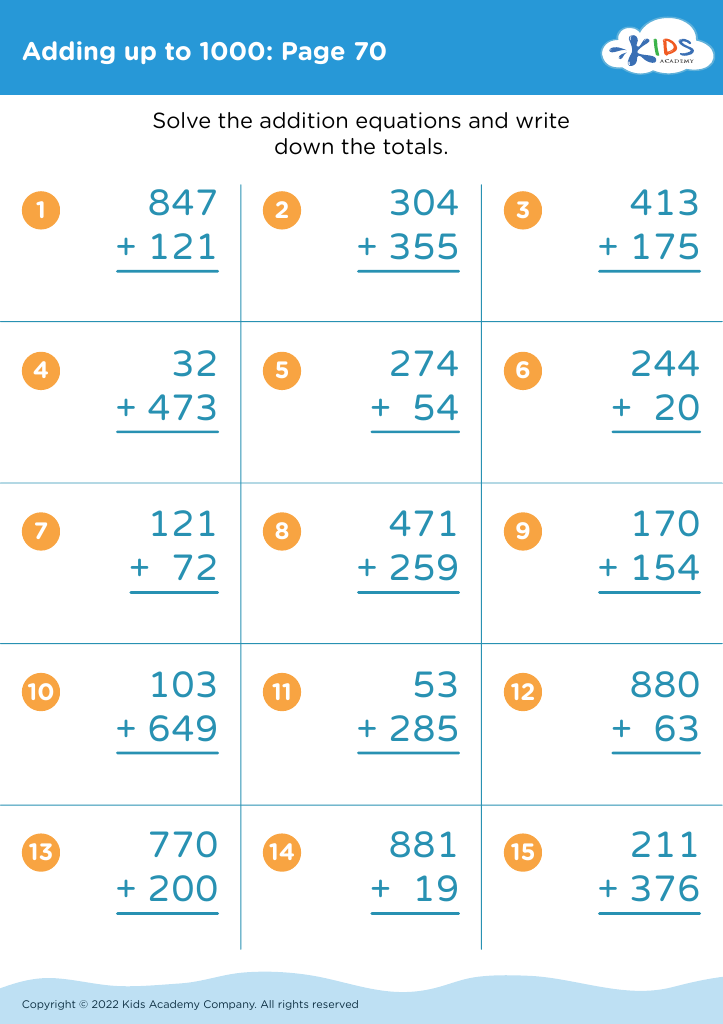
Adding up to 1000: Page 70

Adding up to 1000: Page 70

Adding up to 1000: Page 70
Worksheet
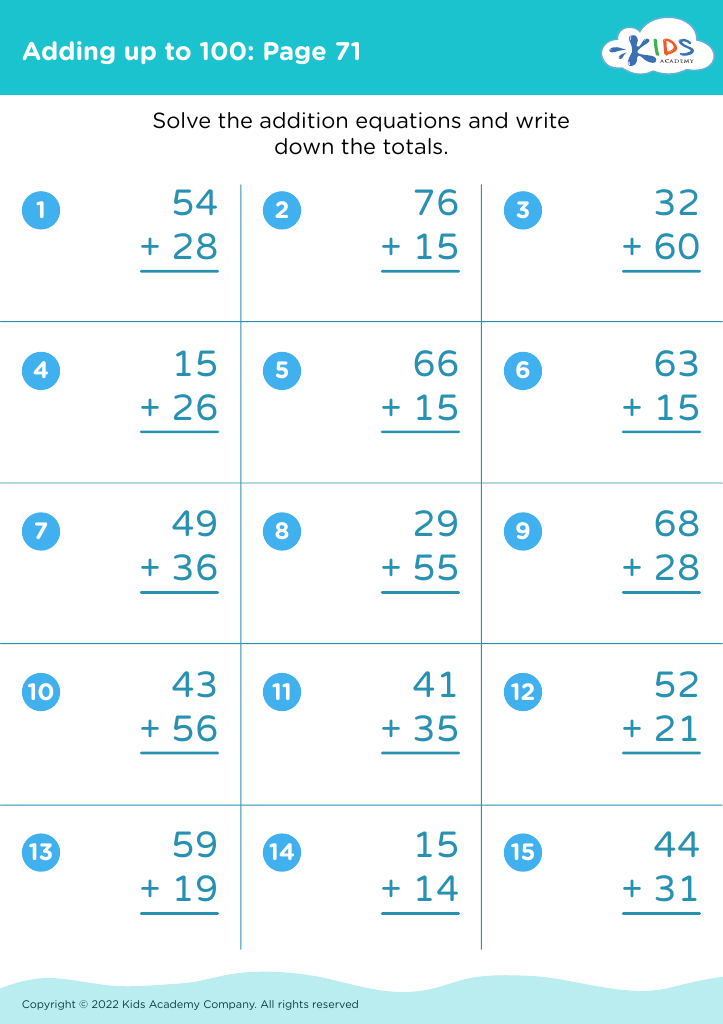
Adding up to 100: Page 71

Adding up to 100: Page 71

Adding up to 100: Page 71
Worksheet
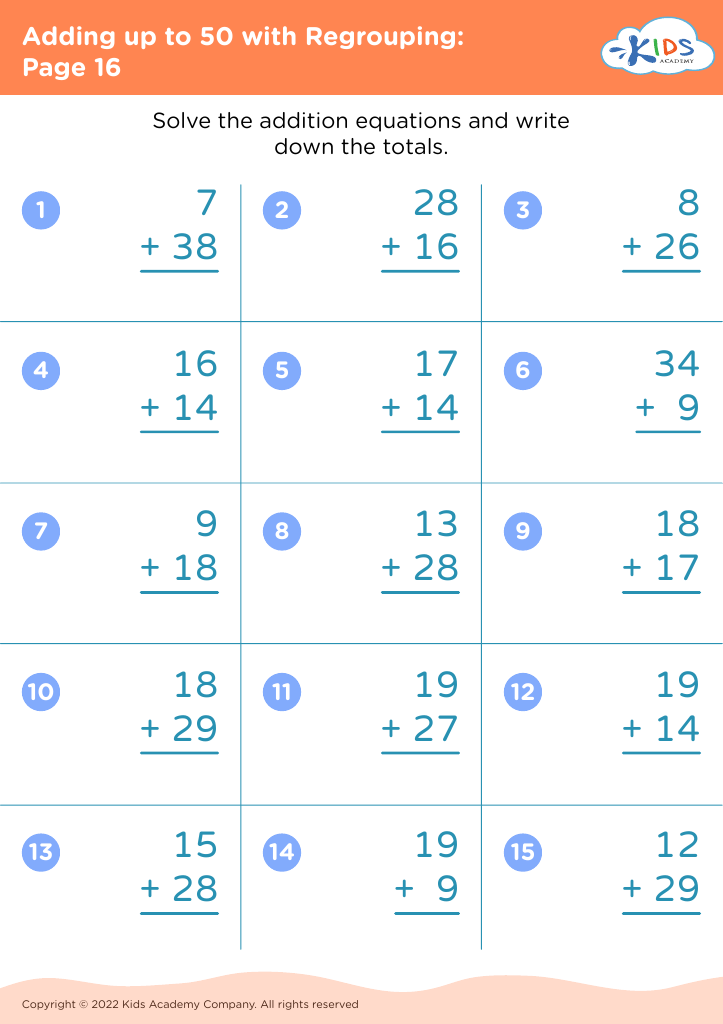
Adding up to 50 with Regrouping: Page 16
Worksheet
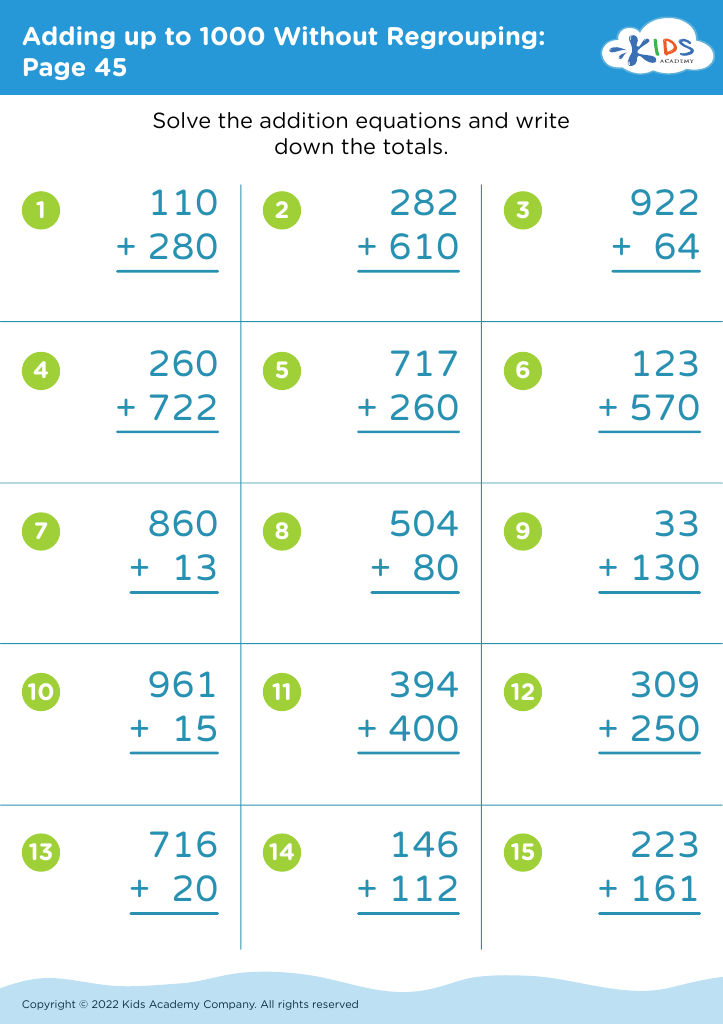
Adding up to 1000 Without Regrouping: Page 45
Worksheet


Fostering problem-solving skills in children ages 3-7 through math practice is crucial for their cognitive and social development. At this early age, children are naturally curious and capable of absorbing new information quickly. Introducing them to problem-solving in math nurtures critical thinking and analytical skills that are essential for academic success and everyday life.

Mathematical problem-solving encourages young minds to explore various strategies and solutions, fostering creativity and persistence. As children wrestle with numbers and patterns, they learn to approach problems logically and develop a growth mindset, understanding that effort can lead to improvement and success.

Moreover, early math skills are a strong predictor of later academic achievement. Research has shown that children proficient in early math are more likely to excel not only in future math-related subjects but also in reading and other areas. This cross-disciplinary impact underscores the importance of early mathematical engagement.

Furthermore, collaborative problem-solving in math activities promotes social skills like communication, teamwork, and patience. As children work together to solve math problems, they learn to articulate their thoughts, listen to others, and respect different perspectives.

By caring about early problem-solving practice in math, parents and teachers are investing in the holistic development of children, equipping them with skills and attitudes that will serve them well throughout their education and beyond.