Filters

275 filtered results

Clear all filters
Favorites
With answer key
Interactive

275 filtered results

Difficulty Level

Grade


Check out this FREE Trial Lesson on Math for age 3-7!

Using Unknown addend problems to help with Subtraction Part 2

Favorites
With answer key
Interactive
  • 3-7
  • Problem-Solving Skills
  • Math
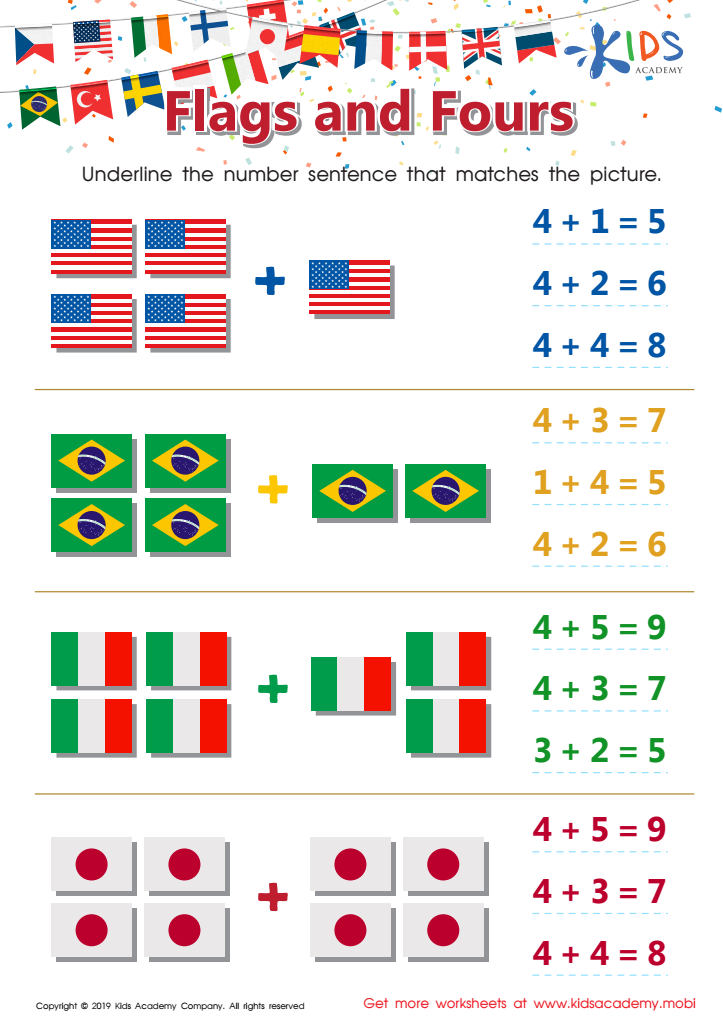
Flags and Fours Worksheet

Flags and Fours Worksheet

Have your kids identify country flags from this colorful printout. Then, ask them to underline the number sentence that goes with each flag. Combining math with national flag recognition strengthens kids' knowledge of both, promoting an understanding of identity and numbers.
Flags and Fours Worksheet
Worksheet
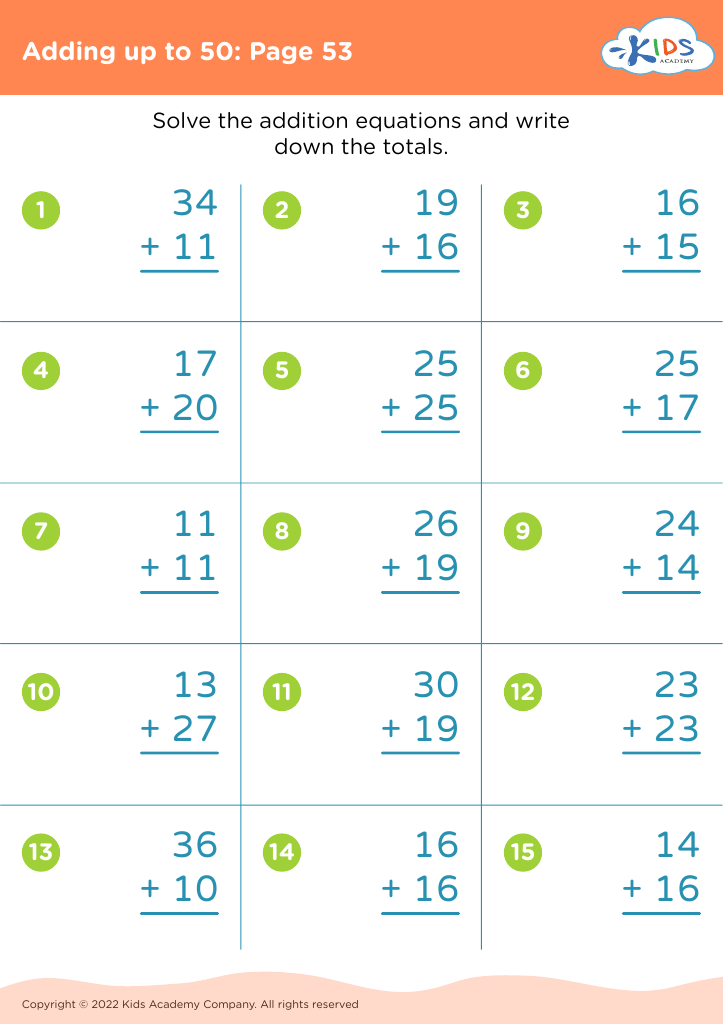
Adding up to 50: Page 53

Adding up to 50: Page 53

Adding up to 50: Page 53
Worksheet
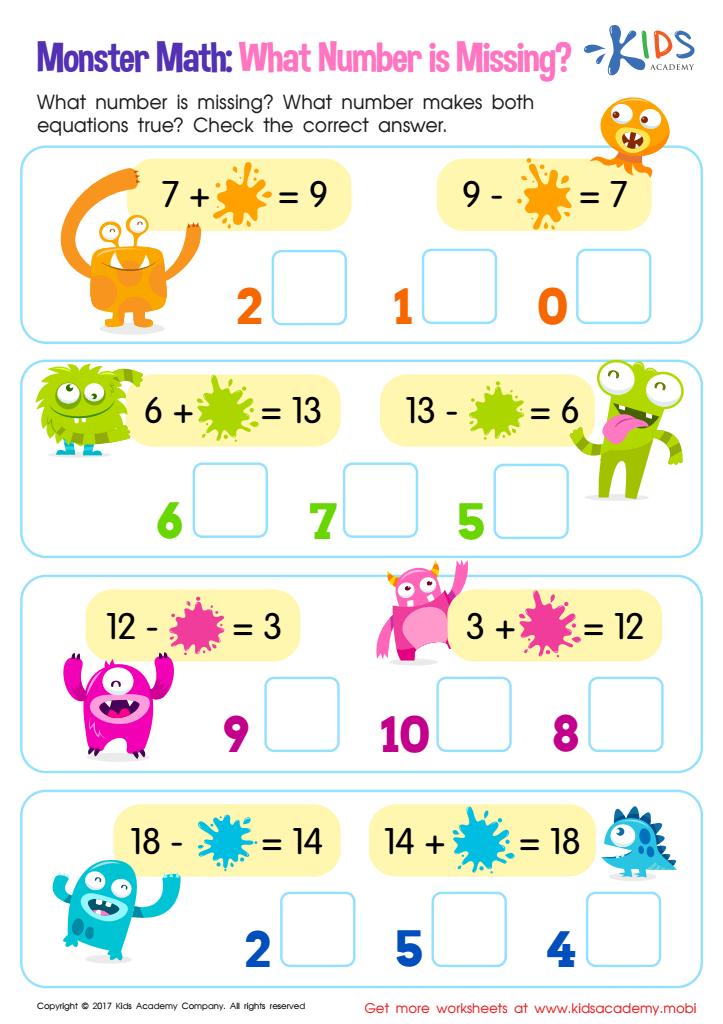
Missing Number: Monster Math Worksheet
Missing Number: Monster Math Worksheet
Engage your child in monster math fun with a worksheet! They'll need to use their counting, addition and subtraction skills to solve equations on both sides. On the left side, they must complete an addition problem and on the right, the equation is in subtraction form. Assist them in selecting the right number out of the given options to make both equations true.
Missing Number: Monster Math Worksheet
Worksheet
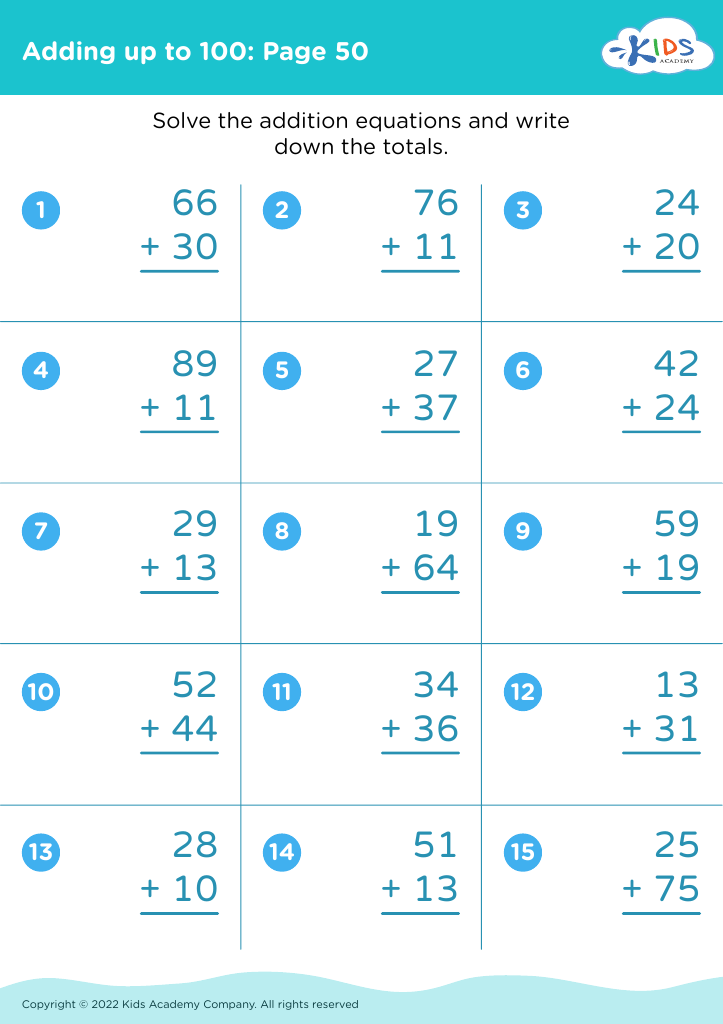
Adding up to 100: Page 50

Adding up to 100: Page 50

Adding up to 100: Page 50
Worksheet
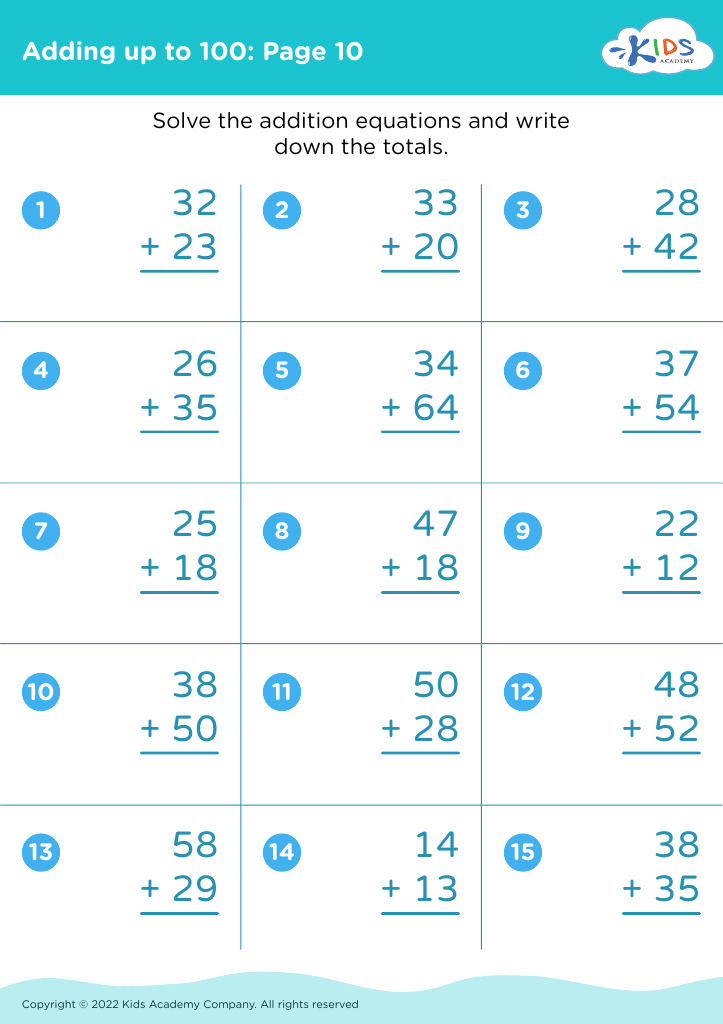
Adding up to 100: Page 10

Adding up to 100: Page 10

Adding up to 100: Page 10
Worksheet
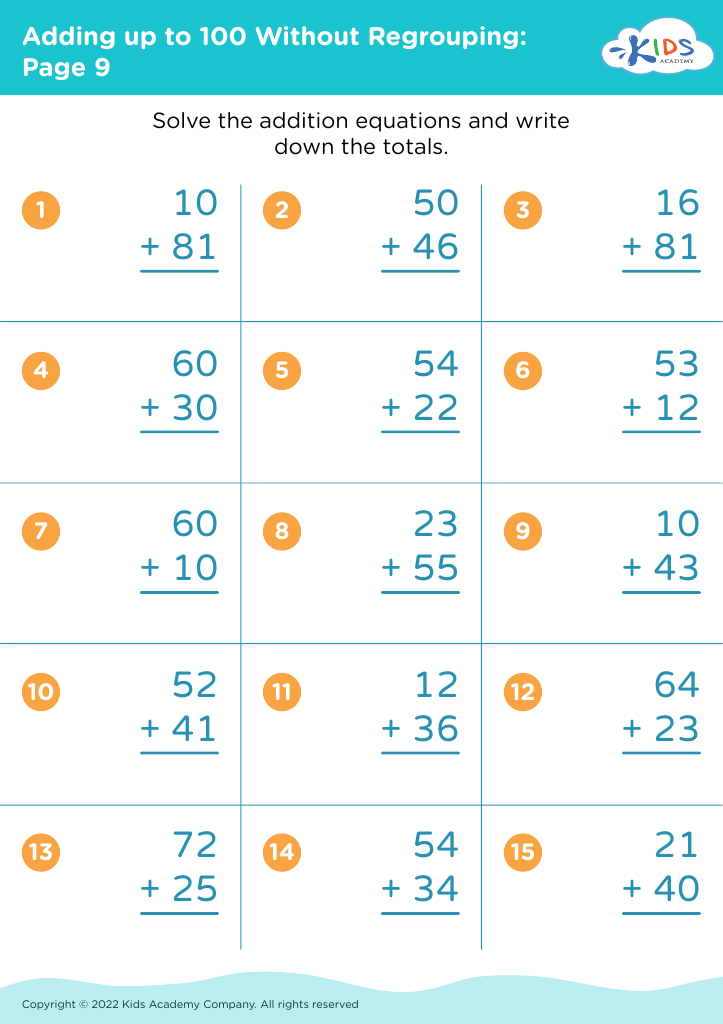
Adding up to 100 Without Regrouping: Page 9
Worksheet
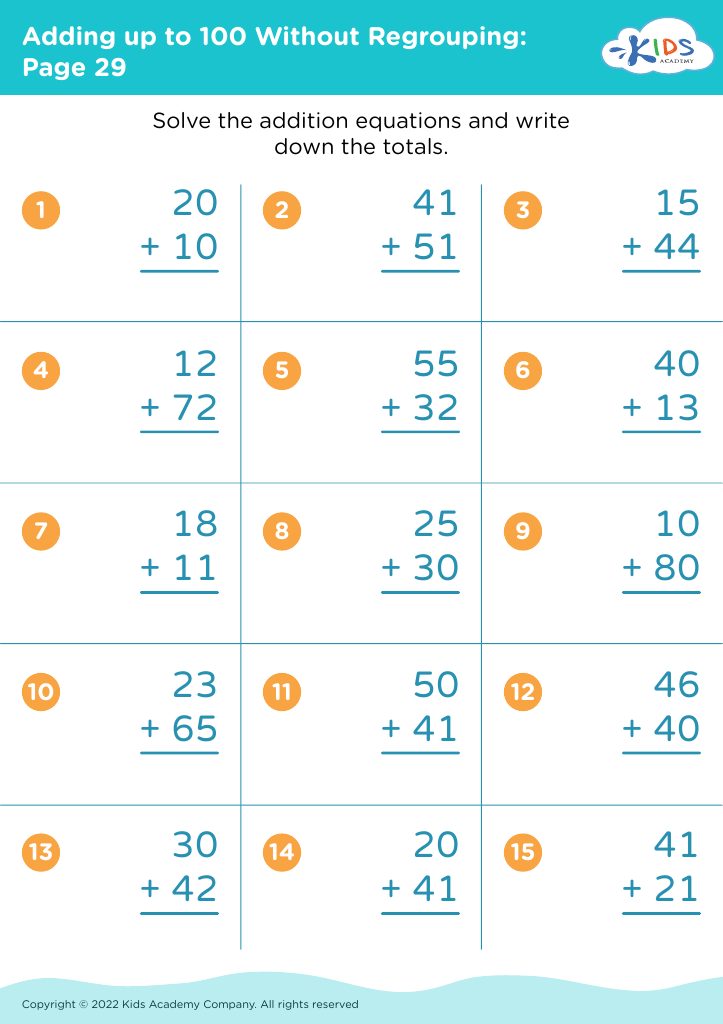
Adding up to 100 Without Regrouping: Page 29
Worksheet
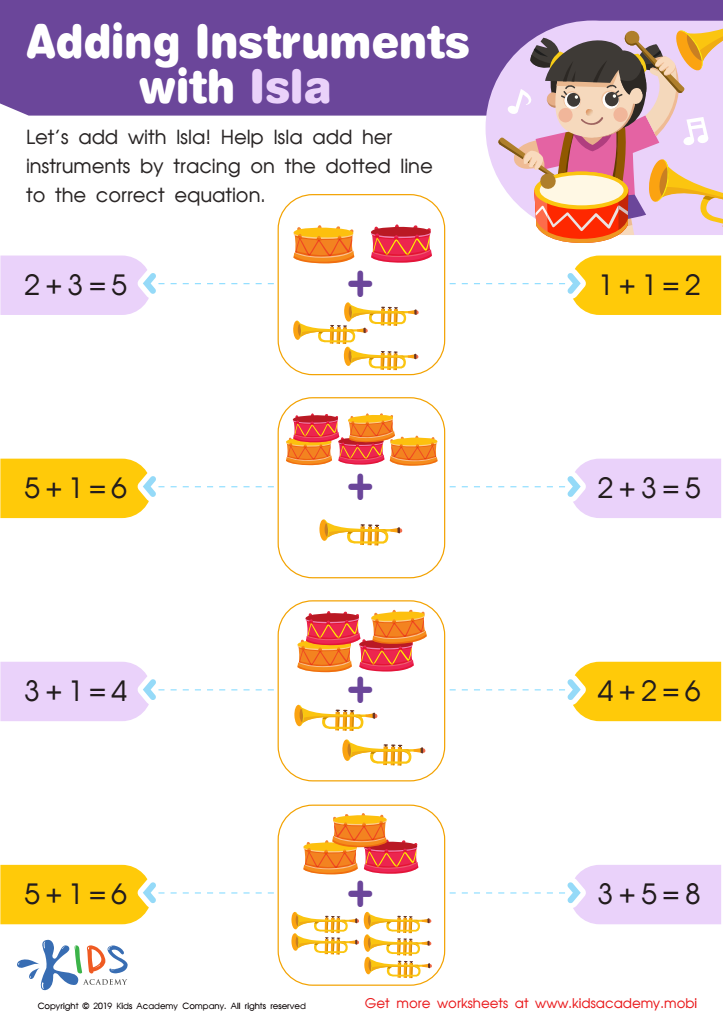
Adding Instruments with Isla Worksheet
Adding Instruments with Isla Worksheet

Your kids can have fun helping Isla add her musical instruments. With colorful pics and one-to-one representation, they can pick the correct addition sentence. They can connect each pic with traceable lines and get to the right sum up to 10.
Adding Instruments with Isla Worksheet
Worksheet
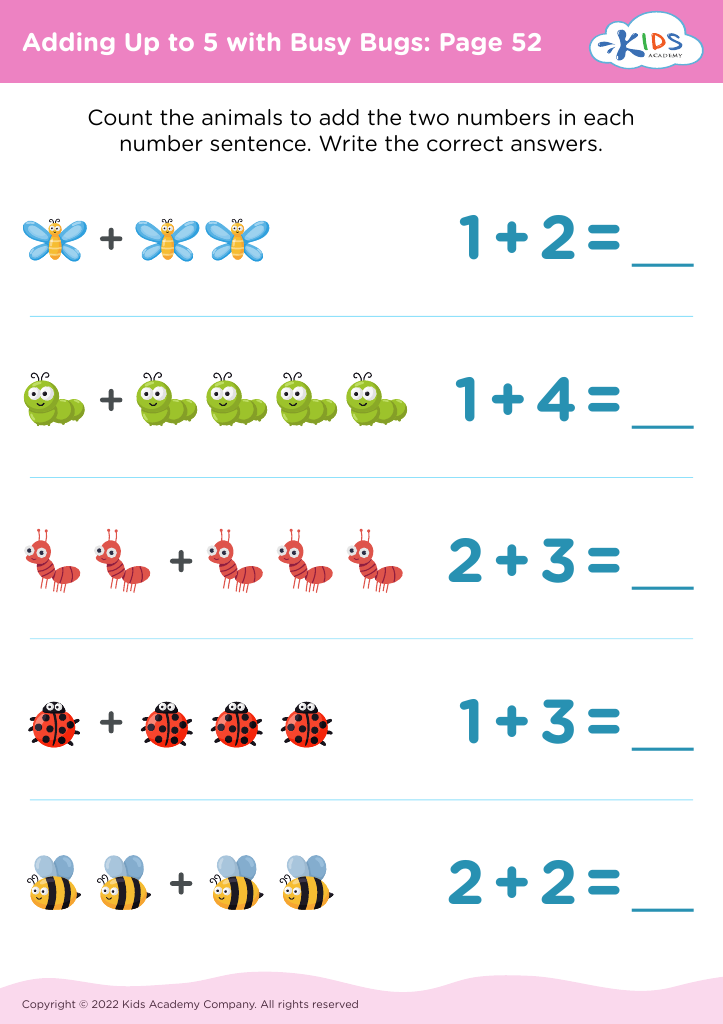
Adding Up to 5 with Busy Bugs: Page 52
Worksheet
Time to Catch the Train Part 2 Worksheet

Time to Catch the Train Part 2 Worksheet

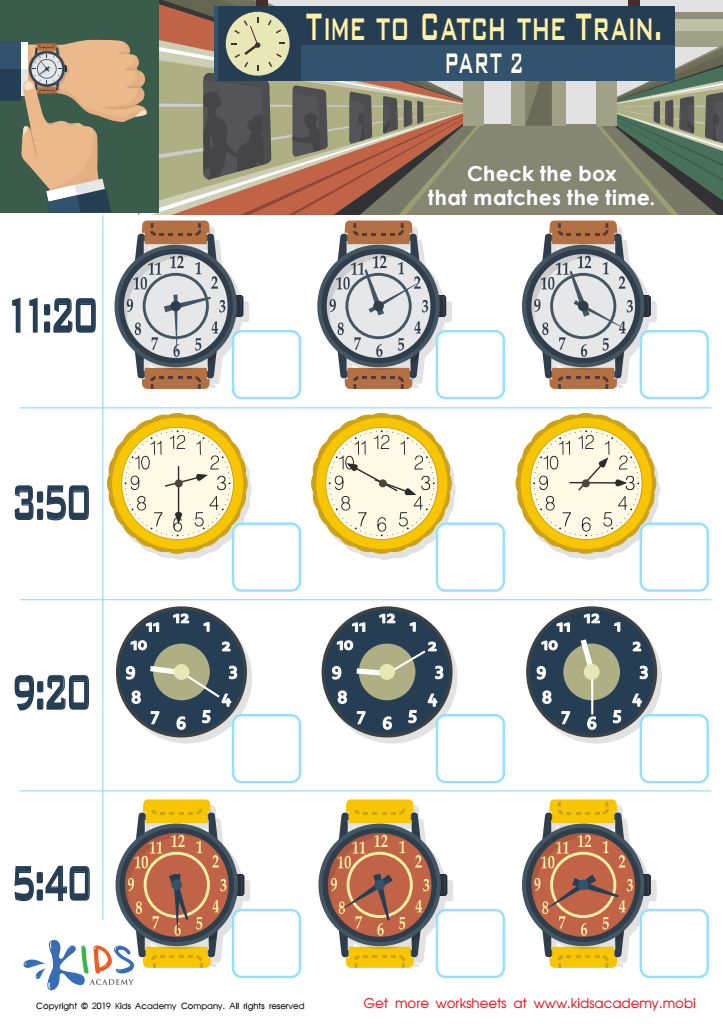
Teach your kids the importance of telling time and how to do it. Explain that there are multiple ways to show the time, such as written on the left side or watches in the picture. Guide them to check the box that matches the time. Knowing the time is essential to get things done and create order. Ensure your kids understand this and they will reap the benefits.
Time to Catch the Train Part 2 Worksheet

Worksheet
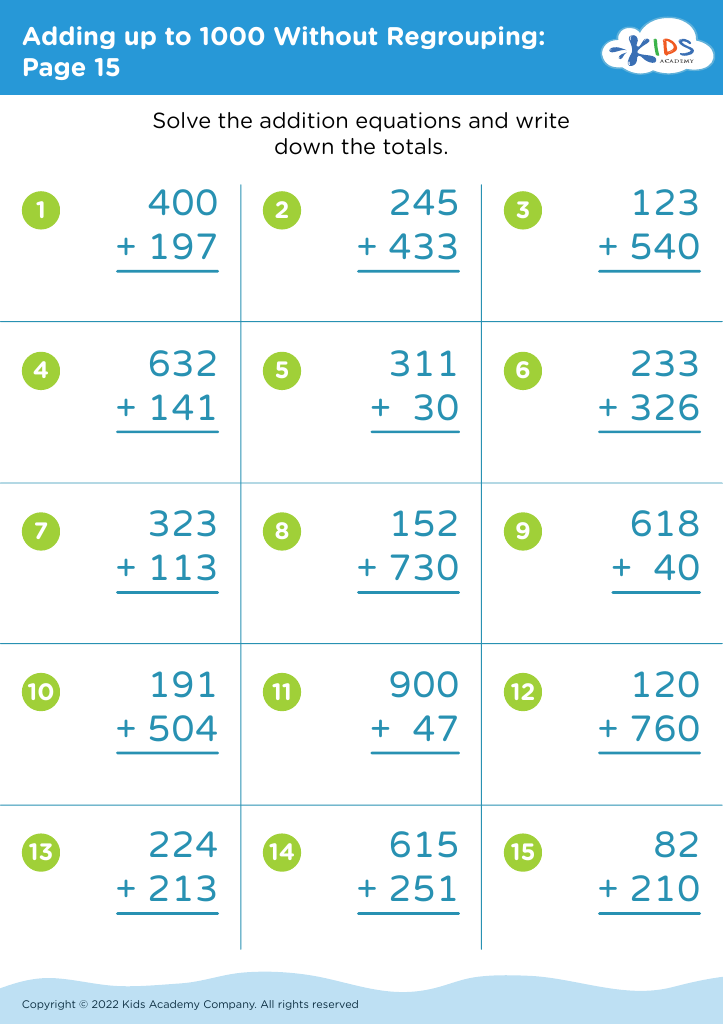
Adding up to 1000 Without Regrouping: Page 15
Worksheet


... 11 12

Problem-solving skills in math are critically important for children aged 3-7, forming the foundation for their overall cognitive development and future learning. During these early years, kids are naturally curious and eager to explore, making it the perfect time to introduce mathematical concepts through engaging activities that promote critical thinking.

First, problem-solving aids in the development of logical reasoning. When children tackle mathematical challenges, they learn to analyze situations, evaluate options, and arrive at solutions. These skills extend beyond math, enhancing their ability to reason and make decisions in everyday life.

Moreover, learning math problem-solving fosters resilience. Kids learn that not every problem has an immediate answer, which teaches them persistence and the growth mindset—understanding that mistakes are part of the learning process.

Parents and teachers play an essential role in nurturing these skills through creative and interactive learning experiences. By integrating math into play, storytelling, and everyday activities, they can create a supportive environment where children feel confident to explore concepts and tackle challenges.

Investing in problem-solving skills in early childhood sets the stage for academic success, encouraging a love for mathematics and a proactive approach to learning that lasts a lifetime.