Logical Reasoning Matching Worksheets for Ages 3-7
5 filtered results
-
From - To
Enhance your child's cognitive skills with our engaging Logical Reasoning Matching Worksheets, specifically designed for ages 3-7. These vibrant and educational worksheets promote critical thinking and problem-solving in a fun, interactive manner. Each colorful matching activity serves to strengthen logical connections as children match related items, patterns, or images. Perfect for preschool and early grade learners, our worksheets are a great foundational tool to boost confidence in logical reasoning. Whether used at home or in the classroom, these worksheets make learning an enjoyable adventure, paving the way for academic success. Unlock your child’s potential with Kids Academy's age-appropriate, skill-building worksheets.
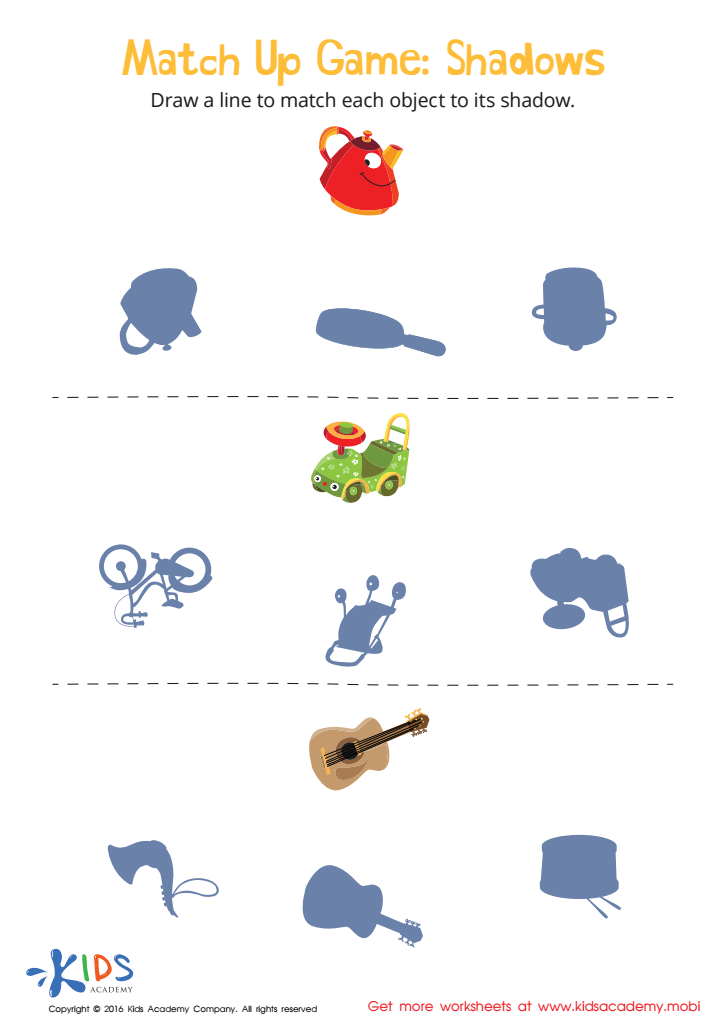
 Assign to My Students
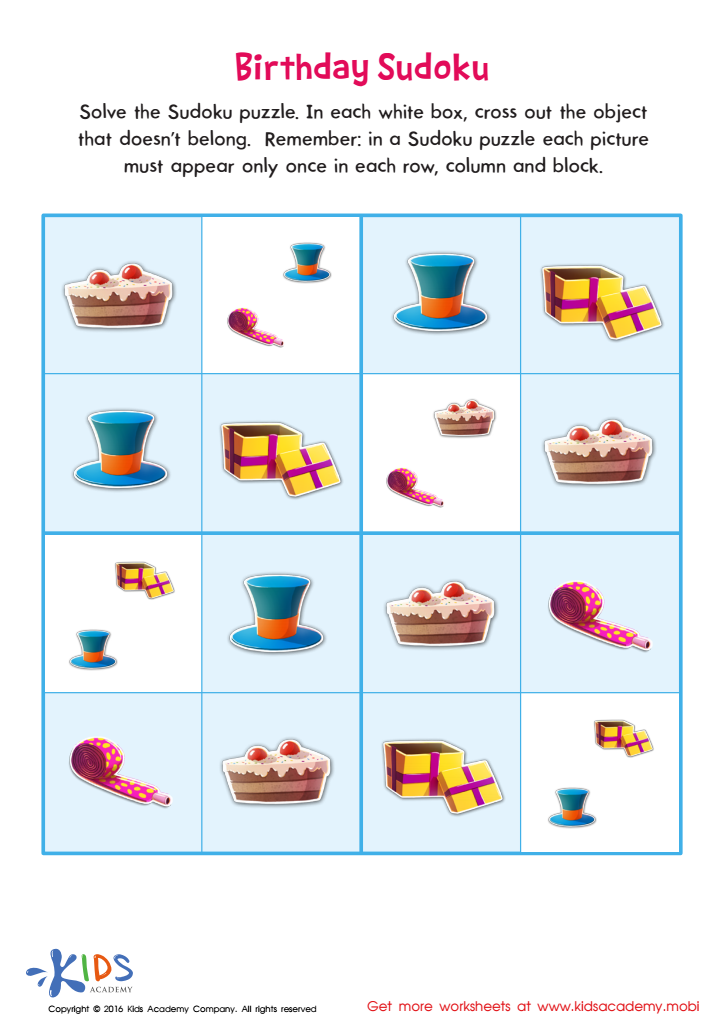
Birthday Sudoku Sorting Worksheet
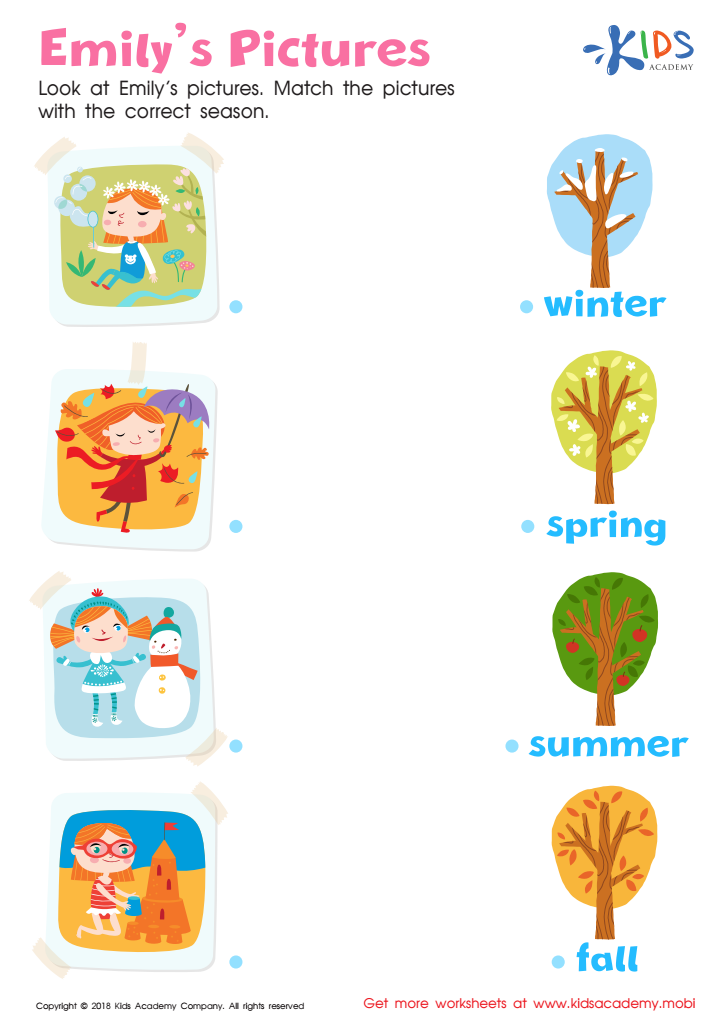
Emily's Pictures Worksheet
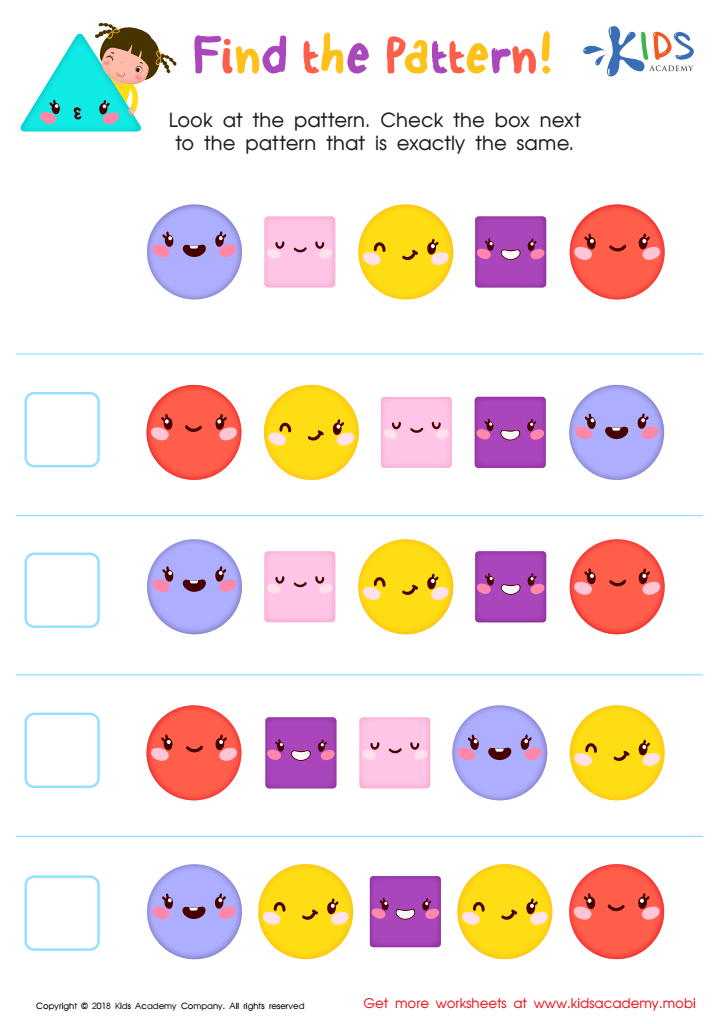
Find the Pattern Worksheet
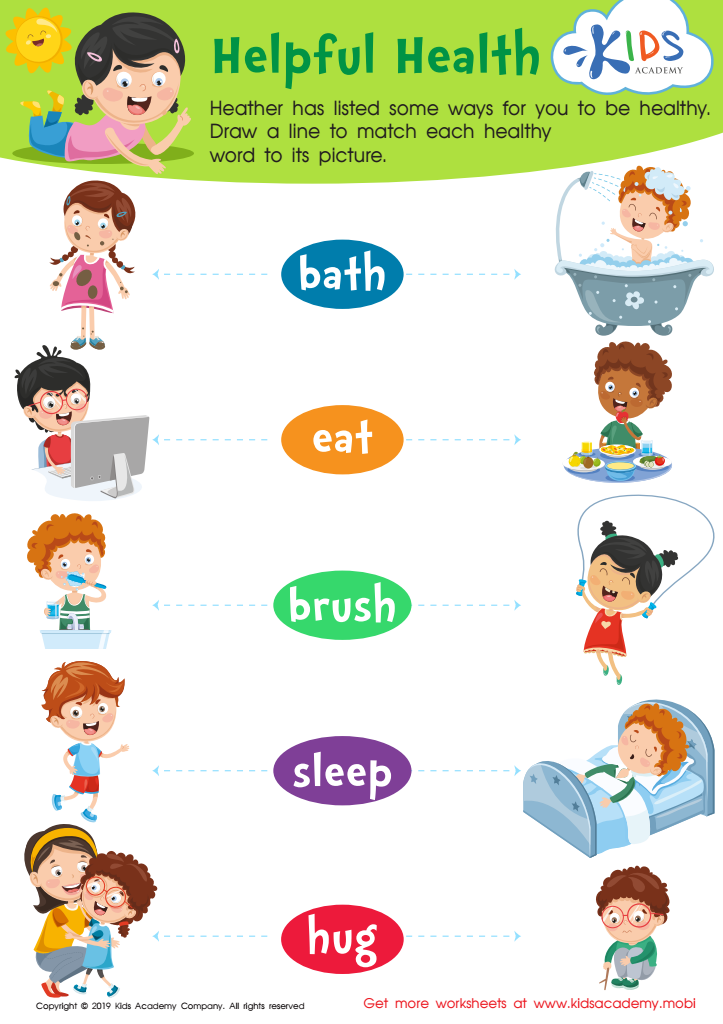
Helpful Health Worksheet








Logical reasoning skills are fundamental building blocks in a child's cognitive development, particularly between the ages of 3 and 7. This period is marked by rapid brain development, where the foundations for problem-solving, critical thinking, and analytical skills are laid. Introducing logical reasoning matching activities at this stage enhances their ability to recognize patterns, understand sequences, and make connections, all of which are crucial for academic success and everyday problem-solving.
When parents and teachers engage children in these activities, they help improve focus, attention to detail, and memory retention. These skills are not only essential for mathematical and scientific thinking but also contribute to language development, as recognizing patterns in sentences can aid in reading comprehension and vocabulary growth.
Moreover, logical reasoning matching promotes confidence and independence. Children begin to trust their ability to find solutions, fostering a sense of achievement and resilience. These activities also encourage a hands-on approach to learning, making abstract concepts more concrete and accessible, which is vital for young learners.
By prioritizing logical reasoning exercises, parents and teachers equip children with critical skills that extend beyond academics, preparing them for various life situations that require analytical thinking, decision-making, and effective problem resolution. This holistic development fosters lifelong learning and adaptation, essential in a constantly changing world.








