Counting skills Subtraction Worksheets for Ages 3-7
11 filtered results
-
From - To
Our Counting Skills Subtraction Worksheets for Ages 3-7 are designed to make learning subtraction fun and engaging. Perfect for early learners, these worksheets incorporate colorful illustrations and hands-on activities to teach basic subtraction concepts. They help children build essential counting skills while fostering a love for math. Each worksheet gradually increases in difficulty, ensuring that kids can confidently progress at their own pace. With our expertly crafted subtraction exercises, young learners will develop a strong mathematical foundation, making future math endeavors more accessible and enjoyable. Ideal for parents and teachers looking to provide quality educational resources at home or in the classroom.
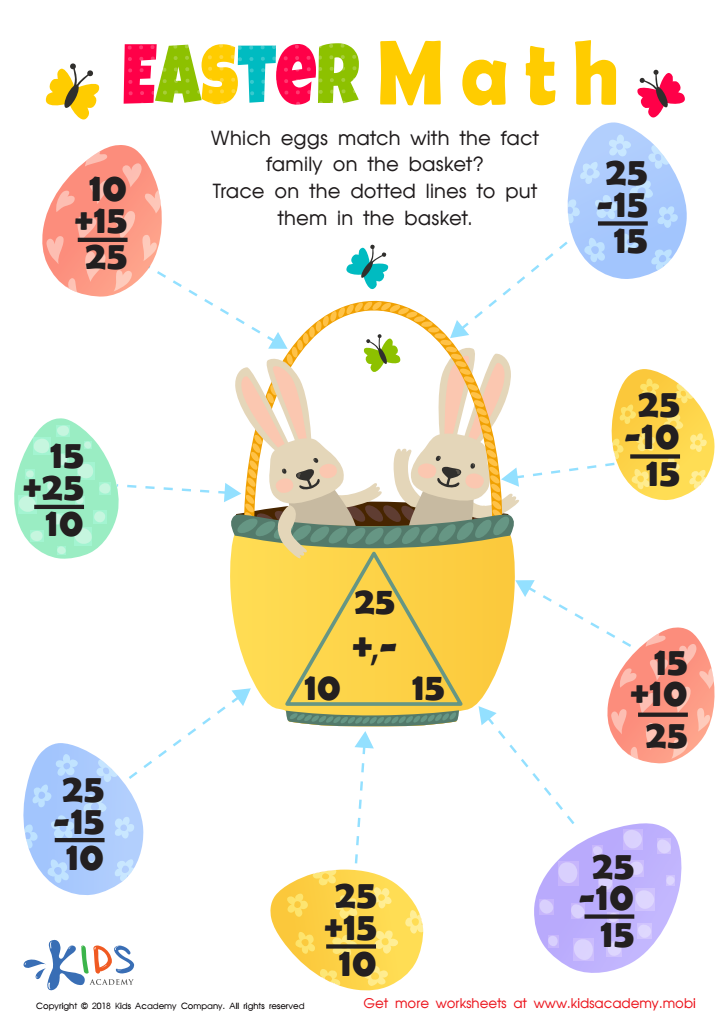
Fact Families: Easter Math Worksheet
 Assign to My Students
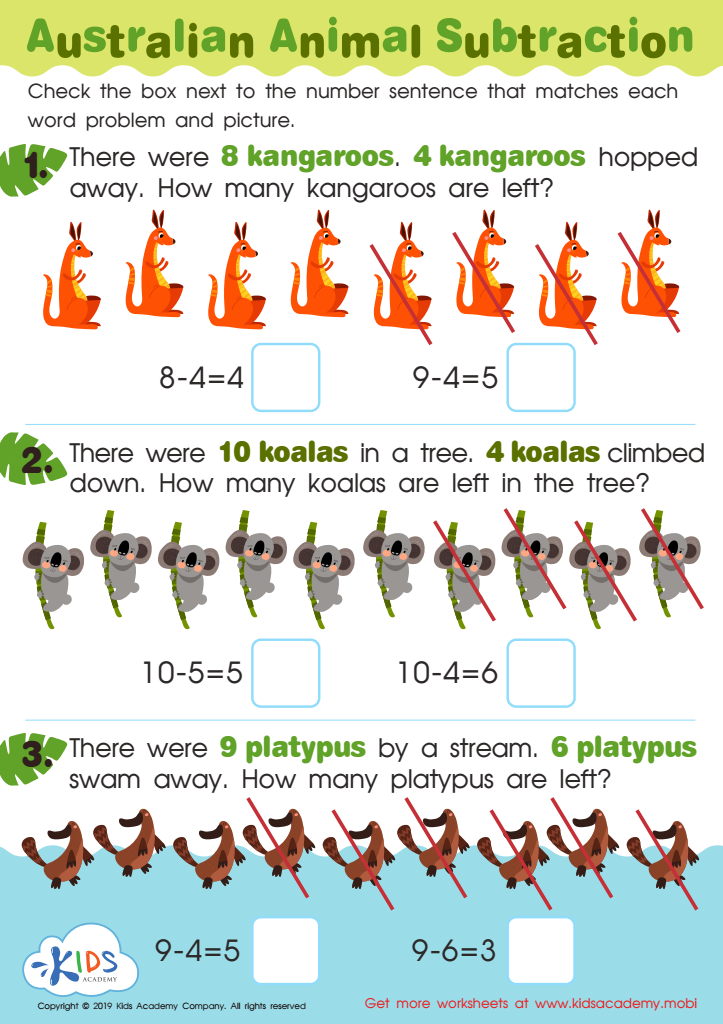
Australian Animal Subtraction Worksheet
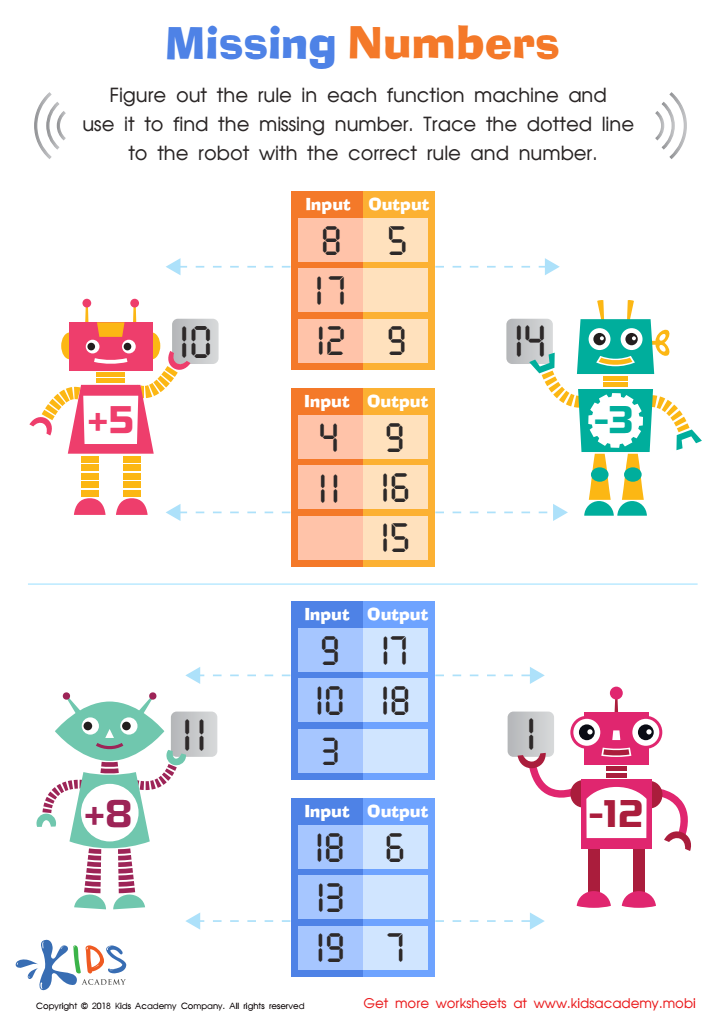
Missing Numbers Worksheet
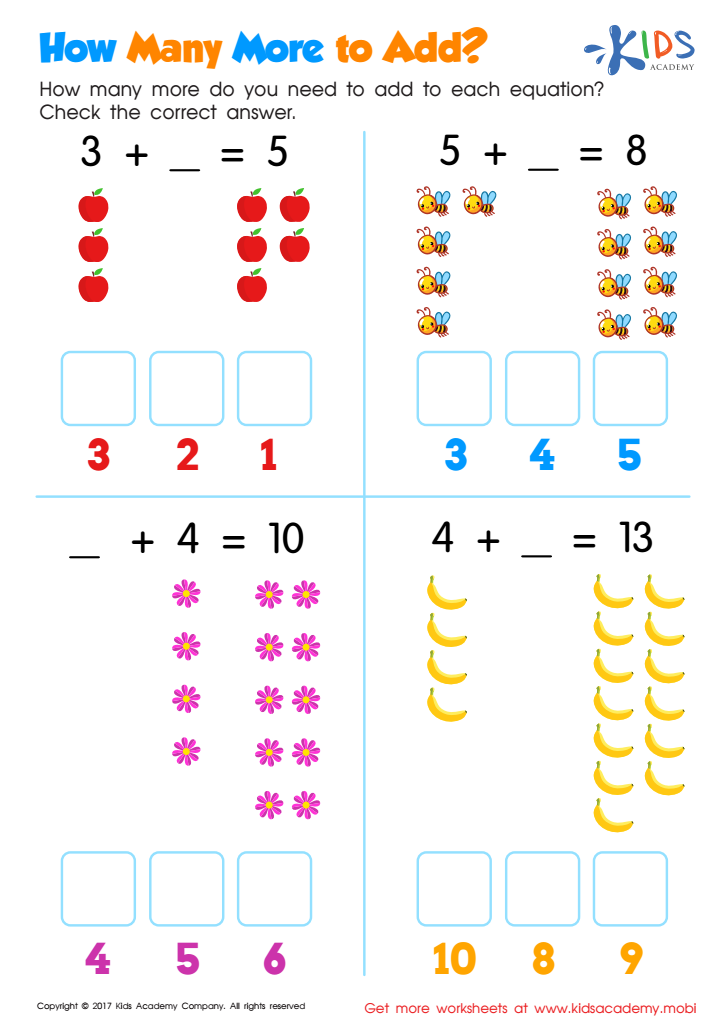
How Many More to Add Worksheet
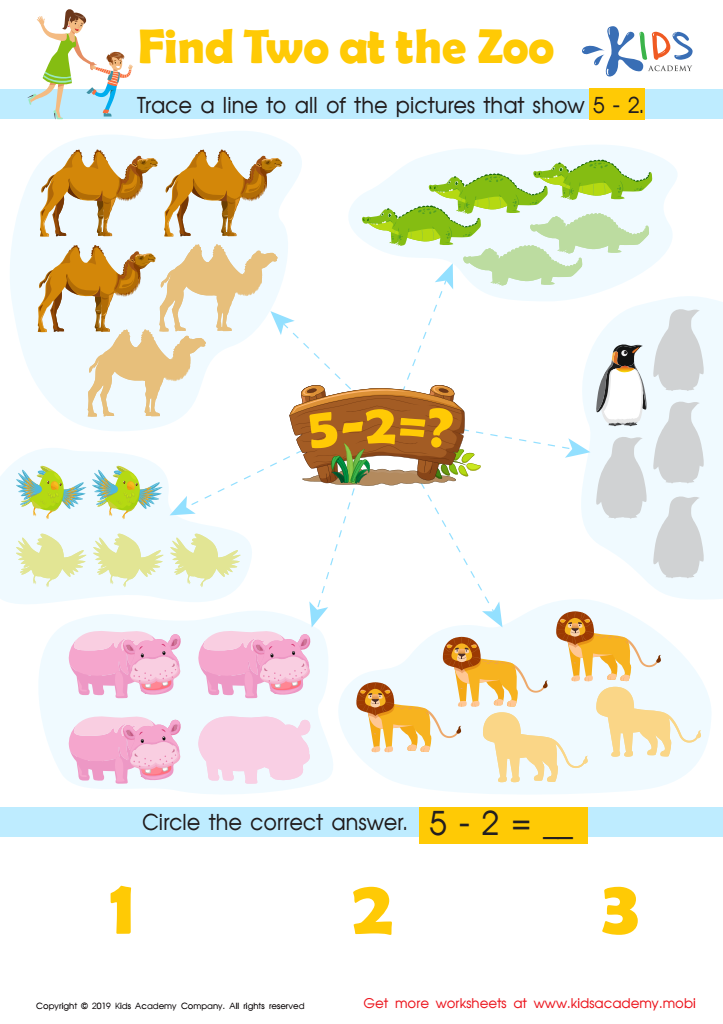
Find Two at the Zoo Worksheet
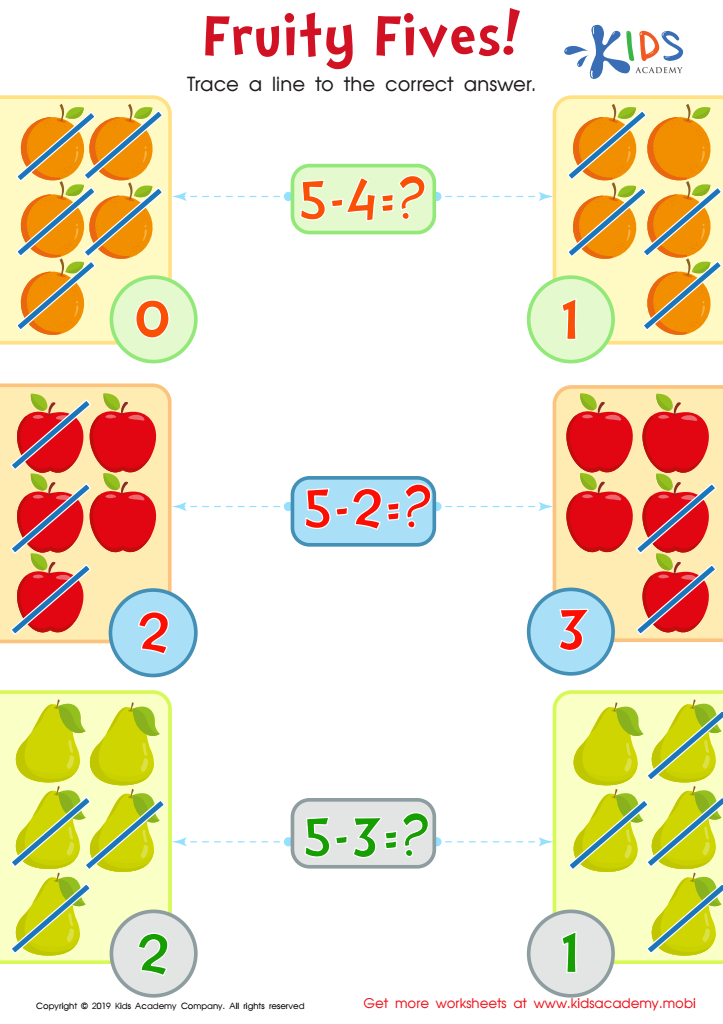
Fruity Fives! Worksheet
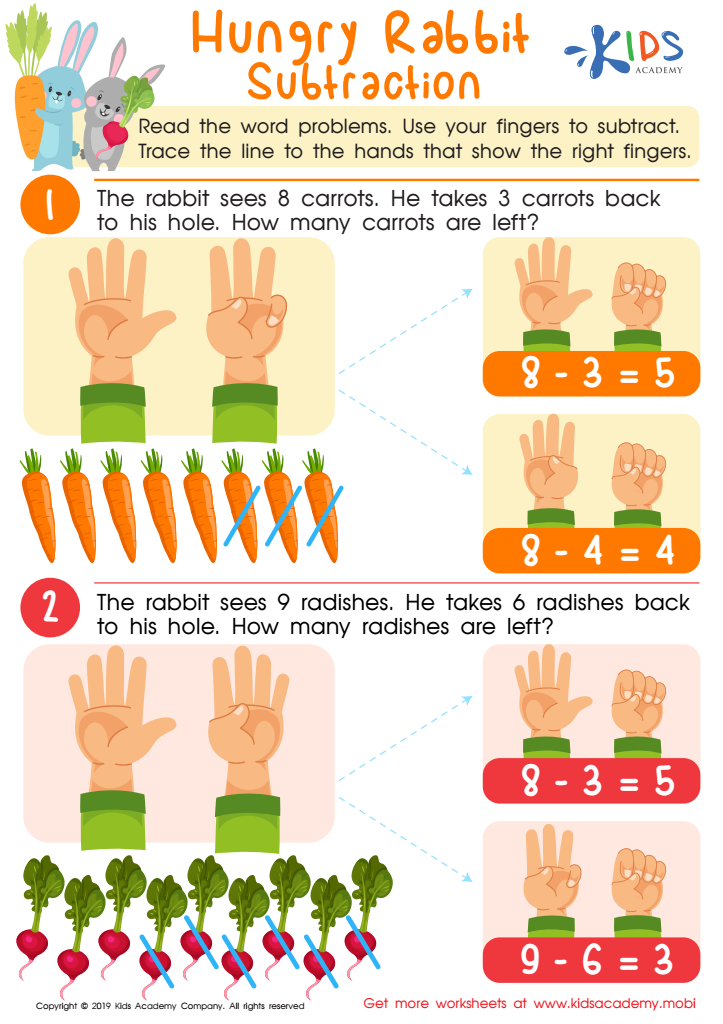
Hungry Rabbit Subtraction Worksheet
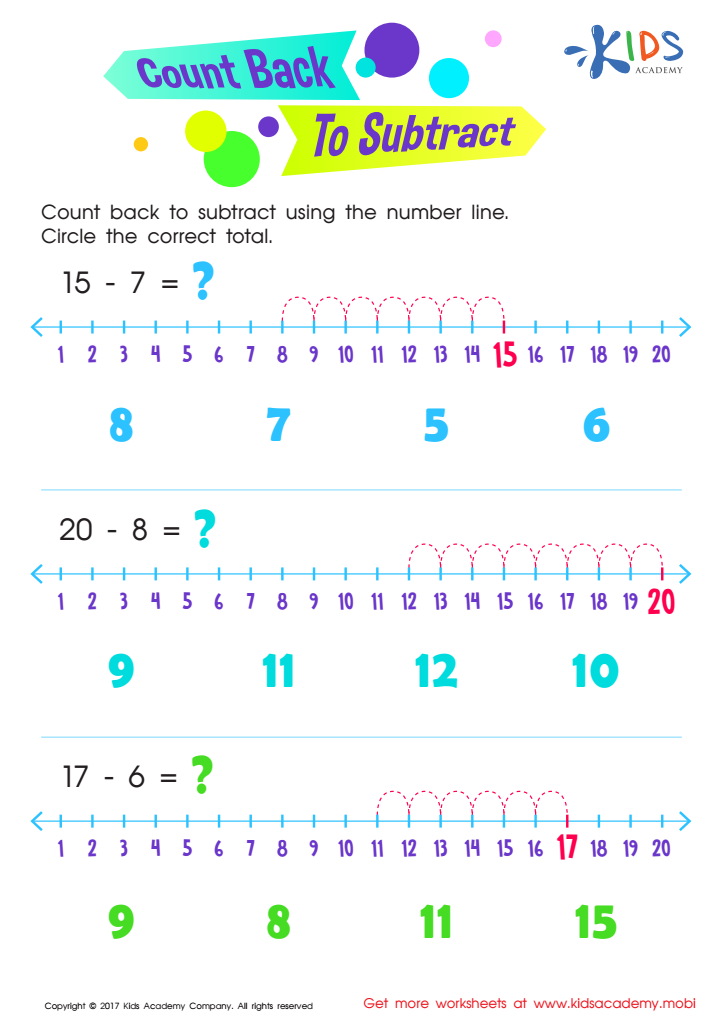
Count Back to Subtract Substraction Worksheet
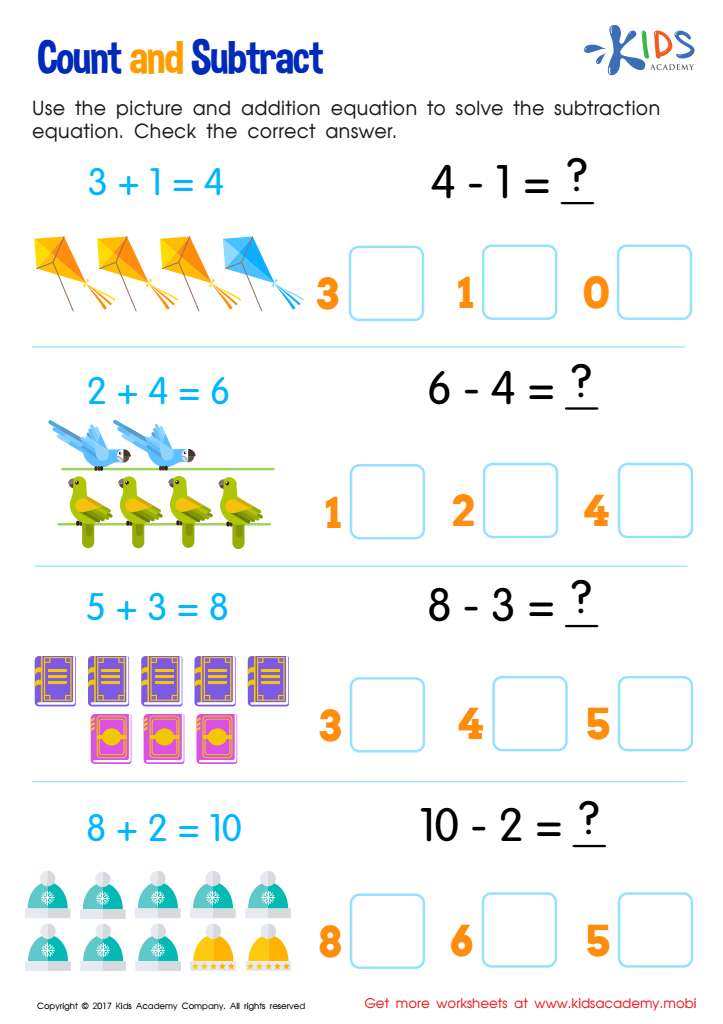
Count and Subtract Worksheet
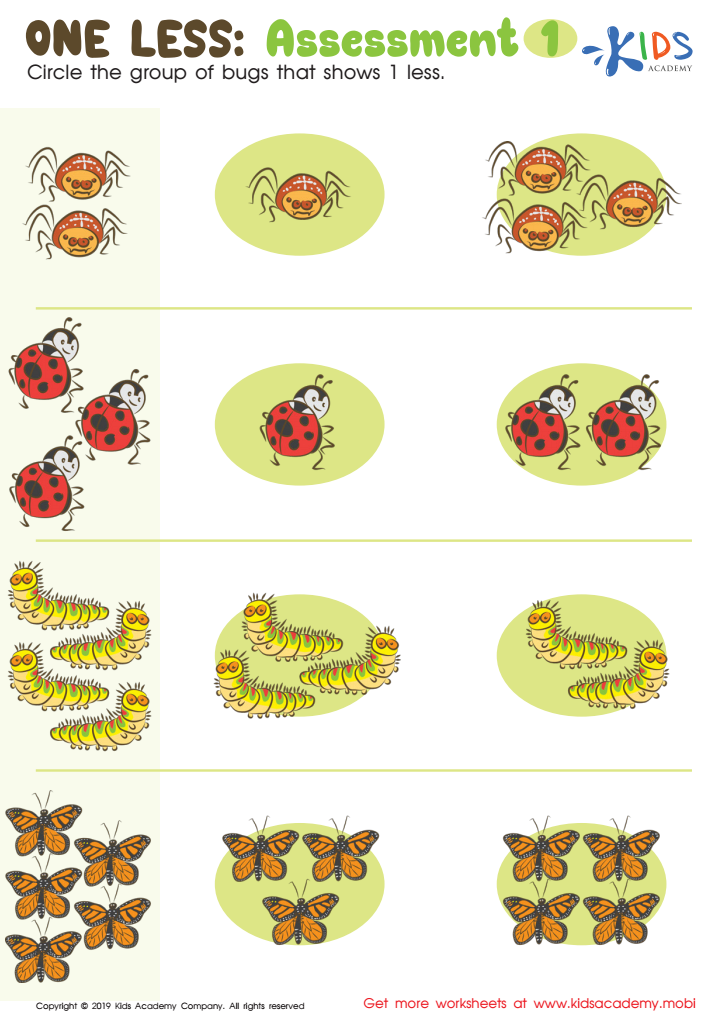
One Less: Assessment 1 Worksheet
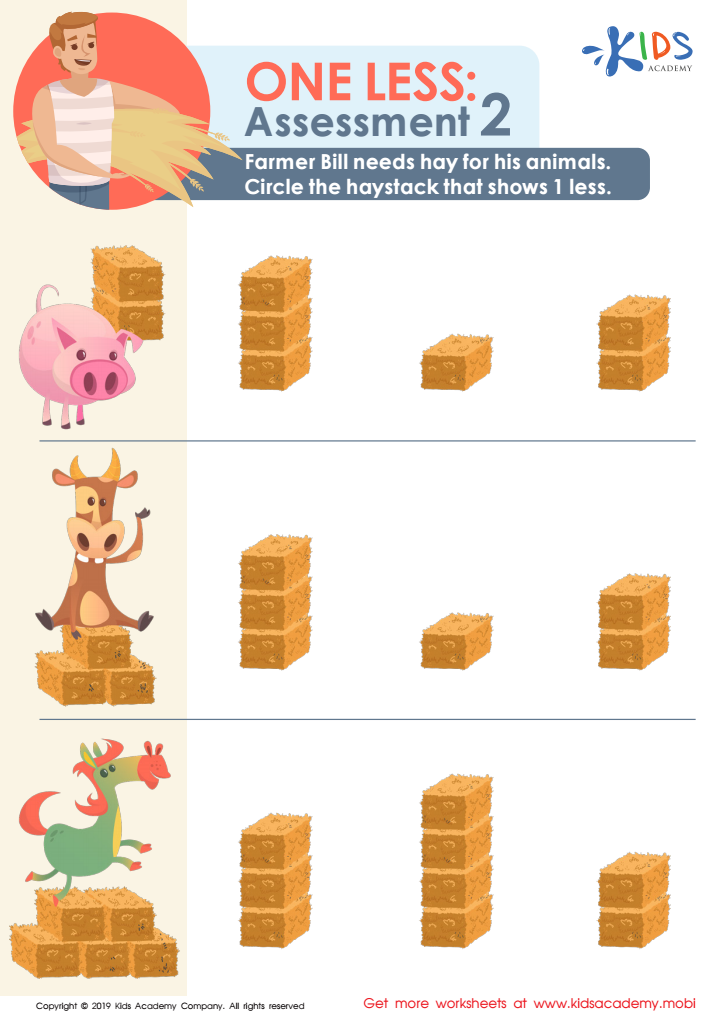
One Less: Assessment 2 Worksheet








Counting skills and subtraction form the cornerstone of early mathematics education, providing a foundation upon which more complex mathematical concepts are built. For children ages 3-7, learning these skills is critical for several reasons.
First, early competence in counting and simple subtraction fosters numerical literacy. Understanding numbers, their relationships, and basic arithmetic operations helps children make sense of the world around them. This foundational knowledge supports their future success in school and daily life.
Moreover, these skills encourage cognitive development. Engaging in counting and basic subtraction activities enhances problem-solving abilities, logical thinking, and reasoning skills. Children learn to recognize patterns, sequence events, and understand cause and effect, which are crucial cognitive milestones.
Socially and emotionally, mastering these fundamental skills boosts children's confidence and self-esteem. It enables them to participate more actively in classroom activities and allows them to feel a sense of accomplishment, fostering a positive attitude towards learning.
Lastly, proficiency in counting and subtraction prepares children for real-world experiences, such as managing simple tasks like sharing items or understanding time and money. Hence, parents and teachers should prioritize these skills to ensure well-rounded development and to lay a robust foundation for future academic achievement.








